
You are using an out of date browser. It may not display this or other websites correctly.
You should upgrade or use an alternative browser.
You should upgrade or use an alternative browser.
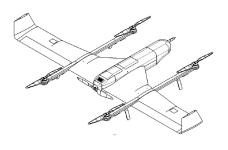


Why tho? Shouldn't this type of project be better leave to private sectors, solar already demonstrated it's VTOL drone in pokhran, and this from Dynauton systems, ADE should better focused on VLO drones, like SWIFT-k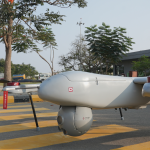
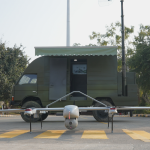
IP rights issue I guess. Govt of India wants to hold the IP rights exclusively so when needed they can produce en masse instead of 100% relying on import volume. This sudden production surge capacity building at a short notice can only be afforded (and maintained) by the Govt side for a high emergency state of war situation. Defence business is such, it is very lumpy when it comes to order esp if no major consumption over a decade or two. Your existing stock get obsolete while you find you have to cater for a large demand suddenly (suddenly does not mean few days, rather few months to year short term basis).
Does pocket money have anything to do with it? More projects means more funds. And a product already made by pvt sector in India, well seems easier to execute then pushing advanced concepts.
Chanelling my inner hydra

Chanelling my inner hydra

Not sure how feasible but this is sort of a bird hit kind of solution for this particular role ? The sheer difference in velocity for the two vectors must mean some specific solution is to be modeled and worked upon, perhaps AI assisted.
Not sure how feasible but this is sort of a bird hit kind of solution for this particular role ? The sheer difference in velocity for the two vectors must mean some specific solution is to be modeled and worked upon, perhaps AI assisted.
Okay.. I might be just rambling but hear me out.
what about a swarm of drone working as an airborne detector. An extension of our radar systems and IACCS, AKASHTEER etc.
As we know that Land based radar have their own limits due to curvature of the earth, frequency band etc. While AWACS have their own limits.
What if an AI assisted swarm is envisioned where, the drones are positioned in a way that leverage astronomy ( geometry) to create or 'un-create' the blind spots. Cheaper version means that any drones lost must be filled by backup drones and real time adjustments based on GPS , INS etc to form right constellation in sky.
I had a diagram made for it. Let me see if it's somewhere saved.
If not manned ac, this could work as hard-kill CUAS with a net gun/direct collision against WL-2/WL-3/CH-3/CH-4/Akinci type MALE drones, I'd say. Or as decoys with radar reflectors to spoof enemy AD.Not sure how feasible but this is sort of a bird hit kind of solution for this particular role ? The sheer difference in velocity for the two vectors must mean some specific solution is to be modeled and worked upon, perhaps AI assisted.
Some good pics and video in the IDSA session presentation.
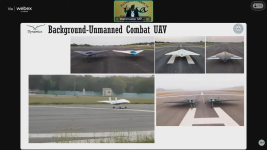
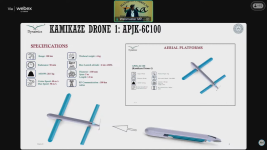
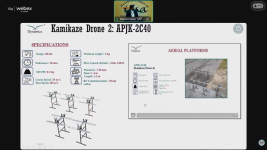
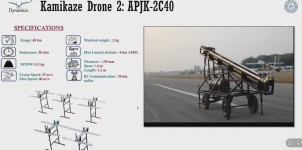


SLMUAV already had it's first flight,
Who will be the DcPP it gonna be interesting?

Who will be the DcPP it gonna be interesting?
That tender was for this purpose, development been ongoing for some time but you finalise on a frozen production ready config with the partner co. Now DRDO side only handover the tech spec, scaling that into the product needs industry expertise, time money & test facilitiesto prove acceptable performance metric. Seen plenty think what DRDO make as proto is what exactly reflected in a production ready version. It does not happen like that.
Its the reason why the tri service has so much complain with domestic products, QA QC is quite bad due to lax effort and corruption.
Its the reason why the tri service has so much complain with domestic products, QA QC is quite bad due to lax effort and corruption.


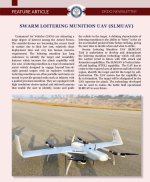
In a significant move towards strengthening India’s defence manufacturing ecosystem, the Minister witnessed the formalisation of CSIR-NAL’s collaboration with M/s Solar Defence & Aerospace Ltd. for the development of the indigenous 150-kg class Loitering Munition UAV. Powered by NAL’s certified Wankel engine, the UAV will offer a 900 km range, 6–9 hours endurance, a 5 km service ceiling and advanced capabilities such as GPS-denied navigation, low radar cross-section, and AI-enabled target identification. The Minister said that this PPP model epitomises the spirit of Atmanirbhar Bharat, ensuring that India develops critical defence technologies within the country while building industrial capacity for commercial-scale production.

I remember some DRDO infographics/ppt presentation that does show something like that.Okay.. I might be just rambling but hear me out.
what about a swarm of drone working as an airborne detector. An extension of our radar systems and IACCS, AKASHTEER etc.
As we know that Land based radar have their own limits due to curvature of the earth, frequency band etc. While AWACS have their own limits.
What if an AI assisted swarm is envisioned where, the drones are positioned in a way that leverage astronomy ( geometry) to create or 'un-create' the blind spots. Cheaper version means that any drones lost must be filled by backup drones and real time adjustments based on GPS , INS etc to form right constellation in sky.
I had a diagram made for it. Let me see if it's somewhere saved.
In a significant move towards strengthening India’s defence manufacturing ecosystem, the Minister witnessed the formalisation of CSIR-NAL’s collaboration with M/s Solar Defence & Aerospace Ltd. for the development of the indigenous 150-kg class Loitering Munition UAV. Powered by NAL’s certified Wankel engine, the UAV will offer a 900 km range, 6–9 hours endurance, a 5 km service ceiling and advanced capabilities such as GPS-denied navigation, low radar cross-section, and AI-enabled target identification. The Minister said that this PPP model epitomises the spirit of Atmanirbhar Bharat, ensuring that India develops critical defence technologies within the country while building industrial capacity for commercial-scale production.

