Indian Unmanned Aerial Vehicles Developments

W
Parliamentary panel indicts HAL-IIT-Kanpur for failed UAV project worth Rs 9.54 crore

A parliamentary panel has criticized Hindustan Aeronautics Limited (HAL) for a Rs 9.54 crore loss on its Rotary Unmanned Aerial Vehicle Program with IIT Kanpur

LUCKNOW: The Committee on Public Undertakings (CPU) has found that Hindustan Aeronautics Limited (HAL), in collaboration with IIT Kanpur, undertook the Rotary Unmanned Aerial Vehicle Program (Project 3) to develop a technology demonstrator for future surveillance platforms, without conducting a detailed market survey and demand assessment. This led to a lack of defence contracts and estimated financial losses of Rs 9.54 crore, the committee, led by Baijayant Panda, BJP MP from Kendrapara, has concluded. The committee, which consists of 14 Lok Sabha members, seven Rajya Sabha members, and four executives, reviewed the Comptroller and Auditor General of India (CAG) report for 2024-25 in detail. The CPU was briefed on the subject by CAG representatives on 25th September 2024.

It then took evidence from representatives of HAL on 24th October 2024. The committee also took oral evidence from representatives of the Ministry of Defence (Department of Defence Production) on the same day. In its report on HAL's design and development (D&D) projects, CAG stated that Project 3 was sanctioned at Rs 23.18 crore by the HAL board. CAG found that despite this significant investment, Project 3 failed to meet operational standards required for defence use, primarily due to its limited capabilities such as a payload capacity of only 2.5 kg, a one-hour endurance, and a range of just 8-10 km.

These specifications were inadequate for defence applications, and the project lacked prior input from potential users, which led to the development of a platform that did not align with actual market needs. Responding to CAG’s probe, HAL in a written reply to CPU stated, “Before committing resources to the full-scale development of large D&D projects, the company ensures a measured approach, and Project 3 was started as a pilot project, which gave confidence and experience for developing Project 4.” However, not satisfied with HAL’s response, the CPU, in its detailed examination report tabled in Parliament three weeks ago, said, “Crucial performance assessments, like the ‘Lessons Learnt Report’, were not conducted, preventing HAL from refining project planning and risk assessment for future UAV programmes. The lack of market analysis and inadequate alignment with defence standards made the expenditure on Project 3 largely unproductive.

” The CPU recommended that HAL should establish a dedicated market research and demand forecasting division to assess potential buyer interest before investing in technology demonstrators, ensuring that projects are commercially and operationally viable. The CPU also recommended that HAL align all future pilot projects with existing defence procurement roadmaps to maximise contract potential and avoid resource misallocation. The CPU further emphasised that HAL should ensure that Letters of Intent (LoIs) from potential buyers are secured before initiating large-scale UAV development projects to guarantee a clear market pathway for new products.
Whats the point. These self entitled PSUs dont give two hoots about panels and committees.
 
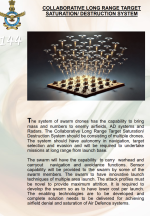
ABHYAS Drone Brochure from Vigyan Vaibhav 2025 (Originally from Defence Expo 2022)
Vigyan Vaibhav 2025.jpg
ABHYAS HIGH SPEED EXPENDABLE AERIAL TARGET

ABHYAS is an indigenously developed cost effective High Speed Expendable Target. It is designed to meet the tri-services requirements of artillery practice, Air-to-Air combat and battleship target practice. This has indigenously developed flight control computer, navigation system & user friendly ground control system. It requires minimum logistics for its operation. It is launched with rocket motors from a Zero length launcher and the flight is sustained with a small gas turbine engine. It is fully pre programmable and can fly with way point navigation. It has capability of autonomous flying from 20 m to 5 km altitude.

FEATURES
• Power Plant : Small Gas Turbine Engine
• Altitude : 5000 m
• Endurance : 30 min
• Turning : 2 g
• Max Speed : 0.5M
• Flight Controls : Programmed WPN, Alt Hold, Heading Hold
• Augmentation : RCS, Visual, IR
• Miss Distance Indicator : AMDI
• Length : 2440 mm
• Diameter : 180 mm
• Max AUW : 75 Kg
 
NAL LM-UAV


We have a status update
 
When you already have off the shelf technology, why it taking them 3yrs for completing the project, also at time when there are similar drones already available with better specs out there
How does it matter that there are similar specs tech is out there?. We have meteor, does it make the development of Astra Mk3 easier?

A development cycle always lasts a minimum of 3 to 4 years.
 
When you already have off the shelf technology, why it taking them 3yrs for completing the project, also at time when there are similar drones already available with better specs out there
3-4 years is standard minimum regardless of weapon system being developed.

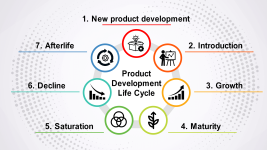
From concept phase to design phase to prototyping, internal testing, user validation testing, certification.

If we are developing lets say a new combat knife for soldier expect it to take this minimum time.
 
How does it matter that there are similar specs tech is out there?. We have meteor, does it make the development of Astra Mk3 easier?

A development cycle always lasts a minimum of 3 to 4 years.
1761724577567.png

Any product that is developed from scratch (even if there are other comparable products present in the market) will undergo these stages. Hence, the timelines in years. These can be shrunk only if there are resources, will, and financing present (amongst a host of other factors). The first two stages each contain sub-stages and can be taxing.
 
3-4 years is standard minimum regardless of weapon system being developed.

From concept phase to design phase to prototyping, internal testing, user validation testing, certification.

If we are developing lets say a new combat knife for soldier expect it to take this minimum time.
Even developing food takes years.


This is the taco bell that is made in minutes after a customer orders it.

 
  • Haha
Reactions: RationalGuy
3-4 years is standard minimum regardless of weapon system being developed.

From concept phase to design phase to prototyping, internal testing, user validation testing, certification.

If we are developing lets say a new combat knife for soldier expect it to take this minimum time.
View attachment 47419

Any product that is developed from scratch (even if there are other comparable products present in the market) will undergo these stages. Hence, the timelines in years. These can be shrunk only if there are resources, will, and financing present (amongst a host of other factors). The first two stages each contain sub-stages and can be taxing.
The issue is that the majority of Indian engineers come from a software development point of view. The cycle is way faster in that industry.