Indian Unmanned Aerial Vehicles Developments

  • Like
Reactions: Kiduva21
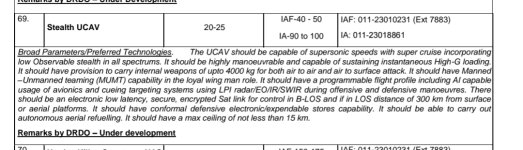
I have a question, can We make shaheed class drone or little bit bigger let's say 4m, with stealth characteristics, from it's sharp edges to RAM & paint, satcom & datalink, suppressed IR signatures of the engine, with internal bay OF 50kg, capable of launching 4 ULPGM V3, or 2 25kg missile, range of 500km and combat radius of 200-150km, autonomous take off & landing, and ECCM again EW jammings, and a EOTS for the purpose of DEAD/SEAD missions in the forward area's, is it possible or the size will become to big and only can be used for kamikaze role?
@marich01 @babablacksheep @Rajput Lion @ShiroBarks @FenicromovCW
 
  • Like
Reactions: Rajput Lion
I have a question, can We make shaheed class drone or little bit bigger let's say 4m, with stealth characteristics, from it's sharp edges to RAM & paint, satcom & datalink, suppressed IR signatures of the engine, with internal bay OF 50kg, capable of launching 4 ULPGM V3, or 2 25kg missile, range of 500km and combat radius of 200-150km, autonomous take off & landing, and ECCM again EW jammings, and a EOTS for the purpose of DEAD/SEAD missions in the forward area's, is it possible or the size will become to big and only can be used for kamikaze role?
@marich01 @babablacksheep @Rajput Lion @ShiroBarks @FenicromovCW
All are in the pipeline. Only a matter of time before India becomes a drone superpower, IMO.
 
I have a question, can We make shaheed class drone or little bit bigger let's say 4m, with stealth characteristics, from it's sharp edges to RAM & paint, satcom & datalink, suppressed IR signatures of the engine, with internal bay OF 50kg, capable of launching 4 ULPGM V3, or 2 25kg missile, range of 500km and combat radius of 200-150km, autonomous take off & landing, and ECCM again EW jammings, and a EOTS for the purpose of DEAD/SEAD missions in the forward area's, is it possible or the size will become to big and only can be used for kamikaze role?
@marich01 @babablacksheep @Rajput Lion @ShiroBarks @FenicromovCW
Aerodynamic design can be anything suitable to a mission the said product has to undergo. The issue lies with the cost-benefit analysis of the project to justify its viability.
 
I have a question, can We make shaheed class drone or little bit bigger let's say 4m, with stealth characteristics, from it's sharp edges to RAM & paint, satcom & datalink, suppressed IR signatures of the engine, with internal bay OF 50kg, capable of launching 4 ULPGM V3, or 2 25kg missile, range of 500km and combat radius of 200-150km, autonomous take off & landing, and ECCM again EW jammings, and a EOTS for the purpose of DEAD/SEAD missions in the forward area's, is it possible or the size will become to big and only can be used for kamikaze role?
@marich01 @babablacksheep @Rajput Lion @ShiroBarks @FenicromovCW
You just described stealthy loyal wingman drones.
 
Aerodynamic design can be anything suitable to a mission the said product has to undergo. The issue lies with the cost-benefit analysis of the project to justify its viability.
I think it can be justified if it being used for SEAD/DEAD missions in the contested environment, and good number of such drones Will make the job easier for the manned aircrafts, less chances of taking a significant loss, degrading the enemy's forward capabilities,
Aerodynamic design can be anything suitable to a mission the said product has to undergo. The issue lies with the cost-benefit analysis of the project to justify its viability.
I think it can be justified if it being used for SEAD/DEAD missions in the contested environment, and good number of such drones Will make the job easier for the manned aircrafts, less chances of taking a significant loss, degrading the enemy's forward capabilities, i hope SWIFT k don't just limit itself to kamikaze roles,
You just described stealthy loyal wingman drones.
Yeah but loyal wingman have bigger roles, it's just for a dedicated stealth drone for SEAD/ DEAD missions
 

This will be locally produced in India by JSW


India set to build US-origin combat drones at home in rare tech transfer deal


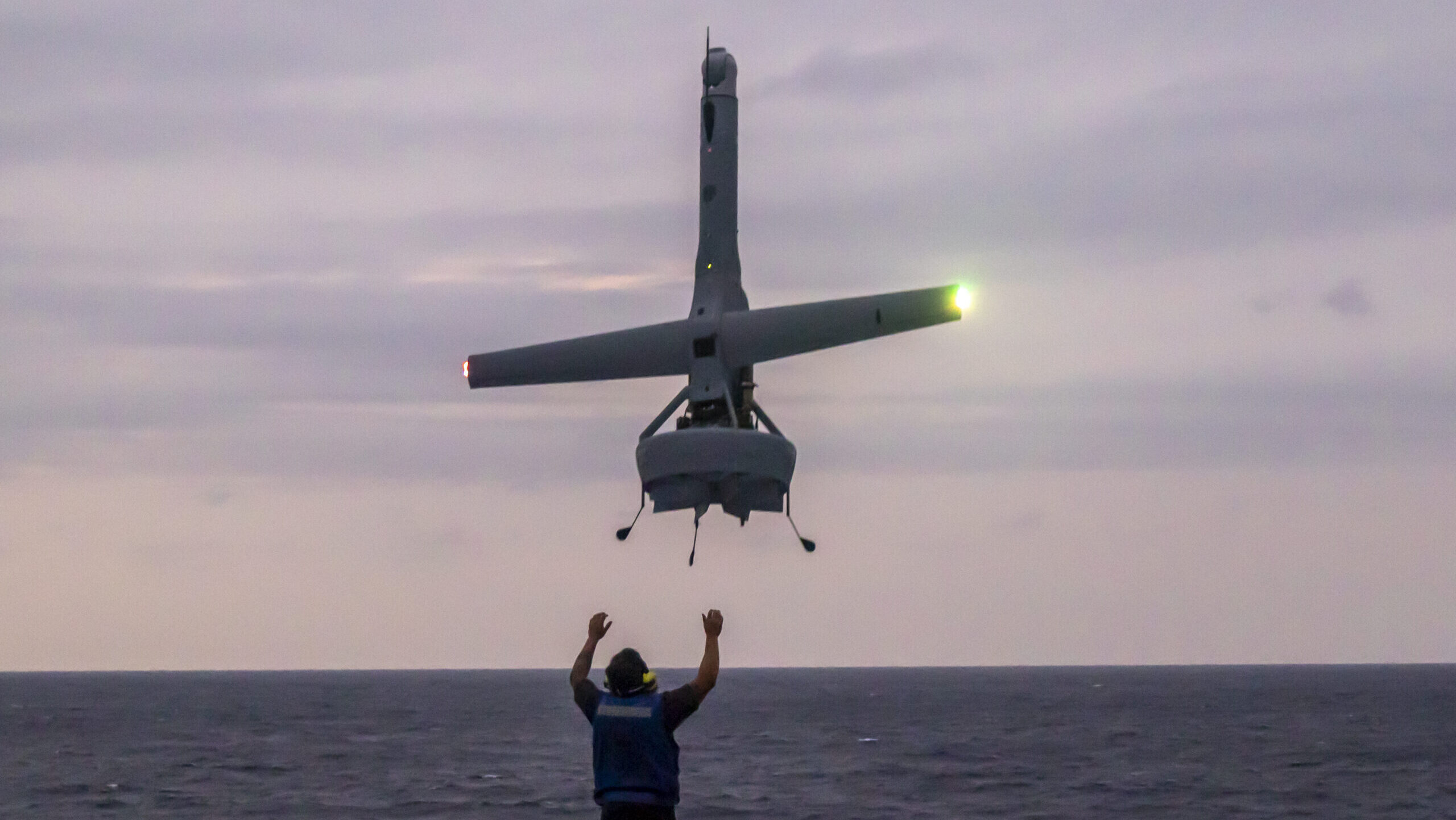
India is close to clinching a landmark deal with US-based defence tech firm Shield AI to acquire and locally manufacture its V-BAT combat drones, marking a rare instance of technology transfer in India’s defence procurement landscape.

As reported by Mint, the deal is part of a $4.5 billion emergency procurement programme initiated shortly after Operation Sindoor. Under the plan, the Defence Ministry is in advanced talks with Shield AI to supply enhanced V-BAT drones to the Indian Air Force (IAF), while simultaneously setting up a domestic production line through a joint venture with JSW Defence, a division of the JSW Group.

The first contract for the IAF is expected to be worth $35 million, the ceiling for emergency procurement contracts. But the broader collaboration goes well beyond acquisition. The companies have inked a $90-million joint venture agreement that includes full transfer of technology (ToT) to JSW, enabling large-scale local manufacturing, assembly, and testing of the V-BAT system in India.

As part of the JV, JSW Group will invest $90 million over two years, $65 million of which will be deployed in the first 12 months. This will cover the establishment of a global compliance programme, set up manufacturing facilities, and train local manpower to handle the licensed tech.

The plan is not just to meet Indian defence requirements but to make the country a global production hub for the V-BAT, which is already deployed by several international forces including the United States Marine Expeditionary Units.

The V-BAT is a vertical take-off and landing (VTOL) drone with fixed wings and long endurance capabilities. Designed for intelligence, surveillance, and reconnaissance (ISR) missions, it’s built for tactical deployments in challenging environments, from special forces operations to front-line support for infantry, armoured, and artillery units. Its patented ducted design allows for a minimal logistics footprint and quick, flexible deployment.

If finalised, the deal would mark a significant shift in India’s approach to defence acquisitions, moving from outright purchase to co-development and localised production of advanced weapon systems.
 
Parliamentary panel indicts HAL-IIT-Kanpur for failed UAV project worth Rs 9.54 crore

A parliamentary panel has criticized Hindustan Aeronautics Limited (HAL) for a Rs 9.54 crore loss on its Rotary Unmanned Aerial Vehicle Program with IIT Kanpur

LUCKNOW: The Committee on Public Undertakings (CPU) has found that Hindustan Aeronautics Limited (HAL), in collaboration with IIT Kanpur, undertook the Rotary Unmanned Aerial Vehicle Program (Project 3) to develop a technology demonstrator for future surveillance platforms, without conducting a detailed market survey and demand assessment. This led to a lack of defence contracts and estimated financial losses of Rs 9.54 crore, the committee, led by Baijayant Panda, BJP MP from Kendrapara, has concluded. The committee, which consists of 14 Lok Sabha members, seven Rajya Sabha members, and four executives, reviewed the Comptroller and Auditor General of India (CAG) report for 2024-25 in detail. The CPU was briefed on the subject by CAG representatives on 25th September 2024.

It then took evidence from representatives of HAL on 24th October 2024. The committee also took oral evidence from representatives of the Ministry of Defence (Department of Defence Production) on the same day. In its report on HAL's design and development (D&D) projects, CAG stated that Project 3 was sanctioned at Rs 23.18 crore by the HAL board. CAG found that despite this significant investment, Project 3 failed to meet operational standards required for defence use, primarily due to its limited capabilities such as a payload capacity of only 2.5 kg, a one-hour endurance, and a range of just 8-10 km.

These specifications were inadequate for defence applications, and the project lacked prior input from potential users, which led to the development of a platform that did not align with actual market needs. Responding to CAG’s probe, HAL in a written reply to CPU stated, “Before committing resources to the full-scale development of large D&D projects, the company ensures a measured approach, and Project 3 was started as a pilot project, which gave confidence and experience for developing Project 4.” However, not satisfied with HAL’s response, the CPU, in its detailed examination report tabled in Parliament three weeks ago, said, “Crucial performance assessments, like the ‘Lessons Learnt Report’, were not conducted, preventing HAL from refining project planning and risk assessment for future UAV programmes. The lack of market analysis and inadequate alignment with defence standards made the expenditure on Project 3 largely unproductive.

” The CPU recommended that HAL should establish a dedicated market research and demand forecasting division to assess potential buyer interest before investing in technology demonstrators, ensuring that projects are commercially and operationally viable. The CPU also recommended that HAL align all future pilot projects with existing defence procurement roadmaps to maximise contract potential and avoid resource misallocation. The CPU further emphasised that HAL should ensure that Letters of Intent (LoIs) from potential buyers are secured before initiating large-scale UAV development projects to guarantee a clear market pathway for new products.
 
  • Informative
Reactions: Shan