Indian Space Program: News & Discussions

  • Thread starter Thread starter Tarun
  • Start date Start date
  • Tags Tags
    isro
ISRO Commissions Advanced Landing Gear Test Facility

April 04, 2025
1744696376410.png

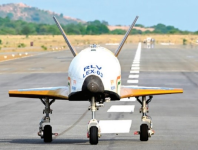
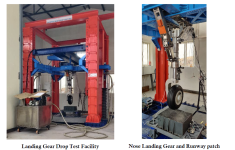
A state-of-the-art Landing Gear Drop Test Facility is commissioned at Vikram Sarabhai Space Centre (VSSC), Thiruvananthapuram towards the testing and qualification of the deployable Landing Gear system for ISRO’s winged body Reusable Launch Vehicle – Pushpak. ISRO is developing Pushpak with a deployable Landing Gear towards the RLV-Orbital Re-entry Experiment (RLV-OREX), wherein the Pushpak vehicle will be launched to orbit in an ascent vehicle. Subsequently, after a few orbits, Pushpak will re-enter the atmosphere and land on a runway using the deployable Landing Gear system.
1744696417588.png

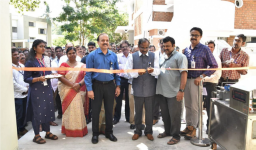
The Landing Gear Drop Test facility was inaugurated by Dr. V. Narayanan, Chairman, ISRO / Secretary, DOS at Vikram Sarabhai Space Centre on April 04, 2025 in the presence of Dr. Unnikrishnan Nair, Director, Vikram Sarabhai Space Centre (VSSC), Shri Rajarajan, Director, Satish Dhawan Space Centre (SDSC-SHAR) and Shri Padmakumar, Director, ISRO Inertial Systems Unit (IISU). The Landing Gear Drop facility has the capability to test various types of landing gears, such as telescopic, articulated and semi-articulated types and has several key features such as an adjustable drop mass up to 2000 kg to simulate various aircrafts and airport altitudes and adjustable drop height. The test rig is capable of simulating landing velocities up to 360 km/hr (100 m/s) with adjustable wheel spin speeds up to 5000 rpm. The test setup also allows simulation of various landing sink rates, up to 4.8 m/s. Different runway conditions such as asphalt, concrete, dry, wet and icy surfaces can also be simulated.

A comprehensive sensor suite is also part of the facility in order to measure the various parameters at the touch down point such as accelerometers to sense acceleration and velocity, high resolution displacement sensors such as LVDTs and LiDARs to sense the vertical motion and tri-axial load cells and strain gauges to sense landing forces, strain and moments experienced by the Landing Gear. This facility also integrates multiple safety features, such as a platform impact protector and a self-lock mechanism for the drop release actuator, ensuring protection for both personnel and test articles. This facility has the potential to accelerate the development and qualification of advanced RLVs and aircraft technologies in India.
1744696442813.png
Inauguration of Landing Gear Drop Test Facility by Chairman, ISRO / Secretary, DOS

ISRO Commissions Advanced Landing Gear Test Facility
 
SPADEX Mission: Successful demonstration of Second Docking and Power Transfer

April 21, 2025
1745260599082.png

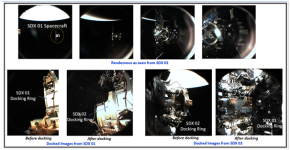
ISRO successfully demonstrated the docking of the SPADEX satellites (SDX 01 & SDX 02) for the second time on April 20, 2025, at 08:20 PM. Subsequently, power transfer from SDX 02 to SDX 01 satellite as well as vice versa was also exercised and accomplished on 21st April 2025. The experiment involved operating a heater element in one of the satellites through power from the other satellite. The duration of power transfer was approximately 4 minutes, and the performance of the satellites was as expected.

In the second docking attempt, the docking was completed with full autonomy from an inter-satellite distance of 15m till docking, whereas in the first docking attempt, an additional hold point was manually exercised at an inter-satellite distance of 3m.

The second docking experiment was preceded by detailed ground simulations and on-orbit trials incorporating the experience gained from first docking & undocking experiments, thereby providing immense confidence for the second docking demonstration.

The demonstration of the fully autonomous second docking along with power transfer marks the completion of an important milestone in the SPADEX mission.

SPADEX Mission: Successful demonstration of Second Docking and Power Transfer


India is conducting a rare and very sophisticated "dogfight" in space between a 'chaser' and 'target' satellite orbiting nearly 500 kilometers above the Earth. This comes close on the heels of Chinese defence satellites practising "dogfights" in low Earth orbits in 2024.

Dogfighting in space refers to the concept of coordinated, close-range maneuvers between spacecraft, similar to the aerial dogfights between fighter jets.

The Indian attempt is one more useful extension of the ambitious SPADEX Mission by the Indian Space Research Organization or ISRO. A mission with many societal and strategic objectives rolled in seamlessly.

Two Indian satellites - zipping through space at 28,800 kilometers per hour, or at a speed which is 28 times faster than cruising a commercial passenger jet and 10 times the speed of a bullet - are autonomously participating in this precision flight pattern orchestrated by the ISRO. Both satellites have been conducting rendezvous and proximity tactics.
This current "dogfight" was preceded by an extended but manually conducted circumambulation or parikrama between the chaser and target satellite a few weeks ago.

In the SPADEX mission, India has already "successfully demonstrated docking and undocking twice over", ISRO Chairman Dr V Narayanan told NDTV.

After these extended docking and undocking maneuvers, the ISRO chief said, there was still 50% of the fuel left on the two satellites.

A precision rocket launch and frugal orbital management has left the two satellites with nearly 2.5 kilograms of fuel each, said the ISRO chief, adding that this helps extend the mission life.

Praising the effort, Brigadier (Retd) Anshuman Narang, Director and Founder Atma Nirbhar Soch, an independent think tank, said, "Through this dogfight in space, ISRO is pushing the right technological frontier. It's a good thing that this technology demonstration of peaceful robotisation in space through advanced swadeshi technology. This space modernization and autonomisation through indigenisation and intelligentisation is what today's atmanirbhar Bharat needs."

The officer, a space expert, keeps a close watch on China's space developments.

Incidentally, China recently demonstrated this huge capability using several satellites and even the US Space Force expressed concern that USA's rivals were closing the technology gap.

Earlier, the ISRO successfully demonstrated the docking of the SPADEX satellites (SDX 01 & SDX 02) for the second time on April 20.

Subsequently, power transfer from SDX 02 to SDX 01 satellite as well as vice versa was also exercised and accomplished on April 21.

The experiment involved operating a heater element in one of the satellites through power from the other satellite. The duration of power transfer was approximately 4 minutes and the performance of the satellites was as expected.

In the second docking attempt, the docking was completed with full autonomy from an inter-satellite distance of 15m till docking, whereas in the first docking attempt, an additional hold point was manually exercised at an inter-satellite distance of 3m.

The second docking experiment was preceded by detailed ground simulations and on-orbit trials incorporating the experience gained from first docking and undocking experiments, thereby providing immense confidence for the second docking demonstration.

The demonstration of the fully autonomous second docking along with power transfer marks the completion of an important milestone in the SPADEX mission.

The first docking was achieved on January 16 this year.

 
  • Like
Reactions: RationalGuy
The possibility of sabotage should be looked into, given that failures seem to coincide precisely with strategic missions. The PS3 is a solid motor: ISRO has enormous experience with these, and a failure there is the last thing one would expect.

Also, ISRO should focus less on planetary exploration, etc, and more on delivering strategically important payloads to orbit on time.
 
  • Like
Reactions: RationalGuy
Why the hell they announce its a spy satellite..
Cant they hide it as communication satellite until successfully placed in orbit.
 
Why the hell they announce its a spy satellite..
Cant they hide it as communication satellite until successfully placed in orbit.
ISRO has recently started using a new EOS (Earth Observation Satellite) designation so that the end-use of sats like RISAT isn't too obvious. But I guess as a civilian space agency there is only so much they can do.
 
ISRO has recently started using a new EOS (Earth Observation Satellite) designation so that the end-use of sats like RISAT isn't too obvious. But I guess as a civilian space agency there is only so much they can do.

We should test & validate Veda soon, in case of any urgency we need those..
Cant always rely on ISRO only ..
 
I hope this launch is problem free. It is a very expensive satellite.

NASA-ISRO Earth-Observing Satellite Arrives at Indian Launch Site

June 12, 2025
1-NISAR at SHAR.jpg
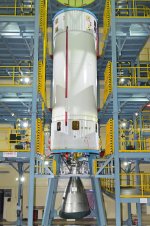
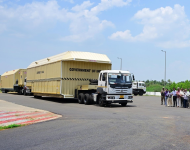
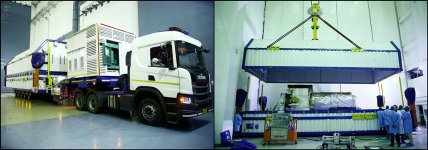
NISAR made the two-day, 220-mile (360-kilometer) trip from the ISRO Satellite Integra-tion and Test Establishment (ISITE) in Bengaluru by truck (left) in a specialized shipping container. It arrived on May 15 at the agency’s launch facility, Satish Dhawan Space Centre, where it was unpacked (right). ISRO

The NISAR (NASA-ISRO Synthetic Aperture Radar) mission, an Earth-observing radar satellite jointly developed by NASA and the Indian Space Research Organization (ISRO), moved another step closer to launch last month when it arrived safe and sound at Satish Dhawan Space Centre on India’s southeastern coast. Home to ISRO’s launch facilities, the center will host the satellite’s liftoff, slated for July.

Prior to arriving at the launch site on May 15, NISAR was at the ISRO Satellite Integration and Test Establishment in Bengaluru. Engineers from ISRO and NASA’s Jet Propulsion Laboratory in Southern California, which manages the mission for NASA, had been working together there since March 2023 on bringing together components and assembling the satellite. They also tested it to ensure it can withstand the rigors of launch and function properly in orbit.

In the early morning of May 14, crews placed the satellite in a specialized container and transported it about 220 miles (360 kilometers) by truck to the space center, arriving the following day. It will be placed in its launch fairing and mounted atop an ISRO Geosynchronous Launch Vehicle Mark II rocket in preparation for launch.

In orbit, NISAR will collect an unprecedented amount of information about our planet’s environment. It will scan nearly all of Earth’s land and ice surfaces twice every 12 days, providing insights into the expansion and contraction of ice sheets, sea ice, and glaciers, the deformation of its crust due to natural hazards, as well as natural and human changes to Earth’s terrestrial ecosystems.

These measurements will be carried out by two radar systems — an L-band system built by JPL, and an S-band system constructed by ISRO’s Space Applications Centre in Ahmedabad. Not only is NISAR the first satellite to carry two radars working at two different frequencies, but the mission also marks the first hardware collaboration on an Earth-observing mission between the two space agencies.

The NISAR mission marks a significant milestone in NASA’s ongoing collaboration with ISRO, indicative of strong bilateral relations between the United States and India. In February of this year, President Donald J. Trump met with Prime Minister Narendra Modi of India. During the meeting, the two leaders hailed this year as a pioneering year for U.S.-India civil space cooperation and reaffirmed their mutual support for the NISAR mission. The leaders committed to further commercial space collaboration through industry engagements in conventional and emerging areas, such as connectivity, advanced spaceflight, satellite and space launch systems, space sustainability, and advanced space manufacturing.

NASA-ISRO Earth-Observing Satellite Arrives at Indian Launch Site - NASA Science
 
Hard 💊 to swallow but true..... For a 4 + trillion $ economy it's just pure scam such low number of launches are being conducted.
The key is to bring Private players into the space. While ISRO has been good, it is limited by its bureaucratic nature, which, of course, makes it inefficient. Additionally, there is a significant workload on its engineers and researchers; they must conduct research, build, and then launch the satellite, which requires a substantial amount of manpower. it is nearly impossible for a single org to do it all, eg. NASA has given out its launch services for commercial payloads as well as research to SPACEX and it has a nearly 20x the budget of ISRO. Taking the burden of launch services and manufacturing of ISRO will improve its launch frequency and also success rate. This has already started with the HAL and L&T consortium but we need to do more.
 
Hard 💊 to swallow but true..... For a 4 + trillion $ economy it's just pure scam such low number of launches are being conducted.
How many launches China did when they were $4 trillion GDP I wonder. CNSA gets $8 billion, women in Karnataka got $3 billion for free bus rides, ISRO gets $2 billion (not even that iirc). Perks of the demoncracy we live in.
The key is to bring Private players into the space. While ISRO has been good, it is limited by its bureaucratic nature, which, of course, makes it inefficient. Additionally, there is a significant workload on its engineers and researchers; they must conduct research, build, and then launch the satellite, which requires a substantial amount of manpower. it is nearly impossible for a single org to do it all, eg. NASA has given out its launch services for commercial payloads as well as research to SPACEX and it has a nearly 20x the budget of ISRO. Taking the burden of launch services and manufacturing of ISRO will improve its launch frequency and also success rate. This has already started with the HAL and L&T consortium but we need to do more.
Give ISRO budget. ISRO said they will transfer GSLV and PSLV technology to private sector when NGLV will be ready which means around 2035. Ask gov to splurge on ISRO like anything. In this country we lose more money into embezzlement and corruption and giving free ****ing bus rides to people than ISROs entire budget. We're not a serious country at all....
 
  • Like
Reactions: Ironhide