

Too many failures, the latest NVS-O2 failed to enter the designated orbit in February, it was supposed to be the replacement of IRNSS-1E. The available satellites in the constellation are down to just 4, and most of them are older satellites launched in the 2016-2018 timeframe. NVS-01 is the only new one, and is the first satellite with a domestic atomic clock, rest have all imported one's probably nearing their end.Very serious. What happened to domestic atomic clocks?
Indian Space Program: News & Discussions
- Thread starter Tarun
- Start date
-
- Tags
- isro
You are using an out of date browser. It may not display this or other websites correctly.
You should upgrade or use an alternative browser.
You should upgrade or use an alternative browser.


Imported atomic clock failure in 5 out of 9 IRNSS satellites is a worrying sign.
What could be the reason of such breakdown?


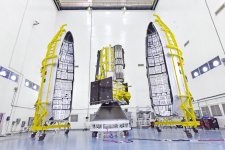


What a series of messed up priorities.
Damn!!
It's not ISRO fault. They are already packed. It's good that private sector has been encouraged with even startups coming up. And ISRO sharing it's tech with HAL and other startups..
It will fill the critical gap in manpower.
So, it's not a miss priority. But a carefully planned approach of leaving already successfully demonstrated and achieved technology in hands of private players to scale for consumption while ISRO can work to advance the Space Tech of India.
This is instead the right use of resources. Not money resource but brainpower resources. ISRO scientist are better placed to pursue advanced missions with private sector absorbing previous tech and scaling them up.
Launch of 30+ satelite by private sector including their launch vehicles is already decided.
Infact DRDO is also pushed to adopt this approach. Hence you see increased participation from private sector resulting in better preparedness. But given the sensitivity and MoD influence, it's slow to reform DRDO.. while ISRO sets a precedent.
Out scientist aren't stupid to let Navic defunct which is core strategic assets for India including defense purposes.
So, I would urge you to tweak your mindset and view the developments holistically ( aap chronology samajhiye) rather than one off.
[Thank you for your attention to this matter! ]
]
P.S. next time you see a leftist. Remember he wants govt to do everything which has been proved infeasible worldwide.
P.P.S This doesn't undermine the worrisome nature of this situation. Only aimed to provide an insight to how the govt and isro might be approaching this fix.
It's not ISRO fault. They are already packed. It's good that private sector has been encouraged with even startups coming up. And ISRO sharing it's tech with HAL and other startups..
It will fill the critical gap in manpower.
So, it's not a miss priority. But a carefully planned approach of leaving already successfully demonstrated and achieved technology in hands of private players to scale for consumption while ISRO can work to advance the Space Tech of India.
This is instead the right use of resources. Not money resource but brainpower resources. ISRO scientist are better placed to pursue advanced missions with private sector absorbing previous tech and scaling them up.
Launch of 30+ satelite by private sector including their launch vehicles is already decided.
Infact DRDO is also pushed to adopt this approach. Hence you see increased participation from private sector resulting in better preparedness. But given the sensitivity and MoD influence, it's slow to reform DRDO.. while ISRO sets a precedent.
Out scientist aren't stupid to let Navic defunct which is core strategic assets for India including defense purposes.
So, I would urge you to tweak your mindset and view the developments holistically ( aap chronology samajhiye) rather than one off.
[Thank you for your attention to this matter!
]P.S. next time you see a leftist. Remember he wants govt to do everything which has been proved infeasible worldwide.
P.P.S This doesn't undermine the worrisome nature of this situation. Only aimed to provide an insight to how the govt and isro might be approaching this fix.
Last edited:


GSLV-F16/NISAR1
GSLV-F16 is ready to carry NISAR into orbit. July 30, Liftoff at : 17:40 Hours IST


ISRO to Launch 9 Satellites by FY26, Including New NASA Collaboration
Space Missions: ISRO plans nine satellite launches this fiscal, including NASA's Blue Bird Block2 and India’s CMS-02, OCEANSAT-3A, and GISAT-1A.
 www.deccanherald.com
9 launches planned till March 2026 or till the end of FY26 :
The next major launch upcoming is the lvm3-m5 launch which will put the comms sattelite cms-02 into orbit. The next pslv launch is for tds-01 sat and then there will be gslv-f17 for nvs-03 launch and the f18 for oceansat 3A. There will also be a launch for a comm sat for the USA on the lvm3 and a couple of sslv launches as well. Ig there could also be the tvd-02 launch as well.

PSLV-XL | TDS-01
ISRO will launch a PSLV-XL rocket with TDS-01 from First Launch Pad, Satish Dhawan Space Centre, India.
Technology demonstrator for indigenous atomic clocks and quantum communication stands out.
One is important for Navic and other for basically everything.

SonaSPEED motors propel NASA-ISRO NISAR mission to success
On July 30, 2025, the GSLV-F16 rocket soared from the Satish Dhawan Space Centre in Sriharikota, marking a triumphant moment for researchers at SonaSPEED labora

ISRO launches mission HOPE in Ladakh
BENGALURU: The Indian Space Research Organisation (ISRO) on Saturday announced the launch of Himalayan Outpost for Planetary Exploration (HOPE) analog mission i
Last edited:

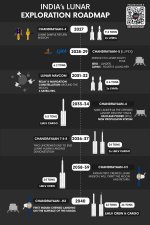

There will probably be delays but if we can have a man or woman on the moon by 2047, the 100th independence anniversary, it would be a great achievement.
India charts plan for Mars settlement and crewed lunar base by 2047
Last Updated: Aug 29, 2025, 03:35:00 PM IST
India has outlined a long-term space roadmap that includes building 3D-printed dwellings on Mars, setting up a crew station on the Moon, and launching human missions to deep space within the next four decades. The plan was drawn up by the Indian Space Research Organization (ISRO) after nationwide consultations and presented during the National Space Day celebrations last week.
According to the roadmap, ISRO aims to establish a human outpost on the Moon by 2047. The plans include mining for resources, deploying crewed lunar terrain vehicles, and setting up propellant depots to support interplanetary missions. These facilities are expected to provide logistics support for astronauts and enable missions to Mars.
To meet these goals, ISRO is working on a new launch vehicle, the Lunar Module Launch Vehicle (LMLV). With a height of 119 metres, equal to a 40-storey building, the LMLV is being designed to lift 80 tonnes to low earth orbit and 27 tonnes to trans-lunar orbit. It is targeted for readiness by 2035. Currently, ISRO’s most powerful rocket, the GSLV Mark-III, carries up to 4 tonnes to geosynchronous transfer orbit and 8 tonnes to low earth orbit.
“ISRO plans to use the LMLV for lunar missions, including the first human mission to the Moon, planned for 2040,” ISRO Chairman V Narayanan said last week.
The roadmap follows Prime Minister Narendra Modi’s 2023 directive, which set goals to build the Bhartiya Antariksha Station by 2035 and send an Indian astronaut to the Moon by 2040. Astronaut Shubhanshu Shukla’s recent trip to the International Space Station and the upcoming Gaganyaan missions are seen as stepping stones toward this long-term vision.
The prime minister has also asked ISRO scientists to prepare for deep space exploration with the aim of advancing knowledge of the universe and contributing to humanity.
India charts plan for Mars settlement and crewed lunar base by 2047
Last Updated: Aug 29, 2025, 03:35:00 PM IST
Synopsis
ISRO has outlined ambitious plans for lunar and Martian exploration, including 3D-printed dwellings on Mars and a crew station on the Moon by 2047. These plans involve developing advanced launch vehicles capable of carrying significantly larger payloads.
ISRO has outlined ambitious plans for lunar and Martian exploration, including 3D-printed dwellings on Mars and a crew station on the Moon by 2047. These plans involve developing advanced launch vehicles capable of carrying significantly larger payloads.
India has outlined a long-term space roadmap that includes building 3D-printed dwellings on Mars, setting up a crew station on the Moon, and launching human missions to deep space within the next four decades. The plan was drawn up by the Indian Space Research Organization (ISRO) after nationwide consultations and presented during the National Space Day celebrations last week.
According to the roadmap, ISRO aims to establish a human outpost on the Moon by 2047. The plans include mining for resources, deploying crewed lunar terrain vehicles, and setting up propellant depots to support interplanetary missions. These facilities are expected to provide logistics support for astronauts and enable missions to Mars.
To meet these goals, ISRO is working on a new launch vehicle, the Lunar Module Launch Vehicle (LMLV). With a height of 119 metres, equal to a 40-storey building, the LMLV is being designed to lift 80 tonnes to low earth orbit and 27 tonnes to trans-lunar orbit. It is targeted for readiness by 2035. Currently, ISRO’s most powerful rocket, the GSLV Mark-III, carries up to 4 tonnes to geosynchronous transfer orbit and 8 tonnes to low earth orbit.
“ISRO plans to use the LMLV for lunar missions, including the first human mission to the Moon, planned for 2040,” ISRO Chairman V Narayanan said last week.
The roadmap follows Prime Minister Narendra Modi’s 2023 directive, which set goals to build the Bhartiya Antariksha Station by 2035 and send an Indian astronaut to the Moon by 2040. Astronaut Shubhanshu Shukla’s recent trip to the International Space Station and the upcoming Gaganyaan missions are seen as stepping stones toward this long-term vision.
The prime minister has also asked ISRO scientists to prepare for deep space exploration with the aim of advancing knowledge of the universe and contributing to humanity.
India charts plan for Mars settlement and crewed lunar base by 2047
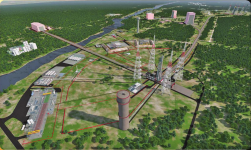
A render of Third Launch Pad (TLP) at SDSC-SHAR, showing its location and associated facilities:
https://www.shar.gov.in/sdscshar/Prajwal/images/prajwal_2025_2.pdf