Indian Space Industry : Updates & Discussions


The third stage of Vikram-1 has reached spaceport. With this all three stages of Vikram-1 moved to pre-flight checks and integration.
 
  • Like
Reactions: Thunder and Gautam

Humbled to share that we successfully test fired 3 semi-cryogenic rocket engines simultaneously, as a cluster. All the 3 engines are 3d printed as single pieces of hardware - designed and manufactured in-house at AgniKul Cosmos Rocket Factory - 1. As with all our propulsion systems, these 3 engines are also powered by electric motor driven pumps.

This test involved calibrating 6 pumps, 6 motors and tuning 6 speed control algorithms to work together in perfect sync to achieve uniform startup, steady state and shutdown performance across the entire system.

To the best of our knowledge, this is the first time such a test has been performed in India with semi cryogenic engines. We are extremely grateful to have the opportunity to be building world class, original space technology from India, for the world with the support of ISRO and IN-SPACe.
 

Gen 5 surveillance. They have created a space-based Litening G5, which is a big deal, 'cause managing two separate sensors on a single satellite is highly impractical. It's because you are dealing with sensors placed at two different angles that use different data formats.

This means when the sensors are at different angles, they will have to capture images of the same spot at the same time in order to prevent parallax errors. So optical captures at a different angle, SAR captures at a different one, and then AI is going to have to fill in the gaps to make up for the difference between the two images.

A second gen satellite will have 0.5 m resolution compared to 1.8 m today. So more such satellites are on the way.

For now, the 7-band MSI likely covers RGB and infrared. Eventually it has to be upgraded to hyperspectral covering hundreds of bands.

Now, if they manage to pair it with GMTI, then we are in the realms of creating next gen MTI satellites.
 
  • Like
Reactions: Thunder
Saudi Arabia takes Indian startup’s help for satellite images

Bengaluru-based, Google-backed Pixxel, whose Firefly constellation of satellites provide hyperspectral images, will supply special satellite data to Saudi Arabia’s national platform UP42
1773940593995.png
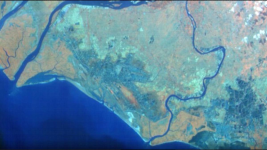
File photo: Image of Krishna River Delta captured by Pixxel’s satellites.

At a time when it is being drawn into the war in West Asia and amid the energy crisis, Saudi Arabia has taken the help of an Indian space start-up for providing it satellite images.

Bengaluru-based, Google-backed Pixxel, whose Firefly constellation of 18 satellites provide hyperspectral images, will supply special satellite data to Saudi Arabia’s national platform, UP42. Instead of buying data separately, Saudi agencies can now log onto this platform and get Pixxel’s imagery.

“The integration of hyperspectral capabilities into NSG UP42 strengthens Saudi Arabia’s geospatial infrastructure by providing government entities, regulators, and enterprises with deeper environmental and surface intelligence through a unified, sovereign platform,” says a press release from Pixxel.

Pixxel’s satellites do not take optical images—photos—of Earth; they take spectral images, in over 135 spectral bands. In simpler terms, this means that the images can be processed to get a very clear picture of the ground below. Electromagnetic waves (such as infra red, visible light, ultra violet, X-rays, gamma rays) hit the ground, but each feature on the ground reflects the waves differently, depending on its own nature. For example, soil’s reflection would be different from a plant’s, which would be different from other plants or a tree. Each feature has its own “signature” -- so one can divine what exactly lies in the area pictured.

Pixxel says that Saudi Arabia will use the hyperspectral data provided by it to support applications, such as mineral detection and resource exploration, mine site closure and rehabilitation monitoring, illegal mining detection and environmental compliance and sustainability reporting enabling science-based regulatory oversight.

The release is silent on the possible military applications of Pixxel’s satellite imagery, but hyperspectral imaging is inherently capable of dual use. It can be used for surveillance, camouflage detection and battle damage assessment.

Pixxel is among the best-funded Indian space startups, having raised $95 million from investors such as Google, Radical Ventures, Lightspeed, Glade Brook Capital Partners and M&G Catalyst.

Saudi Arabia takes Indian startup’s help for satellite images
 

Astrophel Aerospace eyes Independence Day test for reusable rocket prototype

The prototype is intended to serve as a validation platform for the company’s cryogenic subsystems and components.

Published On Apr 7, 2026, at 04:00 PM IST
1776009173148.png
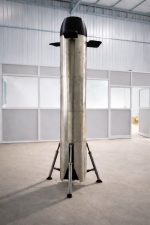
Astrophel Aerospace's s reusable suborbital rocket prototype.

Astrophel Aerospace, a Pune-based space technology startup, on Tuesday said it is targeting August 15, 2026, for the test flight of its reusable suborbital rocket prototype.

According to the official statement, the prototype is designed as a vertical takeoff and vertical landing (VTVL) system and is intended to serve as a validation platform for the company’s cryogenic subsystems and components.

The rocket, also referred to as a hopper, is about three metres long and weighs around 200 kg. It is being designed, manufactured and assembled at the company’s Pune facility.
Advt

“We expect the upcoming test to mark one of the first instances of a privately developed reusable rocket prototype that’s been designed, manufactured and tested entirely from within India,” said Suyash Bafna, Co-Founder and CEO, Astrophel Aerospace.

The company said it has developed an in-house portfolio of propulsion and cryogenic subsystems, including turbopumps, vacuum-insulated cryogenic storage tanks, high-speed precision linear actuators and cryogenic control valves. It had earlier conducted a cryogenic engine test on August 15, 2023, and raised over $800,000 last year.

Its vertically integrated approach to subsystem development is aimed at enabling faster development cycles and improved system integration, with applications across aerospace, defence, oil and gas and emerging sectors such as green hydrogen.
“Our in-house design and manufacturing approach borrows inspiration from automotive best practices, and we’ll be able to develop subsystems at approximately 40 per cent of the cost compared to global players,” said Immanuel Louis, Co-Founder and COO, Astrophel Aerospace. India’s space tech startups rely heavily on imported subsystems and components. The firm said it aims to address this gap by developing and validating critical hardware in-house, while also building revenue through component sales and licensing partnerships.

Satellite operators rely on rideshare programmes that face delays due to limited availability and scheduling constraints. More than 70,000 low-earth-orbit satellites are expected to be launched over the next five years, according to Goldman Sachs Research.

Astrophel Aerospace eyes Independence Day test for reusable rocket prototype
 

An Indian startup is developing space-based thermal observation systems designed to detect missile launches in hotspots and conflict zones.

Speaking to Janes, Shravan Bhati, the co-founder and CEO of SatLeo Labs, said the recent United States-Israel war with Iran from 28 February to 8 April demonstrated how infrared sensors could be employed to detect missile launches.

Founded in 2023 and based in Ahmedabad, India, the company plans to deploy a constellation of 15 satellites to support thermal sensing applications for both military and civilian users. Bhati said the technology is capable of rapidly identifying heat signatures associated with surface-launched missiles, as well as determining whether strategic infrastructure such as nuclear reactors is operational by analysing thermal output.

“Extremely high-temperature sources, such as those exceeding 1,000°C, are particularly easy to detect due to their strong radiative contrast. Any object generating significant heat stands out distinctly in the thermal band, allowing for reliable identification even against complex backgrounds,” he said.

Bhati added that thermal sensing can “rapidly identify the origin of missiles… as the thermal plume and heat source are captured in near real time”.

He said SatLeo Labs is also employing open-source thermal signature data to support the identification of ground combat vehicle types, based on heat emissions associated with specific metals and components.

Capabilities​

While space-based thermal imaging is not a new capability, Bhati said SatLeo Labs' satellite payloads will generate datasets from three sources: a dual-band medium-wave infrared (MWIR) and long-wave infrared (LWIR) sensor, and a visible-band camera.
 
These 2 Ahmedabad-based startups successfully built Asia's first 3D printed Mars Radiation Shield

Ahmedabad-based private startups Aaka Space Studio and MiCoB have successfully developed and tested Asia’s first 3D-printed Mars radiation shield.

By Ishita Ganguly10 Apr 2026
website-1110-x-960-px-83-2026-04-10-12-33-55.webp
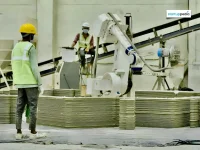
Asia's first 3D printed Mars Radiation Shield

Ahmedabad-based space architecture firm Aaka Space Studio and deep-tech manufacturing startup MiCoB have successfully developed and tested Asia’s first 3D-printed Mars radiation shield. It is an innovation that could redefine how humans build habitats beyond Earth.

Breakthrough for Mars habitat construction

The two startups collaborated to design and fabricate a radiation shield using Martian soil simulant, which is one of Asia’s earliest practical applications of in-situ resource utilization (ISRU) for space habitats.

The shield was produced using 3D printing of regolith-like material, mimicking the composition of Martian soil.

Engineers used a process involving material mixing, extrusion, and curing to create dense protective blocks capable of shielding against harmful cosmic radiation.

Tested during a Mars analogue mission in Gujarat, the structure demonstrated how locally sourced extraterrestrial materials could be transformed into functional infrastructure.

The experiment validated the feasibility of using 3D printing and indigenous materials to construct radiation-resistant habitats, a critical requirement for long-duration human missions to Mars.

Why radiation shielding matters?

Mars lacks a strong magnetic field and thick atmosphere, exposing astronauts to high levels of cosmic and solar radiation.

Traditional shielding methods involving transporting heavy materials from Earth are impractical due to cost and payload limitations.

The Aaka–MiCoB innovation addresses this challenge by
  • Using locally available regolith (soil) instead of Earth-based materials
  • Enabling autonomous, robotic construction
  • Reducing mission costs and launch mass significantly
  • Enhancing thermal stability and habitat durability
This approach is widely considered essential for sustainable human presence on the Moon and Mars.

About Aaka Space Studio

Founded by Aastha Jhala in the early 2020s, Aaka Space Studio is an emerging leader in space architecture and analogue mission design.

Headquartered in Ahmedabad with international collaborations, the company focuses on building human-centric habitats for extreme environments, including the Moon and Mars.

Aaka gained recognition for representing India in global analogue missions such as the World’s Biggest Analog (WBA), a multi-country simulation of extraterrestrial living.

Key specialities:
  • Space habitat design and simulation
  • Analog astronaut missions
  • ISRU-based construction systems
  • Human factors engineering for space living
The company’s work bridges architecture, aerospace engineering, and planetary science.

About MiCoB

Founded by Ankita Sinha, Rishabh Mathur, and Shashank Shekhar in 2018, MiCoB is an Ahmedabad-based startup specializing in advanced 3D concrete printing technologies. The company develops robotic and gantry-based systems capable of printing large-scale structures with precision.

Core expertise:
  • Large-scale 3D construction printing
  • Material engineering for automated building
  • Sustainable and rapid infrastructure solutions
In the Mars radiation shield project, MiCoB provided the printing technology and process engineering, enabling the transformation of simulated Martian materials into structurally viable components.

Technology behind the Shield

The radiation shield integrates multiple cutting-edge elements:
  • Regolith simulant engineering: Using Earth-based materials (such as olivine-rich and limestone analogues) to replicate Martian soil
  • Binder-based additive manufacturing: Ensuring structural integrity during and after printing
  • Layer-by-layer robotic construction: Allowing scalable habitat development
  • Experimental validation: Including biological tests to study protection effectiveness
The system is designed not just as a prototype, but as a scalable solution for future off-world settlements.

By combining space architecture expertise with construction technology, Aaka Space Studio and MiCoB have demonstrated how India’s private sector is contributing to the future of deep-space missions.

These 2 Ahmedabad-based startups successfully built Asia's first 3D printed Mars Radiation Shield