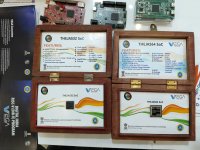
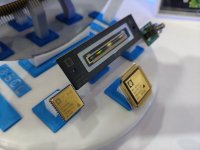
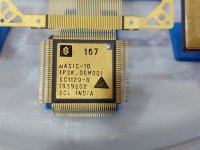
Indian semiconductor ecosystem: News, Updates & Discussions.

A start but still a long way to go. India must also focus on developing the complex EDA design tools for chips which are still mostly developed by US companies, a reality which the Americans have used to bludgeon Chinese chip efforts in the past. No reason to think they wont do the same to us.

There were also plans of a $2 billion investment to modernize SCL Mohali and bring it up to 28 nm node technologies, an effort which must be pursued imo. Even bringing it to 55 nm nodes would be a huge boost especially for our defence industry.
Once these plants are up and running, academia and startups will need to enter advanced designing R&D.
Indian companies need to take charge to learn how to build fabs on our own.

And govt focus should shift to bring manufacturing of lithography machines and other tools in India as phase 2 or 3.
 
Japan To Shift Legacy Semiconductor, LCD And Battery Production To India To Reduce China Dependence: Report

By Swarajya Staff
Aug 28, 2025, 03:12 PM | Updated 03:12 PM IST
1756540488795.png
Chips (Representative Image).

Japan and India are reportedly moving forward with plans to transfer production of older semiconductor and LCD screen technologies to India, as both nations seek to reduce their dependence on Chinese manufacturing and strengthen economic security cooperation. The initiative focuses on so-called legacy technologies that rely on mature manufacturing tools and techniques rather than cutting-edge processes, Nikkei Asia reported.

These older semiconductors remain crucial for various applications, including voltage control in electric vehicles and inverters that improve energy efficiency in air conditioners and refrigerators. A comprehensive plan developed jointly by the Japan External Trade Organization (JETRO) and the Confederation of Indian Industry is set to be unveiled Thursday.

The announcement comes ahead of Indian Prime Minister Narendra Modi's visit to Japan for a summit with his counterpart Shigeru Ishiba beginning Friday (29 August), where the economic security initiative is expected to be formally agreed upon.

According to the report, the plan states it will "promote transferring the production of goods that are losing capacity in Japan due to low-priced Chinese products to India, while reorganizing and expanding production capacity in India." The scope extends beyond semiconductors to include liquid crystal displays, solar power equipment, storage batteries and compressors.

As part of the broader cooperation framework, India will also adopt legislation similar to Japan's that combats technology leakage, addressing concerns about intellectual property protection in high-tech manufacturing. The timing of this partnership is particularly significant as India's electronics industry, while growing, still heavily depends on imports from China for core semiconductor components.

Prime Minister Modi has been pushing for domestic production of these critical components as part of his broader manufacturing strategy. The production transfer plan comes at a time when India is navigating complex international trade relationships.

The United States has recently enacted an additional 25 per cent tariff on Indian goods due to New Delhi's purchases of Russian crude oil. With the American "reciprocal" tariff of 25 per cent lifting the total levy to 50 per cent, India has started growing closer to China economically.

Japan's push to bolster ties appears aimed partly at preventing India from becoming more closely aligned with Beijing, offering an alternative partnership that could help India diversify its technology supply chains while maintaining strategic autonomy. Several Japanese companies are already moving forward with initiatives aligned with the transfer plan.

A Japanese storage battery manufacturer is reportedly looking to sign a memorandum of understanding soon with an Indian company as a step toward joint production. Additionally, a Japanese electrical machinery maker has begun construction of a compressor plant in the southern Indian state of Tamil Nadu.

For Japan, the arrangement offers an opportunity to maintain competitiveness in legacy technology markets while leveraging India's cost-competitive workforce.

The production transfer is considered relatively straightforward from both technical and cost perspectives, making it an attractive option for Japanese manufacturers facing pressure from low-priced Chinese alternatives.

For India, the partnership represents a significant step toward achieving manufacturing self-reliance in critical technology sectors.

New Delhi hopes to develop a mass production model that combines Japanese technological expertise with Indian cost competitiveness, potentially positioning itself as an alternative manufacturing hub to China.

https://swarajyamag.com/business/ja...on-to-india-to-reduce-china-dependence-report
 

Japan's legacy LCD and chip technology find new home in India


NEW DELHI -- Japan and India are taking steps toward transferring production of older semiconductor and LCD screen technologies to the South Asian country.

So-called legacy technologies, which rely on mature tools and techniques over cutting-edge ones, are a key part of plans by Tokyo and New Delhi to reduce dependence on China and strengthen their cooperation on economic security.

Many applications still exist for products that use legacy technologies. Older semiconductors can be used for voltage control in electric vehicles, as well as in inverters that improve energy efficiency for air conditioners and refrigerators. Production of such technologies is easy to transfer, including from a cost perspective.

The plan for the production transfer, developed by the Japan External Trade Organization (JETRO) and the Confederation of Indian Industry, will be unveiled Thursday. It represents part of the economic security initiative the countries are expected to agree on when Indian Prime Minister Narendra Modi visits Japan for a summit with counterpart Shigeru Ishiba beginning Friday.

The plan says it will "promote transferring the production of goods that are losing capacity in Japan due to low-priced Chinese products to India, while reorganizing and expanding production capacity in India." The plan includes semiconductors, liquid crystal displays, solar power equipment, storage batteries and compressors.

India also will adopt legislation similar to Japan's that combats technology leakage.

Though India's electronics industry is growing, it still depends on imports from China for core semiconductor components. Modi wants them produced domestically instead. Along with bringing in legacy technologies from Japan, India hopes to develop a mass production model that leverages the cost competitiveness of its workforce.

Some companies are already working on initiatives in line with the transfer plan. A Japanese storage battery maker looks to sign a memorandum of understanding soon with an Indian company as a step toward joint production. Another Japanese company, an electrical machinery maker, has begun construction of a compressor plant in the southern Indian state of Tamil Nadu.

The U.S. has enacted an additional 25% tariff on Indian goods because of New Delhi's purchases of Russian crude oil. With the American "reciprocal" tariff of 25% lifting the total levy to 50%, India has started growing closer to China. Japan's push to bolster ties seems aimed partly at keeping New Delhi from becoming more closely linked to Beijing.
 

Dutch tech giant ASML eyes India partnership as PM Modi pushes for local chipmaking

VERY BIG DEAL if true but it makes sense for ASML since india is a completely green emerging market and we can learn from the mistakes made by others alr past us so excluding bureaucracy we should be pretty efficient.
 

Dutch tech giant ASML eyes India partnership as PM Modi pushes for local chipmaking

VERY BIG DEAL if true but it makes sense for ASML since india is a completely green emerging market and we can learn from the mistakes made by others alr past us so excluding bureaucracy we should be pretty efficient.
Babus cause fear in every industry. However, if political will exists the babus can be exceptionally attentive to causes. Let's see what ends up happening.
 

Dutch tech giant ASML eyes India partnership as PM Modi pushes for local chipmaking

VERY BIG DEAL if true but it makes sense for ASML since india is a completely green emerging market and we can learn from the mistakes made by others alr past us so excluding bureaucracy we should be pretty efficient.

It's about import export and operational know know sharing. Not manufacturing. So, while it is indeed substantial and welcome news.. i am just giving you a nuanced point to keep in mind in case anyone links it with make-in india partnership with ASML.

Make in india will mostly be with Fabs MNCs for now.
 
  • Like
Reactions: RationalGuy
Centre charts semiconductor roadmap, eyes 7 nanometers chips by 2030

Currently, India’s semiconductor journey is being led by the Tata group, which is establishing the country’s first wafer fabrication facility in
Dholera with an investment of about Rs 91,000 crore

Moneycontrol News
September 08, 2025 / 08:29 IST
1757386830282.png
Globally, IBM has teamed up with Japan’s Rapidus Corporation along with Toyota, Denso and NEC Corporation to establish a research lab in Japan, targeting sub-2 nm chip fabrication.

The Centre has unveiled a detailed roadmap aimed at enabling India to manufacture advanced 7-nanometre (nm) chips within the next five to seven years, Business Standard reported.

Currently, India’s semiconductor journey is being led by the Tata group, which is establishing the country’s first wafer fabrication facility in Dholera with an investment of about Rs 91,000 crore. The project will begin with production of chips at 28 nm and above.

A senior official at the Ministry of Electronics and Information Technology (MeitY) confirmed the long-term plan: “We already have a clear road map to enable companies to manufacture 7 nm and above chips within the next five to seven years. We are tying up the technology and talks are under way. Our 15-year plan is aimed at making India a global player in this space.”

According to the report, discussions have been held with global technology leaders such as IBM and Belgium-based IMEC, a leading nanoelectronics R&D hub. IBM is also expected to support the India Semiconductor Mission by helping set up a domestic research centre, providing expertise in areas like advanced packaging, logic, design, and intellectual property.

Globally, IBM has teamed up with Japan’s Rapidus Corporation along with Toyota, Denso and NEC Corporation to establish a research lab in Japan, targeting sub-2 nm chip fabrication. Separately, TSMC, the world’s largest contract chipmaker, announced plans to begin 2 nm chip production in Japan by 2027.

Back home, India has approved three semiconductor manufacturing facilities, including Tata’s Rs 91,000 crore fab in partnership with Taiwan’s Powerchip Semiconductor Manufacturing Corp. In all, 10 semiconductor projects worth about Rs 1.75 lakh crore have been cleared, with the government earmarking Rs 75,000 crore as incentives.

The government has also rolled out India’s first dedicated semiconductor design programme (SMDP) to strengthen domestic R&D, tying up with firms like TSMC and Intel to build a process roadmap that stretches out to 2036 — with the long-term goal of positioning India among the world’s top five chipmakers.

https://www.moneycontrol.com/news/b...eyes-7-nanometers-chips-by-2030-13527671.html

 
Centre charts semiconductor roadmap, eyes 7 nanometers chips by 2030

Currently, India’s semiconductor journey is being led by the Tata group, which is establishing the country’s first wafer fabrication facility in
Dholera with an investment of about Rs 91,000 crore

Moneycontrol News
September 08, 2025 / 08:29 IST
View attachment 46393
Globally, IBM has teamed up with Japan’s Rapidus Corporation along with Toyota, Denso and NEC Corporation to establish a research lab in Japan, targeting sub-2 nm chip fabrication.

The Centre has unveiled a detailed roadmap aimed at enabling India to manufacture advanced 7-nanometre (nm) chips within the next five to seven years, Business Standard reported.

Currently, India’s semiconductor journey is being led by the Tata group, which is establishing the country’s first wafer fabrication facility in Dholera with an investment of about Rs 91,000 crore. The project will begin with production of chips at 28 nm and above.

A senior official at the Ministry of Electronics and Information Technology (MeitY) confirmed the long-term plan: “We already have a clear road map to enable companies to manufacture 7 nm and above chips within the next five to seven years. We are tying up the technology and talks are under way. Our 15-year plan is aimed at making India a global player in this space.”

According to the report, discussions have been held with global technology leaders such as IBM and Belgium-based IMEC, a leading nanoelectronics R&D hub. IBM is also expected to support the India Semiconductor Mission by helping set up a domestic research centre, providing expertise in areas like advanced packaging, logic, design, and intellectual property.

Globally, IBM has teamed up with Japan’s Rapidus Corporation along with Toyota, Denso and NEC Corporation to establish a research lab in Japan, targeting sub-2 nm chip fabrication. Separately, TSMC, the world’s largest contract chipmaker, announced plans to begin 2 nm chip production in Japan by 2027.

Back home, India has approved three semiconductor manufacturing facilities, including Tata’s Rs 91,000 crore fab in partnership with Taiwan’s Powerchip Semiconductor Manufacturing Corp. In all, 10 semiconductor projects worth about Rs 1.75 lakh crore have been cleared, with the government earmarking Rs 75,000 crore as incentives.

The government has also rolled out India’s first dedicated semiconductor design programme (SMDP) to strengthen domestic R&D, tying up with firms like TSMC and Intel to build a process roadmap that stretches out to 2036 — with the long-term goal of positioning India among the world’s top five chipmakers.

https://www.moneycontrol.com/news/b...eyes-7-nanometers-chips-by-2030-13527671.html
Some where around 2000 chinese starting getting into integrated electronics, they tried to partner with foreign companies but had little success. By 2014 they were importing lot many chips for fabrication inside the cntry, its nearlyy 40% of their input. They revived their national semiconductor program and invested heavily. They started seeing success by 2020 and then started US bans on huawei & other chinese companies.

It took a long time for intel & tsmc even to master 14nm and the big mouth morons in our govt have a road map ffor 7nm by 2030.

For India it is going to be even more tougher, neither chinese nor US would want to see another competitor. Chinese had the attitude of keep quiet and carry on, while Indians with their big mouth attitude will end up shooting in their own foot.
 
Some where around 2000 chinese starting getting into integrated electronics, they tried to partner with foreign companies but had little success. By 2014 they were importing lot many chips for fabrication inside the cntry, its nearlyy 40% of their input. They revived their national semiconductor program and invested heavily. They started seeing success by 2020 and then started US bans on huawei & other chinese companies.

It took a long time for intel & tsmc even to master 14nm and the big mouth morons in our govt have a road map ffor 7nm by 2030.

For India it is going to be even more tougher, neither chinese nor US would want to see another competitor. Chinese had the attitude of keep quiet and carry on, while Indians with their big mouth attitude will end up shooting in their own foot.
If in the vision to get to 7nm, they manage to get 14nm.. it will be a big boost to economy.

And it's a roadmap. Every country has ambitious targets. That's a psychology that they adopt to fast track Innovation and get the best results possible. The important points are to have the target ambitious but not de-moralising. And given the base india has, advancement in chipmaking technology.. 28nm being achieved within few years of initiation, a target of 7nm with real target of 14,16nm chips is good enough. As for time intel took for 14nm, you have missed the point of tech proliferation. Designing and building something new is different than making something already available for years and that too with help of collabs. What we missed are small tech Collab with nations like japan, singapore in skill development that will fuel this growth.


When govt has shown remarkable progress in semiconductor ecosystem you can do well to encourage and contribute, rather than deploying the crab Mentality. You're not only de-moralising others but yourself which will affect you in your own endeavours.
And US,CHINA didn't want india to even have 28nm chips given huge market. Didn't mean that we stopped. Instead of being in perpetual fear of foreign interference, take it as the default line ( interference attempt will happen in everything) and work on identifying the pattern and call it out and not further fuel it. Half the time we don't realise that we ourselves fuel the narrative without meaning to.

As for being silent.. we think CCP was silent only cause it's not in our minds anymore. But if you would look at past.. you will find plethora of opeds, reports on there intentions, policies etc. That is when CCP is autocratic.

Meanwhile what you're referring to as loud mouth is an official talking to some reporter about internal roadmap. The one who wants to interfere don't need this officials confirmation to interfere. They have their sources.
 
If in the vision to get to 7nm, they manage to get 14nm.. it will be a big boost to economy.
we wont even get to 14nm , it will be an achievement if we are able to get everything from raw materials to chip within the country itself for 28nm Its simply based on the past record, for mass prodn we need stringent quality controls in materials. Even tsmc has found it difficult to replicate their production env in US bcos of lack of quality in raw materials. they are getting their stuff like 100% pure sulphuric acid from taiwan.


It would be better to focus on next gen quantum computing and pick on that.
If in the vision to get to 7nm, they manage to get 14nm.. it will be a big boost to economy.

And it's a roadmap. Every country has ambitious targets. That's a psychology that they adopt to fast track Innovation and get the best results possible. The important points are to have the target ambitious but not de-moralising. And given the base india has, advancement in chipmaking technology.. 28nm being achieved within few years of initiation, a target of 7nm with real target of 14,16nm chips is good enough. As for time intel took for 14nm, you have missed the point of tech proliferation. Designing and building something new is different than making something already available for years and that too with help of collabs. What we missed are small tech Collab with nations like japan, singapore in skill development that will fuel this growth.


When govt has shown remarkable progress in semiconductor ecosystem you can do well to encourage and contribute, rather than deploying the crab Mentality. You're not only de-moralising others but yourself which will affect you in your own endeavours.
And US,CHINA didn't want india to even have 28nm chips given huge market. Didn't mean that we stopped. Instead of being in perpetual fear of foreign interference, take it as the default line ( interference attempt will happen in everything) and work on identifying the pattern and call it out and not further fuel it. Half the time we don't realise that we ourselves fuel the narrative without meaning to.

As for being silent.. we think CCP was silent only cause it's not in our minds anymore. But if you would look at past.. you will find plethora of opeds, reports on there intentions, policies etc. That is when CCP is autocratic.

Meanwhile what you're referring to as loud mouth is an official talking to some reporter about internal roadmap. The one who wants to interfere don't need this officials confirmation to interfere. They have their sources.
If we could levy a tax on dreaming & on big mouths we certainly can certainly become $50T economy in no time.
 
Some where around 2000 chinese starting getting into integrated electronics, they tried to partner with foreign companies but had little success. By 2014 they were importing lot many chips for fabrication inside the cntry, its nearlyy 40% of their input. They revived their national semiconductor program and invested heavily. They started seeing success by 2020 and then started US bans on huawei & other chinese companies.

It took a long time for intel & tsmc even to master 14nm and the big mouth morons in our govt have a road map ffor 7nm by 2030.

For India it is going to be even more tougher, neither chinese nor US would want to see another competitor. Chinese had the attitude of keep quiet and carry on, while Indians with their big mouth attitude will end up shooting in their own foot.
That's cuz when they were doing it, nobody else had even done 14 or 7nm. Now the know how of how to do it exists. But it's not in India. Only way for India to do it is hire Korean and Taiwanese guys for 3× their current salaries and bring them to India and make them take us to 14 nm then 7 nm. That's what China did. China only reached 28 nm mass production in 2019, and in 3 years they went to 7 nm. Cus they had a TSMC genius called Liang Miang Song who helped SMIC reach 7 nm quickly. India needs to bring in talented Korean and Taiwanese guys to do it.