C-DAC anchors India’s bid for Nvidia-like artificial intelligence chip
By Shouvik Das
NEW DELHI
17 Jul 2026
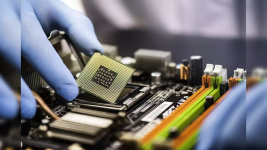
C-DAC was set up in 1988 under the ministry of electronics and information technology (Meity) to develop indigenous supercomputers.
SummaryIndia’s first, indigenous AI inference chip will be made and presented as early as 2029 or 2030, Union IT minister Ashwini Vaishnaw said on Wednesday after the Cabinet approved a ₹1.27 trillion Semicon 2.0 mission to incentivize chip factories, startups, design firms and research.
NEW DELHI : The global artificial intelligence (AI) boom has spurred India to develop its own Nvidia-like chip, with a production-grade version targeted within the next three years, two senior government officials told Mint.
At the heart of this effort is a four-decade-old research institution, for which the chip could mark its most significant contribution yet.
India’s first, indigenous AI inference chip will be made and presented as early as “2029 or 2030", Union IT minister Ashwini Vaishnaw said on Wednesday after the Cabinet approved a ₹1.27 trillion Semicon 2.0 mission to incentivize chip factories, startups, design firms and research.
While details of the AI inference chip remain sparse, the officials cited earlier said the processor is currently undergoing trial production. For this, the Centre for Development of Advanced Computing (C-DAC), a government-affiliated research and development organisation, has selected HCL Infosystems to validate the AI chip’s design and performance, based on a tender floated on the Government e-Marketplace (GeM) platform.
“Following this, C-DAC will work jointly with HCL to validate the performance of the chip, and the same will then be tested across multiple systems and computing architecture. Our eventual goal is to offer the chip to run on domestic servers and IT infrastructure, and power public services and use cases,” the first of the two officials cited above told Mint, both speaking on condition of anonymity.
C-DAC was set up in 1988 under the ministry of electronics and information technology (Meity) to develop indigenous supercomputers after India was denied access to such technology by the US.
“Work on the project has been ongoing for some time now, and the research grants allocated as one of the pillars of Semicon 2.0 will be used in similar projects where India can take ownership of a chip patent. Only then will we truly unlock the kind of value addition that will give us greater independence and worth in the global value chain,” Vaishnaw said.
Vaishnaw said private startups would be encouraged to emulate C-DAC’s AI chip development. Funding for the government-backed research organization, however, will not come from Semicon 2.0, but through the National Supercomputing Mission.
C-DAC anchors India’s bid for Nvidia-like artificial intelligence chip | Company Business News
By Shouvik Das
NEW DELHI
17 Jul 2026
C-DAC was set up in 1988 under the ministry of electronics and information technology (Meity) to develop indigenous supercomputers.
Summary
NEW DELHI : The global artificial intelligence (AI) boom has spurred India to develop its own Nvidia-like chip, with a production-grade version targeted within the next three years, two senior government officials told Mint.
At the heart of this effort is a four-decade-old research institution, for which the chip could mark its most significant contribution yet.
India’s first, indigenous AI inference chip will be made and presented as early as “2029 or 2030", Union IT minister Ashwini Vaishnaw said on Wednesday after the Cabinet approved a ₹1.27 trillion Semicon 2.0 mission to incentivize chip factories, startups, design firms and research.
While details of the AI inference chip remain sparse, the officials cited earlier said the processor is currently undergoing trial production. For this, the Centre for Development of Advanced Computing (C-DAC), a government-affiliated research and development organisation, has selected HCL Infosystems to validate the AI chip’s design and performance, based on a tender floated on the Government e-Marketplace (GeM) platform.
“Following this, C-DAC will work jointly with HCL to validate the performance of the chip, and the same will then be tested across multiple systems and computing architecture. Our eventual goal is to offer the chip to run on domestic servers and IT infrastructure, and power public services and use cases,” the first of the two officials cited above told Mint, both speaking on condition of anonymity.
C-DAC was set up in 1988 under the ministry of electronics and information technology (Meity) to develop indigenous supercomputers after India was denied access to such technology by the US.
“Work on the project has been ongoing for some time now, and the research grants allocated as one of the pillars of Semicon 2.0 will be used in similar projects where India can take ownership of a chip patent. Only then will we truly unlock the kind of value addition that will give us greater independence and worth in the global value chain,” Vaishnaw said.
Vaishnaw said private startups would be encouraged to emulate C-DAC’s AI chip development. Funding for the government-backed research organization, however, will not come from Semicon 2.0, but through the National Supercomputing Mission.
C-DAC anchors India’s bid for Nvidia-like artificial intelligence chip | Company Business News