Indian semiconductor ecosystem: News, Updates & Discussions.

C-DAC anchors India’s bid for Nvidia-like artificial intelligence chip

By Shouvik Das
NEW DELHI
17 Jul 2026
1784477541774.png
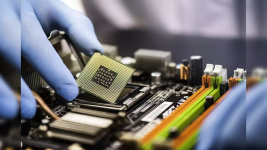
C-DAC was set up in 1988 under the ministry of electronics and information technology (Meity) to develop indigenous supercomputers.

Summary
India’s first, indigenous AI inference chip will be made and presented as early as 2029 or 2030, Union IT minister Ashwini Vaishnaw said on Wednesday after the Cabinet approved a ₹1.27 trillion Semicon 2.0 mission to incentivize chip factories, startups, design firms and research.

NEW DELHI
: The global artificial intelligence (AI) boom has spurred India to develop its own Nvidia-like chip, with a production-grade version targeted within the next three years, two senior government officials told Mint.

At the heart of this effort is a four-decade-old research institution, for which the chip could mark its most significant contribution yet.

India’s first, indigenous AI inference chip will be made and presented as early as “2029 or 2030", Union IT minister Ashwini Vaishnaw said on Wednesday after the Cabinet approved a ₹1.27 trillion Semicon 2.0 mission to incentivize chip factories, startups, design firms and research.

While details of the AI inference chip remain sparse, the officials cited earlier said the processor is currently undergoing trial production. For this, the Centre for Development of Advanced Computing (C-DAC), a government-affiliated research and development organisation, has selected HCL Infosystems to validate the AI chip’s design and performance, based on a tender floated on the Government e-Marketplace (GeM) platform.

“Following this, C-DAC will work jointly with HCL to validate the performance of the chip, and the same will then be tested across multiple systems and computing architecture. Our eventual goal is to offer the chip to run on domestic servers and IT infrastructure, and power public services and use cases,” the first of the two officials cited above told Mint, both speaking on condition of anonymity.

C-DAC was set up in 1988 under the ministry of electronics and information technology (Meity) to develop indigenous supercomputers after India was denied access to such technology by the US.

“Work on the project has been ongoing for some time now, and the research grants allocated as one of the pillars of Semicon 2.0 will be used in similar projects where India can take ownership of a chip patent. Only then will we truly unlock the kind of value addition that will give us greater independence and worth in the global value chain,” Vaishnaw said.

Vaishnaw said private startups would be encouraged to emulate C-DAC’s AI chip development. Funding for the government-backed research organization, however, will not come from Semicon 2.0, but through the National Supercomputing Mission.

C-DAC anchors India’s bid for Nvidia-like artificial intelligence chip | Company Business News
 
philosophy doesnt run geopolitics or fight the war for you, capability & systems do. At this point of time as a country they are more strong & capable than us.

Chinese on the other hand also have a philosophy for us , labelling us losers & puppets of west. As a matter of fact after centuries of humiliation by west , one of the reasons that drove the top chinese elite towards the current system is not to be like India. They have the same patronizing attitude towards us like west has.

Dont get drawn into this game of comparison that our system is better than their system , it is just your point of view. It wont win any wars.
And why the hell should we give 2 sh*ts about what China thinks about us? Indians with an inferiority complex like you may worry what they think lol.

You don't grasp just how equally corrupt China is, they execute a few people in high profile Kangaroo court events and weak minded Indians like you think "look sar they are fighting corruption sar waw sar". Have you even met Chinese people in your life because I have. Many infact and they tell me just how things work there in reality.

Im so sick and tired of such weak minded Indians behaving as if China is the strongest in the universe India is like Uganda. India is in this situation because generations of politicians and bureaucrats had this same hijra mindset.

Grow a spine and have some f****** self respect.

P.S your anti corruption dear leader Xi the yellow teddy bear rails against the west but sent his daughter to Harvard. How did she get into Harvard and how did she study there? 🤡🤡🤡🤡🤡
 
Good steps but they need to specify what types of 5G chips. A 5G modem for a smartphone for eg is basically a capability that no Indian company has full stop. It is so difficult to design that a company like Apple which designed the most powerful smartphone processors for years still has not achieved full scale adoption of a custom 5G modem design: they started designing their 5G modem in 2018 and succeeded just this year (almost a decade later) and even then they released that 5G modem chip in just one of their smartphone line.

This is after Apple poached Qualcomm (which makes best modems) and took a half finished Intel 5G modem design. So suffice to say in this area India has a long way to go.

Huawei has already designed and released a 5G modem for their smartphones.
 
  • Like
Reactions: Asterion Moloc
Good steps but they need to specify what types of 5G chips. A 5G modem for a smartphone for eg is basically a capability that no Indian company has full stop. It is so difficult to design that a company like Apple which designed the most powerful smartphone processors for years still has not achieved full scale adoption of a custom 5G modem design: they started designing their 5G modem in 2018 and succeeded just this year (almost a decade later) and even then they released that 5G modem chip in just one of their smartphone line.

This is after Apple poached Qualcomm (which makes best modems) and took a half finished Intel 5G modem design. So suffice to say in this area India has a long way to go.

Huawei has already designed and released a 5G modem for their smartphones.
Signalchip has a single chip 4G/LTE modem and base station System on Chip (SoC) called "SCBM3412". Their "SCRF4502" SoC is a 5G-NR RF transceiver chip.

But their chips are not for portable devices like phones or laptops. These are meant for 4G & 5G base stations. BSNL is using these chips for their 4G LTE base towers.
 
Ok. How do you think there will be "fudging" in semiconductor project? And why didnt such "fudging" happen to say ISRO or Skyroot or DRDO RCI?

Im not too sure you understand what it takes to run a semiconductor fab. You can't "fudge" sh*t otherwise nobody will buy your chips and your $10 billion investment for the fab goes down the drain. A chip either works or doesn't work. Theres no in between for a company to use "fudging" to their advantage.
Bruh, leave him alone, he wanted to say an intellectual statement and didn't expect people would call him out on it.
 
US companies are shitting bricks after hearing chinese company is going to mass produce ddr5. Though they are not anywhere near making compute chips rivalling US but they are manufacturing using locally assembled systems instead of ASML.

If we need to be taken seriously this is what we need to be doing, be capable of developing on your own. Problem in Inida is that we niehtier have long term strategic vision nor discipline to execute such plans to such capability.

 
US companies are shitting bricks after hearing chinese company is going to mass produce ddr5. Though they are not anywhere near making compute chips rivalling US but they are manufacturing using locally assembled systems instead of ASML.

If we need to be taken seriously this is what we need to be doing, be capable of developing on your own. Problem in Inida is that we niehtier have long term strategic vision nor discipline to execute such plans to such capability.

Yup. Their CXMT which is soon going to be making DDR5 was funded (and is still parly owned) by their local Hebei regional government not even the central government. And now, CXMT is the most valuable Chinese company valued at $500 billion, almost more than Tata + Adani combined. And Apple is clamoring the US government to use their chips.


Long term strategic vision + execution. This semiconductor effort by Modi has the strategic vision, now let's see the execution.
 
  • Agree
Reactions: jetray
They started their journey in semiconductors 10-15 years ago at a similar economic level to what India has today.

The ISM will also take 10-15 years to properly mature. The one advantage we do have is the fact that their journey is severely slowed down by their inability to access the best of machines and nodes from IBM and ASML, something that we don't have an issue with today(dk about the future if the US starts to see us as a major threat(doubt it because they need us to be relatively strong and a democratic country is a lot easier to manipulate compared to a one party dictatorship)). So hopefully ISM 1.0 and 2.0 bloom enough to lay a solid foundation for ISM 3.0 and future ISMs.
Yup. Their CXMT which is soon going to be making DDR5 was funded (and is still parly owned) by their local Hebei regional government not even the central government. And now, CXMT is the most valuable Chinese company valued at $500 billion, almost more than Tata + Adani combined. And Apple is clamoring the US government to use their chips.


Long term strategic vision + execution. This semiconductor effort by Modi has the strategic vision, now let's see the execution.
 
Last edited:
They started their journey in semiconductors 10-15 years ago at a similar economic level to what India has today.

The ISM will also take 10-15 years to properly mature. The one advantage we do have is the fact that their journey is severely slowed down by their inability to access the best of machines and nodes from IBM and ASML, something that we don't have an issue with today(dk about the future if the US starts to see us as a major threat(doubt it because they need us to be relatively strong and a democratic country is a lot easier to manipulate compared to a one party dictatorship)). So hopefully ISM 1.0 and 2.0 bloom enough to lay a solid foundation for ISM 3.0 and future ISMs.
Absolutely, it should be no different from nuclear or space program. This whole mentality of importing foreign maal just bcos it is cheaper in the short run but also terribly expensive in the longer run wrt money & capability should be avoided.

We should not wait until another disaster to start being on the right path. If US even bans their companies from providing mail service to Indian users we are terribly screwed.
 
They started their journey in semiconductors 10-15 years ago at a similar economic level to what India has today.

The ISM will also take 10-15 years to properly mature. The one advantage we do have is the fact that their journey is severely slowed down by their inability to access the best of machines and nodes from IBM and ASML, something that we don't have an issue with today(dk about the future if the US starts to see us as a major threat(doubt it because they need us to be relatively strong and a democratic country is a lot easier to manipulate compared to a one party dictatorship)). So hopefully ISM 1.0 and 2.0 bloom enough to lay a solid foundation for ISM 3.0 and future ISMs.
US will make sure we get the older EUV if and when we get it. Me thinks we will get our first EUV fab around 2040. But whatever.

For defence we need 28 nm and above.
 
Ashwini Vaishnaw has a Substack now?!?!

How we are building India’s semiconductor ecosystem

Ashwini Vaishnaw
Aug 25, 2026

Foundational industry

Semiconductors is a foundational industry. That means the output from the semiconductor units then powers other industries.

Chips are now an integral part of almost all devices that we see around us, like cars, mobile phones, drones, aeroplanes, MRI machines, etc.

The global electronics industry is estimated to be $4.3 trillion. And it is growing rapidly.

Semiconductor chips are some of the most complex objects ever produced by the human race. Apple's A19 Bionic chip is 3 nm and one chip has roughly 30 billion transistors.

During the COVID pandemic, the world realized the importance of chips and the global supply chain. Countries around the world have been trying to develop their semiconductor industries for decades. COVID gave them a big push.

India’s attempts at building semiconductor ecosystem

India has been trying to build a semiconductor ecosystem as far back as 1960.

Fairchild Semiconductor, one of the earliest chip companies in the world, explored setting it up in India. However, the socialist economic planning and "production quotas" drove them away.

Similar half-hearted efforts continued in the later decades, without success.

There was a renewed push for semiconductors in the early 2010s. However, the strategy and execution fell short of the intent. There were cases of semiconductor companies shipping their equipment to India only for customs to send it back.

Things started to change after PM Modi took charge.

India’s success in electronics manufacturing

PM Modi launched Make in India. There were a series of reforms, including foreign direct investment, taxation reforms, customs duty reforms, etc.

In addition, the government launched multiple schemes to support manufacturing. These schemes incentivized manufacturing mobile phones and other electronics in India. Slowly, global electronics and mobile companies began operating in India.

Today, almost all electronics companies have a presence in India. We have more than 300 electronics manufacturing units. Electronics manufacturing has crossed $130 billion, and exports have crossed $48 billion. Mobile phones are the single largest exported item, ahead of petroleum products, gems and jewellery.

Electronics manufacturing now supports 2.5 million jobs!

Semicon India program

Building on the success of electronics manufacturing, we brought out the Semicon India program in 2021.

Since its early days, we were clear about our strategy. We wanted to build a robust semiconductor ecosystem rather than running after vanity projects.

We studied the development of the electronics industry worldwide. We spoke to virtually every industry in this field. There was a lot of scepticism and even pessimism. We faced questions like:

"Does India really want to do it?"

"Do you know how hard it is to build clean rooms?"

“Do you know what ultrapure water is?”

“Do you know what lithography machines are?”


You would smile, take notes, and find your strategy.

While developed countries were spending hundreds of billions of dollars on semiconductors, we were conscious of our realities.

We started with a moderate $10 billion program to support setting up of Fabs and packaging units.

Success so far

After initial scepticism, we began to receive a positive response from the industry. In a span of 5 years, we approved 12 units with cumulative investment of $20 billion.

It is immensely satisfying that three of those units have started commercial production today.

Micron started commercial production on 28th Feb 2026. Kaynes started commercial production on 31st March 2026. CG Power started commercial production on 4th July 2026.

Construction is going on at a torrid pace in other units.

Our success is not only about how many plants and how much investment. We have laid the foundations of the semiconductor industry in this country.

Chip design in India

The semiconductor industry requires specialised skills at every level. Some of the most complex tasks take place at the design level itself. We set a target of developing a pool of 85,000 skilled engineers in 10 years.

We introduced new semiconductor-related courses and changed the curriculum.

We started a program called Chips to Startup, in which we offered the EDA tools to our young engineers. To date, we have offered these tools to more than 320 universities and startups.

During the last Semicon India event, we presented 40 chips designed by Indian students using these tools to the Prime Minister.

Today, almost all semiconductor design companies have large bases in India. Indian chip designers are designing some of the most advanced chips at 2 nm and 3 nm process nodes.

Under the Design Linked Incentive scheme, we supported 105 startups. We provided financial support to 24 startups totalling $83 million. Fifteen of those startups have received VC funding to the tune of $118.5 million.

Industry taking note

The semiconductor industry took note of this development and began actively exploring investment opportunities in India. Beyond the Semicon program, global companies are investing more than $3 billion.

The conversations around boardrooms and economic forums have now changed. They are no longer sceptical but curiously optimistic.

Semicon 2.0

Building upon the foundation, we recently announced Semicon 2.0.

We will now focus on following pillars:

1. Chip design: We will expand the chip design ecosystem in India. We will focus on the 6 building blocks i.e. compute, memory, RF, power, networking, and sensors.

2. Machines: We will incentivise domestic manufacturing of equipment needed for semiconductor manufacturing. If you think manufacturing chips is complex, imagine the equipment that makes them!

3. Materials: Semiconductor manufacturing requires between 150 to 500 specialty chemicals, gases, and materials. We will support domestic manufacturing of these items.

4. Fabs: India is currently developing two fabs. We will support the setup of more fabs.

5. Packaging: Packaging is an important part of the semiconductor ecosystem, and we will continue to support it. Focus will be on advanced packaging.

6. Research: We now have 40 nm technology in India. Now we will develop a clear strategy to achieve advanced nodes, that is, 7 nm to 3 nm, within the next 8 years.

7. Talent: We will now train 1 lakh design engineers in the coming years. Just like the IT sector, we want India to become the semiconductor design capital of the world.

Proving critics wrong

The India Semiconductor program has been criticised by many on both counts: doing too little or spending too much.

Building the semiconductor industry is like catering to a mango tree. A full-grown mango tree needs no tending, thrives on its own and gives hundreds of mangoes per year. That does not mean the sapling doesn't need attention.

A farmer cares for a mango sapling, waters it, fertilises it, and protects it. That's not misplaced priorities. While there may be hundreds of mango trees around in the world, it doesn't mean an Indian farmer should not grow one.

Another criticism is that the world is moving to 5 nm, 3 nm and 2 nm, while we are still stuck on the legacy nodes. While the criticism is understandable, it is simplistic. One must learn to walk before sprinting in a full marathon.

The countries that are developing 2 nm technology have a decades long journey. Ours is just 5 years old. Nonetheless, we're just getting started.

Tune in for more updates!

How we are building India’s semiconductor ecosystem
 
  • Like
Reactions: Asterion Moloc