

Indian Security Forces: Joint Exercises
- Thread starter Ankit Kumar
- Start date
-
- Tags
- indian defence forum
You are using an out of date browser. It may not display this or other websites correctly.
You should upgrade or use an alternative browser.
You should upgrade or use an alternative browser.


Indian, Philippine Navies to Hold First South China Sea Joint Patrol
By Aaron-Matthew Lariosa
July 30, 2025, 6:58 PM - Updated: August 1, 2025, 8:26 AM
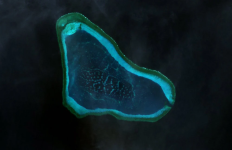
Scarborough Shoal. NASA Photo.
This post has been updated to correct the Indian destroyer involved in the patrol. The ship is INS Delhi (D61), not INS Mysore (D60).
India’s latest operational deployment to the South China Sea will feature its first joint patrol with the Philippines in the contested waters.
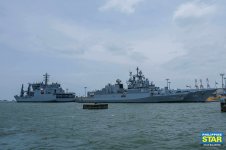
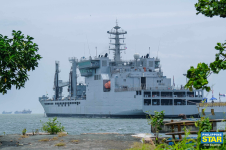
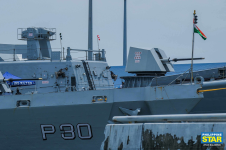
India’s’s Eastern Fleet flotilla, which includes guided-missile destroyer INS Delhi (D-61), anti-submarine corvette INS Kiltan (D 30) and replenishment vessel INS Shakti (A 57), docked at the Port of Manila today for goodwill activities ahead of the maritime cooperative activity. While Indian warships have previously visited the Philippines, their arrival comes amid New Delhi’s increased support for Manila’s military modernization efforts and the South China Sea.
“After the port visit, a Maritime Cooperative Activity will be conducted to further strengthen the robust maritime relationship between the Philippine Navy and the Indian Navy,” Philippine Navy Capt. John Alcos told USNI News.
Alcos deferred operational details of the South China Sea joint patrol to the Armed Forces of the Philippines.
While both nations have conducted numerous drills in the South China Sea, this will be the first time India participates in a maritime cooperative activity with Philippine forces. Compared to previous navy-to-navy engagements, such as joint sails, passing exercises and maritime partnership exercises, the maritime cooperative activity tackles force interoperability and demonstrates support for the Philippines amid its struggle with China. The Armed Forces of the Philippines in a news release described the maritime cooperative activities as “vital engagements between nations aimed at maintaining peace and stability in international waters.”
India follows the U.S., Australia, Japan, Canada and France in teaming up with Philippine forces in the South China Sea through a maritime cooperative activity. Indian outlets have reported that the joint patrol will coincide with Philippine President Bongbong Marcos’ visit to India next week.
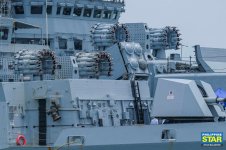
Indian-Philippine defense cooperation has ramped up in recent years, with Indian in 2022 selling BrahMos supersonic anti-ship cruise missiles to the Philippine Marine Corps. New Delhi also revised its stance on the 2016 South China Sea Arbitration last year, moving from an acknowledgment of the outcome to calling for adherence to the award.
The first Philippine BrahMos missile base has the potential to strike maritime targets in the South China Sea off Western Luzon, including those around the contested Scarborough Shoal. New Delhi previously offered Manila defense loans and its roster of domestically developed and produced military equipment in support of the Armed Forces of the Philippines modernization program.
https://news.usni.org/2025/07/30/indian-philippine-navies-to-hold-first-south-china-sea-joint-patrol
By Aaron-Matthew Lariosa
July 30, 2025, 6:58 PM - Updated: August 1, 2025, 8:26 AM
Scarborough Shoal. NASA Photo.
This post has been updated to correct the Indian destroyer involved in the patrol. The ship is INS Delhi (D61), not INS Mysore (D60).
India’s latest operational deployment to the South China Sea will feature its first joint patrol with the Philippines in the contested waters.
India’s’s Eastern Fleet flotilla, which includes guided-missile destroyer INS Delhi (D-61), anti-submarine corvette INS Kiltan (D 30) and replenishment vessel INS Shakti (A 57), docked at the Port of Manila today for goodwill activities ahead of the maritime cooperative activity. While Indian warships have previously visited the Philippines, their arrival comes amid New Delhi’s increased support for Manila’s military modernization efforts and the South China Sea.
“After the port visit, a Maritime Cooperative Activity will be conducted to further strengthen the robust maritime relationship between the Philippine Navy and the Indian Navy,” Philippine Navy Capt. John Alcos told USNI News.
Alcos deferred operational details of the South China Sea joint patrol to the Armed Forces of the Philippines.
While both nations have conducted numerous drills in the South China Sea, this will be the first time India participates in a maritime cooperative activity with Philippine forces. Compared to previous navy-to-navy engagements, such as joint sails, passing exercises and maritime partnership exercises, the maritime cooperative activity tackles force interoperability and demonstrates support for the Philippines amid its struggle with China. The Armed Forces of the Philippines in a news release described the maritime cooperative activities as “vital engagements between nations aimed at maintaining peace and stability in international waters.”
India follows the U.S., Australia, Japan, Canada and France in teaming up with Philippine forces in the South China Sea through a maritime cooperative activity. Indian outlets have reported that the joint patrol will coincide with Philippine President Bongbong Marcos’ visit to India next week.
Indian-Philippine defense cooperation has ramped up in recent years, with Indian in 2022 selling BrahMos supersonic anti-ship cruise missiles to the Philippine Marine Corps. New Delhi also revised its stance on the 2016 South China Sea Arbitration last year, moving from an acknowledgment of the outcome to calling for adherence to the award.
The first Philippine BrahMos missile base has the potential to strike maritime targets in the South China Sea off Western Luzon, including those around the contested Scarborough Shoal. New Delhi previously offered Manila defense loans and its roster of domestically developed and produced military equipment in support of the Armed Forces of the Philippines modernization program.
https://news.usni.org/2025/07/30/indian-philippine-navies-to-hold-first-south-china-sea-joint-patrol
Ministry of Defence
INDIAN NAVY ASSUMES FIRST-EVER COMMAND OF COMBINED TASK FORCE (CTF) 154
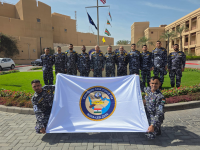
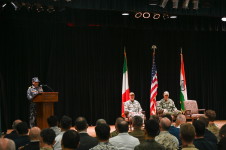
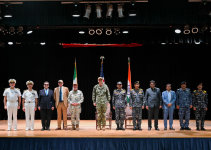
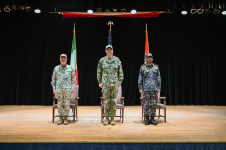
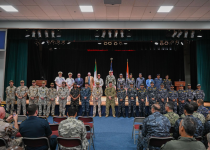
Posted On: 12 FEB 2026 10:39AM by PIB DelhiIn a landmark development underscoring India’s commitment to collaborative maritime security and capacity building in the Indian Ocean Region and beyond, the Indian Navy has assumed command of Combined Task Force (CTF) 154, a key multinational training task force under the Combined Maritime Forces (CMF).
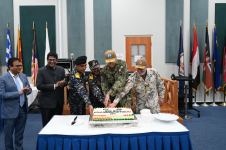
The change of command ceremony was conducted on 11 Feb 2026 at CMF Headquarters in Manama, Bahrain, and was presided over by VAdm Curt A Renshaw, Commander, CMF / US NAVCENT / US Fifth Fleet. VAdm Tarun Sobti, Deputy Chief of the Naval Staff (DCNS), Indian Navy, and senior military leaders from other member nations were in attendance. Cmde Milind M Mokashi, Shaurya Chakra, of the Indian Navy, formally took over as Commander CTF 154 from the outgoing Commander of the Italian Navy.
CTF 154 is specifically oriented towards training and capacity building of member nations of CMF. It reflects the region's growing trust in India’s professional expertise, operational experience, and a role as a Preferred Security Partner among the 47 nations of the CMF.
CTF 154, established in May 2023, is dedicated to enhancing maritime security through multinational training programs across the Middle East and the wider region.
The training focuses on five core pillars: Maritime Domain Awareness (MDA), Law of the Sea, Maritime Interdiction Operations, Maritime Rescue and Assistance, and Leadership Development. The task force conducts regular Maritime Security Enhancement Training (MSET) events, exercises like Compass Rose and Northern/Southern Readiness, and outreach to build partner nations’ operational capabilities against common threats such as illegal trafficking, piracy, and irregular migration.
CTF 154 operates alongside CMF’s other task forces: CTF 150 (Maritime Security), CTF 151 (Counter-Piracy), CTF 152 (Maritime Security in Arabian Gulf) and CTF 153 (Maritime Security in Red Sea).
The Indian Navy looks forward to a productive tenure, delivering high-impact training initiatives and reinforcing global maritime partnerships for peace, prosperity, and security.
https://www.pib.gov.in/PressReleasePage.aspx?PRID=2226776®=3&lang=1

Last edited by a moderator:
India’s Su-30MKI And Thai Gripen Jets Execute Indian Ocean Patrol Signaling Deeper Indo-Pacific Alignment
23 Feb 2026 - 4:03
Defense News Aerospace 2026
On 13 February 2026, the Indian Air Force confirmed it had conducted an in-situ air exercise with the Royal Thai Air Force, pairing India’s Su-30MKI multirole fighters with Thailand’s JAS 39 Gripen fleet over the Indian Ocean. The event placed two different force designs into a shared operational picture, integrating air-to-air refueling, airborne battle management, and mixed formation tactics. Indian Su-30MKI aircraft, long-range twin-engine platforms optimized for endurance and heavy payloads, operated alongside Thailand’s network-centric Gripens, known for compact basing and advanced data link integration. Officials framed the drill as routine cooperation, but its operational focus on maritime airspace and coordinated command and control underscores a broader alignment as Indo-Pacific air forces refine tactics around critical sea lines of communication.
The development is an air combat training engagement conducted in the Indian Ocean Region from 9 to 12 February 2026, with Indian assets operating from bases in the Andaman and Nicobar Islands and Thai Gripens flying from Thailand. The Indian side explicitly framed the activity as a demonstration of reach and interoperability, while Thailand contributed its Ground Control Interception element to integrate fighter control procedures across national command chains. In practical terms, that combination points to a scenario where a dispersed force must assemble a coherent recognized air picture, execute tactical intercepts, and manage safety and deconfliction across long distances and overwater operating areas.
Platform mix is the signal. India disclosed participation of Su-30MKI multirole fighters and IL-78 tankers, backed by AWACS, while Thai Gripens formed the partner fighter element. For air forces, this is not a simple “fighter meets fighter” sortie set: it is a systems exercise that tests the kill chain from detection to identification, command and control, tanker rendezvous, and tactical employment. It also forces crews to standardize mission planning products, communications plans, rendezvous geometry, and emergency procedures, which is where interoperability is either proven or exposed as fragile. The presence of a tanker is especially relevant because it enables extended endurance and time on station, turning a short-range training event into a sustained air policing style profile.
Gripen is central because it represents a distinct design philosophy: a relatively light, networked multirole fighter optimized for high sortie generation, dispersed operations, and rapid turnaround, attributes that can be attractive in maritime and archipelagic environments. Thailand has operated Gripen C/D for years and has built a broader Saab-enabled ecosystem around it, including airborne early warning and a national data link architecture, which supports cooperative engagement concepts and sensor fusion at the force level. Thailand’s more recent selection of Gripen E/F for additional capability, even in limited initial quantities, further reinforces the platform’s political and operational relevance in Bangkok’s modernization path. For India, this matters less as endorsement and more as exposure: the exercise is an opportunity to observe how a Gripen formation is controlled, how it manages beyond visual range timelines, and how it integrates with airborne C2 in a mixed package.
Operational history provides the context for why this pairing is unusual but logical. The Su-30MKI has long been a mainstay of Indian long-range airpower, routinely used for maritime strike training, air defence, and extended patrol missions, and its size, payload, and endurance make it a natural match for operations from the Andaman and Nicobar chain. The Thai Gripen fleet, by contrast, has been used to mature a network-centric approach within a smaller air force, emphasizing data-linked tactics, quick reaction alert, and integrated air defence with ground-based control. When those two aircraft types train together, the value lies in comparing tactics and battle rhythm: heavy twin-engine fighters operating with tankers and airborne sensors on one side, and a lighter networked fighter optimized for rapid employment and integrated control on the other.
The exercise highlights a set of practical capabilities that Indo-Thai cooperation can build on with relatively low political risk. Air refuelling procedures, common brevity and radio discipline, tactical formation workups, and shared intercept geometries improve the probability that the two services could coordinate in future contingencies such as search and rescue support, humanitarian assistance air cover, or maritime security operations near congested sea lanes. The Indian Ocean Region framing and the use of Andaman and Nicobar operating locations point to an airpower logic centered on endurance, reach, and command and control resilience, all of which become more important when operating near the approaches to the Malacca Strait and other strategic chokepoints. Even without implying any operational pact, the training helps normalize cross-servicing, cross-cueing, and shared situational awareness practices.
The event is best read as incremental alignment rather than a new bloc. India’s Ministry of Defence explicitly linked the activity to India’s Act East partnership with Thailand, suggesting a steady expansion of defence ties into the aerospace domain. This sits comfortably inside a broader regional pattern: medium powers investing in airpower cooperation to improve crisis response options while avoiding formal alliance commitments. From an acquisition perspective, the exercise does not by itself indicate fighter selection outcomes for India, but it can create conditions that make certain options more plausible.
Saab continues to position Gripen E for India with heavy emphasis on industrial participation and transfer of capability, and such offers tend to gain traction when decision makers can point to concrete operational exposure rather than marketing alone. At the same time, recent reporting indicates strong momentum behind expanded Rafale-related industrial cooperation, which would likely remain a powerful competing vector in India’s fighter roadmap. The more realistic indicator, therefore, is not that the exercise “pushes” India toward Gripen, but that it marginally strengthens the evidentiary basis for evaluating how a Gripen-centred concept of operations might integrate with Indian airborne C2, tanker-supported reach, and an increasingly mixed fleet.
The Su-30MKI Gripen in situ exercise demonstrates a practical, capability-focused approach to Indo Thai defence cooperation, emphasizing tanking, airborne battle management, and fighter control integration rather than symbolic flypasts. Its strongest message is geostrategic: both air forces are investing in the operational habits needed to sustain air operations over strategic maritime approaches, reinforcing stability through readiness and coordination while preserving political flexibility. Over time, repeated exposure to each other’s operating concepts could modestly influence how India benchmarks interoperability, sustainment models, and network integration in future fighter evaluations, but the signal remains probabilistic, not determinative, in a procurement environment shaped by industrial policy, fleet mix constraints, and parallel strategic partnerships.
India’s Su-30MKI And Thai Gripen Jets Execute Indian Ocean Patrol Signaling Deeper Indo-Pacific Alignment
23 Feb 2026 - 4:03
Defense News Aerospace 2026
The Indian Air Force and Royal Thai Air Force confirmed a 13 February 2026 in situ air exercise pairing Indian Su-30MKI fighters with Thai Gripen jets over the Indian Ocean. The drill highlights growing interoperability between two distinct airpower models at a time when regional forces are sharpening maritime security and high-tempo operational tactics.
On 13 February 2026, the Indian Air Force confirmed it had conducted an in-situ air exercise with the Royal Thai Air Force, pairing India’s Su-30MKI multirole fighters with Thailand’s JAS 39 Gripen fleet over the Indian Ocean. The event placed two different force designs into a shared operational picture, integrating air-to-air refueling, airborne battle management, and mixed formation tactics. Indian Su-30MKI aircraft, long-range twin-engine platforms optimized for endurance and heavy payloads, operated alongside Thailand’s network-centric Gripens, known for compact basing and advanced data link integration. Officials framed the drill as routine cooperation, but its operational focus on maritime airspace and coordinated command and control underscores a broader alignment as Indo-Pacific air forces refine tactics around critical sea lines of communication.
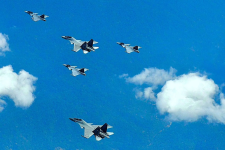
The Indian Air Force and Royal Thai Air Force conducted a 13 February 2026 joint air drill over the Indian Ocean, pairing Su-30MKI and Gripen fighters to practice refueling and coordinated airborne battle management in a maritime security context (Picture Source: Indian Air Force)
The development is an air combat training engagement conducted in the Indian Ocean Region from 9 to 12 February 2026, with Indian assets operating from bases in the Andaman and Nicobar Islands and Thai Gripens flying from Thailand. The Indian side explicitly framed the activity as a demonstration of reach and interoperability, while Thailand contributed its Ground Control Interception element to integrate fighter control procedures across national command chains. In practical terms, that combination points to a scenario where a dispersed force must assemble a coherent recognized air picture, execute tactical intercepts, and manage safety and deconfliction across long distances and overwater operating areas.
Platform mix is the signal. India disclosed participation of Su-30MKI multirole fighters and IL-78 tankers, backed by AWACS, while Thai Gripens formed the partner fighter element. For air forces, this is not a simple “fighter meets fighter” sortie set: it is a systems exercise that tests the kill chain from detection to identification, command and control, tanker rendezvous, and tactical employment. It also forces crews to standardize mission planning products, communications plans, rendezvous geometry, and emergency procedures, which is where interoperability is either proven or exposed as fragile. The presence of a tanker is especially relevant because it enables extended endurance and time on station, turning a short-range training event into a sustained air policing style profile.
Gripen is central because it represents a distinct design philosophy: a relatively light, networked multirole fighter optimized for high sortie generation, dispersed operations, and rapid turnaround, attributes that can be attractive in maritime and archipelagic environments. Thailand has operated Gripen C/D for years and has built a broader Saab-enabled ecosystem around it, including airborne early warning and a national data link architecture, which supports cooperative engagement concepts and sensor fusion at the force level. Thailand’s more recent selection of Gripen E/F for additional capability, even in limited initial quantities, further reinforces the platform’s political and operational relevance in Bangkok’s modernization path. For India, this matters less as endorsement and more as exposure: the exercise is an opportunity to observe how a Gripen formation is controlled, how it manages beyond visual range timelines, and how it integrates with airborne C2 in a mixed package.
Operational history provides the context for why this pairing is unusual but logical. The Su-30MKI has long been a mainstay of Indian long-range airpower, routinely used for maritime strike training, air defence, and extended patrol missions, and its size, payload, and endurance make it a natural match for operations from the Andaman and Nicobar chain. The Thai Gripen fleet, by contrast, has been used to mature a network-centric approach within a smaller air force, emphasizing data-linked tactics, quick reaction alert, and integrated air defence with ground-based control. When those two aircraft types train together, the value lies in comparing tactics and battle rhythm: heavy twin-engine fighters operating with tankers and airborne sensors on one side, and a lighter networked fighter optimized for rapid employment and integrated control on the other.
The exercise highlights a set of practical capabilities that Indo-Thai cooperation can build on with relatively low political risk. Air refuelling procedures, common brevity and radio discipline, tactical formation workups, and shared intercept geometries improve the probability that the two services could coordinate in future contingencies such as search and rescue support, humanitarian assistance air cover, or maritime security operations near congested sea lanes. The Indian Ocean Region framing and the use of Andaman and Nicobar operating locations point to an airpower logic centered on endurance, reach, and command and control resilience, all of which become more important when operating near the approaches to the Malacca Strait and other strategic chokepoints. Even without implying any operational pact, the training helps normalize cross-servicing, cross-cueing, and shared situational awareness practices.
The event is best read as incremental alignment rather than a new bloc. India’s Ministry of Defence explicitly linked the activity to India’s Act East partnership with Thailand, suggesting a steady expansion of defence ties into the aerospace domain. This sits comfortably inside a broader regional pattern: medium powers investing in airpower cooperation to improve crisis response options while avoiding formal alliance commitments. From an acquisition perspective, the exercise does not by itself indicate fighter selection outcomes for India, but it can create conditions that make certain options more plausible.
Saab continues to position Gripen E for India with heavy emphasis on industrial participation and transfer of capability, and such offers tend to gain traction when decision makers can point to concrete operational exposure rather than marketing alone. At the same time, recent reporting indicates strong momentum behind expanded Rafale-related industrial cooperation, which would likely remain a powerful competing vector in India’s fighter roadmap. The more realistic indicator, therefore, is not that the exercise “pushes” India toward Gripen, but that it marginally strengthens the evidentiary basis for evaluating how a Gripen-centred concept of operations might integrate with Indian airborne C2, tanker-supported reach, and an increasingly mixed fleet.
The Su-30MKI Gripen in situ exercise demonstrates a practical, capability-focused approach to Indo Thai defence cooperation, emphasizing tanking, airborne battle management, and fighter control integration rather than symbolic flypasts. Its strongest message is geostrategic: both air forces are investing in the operational habits needed to sustain air operations over strategic maritime approaches, reinforcing stability through readiness and coordination while preserving political flexibility. Over time, repeated exposure to each other’s operating concepts could modestly influence how India benchmarks interoperability, sustainment models, and network integration in future fighter evaluations, but the signal remains probabilistic, not determinative, in a procurement environment shaped by industrial policy, fleet mix constraints, and parallel strategic partnerships.
India’s Su-30MKI And Thai Gripen Jets Execute Indian Ocean Patrol Signaling Deeper Indo-Pacific Alignment