Indian AESA Radar Developments
- Thread starter ni8mare
- Start date
You are using an out of date browser. It may not display this or other websites correctly.
You should upgrade or use an alternative browser.
You should upgrade or use an alternative browser.


Why is our recruitment process for such strategically important institutions has been such a mess?You know how government vacancies are filled & the sort of manpower shortfall each department & directorate work with ?
Officials in director level do not have power to recruit on own whim, at best can initiate a case for urgent short term contract hiring and put forward to MoD for approval. The Missile complex has over 2000 unfilled permanent posts at various level, scientists technical officer technicians each grade. The same story in other labs too because scientist & technical recruitment was paused during covid and lot of retirement/non retention left each dept short of manpower.
Add with it the usual issues of official in holiday, spares issue, delayed timing etc.




Next 97 batch does, also we're hardly going to see any GaA radars, if any at all, DRDO plans to standardize on GaN TRMs, at least what they said in recent seminarBtw, does the Uttam have GaNs? I've heard conflicting claims, can someone clarify it?
The issues with radar won't be there much longer, so good news there
Next 97 batch does, also we're hardly going to see any GaA radars, if any at all, DRDO plans to standardize on GaN TRMs, at least what they said in recent seminar
The issues with radar won't be there much longer, so good news there
Does it have Vivaldi antennas?
India Moves Toward a New-Generation Missile Tracking Radar Network
8 February 2026
by alphadefense.in
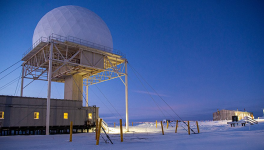
India appears to be laying the groundwork for a new radar and sensor site dedicated to next-generation ballistic missile tracking, marking a quiet but significant evolution in the country’s strategic early-warning and missile defence architecture. While official documents and public disclosures avoid operational details as they should the direction of travel is unmistakable.
At the heart of this effort is India’s push to strengthen long-range detection, tracking, and discrimination of ballistic missile threats, particularly as regional missile capabilities continue to advance in range, speed, and counter-measure sophistication.
This new effort points to a separate radar and sensor facility being developed in southern India, designed to complement not duplicate existing coverage. The logic is clear:
Strategic sensor sites are designed to operate as part of a networked national system, feeding data into command-and-control nodes and interceptor units. Their effectiveness depends far more on sensor performance, data fusion, and response timelines than on public knowledge of their location.
As with most credible strategic systems, silence and ambiguity are features, not flaws.
New Radar for BMD Phase 2 of DRDO ?
8 February 2026
by alphadefense.in
India appears to be laying the groundwork for a new radar and sensor site dedicated to next-generation ballistic missile tracking, marking a quiet but significant evolution in the country’s strategic early-warning and missile defence architecture. While official documents and public disclosures avoid operational details as they should the direction of travel is unmistakable.
At the heart of this effort is India’s push to strengthen long-range detection, tracking, and discrimination of ballistic missile threats, particularly as regional missile capabilities continue to advance in range, speed, and counter-measure sophistication.
Role of Advanced Long-Range Sensors
The Defence Research and Development Organisation (DRDO), through its specialised laboratories such as IRDE, has been working for years on long-range sensors designed for ballistic missile detection and tracking. These sensors are not conventional air-surveillance radars. Instead, they are optimised to:- Detect ballistic missiles at extreme ranges
- Track high-velocity targets during boost and mid-course phases
- Provide precise data for interceptor cueing and engagement
- Support layered missile defence systems
A New Site, Distinct from Existing Installations
What makes this development noteworthy is that it is distinct from India’s existing missile tracking and radar infrastructure that observers commonly associate with the western seaboard and maritime approaches.This new effort points to a separate radar and sensor facility being developed in southern India, designed to complement not duplicate existing coverage. The logic is clear:
- Broader angular coverage of missile trajectories
- Redundancy and survivability of early-warning assets
- Improved tracking geometry for long-range ballistic targets
- Likely linked to DRDO’s BMD Phase II
Why Location Details Don’t Matter, Capability Does ?
In line with Alpha Defence’s editorial policy, specific geographic coordinates, site names, or operational layouts are neither discussed nor required to understand the strategic implication. What matters is the capability being built, not the pin on the map.Strategic sensor sites are designed to operate as part of a networked national system, feeding data into command-and-control nodes and interceptor units. Their effectiveness depends far more on sensor performance, data fusion, and response timelines than on public knowledge of their location.
Strategic Context: Preparing for the Next Threat Envelope
This development should be seen in the context of:- Rapid evolution of regional ballistic missile forces
- Emergence of longer-range and higher-speed missile systems
- Increased emphasis on missile defence, early warning, and deterrence stability
The Bigger Picture
Taken together, the move indicates that India is quietly but steadily transitioning toward a more mature, resilient missile tracking and early-warning ecosystem. These are not headline-grabbing programs—but they are the kind that fundamentally alter strategic balance over time.As with most credible strategic systems, silence and ambiguity are features, not flaws.
New Radar for BMD Phase 2 of DRDO ?
Its part of that network to detect via different means like the tenders we saw before. Will also have the optical VLR tracking system made by IRDE.
Anyway , radar work. AMCA radar is the Virupaksha variant of course.


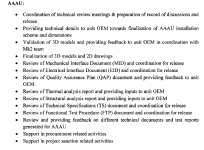
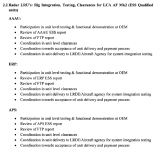
Anyway , radar work. AMCA radar is the Virupaksha variant of course.

As AMCA will have fix main radar(because of stealth issues, of course!); hopefully we also develop cheek mounted radars in MK2 variant(ala Su-57) to increase its BVR potency. Having cheek mounted radars would mean that AMCA would continue to track the target while cranking and itself getting away from threat.

Wait, so even LCA mk2 is getting both configuration options?Its part of that network to detect via different means like the tenders we saw before. Will also have the optical VLR tracking system made by IRDE.
Anyway , radar work. AMCA radar is the Virupaksha variant of course.
View attachment 49624
View attachment 49625
View attachment 49626
View attachment 49627
View attachment 49628


3D IAMDR in the first picture.
One of the radars for Kusha? It may be an acronym for "Indigenous Advanced Missile Defence Radar"
One of the radars for Kusha? It may be an acronym for "Indigenous Advanced Missile Defence Radar"
Looks like an offshoot/rebrand of the RAWL-03 radar.3D IAMDR in the first picture.
One of the radars for Kusha? It may be an acronym for "Indigenous Advanced Missile Defence Radar"
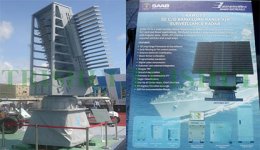
Possible, but the IAMDR comes with a radome which wouldn't be needed for a radar hardened to endure marine environment
Not necessarily. The BAe Sampson was designed for naval applications but comes with an integral radome.Possible, but the IAMDR comes with a radome which wouldn't be needed for a radar hardened to endure marine environment
That's a different case altogether. RAWL MK3 like its predecessor doesn't require random. Similarly, We have MFSTAR sitting inside a radome while Lanza back there chills all out in the open.Not necessarily. The BAe Sampson was designed for naval applications but comes with an integral radome.
I guess BEL will release more info soon enough.That's a different case altogether. RAWL MK3 like its predecessor doesn't require random. Similarly, We have MFSTAR sitting inside a radome while Lanza back there chills all out in the open.
But RAWL 03 apparently lost the competition for the INs next gen volume search radar to Lanza. So my guess is BEL has come up with a new use case for it.