

India - United States Relations
- Thread starter Butter Chicken
- Start date
You are using an out of date browser. It may not display this or other websites correctly.
You should upgrade or use an alternative browser.
You should upgrade or use an alternative browser.

U.S.-Indian Commercial Ties: Getting from Good to Great
Author: Richard M. Rossow
Date Published: December 23, 2019
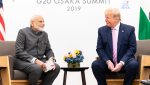
India’s Promise as a Commercial Partner :
India remains a devilishly difficult place for American firms to do business. Indian firms would increasingly say the same about the United States, particularly when it comes to technology services trade. Nevertheless, U.S.-Indian natural economic complementarities—augmented by an increasingly shared security worldview—will ensure the continued expansion of economic ties. However, as we have seen in recent years, the pace of our expanded economic partnership will depend to some extent on policy choices made in both our national capitals. American and Indian leaders must continue to work at removing real impediments while finding proactive ways to boost economic ties.
Business Ties Today :
U.S.-Indian commercial ties are at historically high levels, albeit starting from modest beginnings. India’s began opening its market to the world in earnest in 1991, with a real acceleration in welcoming foreign investment and trade starting in the mid 1990’s. Today, the U.S.-Indian goods trade stands at over $92 billion per year, making India the United States’ ninth-largest trade partner. The United States is India’s top goods trade partner, while services trade between the two totaled around $54.8 billion in 2018. Overall the United States has a combined goods and services trade deficit with India totaling around $25 billion, though U.S. exports to India are growing faster than imports.
India remains one of the world’s top destinations for foreign direct investment (FDI). In the twelve months leading up to September 2019, India attracted over $48 billion in fresh FDI equity, in addition to over $19 billion in passive foreign portfolio investment (FPI). While well below the peak FDI inflows into China, India is slowly increasing its foreign investment inflows as the market matures and FDI policies are liberalized.
As the 2017 “Indian Roots, American Soil” report highlights, Indian firms are key investors in the United States. As of 2018, total Indian FDI into the United States amounted to $17.9 billion, and Indian firms employ over 113,000 people in the United States. These investments cross a range of sectors including information technology, healthcare, manufacturing, energy, and more.
Within the decade, India will hit important milestones. India will become the world’s most populous nation. India should become the world’s fifth-largest economy. And India could become America’s sixth-largest goods trade partner.
Impediments to Trade and Investment :
Despite the substantial growth in U.S.-Indian economic ties, both sides have key impediments that deter a dramatic expansion. India’s steps to liberalize its foreign investment regime remain incomplete, and the Modi government is taking regular steps to impose new restrictions to guard against imports. Other domestic business policies, such as price controls in some product groups like pharmaceuticals and medical devices, have introduced new challenges for U.S. companies in these industries.
Protectionist sentiments in the United States have triggered increased pressure on India to relax trade restrictions. The United States has hit India with trade policies that have broad application globally, such as the increased steel and aluminum tariffs announced in March 2018. Due to India’s domestic market policies, the U.S. revoked a preferential trade program called the Generalized System of Preferences (GSP) in March 2019. And the United States is threatening to impose new immigration restrictions that could harm Indian firms’ ability to move technology workers to U.S. job sites.
Despite these impediments, U.S.-Indian commercial ties have expanded in recent years. As a result, the various points of discord have not yet defined actual business linkages. But our nations’ leaders must work hard to reduce friction when possible and avoid taking new steps that could harm commercial relations.
Opportunities for Asymmetrical Growth :
With two large and growing economies, U.S.-Indian commercial ties are certain to grow across the board, barring an economic upheaval in either or both markets, but there are also opportunities to stimulate asymmetrical commercial growth. Key policy ideas include the following:
1) Removing Remaining Impediments to FDI: India maintains foreign ownership restrictions in a wide range of sectors including retail, insurance, ecommerce, pensions, defense production, and more. Removing these restrictions and offering foreign firms an even playing field should trigger substantially higher FDI inflows.
2) Getting “Make in India” Right: The U.S.-China trade fight does not have an easy solution. American firms are looking to shift global manufacturing out of China and into other low-cost markets. India has a substantial domestic consumption market, but still needs to improve its domestic manufacturing environment. India’s infrastructure is inadequate; tight regulations on labor and land acquisition deter investors; logistics costs are too high; and high customs duties on input goods makes manufacturing unappealing. India has a chance to position itself as the new “workshop to the world,” but the path is not easy.
3) Frugal Innovation: Most of the world’s growth in the coming decades will come from markets that bear more similarity to India than to Germany or Canada. American firms can partner with India’s engineering powerhouses—or establish their own engineering centers—to redesign products and services to make them more acceptable to emerging markets. This involves reducing cost, reducing size, reducing bandwidth, increasing ruggedness, and more.
4) Indian States Push for Growth: Most of the levers—such as access to electricity, business licenses, water and sanitation, and more—for India’s economic growth are, in practice, controlled by its twenty-eight state leaders. Voters still do not reward “economic reforms” with ballot success. If this were to change, India could easily move to double-digit economic growth.
5) India’s Urban Voters Begin to Dominate: With a few notable exceptions, India’s states have not devolved meaningful power to municipal authorities. With around two-thirds of voters coming from rural constituencies, India’s state leaders tend to use revenue generated by major urban industrial hubs to fund rural development—a worthy cause, but one which also deprives India’s cities of much-needed infrastructure to trigger faster economic growth.
6) U.S. Immigration Relaxation: India’s dynamic technology services sector remains the strongest economic bond between the United States and India, and an open immigration policy is a critical element of U.S.-Indian technology services trade. In particular, the United States could look at expanding our pool of H1B technical worker visas. The visa pool is currently at 65,000, which is well below the peak during 1999 and 2000 when the cap was temporarily increased to 115,000 visas per year.
7) Forging a Free Trade Agreement: While not currently under serious consideration, a free trade agreement (FTA) remains a potent option to boost U.S.-Indian commercial ties. As my colleague Raymond Vickery noted in February 2018, there have already been substantial studies showing a bilateral positive impact in signing a robust FTA.
Again, even without substantial movement on the issues highlighted above, U.S.-Indian commercial ties will continue to expand. However, removing major impediments and taking policy measures to improve our respective commercial environments will increase the momentum of this expansion. The two nations’ shared security outlook in the Indo-Pacific region should provide some impetus as well. Both nations are concerned about a regional economy dominated by China; strengthening our economic cooperation is an important way to balance.
Summation :
India is quietly rising on the list of America’s top economic partners. While well below the scale of the United States’ economic ties with China, Canada, or Mexico, India’s population growth and economic prospects make for a compelling case. The U.S.-Indian economic relationship today is experiencing real turmoil, at least from the perspective of our respective capitals. Even if the two nations simply “muddle through,” India will still become one of America’s most important economic partners in the coming decades. This process will move considerably faster if we can avoid the current headwinds while simultaneously removing impediments and seizing opportunities for asymmetrical growth.
Richard M. Rossow is a senior adviser and holds the Wadhwani Chair in U.S.-India Policy Studies at CSIS. Prior to CSIS, he served as director for South Asia at McLarty Associates, leading the firm’s work for clients in India and the neighboring region. From 2008 to 2012, Mr. Rossow was with New York Life Insurance company, most recently as head of International Governmental Affairs. From 1998 to 2008, Mr. Rossow served as deputy director of the U.S.-India Business Council (USIBC), the world’s leading advocacy group on behalf of strengthening economic ties between the United States and India.
U.S.-Indian Commercial Ties: Getting from Good to Great - Georgetown Journal of International Affairs
Author: Richard M. Rossow
Date Published: December 23, 2019
India’s Promise as a Commercial Partner :
India remains a devilishly difficult place for American firms to do business. Indian firms would increasingly say the same about the United States, particularly when it comes to technology services trade. Nevertheless, U.S.-Indian natural economic complementarities—augmented by an increasingly shared security worldview—will ensure the continued expansion of economic ties. However, as we have seen in recent years, the pace of our expanded economic partnership will depend to some extent on policy choices made in both our national capitals. American and Indian leaders must continue to work at removing real impediments while finding proactive ways to boost economic ties.
Business Ties Today :
U.S.-Indian commercial ties are at historically high levels, albeit starting from modest beginnings. India’s began opening its market to the world in earnest in 1991, with a real acceleration in welcoming foreign investment and trade starting in the mid 1990’s. Today, the U.S.-Indian goods trade stands at over $92 billion per year, making India the United States’ ninth-largest trade partner. The United States is India’s top goods trade partner, while services trade between the two totaled around $54.8 billion in 2018. Overall the United States has a combined goods and services trade deficit with India totaling around $25 billion, though U.S. exports to India are growing faster than imports.
India remains one of the world’s top destinations for foreign direct investment (FDI). In the twelve months leading up to September 2019, India attracted over $48 billion in fresh FDI equity, in addition to over $19 billion in passive foreign portfolio investment (FPI). While well below the peak FDI inflows into China, India is slowly increasing its foreign investment inflows as the market matures and FDI policies are liberalized.
As the 2017 “Indian Roots, American Soil” report highlights, Indian firms are key investors in the United States. As of 2018, total Indian FDI into the United States amounted to $17.9 billion, and Indian firms employ over 113,000 people in the United States. These investments cross a range of sectors including information technology, healthcare, manufacturing, energy, and more.
Within the decade, India will hit important milestones. India will become the world’s most populous nation. India should become the world’s fifth-largest economy. And India could become America’s sixth-largest goods trade partner.
Impediments to Trade and Investment :
Despite the substantial growth in U.S.-Indian economic ties, both sides have key impediments that deter a dramatic expansion. India’s steps to liberalize its foreign investment regime remain incomplete, and the Modi government is taking regular steps to impose new restrictions to guard against imports. Other domestic business policies, such as price controls in some product groups like pharmaceuticals and medical devices, have introduced new challenges for U.S. companies in these industries.
Protectionist sentiments in the United States have triggered increased pressure on India to relax trade restrictions. The United States has hit India with trade policies that have broad application globally, such as the increased steel and aluminum tariffs announced in March 2018. Due to India’s domestic market policies, the U.S. revoked a preferential trade program called the Generalized System of Preferences (GSP) in March 2019. And the United States is threatening to impose new immigration restrictions that could harm Indian firms’ ability to move technology workers to U.S. job sites.
Despite these impediments, U.S.-Indian commercial ties have expanded in recent years. As a result, the various points of discord have not yet defined actual business linkages. But our nations’ leaders must work hard to reduce friction when possible and avoid taking new steps that could harm commercial relations.
Opportunities for Asymmetrical Growth :
With two large and growing economies, U.S.-Indian commercial ties are certain to grow across the board, barring an economic upheaval in either or both markets, but there are also opportunities to stimulate asymmetrical commercial growth. Key policy ideas include the following:
1) Removing Remaining Impediments to FDI: India maintains foreign ownership restrictions in a wide range of sectors including retail, insurance, ecommerce, pensions, defense production, and more. Removing these restrictions and offering foreign firms an even playing field should trigger substantially higher FDI inflows.
2) Getting “Make in India” Right: The U.S.-China trade fight does not have an easy solution. American firms are looking to shift global manufacturing out of China and into other low-cost markets. India has a substantial domestic consumption market, but still needs to improve its domestic manufacturing environment. India’s infrastructure is inadequate; tight regulations on labor and land acquisition deter investors; logistics costs are too high; and high customs duties on input goods makes manufacturing unappealing. India has a chance to position itself as the new “workshop to the world,” but the path is not easy.
3) Frugal Innovation: Most of the world’s growth in the coming decades will come from markets that bear more similarity to India than to Germany or Canada. American firms can partner with India’s engineering powerhouses—or establish their own engineering centers—to redesign products and services to make them more acceptable to emerging markets. This involves reducing cost, reducing size, reducing bandwidth, increasing ruggedness, and more.
4) Indian States Push for Growth: Most of the levers—such as access to electricity, business licenses, water and sanitation, and more—for India’s economic growth are, in practice, controlled by its twenty-eight state leaders. Voters still do not reward “economic reforms” with ballot success. If this were to change, India could easily move to double-digit economic growth.
5) India’s Urban Voters Begin to Dominate: With a few notable exceptions, India’s states have not devolved meaningful power to municipal authorities. With around two-thirds of voters coming from rural constituencies, India’s state leaders tend to use revenue generated by major urban industrial hubs to fund rural development—a worthy cause, but one which also deprives India’s cities of much-needed infrastructure to trigger faster economic growth.
6) U.S. Immigration Relaxation: India’s dynamic technology services sector remains the strongest economic bond between the United States and India, and an open immigration policy is a critical element of U.S.-Indian technology services trade. In particular, the United States could look at expanding our pool of H1B technical worker visas. The visa pool is currently at 65,000, which is well below the peak during 1999 and 2000 when the cap was temporarily increased to 115,000 visas per year.
7) Forging a Free Trade Agreement: While not currently under serious consideration, a free trade agreement (FTA) remains a potent option to boost U.S.-Indian commercial ties. As my colleague Raymond Vickery noted in February 2018, there have already been substantial studies showing a bilateral positive impact in signing a robust FTA.
Again, even without substantial movement on the issues highlighted above, U.S.-Indian commercial ties will continue to expand. However, removing major impediments and taking policy measures to improve our respective commercial environments will increase the momentum of this expansion. The two nations’ shared security outlook in the Indo-Pacific region should provide some impetus as well. Both nations are concerned about a regional economy dominated by China; strengthening our economic cooperation is an important way to balance.
Summation :
India is quietly rising on the list of America’s top economic partners. While well below the scale of the United States’ economic ties with China, Canada, or Mexico, India’s population growth and economic prospects make for a compelling case. The U.S.-Indian economic relationship today is experiencing real turmoil, at least from the perspective of our respective capitals. Even if the two nations simply “muddle through,” India will still become one of America’s most important economic partners in the coming decades. This process will move considerably faster if we can avoid the current headwinds while simultaneously removing impediments and seizing opportunities for asymmetrical growth.
Richard M. Rossow is a senior adviser and holds the Wadhwani Chair in U.S.-India Policy Studies at CSIS. Prior to CSIS, he served as director for South Asia at McLarty Associates, leading the firm’s work for clients in India and the neighboring region. From 2008 to 2012, Mr. Rossow was with New York Life Insurance company, most recently as head of International Governmental Affairs. From 1998 to 2008, Mr. Rossow served as deputy director of the U.S.-India Business Council (USIBC), the world’s leading advocacy group on behalf of strengthening economic ties between the United States and India.
U.S.-Indian Commercial Ties: Getting from Good to Great - Georgetown Journal of International Affairs
US army ‘official’ briefly detained after live bullets found in baggage at Bengaluru airport
According to the police, the duo was taken to custody for an inquiry after two live bullets were found in their baggage by Central Industrial Security Force (CISF) personnel in the airport during routine checks.
Written by Ralph Alex Arakal | Bengaluru | Published: January 8, 2020
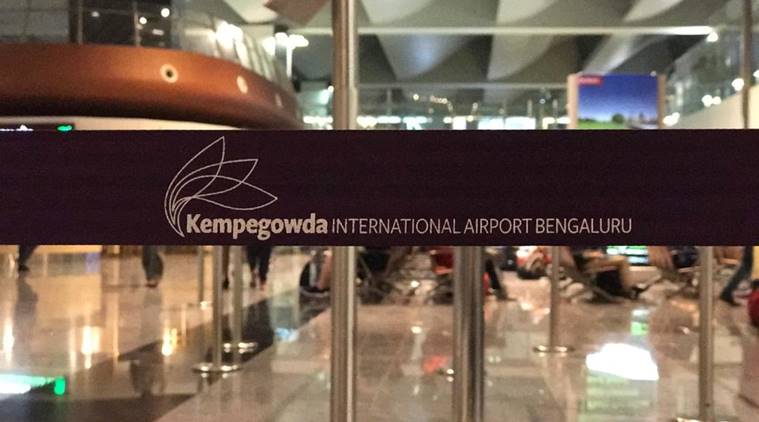
Two live bullets were found from the baggage of a man and his mother in Bengaluru International Airport on Wednesday.
A man and his mother were detained at the Kempegowda International Airport in Bengaluru Wednesday after two live bullets were found from their baggage. According to the police, the duo was taken to custody for an inquiry after two live bullets were found in their baggage by Central Industrial Security Force (CISF) personnel at the airport during routine checks.
Sources from the airport told indianexpress.com that the duo was soon handed over to the police. “On realising the man who landed in the airport early morning on Wednesday was carrying live bullets, CISF personnel got in touch with the Bengaluru City Police. The man was accompanied by his mother and both were soon detained for a thorough inquiry,” the source said.
However, when contacted, police inspector Prasanth Varni from BIAL police station said, “The person, who hails from Mangaluru, had a military license and is a person serving the American army. Also, he was carrying only bullets and no weapon. In an inquiry, it was found that he carried them accidentally.”
The police further verified his documents and the duo was released soon. “No FIR was filed,” the police said.
US army ‘official’ briefly detained after live bullets found in baggage at Bengaluru airport
According to the police, the duo was taken to custody for an inquiry after two live bullets were found in their baggage by Central Industrial Security Force (CISF) personnel in the airport during routine checks.
Written by Ralph Alex Arakal | Bengaluru | Published: January 8, 2020
Two live bullets were found from the baggage of a man and his mother in Bengaluru International Airport on Wednesday.
A man and his mother were detained at the Kempegowda International Airport in Bengaluru Wednesday after two live bullets were found from their baggage. According to the police, the duo was taken to custody for an inquiry after two live bullets were found in their baggage by Central Industrial Security Force (CISF) personnel at the airport during routine checks.
Sources from the airport told indianexpress.com that the duo was soon handed over to the police. “On realising the man who landed in the airport early morning on Wednesday was carrying live bullets, CISF personnel got in touch with the Bengaluru City Police. The man was accompanied by his mother and both were soon detained for a thorough inquiry,” the source said.
However, when contacted, police inspector Prasanth Varni from BIAL police station said, “The person, who hails from Mangaluru, had a military license and is a person serving the American army. Also, he was carrying only bullets and no weapon. In an inquiry, it was found that he carried them accidentally.”
The police further verified his documents and the duo was released soon. “No FIR was filed,” the police said.
US army ‘official’ briefly detained after live bullets found in baggage at Bengaluru airport
India to double US oil imports to cut reliance on others
India is heavily dependant on oil imports from West Asia. Its top three suppliers in 2018-19 are from the area: Iraq, with about 46.6 million tonnes (MT) in 2018-19, is the number one supplier, followed by Saudi Arabia (40.3 MT) and the UAE (17.5 MT). Kuwait supplied 10.8 MT.
Updated: Jan 11, 2020 04:02:53
By Rajeev Jayaswal and Rezaul H Laskar, Hindustan Times, New Delhi

Oil purchases from the US, which started in 2017-18, have already crossed about 6 million tonnes a year. (AP File Photo )
India plans to double crude oil imports from the US as part of its effort to reduce dependence on the volatile West Asia region, three officials with direct knowledge of the matter said.
Oil purchases from the US, which started in 2017-18, have already crossed about 6 million tonnes a year. India is also keen on long-term oil supply contracts with Russia and oil producing countries in Africa, the officials said on condition of anonymity.
“We can easily double our crude oil imports from the US to 12 million tonnes. We are in talks with the US government and private oil firms as petroleum is an unregulated business in that country. We expect good rates and better terms from American firms that would compensate for our transportation costs. In return, we can offer them an assured market,” one of the three officials said.
India is heavily dependent on oil imports from West Asia. Its top three suppliers in 2018-19 are from the area: Iraq, with about 46.6 million tonnes (MT) in 2018-19, is the number one supplier, followed by Saudi Arabia (40.3 MT) and the UAE (17.5 MT). Kuwait supplied 10.8 MT.
Together, these countries supplied about 51% of the total of 226.5 MT of oil worth $111.9 billion or Rs 7.83 lakh crore that India imported in 2018-19, they said. According to the Petroleum Planning and Analysis Cell (PPAC), the data-keeper of the oil ministry, India’s crude oil import dependency on the basis of consumption was 83.8% in 2018-19.Put otherwise, 8.38 of every 10 litres of crude consumed in the country was imported.
Officials said the diversification of India’s crude basket is necessary because unlike other importers, it neither has its own resources nor has bought significant oil and gas assets abroad. India is the third-largest consumer of oil after the US and China. India’s efforts in recent years have resulted in diversification of energy sources with the focus on secure, stable and predictable supplies, a third official said, also on condition of anonymity. Efforts have also been made to change the energy mix, with a push for including more renewable sources, he added.
Besides increasing oil and gas purchases from the US to diversify imports, there have also been shifts among traditional sources, especially in the case of supplies from Venezuela and Iran because of US sanctions and other domestic factors, the officials said.
Importance is being given to Russia as an energy source, especially after the meeting between Prime Minister Narendra Modi and President Vladimir Putin at Vladivostok last September, the third official said. The two also signed a road map for cooperation in hydrocarbons for 2019-24.
A joint statement issued after the meeting welcomed the success in cooperation between Russia’s JSC Rosneft Oil Company and the Indian consortium of state-owned oil and gas firms. Modi and Putin said they would forge cooperation in joint development of oil and gas fields in Russia and India, including offshore fields, and develop ways to deliver energy resources from Russia to India, including a long-term agreement for sourcing Russian crude.
“Our key interest is securing long-term supplies though there could be spot (purchases) in the European markets. We are also helping Indian oil companies to acquire stakes in offshore operations,” the third official said. “Work is also being done with players such as Saudi Aramco to create strategic reserves.”
The US’ dependence on West Asian countries for energy needs is negligible due its huge domestic reserves, and China has significantly diversified its sourcing in terms of domestic reserves and equity oil abroad.
A report of the International Energy Agency (IEA), titled “In-depth Review of India’s Energy Policies” that was launched by petroleum minister Dharmendra Pradhan on Friday, said: “The rate of growth of India’s oil consumption is expected to surpass that of...China in the mid-2020s... As proven oil reserves are limited compared with domestic needs, India’s import dependency (above 80% in 2018) is going to increase significantly.” “We are meeting in the backdrop of rising tensions in West Asia and its impact on stability and security in the region,” Pradhan said.
Experts said India has almost stopped importing Iranian crude due to the US pressure, even as the country had been a reliable supplier of the best quality of crude at cheapest rate under most favourable terms and conditions. “We, therefore, need its replacement,” said an energy analyst who asked not to be named. India imported little over 27 MT Iranian crude in 2016-17.
Former chairman & managing director of Oil and Natural Gas Corp (ONGC), RS Sharma said diversification of crude oil import is crucial to India’s energy security. “We are already importing from countries like Nigeria, Angola, USA and Venezuela. Russia could be an important supplier depending on resolution of transportation issues. But, at the same time, we cannot wish away the West Asian countries because they supply us cheapest crude. Transportation is also cost effective,” he said.
India to double US oil imports to cut reliance on others
India is heavily dependant on oil imports from West Asia. Its top three suppliers in 2018-19 are from the area: Iraq, with about 46.6 million tonnes (MT) in 2018-19, is the number one supplier, followed by Saudi Arabia (40.3 MT) and the UAE (17.5 MT). Kuwait supplied 10.8 MT.
Updated: Jan 11, 2020 04:02:53
By Rajeev Jayaswal and Rezaul H Laskar, Hindustan Times, New Delhi
Oil purchases from the US, which started in 2017-18, have already crossed about 6 million tonnes a year. (AP File Photo )
India plans to double crude oil imports from the US as part of its effort to reduce dependence on the volatile West Asia region, three officials with direct knowledge of the matter said.
Oil purchases from the US, which started in 2017-18, have already crossed about 6 million tonnes a year. India is also keen on long-term oil supply contracts with Russia and oil producing countries in Africa, the officials said on condition of anonymity.
“We can easily double our crude oil imports from the US to 12 million tonnes. We are in talks with the US government and private oil firms as petroleum is an unregulated business in that country. We expect good rates and better terms from American firms that would compensate for our transportation costs. In return, we can offer them an assured market,” one of the three officials said.
India is heavily dependent on oil imports from West Asia. Its top three suppliers in 2018-19 are from the area: Iraq, with about 46.6 million tonnes (MT) in 2018-19, is the number one supplier, followed by Saudi Arabia (40.3 MT) and the UAE (17.5 MT). Kuwait supplied 10.8 MT.
Together, these countries supplied about 51% of the total of 226.5 MT of oil worth $111.9 billion or Rs 7.83 lakh crore that India imported in 2018-19, they said. According to the Petroleum Planning and Analysis Cell (PPAC), the data-keeper of the oil ministry, India’s crude oil import dependency on the basis of consumption was 83.8% in 2018-19.Put otherwise, 8.38 of every 10 litres of crude consumed in the country was imported.
Officials said the diversification of India’s crude basket is necessary because unlike other importers, it neither has its own resources nor has bought significant oil and gas assets abroad. India is the third-largest consumer of oil after the US and China. India’s efforts in recent years have resulted in diversification of energy sources with the focus on secure, stable and predictable supplies, a third official said, also on condition of anonymity. Efforts have also been made to change the energy mix, with a push for including more renewable sources, he added.
Besides increasing oil and gas purchases from the US to diversify imports, there have also been shifts among traditional sources, especially in the case of supplies from Venezuela and Iran because of US sanctions and other domestic factors, the officials said.
Importance is being given to Russia as an energy source, especially after the meeting between Prime Minister Narendra Modi and President Vladimir Putin at Vladivostok last September, the third official said. The two also signed a road map for cooperation in hydrocarbons for 2019-24.
A joint statement issued after the meeting welcomed the success in cooperation between Russia’s JSC Rosneft Oil Company and the Indian consortium of state-owned oil and gas firms. Modi and Putin said they would forge cooperation in joint development of oil and gas fields in Russia and India, including offshore fields, and develop ways to deliver energy resources from Russia to India, including a long-term agreement for sourcing Russian crude.
“Our key interest is securing long-term supplies though there could be spot (purchases) in the European markets. We are also helping Indian oil companies to acquire stakes in offshore operations,” the third official said. “Work is also being done with players such as Saudi Aramco to create strategic reserves.”
The US’ dependence on West Asian countries for energy needs is negligible due its huge domestic reserves, and China has significantly diversified its sourcing in terms of domestic reserves and equity oil abroad.
A report of the International Energy Agency (IEA), titled “In-depth Review of India’s Energy Policies” that was launched by petroleum minister Dharmendra Pradhan on Friday, said: “The rate of growth of India’s oil consumption is expected to surpass that of...China in the mid-2020s... As proven oil reserves are limited compared with domestic needs, India’s import dependency (above 80% in 2018) is going to increase significantly.” “We are meeting in the backdrop of rising tensions in West Asia and its impact on stability and security in the region,” Pradhan said.
Experts said India has almost stopped importing Iranian crude due to the US pressure, even as the country had been a reliable supplier of the best quality of crude at cheapest rate under most favourable terms and conditions. “We, therefore, need its replacement,” said an energy analyst who asked not to be named. India imported little over 27 MT Iranian crude in 2016-17.
Former chairman & managing director of Oil and Natural Gas Corp (ONGC), RS Sharma said diversification of crude oil import is crucial to India’s energy security. “We are already importing from countries like Nigeria, Angola, USA and Venezuela. Russia could be an important supplier depending on resolution of transportation issues. But, at the same time, we cannot wish away the West Asian countries because they supply us cheapest crude. Transportation is also cost effective,” he said.
India to double US oil imports to cut reliance on others
India, US in talks to finalise dates for Donald Trump’s state visit
Updated: Jan 14, 2020; 05:03 IST
By Yashwant Raj
Hindustan Times, Washington
India and the US have indicated that a short-term trade deal is in sight and could be signed soon, with a more ambitious longer-term agreement set for a later date.
A trade deal with India will be an important achievement of the Trump administration, especially in an election year, with the US President seeking a second term in November.(Reuters File Photo )
Officials from New Delhi and Washington are in touch to work out mutually convenient dates for US President Donald Trump’s visit to India on a standing invitation, a year after he expressed his inability to attend the Republic Day parade in the Indian capital, people aware of the developments said.
According to a person familiar with the planning of the tour, the visit could take place as early as the second half of February. However, the timing will depend on the duration of the US Senate trial, expected to start this week, to determine if Trump should be removed from office in impeachment proceedings, the person added.
The White House declined to comment on the matter.
The US President was unable to participate as the chief guest of the Republic Day celebrations due to scheduling constraints, the White House said in October 2018, after Prime Minister Narendra Modi invited him for a bilateral visit during their talks in Washington.
An Indian official who spoke on condition of anonymity said: “Both sides are in touch to work out mutually convenient dates for the visit.” He did not elaborate on the timeline of the state visit.
There has been a standing invitation to Trump after he expressed his inability to visit India last year, essentially in view of his State of the Union speech, the annual presidential address to a joint sitting of the US congress.
“He wants me to go there,” Trump told reporters in November last year to a question about the invitation from the Indian Prime Minister. “I will be going at some point to India,” he added.
The Indian invitation to Trump was reiterated last month by defence minister Rajnath Singh and external affairs minister S Jaishankar, when they called on the US President at the White House after their meeting with their American counterparts Mark Esper and Mike Pompeo.
The US President gave a positive response, the first person said, adding that planning picked up for the visit along with progress in trade talks that have been touted to be “close” to being formalised between the two countries.
India and the US have indicated that a short-term deal is in sight and could be signed soon, with a more ambitious longer-term agreement set for a later date. The two sides have been in talks to resolve trade differences and the dialogue could lay the ground for an ambitious Free Trade Agreement.
A trade deal with India, though not of the same size as the one the US and China are scheduled to announce in Washington this week, will be an important achievement of the Trump administration, especially in an election year, with the US President seeking a second term in November.
(With HTC inputs in New Delhi)
India, US in talks to finalise dates for Donald Trump’s state visit
Updated: Jan 14, 2020; 05:03 IST
By Yashwant Raj
Hindustan Times, Washington
India and the US have indicated that a short-term trade deal is in sight and could be signed soon, with a more ambitious longer-term agreement set for a later date.
A trade deal with India will be an important achievement of the Trump administration, especially in an election year, with the US President seeking a second term in November.(Reuters File Photo )
Officials from New Delhi and Washington are in touch to work out mutually convenient dates for US President Donald Trump’s visit to India on a standing invitation, a year after he expressed his inability to attend the Republic Day parade in the Indian capital, people aware of the developments said.
According to a person familiar with the planning of the tour, the visit could take place as early as the second half of February. However, the timing will depend on the duration of the US Senate trial, expected to start this week, to determine if Trump should be removed from office in impeachment proceedings, the person added.
The White House declined to comment on the matter.
The US President was unable to participate as the chief guest of the Republic Day celebrations due to scheduling constraints, the White House said in October 2018, after Prime Minister Narendra Modi invited him for a bilateral visit during their talks in Washington.
An Indian official who spoke on condition of anonymity said: “Both sides are in touch to work out mutually convenient dates for the visit.” He did not elaborate on the timeline of the state visit.
There has been a standing invitation to Trump after he expressed his inability to visit India last year, essentially in view of his State of the Union speech, the annual presidential address to a joint sitting of the US congress.
“He wants me to go there,” Trump told reporters in November last year to a question about the invitation from the Indian Prime Minister. “I will be going at some point to India,” he added.
The Indian invitation to Trump was reiterated last month by defence minister Rajnath Singh and external affairs minister S Jaishankar, when they called on the US President at the White House after their meeting with their American counterparts Mark Esper and Mike Pompeo.
The US President gave a positive response, the first person said, adding that planning picked up for the visit along with progress in trade talks that have been touted to be “close” to being formalised between the two countries.
India and the US have indicated that a short-term deal is in sight and could be signed soon, with a more ambitious longer-term agreement set for a later date. The two sides have been in talks to resolve trade differences and the dialogue could lay the ground for an ambitious Free Trade Agreement.
A trade deal with India, though not of the same size as the one the US and China are scheduled to announce in Washington this week, will be an important achievement of the Trump administration, especially in an election year, with the US President seeking a second term in November.
(With HTC inputs in New Delhi)
India, US in talks to finalise dates for Donald Trump’s state visit
Support for India's initiatives in Jammu & Kashmir increases in US Congress
By Dipanjan Roy Chaudhury
Jan 11, 2020, 02.09 PM IST
PTI
Congressman Scott Perry (Republican-Pennsylvania) recently made a statement in the House in support of Government of India’s initiative in Jammu and Kashmir (J&K). He was the sixth Congressman to support India's moves in J & K.

Stranded trucks wait for re-opening of the highway, on the outskirts of Jammu.
NEW DELHI: As many as six US Congressmen have spoken out on the floor of the House in support of India’s initiative in Jammu and Kashmir in what would reflect strong support for Delhi's counter-terror initiatives against cross-border terror.
Congressman Scott Perry (Republican-Pennsylvania) recently made a statement in the House in support of Government of India’s initiative in Jammu and Kashmir (J&K). He was the sixth Congressman to support India's moves in J & K.
This is reflected in the statement in the House where he says, “I stand with India in their aspiration to provide equal economic, social, and political opportunities to all citizens. As part of this pursuit, two-thirds of the Indian Parliament voted last year to change the status of Jammu and Kashmir. This vote allowed the government of India to address the stagnant economy and high youth unemployment plaguing the region by providing economic opportunity and sound governance. The residents of Jammu and Kashmir have battled economic depression and forces of extremism and radicalization for too long. The regional stability now provided by government will give residents of Jammu and Kashmir a better way forward and hope for the future.”
"I rise today to recognize the strong relationship between the United States and India. Since our two countries established diplomatic relations in 1946 through the 2005 launch of our strategic partnership, the United States and India have had a long and storied history. I thank Ambassador Shringla for his friendship and his deep commitment to maintaining our strong US-India alliance. I wish him the best of luck in his future endeavors..."
Perry is a four-term Republican Congressman from Pennsylvania who serves on two important House Committees – Foreign Affairs and Transportation & Infrastructure. By virtue of being part of the Foreign Affairs sub-Committee on Asia and the Pacific, he is a close observer of dynamics in the region and the instability wreaked by state-sponsored terrorism.
On 27 March 2019, he had introduced House Resolution 261 to condemn the Pulwama terrorist attack and stated, “Pakistan has a long history of harboring terrorists and terrorist sympathizers, despite continued American efforts to root out bad actors in the region. Actively choosing lax enforcement has cost innocent lives and emboldens radicals to perpetuate similar attacks. Enough is enough; now’s the time to hold the Pakistani government accountable.” His understanding of the malign influence of Pakistan informs his perspective on the need for the initiative taken by India in J&K.
Another Member of the House Foreign Affairs Committee, Congressman Francis Rooney, who made a statement “recognizing the critical US-India relationship” on 20 November 2019, won his last election from Florida’s 19th district with 62.3% of the vote. He is a 2nd-term Republican Congressman and in his first term, he was Vice-Chair of the House Foreign Affairs Committee (HFAC). Currently, he is Ranking Member of the Western Hemisphere sub-Committee of HFAC.
In his statement, he had noted, “India faces many regional and geopolitical threats. Islamic insurgents are a constant threat, spreading terror throughout Jammu and Kashmir and elsewhere in India. We should support the government in Delhi in the continued fight against terror.”
Another senior Member of the House Foreign Affairs Committee, 10th term Republican Congressman Joe Wilson of South Carolina, spoke on the floor of the House on 19 December 2019. He said, “….the Indian Parliament, with multiparty support, voided the constitutional autonomy of Kashmir, supporting the Prime Minister’s efforts to boost economic development, fight corruption, and end gender, caste and religious discrimination.” Congressman Wilson’s perspective is informed by virtue of being Ranking Member of the Middle East, North Africa, and International Terrorism Subcommittee of HFAC. He is also a member of the important House Armed Services Committee. Since the 111th Congress, he has been appointed to the highly influential Republican Policy Committee. He won his last election handily with 56.3% of the vote.
Congressman Pete Olson (Republican-Texas) has been a staunch friend of India. He made a strong statement on the House floor on 20 November 2019 stating, “Earlier this year, the Indian parliament confirmed that Article 370’s temporary status should end. It ended. It gave the people of Jammu-Kashmir the same rights as all Indians. It was a landslide: 125 to 61 in the Rajya Sabha and 370 to 70 in the Lok Sabha. This action creates equality for all Indians.”
Olson’s affinity for India dates back to the time when he was Chief of Staff to Senator John Cornyn (Republican-Texas), co-founder of the Senate India Caucus. His trust and confidence in the India-US strategic partnership has been built over the 12 years that he has been in Congress. As a Representative from Texas, he serves on the important House Energy & Commerce Committee, the oldest standing legislative committee in the U.S. House of Representatives. He is also member of the House Republican Whip team. One of the main reasons for his announcement to not seek re-election is that he faces a challenge from an Indian-American, Sri Preston Kulkarni that has split his traditional Indian-American support.
Paul Gosar, a 5th-term Republican Congressman from Arizona, in a strong statement submitted for the House record on 23 December 2019 recognizing Prime Minister Modi’s efforts to promote peace within Jammu and Kashmir said, “Prime Minister Modi has made it clear that this change was necessary to facilitate peace and economic prosperity. I applaud Prime Minister Modi and the Parliament for their leadership on ensuring the stability of Jammu-Kashmir. Madam Speaker, I would also like to commend the Trump Administration’s continued work with Prime Minister Modi to ensure peace within the region.”
Gosar is Chair of the House Committee on Natural Resources Subcommittee on Energy and Mineral Resources, which is very relevant for the district he represents. The Congressman’s perspective on the threat of radical Islamic terrorism is informed by his work with the Mueller family of Arizona to rescue their daughter Kayla Mueller who was held captive, tortured and killed by ISIS in Syria in 2015. He won his last election by 68.2% of the vote, despite a family feud coming into full public view.
Congressman George Holding (Republican-North Carolina), co-Chair of the House India Caucus and Member of the important House Ways and Means Committee that holds the purse strings of the government, was the first to issue a statement in our support on 31 October 2019. He said, “Article 370 might have worked well for those with political connections, but it denied economic opportunities for the people. It also created a polarizing environment that was exploited politically.” He said further, “The Modi Government had to make a decision on whether to continue with the old policy or to pursue progress by changing the region’s legal status”.
Support for India's initiatives in Jammu & Kashmir increases in US Congress
By Dipanjan Roy Chaudhury
Jan 11, 2020, 02.09 PM IST
PTI
Congressman Scott Perry (Republican-Pennsylvania) recently made a statement in the House in support of Government of India’s initiative in Jammu and Kashmir (J&K). He was the sixth Congressman to support India's moves in J & K.
Stranded trucks wait for re-opening of the highway, on the outskirts of Jammu.
NEW DELHI: As many as six US Congressmen have spoken out on the floor of the House in support of India’s initiative in Jammu and Kashmir in what would reflect strong support for Delhi's counter-terror initiatives against cross-border terror.
Congressman Scott Perry (Republican-Pennsylvania) recently made a statement in the House in support of Government of India’s initiative in Jammu and Kashmir (J&K). He was the sixth Congressman to support India's moves in J & K.
This is reflected in the statement in the House where he says, “I stand with India in their aspiration to provide equal economic, social, and political opportunities to all citizens. As part of this pursuit, two-thirds of the Indian Parliament voted last year to change the status of Jammu and Kashmir. This vote allowed the government of India to address the stagnant economy and high youth unemployment plaguing the region by providing economic opportunity and sound governance. The residents of Jammu and Kashmir have battled economic depression and forces of extremism and radicalization for too long. The regional stability now provided by government will give residents of Jammu and Kashmir a better way forward and hope for the future.”
"I rise today to recognize the strong relationship between the United States and India. Since our two countries established diplomatic relations in 1946 through the 2005 launch of our strategic partnership, the United States and India have had a long and storied history. I thank Ambassador Shringla for his friendship and his deep commitment to maintaining our strong US-India alliance. I wish him the best of luck in his future endeavors..."
Perry is a four-term Republican Congressman from Pennsylvania who serves on two important House Committees – Foreign Affairs and Transportation & Infrastructure. By virtue of being part of the Foreign Affairs sub-Committee on Asia and the Pacific, he is a close observer of dynamics in the region and the instability wreaked by state-sponsored terrorism.
On 27 March 2019, he had introduced House Resolution 261 to condemn the Pulwama terrorist attack and stated, “Pakistan has a long history of harboring terrorists and terrorist sympathizers, despite continued American efforts to root out bad actors in the region. Actively choosing lax enforcement has cost innocent lives and emboldens radicals to perpetuate similar attacks. Enough is enough; now’s the time to hold the Pakistani government accountable.” His understanding of the malign influence of Pakistan informs his perspective on the need for the initiative taken by India in J&K.
Another Member of the House Foreign Affairs Committee, Congressman Francis Rooney, who made a statement “recognizing the critical US-India relationship” on 20 November 2019, won his last election from Florida’s 19th district with 62.3% of the vote. He is a 2nd-term Republican Congressman and in his first term, he was Vice-Chair of the House Foreign Affairs Committee (HFAC). Currently, he is Ranking Member of the Western Hemisphere sub-Committee of HFAC.
In his statement, he had noted, “India faces many regional and geopolitical threats. Islamic insurgents are a constant threat, spreading terror throughout Jammu and Kashmir and elsewhere in India. We should support the government in Delhi in the continued fight against terror.”
Another senior Member of the House Foreign Affairs Committee, 10th term Republican Congressman Joe Wilson of South Carolina, spoke on the floor of the House on 19 December 2019. He said, “….the Indian Parliament, with multiparty support, voided the constitutional autonomy of Kashmir, supporting the Prime Minister’s efforts to boost economic development, fight corruption, and end gender, caste and religious discrimination.” Congressman Wilson’s perspective is informed by virtue of being Ranking Member of the Middle East, North Africa, and International Terrorism Subcommittee of HFAC. He is also a member of the important House Armed Services Committee. Since the 111th Congress, he has been appointed to the highly influential Republican Policy Committee. He won his last election handily with 56.3% of the vote.
Congressman Pete Olson (Republican-Texas) has been a staunch friend of India. He made a strong statement on the House floor on 20 November 2019 stating, “Earlier this year, the Indian parliament confirmed that Article 370’s temporary status should end. It ended. It gave the people of Jammu-Kashmir the same rights as all Indians. It was a landslide: 125 to 61 in the Rajya Sabha and 370 to 70 in the Lok Sabha. This action creates equality for all Indians.”
Olson’s affinity for India dates back to the time when he was Chief of Staff to Senator John Cornyn (Republican-Texas), co-founder of the Senate India Caucus. His trust and confidence in the India-US strategic partnership has been built over the 12 years that he has been in Congress. As a Representative from Texas, he serves on the important House Energy & Commerce Committee, the oldest standing legislative committee in the U.S. House of Representatives. He is also member of the House Republican Whip team. One of the main reasons for his announcement to not seek re-election is that he faces a challenge from an Indian-American, Sri Preston Kulkarni that has split his traditional Indian-American support.
Paul Gosar, a 5th-term Republican Congressman from Arizona, in a strong statement submitted for the House record on 23 December 2019 recognizing Prime Minister Modi’s efforts to promote peace within Jammu and Kashmir said, “Prime Minister Modi has made it clear that this change was necessary to facilitate peace and economic prosperity. I applaud Prime Minister Modi and the Parliament for their leadership on ensuring the stability of Jammu-Kashmir. Madam Speaker, I would also like to commend the Trump Administration’s continued work with Prime Minister Modi to ensure peace within the region.”
Gosar is Chair of the House Committee on Natural Resources Subcommittee on Energy and Mineral Resources, which is very relevant for the district he represents. The Congressman’s perspective on the threat of radical Islamic terrorism is informed by his work with the Mueller family of Arizona to rescue their daughter Kayla Mueller who was held captive, tortured and killed by ISIS in Syria in 2015. He won his last election by 68.2% of the vote, despite a family feud coming into full public view.
Congressman George Holding (Republican-North Carolina), co-Chair of the House India Caucus and Member of the important House Ways and Means Committee that holds the purse strings of the government, was the first to issue a statement in our support on 31 October 2019. He said, “Article 370 might have worked well for those with political connections, but it denied economic opportunities for the people. It also created a polarizing environment that was exploited politically.” He said further, “The Modi Government had to make a decision on whether to continue with the old policy or to pursue progress by changing the region’s legal status”.
Support for India's initiatives in Jammu & Kashmir increases in US Congress
Donald Trump's maiden visit to India likely on Feb 24-25
By Dipanjan Roy Chaudhury
Jan 21, 2020, 11.41 PM IST
Reuters
This would be Trump’s maiden visit to India as the head of a state. A key element of the visit could be a townhall event, either in Delhi or Western India, on the lines of Howdy Modi event in Houston, sources indicated to ET.
Trump’s prospective visit would also boost the administration’s support for India’s moves in Jammu and Kashmir amid anti-Delhi rhetoric by left leaning section of Democrats.
New Delhi: Initial preparations have been launched to host American President Donald Trump who is expected to visit India on February 24 and 25. This would be Trump’s maiden visit to India as the head of a state. A key element of the visit could be a townhall event, either in Delhi or Western India, on the lines of Howdy Modi event in Houston, sources indicated to ET.
The contours of the visit is understood to have been discussed when Principal Deputy Assistant Secretary of State Alice Wells visited India last week. Other senior State Department officials will visit India in few weeks.
Indian foreign and defence ministers’ visit to Washington for second edition of 2+2 ministerial dialogue last month in many ways had laid the foundation for the key visit as a number of key pacts in defence and civilian sectors were signed on the occasion. Later, the outgoing Indian envoy to USA, Harsh V Shringla, met Trump before his departure.
Trump’s prospective visit would also boost the administration’s support for India’s moves in Jammu and Kashmir amid anti-Delhi rhetoric by left leaning section of Democrats. Earlier there were speculations that Trump could visit India for 2019 Republic Day celebrations as the chief guest which, however, did not fructify for a variety of reasons including the State of Union address.
India and the US are understood to have resolved most of the important trade issues, paving the way for an 'initial trade package' wherein the two countries are looking for an equitable market access. Progress is believed to have been made during the meeting between the Commerce and Industry Minister Piyush Goyal and US Trade Representatives Robert Lighthizer in Washington last year.
Donald Trump's maiden visit to India likely on Feb 24-25
By Dipanjan Roy Chaudhury
Jan 21, 2020, 11.41 PM IST
Reuters
This would be Trump’s maiden visit to India as the head of a state. A key element of the visit could be a townhall event, either in Delhi or Western India, on the lines of Howdy Modi event in Houston, sources indicated to ET.
Trump’s prospective visit would also boost the administration’s support for India’s moves in Jammu and Kashmir amid anti-Delhi rhetoric by left leaning section of Democrats.
New Delhi: Initial preparations have been launched to host American President Donald Trump who is expected to visit India on February 24 and 25. This would be Trump’s maiden visit to India as the head of a state. A key element of the visit could be a townhall event, either in Delhi or Western India, on the lines of Howdy Modi event in Houston, sources indicated to ET.
The contours of the visit is understood to have been discussed when Principal Deputy Assistant Secretary of State Alice Wells visited India last week. Other senior State Department officials will visit India in few weeks.
Indian foreign and defence ministers’ visit to Washington for second edition of 2+2 ministerial dialogue last month in many ways had laid the foundation for the key visit as a number of key pacts in defence and civilian sectors were signed on the occasion. Later, the outgoing Indian envoy to USA, Harsh V Shringla, met Trump before his departure.
Trump’s prospective visit would also boost the administration’s support for India’s moves in Jammu and Kashmir amid anti-Delhi rhetoric by left leaning section of Democrats. Earlier there were speculations that Trump could visit India for 2019 Republic Day celebrations as the chief guest which, however, did not fructify for a variety of reasons including the State of Union address.
India and the US are understood to have resolved most of the important trade issues, paving the way for an 'initial trade package' wherein the two countries are looking for an equitable market access. Progress is believed to have been made during the meeting between the Commerce and Industry Minister Piyush Goyal and US Trade Representatives Robert Lighthizer in Washington last year.
Donald Trump's maiden visit to India likely on Feb 24-25
Exclusive: U.S. pushing India to buy $5-6 billion more farm goods to seal trade deal - sources
By Aditya Kalra, Neha Dasgupta
January 24, 2020 / 5:58 PM
NEW DELHI (Reuters) - The United States wants India to buy at least another $5-6 billion worth of American farm goods if New Delhi wants to win reinstatement of a key U.S. trade concession and seal a wider pact, four sources familiar with the talks told Reuters.
U.S. President Donald Trump cited trade barriers last year when removing India from its Generalized System of Preferences (GSP) program that allowed zero tariffs on $5.6 billion of exports to the United States. In retaliation, India slapped higher tariffs on more than two dozens U.S. products.
Ahead of a Trump visit to New Delhi to meet Prime Minister Narendra Modi next month, negotiators on both sides are hammering out terms for a trade deal that would include New Delhi rolling back higher tariffs on some farm goods such as almonds, walnuts and apples, one of the sources said.
Both governments had hoped to work out a limited trade deal last year, but struggled to reach an agreement.
India’s commerce ministry and the U.S. Embassy in New Delhi did not respond to a request for comment. The office of the U.S. Trade Representative did not immediately respond outside regular business hours.
While India has offered partial relief on medical device price caps that have hurt American pharma giants and a roll-back in tariffs on some U.S. goods, Trump’s team wants a sweetener of $5-6 billion in additional trade for U.S. goods to restore GSP privileges, three of the sources said.
That demand was conveyed by the United States to India in late December, said two sources.
As part of the negotiation, the U.S. wants India to increase imports of frozen poultry products, the first source said. The U.S. has already been pushing India to cut the high import taxes on poultry products.
“The deal has to be agriculture focused, the U.S. is putting a number on everything (if India wants GSP back),” said one of the sources.
The sources asked not to be named due to the sensitivity of the discussions.
Other than the agriculture sector, the United States could be swayed if some of that additional revenue goes to its energy sector, said one of the sources.
Indian oil minister Dharmendra Pradhan this week said India was looking forward to extending its energy cooperation with the United States and other countries, but didn’t disclose any planned deals.
Trump is likely to visit India in late February, in what would be his first visit to the South Asian nation since he took office three years ago.
SMALLER CHINA-TYPE DEAL
India and the United States have built close political and security ties, but in recent years trade frictions have come to the fore. Trump has often named India as one of the countries with the highest tariffs in the world.
Trump’s administration has also been upset with India’s decision to force foreign card networks to store more data locally and imposition of stringent e-commerce investment rules that impacted operations of Amazon.com Inc and Walmart’s Flipkart.
A fifth Washington-based source with knowledge of the U.S. administration’s thinking said a U.S.-India trade deal would be far smaller than one the United States struck with China this month, but will “look basically the same”.
China this month agreed to increase purchases of U.S. products and services by at least $200 billion over the next two years in exchange for the rolling back of some tariffs, defusing an 18-month row that had hit global growth.
“It will be challenging for the U.S. to see a reasonable agreement with India ... without concessions on the trade gap. Given the recent deal with China, India has to follow suit,” said Samir Kapadia of Washington-based lobbying and advisory firm, The Vogel Group.
Trade between United States and India stood at $142.6 billion in 2018, but Trump wants to reduce its $25.2 billion deficit with India.
India has also offered the United States a commitment to increase purchases of almonds and apples and scrap an import tariff of 50% levied on Harley-Davidson motorcycles, the first source said. Trump has publicly said India’s high tariffs on such bikes was unacceptable.
India initially also offered to relax some tariffs on high-end U.S. technology products, but that is now off the table, said one of the sources.
Exclusive: U.S. pushing India to buy $5-6 billion more farm goods to seal trade deal - sources
By Aditya Kalra, Neha Dasgupta
January 24, 2020 / 5:58 PM
NEW DELHI (Reuters) - The United States wants India to buy at least another $5-6 billion worth of American farm goods if New Delhi wants to win reinstatement of a key U.S. trade concession and seal a wider pact, four sources familiar with the talks told Reuters.
U.S. President Donald Trump cited trade barriers last year when removing India from its Generalized System of Preferences (GSP) program that allowed zero tariffs on $5.6 billion of exports to the United States. In retaliation, India slapped higher tariffs on more than two dozens U.S. products.
Ahead of a Trump visit to New Delhi to meet Prime Minister Narendra Modi next month, negotiators on both sides are hammering out terms for a trade deal that would include New Delhi rolling back higher tariffs on some farm goods such as almonds, walnuts and apples, one of the sources said.
Both governments had hoped to work out a limited trade deal last year, but struggled to reach an agreement.
India’s commerce ministry and the U.S. Embassy in New Delhi did not respond to a request for comment. The office of the U.S. Trade Representative did not immediately respond outside regular business hours.
While India has offered partial relief on medical device price caps that have hurt American pharma giants and a roll-back in tariffs on some U.S. goods, Trump’s team wants a sweetener of $5-6 billion in additional trade for U.S. goods to restore GSP privileges, three of the sources said.
That demand was conveyed by the United States to India in late December, said two sources.
As part of the negotiation, the U.S. wants India to increase imports of frozen poultry products, the first source said. The U.S. has already been pushing India to cut the high import taxes on poultry products.
“The deal has to be agriculture focused, the U.S. is putting a number on everything (if India wants GSP back),” said one of the sources.
The sources asked not to be named due to the sensitivity of the discussions.
Other than the agriculture sector, the United States could be swayed if some of that additional revenue goes to its energy sector, said one of the sources.
Indian oil minister Dharmendra Pradhan this week said India was looking forward to extending its energy cooperation with the United States and other countries, but didn’t disclose any planned deals.
Trump is likely to visit India in late February, in what would be his first visit to the South Asian nation since he took office three years ago.
SMALLER CHINA-TYPE DEAL
India and the United States have built close political and security ties, but in recent years trade frictions have come to the fore. Trump has often named India as one of the countries with the highest tariffs in the world.
Trump’s administration has also been upset with India’s decision to force foreign card networks to store more data locally and imposition of stringent e-commerce investment rules that impacted operations of Amazon.com Inc and Walmart’s Flipkart.
A fifth Washington-based source with knowledge of the U.S. administration’s thinking said a U.S.-India trade deal would be far smaller than one the United States struck with China this month, but will “look basically the same”.
China this month agreed to increase purchases of U.S. products and services by at least $200 billion over the next two years in exchange for the rolling back of some tariffs, defusing an 18-month row that had hit global growth.
“It will be challenging for the U.S. to see a reasonable agreement with India ... without concessions on the trade gap. Given the recent deal with China, India has to follow suit,” said Samir Kapadia of Washington-based lobbying and advisory firm, The Vogel Group.
Trade between United States and India stood at $142.6 billion in 2018, but Trump wants to reduce its $25.2 billion deficit with India.
India has also offered the United States a commitment to increase purchases of almonds and apples and scrap an import tariff of 50% levied on Harley-Davidson motorcycles, the first source said. Trump has publicly said India’s high tariffs on such bikes was unacceptable.
India initially also offered to relax some tariffs on high-end U.S. technology products, but that is now off the table, said one of the sources.
Exclusive: U.S. pushing India to buy $5-6 billion more farm goods to seal trade deal - sources

Principal Deputy Assistant Secretary of State for South And Central Asian Affairs Alice Wells
MS ORTAGUS: So this entire briefing will be on the record. Alice just came back. She’s got a readout of her trip. We, obviously, have another trip coming up, so we’ll try to get as many questions in after she finishes her opening statements.
Go ahead.
AMBASSADOR WELLS: Great. It was a long trip, so I apologize for the long sort of framing remarks, but then look forward to answering your questions. So my first stop was in Sri Lanka. I was joined by Lisa Curtis, the deputy assistant to the President, from the NSC. And as you know, Sri Lanka occupies some very important real estate in the Indo-Pacific region, and it’s a country of increasing strategic importance in the Indian Ocean region. And we had productive meetings with President Gotabaya Rajapaksa, who was elected last November, and his brother Prime Minister Mahinda Rajapaksa, as well as the foreign minister, representatives of the opposition, as well as leaders of the Tamil National Alliance and civil society. And I would say the election itself was noteworthy. Sri Lanka is Asia’s oldest democracy. The election was contested, it was fair, and it delivered a clear mandate to President Rajapaksa.
In our meeting with the president, Lisa Curtis and I conveyed a letter from President Trump emphasizing the value that we place on continued engagement with Sri Lanka that’s pursuing the path of reform and reconciliation, and we really welcomed the president’s statement that he wants to be president for all Sri Lankans.
We have compelling shared interests that include countering violent extremism, strengthening maritime security, preventing narcotics smuggling, promoting investment and economic growth as part of a free and open Indo-Pacific. And ultimately, the quality of our partnership will reflect our success in strengthening shared values, including on the critical issue of healing the wounds of Sri Lanka’s civil war.
From Sri Lanka we went to New Delhi for the Raisina Dialogue. The success of this annual conference reflects India’s prominent role on the world’s stage and at the heart of the Indo-Pacific region. In addition to joining Deputy National Security Advisor Matt Pottinger’s meetings with the Indian national security advisor and foreign minister, we met broadly with the Ministry of External Affairs, the prime minister’s office, and the NSC, as well as engaged opposition in civil society.
I think it’s clear that India’s broadening strategic horizons over the past two decades have resulted in a shift away from a passive foreign policy into one that more vigorously advances Indian interests. Nowhere is that more true than in the Indo-Pacific region. Whether it’s in our growing maritime and naval cooperation, the Quad, India’s Act East Policy, there’s virtually no daylight in our approaches to the Indo-Pacific. Deputy National Security Advisor Pottinger’s remarks at Raisina endorsing an Indo-Pacific region stretching from California to Kilimanjaro only further reinforced the strategic convergence.
My official meetings also focused on how to build on the diplomatic and defense gains achieved during the 2+2 ministerial dialogue last December. With continued progress on defense cooperation, peacekeeping operations, space, counterterrorism, trade, people-to-people initiatives, and more, I would highlight that the quality and frequency of our naval cooperation, especially information sharing, has reached unprecedented levels. We also remain focused on achieving a trade deal that promotes fair and reciprocal trade, and my colleagues from USTR are in Delhi now to continue this progress.
The visit also offered an opportunity to hear more regarding developments with India’s Citizenship Amendment Act, which is undergoing I would say a vigorous democratic scrutiny, whether it’s in the streets, by the political opposition, media, and the courts. We continue to underscore the importance of the principle of equal protection under the law.
On Jammu and Kashmir, I was pleased to see some incremental steps, including the partial return of internet service in Kashmir. And the visit by our ambassador and other foreign diplomats to Jammu and Kashmir is something that I know was extensively covered in the press. We see this as a useful step. We also continue to urge the government to permit regular access by our diplomats, and to move swiftly to release those political leaders detained without charge.
From New Delhi, I traveled to Islamabad where I held meetings with government, military, civil society, and business leaders. At the top of the agenda was understanding how we can grow our bilateral relationship commensurate with the cooperation that we are achieving in promoting peace in Afghanistan and regional stability.
We appreciate the steps Pakistan has taken to advance the Afghan peace process, and Pakistan has important leverage to promote lasting security and stability in Afghanistan.
I welcomed efforts by Pakistan to meet its counterterrorism financing obligations under FATF, the Financial Action Task Force. We strongly encourage Pakistan to work with FATF and the international community to fully satisfy its action plan commitments. Completion of the FATF action plan is critical to Pakistan’s economic reform efforts, including its IMF program, as well as for demonstrating sustained and irreversible action against all militant groups based in Pakistan without distinction.
We’ve seen obvious progress in our relations with Pakistan, from the high-level engagement such as the President’s warm and constructive meeting with Prime Minister Khan at Davos to the restoration of the International Military Education and Training programs.
I had extensive conversations on how we can bolster our economic partnership where the U.S. is Pakistan’s largest export market, largest trade partner, and historically one of its most significant investors. There are obvious synergies in energy and agriculture, and opening Pakistan’s markets to American investments creates jobs and wealth without sacrificing standards or fueling corruption.
We’re looking forward to welcoming 10 Pakistani buyer delegations to the U.S. and five regional trade shows in 2020, which will build deeper relationships between U.S. and Pakistani firms. Prime Minister Khan’s economic reform efforts contributed to the World Bank identifying it as one of the top 10 reformers globally in 2019.
One last item of note is what was announced earlier today, that Secretary Pompeo will travel to Kazakhstan and Uzbekistan February 1-3, following his stops in Europe. The Secretary looks forward to traveling to Central Asia to discuss important economic, security, and religious freedom issues. He’ll also reaffirm our commitment to the sovereignty, independence, and territorial integrity of the countries of Central Asia.
So let me stop here and take your questions.
MS ORTAGUS: Go ahead, Matt.
QUESTION: Can I – thanks. I know this isn’t your portfolio necessarily – I’m going to ask about North Korea. No. (Laughter.) I’m kidding.
MS ORTAGUS: You didn’t have a —
QUESTION: But can you, if at all possible, let us – tell us what your understanding of where current things are with the Afghanistan peace deal?
AMBASSADOR WELLS: I mean, the only thing I can note is that Ambassador Khalilzad and his team are in Doha. They are encouraging the Taliban to make a commitment to a reduction in force[1] that would allow Afghans to sit at a negotiating table. And so that process continues.
MS ORTAGUS: Okay.
QUESTION: May I ask a quick follow-up?
MS ORTAGUS: Yeah, go ahead.
QUESTION: Sorry. Do you give any credence to the reports of more Taliban violence coming out of Afghanistan? There have been some reports even just overnight that the Taliban militants are killing civilians and other members of the ANSF. Have you seen those reports? Do you – can you confirm —
AMBASSADOR WELLS: I have, and the violence continues. It obviously underscores why there needs to be a peace process and why the Afghan people seek peace. It also underscores the violence and the Taliban’s lack of inhibition in attacking civilians.
QUESTION: The reason I ask if because, of course, as we know, President Trump said he would not allow some of the negotiations to go forward if the violence continued, and that sort of spelled doom for the prospect of a peace process.
AMBASSADOR WELLS: And that’s why there has to be the focus on the reduction in violence that the Afghan people can see and feel and appreciate.
MS ORTAGUS: Go ahead.
QUESTION: Pakistan and China is certainly upset with your comments on CPEC and Pakistan. Anything you want to say after the whole chaos over there?
AMBASSADOR WELLS: Well, as you’ve heard, Secretary Pompeo addressed more broadly we have concerns over One Belt One Road, and the fact that projects under One Belt One Road often don’t adhere to international standards – sustainability, labor environment. And the argument that I was making in Pakistan is that there are opportunities and should be opportunities for American investment, American energy firms, and manufacturers are interested in the Pakistani market. You have Exxon-Mobil, Excelerate, Cargill, Honeywell, all pursuing major new investments. You have Uber creating 80,000 jobs for Pakistani youth.
And so, as we do globally, we argue in Pakistan that – that there – you should adhere to the “buyer beware.” That Pakistan is a buyer, these are not – this is not grant assistance from China, it’s loans, often not with concessional financing. And Pakistan should beware of the terms, to make sure that they’re getting the most for their money, that brings the greatest economic prosperity.
QUESTION: So you are not negating what exactly they’re saying? They are actually agitating on that?
AMBASSADOR WELLS: What —
QUESTION: They are kind of agitating on it – like, foreign officers saying they are – it’s meddling in their local affairs or the country affairs.
MS ORTAGUS: You’re saying the Chinese are saying that?
QUESTION: They’re endorsing it.
MS ORTAGUS: I don’t think – what’s the – so what’s the question?
QUESTION: Would it be meddling in local affairs, the government affairs, or Pakistan’s affairs?
AMBASSADOR WELLS: Oh, of course not. This is Pakistan’s sovereign right to decide what investment it seeks and on what terms. And a friend of Pakistan, we certainly urge that they take on investment projects that create wealth, generate employment, and are sustainable, and think we have great options for the Pakistani market.
QUESTION: Thank you, Ambassador.
MS ORTAGUS: Go ahead.
QUESTION: Do you think the IMF’s funding could get affected if Pakistan does not meet the FATF regulations or the rules?
AMBASSADOR WELLS: I mean, obviously, if Pakistan were not to meet FATF obligations or were to fail and be blacklisted, that would be devastating for Pakistan’s economic reform program and for its ability to attract investors. We’ve been pleased to see progress by Pakistan towards fulfilling FATF obligations. There is a meeting underway currently in Beijing where Pakistan is presenting its actions to the task force. And so I defer to that task force to make its evaluation. But the more evidence of Pakistan’s seriousness in both documenting its economy and in shrinking the space for militants to be able to take advantage of Pakistan’s either banking system or territory, the more confidence that the international community and business community will have in working with Pakistan.
QUESTION: Because Pakistan’s foreign minister was in town last week, and he urged that now United States should step up to help Pakistan, get it out of the gray list.
AMBASSADOR WELLS: Well, FATF is a technical process. There has been an action plan that was presented to Pakistan. It’s a question of fulfilling the requirements that have been spelled out and that are asked of all countries in the international system. So it’s not a political process, but we certainly support and stand ready to assist Pakistan as it implements these obligations.
MS ORTAGUS: Okay. Conor.
QUESTION: Ambassador Wells, back here. Two questions, if I could. The first one: Has there been any progress since the decision to withhold certain economic assistance to Afghanistan? Have you seen constructive steps from the Ghani administration? Are you considering other funds be withheld to send a message, if not?
And then secondly, it’s been, I guess, nearly four months now since the national elections. Are you concerned that there’s not been a clear outcome, and at what point would you call for maybe a recount or a new election?
AMBASSADOR WELLS: Corruption is – fighting corruption is a key element of all of our programs in Afghanistan. We try to ensure that U.S. taxpayer dollars are spent appropriately and with the desired effect. We are constantly looking for ways to enhance the effectiveness of donor dollars.
And so when Secretary Pompeo outlined areas of shortcoming, it reflected our concern about what continues to be endemic corruption in Afghanistan. I am pleased that in one area that the Secretary underscored, we did see progress by the Government of Afghanistan, and $60 million in assistance was able to move forward.[2] And we certainly, again, encourage that the government as well as other implementers or recipients of assistance do everything possible to ensure that what are declining levels of economic assistance be put to maximum effect of the – Afghanistan has to transition to become self-reliant and to develop a private sector.
With regard to elections, I think it’s very important that the contestants in the election are adhering to the process. The Independent Election Commission and the Electoral Complaints Commission are working according to the electoral law. They’re processing the electoral complaints. The Electoral Complaint Commission has identified voting centers where they want to recount the ballots. That process is proceeding. And so our message is that it’s better to get it right than better to finish – than to finish it quickly. And so we are supporting the electoral institutions of Afghanistan.
MS ORTAGUS: Anybody else?
QUESTION: What was the one area that you said you saw some progress and it freed up 60 million?
AMBASSADOR WELLS: Yeah, we will get you the specific. I don’t recall the program offhand, but (staff) can provide that to you.
QUESTION: Is there anything big or some – or that you would like to – anything you would like to highlight about the trip upcoming in either Kazakhstan or other than what you just said there? Is there – in Kazakhstan and Uzbekistan? Is there any kind of deliverable that we should be expecting or looking for?
AMBASSADOR WELLS: I think the Secretary’s visit is important because it comes in the context of the administration’s Central Asia strategy, which will shortly be rolled out, which has important support, again, for the sovereignty, territorial integrity, and independence of the Central Asian states. He’ll be hosting a meeting of the C5, so all of the foreign ministers of Central Asia, which will be the second time he’s done so in the year, underscoring the importance we attach to also developing a regional identity among the Central Asian states at a time when we’re working very closely with them to enhance regional connectivity and to help stitch Afghanistan back into the region.
And so there’s been important progress in enhancing trade and investment and support for Afghanistan at the same time that there’s been important developments in the modernization of the region thanks to the opening of Uzbekistan with the passing of President Karimov and President Mirziyoyev’s different stance towards regional integration.
QUESTION: But my understanding has been in the past that the C5, when it gets together, are generally talking about intra-C5 opening up of trade and security, counterterrorism, that kind of thing. Is there also going to be —
AMBASSADOR WELLS: And also —
QUESTION: Well, right. But also with Afghanistan. But is there anything U.S. – that’s less intra-C5 and Afghanistan, and more C5-U.S.?
AMBASSADOR WELLS: Well, I think counterterrorism cooperation. We’ve seen Central Asia become the leading – they’re the leading countries in reintegrating foreign terrorist fighters. Kazakhstan brought back 600 fighters and family members, Uzbekistan over a hundred, Tajikistan also close to a hundred. And it’s these countries that are actually going to be teaching us lessons from that reintegration process. So CT will be an important part. Regional economic connectivity will be another. And then economic modernization, including a new project to enhance – to create a regional electricity market.
QUESTION: Are you going on the trip?
AMBASSADOR WELLS: I am.
QUESTION: Who came up with California to Kilimanjaro?
AMBASSADOR WELLS: I think it’s witty.
MS ORTAGUS: I like the line.
AMBASSADOR WELLS: It used to be Bollywood to Hollywood, and now – (laughter). No, but what it —
MS ORTAGUS: I want to claim credit for it.
AMBASSADOR WELLS: But what it does signify – but thank you for noticing it, because what it does – (laughter). Because what it does signify —
QUESTION: Except you have to spell California with a K. (Laughter.)
AMBASSADOR WELLS: No, but it signifies a definitional change, because originally when we spoke about the Indo-Pacific, we did do Hollywood to Bollywood and put the border at the – on the western border of India. And now where we’ve aligned our definition of Indo-Pacific to match that of Japan and India and Australia, and so the Quad members all have a common vision, at least geographically, of the Indo-Pacific region.
QUESTION: And so they define the Indo-Pacific as going to East Africa?
AMBASSADOR WELLS: Mm-hmm.
MS ORTAGUS: Okay, we’ll be —
QUESTION: Can I ask one more question? Sorry, I just popped in late. Sorry.
MS ORTAGUS: Sure, go ahead.
QUESTION: I know I missed a little bit at the beginning, but with regard to the American soldiers who have already been killed this year in Afghanistan, how has that specifically impacted the peace talks?
MS ORTAGUS: I think she already answered that, so we’ll send you to the transcript.
Francesco.
QUESTION: I was just wondering if you could switch off the record to update us on the U.S.-Taliban talks in Doha, even off the record.
MS ORTAGUS: No, but thanks for trying. No. But I’m going to check on [Senior Administration Official] and see if he’s one time, and we’ll be back in just a few minutes.
QUESTION: I think I found the 60 million, by the way.
AMBASSADOR WELLS: Did you?
QUESTION: Is it national procurement authority? It was withheld because of concerns about transparency in accounting and managing finances?
AMBASSADOR WELLS: Yes, yes.
MS ORTAGUS: Thank you.
AMBASSADOR WELLS: Thank you. (Laughter.) You’re hired. You’re hired. (Laughter.)
Principal Deputy Assistant Secretary of State for South And Central Asian Affairs Alice Wells - United States Department of State
MS ORTAGUS: So this entire briefing will be on the record. Alice just came back. She’s got a readout of her trip. We, obviously, have another trip coming up, so we’ll try to get as many questions in after she finishes her opening statements.
Go ahead.
AMBASSADOR WELLS: Great. It was a long trip, so I apologize for the long sort of framing remarks, but then look forward to answering your questions. So my first stop was in Sri Lanka. I was joined by Lisa Curtis, the deputy assistant to the President, from the NSC. And as you know, Sri Lanka occupies some very important real estate in the Indo-Pacific region, and it’s a country of increasing strategic importance in the Indian Ocean region. And we had productive meetings with President Gotabaya Rajapaksa, who was elected last November, and his brother Prime Minister Mahinda Rajapaksa, as well as the foreign minister, representatives of the opposition, as well as leaders of the Tamil National Alliance and civil society. And I would say the election itself was noteworthy. Sri Lanka is Asia’s oldest democracy. The election was contested, it was fair, and it delivered a clear mandate to President Rajapaksa.
In our meeting with the president, Lisa Curtis and I conveyed a letter from President Trump emphasizing the value that we place on continued engagement with Sri Lanka that’s pursuing the path of reform and reconciliation, and we really welcomed the president’s statement that he wants to be president for all Sri Lankans.
We have compelling shared interests that include countering violent extremism, strengthening maritime security, preventing narcotics smuggling, promoting investment and economic growth as part of a free and open Indo-Pacific. And ultimately, the quality of our partnership will reflect our success in strengthening shared values, including on the critical issue of healing the wounds of Sri Lanka’s civil war.
From Sri Lanka we went to New Delhi for the Raisina Dialogue. The success of this annual conference reflects India’s prominent role on the world’s stage and at the heart of the Indo-Pacific region. In addition to joining Deputy National Security Advisor Matt Pottinger’s meetings with the Indian national security advisor and foreign minister, we met broadly with the Ministry of External Affairs, the prime minister’s office, and the NSC, as well as engaged opposition in civil society.
I think it’s clear that India’s broadening strategic horizons over the past two decades have resulted in a shift away from a passive foreign policy into one that more vigorously advances Indian interests. Nowhere is that more true than in the Indo-Pacific region. Whether it’s in our growing maritime and naval cooperation, the Quad, India’s Act East Policy, there’s virtually no daylight in our approaches to the Indo-Pacific. Deputy National Security Advisor Pottinger’s remarks at Raisina endorsing an Indo-Pacific region stretching from California to Kilimanjaro only further reinforced the strategic convergence.
My official meetings also focused on how to build on the diplomatic and defense gains achieved during the 2+2 ministerial dialogue last December. With continued progress on defense cooperation, peacekeeping operations, space, counterterrorism, trade, people-to-people initiatives, and more, I would highlight that the quality and frequency of our naval cooperation, especially information sharing, has reached unprecedented levels. We also remain focused on achieving a trade deal that promotes fair and reciprocal trade, and my colleagues from USTR are in Delhi now to continue this progress.
The visit also offered an opportunity to hear more regarding developments with India’s Citizenship Amendment Act, which is undergoing I would say a vigorous democratic scrutiny, whether it’s in the streets, by the political opposition, media, and the courts. We continue to underscore the importance of the principle of equal protection under the law.
On Jammu and Kashmir, I was pleased to see some incremental steps, including the partial return of internet service in Kashmir. And the visit by our ambassador and other foreign diplomats to Jammu and Kashmir is something that I know was extensively covered in the press. We see this as a useful step. We also continue to urge the government to permit regular access by our diplomats, and to move swiftly to release those political leaders detained without charge.
From New Delhi, I traveled to Islamabad where I held meetings with government, military, civil society, and business leaders. At the top of the agenda was understanding how we can grow our bilateral relationship commensurate with the cooperation that we are achieving in promoting peace in Afghanistan and regional stability.
We appreciate the steps Pakistan has taken to advance the Afghan peace process, and Pakistan has important leverage to promote lasting security and stability in Afghanistan.
I welcomed efforts by Pakistan to meet its counterterrorism financing obligations under FATF, the Financial Action Task Force. We strongly encourage Pakistan to work with FATF and the international community to fully satisfy its action plan commitments. Completion of the FATF action plan is critical to Pakistan’s economic reform efforts, including its IMF program, as well as for demonstrating sustained and irreversible action against all militant groups based in Pakistan without distinction.
We’ve seen obvious progress in our relations with Pakistan, from the high-level engagement such as the President’s warm and constructive meeting with Prime Minister Khan at Davos to the restoration of the International Military Education and Training programs.
I had extensive conversations on how we can bolster our economic partnership where the U.S. is Pakistan’s largest export market, largest trade partner, and historically one of its most significant investors. There are obvious synergies in energy and agriculture, and opening Pakistan’s markets to American investments creates jobs and wealth without sacrificing standards or fueling corruption.
We’re looking forward to welcoming 10 Pakistani buyer delegations to the U.S. and five regional trade shows in 2020, which will build deeper relationships between U.S. and Pakistani firms. Prime Minister Khan’s economic reform efforts contributed to the World Bank identifying it as one of the top 10 reformers globally in 2019.
One last item of note is what was announced earlier today, that Secretary Pompeo will travel to Kazakhstan and Uzbekistan February 1-3, following his stops in Europe. The Secretary looks forward to traveling to Central Asia to discuss important economic, security, and religious freedom issues. He’ll also reaffirm our commitment to the sovereignty, independence, and territorial integrity of the countries of Central Asia.
So let me stop here and take your questions.
MS ORTAGUS: Go ahead, Matt.
QUESTION: Can I – thanks. I know this isn’t your portfolio necessarily – I’m going to ask about North Korea. No. (Laughter.) I’m kidding.
MS ORTAGUS: You didn’t have a —
QUESTION: But can you, if at all possible, let us – tell us what your understanding of where current things are with the Afghanistan peace deal?
AMBASSADOR WELLS: I mean, the only thing I can note is that Ambassador Khalilzad and his team are in Doha. They are encouraging the Taliban to make a commitment to a reduction in force[1] that would allow Afghans to sit at a negotiating table. And so that process continues.
MS ORTAGUS: Okay.
QUESTION: May I ask a quick follow-up?
MS ORTAGUS: Yeah, go ahead.
QUESTION: Sorry. Do you give any credence to the reports of more Taliban violence coming out of Afghanistan? There have been some reports even just overnight that the Taliban militants are killing civilians and other members of the ANSF. Have you seen those reports? Do you – can you confirm —
AMBASSADOR WELLS: I have, and the violence continues. It obviously underscores why there needs to be a peace process and why the Afghan people seek peace. It also underscores the violence and the Taliban’s lack of inhibition in attacking civilians.
QUESTION: The reason I ask if because, of course, as we know, President Trump said he would not allow some of the negotiations to go forward if the violence continued, and that sort of spelled doom for the prospect of a peace process.
AMBASSADOR WELLS: And that’s why there has to be the focus on the reduction in violence that the Afghan people can see and feel and appreciate.
MS ORTAGUS: Go ahead.
QUESTION: Pakistan and China is certainly upset with your comments on CPEC and Pakistan. Anything you want to say after the whole chaos over there?
AMBASSADOR WELLS: Well, as you’ve heard, Secretary Pompeo addressed more broadly we have concerns over One Belt One Road, and the fact that projects under One Belt One Road often don’t adhere to international standards – sustainability, labor environment. And the argument that I was making in Pakistan is that there are opportunities and should be opportunities for American investment, American energy firms, and manufacturers are interested in the Pakistani market. You have Exxon-Mobil, Excelerate, Cargill, Honeywell, all pursuing major new investments. You have Uber creating 80,000 jobs for Pakistani youth.
And so, as we do globally, we argue in Pakistan that – that there – you should adhere to the “buyer beware.” That Pakistan is a buyer, these are not – this is not grant assistance from China, it’s loans, often not with concessional financing. And Pakistan should beware of the terms, to make sure that they’re getting the most for their money, that brings the greatest economic prosperity.
QUESTION: So you are not negating what exactly they’re saying? They are actually agitating on that?
AMBASSADOR WELLS: What —
QUESTION: They are kind of agitating on it – like, foreign officers saying they are – it’s meddling in their local affairs or the country affairs.
MS ORTAGUS: You’re saying the Chinese are saying that?
QUESTION: They’re endorsing it.
MS ORTAGUS: I don’t think – what’s the – so what’s the question?
QUESTION: Would it be meddling in local affairs, the government affairs, or Pakistan’s affairs?
AMBASSADOR WELLS: Oh, of course not. This is Pakistan’s sovereign right to decide what investment it seeks and on what terms. And a friend of Pakistan, we certainly urge that they take on investment projects that create wealth, generate employment, and are sustainable, and think we have great options for the Pakistani market.
QUESTION: Thank you, Ambassador.
MS ORTAGUS: Go ahead.
QUESTION: Do you think the IMF’s funding could get affected if Pakistan does not meet the FATF regulations or the rules?
AMBASSADOR WELLS: I mean, obviously, if Pakistan were not to meet FATF obligations or were to fail and be blacklisted, that would be devastating for Pakistan’s economic reform program and for its ability to attract investors. We’ve been pleased to see progress by Pakistan towards fulfilling FATF obligations. There is a meeting underway currently in Beijing where Pakistan is presenting its actions to the task force. And so I defer to that task force to make its evaluation. But the more evidence of Pakistan’s seriousness in both documenting its economy and in shrinking the space for militants to be able to take advantage of Pakistan’s either banking system or territory, the more confidence that the international community and business community will have in working with Pakistan.
QUESTION: Because Pakistan’s foreign minister was in town last week, and he urged that now United States should step up to help Pakistan, get it out of the gray list.
AMBASSADOR WELLS: Well, FATF is a technical process. There has been an action plan that was presented to Pakistan. It’s a question of fulfilling the requirements that have been spelled out and that are asked of all countries in the international system. So it’s not a political process, but we certainly support and stand ready to assist Pakistan as it implements these obligations.
MS ORTAGUS: Okay. Conor.
QUESTION: Ambassador Wells, back here. Two questions, if I could. The first one: Has there been any progress since the decision to withhold certain economic assistance to Afghanistan? Have you seen constructive steps from the Ghani administration? Are you considering other funds be withheld to send a message, if not?
And then secondly, it’s been, I guess, nearly four months now since the national elections. Are you concerned that there’s not been a clear outcome, and at what point would you call for maybe a recount or a new election?
AMBASSADOR WELLS: Corruption is – fighting corruption is a key element of all of our programs in Afghanistan. We try to ensure that U.S. taxpayer dollars are spent appropriately and with the desired effect. We are constantly looking for ways to enhance the effectiveness of donor dollars.
And so when Secretary Pompeo outlined areas of shortcoming, it reflected our concern about what continues to be endemic corruption in Afghanistan. I am pleased that in one area that the Secretary underscored, we did see progress by the Government of Afghanistan, and $60 million in assistance was able to move forward.[2] And we certainly, again, encourage that the government as well as other implementers or recipients of assistance do everything possible to ensure that what are declining levels of economic assistance be put to maximum effect of the – Afghanistan has to transition to become self-reliant and to develop a private sector.
With regard to elections, I think it’s very important that the contestants in the election are adhering to the process. The Independent Election Commission and the Electoral Complaints Commission are working according to the electoral law. They’re processing the electoral complaints. The Electoral Complaint Commission has identified voting centers where they want to recount the ballots. That process is proceeding. And so our message is that it’s better to get it right than better to finish – than to finish it quickly. And so we are supporting the electoral institutions of Afghanistan.
MS ORTAGUS: Anybody else?
QUESTION: What was the one area that you said you saw some progress and it freed up 60 million?
AMBASSADOR WELLS: Yeah, we will get you the specific. I don’t recall the program offhand, but (staff) can provide that to you.
QUESTION: Is there anything big or some – or that you would like to – anything you would like to highlight about the trip upcoming in either Kazakhstan or other than what you just said there? Is there – in Kazakhstan and Uzbekistan? Is there any kind of deliverable that we should be expecting or looking for?
AMBASSADOR WELLS: I think the Secretary’s visit is important because it comes in the context of the administration’s Central Asia strategy, which will shortly be rolled out, which has important support, again, for the sovereignty, territorial integrity, and independence of the Central Asian states. He’ll be hosting a meeting of the C5, so all of the foreign ministers of Central Asia, which will be the second time he’s done so in the year, underscoring the importance we attach to also developing a regional identity among the Central Asian states at a time when we’re working very closely with them to enhance regional connectivity and to help stitch Afghanistan back into the region.
And so there’s been important progress in enhancing trade and investment and support for Afghanistan at the same time that there’s been important developments in the modernization of the region thanks to the opening of Uzbekistan with the passing of President Karimov and President Mirziyoyev’s different stance towards regional integration.
QUESTION: But my understanding has been in the past that the C5, when it gets together, are generally talking about intra-C5 opening up of trade and security, counterterrorism, that kind of thing. Is there also going to be —
AMBASSADOR WELLS: And also —
QUESTION: Well, right. But also with Afghanistan. But is there anything U.S. – that’s less intra-C5 and Afghanistan, and more C5-U.S.?
AMBASSADOR WELLS: Well, I think counterterrorism cooperation. We’ve seen Central Asia become the leading – they’re the leading countries in reintegrating foreign terrorist fighters. Kazakhstan brought back 600 fighters and family members, Uzbekistan over a hundred, Tajikistan also close to a hundred. And it’s these countries that are actually going to be teaching us lessons from that reintegration process. So CT will be an important part. Regional economic connectivity will be another. And then economic modernization, including a new project to enhance – to create a regional electricity market.
QUESTION: Are you going on the trip?
AMBASSADOR WELLS: I am.
QUESTION: Who came up with California to Kilimanjaro?
AMBASSADOR WELLS: I think it’s witty.
MS ORTAGUS: I like the line.
AMBASSADOR WELLS: It used to be Bollywood to Hollywood, and now – (laughter). No, but what it —
MS ORTAGUS: I want to claim credit for it.
AMBASSADOR WELLS: But what it does signify – but thank you for noticing it, because what it does – (laughter). Because what it does signify —
QUESTION: Except you have to spell California with a K. (Laughter.)
AMBASSADOR WELLS: No, but it signifies a definitional change, because originally when we spoke about the Indo-Pacific, we did do Hollywood to Bollywood and put the border at the – on the western border of India. And now where we’ve aligned our definition of Indo-Pacific to match that of Japan and India and Australia, and so the Quad members all have a common vision, at least geographically, of the Indo-Pacific region.
QUESTION: And so they define the Indo-Pacific as going to East Africa?
AMBASSADOR WELLS: Mm-hmm.
MS ORTAGUS: Okay, we’ll be —
QUESTION: Can I ask one more question? Sorry, I just popped in late. Sorry.
MS ORTAGUS: Sure, go ahead.
QUESTION: I know I missed a little bit at the beginning, but with regard to the American soldiers who have already been killed this year in Afghanistan, how has that specifically impacted the peace talks?
MS ORTAGUS: I think she already answered that, so we’ll send you to the transcript.
Francesco.
QUESTION: I was just wondering if you could switch off the record to update us on the U.S.-Taliban talks in Doha, even off the record.
MS ORTAGUS: No, but thanks for trying. No. But I’m going to check on [Senior Administration Official] and see if he’s one time, and we’ll be back in just a few minutes.
QUESTION: I think I found the 60 million, by the way.
AMBASSADOR WELLS: Did you?
QUESTION: Is it national procurement authority? It was withheld because of concerns about transparency in accounting and managing finances?
AMBASSADOR WELLS: Yes, yes.
MS ORTAGUS: Thank you.
AMBASSADOR WELLS: Thank you. (Laughter.) You’re hired. You’re hired. (Laughter.)
Principal Deputy Assistant Secretary of State for South And Central Asian Affairs Alice Wells - United States Department of State
India-US trade deal final, Robert Lighthizer to seal it on February trip to Delhi
India and US, whose relationship has been wracked by deep trade tensions, have managed to iron out ‘last-minute glitches’.
By Nayanima Basu, 27 January, 2020 9:49 pm IST
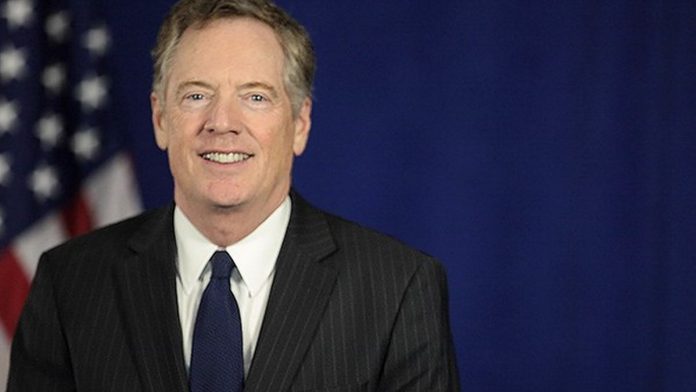
US Trade Representative (USTR) Robert Lighthizer | Commons
New Delhi: India and the US have ironed out last-minute glitches to finalise a limited trade package that will address some immediate irritants on both sides, multiple sources told ThePrint.
According to the sources, New Delhi has agreed to remove price caps from US-imported medical devices, a matter of much concern in the US, while Washington is ready to partially restore concessions for Indian imports under the US’ Generalised System of Preferences (GSP), a trade programme meant to boost the economies of developing nations.
The final prepping of the deal will take place early next month when US Trade Representative (USTR) Robert Lighthizer comes to India, the sources said.
This will be Lighthizer’s maiden visit to India since becoming the USTR. He is expected to be here in the second week of February, when he will hold the final round of negotiations with his Indian counterpart Piyush Goyal, the Union Commerce and Industry Minister, the sources added.
US President Donald Trump, the sources said, will formally sign the deal during his visit here later that month.
Concessions on both sides
According to sources, the main bone of contention in India-US trade negotiations was the price caps placed by New Delhi on US-made medical devices such as coronary stents and knee implants.
India, the sources said, has now agreed to remove blanket price caps for high-end medical devices and bring them under price-control measures such as trade margin rationalisation (TMR).
The trade margin is the difference between the price at which manufacturers or importers sell to trade (price to trade) and the price to patients (maximum retail price), and TMR entails a cap on the profit that can be earned on a product.
The US is the largest exporter of medical devices to India. In 2017, India slashed prices of coronary stents by 85 per cent while those of knee implants were also capped. According to the government, the idea was to make devices affordable and curb “illegal profiteering”.
The deal, which follows intense discussions over one year, is also expected to ensure a “partial restoration” of Generalised System of Preferences (GSP) benefits for Indian exporters.
The Donald Trump administration had stripped India of GSP benefits last June, immediately after Prime Minister Narendra Modi came to office for the second time, over lingering trade tensions.
The final contours of the deal were discussed last week during the visit of Brendan Lynch, the deputy USTR (South and Central Asia), and Christopher Wilson, the assistant USTR (South and Central Asia).
“Both the US and India have made substantial progress on the trade negotiations. We expect closure soon. We also expect it to be a win-win for both sides and some agreement on medical devices as well as on GSP for India, all these issues are on the table,” said Mukesh Aghi, president and CEO of the non-profit US-India Strategic Partnership Forum.
“However, going forward, a free trade agreement (FTA) between both sides will be a positive development in the long run.”
According to sources, the FTA may be announced as part of a long-term plan between the US and India even as the US continues to express concerns over its trade deficit with India.
“A free trade agreement between India and the US looks quite far away, especially when it has taken years to conclude even the limited deal,” said Richard Rossow, Wadhwani Chair in US-India policy studies at Washington-based think tank Centre for Strategic & International Studies.
‘All eyes now on the budget’
The Trump administration has been particularly upset with India for hiking customs duties on a range of products since 2014 that are of export interest for the US.
In 2014, New Delhi had raised tariffs on various products from the information and communications technology (ICT) sector, including cellphones.
New Delhi is now reportedly contemplating increasing import duties on over 50 items ranging from electronics, electrical goods, chemicals and handicrafts, which experts say may worsen tensions.
“All eyes are now on the budget, and if India decides to go for another round of hike in customs duties, especially on items such as IT goods, electronics or capital goods, then problems between India and US will only pile up,” Rossow added.
Last June, India had hiked customs duties on as many as 28 US products, including almonds, pulses and walnuts, in response to higher tariffs imposed by Washington on Indian products like steel and aluminium.
India-US trade deal final, Robert Lighthizer to seal it on February trip to Delhi
India and US, whose relationship has been wracked by deep trade tensions, have managed to iron out ‘last-minute glitches’.
By Nayanima Basu, 27 January, 2020 9:49 pm IST
US Trade Representative (USTR) Robert Lighthizer | Commons
New Delhi: India and the US have ironed out last-minute glitches to finalise a limited trade package that will address some immediate irritants on both sides, multiple sources told ThePrint.
According to the sources, New Delhi has agreed to remove price caps from US-imported medical devices, a matter of much concern in the US, while Washington is ready to partially restore concessions for Indian imports under the US’ Generalised System of Preferences (GSP), a trade programme meant to boost the economies of developing nations.
The final prepping of the deal will take place early next month when US Trade Representative (USTR) Robert Lighthizer comes to India, the sources said.
This will be Lighthizer’s maiden visit to India since becoming the USTR. He is expected to be here in the second week of February, when he will hold the final round of negotiations with his Indian counterpart Piyush Goyal, the Union Commerce and Industry Minister, the sources added.
US President Donald Trump, the sources said, will formally sign the deal during his visit here later that month.
Concessions on both sides
According to sources, the main bone of contention in India-US trade negotiations was the price caps placed by New Delhi on US-made medical devices such as coronary stents and knee implants.
India, the sources said, has now agreed to remove blanket price caps for high-end medical devices and bring them under price-control measures such as trade margin rationalisation (TMR).
The trade margin is the difference between the price at which manufacturers or importers sell to trade (price to trade) and the price to patients (maximum retail price), and TMR entails a cap on the profit that can be earned on a product.
The US is the largest exporter of medical devices to India. In 2017, India slashed prices of coronary stents by 85 per cent while those of knee implants were also capped. According to the government, the idea was to make devices affordable and curb “illegal profiteering”.
The deal, which follows intense discussions over one year, is also expected to ensure a “partial restoration” of Generalised System of Preferences (GSP) benefits for Indian exporters.
The Donald Trump administration had stripped India of GSP benefits last June, immediately after Prime Minister Narendra Modi came to office for the second time, over lingering trade tensions.
The final contours of the deal were discussed last week during the visit of Brendan Lynch, the deputy USTR (South and Central Asia), and Christopher Wilson, the assistant USTR (South and Central Asia).
“Both the US and India have made substantial progress on the trade negotiations. We expect closure soon. We also expect it to be a win-win for both sides and some agreement on medical devices as well as on GSP for India, all these issues are on the table,” said Mukesh Aghi, president and CEO of the non-profit US-India Strategic Partnership Forum.
“However, going forward, a free trade agreement (FTA) between both sides will be a positive development in the long run.”
According to sources, the FTA may be announced as part of a long-term plan between the US and India even as the US continues to express concerns over its trade deficit with India.
“A free trade agreement between India and the US looks quite far away, especially when it has taken years to conclude even the limited deal,” said Richard Rossow, Wadhwani Chair in US-India policy studies at Washington-based think tank Centre for Strategic & International Studies.
‘All eyes now on the budget’
The Trump administration has been particularly upset with India for hiking customs duties on a range of products since 2014 that are of export interest for the US.
In 2014, New Delhi had raised tariffs on various products from the information and communications technology (ICT) sector, including cellphones.
New Delhi is now reportedly contemplating increasing import duties on over 50 items ranging from electronics, electrical goods, chemicals and handicrafts, which experts say may worsen tensions.
“All eyes are now on the budget, and if India decides to go for another round of hike in customs duties, especially on items such as IT goods, electronics or capital goods, then problems between India and US will only pile up,” Rossow added.
Last June, India had hiked customs duties on as many as 28 US products, including almonds, pulses and walnuts, in response to higher tariffs imposed by Washington on Indian products like steel and aluminium.
India-US trade deal final, Robert Lighthizer to seal it on February trip to Delhi

Oh man India is not limited to Gujrat.
The political context of Donald Trump’s India visit
Ahead of polls, he will seek to leverage the trip for political ends. India should stay focused on the wider agenda.
Updated: Feb 06, 2020 20:16 IST
By Dhruva Jaishankar.

The White House has yet to confirm Trump’s expected visit this month, although preparations have begun in earnest. The US is seeking to conclude a modest bilateral deal with India that will bring an end to almost three years of trade hostilities(REUTERS)
Nine months is a long time in politics. But with the next United States (US) presidential election coming up in November, Donald Trump is feeling ascendant. Within 72 hours this week, several developments took place that further improve his prospects for re-election.
On Monday, when the state of Iowa held the first vote to select the Democratic Party’s nominee for president, the process was dogged by controversy. The Iowa Caucuses — comprising local meetings to select representatives supporting individual candidates — hit a technical snag, meaning that results were delayed. As the confirmed results trickled in, it appeared that Pete Buttigieg, the 38-year-old former mayor of a small town in Indiana, had won the most delegates, even though veteran Senator Bernie Sanders may have won the most votes. With Buttigieg and Sanders representing two wings of the party, the Democrats leave Iowa more fractured than ever. Meanwhile, the Democrats’ organisation in at least one pivotal state appeared woefully incompetent.
On Tuesday, Trump delivered his annual State of the Union address to the US Congress. This occasion not only saw him extolling his various accomplishments, but was marked by political theatre reminiscent of the president’s prior career as reality television show personality. Rightwing radio commentator Rush Limbaugh was presented with one of the US’ highest civilian honours. An enlisted military officer deployed in Afghanistan was reunited with his family. Democrats refused to applaud, several boycotted the address, and Speaker Nancy Pelosi tore up the text of Trump’s speech sitting right behind him. It was a moment of triumphalism for Trump in a house bitterly divided.
On Wednesday, the US Senate voted to acquit Trump on charges of abuse of power and obstruction of the Congress, both related to his linking military assistance to Ukraine with domestic US political objectives. While the acquittal was along predictable party lines, Senator Mitt Romney, himself a former Republican nominee for president, voted with Democrats to remove Trump from office. Romney’s surprise decision mitigated what might have otherwise been another unambiguous victory for Trump.
These developments have occurred just as Trump’s popularity has enhanced. The overall US economy and employment remain strong, with one recent estimate suggesting the largest private sector job growth in four-and-a-half years. On foreign policy, Trump’s escalation with Iran burnished his standing following the assassination by the US of Iranian General Qasem Soleimani and the accidental downing by Iran of a civilian airliner. On trade, Trump has recently concluded a “Phase One” deal with China, and successfully renegotiated a US-Mexico-Canada trade agreement (USMCA) on more favourable terms. His tax cuts have found favour with middle-class constituents, his judicial appointments have pleased Christian conservatives, and his trade policies have appealed to certain business interests and trade unions. This creates a strong base upon which he will now seek re-election.
It is amid this context that Trump may be headed to India. The White House has yet to confirm Trump’s expected visit this month, although preparations have begun in earnest. The US is seeking to conclude a modest bilateral deal with India that will bring an end to almost three years of trade hostilities. But the president’s top trade negotiator Robert Lighthizer — buoyant from concluding tough negotiations with China, Japan, Canada, and Mexico — appears eager to drive a hard bargain and not let India off the hook easily. A significant defence sale is another item awaiting conclusion. Trump also thrives on big crowds, which he hopes will await him in India. While these items remain at the top of the US president’s priorities, given their political value, his government is seeking other deliverables, including cooperation in third countries as part of the US and India’s Indo-Pacific convergence. Several other US officials are expected to visit India later in the year to follow up substantively on various aspects of India policy.
If Trump comes to India riding high, it will be important to recall a few points. First, US elections are always competitive affairs and opinion can change dramatically in a matter of months, as it happened in 2008 and again in 2016. That being said, US presidential elections tend to favour incumbent presidents (only four have lost in the past century). Much will depend upon the state of the US economy.
Second, Trump’s India visit will not be a partisan affair, even if the president chooses to portray it as such. After all, the Indian government invited his predecessor Barack Obama, a Democrat, as chief guest of Republic Day in 2015. Efforts will continue to be made to engage Democrats, despite their internal divisions, including presidential candidates and members of the US Congress.
Finally, while Trump will highlight the aspects of engagement with India that serve his political interests, the real significance for India will be at a more mundane level. The wide gulfs that existed between New Delhi and Washington on trade, Russia, Iran, and Afghanistan have been mended over the past six months, while cooperation on security and terrorism has continued apace. Trump’s theatrics are not a sideshow, for they have real implications. But neither should they constitute the most important story in India-US relations from New Delhi’s vantage point.
Dhruva Jaishankar is director of the US Initiative at the Observer Research Foundation. The views expressed are personal.
The political context of Donald Trump’s India visit
Ahead of polls, he will seek to leverage the trip for political ends. India should stay focused on the wider agenda.
Updated: Feb 06, 2020 20:16 IST
By Dhruva Jaishankar.
The White House has yet to confirm Trump’s expected visit this month, although preparations have begun in earnest. The US is seeking to conclude a modest bilateral deal with India that will bring an end to almost three years of trade hostilities(REUTERS)
Nine months is a long time in politics. But with the next United States (US) presidential election coming up in November, Donald Trump is feeling ascendant. Within 72 hours this week, several developments took place that further improve his prospects for re-election.
On Monday, when the state of Iowa held the first vote to select the Democratic Party’s nominee for president, the process was dogged by controversy. The Iowa Caucuses — comprising local meetings to select representatives supporting individual candidates — hit a technical snag, meaning that results were delayed. As the confirmed results trickled in, it appeared that Pete Buttigieg, the 38-year-old former mayor of a small town in Indiana, had won the most delegates, even though veteran Senator Bernie Sanders may have won the most votes. With Buttigieg and Sanders representing two wings of the party, the Democrats leave Iowa more fractured than ever. Meanwhile, the Democrats’ organisation in at least one pivotal state appeared woefully incompetent.
On Tuesday, Trump delivered his annual State of the Union address to the US Congress. This occasion not only saw him extolling his various accomplishments, but was marked by political theatre reminiscent of the president’s prior career as reality television show personality. Rightwing radio commentator Rush Limbaugh was presented with one of the US’ highest civilian honours. An enlisted military officer deployed in Afghanistan was reunited with his family. Democrats refused to applaud, several boycotted the address, and Speaker Nancy Pelosi tore up the text of Trump’s speech sitting right behind him. It was a moment of triumphalism for Trump in a house bitterly divided.
On Wednesday, the US Senate voted to acquit Trump on charges of abuse of power and obstruction of the Congress, both related to his linking military assistance to Ukraine with domestic US political objectives. While the acquittal was along predictable party lines, Senator Mitt Romney, himself a former Republican nominee for president, voted with Democrats to remove Trump from office. Romney’s surprise decision mitigated what might have otherwise been another unambiguous victory for Trump.
These developments have occurred just as Trump’s popularity has enhanced. The overall US economy and employment remain strong, with one recent estimate suggesting the largest private sector job growth in four-and-a-half years. On foreign policy, Trump’s escalation with Iran burnished his standing following the assassination by the US of Iranian General Qasem Soleimani and the accidental downing by Iran of a civilian airliner. On trade, Trump has recently concluded a “Phase One” deal with China, and successfully renegotiated a US-Mexico-Canada trade agreement (USMCA) on more favourable terms. His tax cuts have found favour with middle-class constituents, his judicial appointments have pleased Christian conservatives, and his trade policies have appealed to certain business interests and trade unions. This creates a strong base upon which he will now seek re-election.
It is amid this context that Trump may be headed to India. The White House has yet to confirm Trump’s expected visit this month, although preparations have begun in earnest. The US is seeking to conclude a modest bilateral deal with India that will bring an end to almost three years of trade hostilities. But the president’s top trade negotiator Robert Lighthizer — buoyant from concluding tough negotiations with China, Japan, Canada, and Mexico — appears eager to drive a hard bargain and not let India off the hook easily. A significant defence sale is another item awaiting conclusion. Trump also thrives on big crowds, which he hopes will await him in India. While these items remain at the top of the US president’s priorities, given their political value, his government is seeking other deliverables, including cooperation in third countries as part of the US and India’s Indo-Pacific convergence. Several other US officials are expected to visit India later in the year to follow up substantively on various aspects of India policy.
If Trump comes to India riding high, it will be important to recall a few points. First, US elections are always competitive affairs and opinion can change dramatically in a matter of months, as it happened in 2008 and again in 2016. That being said, US presidential elections tend to favour incumbent presidents (only four have lost in the past century). Much will depend upon the state of the US economy.
Second, Trump’s India visit will not be a partisan affair, even if the president chooses to portray it as such. After all, the Indian government invited his predecessor Barack Obama, a Democrat, as chief guest of Republic Day in 2015. Efforts will continue to be made to engage Democrats, despite their internal divisions, including presidential candidates and members of the US Congress.
Finally, while Trump will highlight the aspects of engagement with India that serve his political interests, the real significance for India will be at a more mundane level. The wide gulfs that existed between New Delhi and Washington on trade, Russia, Iran, and Afghanistan have been mended over the past six months, while cooperation on security and terrorism has continued apace. Trump’s theatrics are not a sideshow, for they have real implications. But neither should they constitute the most important story in India-US relations from New Delhi’s vantage point.
Dhruva Jaishankar is director of the US Initiative at the Observer Research Foundation. The views expressed are personal.
The political context of Donald Trump’s India visit