

India - United States Relations
- Thread starter Butter Chicken
- Start date
You are using an out of date browser. It may not display this or other websites correctly.
You should upgrade or use an alternative browser.
You should upgrade or use an alternative browser.

Please do it, please cancel few deals and see pressure on Trump as politician. Stop kissing *censored* for eternity, show some self respect, some spine.
$6 Billions down the drain for a remark will send a message loud and clear to present and future politicians of US.

At DPG meeting with US, India set to play Pakistan card
India
By Srinjoy Chowdhury | National Affairs Editor
Updated Aug 01, 2019 | 00:13 IST
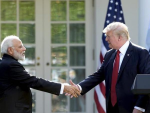
File image | Photo Credit: AP
The meeting will take place just days after US President Donald Trump’s remarks on mediating between New Delhi and Islamabad on Kashmir kicked up a huge row here.
Washington: Days after US President Donald Trump’s statements about mediating between New Delhi and Islamabad, India will play the Pakistan card at the much-delayed Defence Policy Group (DPG) meeting beginning Thursday in Washington, DC.
At the secretary-level talks, India is expected to point out that the United States is very forthcoming on cooperation with the US Pacific Command that is being rapidly strengthened as Washington sees China as a major threat. So, with India, there is interaction at various levels, including Exercise Malabar between the two navies and Japan also playing a part. But India wants more interaction with the Central Command. It is the Central Command, with its naval unit's headquarters in Bahrain, that is responsible for Pakistan. India unhesitatingly wants closer ties on its western side primarily because it would mean more exchange of intelligence about Pakistan. Closer cooperation with the USA in this area would mean a more stable zone on India's west.
While the USA and Britain are building up a coalition of willing naval forces against Iran, India will operate independently in the Persian Gulf area. The Indian Navy's Operation Sankalp will continue; it will be an independent operation.
Discussions on the transfer of weapons systems are likely. They include 10 P8I maritime reconnaissance planes for the Navy, along with 111 Naval Utility helicopters and 24 other choppers, both made by Lockheed Martin. There are talks of the Predator 'B' Sea Guardian UAVs, 1,000 plus sonobuoys and the 127mm medium calibre gun for Indian naval ships. Also, there is likely to be a talk about India purchasing about 270 Harpoon anti-ship missiles.
For the Indian Air Force, there may be discussions about more C-130 and C-17 aircrafts and with the Army, about a major exercise and the purchase of radars and other equipment. The issue of the F-35 top-of-the-line fighter aircraft has been bandied about, but so far, India has not officially made any request to the United States.
Besides, talks about the operationalisation of COMCASA, one of the foundational agreements between the two countries and forward movement on the BECA, the agreement that is still under discussion, is expected.
Right after the meeting, a mini 2+2 meeting between officials of both sides is taking place in California. There will also be a Maritime Security Dialogue shortly afterwards.
At DPG meeting with US, India set to play Pakistan card
India
By Srinjoy Chowdhury | National Affairs Editor
Updated Aug 01, 2019 | 00:13 IST
File image | Photo Credit: AP
The meeting will take place just days after US President Donald Trump’s remarks on mediating between New Delhi and Islamabad on Kashmir kicked up a huge row here.
Washington: Days after US President Donald Trump’s statements about mediating between New Delhi and Islamabad, India will play the Pakistan card at the much-delayed Defence Policy Group (DPG) meeting beginning Thursday in Washington, DC.
At the secretary-level talks, India is expected to point out that the United States is very forthcoming on cooperation with the US Pacific Command that is being rapidly strengthened as Washington sees China as a major threat. So, with India, there is interaction at various levels, including Exercise Malabar between the two navies and Japan also playing a part. But India wants more interaction with the Central Command. It is the Central Command, with its naval unit's headquarters in Bahrain, that is responsible for Pakistan. India unhesitatingly wants closer ties on its western side primarily because it would mean more exchange of intelligence about Pakistan. Closer cooperation with the USA in this area would mean a more stable zone on India's west.
While the USA and Britain are building up a coalition of willing naval forces against Iran, India will operate independently in the Persian Gulf area. The Indian Navy's Operation Sankalp will continue; it will be an independent operation.
Discussions on the transfer of weapons systems are likely. They include 10 P8I maritime reconnaissance planes for the Navy, along with 111 Naval Utility helicopters and 24 other choppers, both made by Lockheed Martin. There are talks of the Predator 'B' Sea Guardian UAVs, 1,000 plus sonobuoys and the 127mm medium calibre gun for Indian naval ships. Also, there is likely to be a talk about India purchasing about 270 Harpoon anti-ship missiles.
For the Indian Air Force, there may be discussions about more C-130 and C-17 aircrafts and with the Army, about a major exercise and the purchase of radars and other equipment. The issue of the F-35 top-of-the-line fighter aircraft has been bandied about, but so far, India has not officially made any request to the United States.
Besides, talks about the operationalisation of COMCASA, one of the foundational agreements between the two countries and forward movement on the BECA, the agreement that is still under discussion, is expected.
Right after the meeting, a mini 2+2 meeting between officials of both sides is taking place in California. There will also be a Maritime Security Dialogue shortly afterwards.
At DPG meeting with US, India set to play Pakistan card

India, US to ink two key defence pacts this week
Defence secretary Sanjay Mitra is leading India’s delegation, a senior official aware of the details said on condition of anonymity. He will be meeting the US undersecretary of defence for policy John Rood.
Updated: Aug 02, 2019 05:17 IST
By Sudhi Ranjan Sen
Hindustan Times, New Delhi
 BECA will allow India to use US geospatial maps to achieve pinpoint military accuracy of automated hardware systems and weapons such as cruise and ballistic missiles, even drones.(REUTERS)
India and the United States are likely to finalise two critical agreements, the Industrial Security Annexure (ISA) and the Basic Exchange and Cooperation Agreement (BECA) – the second is a so-called foundational military agreement — in the coming bilateral Defence Planning Group (DPG) dialogue in Washington this week.
Defence secretary Sanjay Mitra is leading India’s delegation, a senior official aware of the details said on condition of anonymity. He will be meeting the US undersecretary of defence for policy John Rood. The DPG has been revived after a gap of four years. The decision to revive it was taken at the last 2+2 dialogue between India and the US last year in which their defence and foreign ministers participated.
BECA will allow India to use US geospatial maps to achieve pinpoint military accuracy of automated hardware systems and weapons such as cruise and ballistic missiles, even drones. India is considering buying 30 High Altitude Long Endurance (HALE) drones from the United States. BECA is an important enabler of unmanned aerial vehicles from the US, such as the Predator-B, that use spatial data for accurate strikes on enemy targets.
The other agreement, ISA, is an annexure to the General Security Of Military Information Agreement (GSOMIA) and will enable the US government and US defence companies to share classified information with Indian private defence manufacturers. India and the US signed the GSOMIA 17 years ago. It allowed the sharing of classified information from the US government and American defence manufacturers with the Indian government and government-owned defence firms. Once the ISA is signed, the US will be able to share technology with Indian private companies.
The United States has already shared the draft agreements of both ISA and BECA with India. Although India initially had reservations on geospatial mapping on grounds of national security, the Narendra Modi government has made up its mind to sign BECA, provided its concerns are addressed.
India is already a signatory to the remaining two foundational military agreements, Communications Compatibility and Security Agreement (COMCASA), and Logistics Exchange Memorandum of Agreement (LEMOA). The former allows the US to transfer communication equipment to India that facilitate secure transmission of data and real-time information between the armed forces of the two countries. It was finalised during last year’s 2+2 talks in Washington.
India and the US singed LEMOA -- it allows Indian and American defence forces to use each other’s facilities and establishes procedures of easier access to supplies and services required by them -- in 2016. While India and US forces have always used each other’s facilities on a case-by-case basis, LEMOA gives blanket approval for use of facilities and also makes the accounting easier for both countries.
In the DPG, the two sides are likely to decide on the “future roadmap” for “joint advanced exercises” between India and the US, a second senior official who did not want to be named said. In addition, the DPG will also look at the prospect of technological cooperation in building military hardware under Make in India, the second official added. “Exercises between the two sides will become complicated in scale and scope with the militaries preparing for future scenarios.”
Experts said the two pacts are crucial for the defence cooperation between the two countries. “Sealing ISA and BECA is very significant. ISA will mean that the last hurdle to sharing critical technology with the private sector will go. It will be much easier to achieve Make in India,” said admiral Shekhar Sinha (retd), who advises the government on issues of security policy. “Similarly, BECA is also critical for more cooperation between US and India. I had expected these would be signed much earlier. With these two agreements in place the private sector is likely to play a bigger role in defence manufacturing and that will free up much needed resources for the government to concentrate on issues like health, water, etc,” he added.
India, US to ink two key defence pacts this week
Defence secretary Sanjay Mitra is leading India’s delegation, a senior official aware of the details said on condition of anonymity. He will be meeting the US undersecretary of defence for policy John Rood.
Updated: Aug 02, 2019 05:17 IST
By Sudhi Ranjan Sen
Hindustan Times, New Delhi
India and the United States are likely to finalise two critical agreements, the Industrial Security Annexure (ISA) and the Basic Exchange and Cooperation Agreement (BECA) – the second is a so-called foundational military agreement — in the coming bilateral Defence Planning Group (DPG) dialogue in Washington this week.
Defence secretary Sanjay Mitra is leading India’s delegation, a senior official aware of the details said on condition of anonymity. He will be meeting the US undersecretary of defence for policy John Rood. The DPG has been revived after a gap of four years. The decision to revive it was taken at the last 2+2 dialogue between India and the US last year in which their defence and foreign ministers participated.
BECA will allow India to use US geospatial maps to achieve pinpoint military accuracy of automated hardware systems and weapons such as cruise and ballistic missiles, even drones. India is considering buying 30 High Altitude Long Endurance (HALE) drones from the United States. BECA is an important enabler of unmanned aerial vehicles from the US, such as the Predator-B, that use spatial data for accurate strikes on enemy targets.
The other agreement, ISA, is an annexure to the General Security Of Military Information Agreement (GSOMIA) and will enable the US government and US defence companies to share classified information with Indian private defence manufacturers. India and the US signed the GSOMIA 17 years ago. It allowed the sharing of classified information from the US government and American defence manufacturers with the Indian government and government-owned defence firms. Once the ISA is signed, the US will be able to share technology with Indian private companies.
The United States has already shared the draft agreements of both ISA and BECA with India. Although India initially had reservations on geospatial mapping on grounds of national security, the Narendra Modi government has made up its mind to sign BECA, provided its concerns are addressed.
India is already a signatory to the remaining two foundational military agreements, Communications Compatibility and Security Agreement (COMCASA), and Logistics Exchange Memorandum of Agreement (LEMOA). The former allows the US to transfer communication equipment to India that facilitate secure transmission of data and real-time information between the armed forces of the two countries. It was finalised during last year’s 2+2 talks in Washington.
India and the US singed LEMOA -- it allows Indian and American defence forces to use each other’s facilities and establishes procedures of easier access to supplies and services required by them -- in 2016. While India and US forces have always used each other’s facilities on a case-by-case basis, LEMOA gives blanket approval for use of facilities and also makes the accounting easier for both countries.
In the DPG, the two sides are likely to decide on the “future roadmap” for “joint advanced exercises” between India and the US, a second senior official who did not want to be named said. In addition, the DPG will also look at the prospect of technological cooperation in building military hardware under Make in India, the second official added. “Exercises between the two sides will become complicated in scale and scope with the militaries preparing for future scenarios.”
Experts said the two pacts are crucial for the defence cooperation between the two countries. “Sealing ISA and BECA is very significant. ISA will mean that the last hurdle to sharing critical technology with the private sector will go. It will be much easier to achieve Make in India,” said admiral Shekhar Sinha (retd), who advises the government on issues of security policy. “Similarly, BECA is also critical for more cooperation between US and India. I had expected these would be signed much earlier. With these two agreements in place the private sector is likely to play a bigger role in defence manufacturing and that will free up much needed resources for the government to concentrate on issues like health, water, etc,” he added.
India, US to ink two key defence pacts this week

India, US agree on collaboration in defence sector
Indian and American officials on August 2 agreed to pursue a policy environment conducive to collaboration between the defence industry and start-ups in both countries.
An understanding in this regard was reached during the 15th meeting of the India-US Defence Policy Group (DPG) on August 2.
The Indian side was led by Defence Secretary Sanjay Mitra. The US was led by the Undersecretary of Defence for Policy, John Rood.
The DPG is the apex official-level meeting mechanism between India and the US on defense issues, which comprehensively reviews and guides all aspects of bilateral cooperation between the two countries.
"The meeting today took stock of the progress made in various fields of defence cooperation in recent years, including in defence trade, technology, procurement, industry, R&D and mil-to-mil engagement," a media release said Friday.
During the meeting, the two countries recognised the benefit of enabling defence agreements concluded by the two sides and appreciated India's designation as a Major Defence Partner of the US.
"They underlined the importance of collaboration between the defence industry and start-ups in the two countries and agreed to pursue a policy environment conducive to this," said a statement issued by the Indian Embassy here.
Various working groups and mechanisms under the DPG briefed the Co-chairs of the progress made in their respective areas and got the latter's guidance on addressing process issues for meaningful, sustainable and mutually beneficial cooperation, it said.
The two sides reaffirmed the role of the DPG as an important part of the ministerial 2+2 mechanism, helping translate the shared strategic vision of cooperation into reality.
India, US agree on collaboration in defence sector
Indian and American officials on August 2 agreed to pursue a policy environment conducive to collaboration between the defence industry and start-ups in both countries.
An understanding in this regard was reached during the 15th meeting of the India-US Defence Policy Group (DPG) on August 2.
The Indian side was led by Defence Secretary Sanjay Mitra. The US was led by the Undersecretary of Defence for Policy, John Rood.
The DPG is the apex official-level meeting mechanism between India and the US on defense issues, which comprehensively reviews and guides all aspects of bilateral cooperation between the two countries.
"The meeting today took stock of the progress made in various fields of defence cooperation in recent years, including in defence trade, technology, procurement, industry, R&D and mil-to-mil engagement," a media release said Friday.
During the meeting, the two countries recognised the benefit of enabling defence agreements concluded by the two sides and appreciated India's designation as a Major Defence Partner of the US.
"They underlined the importance of collaboration between the defence industry and start-ups in the two countries and agreed to pursue a policy environment conducive to this," said a statement issued by the Indian Embassy here.
Various working groups and mechanisms under the DPG briefed the Co-chairs of the progress made in their respective areas and got the latter's guidance on addressing process issues for meaningful, sustainable and mutually beneficial cooperation, it said.
The two sides reaffirmed the role of the DPG as an important part of the ministerial 2+2 mechanism, helping translate the shared strategic vision of cooperation into reality.
India, US agree on collaboration in defence sector
Series of events :
First this :
U.S. will consider ‘301 probe’ on India, says trade official
By Sriram Lakshman
Washington, July 12, 2019 22:26 IST
Updated : July 12, 2019 23:33 IST

Investigation is a precursor to trade measures
The U.S. will consider a “301 investigation”, a probe employed as a precursor to tariffs and other trade measures against a country, against India if the trade issues between the two countries are not resolved quickly, Deputy U.S. Trade Representative (USTR) Jeffrey Gerrish said on Thursday.
Mr. Gerrish also said India finalising data localisation policies could be deal-breaker across the board between the two countries.
His comments were made at a U.S.-India Strategic Partnership Forum (USISPF) event in Washington during a discussion with Susan Esserman, a former Deputy USTR in the Clinton Administration.
“We believe that we should utilise the full range of trade rules, including Section 301, where warranted. And we’re certainly looking at these policies and practices that India has engaged in light of that. We are doing it in a very deliberate, thoughtful way and trying to determine what the best approach is here,” Mr Gerrish said. “And we’ll see where that goes. At this point, we’re clearly in the very early stages of our engagement with the new Indian government and we want to see, of course, what the willingness is to address the trade issues that we have.”
Mr. Gerrish declined to give a timeline for these actions but said issues would need to be resolved quickly.
However, Mr. Gerrish added that if the market access issues related to GSP (Generalized System of Preferences) were resolved quickly, it would be a confidence building step and would help the process.
Section 301 of the U.S. Trade Act (1974) was also to authorise a 2017 probe that resulted in tariffs on Chinese exports to the U.S. from July 2018. Earlier this week, the USTR announced a 301 probe against France on a digital services tax.
“We certainly recognise the pivotal role that India plays as a vibrant democracy in the region to a free and open Indo-Pacific region and the important strategic relationship that our two countries have and in everything we do, we approach it with that in mind,” Mr. Gerrish said.
Mr. Gerrish, a former lawyer and Trump appointee to the U.S.’s trade office, was confirmed by the Senate in March 2018.
He said the two countries needed to move beyond the GSP review and take a more “comprehensive approach” to the issues between them. The US, in June, cancelled India’s benefits under the Generalized System of Preferences (GSP) programme for market access reasons.
“But it goes well beyond that [GSP] and we have a number of other market access issues relating to agricultural and non-agricultural products, but also other critical issues and areas involving digital trade, services and intellectual property protection enforcement,” Mr. Gerrish said.
A 301 probe, if launched, would be comprehensive.
“Just on the IPR issue, this is something that India has been on our Priority Watch List that we issued as part of our Special 301 Process since 1989,” Mr. Gerrish said.
A Special 301 Report is prepared annually by the USTR and is different from a 301 investigation.
Mr. Gerrish said his trade colleagues were in New Delhi not to negotiate but to ascertain whether the new government had the “willingness and wherewithal” to address and resolve the trade issues between the two countries, adding the U.S. has had “good interactions so far” with Commerce Minister Piyush Goyal.
A USTR delegation has been in New Delhi this week for talks, including with Commerce and Industry Minister Piyush Goyal.
The issues, however, are not long-standing ones, Mr. Gerrish said, but included recent developments such as with regard to digital trade.
“We’ve even had some... unfortunately... some additional troubling issues that have developed in the last year, particularly in the digital trade area,” Mr Gerrish said, adding India had taken a number of “troubling actions” in the data localisation arena. Mr. Gerrish cited the RBI electronic payments regulation, the draft e-commerce policy released earlier this year and the draft data privacy as examples of these actions.
The RBI had, in 2018, said payment system operators operating in India would need to store payment systems data within the country.
In the context of data localisation, Mr. Gerrish welcomed the fact that the Indian government had indicated that it would be consulting stakeholders on policies they are considering but indicated that data localisation policies, if finalised, would be deal breaker for U.S.-India trade.
“It would be a really problematic step if those [data localisation policies] were to be put in place and could really, I think, hurt the new engagement that we have and potentially halt that altogether across the board on the trade issues.”
https://www.thehindu.com/news/inter...india-says-trade-official/article28415242.ece
First this :
U.S. will consider ‘301 probe’ on India, says trade official
By Sriram Lakshman
Washington, July 12, 2019 22:26 IST
Updated : July 12, 2019 23:33 IST
Investigation is a precursor to trade measures
The U.S. will consider a “301 investigation”, a probe employed as a precursor to tariffs and other trade measures against a country, against India if the trade issues between the two countries are not resolved quickly, Deputy U.S. Trade Representative (USTR) Jeffrey Gerrish said on Thursday.
Mr. Gerrish also said India finalising data localisation policies could be deal-breaker across the board between the two countries.
His comments were made at a U.S.-India Strategic Partnership Forum (USISPF) event in Washington during a discussion with Susan Esserman, a former Deputy USTR in the Clinton Administration.
“We believe that we should utilise the full range of trade rules, including Section 301, where warranted. And we’re certainly looking at these policies and practices that India has engaged in light of that. We are doing it in a very deliberate, thoughtful way and trying to determine what the best approach is here,” Mr Gerrish said. “And we’ll see where that goes. At this point, we’re clearly in the very early stages of our engagement with the new Indian government and we want to see, of course, what the willingness is to address the trade issues that we have.”
Mr. Gerrish declined to give a timeline for these actions but said issues would need to be resolved quickly.
However, Mr. Gerrish added that if the market access issues related to GSP (Generalized System of Preferences) were resolved quickly, it would be a confidence building step and would help the process.
Section 301 of the U.S. Trade Act (1974) was also to authorise a 2017 probe that resulted in tariffs on Chinese exports to the U.S. from July 2018. Earlier this week, the USTR announced a 301 probe against France on a digital services tax.
“We certainly recognise the pivotal role that India plays as a vibrant democracy in the region to a free and open Indo-Pacific region and the important strategic relationship that our two countries have and in everything we do, we approach it with that in mind,” Mr. Gerrish said.
Mr. Gerrish, a former lawyer and Trump appointee to the U.S.’s trade office, was confirmed by the Senate in March 2018.
He said the two countries needed to move beyond the GSP review and take a more “comprehensive approach” to the issues between them. The US, in June, cancelled India’s benefits under the Generalized System of Preferences (GSP) programme for market access reasons.
“But it goes well beyond that [GSP] and we have a number of other market access issues relating to agricultural and non-agricultural products, but also other critical issues and areas involving digital trade, services and intellectual property protection enforcement,” Mr. Gerrish said.
A 301 probe, if launched, would be comprehensive.
“Just on the IPR issue, this is something that India has been on our Priority Watch List that we issued as part of our Special 301 Process since 1989,” Mr. Gerrish said.
A Special 301 Report is prepared annually by the USTR and is different from a 301 investigation.
Mr. Gerrish said his trade colleagues were in New Delhi not to negotiate but to ascertain whether the new government had the “willingness and wherewithal” to address and resolve the trade issues between the two countries, adding the U.S. has had “good interactions so far” with Commerce Minister Piyush Goyal.
A USTR delegation has been in New Delhi this week for talks, including with Commerce and Industry Minister Piyush Goyal.
The issues, however, are not long-standing ones, Mr. Gerrish said, but included recent developments such as with regard to digital trade.
“We’ve even had some... unfortunately... some additional troubling issues that have developed in the last year, particularly in the digital trade area,” Mr Gerrish said, adding India had taken a number of “troubling actions” in the data localisation arena. Mr. Gerrish cited the RBI electronic payments regulation, the draft e-commerce policy released earlier this year and the draft data privacy as examples of these actions.
The RBI had, in 2018, said payment system operators operating in India would need to store payment systems data within the country.
In the context of data localisation, Mr. Gerrish welcomed the fact that the Indian government had indicated that it would be consulting stakeholders on policies they are considering but indicated that data localisation policies, if finalised, would be deal breaker for U.S.-India trade.
“It would be a really problematic step if those [data localisation policies] were to be put in place and could really, I think, hurt the new engagement that we have and potentially halt that altogether across the board on the trade issues.”
https://www.thehindu.com/news/inter...india-says-trade-official/article28415242.ece
Then this :
‘India and U.S. very close to resolving all trade issues’
By T.C.A. Sharad Raghavan
NEW DELHI,July 31, 2019 22:48 IST
Updated:July 31, 2019 22:59 IST
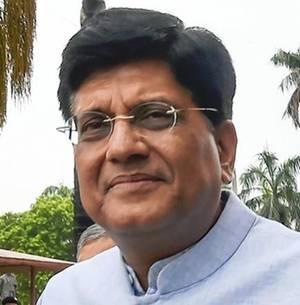
Piyush Goyal. | Photo Credit: PTI
‘Market access, the bone of contention, close to settlement’
India and the U.S. are “very close” to resolving all their trade-related differences, with Commerce Minister Piyush Goyal planning to meet the U.S. Trade Representative in the coming month, a senior Commerce Ministry official told The Hindu.
The focus now for the two countries is to “calm the heightened tempers” since almost all issues have been resolved, the official added. The core area of disagreement, market access, is also close to being resolved, he said.
“All the issues that have happened, on aluminium, steel, retaliatory tariffs by us, are all done now,” the official said on the condition of anonymity. “The focus now is to look ahead and to calm the heightened tempers on both sides. The officials from our side and their side have been meeting regularly, and we are very close to seeing an agreement coming into place.”
The key bone of contention between India and the U.S. is market access, the official explained, adding that this was at the bottom of most of the tensions between the two countries over the last year or so.
“The market access issue will also be resolved soon, when the [Commerce] Minister meets the U.S. Trade Representative either late next month [August] or early the month after that,” the official said. The Indian government is demanding greater market access in the U.S. for dairy products, medical devices, and information and communication technology (ICT) services, he added.
The U.S. government, on the other hand, is demanding increased market access on a wider range of products.
India had in mid-June imposed retaliatory tariffs on 29 items imported from the U.S., including walnuts, apples, and some pulses, a year after it had initially threatened to do so. The threat of retaliation by India had come following U.S. President Donald Trump’s decision in March 2018 to impose higher import tariffs on aluminium and steel, including that originating in India.
Soon after, the U.S. also announced that it would be reviewing India’s eligibility for duty-free imports under the US Generalised System of Preferences (GSP). India repeatedly held talks with the U.S. at various levels to convince them to grant India an exemption from the steel and aluminium import duty hike, and also to further extend the GSP to India.
However, this was to no avail. The U.S. refused to grant India an exemption from the import duty hike and also earlier this year withdrew India’s GSP status.
“The meeting between the Minister and the USTR will close this issue and once again increase the engagement between the two countries,” the official said.
‘India and U.S. very close to resolving all trade issues’
‘India and U.S. very close to resolving all trade issues’
By T.C.A. Sharad Raghavan
NEW DELHI,July 31, 2019 22:48 IST
Updated:July 31, 2019 22:59 IST
Piyush Goyal. | Photo Credit: PTI
‘Market access, the bone of contention, close to settlement’
India and the U.S. are “very close” to resolving all their trade-related differences, with Commerce Minister Piyush Goyal planning to meet the U.S. Trade Representative in the coming month, a senior Commerce Ministry official told The Hindu.
The focus now for the two countries is to “calm the heightened tempers” since almost all issues have been resolved, the official added. The core area of disagreement, market access, is also close to being resolved, he said.
“All the issues that have happened, on aluminium, steel, retaliatory tariffs by us, are all done now,” the official said on the condition of anonymity. “The focus now is to look ahead and to calm the heightened tempers on both sides. The officials from our side and their side have been meeting regularly, and we are very close to seeing an agreement coming into place.”
The key bone of contention between India and the U.S. is market access, the official explained, adding that this was at the bottom of most of the tensions between the two countries over the last year or so.
“The market access issue will also be resolved soon, when the [Commerce] Minister meets the U.S. Trade Representative either late next month [August] or early the month after that,” the official said. The Indian government is demanding greater market access in the U.S. for dairy products, medical devices, and information and communication technology (ICT) services, he added.
The U.S. government, on the other hand, is demanding increased market access on a wider range of products.
India had in mid-June imposed retaliatory tariffs on 29 items imported from the U.S., including walnuts, apples, and some pulses, a year after it had initially threatened to do so. The threat of retaliation by India had come following U.S. President Donald Trump’s decision in March 2018 to impose higher import tariffs on aluminium and steel, including that originating in India.
Soon after, the U.S. also announced that it would be reviewing India’s eligibility for duty-free imports under the US Generalised System of Preferences (GSP). India repeatedly held talks with the U.S. at various levels to convince them to grant India an exemption from the steel and aluminium import duty hike, and also to further extend the GSP to India.
However, this was to no avail. The U.S. refused to grant India an exemption from the import duty hike and also earlier this year withdrew India’s GSP status.
“The meeting between the Minister and the USTR will close this issue and once again increase the engagement between the two countries,” the official said.
‘India and U.S. very close to resolving all trade issues’
India is a developed country guys.. celebrate 
India, China no longer 'developing nations', won't let them take 'advantage' from WTO: Donald Trump
India, China no longer 'developing nations', won't let them take 'advantage' from WTO: Donald Trump
And the drama over solar panel continues................
Solar case: US appeals against WTO panel’s ruling in favour of India
By: PTI | Published: August 16, 2019 5:53:49 PM
The US has challenged this ruling in the WTO's Appellate Body, which is above the dispute settlement panel.
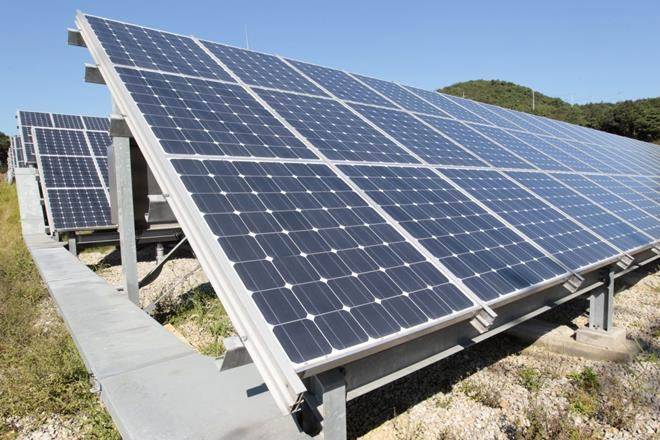
The Geneva-based body can uphold, modify or reverse legal findings and conclusions of WTO’s dispute panel and its reports.
A ruling given by the WTO’s dispute settlement panel on renewable energy or the solar sector in favour of India has been challenged by the US in the upper body of the World Trade Organization. In June, a WTO dispute resolution panel ruled in favour of India in a case against the US saying that America’s domestic content requirements and subsidies provided by eight of its states in the renewable energy or the solar sector are violative of global trade norms.
The US has challenged this ruling in the WTO’s Appellate Body, which is above the dispute settlement panel. “The US hereby notifies its decision to appeal to the appellate body certain issues of law covered in the report of the panel in US – Certain Measures Relating to the Renewable Energy Sector and certain legal interpretations developed by the panel,” a WTO communication has said.
The panel in its ruling had concluded that the measures of the US are inconsistent with certain provisions of the General Agreement on Tariffs and Trade (GATT). The GATT aims to promote trade by reducing or eliminating trade barriers such as customs duties. In September 2016, India had dragged the US to the WTO’s dispute settlement mechanism over the issue.
Washington, California, Montana, Massachusetts, Connecticut, Michigan, Delaware and Minnesota were the eight states providing subsidies. India had stated that the measures are inconsistent with global trade norms because they provide less favourable treatment to imported products than domestic products, and because the subsidies are contingent on the use of domestic over imported goods. Parties to a dispute can appeal a panel’s ruling.
Appeals have to be based on points of law, such as legal interpretation — they cannot re-open factual findings made by the panel. Each appeal is heard by three members of an Appellate Body, comprising persons of recognised authority and unaffiliated with any government. Each member of the appellate body is appointed for a fixed term. Generally, the Appellate Body has up to 3 months to conclude its report.
The Geneva-based body can uphold, modify or reverse legal findings and conclusions of WTO’s dispute panel and its reports. If the body’s ruling goes against India, the country will have to comply with the order in six-seven months. The ruling in favour of India came at a time when there are trade tensions between the two countries.
The US has rolled back export incentives from India under its Generalized System of Preferences programme and New Delhi has imposed higher customs duties on 28 American products. The two countries are also at loggerheads over a number of other disputes at the WTO. The US has challenged certain export promotion schemes of India, while India has challenged the US’ unilateral increase in customs duties on certain steel and aluminium products.
Solar case: US appeals against WTO panel’s ruling in favour of India
Solar case: US appeals against WTO panel’s ruling in favour of India
By: PTI | Published: August 16, 2019 5:53:49 PM
The US has challenged this ruling in the WTO's Appellate Body, which is above the dispute settlement panel.
The Geneva-based body can uphold, modify or reverse legal findings and conclusions of WTO’s dispute panel and its reports.
A ruling given by the WTO’s dispute settlement panel on renewable energy or the solar sector in favour of India has been challenged by the US in the upper body of the World Trade Organization. In June, a WTO dispute resolution panel ruled in favour of India in a case against the US saying that America’s domestic content requirements and subsidies provided by eight of its states in the renewable energy or the solar sector are violative of global trade norms.
The US has challenged this ruling in the WTO’s Appellate Body, which is above the dispute settlement panel. “The US hereby notifies its decision to appeal to the appellate body certain issues of law covered in the report of the panel in US – Certain Measures Relating to the Renewable Energy Sector and certain legal interpretations developed by the panel,” a WTO communication has said.
The panel in its ruling had concluded that the measures of the US are inconsistent with certain provisions of the General Agreement on Tariffs and Trade (GATT). The GATT aims to promote trade by reducing or eliminating trade barriers such as customs duties. In September 2016, India had dragged the US to the WTO’s dispute settlement mechanism over the issue.
Washington, California, Montana, Massachusetts, Connecticut, Michigan, Delaware and Minnesota were the eight states providing subsidies. India had stated that the measures are inconsistent with global trade norms because they provide less favourable treatment to imported products than domestic products, and because the subsidies are contingent on the use of domestic over imported goods. Parties to a dispute can appeal a panel’s ruling.
Appeals have to be based on points of law, such as legal interpretation — they cannot re-open factual findings made by the panel. Each appeal is heard by three members of an Appellate Body, comprising persons of recognised authority and unaffiliated with any government. Each member of the appellate body is appointed for a fixed term. Generally, the Appellate Body has up to 3 months to conclude its report.
The Geneva-based body can uphold, modify or reverse legal findings and conclusions of WTO’s dispute panel and its reports. If the body’s ruling goes against India, the country will have to comply with the order in six-seven months. The ruling in favour of India came at a time when there are trade tensions between the two countries.
The US has rolled back export incentives from India under its Generalized System of Preferences programme and New Delhi has imposed higher customs duties on 28 American products. The two countries are also at loggerheads over a number of other disputes at the WTO. The US has challenged certain export promotion schemes of India, while India has challenged the US’ unilateral increase in customs duties on certain steel and aluminium products.
Solar case: US appeals against WTO panel’s ruling in favour of India
United States to hold meeting of 2+2 Dialogue with India today
Posted at : Aug 22, 2019, 8:31 AM (IST)

The American delegation is being led jointly by Acting Assistant Secretary of State for South and Central Asian Affairs Alice Wells and Assistant Secretary of Defence for Indo-Pacific Affairs Randall Schriver. iStock
Washington, August 22
Amid increased India-Pakistan tension, the United States will host an inter-sessional meeting of the US-India 2+2 Dialogue in California on Thursday to discuss ways to advance cooperation on critical diplomatic and security priorities.
The inter-sessional meeting is aimed at strengthening the strategic partnership, the State Department said on Wednesday.
“During the inter-sessional, the two sides will discuss ways to advance cooperation on critical diplomatic and security priorities, including our shared vision of a free and open Indo-Pacific region, and review preparations for the next 2+2 Ministerial Dialogue,” the State Department said.
The American delegation is being led jointly by Acting Assistant Secretary of State for South and Central Asian Affairs Alice Wells and Assistant Secretary of Defence for Indo-Pacific Affairs Randall Schriver.
Meanwhile, on Friday, during the fourth US-India Maritime Security Dialogue, the two sides would exchange views on maritime developments in the Indo-Pacific region and consider steps to further strengthen bilateral maritime security cooperation, the official US statement said.
Both the 2+2 inter-sessional meeting and Maritime Security Dialogue would be held at the Naval Postgraduate School, Monterey in California, it said.
The interactions will lay the ground work for the visit of External Affairs Minister S Jaishankar and Defence Minister Rajnath Singh to the US later this fall.
United States to hold meeting of 2+2 Dialogue with India today
Posted at : Aug 22, 2019, 8:31 AM (IST)
The American delegation is being led jointly by Acting Assistant Secretary of State for South and Central Asian Affairs Alice Wells and Assistant Secretary of Defence for Indo-Pacific Affairs Randall Schriver. iStock
Washington, August 22
Amid increased India-Pakistan tension, the United States will host an inter-sessional meeting of the US-India 2+2 Dialogue in California on Thursday to discuss ways to advance cooperation on critical diplomatic and security priorities.
The inter-sessional meeting is aimed at strengthening the strategic partnership, the State Department said on Wednesday.
“During the inter-sessional, the two sides will discuss ways to advance cooperation on critical diplomatic and security priorities, including our shared vision of a free and open Indo-Pacific region, and review preparations for the next 2+2 Ministerial Dialogue,” the State Department said.
The American delegation is being led jointly by Acting Assistant Secretary of State for South and Central Asian Affairs Alice Wells and Assistant Secretary of Defence for Indo-Pacific Affairs Randall Schriver.
Meanwhile, on Friday, during the fourth US-India Maritime Security Dialogue, the two sides would exchange views on maritime developments in the Indo-Pacific region and consider steps to further strengthen bilateral maritime security cooperation, the official US statement said.
Both the 2+2 inter-sessional meeting and Maritime Security Dialogue would be held at the Naval Postgraduate School, Monterey in California, it said.
The interactions will lay the ground work for the visit of External Affairs Minister S Jaishankar and Defence Minister Rajnath Singh to the US later this fall.
United States to hold meeting of 2+2 Dialogue with India today
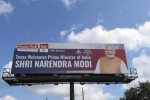
Howdy Modi ?!?!?! 
They even have a website
Anybody here lives/lived in Texas ?? Howdy Mitron is coming !
They even have a website
Anybody here lives/lived in Texas ?? Howdy Mitron is coming !
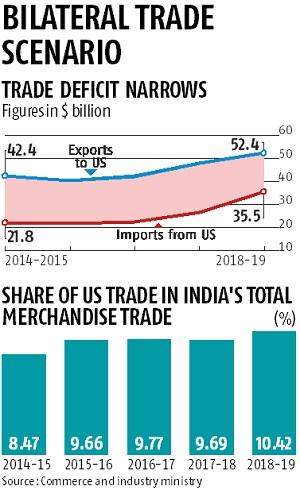
Major American apparel brands such as Ralph Lauren, Calvin Klein, Van Heusen, and Carters have made a case for a free trade agreement (FTA) between India and the US, arguing it will attract investments and streamline trade-related issues.
“An FTA with the US is a major component of bilateral business relations that is missing now,” Tara Joseph, president of the American Chamber of Commerce (AmCham) in Hong Kong, said.
AmCham Hong Kong, in partnership with the Confederation of Indian Industry (CII), has brought a delegation of 15 top US apparel companies to India for exploring mega investment opportunities. It has also asked the government to reduce the customs duty on synthetic fabric imports.
The American industry body is the latest to bat for an FTA with the US. Earlier this year, both the US-India Business Council and the US-India Strategic Partnership Forum -- major business advocacy groups -- reiterated their support for a bilateral trade deal.
This view has found support among Indian industry as well. “We need FTAs with major buying countries like the US. In the current business environment, for a variety of reasons, this may be a good time to sign a bilateral FTA with the US," said Gautam Nair, chairman of the CII Textiles Task Force on Sourcing and Investments.
According to AmCham, the US-China trade war has made sourcing from China costly and has opened a window for investments into India, and that businesses are keen to test whether manufacturing can start.
During the ongoing three-day visit, the companies are testing the Indian market and having talks with Indian firms for greater sourcing operations, as well as the government, for investments of “hundreds of millions of dollars”, Joseph said.
 In a meeting with Textiles Minister Smriti Irani, the delegation suggested that problems in doing business and lack of skilled manpower remained key issues. It also flagged the long time taken in moving goods into production areas.
“India has a lot of cotton and natural fibres, but many US manufacturers work with synthetic fibres and the high cost of bringing them in creates a difficulty for manufacturers," Joseph said. The delegation has also discussed sustainable manufacturing practices with a focus on low water consumption, with government functionaries, including NITI Aayog CEO Amitabh Kant.
FTA debate
After repeated overtures from the Donald Trump administration, India has told the US that it was unwilling to discuss a full FTA. Officials and trade experts say it is against India's interest to sign an FTA with the US, given that import tariffs for the majority of goods are relatively high in India and the country would need to adjust to a much greater degree to lower duties to US levels, which are among the lowest globally.
Instead, New Delhi has pushed for a 'trade package' that will aim to provide mutual trade concessions across information and communication technology (ICT) goods, aviation, and oil purchases. The package has been in the works for the past year and a half, with trade officials having met as many as seven times to hammer out a deal that provides an amicable solution to grouses from both sides.
As part of the deal, India had considered dismantling its existing price cap regime for coronary stents with a trade margin policy. It had also discussed the possibility of allowing lower duties on import of certain ICT goods such as high-end mobile phones and smartwatches from the US.
American fashion brands push for India-US FTA to streamline trade issues
“An FTA with the US is a major component of bilateral business relations that is missing now,” Tara Joseph, president of the American Chamber of Commerce (AmCham) in Hong Kong, said.
AmCham Hong Kong, in partnership with the Confederation of Indian Industry (CII), has brought a delegation of 15 top US apparel companies to India for exploring mega investment opportunities. It has also asked the government to reduce the customs duty on synthetic fabric imports.
The American industry body is the latest to bat for an FTA with the US. Earlier this year, both the US-India Business Council and the US-India Strategic Partnership Forum -- major business advocacy groups -- reiterated their support for a bilateral trade deal.
This view has found support among Indian industry as well. “We need FTAs with major buying countries like the US. In the current business environment, for a variety of reasons, this may be a good time to sign a bilateral FTA with the US," said Gautam Nair, chairman of the CII Textiles Task Force on Sourcing and Investments.
According to AmCham, the US-China trade war has made sourcing from China costly and has opened a window for investments into India, and that businesses are keen to test whether manufacturing can start.
During the ongoing three-day visit, the companies are testing the Indian market and having talks with Indian firms for greater sourcing operations, as well as the government, for investments of “hundreds of millions of dollars”, Joseph said.
“India has a lot of cotton and natural fibres, but many US manufacturers work with synthetic fibres and the high cost of bringing them in creates a difficulty for manufacturers," Joseph said. The delegation has also discussed sustainable manufacturing practices with a focus on low water consumption, with government functionaries, including NITI Aayog CEO Amitabh Kant.
FTA debate
After repeated overtures from the Donald Trump administration, India has told the US that it was unwilling to discuss a full FTA. Officials and trade experts say it is against India's interest to sign an FTA with the US, given that import tariffs for the majority of goods are relatively high in India and the country would need to adjust to a much greater degree to lower duties to US levels, which are among the lowest globally.
Instead, New Delhi has pushed for a 'trade package' that will aim to provide mutual trade concessions across information and communication technology (ICT) goods, aviation, and oil purchases. The package has been in the works for the past year and a half, with trade officials having met as many as seven times to hammer out a deal that provides an amicable solution to grouses from both sides.
As part of the deal, India had considered dismantling its existing price cap regime for coronary stents with a trade margin policy. It had also discussed the possibility of allowing lower duties on import of certain ICT goods such as high-end mobile phones and smartwatches from the US.
American fashion brands push for India-US FTA to streamline trade issues
