India eyes 6th generation FCAS, looks at tying up with France for possible collaboration

Tatvamasi

Senior member
Jan 5, 2018
1,809
2,233
India
New Delhi: In what could be a major collaboration in the aviation sector, India is exploring the possibility of teaming up with France for co-development and co-manufacture of a futuristic sixth-generation fighter under the Future Combat Air System (FCAS) programme, ThePrint has learnt.

Initial talks have already been held on the possibility of India entering the programme that was started in 2017 between France, Germany and Spain to ensure European sovereignty in defence and security.

However, nearly nine years later, the ambitious project is going through turbulence, with sharp differences over leadership and workshare threatening its future.
German Chancellor Friedrich Merz said last week that the Euro 100 billion programme no longer worked for him. However, he underlined that this was “not a political dispute” but a technical one.

France needs a jet that can carry nuclear weapons and launch from aircraft carriers, while Germany does not since it is against nuclear weapons and has even shut down its nuclear power plants.

The companies involved in the project are Dassault Aviation (France), Airbus (Germany/Spain) and Indra Sistemas (Spain).

Such has been the bickering between Airbus and Dassault, that the European aviation major has publicly suggested a “two-fighter solution” where France and Germany/Spain could pursue separate fighter designs under a shared FCAS architecture to avoid the entire programme collapsing.

The Guardian quoted Airbus’ chief executive Guillaume Faury signalling a potential route forward Thursday by suggesting France and Germany each develop separate jets, but link them through the shared combat cloud and drone systems.

Speaking at the company’s annual results announcement, he said the deadlock “should not jeopardise the entire future of this high-tech European capability, which will bolster our collective defence”.

“If mandated by our customers, we would support a two-fighter solution and are committed to playing a leading role in such a reorganised FCAS delivered through European cooperation,” Faury said.

While FCAS was at a “difficult juncture”, he added, “we continue to believe that the programme as a whole makes sense”, The Guardian reported.

The Indian interest

Sources in the defence and security establishment said that India has informed the French “loud and clear” that it is willing to look at joining the FCAS project in case it does not work out with Germany.

India is already developing its own fifth-generation Advanced Medium Combat Aircraft (AMCA) and collaboration on FCAS could potentially accelerate India’s exposure to sixth-generation technologies such as manned-unmanned teaming, combat cloud networking and advanced propulsion and stealth.

Whether FCAS evolves into a unified European programme, splits into parallel efforts, or morphs into a broader India-France partnership remains to be seen, but early conversations suggest New Delhi is closely watching the turbulence in Europe’s most ambitious air combat project.

This is the second time India would be teaming up with a foreign country for the development of future technology in the aviation sector.

India had tied up with Russia earlier for the Fifth Generation Fighter Aircraft (FGFA) but left it in 2018 due to work share issues and the inability of the aircraft to meet 5th generation standards.

Indian authorities have put their trust behind France and this dates back to the 1950s. Since then there has never been a period when the Indian Air Force (IAF) has not flown a fighter built by Dassault Aviation or with a French connection.


This paper highlights something much deeper than mere opportunistic “Indian interest”: it reveals a structural realignment of industrial and strategic thinking around 21st-century air combat.

First, it is important to remember what the Future Combat Air System really is. This program has never been just about an aircraft. It is an architecture of sovereignty built around a new-generation fighter, collaborative drones, cloud combat, and complete control of the decision-making and information chain. However, this ambition has been hampered from the outset by an insoluble political contradiction: France and Germany do not pursue the same strategic objective.

For France, the future aircraft must be carrier-based, nuclear-powered, deployable, and fully sovereign. For Germany, it cannot serve as a deterrent or be structured around complete strategic autonomy, since Berlin remains fundamentally tied to NATO and politically opposed to nuclear power. This divergence is not “technical,” contrary to what diplomatic statements claim: it is doctrinal.

The industrial deadlock between Dassault Aviation and Airbus is merely a concrete manifestation of this. Dassault thinks like a coherent system architect, responsible from start to finish, with a clear authority structure. Airbus thinks like a multinational integrator, based on task sharing, ongoing negotiation, and political symmetry. These two cultures can coexist on a transport aircraft or helicopter, but they become explosive on a strategic combat system.

Airbus's proposal for a “two-fighter solution” is therefore an implicit admission: the unified FCAS is probably dead, or at least doomed to be a hollow shell. Two different aircraft, linked by the same digital layer, is no longer a sovereign program, but contractual interoperability. In other words, the infrastructure is saved, but strategic unity is sacrificed.

It is precisely this gap that India is filling.

India's reasoning is remarkably consistent. New Delhi does not need a simple technology transfer. It wants access to the core of the sixth generation: collaborative human-machine combat, sovereign tactical cloud, advanced motorization, and multi-spectral stealth. Its own AMCA program is aimed at the fifth generation, but India knows that it cannot, alone and quickly, overcome all the obstacles to the sixth. Relying on France would allow it to accelerate without placing itself under American tutelage.

And it is no coincidence that India looks to Paris, rather than Berlin or Washington. The Indo-French relationship is asymmetrical but stable, based on strategic trust built up since the 1950s. Unlike other partners, France has demonstrated that it accepts the principle of India's real autonomy, including industrial autonomy. The precedent set by the Rafale, motorization, submarines, and associated technology transfers has left a lasting impression in New Delhi.

There is also a point that is often underestimated: India has learned a very hard lesson from its failure with Russia on the FGFA. It no longer wants a program where the division of labor is unclear, where the final aircraft does not meet the announced standards, and where political dependence becomes an operational handicap. In contrast, France appears to be a demanding, sometimes difficult, but predictable partner.

This scenario reveals an uncomfortable truth for Europe: the “Franco-German couple” does not work in systems of hard sovereignty. It can work on regulation, the economy, and standards. It fails when it comes to nuclear power, power projection, and high-intensity warfare. India's possible entry into a France-centered version of the FCAS would, in fact, be an implicit recognition of this failure.

If this shift were to be confirmed, the consequences would be considerable. France would secure a critical mass partner, both industrially and financially. India would gain access to an exclusive technological club without losing its strategic freedom. And continental Europe would see that the future of its most advanced capabilities is now being played out outside its traditional political framework.

In short, it is not India that is knocking on the door of the FCAS out of opportunism.
It is the FCAS, as it was conceived, that is seeking a strategic coherence that it no longer has in Europe.

And so the central question becomes:
will France choose to save a real industrial and military ambition with India, or to preserve a European political fiction that, in this specific area, no longer holds water?
 
New Delhi: In what could be a major collaboration in the aviation sector, India is exploring the possibility of teaming up with France for co-development and co-manufacture of a futuristic sixth-generation fighter under the Future Combat Air System (FCAS) programme, ThePrint has learnt.

Initial talks have already been held on the possibility of India entering the programme that was started in 2017 between France, Germany and Spain to ensure European sovereignty in defence and security.

However, nearly nine years later, the ambitious project is going through turbulence, with sharp differences over leadership and workshare threatening its future.
German Chancellor Friedrich Merz said last week that the Euro 100 billion programme no longer worked for him. However, he underlined that this was “not a political dispute” but a technical one.

France needs a jet that can carry nuclear weapons and launch from aircraft carriers, while Germany does not since it is against nuclear weapons and has even shut down its nuclear power plants.

The companies involved in the project are Dassault Aviation (France), Airbus (Germany/Spain) and Indra Sistemas (Spain).

Such has been the bickering between Airbus and Dassault, that the European aviation major has publicly suggested a “two-fighter solution” where France and Germany/Spain could pursue separate fighter designs under a shared FCAS architecture to avoid the entire programme collapsing.

The Guardian quoted Airbus’ chief executive Guillaume Faury signalling a potential route forward Thursday by suggesting France and Germany each develop separate jets, but link them through the shared combat cloud and drone systems.

Speaking at the company’s annual results announcement, he said the deadlock “should not jeopardise the entire future of this high-tech European capability, which will bolster our collective defence”.

“If mandated by our customers, we would support a two-fighter solution and are committed to playing a leading role in such a reorganised FCAS delivered through European cooperation,” Faury said.

While FCAS was at a “difficult juncture”, he added, “we continue to believe that the programme as a whole makes sense”, The Guardian reported.

The Indian interest

Sources in the defence and security establishment said that India has informed the French “loud and clear” that it is willing to look at joining the FCAS project in case it does not work out with Germany.

India is already developing its own fifth-generation Advanced Medium Combat Aircraft (AMCA) and collaboration on FCAS could potentially accelerate India’s exposure to sixth-generation technologies such as manned-unmanned teaming, combat cloud networking and advanced propulsion and stealth.

Whether FCAS evolves into a unified European programme, splits into parallel efforts, or morphs into a broader India-France partnership remains to be seen, but early conversations suggest New Delhi is closely watching the turbulence in Europe’s most ambitious air combat project.

This is the second time India would be teaming up with a foreign country for the development of future technology in the aviation sector.

India had tied up with Russia earlier for the Fifth Generation Fighter Aircraft (FGFA) but left it in 2018 due to work share issues and the inability of the aircraft to meet 5th generation standards.

Indian authorities have put their trust behind France and this dates back to the 1950s. Since then there has never been a period when the Indian Air Force (IAF) has not flown a fighter built by Dassault Aviation or with a French connection.


This was an inevitability. The moment you gave engine production codevelopment to the French.
It's better we license produce the su-57.
Get AMCA mk1 and tedbf with GE-414.
Get the fcas and the engine
The engine gets integrated on AMCA mk2.
I hope we make a 180kN with the Brits but our dehati uncouth politicians neither have the intelligence, education or vision.
 
Hmm, we need a thread on Indian 6gen developments & news, if not there.

Something solid has to be started officially this year, like colaboration on VCE, DEW, airframe, etc.

> Defence Minister Rajnath Singh has told DoD units to look into 6gen tech also, not just AMCA.

> Germany has disagreed with France on need of nuclear capable & naval versions of FCAS. But we have both those needs. So we can explore few things with France.

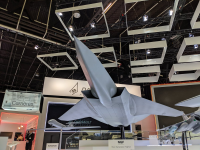
> So far FCAS seems to be a very flat design. But no preliminary specs yet. The models show IWB doors but unclear how deep, for which weapons.

1771834758571.png
 
  • Like
Reactions: Sathya
This paper highlights something much deeper than mere opportunistic “Indian interest”: it reveals a structural realignment of industrial and strategic thinking around 21st-century air combat.

First, it is important to remember what the Future Combat Air System really is. This program has never been just about an aircraft. It is an architecture of sovereignty built around a new-generation fighter, collaborative drones, cloud combat, and complete control of the decision-making and information chain. However, this ambition has been hampered from the outset by an insoluble political contradiction: France and Germany do not pursue the same strategic objective.

For France, the future aircraft must be carrier-based, nuclear-powered, deployable, and fully sovereign. For Germany, it cannot serve as a deterrent or be structured around complete strategic autonomy, since Berlin remains fundamentally tied to NATO and politically opposed to nuclear power. This divergence is not “technical,” contrary to what diplomatic statements claim: it is doctrinal.

The industrial deadlock between Dassault Aviation and Airbus is merely a concrete manifestation of this. Dassault thinks like a coherent system architect, responsible from start to finish, with a clear authority structure. Airbus thinks like a multinational integrator, based on task sharing, ongoing negotiation, and political symmetry. These two cultures can coexist on a transport aircraft or helicopter, but they become explosive on a strategic combat system.

Airbus's proposal for a “two-fighter solution” is therefore an implicit admission: the unified FCAS is probably dead, or at least doomed to be a hollow shell. Two different aircraft, linked by the same digital layer, is no longer a sovereign program, but contractual interoperability. In other words, the infrastructure is saved, but strategic unity is sacrificed.

It is precisely this gap that India is filling.

India's reasoning is remarkably consistent. New Delhi does not need a simple technology transfer. It wants access to the core of the sixth generation: collaborative human-machine combat, sovereign tactical cloud, advanced motorization, and multi-spectral stealth. Its own AMCA program is aimed at the fifth generation, but India knows that it cannot, alone and quickly, overcome all the obstacles to the sixth. Relying on France would allow it to accelerate without placing itself under American tutelage.

And it is no coincidence that India looks to Paris, rather than Berlin or Washington. The Indo-French relationship is asymmetrical but stable, based on strategic trust built up since the 1950s. Unlike other partners, France has demonstrated that it accepts the principle of India's real autonomy, including industrial autonomy. The precedent set by the Rafale, motorization, submarines, and associated technology transfers has left a lasting impression in New Delhi.

There is also a point that is often underestimated: India has learned a very hard lesson from its failure with Russia on the FGFA. It no longer wants a program where the division of labor is unclear, where the final aircraft does not meet the announced standards, and where political dependence becomes an operational handicap. In contrast, France appears to be a demanding, sometimes difficult, but predictable partner.

This scenario reveals an uncomfortable truth for Europe: the “Franco-German couple” does not work in systems of hard sovereignty. It can work on regulation, the economy, and standards. It fails when it comes to nuclear power, power projection, and high-intensity warfare. India's possible entry into a France-centered version of the FCAS would, in fact, be an implicit recognition of this failure.

If this shift were to be confirmed, the consequences would be considerable. France would secure a critical mass partner, both industrially and financially. India would gain access to an exclusive technological club without losing its strategic freedom. And continental Europe would see that the future of its most advanced capabilities is now being played out outside its traditional political framework.

In short, it is not India that is knocking on the door of the FCAS out of opportunism.
It is the FCAS, as it was conceived, that is seeking a strategic coherence that it no longer has in Europe.

And so the central question becomes:
will France choose to save a real industrial and military ambition with India, or to preserve a European political fiction that, in this specific area, no longer holds water?
This was discussed, ie India joining the program. The observation by @randomradio was that it is not financially feasible for India because of huge pay difference for French & Indian workforce. He even told that the Janitor in Dassault will be getting more salary than the lead scientists in DRDO.

My opinion is, if Indo Russian FGFA joint development stuck then i dont have any hope on Indo French joint development of the fighter.
If India plays its cards right, They have leverage to get a good deal
We have only financing card for development & confirmed pre order of FCAS. France doesn't need any technical collaboration from India on sixth gen aircraft development.
 
the current timelines for this program is 2029 first flight and 2040 induction, none of the participants in the program have a engine certified for this class of fighter and I not even sure the prototyping of the fighter started yet.
This is going to be another white elephant for us
 
  • Like
Reactions: Optimist
German Chancellor Friedrich Merz said last week that the Euro 100 billion programme no longer worked for him. However, he underlined that this was “not a political dispute” but a technical one.
6 years to understand than France needed and need a carrier suitable and nuclear deterrence jet. As said from the beginning....
OK, let's go for 2 jets.
I hope we make a 180kN with the Brits
What is the last jet engine 100% developped and produced by them ?
 
  • Agree
Reactions: Amarante
Hmm, we need a thread on Indian 6gen developments & news, if not there.

Something solid has to be started officially this year, like colaboration on VCE, DEW, airframe, etc.

> Defence Minister Rajnath Singh has told DoD units to look into 6gen tech also, not just AMCA.

> Germany has disagreed with France on need of nuclear capable & naval versions of FCAS. But we have both those needs. So we can explore few things with France.

> So far FCAS seems to be a very flat design. But no preliminary specs yet. The models show IWB doors but unclear how deep, for which weapons.

View attachment 49878
No bay big enough for ASN4G on this mock up.
Or another solution for deterrence will be found....
the current timelines for this program is 2029 first flight and 2040 induction, none of the participants in the program have a engine certified for this class of fighter and I not even sure the prototyping of the fighter started yet.
This is going to be another white elephant for us
2029 is now irrealist.
It takes at least 4 years to built a new frame. 2030/31 is more realist for a roll out.
 
2029 is now irrealist.
It takes at least 4 years to built a new frame. 2030/31 is more realist for a roll out.
What nonsense, Dassault has said the 2040 timeline couldn't be met and is now looking at 2050 and I think that is optimistic too
As to design just the demonstrator, that is also a long timeline, they havent worked on it for years now, it's been stalled
The 2029 was from many years ago, 2050 says It has slipped 10 years

The Dassault Aviation FCAS (Future Combat Air System) is a collaborative 6th-gen European fighter program aiming for operational deployment by 2050, delayed from 2040 due to industrial disagreements between Dassault and Airbus. The project involves France, Germany, and Spain developing a "system of systems" with a core Next Generation Fighter, remote carriers, and advanced stealth capabilities.
AeroTime +4
 
Last edited:
the current timelines for this program is 2029 first flight and 2040 induction, none of the participants in the program have a engine certified for this class of fighter and I not even sure the prototyping of the fighter started yet.
This is going to be another white elephant for us
I don't know about a white elephant, but looking at late 2050's could be doable, If there is enough funding, Remember the rafale was underfunded and it took to f3 for the rafale to be saleable
 
We have only financing card for development & confirmed pre order of FCAS
Only? Why?


If India did collaborate then By the time FCAS will be ready , the numerical requirement of IAF+IN combined will rival or exceed the combined numerical requirement of France+Germany +Spain

Its the financial aspect mainly that's helping India getting the technology and assistance by France in time to develop amca's engine by 2035.
 
  • Like
Reactions: Rajput Lion
No bay big enough for ASN4G on this mock up.
Or another solution for deterrence will be found....
A new gen jet needs new gen weapons also, with adjustment to size, shape.
IMO, a central longer modular bay is needed to keep such weapons.
I visualize an Indian 6gen jet design to be naval primarily, then adjusted to IAF, capable of carrying 6m long Brahmos-NG, may be shortened 7-8m long Brahmos also internally.
 
  • Like
Reactions: Rajput Lion
What nonsense, Dassault has said the 2040 timeline couldn't be met and is now looking at 2050 and I think that is optimistic too
As to design just the demonstrator, that is also a long timeline, they havent worked on it for years now, it's been stalled
The 2029 was from many years ago, 2050 says It has slipped 10 years

The Dassault Aviation FCAS (Future Combat Air System) is a collaborative 6th-gen European fighter program aiming for operational deployment by 2050, delayed from 2040 due to industrial disagreements between Dassault and Airbus. The project involves France, Germany, and Spain developing a "system of systems" with a core Next Generation Fighter, remote carriers, and advanced stealth capabilities.
AeroTime +4
We were speaking of a demonstrator, as Rafale A was to legacy Rafale.

Read the thread before answering
 
This JV, if comes true would bypass our need for a 5th gen carrier based fighter and give us access to 6th gen or 5+ gen tech for our CBGs. We should definitely work with the French for our future 6th gen fighter while our indigenous AHCA work shall continue alongside it.
AHCA ? you mean the slightly bigger AMCA mk2 that would come along with the JV engine?

As for the FCAS, i mean depends on how much money france asks, if its 10-15 billion paid until like 2040-45 then i think we should go for it especially if they allow us to pay later in the 2030s when we got the money to spend after the growth of the economy.

A carrier capable sixth gen would be a Boon for India even if it came in the 2040s
 
  • Like
Reactions: Rajput Lion
IMO, the current FCAS airframe won't suffice. India can design the airframe for 6G-N-TEDB-AHCA, they we go, a compound acronym😵‍💫😵 -
6G - 6th gen
N - Nuclear weapons capable
TEDB - Twin Engine Deck Based
AHCA - Advanced Heavy Combat Aircrat
🤢

But we need help with engines.
 
  • Like
Reactions: Rajput Lion
Sounds all fine & dandy . Hate to be a wet blanket. But let's see what are we getting into here? ADA is & will continue to be neck deep into AMCA Mk-1 & Mk-2 .

RN it's focusing on the LCA Mk-2. In between there were talks of the MKI zation of the Su-57. Wonder who'd be handling it? HAL? HAL themselves will be pre occupied with the production of the ~ 180 nos Mk-1a & possibly the Mk-2 after that. Then there's the HTT-40 & the IJT - Yashas they'd be mfg.

Rafale will be DRAL's baby or whoever will replace Anilbhai . No idea how much MKI zation will happen & who will implement it? Besides what's the learning for our local partner in all this ?

If we opt for this JV, TEDBF is dead not that it isn't now but there's some hope it'd morph into a 5th Gen TEDBF. Whether it happens or advisable is another topic! Which isn't a bad deal IMO. The IN can be the Project Manager here for this project which still raises the question which agency would be the development agency?

ADA as it is structured won't be in a position to handle the work load . Then there's the issue of knowledge & industrial bandwidth as this is a 6th Gen Project we're talking about where both parties don't have any experience of a 5th Gen FA.

ADA probably makes up for DA's lack of experience in this field given the AMCA project it's steering. However DA's experience knowledge & industrial bandwidth far exceeds anything ADA can bring to the table for reasons given above.

Then there's the issue of finance. 100 billion Euros was the budgeted figure across ~ 20 years to be distributed roughly equally between France & Germany. Works out to 2.5 billion Euros per annum. That's ~ INR 30,000 crores.

Let's not get into PPP & other exotic economic terms . There's inflation and to consider too so whatever we save via lesser costs of development will be taken care of by inflation & escalation.

Finally there's the issue of our famed bureaucracy , our clueless dhotis & the amiable relationship between the various arms of our armed forces all of which will have a bearing in decision making & obviously the implementation.

Too many T's to cross & I's to be dotted. Besides our establishment is extremely conservative mean it's extremely risk averse & tight fisted. They won't move forward for the life of them unless they get a swift kick on their backsides like Operation Sindoor which wasn't much of the a kick more of a wake up call & lo & behold! Suddenly the purse strings opened.

Considering all that I've mentioned & possibly other reasons I've overlooked I'm not sanguine in the least .