

Gaganyaan Mission : ISRO to send Indian into space by 2022
- Thread starter Ashwin
- Start date
You are using an out of date browser. It may not display this or other websites correctly.
You should upgrade or use an alternative browser.
You should upgrade or use an alternative browser.




Gaganyaan mission delayed again: First uncrewed launch unlikely before February 2027
By Sibu Tripathi
New Delhi,Nov 20, 2026 20:52 IST
ISRO's first uncrewed Gaganyaan mission is unlikely to launch before February 2027. Sources told India Today Digital that additional simulations and validation are being done, which reflect the agency's focus on mission safety.
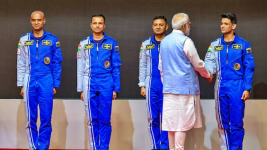
Prime Minister Narendra Modi hands-over wings to astronauts-designate Shubanshu Shukla, Prashanth Balakrishnan Nair, Angad Prathap and Ajit Krishnan who have been selected to be the astronauts on India's first crewed mission to space. (Photo: PIB)
India's ambitious human spaceflight programme, Gaganyaan, is facing another delay, with the first uncrewed mission now unlikely to take off before February 2027, multiple senior officials within the Indian Space Research Organisation (ISRO) have told India Today Digital on condition of anonymity.
The mission was earlier planned for December 2026, but ongoing technical fine-tuning, additional simulations and validation exercises could push the launch beyond the current window.
Officials familiar with the developments at the Indian space agency said that nearly 80 per cent of the work has been completed.
The Crew Module, which will carry the humanoid robot Vyomitra into space, has already been cleared and is likely to move to the Satish Dhawan Space Centre in Sriharikota within a couple of weeks, another source familiar with the developments confirmed.
"Isro wants to make the mission as foolproof as possible. This is the first attempt at demonstrating India's human spaceflight capabilities, and there are bound to be uncertainties when technology of this scale is involved," a senior official said.
The officials indicated that the programme is progressing, but the remaining simulations and technical assessments could affect the December launch schedule.
Once the Crew Module reaches Sriharikota, work on integrating with the human-rated LVM3 rocket will commence.
ISRO CHIEF HAD INDICATED DECEMBER LAUNCH
The development comes months after Isro Chairman Dr V Narayanan indicated that the first uncrewed Gaganyaan mission would be among the agency's planned launches for 2026.
Following the successful GSLV-F17 launch carrying EOS-05 in September, Narayanan said six more launches were being planned for the calendar year, including NVS-03 and the first uncrewed Gaganyaan flight.
He underlined the complexity of the mission, revealing that approximately 8,000 tests had been completed. "Unlike other satellite missions, the safety of human life is very important," he said.
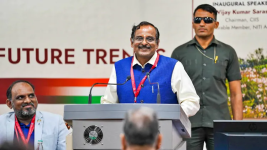
ISRO Chairman Dr V Narayanan had indicated that the first uncrewed Gaganyaan mission would be among the agency's planned launches for 2026. (Photo: PTI)
Narayanan also said that development of the crew escape system had progressed, while the environmental control and safety system was in advanced stages of testing.
GAGANYAAN HAS FACED MULTIPLE TIMELINE REVISIONS
Gaganyaan was originally approved in January 2019 with a target of launching India's first crewed spaceflight by May 2022. The programme initially envisaged two uncrewed missions followed by a crewed flight.
However, the Covid-19 pandemic disrupted hardware production and supply chains, forcing Isro to reassess its timelines. In 2021, the first uncrewed flight was rescheduled for December 2021, with subsequent missions pushed further.
By August 2025, the government was targeting the first uncrewed orbital flight in the fourth quarter of 2025. This was subsequently shifted to the fourth quarter of 2026.
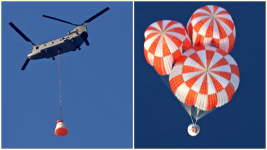
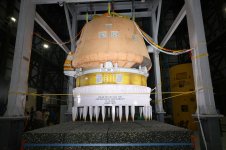
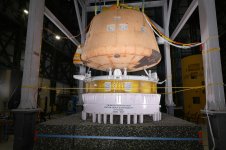
Isro has been conducting multiple tests to validate the systems. (Photo: ISRO)
The programme was also expanded in October 2024 from three to eight missions, with three uncrewed flights planned before India's first crewed mission.
WHY THE DELAY MATTERS
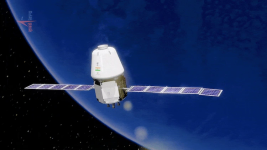
The first uncrewed flight, G1, will carry Vyommitra, Isro's half-humanoid robot, to test critical spacecraft systems before astronauts travel aboard.
The mission will validate the human-rated LVM3 launch vehicle, crew module, life-support technologies and recovery systems.
With human lives eventually depending on these systems, Isro is prioritising reliability over launch deadlines. If the latest assessment holds, India's first major step towards sending astronauts into space independently could now come in February 2027.
https://www.indiatoday.in/science/s...ikely-before-february-2027-3043002-2026-11-20
By Sibu Tripathi
New Delhi,Nov 20, 2026 20:52 IST
ISRO's first uncrewed Gaganyaan mission is unlikely to launch before February 2027. Sources told India Today Digital that additional simulations and validation are being done, which reflect the agency's focus on mission safety.
Prime Minister Narendra Modi hands-over wings to astronauts-designate Shubanshu Shukla, Prashanth Balakrishnan Nair, Angad Prathap and Ajit Krishnan who have been selected to be the astronauts on India's first crewed mission to space. (Photo: PIB)
India's ambitious human spaceflight programme, Gaganyaan, is facing another delay, with the first uncrewed mission now unlikely to take off before February 2027, multiple senior officials within the Indian Space Research Organisation (ISRO) have told India Today Digital on condition of anonymity.
The mission was earlier planned for December 2026, but ongoing technical fine-tuning, additional simulations and validation exercises could push the launch beyond the current window.
Officials familiar with the developments at the Indian space agency said that nearly 80 per cent of the work has been completed.
The Crew Module, which will carry the humanoid robot Vyomitra into space, has already been cleared and is likely to move to the Satish Dhawan Space Centre in Sriharikota within a couple of weeks, another source familiar with the developments confirmed.
"Isro wants to make the mission as foolproof as possible. This is the first attempt at demonstrating India's human spaceflight capabilities, and there are bound to be uncertainties when technology of this scale is involved," a senior official said.
The officials indicated that the programme is progressing, but the remaining simulations and technical assessments could affect the December launch schedule.
Once the Crew Module reaches Sriharikota, work on integrating with the human-rated LVM3 rocket will commence.
ISRO CHIEF HAD INDICATED DECEMBER LAUNCH
The development comes months after Isro Chairman Dr V Narayanan indicated that the first uncrewed Gaganyaan mission would be among the agency's planned launches for 2026.
Following the successful GSLV-F17 launch carrying EOS-05 in September, Narayanan said six more launches were being planned for the calendar year, including NVS-03 and the first uncrewed Gaganyaan flight.
He underlined the complexity of the mission, revealing that approximately 8,000 tests had been completed. "Unlike other satellite missions, the safety of human life is very important," he said.
ISRO Chairman Dr V Narayanan had indicated that the first uncrewed Gaganyaan mission would be among the agency's planned launches for 2026. (Photo: PTI)
Narayanan also said that development of the crew escape system had progressed, while the environmental control and safety system was in advanced stages of testing.
GAGANYAAN HAS FACED MULTIPLE TIMELINE REVISIONS
Gaganyaan was originally approved in January 2019 with a target of launching India's first crewed spaceflight by May 2022. The programme initially envisaged two uncrewed missions followed by a crewed flight.
However, the Covid-19 pandemic disrupted hardware production and supply chains, forcing Isro to reassess its timelines. In 2021, the first uncrewed flight was rescheduled for December 2021, with subsequent missions pushed further.
By August 2025, the government was targeting the first uncrewed orbital flight in the fourth quarter of 2025. This was subsequently shifted to the fourth quarter of 2026.
Isro has been conducting multiple tests to validate the systems. (Photo: ISRO)
The programme was also expanded in October 2024 from three to eight missions, with three uncrewed flights planned before India's first crewed mission.
WHY THE DELAY MATTERS
The first uncrewed flight, G1, will carry Vyommitra, Isro's half-humanoid robot, to test critical spacecraft systems before astronauts travel aboard.
The mission will validate the human-rated LVM3 launch vehicle, crew module, life-support technologies and recovery systems.
With human lives eventually depending on these systems, Isro is prioritising reliability over launch deadlines. If the latest assessment holds, India's first major step towards sending astronauts into space independently could now come in February 2027.
https://www.indiatoday.in/science/s...ikely-before-february-2027-3043002-2026-11-20
Ambani, Adani, Tata in space: An Indian astronaut’s big pitch
The astronaut-designate also spoke about Gaganyaan preparations, including uncrewed test flights and protocols for astronaut safety and emergency recovery.
Written by: Anonna Dutt
New Delhi
Updated: Nov 24, 2026 02:24 PM IST
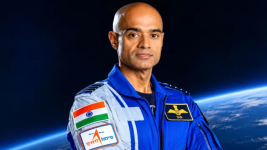
Air Commodore Nair, an Indian Air Force flight instructor, is among the four officers selected as astronaut-designates for India's Gaganyaan human spaceflight mission. (PIB Photo/AI Enhanced)
Calling on India’s biggest industrial houses to join hands for ambitious space missions, astronaut-designate Air Commodore Prasanth Balakrishnan Nair on Monday proposed a consortium of business groups to develop the capability for private human spaceflight missions on the lines of SpaceX.
“We should enable our entire industry — the Ambanis, Adanis, Mahindra, and Tatas… I would love for everyone to come together and make a consortium to undertake even private human space endeavours like Crew Dragon,” Nair said on the sidelines of the ongoing India International Space Conclave.
He wished India would become the second country, after the United States, to do so.
Air Commodore Nair, an Indian Air Force flight instructor, is among the four officers selected as astronaut-designates for India’s Gaganyaan human spaceflight mission. The other three are Group Captains Ajit Krishnan, Angad Pratap, and Shubhanshu Shukla.
Although he did not specify a timeline for the uncrewed Gaganyaan missions, Nair said the first flight’s success would validate the systems and procedures required for the human spaceflight programme.
“A successful uncrewed mission will see the entire process right from the launch to descent into the ocean, except a human being not being present,” he said.
He said that while the life support system would not be fully activated, the mission would demonstrate all the procedures and coordination between different agencies needed for the eventual crewed flight.
As part of the crew mission operations group, Nair said they have been developing protocols to certify all systems for human spaceflight, maintain communication with crew members, and respond to emergencies or unexpected situations during the mission.
The team is also developing protocols covering every stage of the mission, from astronauts’ journey to the launch pad and emergency evacuation to in-orbit return and recovery from the ocean. Nair said this also involved establishing coordination mechanisms between different agencies, which had not been in place before India embarked on its human spaceflight programme.
“The process includes looking at the best practices and technology and adapting it for our own capsule, working with our constraints, such as limitations of tech — no country would share their life support system technology — or strengths and limitations of our launch pad,” he added.
The first uncrewed flight under the Gaganyaan mission is likely to take place next year, with at least two more flights likely before a human spaceflight.
https://indianexpress.com/article/i...r-spacex-like-consortium-india-10976001/lite/
The astronaut-designate also spoke about Gaganyaan preparations, including uncrewed test flights and protocols for astronaut safety and emergency recovery.
Written by: Anonna Dutt
New Delhi
Updated: Nov 24, 2026 02:24 PM IST
Air Commodore Nair, an Indian Air Force flight instructor, is among the four officers selected as astronaut-designates for India's Gaganyaan human spaceflight mission. (PIB Photo/AI Enhanced)
Calling on India’s biggest industrial houses to join hands for ambitious space missions, astronaut-designate Air Commodore Prasanth Balakrishnan Nair on Monday proposed a consortium of business groups to develop the capability for private human spaceflight missions on the lines of SpaceX.
“We should enable our entire industry — the Ambanis, Adanis, Mahindra, and Tatas… I would love for everyone to come together and make a consortium to undertake even private human space endeavours like Crew Dragon,” Nair said on the sidelines of the ongoing India International Space Conclave.
He wished India would become the second country, after the United States, to do so.
Air Commodore Nair, an Indian Air Force flight instructor, is among the four officers selected as astronaut-designates for India’s Gaganyaan human spaceflight mission. The other three are Group Captains Ajit Krishnan, Angad Pratap, and Shubhanshu Shukla.
Although he did not specify a timeline for the uncrewed Gaganyaan missions, Nair said the first flight’s success would validate the systems and procedures required for the human spaceflight programme.
“A successful uncrewed mission will see the entire process right from the launch to descent into the ocean, except a human being not being present,” he said.
He said that while the life support system would not be fully activated, the mission would demonstrate all the procedures and coordination between different agencies needed for the eventual crewed flight.
As part of the crew mission operations group, Nair said they have been developing protocols to certify all systems for human spaceflight, maintain communication with crew members, and respond to emergencies or unexpected situations during the mission.
The team is also developing protocols covering every stage of the mission, from astronauts’ journey to the launch pad and emergency evacuation to in-orbit return and recovery from the ocean. Nair said this also involved establishing coordination mechanisms between different agencies, which had not been in place before India embarked on its human spaceflight programme.
“The process includes looking at the best practices and technology and adapting it for our own capsule, working with our constraints, such as limitations of tech — no country would share their life support system technology — or strengths and limitations of our launch pad,” he added.
The first uncrewed flight under the Gaganyaan mission is likely to take place next year, with at least two more flights likely before a human spaceflight.
https://indianexpress.com/article/i...r-spacex-like-consortium-india-10976001/lite/