French Military Technology

On ASMPA-R

"The ASMPA-R (renovated) project, launched in 2016, will see the missile's range extended and a new 300kt thermonuclear warhead added."
Auran, Jean Francois (October 2021). "French Strategic Forces: Nuclear Defenders". Air Forces Monthly. p. 33.

True?
@Picdelamirand-oil
 
  • Informative
Reactions: Amarante
On ASMPA-R

"The ASMPA-R (renovated) project, launched in 2016, will see the missile's range extended and a new 300kt thermonuclear warhead added."
Auran, Jean Francois (October 2021). "French Strategic Forces: Nuclear Defenders". Air Forces Monthly. p. 33.

True?
@Picdelamirand-oil
Jean François AURAN is credible for this kind of information, he is a Lieutenant Colonel. Me, I don't know: I've been retired for 14 years already and they don't inform retirees on this kind of subject, and that suits me fine.
 
  • Like
Reactions: Amarante and BMD
Jean François AURAN is credible for this kind of information, he is a Lieutenant Colonel. Me, I don't know: I've been retired for 14 years already and they don't inform retirees on this kind of subject, and that suits me fine.
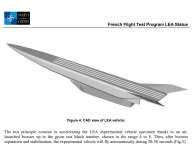
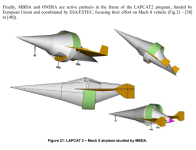
The reference was on wiki, but it had no link so I couldn't check it. Also mentioned was the ASN4G, which is required to have 1,000+km range, speed up to Mach 8.
 
Rolls-Royce and Safran Power Units have jointly signed an Assessment Phase contract with MBDA, as part of the Franco-British Future Cruise / Anti-Ship Weapon (FC/ASW) programme. Both partners will work collaboratively to mature a new propulsion solution for a subsonic, low observable missile expected to be fielded before the end of the decade.

Signed at Farnborough International Airshow, the agreement now means that Rolls-Royce and Safran Power Units will work alongside MBDA to meet the propulsion requirements for the UK and French Governments, with the intent to provide a game changing capability to overcome hardened targets and air defence systems in increasingly contested battlespace environment.

Earlier the UK Ministry of Defence and the French Armament General Directorate (Direction Générale de l’Armement -DGA) signed a bilateral agreement for the FC/ASW programme that will see the joint development of a next generation of deep strike and heavy anti-ship missiles.
 
  • Like
Reactions: Amarante
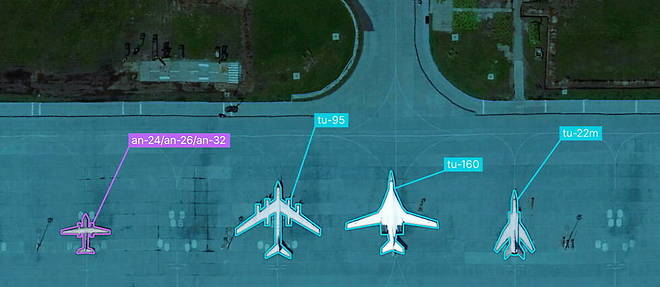
23723169lpw-23723463-article-jpg_9080071_660x287.jpg

(lepoint.fr, oct.12, paywall)
AI: Preligens signs a historic contract with the military
The French nugget that analyses satellite images will provide its software for 7 years, with a ceiling of 240 million euros.


After a first victory in July 2021, the French nugget Preligens confirms its merger partnership with the Ministry of the Armed Forces in the field of artificial intelligence (AI) applied to the analysis of satellite images.

The Direction Générale de l'Armement (DGA) has just awarded Preligens a seven-year "Tornado" contract worth a maximum of 240 million euros. The objective for the Ministry is to secure its software supply chain, while locking in prices before these tools are even more widely deployed and therefore essential, which would give the company additional negotiating leverage. For Preligens, a 220-employee SME, this is a major victory over the traditional model of favouring defence giants over start-ups.

"All our products are equipped with AI with deep learning, but this market covers our most mature products," explains François Bourrier-Soifer, Deputy Managing Director of Preligens. "For us, this is a changeover: we are moving from a development phase in which we have invested a lot in research without necessarily having enough return in terms of orders, to a time when the orders are concrete and we can manage the company's development more finely," he explains. "This does not necessarily mean that we will be recruiting more people, because we have also gained a lot in productivity," he adds.


Some twenty deployments by the end of 2022
Preligens' software is capable of automatically identifying the types of armoured vehicles, aircraft or ships in images, and above all of monitoring the evolution of a strategic site. The AI can alert a human analyst as soon as a nuclear submarine leaves a military port, or when an unusual concentration of armour is detected. Initially used in the centres of the Directorate of Military Intelligence (DRM), Preligens' AI is now used by all the armed forces' satellite image analysis centres, but also by a growing number of "operations-oriented" units, including the special forces in particular. Some twenty additional deployments are planned by the end of 2022.

The integration of AI is crucial for the armies: with the multiplication of sensor capabilities, including satellites, as well as partnerships with other countries, French military intelligence receives much more imagery than it is able to process. "When Russia massed troops on the Ukrainian border before the crisis began in 2014, Western armies had the satellite images, but not enough analysts, so the information went unnoticed," Arnaud Guérin, co-founder and CEO of Preligens, explained to Le Point in 2021. "Our AI generates alerts as soon as predefined scenarios are observed," he continued. "Our tool is at the service of analysts, it's not sycophancy to reassure them while we steal their jobs: we can't transpose the analyst's expertise into the software, we can only use the machine where the human brain is not very good," the young boss went on to explain.

Preligens' AI is not connected to the Internet, but only to the defence network. And the system is deployed on site: the start-up's teams do not have access to sensitive information. Of the company's 220 employees, about 120 are engineers, making it the largest research team dedicated to AI for satellite image analysis within Nato countries, including the United States. The company was also subject to an attempted takeover in 2020 by the CIA-managed investment fund In-Q-Tel, before being secured in extremis by French and European funds, including the French Ministry of Defence's Definvest.
/deepl
 
Unprecedented in scale military exercises Orion23 began in France. Exercise Orion 2023 is the largest for the French army in the last three decades. The purpose of the maneuvers will be to demonstrate the readiness of the French forces for the most difficult situations of modern combat, their efficiency and endurance in a high-intensity conflict. In total, about 20 thousand people will be involved in the exercises, which take place on land, at sea and in the air, and will also affect space and information warfare. According to the scenario, events unfold in an area bordering a powerful state that was a source of tension. Other countries, including the United States, will also take part in the exercises, which will last 2 months. The cost of military maneuvers is estimated at €35 million.

 
  • Like
Reactions: Amarante
During the exercise the Mamba was neutralized by special forces, on the night of Wednesday to Thursday, on the site, which however had a solid protection-defense, with about thirty men. An unknown number of commandos (not identified at this stage) entered the site. A vulnerability was exploited in the system architecture: an electronic implant was placed on a wire connecting the GM200 radar, which provides increased visibility to the system, to the CMD3D (3D defense management center).
:ROFLMAO: :ROFLMAO: :ROFLMAO:
 
Yes, there is a difference between the performances announced by the French and the Americans or the British. For the Anglo-Saxons, if one day exceptional circumstances have made it possible to surpass the usual performance, then this becomes the performance they proclaim everywhere. For the French the real performance is hidden and the performance displayed is "more than" a relatively weak performance compared to the reality. For example, the range of the SCALP was "more than 300 km" until President Hollande said in a book that it was 560 km, similarly for the METEOR it was "more than 100 km" until the Greeks said it was 200 km. And that doesn't prevent us from hitting the bull's-eye at 250 km, but the probability is lower because the missile will not have the same dynamics at that distance and the doctrine of use will not recommend it.
I agree with this. Another deadly thing is Meteor's NEZ of 60kms. If Rafale can sneak in and fire Meteor within that 60kms bubble, the enemy is toast. Its kinematics would be much more than MICA-IR/EM within that range.

Max range is good on brochure, but to kill a maneuverable target from 200kms is literally impossible.

@marich01

That end game speed is one of the biggest secrets of a SFDR missile. Forget about Mach 4, I've even seen claims of Meteor reaching over Mach 5(even mach 7!!) during end-game. How? Hard to answer.
 
I agree with this. Another deadly thing is Meteor's NEZ of 60kms. If Rafale can sneak in and fire Meteor within that 60kms bubble, the enemy is toast. Its kinematics would be much more than MICA-IR/EM within that range.
My pov is that a bvr fight is now divided in two part, first the travel distance & then the NEZ. NEZ is the key in the sense it is the endgame zone, basically a good old dogfight but between the target jet & a missile that is smart enough. So if the NEZ is stretched enough kill probability increases. A throttleable ducted ramjet is perfect tool for that reason.

This NEZ 60 km area need not be strictly 60 from rafale to adversary distance, but a 60km bubble area within the distance area between my jet & enemy aircraft. The greater it is the further my jet can have the kill.

Now come the speed part, in the missile & munition thread there is a very good sfdr post which cited the speed factor, 3 mach was fully possible both simulation, control logic & materials available wise & seems we have chosen that as our benchmark as per cfd analysis. MBDA certainly have better materials & a mature ramjet so it is likely better speed too.
 
My pov is that a bvr fight is now divided in two part, first the travel distance & then the NEZ. NEZ is the key in the sense it is the endgame zone, basically a good old dogfight but between the target jet & a missile that is smart enough. So if the NEZ is stretched enough kill probability increases. A throttleable ducted ramjet is perfect tool for that reason.

This NEZ 60 km area need not be strictly 60 from rafale to adversary distance, but a 60km bubble area within the distance area between my jet & enemy aircraft. The greater it is the further my jet can have the kill.

Now come the speed part, in the missile & munition thread there is a very good sfdr post which cited the speed factor, 3 mach was fully possible both simulation, control logic & materials available wise & seems we have chosen that as our benchmark as per cfd analysis. MBDA certainly have better materials & a mature ramjet so it is likely better speed too.
Once again people may term me "Optimistic", but our SFDR/Astra 3 is going to be better than Meteor in every which way.

There is no way Meteor's speed or range would match our Astra 3s'. It may cruise at Mach 3 and in terminal speed may reach over mach 4.5 or even mach 5.

Mach 5 is the limit of Ramjet motor. Beyond which, we'll need scramjet motor with different aerodynamics.
 
  • Like
Reactions: marich01