

You are using an out of date browser. It may not display this or other websites correctly.
You should upgrade or use an alternative browser.
You should upgrade or use an alternative browser.

A game-changing pill and two new vaccines will bolster India's fight against Covid variants
ET Bureau
Last Updated: Dec 28, 2021, 11:54 AM IST
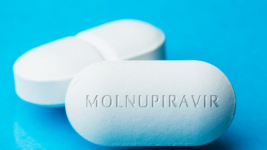
India has granted Emergency Use Authorisation (EUA) to Serum Institute of India's Covovax, Biological E's Corbevax and antiviral Covid-19 pill molnupiravir in a significant move.
The new vaccines could possibly be used as booster shots in the days to come. With this nod, the number of Covid vaccines which have received emergency use authorisation is now eight.
Six COVID-19 vaccines -- Serum Institute's Covishield, Bharat Biotech's Covaxin, Zydus Cadila's ZyCoV-D, Russia's Sputnik V and the US-made Moderna and Johnson and Johnson -- had already received EUA from the Indian drug regulator earlier.
Covovax is the Indian version of US drug manufacturer Novavax's recombinant nanoparticle protein-based Covid-19 vaccine.
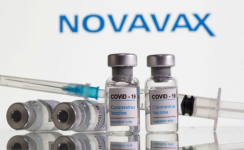
Novavax and SII have already received EUA for this vaccine in the Philippines. The World Health Organisation (WHO) too recently granted Emergency Use Listing (EUL) to Covovax.
The other vaccine approved is protein-based Corbevax, produced by Biological E Ltd. The company had been submitting rolling data from the clinical trial to the drug regulator. The Centre has already made an advance payment of Rs 1,500 crore to reserve 300 million doses of Corbevax. EUA has also been granted to antiviral Covid-19 pill molnupiravir.
Developed by MSD and Ridgeback Biotherapeutics, the drug works by introducing errors into the SARS-CoV-2 virus' genetic code, which prevents the virus from further replicating. Ridgeback is collaborating with Merck on developing molnupiravir. It is administered as four 200 milligram capsules taken orally every 12 hours for five days, for a total of 40 capsules. Molnupiravir is not authorised for use for longer than five consecutive days.
Last week, the USFDA issued EUA to molnupiravir for the treatment of mild-to-moderate coronavirus disease in adults who are at high risk for progression to severe Covid-19, including hospitalisation or death.
In India, Merck & Co. has signed voluntary licensing agreements with Cipla Ltd, Dr Reddy's Laboratories, Emcure Pharmaceuticals Ltd, Hetero Labs Ltd and Sun Pharmaceutical Industries Ltd, for allowing the drug to be manufactured and marketed in India.
A game-changing pill and two new vaccines will bolster India's fight against Covid variants
ET Bureau
Last Updated: Dec 28, 2021, 11:54 AM IST
Synopsis
The recommendations have been sent to the Drug Controller General of India (DCGI), which will soon decide on their approval, people in the know told ET. The new vaccines could possibly be used as booster shots in the days to come.
The recommendations have been sent to the Drug Controller General of India (DCGI), which will soon decide on their approval, people in the know told ET. The new vaccines could possibly be used as booster shots in the days to come.
India has granted Emergency Use Authorisation (EUA) to Serum Institute of India's Covovax, Biological E's Corbevax and antiviral Covid-19 pill molnupiravir in a significant move.
The new vaccines could possibly be used as booster shots in the days to come. With this nod, the number of Covid vaccines which have received emergency use authorisation is now eight.
Six COVID-19 vaccines -- Serum Institute's Covishield, Bharat Biotech's Covaxin, Zydus Cadila's ZyCoV-D, Russia's Sputnik V and the US-made Moderna and Johnson and Johnson -- had already received EUA from the Indian drug regulator earlier.
Covovax is the Indian version of US drug manufacturer Novavax's recombinant nanoparticle protein-based Covid-19 vaccine.
Novavax and SII have already received EUA for this vaccine in the Philippines. The World Health Organisation (WHO) too recently granted Emergency Use Listing (EUL) to Covovax.
The other vaccine approved is protein-based Corbevax, produced by Biological E Ltd. The company had been submitting rolling data from the clinical trial to the drug regulator. The Centre has already made an advance payment of Rs 1,500 crore to reserve 300 million doses of Corbevax. EUA has also been granted to antiviral Covid-19 pill molnupiravir.
Developed by MSD and Ridgeback Biotherapeutics, the drug works by introducing errors into the SARS-CoV-2 virus' genetic code, which prevents the virus from further replicating. Ridgeback is collaborating with Merck on developing molnupiravir. It is administered as four 200 milligram capsules taken orally every 12 hours for five days, for a total of 40 capsules. Molnupiravir is not authorised for use for longer than five consecutive days.
Last week, the USFDA issued EUA to molnupiravir for the treatment of mild-to-moderate coronavirus disease in adults who are at high risk for progression to severe Covid-19, including hospitalisation or death.
In India, Merck & Co. has signed voluntary licensing agreements with Cipla Ltd, Dr Reddy's Laboratories, Emcure Pharmaceuticals Ltd, Hetero Labs Ltd and Sun Pharmaceutical Industries Ltd, for allowing the drug to be manufactured and marketed in India.
A game-changing pill and two new vaccines will bolster India's fight against Covid variants


Apparently the 3rd wave is upon Mumbai & it's due to Omicron. 2500+ cases reported y'day , a doubling which took less than 2 days to achieve.
Immunogenicity and safety of an inactivated SARS-CoV-2 vaccine (BBV152) in children from 2 to 18 years of age: an open-label, age-de-escalation phase 2/3 study
Krishna Mohan Vadrevu, Siddharth Reddy, Harsh Jogdand, Brunda Ganneru, Nizam Mirza, VN Tripathy, Chandramani Singh, Vasant Khalatkar, Siddaiah Prasanth, Sanjay Rai, View ORCID ProfileRaches Ella, William Blackwelder, Sai Prasad, Krishna Elladoi: Immunogenicity and safety of an inactivated SARS-CoV-2 vaccine (BBV152) in children from 2 to 18 years of age: an open-label, age-de-escalation phase 2/3 study
This article is a preprint and has not been certified by peer review [what does this mean?]. It reports new medical research that has yet to be evaluated and so should not be used to guide clinical practice.
Abstract
Background: We assessed the safety, reactogenicity, and immunogenicity of BBV152 in an open-label age de–escalation study in three age cohorts of children from 18 years of age down to 2 years of age. Methods: This was a phase 2/3 open–label, multi–centre study done across six hospitals in India. All children received two 0.5mL doses of BBV152 (Covaxin®, Bharat Biotech International Ltd., Hyderabad, India), which is the same formulation indicated in adults. Participants were monitored for adverse events, and post-vaccination blood draws were collected to assess neutralising antibodies. A total of 526 children were enrolled into Group 1 (ages 12 through 18 years, n=176), Group 2 (ages 6 through 12 years, n=175), Group 3 (ages 2 through 6 years, n=175). Findings: There were no serious adverse events, deaths, or withdrawals due to an adverse event during the study. Vaccination with BBV152 was generally well tolerated, with no substantial difference in reactogenicity profiles between the different age groups. Similar immune responses were measured as microneutralisation (MNT) antibody titers in all three age groups. Vaccine-induced MNT responses in all groups were comparable to BEI reference sera run in the same assay. Seroconversion (measured by Plaque Reduction Neutralization Test (PRNT)) achieved high levels (95–98%) in all three groups four weeks after the second vaccination. The PRNT GMT ratio was 1.76 (95%CI: 1.32–2.33) (GMT all children subgroup / GMT in adults) had a lower limit ≥ 1, indicating superior antibodies in children when compared to adults. Vaccine responses were skewed towards a Th1 response with IgG1/IgG4 ratios above 1. Interpretation: BBV152 is well tolerated and immunogenic in children from 18 years down to 2 years of age. Immunogenicity analysis (by PRNT) shows superior antibody responses were observed in children compared to adults, suggesting that BBV152 will also be efficacious in this age group.Competing Interest Statement
This work was funded by Bharat Biotech International Limited. KMV, SR, BR and SP, are employees of Bharat Biotech, with no stock options or incentives. Co-author, KE, is the Chairman and Managing Director of Bharat Biotech and owns equity in the company. RE and WB are independent clinical development and statistical consultants, respectively. NM, VNT, CS, VK, SP, NP, SRa, were principal investigators representing the study sites.Clinical Trial
Registered with the Clinical Trials Registry (India) No. CTRI/2021/05/033752Funding Statement
The sponsor of the study had no role in data collection, data analysis, data interpretation, or writing the report. A contract research organisation (CRO) was responsible for data analysis and generating the report. The unblinded CRO and several authors from Bharat Biotech had full access to the data in the study. Authors from Bharat Biotech had final responsibility for the decision to submit for publication.Author Declarations
I confirm all relevant ethical guidelines have been followed, and any necessary IRB and/or ethics committee approvals have been obtained.Yes
The details of the IRB/oversight body that provided approval or exemption for the research described are given below:
1. Institutional Ethics Committee: ECR/1460/Inst/TG/2020 of Pranaam Hospital gave ethical approval for this work 2. Institutional Ethics Committee: ECR/1387/Inst/BR/2020 of All India Institute of Medical Sciences gave ethical approval for this work 3. Institutional Ethics Committee: ECR/134/Inst/KA/2013/RR-19 of Cheluvambha Hospital gave ethical approval for this work 4. Institutional Ethics Committee: ECR/608/Inst/MH/2014/RR-20 of Meditrina Institute of Medical Sciences gave ethical approval for this work. 5. Institutional Ethics Committee: ECR/1017/Inst/UP/2017/RR-21 of Prakhar Hospital gave ethical approval for this work. 6. Institutional Ethics Committee: ECR/538/Inst/DL/2014/RR-20 of All India Institute of Medical Sciences gave ethical approval for this work.
I confirm that all necessary patient/participant consent has been obtained and the appropriate institutional forms have been archived, and that any patient/participant/sample identifiers included were not known to anyone (e.g., hospital staff, patients or participants themselves) outside the research group so cannot be used to identify individuals.
Yes
I understand that all clinical trials and any other prospective interventional studies must be registered with an ICMJE-approved registry, such as ClinicalTrials.gov. I confirm that any such study reported in the manuscript has been registered and the trial registration ID is provided (note: if posting a prospective study registered retrospectively, please provide a statement in the trial ID field explaining why the study was not registered in advance).
Yes
I have followed all appropriate research reporting guidelines and uploaded the relevant EQUATOR Network research reporting checklist(s) and other pertinent material as supplementary files, if applicable.
Yes

Immunogenicity and safety of an inactivated SARS-CoV-2 vaccine (BBV152) in children from 2 to 18 years of age: an open-label, age-de-escalation phase 2/3 study
Background We assessed the safety, reactogenicity, and immunogenicity of BBV152 in an open-label age de-escalation study in three age cohorts of children from 18 years of age down to 2 years of age. Methods This was a phase 2/3 open-label, multi-centre study done across six hospitals in India...
India would need nearly 250 million more doses to cover new cohorts
On Saturday, in an address to the nation, Prime Minister Narendra Modi announced that India will be opening its vaccination for children aged 15 and over. The Prime Minister, while assuring the nation of the readiness to brace for a wave of infections owing to Omicron, announced that the country will be administering booster doses to healthcare and frontline workers and vulnerable population over the age of 60 with underlying health conditions. The “precautionary dose” will be administered from January 10.
On Saturday, the Drugs Controller General of India (DCGI) had given emergency use authorisation to Bharat Biotech for use of Covaxin for children above 12 years.
India has 30 million health and frontline workers in the country and 8.1 per cent of the people in the country are aged 60 and above.
A Business Standard analysis shows that there are 76 million children aged 15-18 across the country. The analysis is based on data from the Sample Registration System report of 2018. If India were to administer two doses each to people aged 15-18, it would require 152 million more doses starting January 3.
Analysis of data for children aged 15-18 shows that nearly 40 per cent of the 15-18 population for the nation is based in three states. Uttar Pradesh accounts for 19.4 per cent of the people in the age group, followed by Bihar at 11.6 per cent and Maharashtra at 8.3 per cent.
Uttar Pradesh and Bihar are also some of the worst states in terms of vaccine administration. While the country had achieved 148 per cent coverage in terms of total dose administration—a 200 per cent coverage implies complete vaccination—Uttar Pradesh had only a 124 per cent total dose coverage, whereas Bihar had 131 per cent coverage.
The country has till now administered the first dose to 835 million people, of which 576 million were fully vaccinated. There are 940 million adults aged 18 and above in the country.
Of the total 1.41 billion doses administered, only 10.79 per cent are Covaxin and the rest are Covishield doses. The country has been averaging 6.2 million doses daily, lower than 8.2 million doses on average nearly three weeks ago.
There are 111 million people aged 60 and above in the country. Assuming that even half have comorbidities, India would need nearly 250 million additional doses to vaccinate this cohort.

 www.business-standard.com
On Saturday, in an address to the nation, Prime Minister Narendra Modi announced that India will be opening its vaccination for children aged 15 and over. The Prime Minister, while assuring the nation of the readiness to brace for a wave of infections owing to Omicron, announced that the country will be administering booster doses to healthcare and frontline workers and vulnerable population over the age of 60 with underlying health conditions. The “precautionary dose” will be administered from January 10.
On Saturday, the Drugs Controller General of India (DCGI) had given emergency use authorisation to Bharat Biotech for use of Covaxin for children above 12 years.
India has 30 million health and frontline workers in the country and 8.1 per cent of the people in the country are aged 60 and above.
A Business Standard analysis shows that there are 76 million children aged 15-18 across the country. The analysis is based on data from the Sample Registration System report of 2018. If India were to administer two doses each to people aged 15-18, it would require 152 million more doses starting January 3.
Analysis of data for children aged 15-18 shows that nearly 40 per cent of the 15-18 population for the nation is based in three states. Uttar Pradesh accounts for 19.4 per cent of the people in the age group, followed by Bihar at 11.6 per cent and Maharashtra at 8.3 per cent.
Uttar Pradesh and Bihar are also some of the worst states in terms of vaccine administration. While the country had achieved 148 per cent coverage in terms of total dose administration—a 200 per cent coverage implies complete vaccination—Uttar Pradesh had only a 124 per cent total dose coverage, whereas Bihar had 131 per cent coverage.
The country has till now administered the first dose to 835 million people, of which 576 million were fully vaccinated. There are 940 million adults aged 18 and above in the country.
Of the total 1.41 billion doses administered, only 10.79 per cent are Covaxin and the rest are Covishield doses. The country has been averaging 6.2 million doses daily, lower than 8.2 million doses on average nearly three weeks ago.
There are 111 million people aged 60 and above in the country. Assuming that even half have comorbidities, India would need nearly 250 million additional doses to vaccinate this cohort.
India would need nearly 250 million more doses to cover new cohorts
Nearly 40 per cent of the 76 million children between the ages of 15 and 18 reside in states where the vaccination pace has been slowest

Hester Biosciences to roll out Covaxin drug substance by April 2022
Ahmedabad-based Hester Biosciences is a part of Gujarat Covid Vaccine Consortium (GCVC), which in May this year signed an agreement with Bharat Biotech for manufacture of the latters drug substance for its Covid-19 vaccine.

ICMR-NIV isolates Omicron Covid strain | India News - Times of India
India News: Scientists at the Pune-based Indian Council of Medical Research-National Institute of Virology (ICMR-NIV) have successfully isolated the Omicron strai
 timesofindia.indiatimes.com