Central Drug Regulator Approves Shelf Life Of COVID-19 Vaccines CoviShield, Covaxin, ZyCoV-D
New Delhi:
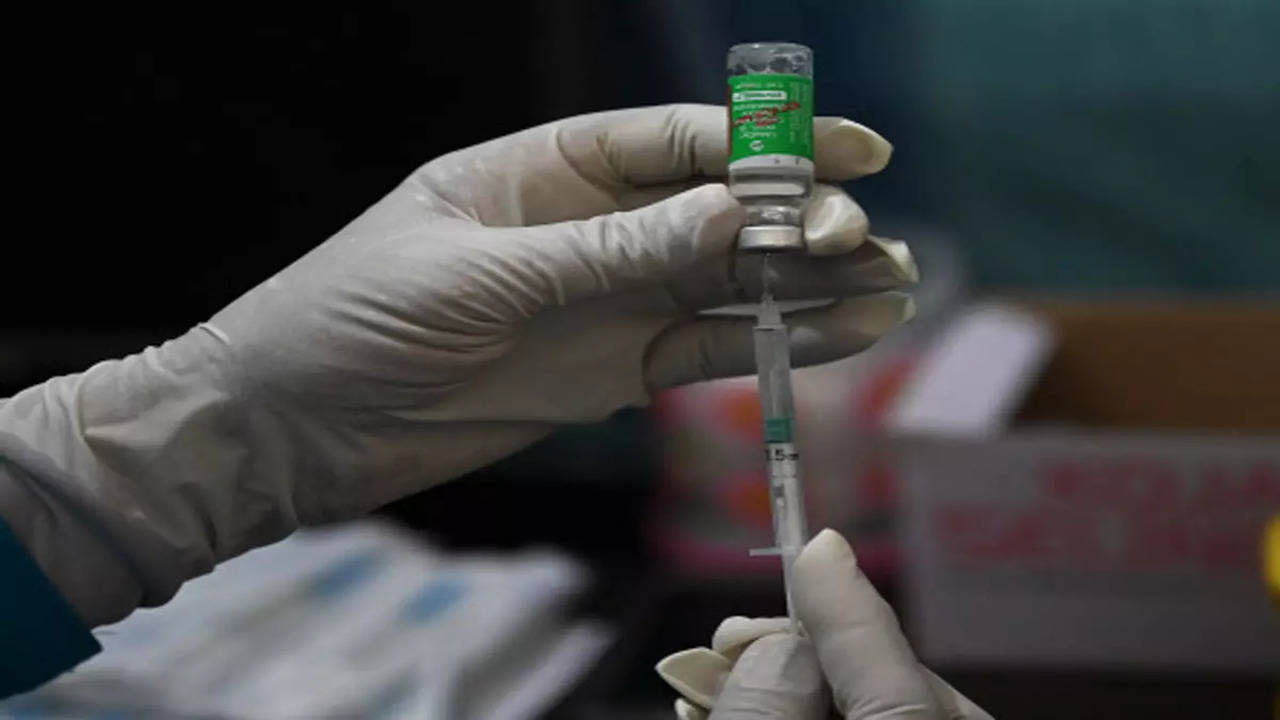
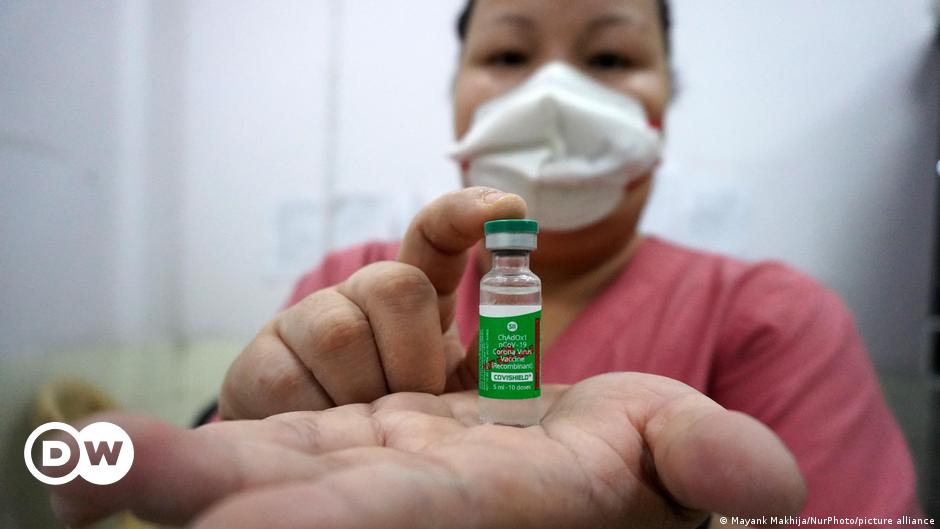
The Central Drugs Standard Organisation (CDSO) has approved the shelf life of COVID-19 vaccines Covaxin to 12 months, Covishield to nine months, and ZyCoV-D to six months from the date of manufacture, the Lok Sabha was informed on Friday.
Regarding administration of booster doses, Union Health Minister Mansukh Mandaviya said the National Technical Advisory Group on Immunisation (NTAGI) and the National Expert Group on Vaccine Administration for COVID-19 (NEGVAC) are deliberating and considering scientific evidences related to this aspect.
Responding to a question on the shelf life of Covid vaccines approved in the country and their active period among the vaccinated people, Mr Mandaviya, in a written reply, said the vaccines were developed very recently, therefore, scientific evidence regarding the duration of protection is still evolving globally.
"The National Regulator, i.e. the CDSO, has approved the shelf life of nine months for Covishield vaccine, for Covaxin vaccine it is 12 months and for ZyCoV-D vaccine it is six months from the date of manufacture," Mr Mandaviya said.
On whether the government has taken stock of vaccines lying unused in government and private hospitals and proposes to procure and redistribute the unused vaccines before their dates of expiry, Mr Mandaviya said the central government closely monitors COVID-19 vaccine stocks in states and Union Territories to ensure their optimal utilisation.
COVID-19 vaccine stock which has not been utilised in private hospitals and nearing expiry has been taken up for redistribution by respective state governments, as advised by the Union government, for their timely utilisation, he said.
Listing steps taken by the government to ensure adequate production and supply of Covid vaccines and booster doses along with the total expenses incurred and funds allocated and disbursed in this regard, Mr Mandaviya said under 'Mission Covid Suraksha' being implemented by the Biotechnology Industry Research Assistance Council (BIRAC), a PSU of Department of Biotechnology, efforts have been made to strengthen COVID-19 vaccine manufacturing capabilities of Indian industry, to ensure optimal vaccine production.
In this regard, augmentation of manufacturing facilities was supported at Bharat Biotech International Limited (BBIL) and Indian Immunologicals Limited (IIL), Hyderabad.
The IIL, supported under the mission, has achieved a production capacity of around 20 lakh doses/month equivalent Drug Substance (DS) of Covaxin.
The validation of the BBIL facility at Malur, Bengaluru is complete and production of DS started in August 2021. Further, support for facility augmentation at Bharat Immunologicals and Biologicals Corporation Limited (BIBCOL), Bulandshahr; and Haffkine Biopharmaceutical Corporation Ltd (HBPCL), Mumbai; for Covaxin production is under consideration.
An amount of ₹ 260 crore has been allocated to support facility upgradation for augmented Covaxin production, out of which, an amount of ₹ 27.25 crore has been disbursed so far, Mr Mandaviya said.
Additionally, DBT along with the PSU BIRAC, is facilitating expert advisory support for facility up-gradation at Gujarat COVID Vaccine Consortium (GCVC), for augmented production of Covaxin, he said in the written reply.
In the current financial year i.e. 2021-22, ₹ 35,000 crore has been budgeted for implementation of COVID-19 vaccination programme.
As on November 27, an expenditure of INR 19,675.46 crore has been incurred against this allocation which has been utilised for procurement of COVID-19 vaccines for free of cost supply to states and Union Territories, he said.
The Central Drugs Standard Organisation (CDSO) has approved the shelf life of COVID-19 vaccines Covaxin to 12 months, Covishield to nine months, and ZyCoV-D to six months from the date of manufacture, the Lok Sabha was informed on Friday.

www.ndtv.com
Brain problems found in 1 percent of hospitalised COVID-19 patients; real-world data shows Moderna vaccine highly effective
The following is a summary of some recent studies on COVID-19. They include research that warrants further study to corroborate the findings and that has yet to be certified by peer review, Reuters
reported.
Brain problems seen in 1 percent of hospitalised COVID-19 patients
Roughly one in every 100 patients hospitalised with COVID-19 will likely have central nervous system complications, researchers reported on November 30 at the annual meeting of the Radiological Society of North America.
Among nearly 38,000 patients hospitalised with COVID-19 in the United States and Europe, symptoms led doctors to suspect brain complications in about 11 percent.
Magnetic resonance imaging (MRI) and computed tomography (CT) exams confirmed central nervous system abnormalities that were most likely associated with the virus in 10 percent of those patients, for an overall incidence of 1.2 percent.
Study leader Dr Scott Faro of Thomas Jefferson University in Philadelphia said in a statement that while the lung problems related to COVID-19 are well recognised, "Our study shows that central nervous system complications represent a significant cause of morbidity and mortality in this devastating pandemic."
Moderna vaccine effectiveness not limited to clinical trials
Moderna's mRNA COVID-19 vaccine is proving effective in the real world, according to doctors at Kaiser Permanente in California who have been tracking nearly 706,000 adults, half of whom had received the vaccine.
Five months after the second dose, the vaccine was still 87 percent effective against SARS-CoV-2 infection, 96 percent effective against COVID-19 hospitalisation, and 98 percent effective against COVID-19 death, researchers reported in The Lancet Regional Health - Americas.
Despite a wide range of chronic diseases among those in the study, the vaccine's effectiveness against infection ranged from 83 percent to 92 percent across age, sex, racial, and ethnic subgroups, researchers said.
Immunologist E. John Wherry of the University of Pennsylvania, who was not involved in the Kaiser study, said it is "highly unlikely" that the Omicron variant of the virus can completely evade all of the immune defences induced by the vaccines and that current boosters will likely "provide increased protection against this variant."
COVID-19 at childbirth linked with higher risks; antibody drugs appear to be safe
Pregnant women with COVID-19 face higher risks of childbirth complications than those who are not infected by the coronavirus, a new study found.
A separate study suggests mildly or moderately ill pregnant women with COVID-19 can safely be treated with monoclonal antibody drugs such as those from Regeneron Pharmaceuticals.
The analysis of childbirth complications included 244,645 births, 874 of which were in infected women.
Researchers reported on November 30 in PLOS Medicine that miscarriage and stillbirth rates did not differ between the groups.
But after accounting for women's risk factors, researchers found that those with COVID-19 had 80 percent higher odds of having too much amniotic fluid, doubled odds of dangerously high blood pressure, more than doubled odds of amniotic infection, nearly tripled odds of hemorrhage during delivery, and nearly doubled odds of hemorrhage afterward. They were also at higher risk for preterm delivery.
"Pregnant women and those who plan to conceive... are strongly encouraged to be vaccinated," said study leader Dr. Sylvie Epelboin of the University of Paris.
Meanwhile, doctors at the Mayo Clinic in Rochester, Minnesota treated 51 pregnant patients with mild-to-moderate COVID-19 with one of several monoclonal antibody treatments.
"No adverse effects were reported, and no patient required COVID-19 related hospitalization," they reported on Sunday on medRxiv ahead of peer review.
So far, 29 of the women have delivered healthy babies. There was one miscarriage due to a congenital defect not related to the medication.
The investigators note that while the infusions were well tolerated, the study was a small one.
Further research is recommended to fully assess safety and efficacy in pregnancy, they said.
The beleaguered auto parts maker was among the first batch of bankrupt companies to be referred for insolvency resolution back in 2017 but the hurdles faced in this instant case made the road to revival a long and bumpy one.

www.moneycontrol.com



 theprint.in

 www.livemint.com


 timesofindia.indiatimes.com


 www.deccanherald.com

 amp.dw.com