Chinese Wuhan Virus Thread

How Macaulay Putras Ridiculed Covaxin and Data Proved Them Wrong​

Balram Bhargava
The Phase III human clinical trials of Covaxin began in mid-November 2020, involving 26,000 volunteers, between 18 and 98 years of age, across 21 sites. It was India’s first and only Phase III study for a COVID-19 vaccine, and the largest Phase III efficacy trial ever conducted here for any vaccine. The study included 2,433 participants over the age of 60 and 4,500 with co-morbidities.

The interim results of the trial released in late April 2021, showed an efficacy of 100 per cent against severe COVID-19 disease; the efficacy of protection from asymptomatic COVID-19 infection was 78 per cent, putting it at par with other global front-runner vaccines. The analysis was on a data set of 127 Covid-positive volunteers.

Data from 25,800 participants, half of whom received the vaccine and the other half a placebo, also showed that the vaccinated candidate was safe and well tolerated. A review of the safety database showed that severe, serious and medically attended adverse events occurred at low levels and were balanced between vaccine and placebo groups. This was again published in The Lancet.

Analysis from the NIV indicated that vaccine-induced antibodies could neutralize the known variants of concern including the delta variant.

This was all excellent news! Those results will always be a matter of great pride to us at the ICMR, which I will cherish for the rest of my life. There were critics who said that we had to complete Phase III before giving the vaccine to humans, before it could be given to the nation. But there is a Gazette notification of 19 March 2019, which is pre-COVID, and it said that in national interest, if a product has successfully undergone the Phase II trial, it can be deployed. In other words, emergency authorization can be given. And that rule was invoked by the Drugs Controller on 2 January 2020, when approval for Covaxin was issued.

The leadership had about, I would say, more than 15 meetings with various chief ministers of different states. And at that point in time, we had to participate and any question that was put forward for the vaccine or for the testing would come to me. So we were all on our toes at every level. But there was no question after the Emergency Use Authorization (EUA) happened. We were only asked how we could help out; the government would help the company to scale it up.

As we battled one challenge after another and found ways to deal with them, and firmed our resolve to have an Indian vaccine, a tiny section of our population—the so-called experts in the media and elsewhere—began to raise doubts on our ability. It was not the first time that an Indian initiative was being ridiculed even before it had the opportunity to succeed. But it was disgraceful that it should happen at a time when our scientists and researchers were showing a steely determination to find a solution to the pandemic.

It was the Macaulay-mindset at work. What had T.B. Macaulay done? He framed India’s education policy. He said that if the East India Company had to rule over this country, we have to systematically destroy its education system, drilling every Indian’s mind that the Indian education system is inferior to that of the British. This was instilled in 1834 in every Indian’s mind. It is this Macaulay mindset which is responsible for every Indian critic in India who feels that anything Indian can never work.

And that’s why I told Bharat Biotech in a lighter vein, that they should name their company after ‘another country’ Biotech not Bharat, for acceptability from the Macaulay-minded people! It was something I mentioned during my depositions before the Department Related Parliamentary Standing Committee on Health and Family Welfare and the parliamentary standing committee on ‘COVID-19 pandemic response, India’s contribution and the way forward’. I would like to put on record that the members of these panels were most supportive and praised the efforts of the ICMR. Cutting across party lines, they were also of the opinion that the work that the ICMR had done was phenomenal.

Once the Phase III clinical results came out, it laid to rest the criticism of the cynics. It is the vaccine which has more than 10 full scientific publications in top international journals, all featuring only Indian authors.

The approvals for Covaxin, contrary to criticism, were purely data-driven. Phase II trials established beyond doubt the immunogenicity of the vaccine. No responsible Subject Expert Committee (SEC) approves vaccines without adequate data, and those involved with the approval were all responsible people. Experts had taken into account the alpha variant of SARS-Cov-2 before granting approval to Covaxin. And because Covaxin is a whole-virus inactivated vaccine, as I mentioned earlier, it is equipped to target all parts of the virus instead of just partially. The virus is known to have undergone mutations in the spike protein also, and drug makers such as Pfizer Inc. have admitted that it needs about four to six weeks to make tweaks to their vaccine to adjust to the new mutations.
 
Two doses of Covaxin have 50 per cent effectiveness against symptomatic Covid-19, the first real-world assessment of the effectiveness of the vaccine developed in India suggests.

The study, published in The Lancet Infectious Diseases journal, assessed 2,714 hospital workers at AIIMS, New Delhi, who were symptomatic and underwent RT-PCR testing for the coronavirus between April 15 and May 15 this year.
 
The study period coincided with the second wave of the pandemic in India, when the Delta variant of SARS-CoV-2 was dominant, accounting for approximately 80 per cent of all confirmed cases of Covid-19. It was carried out among a high-exposure population of healthcare workers who were primarily given Covaxin, thus presenting a unique opportunity to evaluate the real-world effectiveness of the vaccine.

From January 16, when India started vaccinating healthcare and frontline workers, AIIMS exclusively offered Covaxin to its 23,000 employees. Of the 2,714 employees in the study population, 1,617 tested positive for SARS-CoV-2 infection. Positive cases were matched to negative RT-PCR tests (controls) using a 1:1 ratio based on age and gender. The odds of vaccination with BBV152 were compared between cases and controls, and adjusted for occupational exposure to Covid-19, previous SARS-CoV-2 infection, and infection dates.

The adjusted vaccine effectiveness against symptomatic Covid-19 after full vaccination with Covaxin, with the second dose administered 14 days or more before undergoing RT-PCR testing, was found to be 50 per cent. The effectiveness of two vaccine doses remained stable over the seven-week follow-up period.

The majority of eligible participants were tested during the first 20 days of the 30-day study when the test positivity rate for Covid-19 was at its peak in India. Requests for testing declined towards the end of the study period (from May 6 to May 15).

Another study conducted across 11 hospitals between May and July this year had found that both Covishield and Covaxin significantly reduced the risk of severe Covid-19 and against the Delta variant among those aged 45 years and older. The overall effectiveness against severe Covid was 69 per cent with both doses of Covaxin and 80 per cent with two doses of Covishield.

The real-world performance of a vaccine often differs from trial conditions. The authors of the AIIMS study acknowledged that the effectiveness estimated in their study was lower than the 77.8 per cent protection against symptomatic Covid reported by a phase 3 randomised control trial study published in The Lancet earlier this month.

Among the factors possibly responsible for the lower vaccine effectiveness could be the facts that the study was conducted only among hospital employees who have a higher risk of exposure to infection than the general population, and that it was conducted at the peak of the second wave when test positivity rates were generally high in Delhi. Also, the prevalence of circulating variants of concern, especially delta, may have contributed to the lower effectiveness, the study said.

The authors acknowledged that the study did not estimate vaccine effectiveness against hospitalisation, severe disease, and death, which they said required further assessment.

Also, the study was not designed to estimate vaccine effectiveness for different time intervals after vaccination, or to determine if vaccine effectiveness changed over time. Another limitation was the absence of data on comorbidities and prior Covid-19 infection, which may affect health-seeking behaviour as well as vaccine effectiveness.

While the surge was driven by delta, positive patients were not tested for SARS-CoV-2 variants. The study could not, therefore, definitively estimate the vaccine effectiveness against a specific variant.
 

60 Lakh Covishield, Covaxin Doses Lying Unused With Private Hospitals to be Sent for Exports​

Unused stock of around 60 lakh Covid-19 vaccines lying with private hospitals in India will be exported to other countries, the Narendra Modi government has assured hospitals.

Large, medium and small hospitals across India are sitting over an unused stock of around 60 lakh Covid-19 vaccine doses, out of which around 10% are set to expire by December. Majority of these vaccines, around 85% of the total stock, are Serum Institute of India’s Covishield (around 51 lakh) whereas the rest are Bharat Biotech’s Covaxin (around 9 lakh).

“The hospitals have been assured that their stocks will be merged into the stock for exports. We are yet to finalise the modus operandi. However, most likely, the manufacturers will collect back the stock and use it for exports,” a senior official at the Ministry of Health and Family Welfare told News18.com. “The manufacturer will return their purchasing amount as soon as they receive the stock back.”

On being asked about concerns over expired doses, the official added that companies will consider discarding if the stock is nearing expiry. “However, we believe, the other stock will be utilised quickly as the government is planning to open commercial exports apart from fulfilling COVAX commitments and contribution to Vaccine Maitri.”

The move was confirmed by Girdhar J Gyani, director general of the Association of Healthcare Providers (India), a lobby of private hospitals in India that includes Fortis Healthcare, Max Healthcare, Narayana Health and Medanta. “We have informed the Health Ministry that we have an unused stock of over 50-60 lakh vaccines. They told us that they will merge our stock in the export channel. However, they haven’t yet informed us of the exact timelines,” Gyani said.

The AHPI represents 2,500 speciality and 8,000 smaller hospitals across India.

According to government data, a mere 6% of all Covid-19 vaccine doses administered in the country starting May 1 were administered by the private sector. While private hospitals were charging a maximum retail price of Rs 1,410 for Covaxin and Rs 780 for Covishield, government hospitals were administering it free of cost.

The private sector started vaccinations for adults on May 1 and were allocated 25% quota of all vaccines manufactured in the country.
 

Merkel Says Covid Spike ‘Worse Than Anything We’ve Seen’​

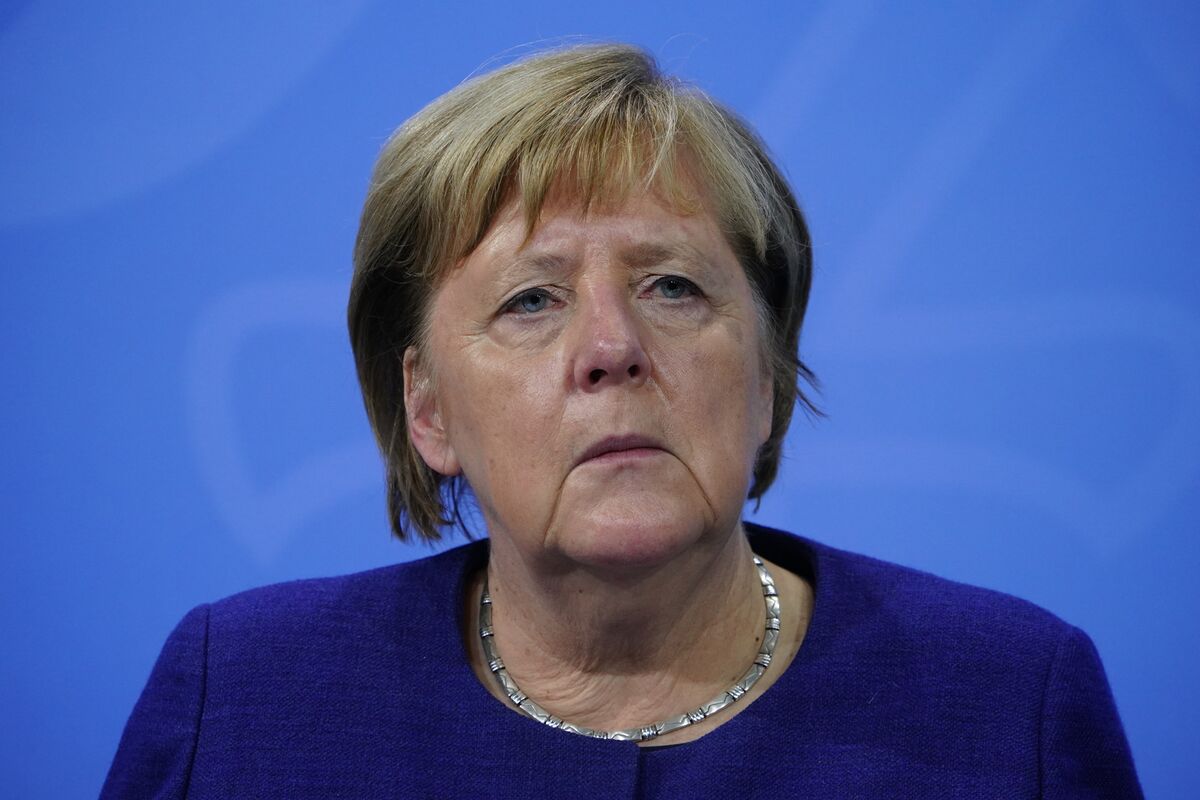
Chancellor Angela Merkel said the latest surge in Covid-19 infections is worse than anything Germany has experienced so far and called for tighter restrictions to help check the spread.

Merkel told officials from her Christian Democratic party on Monday that the situation is “highly dramatic” and warned that some hospitals would soon be overwhelmed unless the fourth wave of the pandemic is broken, according to a person familiar with her remarks.

Germany’s contagion rate has set new highs every day for about two weeks. In the eastern state of Saxony the seven-day incidence rate has surged to almost 1,000 per 100,000 people -- close to three times higher than the national average. Hospitals are quickly filling up, and vaccination rates remain stubbornly below 70%, trailing countries like France, Spain and Italy.

The German chancellor said many citizens don’t seem to understand the severity of the outbreak, and that while more people should get vaccinated, it wouldn’t be enough on its own. She called on Germany’s 16 states, which largely set their own policies on coronavirus curbs, to introduce more restrictions already this week.

Merkel, who is due to step down as soon as next month after 16 years in power, has been making increasingly frantic calls for Germany to step up its fight against the virus.

While deaths are at about a fifth of the levels seen last winter, the rapid spread is creating concerns of higher fatalities. Health Minister Jens Spahn said Monday that people who aren’t vaccinated against Covid are almost certain to catch it in coming months and some of those will die.

“Just about everyone in Germany will probably be either vaccinated, recovered or dead” by the end of this winter, Spahn said at a news conference in Berlin. He acknowledged that some might find the statement cynical.

Spahn said last week he couldn’t rule out another full lockdown, after neighboring Austria imposed its fourth shutdown of the pandemic that took effect Monday.

Merkel's Warning​

German 7-day coronavirus figures per 100,000 people


Source: Johns Hopkins


The euro held declines after Merkel’s comments, falling 0.1% to $1.1274. It traded within 0.2% of 16-month low seen last week, which came after Austria announced its lockdown and Spahn suggested Germany might soon follow.

The Stoxx 600 benchmark surrendered early gains of as much as 0.4% and turned flat on the day. The Euro Stoxx 50, a gauge for the euro area’s biggest companies, was down 0.3%. Travel and leisure shares were among the hardest hit, with TUI AG down 0.9%.

While Germany is accelerating its vaccine campaign, the vast majority of Covid shots given of late have been boosters. In the past week, about 75% of the 2.5 million shots administered were third doses, while just 13%, or about 329,000, were people getting their initial jabs, according to the health ministry.

At that rate, only about 10% of the country’s nearly 15 million adult vaccine holdouts would receive their first dose by the end of this year.

“Immunity will be reached,” Spahn said. “The question is whether it’s via vaccination or infection, and we emphatically recommend the path via vaccination.”

Pandemic Fallout​


New cases are pushing countries to introduce more stringent measures


Source: Bloomberg

Note: Covid pass/certificate typically means vaccination/recovery/test required to enter certain venues, exact measures vary by country

Many of the Germany’s famed outdoor Christmas markets have been canceled for the second year in a row, and people who aren’t inoculated face possible curfews.


Starting this week, Bavaria will close clubs and bars, while shops will have to reduce capacity and restaurants will have to shut by 10 p.m. The hardest-hit communities will face even tougher restrictions, the state government announced on Friday. Saxony has also closed clubs and bars, among other measures.

The situation in hospitals is increasingly strained, with clinics preparing to transfer severely ill people to other facilities, according to German intensive-care association DIVI.

The number of Covid cases in ICUs rose to about 3,840 on Monday, still below the peak of around 5,750 during the second wave and about 5,100 during the third, DIVI data showed.

In the states of Bavaria, Saxony and Thuringia, Covid patients account for more than 30% of the patients in intensive care. Across the country, there are 2,705 free ICU beds, less than half the available capacity a year ago.

Authorities expect shipments of 6 million doses of the Pfizer Inc.-BioNTech SE Covid shot early this week in Germany, Spahn said. Still, boosters alone won’t be enough to curb infections within the next two weeks and people will need to reduce contacts as well, he added.
 

Pfizer Shot Just 39% Effective Against Delta Infection, But Largely Prevents Severe Illness, Israel Study Suggests​

Topline​


Recent data from Israel’s health ministry suggests Pfizer’s Covid-19 vaccine is far less effective at preventing infection and symptomatic illness with the Delta variant than with previous strains of coronavirus, a finding that conflicts with other research indicating high levels of protection against the contagious variant as countries around the world struggle to contain new waves of infection.

The Pfizer Covid-19 vaccine appears to be significantly less effective against the Delta variant, ... [+]

Key Facts​


A full course of the Pfizer-BioNTech vaccine was just 39% effective at preventing infections and 41% effective at preventing symptomatic infections caused by the Delta Covid-19 variant, according to Israel’s health ministry, down from early estimates of 64% two weeks ago.

The figures, based on data from an unspecified number of people between June 20 and July 17, are significantly lower than previous estimates of the vaccine’s efficacy against other variants, which initial clinical trials found to be 95%.

The Israel findings also conflict with several other studies assessing the vaccine’s performance against the Delta variant, which indicated only slightly diminished degrees of protection against infection and mild illness (between 80% and 90%), including peer reviewed research from Public Health England published Wednesday.

The vaccine still provides very high levels of protection against hospitalization (92%) and severe illness (91%) caused by the Delta variant, the ministry said.

In a statement, Pfizer and BioNTech noted that while real-world data from Israel show vaccine efficacy in preventing infection and symptomatic disease to decline six months post-vaccination, “efficacy in preventing serious illnesses remains high.”


It is possible Israel’s findings diverge from other studies in reflection of the fact they have had access to vaccines for longer than most other parts of the world. In other words, it is the most up to date and accurate assessment of the Pfizer shot against Delta. However, the Israel health ministry has not revealed the data behind their results and there are a number of issues in the way the study appears to have been conducted that could create uncertainty. The study did not, for example, take the steps needed to rule out alternative explanations for the lower efficacy, such as bias in who is tested for Covid-19.


Key Background​


Israel was an early leader in the global effort to vaccinate against Covid-19, moving swiftly to secure supply by paying above market price and offering to share medical data with Pfizer. It was a success and the country dropped pandemic restrictions in May, though a resurgent wave of cases driven by Delta has put it on the brink of another lockdown. Israel is not the only country to struggle with new surges caused by Delta—which is more contagious than other variants circulating and possibly more dangerous—which has prompted new lockdowns around the world. The U.K., which has one of the highest case rates in the world, almost all of which are caused by Delta, is an exception. High vaccination rates are helping contribute towards a possible decoupling between infection, severe illness and death, prompting the government to drop almost all social restrictions on July 19.


What To Watch For​


In mid July, Israel’s health ministry greenlit booster shots—likely a third Pfizer shot—for immunocompromised people over concerns they could still be vulnerable to the disease. This includes some cancer patients, organ transplant recipients and people who are HIV positive. The U.S. Centers for Disease Control and Prevention is considering a similar move amid an ongoing debate over whether booster shots should be made available to everyone.


Big Number​


91%. That’s how effective the Pfizer vaccine is at preventing serious illness and hospitalization caused by the Delta variant after two doses, according to the Israeli study. This is only slightly lower than against other variants. As this is the primary purpose of a vaccine, it is still highly successful, though it does mean it will likely not be sufficient to stop outbreaks on its own.


Tangent​


The Delta variant appears to be at least moderately resistant to many of the vaccines in widespread use, especially after just one shot. A recent study found the Johnson & Johnson shot to be just 33% effective at preventing symptomatic illness caused by the variant.