

You are using an out of date browser. It may not display this or other websites correctly.
You should upgrade or use an alternative browser.
You should upgrade or use an alternative browser.
8 Covid Vaccines Aim to Cover Every Indian by Year-end: What Are They & How They Work
Niti Aayog member (Health) Dr VK Paul outlined on Thursday a plan involving eight vaccines that could help India inoculate all its citizens by the end of the year. The number is a significant jump from the two shots currently in use in India, which is faced with a devastating second wave of Covid-19.In less than a year since the covid-19 outbreak began, hundreds of vaccine candidates have entered various phases of pre-clinical and clinical trial stages. According to the Covid-19 Vaccine Tracker, there are 115 candidates and 14 approved vaccines.
In India, two vaccines, Hyderabad-based Bharat Biotech’s Covaxin and Oxford-AstraZeneca’s Covishield, are currently being administered in a nation-wide vaccination drive. Russian anti-Covid vaccine Sputnik V is likely to be available by next week.
The government has given a push to increase vaccine manufacturing and has issued emergency use authorisation to Biological E, Zydus Cadila, Serum Institute of India for Novavax, Bharat Biotech’s nasal vaccine, Gennova and Sputnik V.
In a major push towards vaccine manufacturing and availability, Paul in a press briefing said, 216 crore vaccine doses would become available for the national vaccination drive. “Overall, 216 crore doses of vaccines will be manufactured in India between August and December, for India and for Indians. There should be no doubt that vaccines will be available for all as we move forward,” he said.
VACCINES IN INDIA AND THE PLATFORMS USED
Covaxin: Bharat Biotech partnered with the National Institute of Virology (NIV) and the Indian Council of Medical Research (ICMR) for the inactivated coronavirus vaccine Covaxin. Trial results have showed the vaccine has an efficacy of 78 per cent. Pathogens (viruses or bacteria) that cannot multiply can be injected into the arm without causing covid-19 inside the body. Using chemicals like formalin, the vaccine works by teaching the immune system to make antibodies against the SARS-CoV-2 coronavirus. Inactivated viruses are mixed with a tiny amount of an aluminum-based compound called an adjuvant which stimulates the immune system to boost its response to a vaccine. Atleast 55 crore doses of Covaxin would be available by December, the government said.
Biological E: Hyderabad-based pharmaceutical company Biological E Limited (BE) received emergency authorisation for its protein subunit BECOV2A vaccine. Rather than injecting a whole pathogen to trigger an immune response like in Covaxin, subunit vaccines (sometimes called acellular vaccines) contain purified pieces specially selected for their ability to produce a strong and effective immune response. Because these fragments are incapable of causing covid-19, subunit vaccines are considered very safe. Such vaccines are also relatively cheap and easy to produce, and more stable than those containing whole viruses or bacteria. Biological E is expected to produce 30 crore doses between August and December.
Covishield: The University of Oxford partnered with the British-Swedish company AstraZeneca developed a vaccine based on the viral-vectored platform. The Serum Institute of India is manufacturing the vaccine known as Covishield in India. Viral vector-based vaccines don’t actually contain antigens but rather use the body’s own cells to produce them. It uses modified virus (the vector) to deliver genetic code for antigen in the case of COVID-19 spike proteins found on the surface of the virus, into human cells. Various viruses have been developed as vectors, including adenovirus (a cause of the common cold). The coronavirus spike protein gene gene is added to two types of adenovirus, one called Ad26 and one called Ad5, to enable them to invade cells but not replicate. Once infected, the cells make large amounts of antigen, triggering an immune response against the virus. The Oxford-AstraZeneca vaccine uses a chimpanzee adenovirus because humans will not have pre-existing antibodies to this adenovirus. However, there are human adenoviruses as well. But the risk here is that previous colds or infections in an individual may leave them with antibodies to the human adenoviruses, interfering with the vaccine. Over 75 crore doses will be made available by the SII between August and December.
Sputnik V: Russian Ministry of Health’s Gamaleya Research Institute developed a non-replicating viral vector coronavirus vaccine Sputnik V. The two-dose vaccine has an efficacy rate of 91.6 per cent. Sputnik V uses two human adenoviruses Ad5 and Ad26, the adenoviruses bump into cells and latch onto proteins on their surface. Once injected into the body, these vaccine viruses begin infecting our cells and inserting their genetic material – including the antigen gene – into the cells’ nuclei. Human cells manufacture the antigen as if it were one of their own proteins. At least 15.6 crore doses will be available in India by December.
Zydus Cadila: Ahmedabad-based pharmaceutical firm Zydus Cadila will be rolling out its plasmid DNA vaccine ZyCoV-D for rollout in India. Nucleic acid vaccines use genetic material from a disease-causing virus or bacterium (a pathogen) to stimulate an immune response against it. The vaccine genetic material orders instructions for making a specific protein from the pathogen, which the immune system will recognise and trigger a response against the virus. Zydus Cadila will be providing the Indian government 5 crore of its vaccine for the inoculation drive by December.
Novavax: The United State-based vaccine maker Novavax in partnership with vaccine manufacturer Serum Insititute of India will be rolling out the protein subunit covid-19 vaccine NVX-CoV2373 named Covovax. Like the Biological E candidate, the vaccine is protein subunit and works by teaching the immune system to make antibodies to the spike protein. Once vaccinated, the infected cells put fragments of its spike protein on their surface after a coronavirus is detected. Antigen-presenting cells activate a type of immune cell called a killer T cell before multiplying inside the body. The antibodies can also lock onto the spike proteins and stop the coronavirus from entering cells. The health ministry said the Serum Institute of India will provide 20 crore doses of Novavax by December.
Gennova: Pune-based Gennova Biopharmaceuticals has been approved for rollout of its indigenous mRNA vaccine in India’s vaccination drive. The Indian government has said Gennova will make available 6 crore doses by December. The vaccine uses messenger RNA (mRNA) carrying the genetic sequence for building the spike protein. Since the body’s natural enzymes would break down the mRNA molecule, it is wrapped in oily bubbles made of lipid nanoparticles. This resembles cell membranes and can deliver the RNA into the host cell, where the messenger RNA is treated like it belongs to that cell. Thereafter, the cell uses its protein-producing machinery to read the message and make spike protein, which is then released from the host cell and recognised by the immune system, triggering a response that results in antibody production and cellular immunity.
Intranasal: Bharat Biotech proposed an adenovirus vectored, intranasal vaccine for covid-19. A modified version of a adenovirus can enter human cells in this vaccine but not replicate inside blocking the infection. A gene for the coronavirus vaccine ads into the adenovirus DNA, allowing the vaccine to target the spike proteins that SARS-CoV-2 uses to enter human cells. The ministry has ordered 10 crore doses of the intranasal vaccine for its vaccine drive.

8 Covid Vaccines Aim to Cover Every Indian by Year-end: What Are They & How They Work
The government has given a push to increase vaccine manufacturing and has issued emergency use authorisation to Biological E, Zydus Cadila, Serum Institute of India for Novavax, Bharat Biotech's nasal vaccine, Gennova and Sputnik V.
 www.news18.com
That sounds about right. AFAIK, community transmission is still only in urban areas of the country as of now, unless someone is hiding something. So Bangalore is definitely under community transmission. But the rest of India is still under stage 2. Lockdown has ensured rural areas have escaped from community transmission as of now. Dunno what will happen during the potential third wave though.
Coronavirus | India resists ‘community transmission’ tag despite soaring cases
Inspite of adding the highest number of cases in the world every day, India continues to label itself as a country with no community transmission (CT), opting instead for the lower, less serious classification called ‘cluster of cases’, according to the latest weekly report by the World Health Organisation (WHO) on May 11.https://www.thehindu.com/news/natio...dian-markets-by-next-week/article34550845.ece
Countries such as the United States, Brazil, United Kingdom, France — and a perusal of the list of over 190 countries suggest the majority — have all labelled themselves as being in ‘community transmission’. Among the 10 countries with the most number of confirmed cases, only Italy and Russia do not label themselves as being in ‘community transmission’. Both countries have been on a declining trajectory for at least a month and together contribute less than 20,000 cases a day — about 5% of India’s daily numbers.
India, since the beginning of the pandemic has never marked itself as being in community transition.
Risk for more people
Broadly, CT is when new cases in the last 14 days can’t be traced to those who have an international travel history, when cases can’t be linked to specific cluster. The WHO guidelines further suggest four subcategories within the broader definition of CT. CT-1 implying “Low incidence of locally acquired, widely dispersed cases...and low risk of infection for the general population” with the highest, a CT-4 suggesting “Very high incidence of locally acquired, widely dispersed cases in the past 14 days. Very high risk of infection for the general population.”States and countries are expected to classify themselves appropriately and point to the kind of public health measures in place.
Instead, the classification, ‘cluster of cases’, that India chooses to describe itself in says “...Cases detected in the past 14 days are predominantly limited to well-defined clusters that are not directly linked to imported cases... It is assumed that there are a number of unidentified cases in the area. This implies a low risk of infection to others in the wider community if exposure to these clusters is avoided”.
India’s national positivity rate, or the proportion of tested cases returning positive, is around 21% and around 533 of the 734 districts had reported positivity greater than 10%. There are 24 States with more than 15% positivity and 10 with over 25%, according to figures from the Health Ministry on Thursday. With lockdowns or some form of major restrictions on public movement in at least 18 States, it underlines that no area in the country is safe from the coronavirus.
Health Ministry officials have even advised wearing masks at home, acknowledging the scientific consensus that the virus spread through aerosols than from contact with large droplets from surfaces.
The closest Indian government came to acknowledging CT was when Union Health Minister Harsh Vardhan, in October said at public, web-meeting, in the context of West Bengal that “...In different pockets across various States, including West Bengal, community transmission is expected to occur, especially in dense areas. However, this is not happening across the country. It is limited to certain districts occurring in limited States.”
In denial
An expert told The Hindu that India’s refusal to describe itself as being in community transmission was an “ostrich in the sand” approach since being in CT — far from being stigmatic or an indicator of failure — had a bearing on how authorities addressed a pandemic.If cases were still a cluster, it would mean that the government ought to be prioritising testing, contact tracing and isolating to prevent further infection spread. CT, on the other hand meant prioritising treatment and observing advisories to stay protected.
“We may have been in community transmission since last April. Testing continues to be useful for forecasting the future course of the pandemic (through random tests) and preparing for it,” said Dr Jacob John, epidemiologist and Professor, Christian Medical College, Vellore. “Or it is useful if there is a specific course of treatment, or medicine, that can be prescribed once someone tests positive. However, that’s not really why the government seems to want to avoid the term. It just makes us look stupid.”
Coronavirus | India resists ‘community transmission’ tag despite soaring cases
WHO classification has implications for pandemic control measures

totally wrong, we dont have enuf vaccine. Time interval between first dose and second dose has been increased by nearly 3 to 4 times for that very reason. In fact my mother is waiting for her second dose and waiting time given is 80 days which is totally ridiculous.
The point wasn't if there are enough vaccines or not, the point was why we haven't used all the vaccines that we already have.
It is disingenuous to say that ppl are not forthcoming to have vaccine, it is only few percent of ppl who dint want to have covaxin but most of the general population are direly looking to get vaccinated. You seriously should stop spinning tales and putting the blame on ppl. It is a serious affront to the thousands of ppl who have lost
It's public knowledge. Look up the Cowin website. So many unbooked appointments in the 45+ age group.
which part of the stmt you dint understand?It's public knowledge. Look up the Cowin website. So many unbooked appointments in the 45+ age group.
I clearly stated we are waiting for vaccine dose to be available and as per the info on cowin website itself we are supposed to wait to for another 80 days .
do we still have any shame left?
well its common sense , when the country has billion ppl there is a long road to cover if we need to vaccinate them. At the most we can vaccinate 50-65 million ppl in a month that would take us over a year.When vaccines were being exported
Nobody amongst the General Public
Had imagined that in the month of May , people would not be able to get vaccines
Initially there was vaccine hesitancy
No doubt but when the Government was aware of a coming Second Wave , then they should have also anticipated
A Rush for Vaccines
It was quite evident what the 2nd wave did in europe, in fact we got a good head start to prepare give that we were hit later. Instead we were witness to politics & stupidity of allowing ppl gather in large numbers. vaccine hesitancy was only for covaxin not for covishield. What a good leadership would have done is impressed on ppl to get vaccinated and if that dint work then enforce the law that if ppl who are not willing to be vaccinated will not allowed in public.
We lost a lot of time in not producing the vaccines, whether we vaccinate or not we should have produced more doses as a precaution. Those doses could have been exported later if not used. If we had spent a billion dollar or more we could have had saved not only the ppl but also the economy. Now both are tottering.
what test man, all nonsense. There is no point in having these tests if we cannot have good quality control. In fact these tests might be doing more harm than good.

‘Sterile’ test swab sticks, made in Ulhasnagar slum
These plastic sticks, one thicker than the other, with cotton buds at each end, are swab sticks used to collect nasal and throat samples for RT-PCR tests.
 indianexpress.com
which part of the stmt you dint understand?
I clearly stated we are waiting for vaccine dose to be available and as per the info on cowin website itself we are supposed to wait to for another 80 days .
Appointments are opened based on availability of the vaccines, genius. And if appointments are left as is, without anyone taking them, it means people are not going in for vaccinations even though vaccines are available.


There is a weird situation:
In last 30 days (17th April to 17th May) total vaccines jabbed = (143+40) - (106 + 16) = 183 - 122 = 61 Millions. Which is roughly 2 million a day, what we are seeing.
We produce 60-70 million covishield and 10-15 million covaxin... Thats 70-85 million jabs. Unless we are throwing away 10-16 million jabs a month, something is messed up.
Is there really a scarcity of vaccines or are we having lesser ability to deliver them or is it something else that I cann't see. This does not look like a war footing effort.
It seems about a minimum 10 - 15 million jabs are just sitting idle somewhere.
Some folks say we are producing 90 million jabs. That will be weird because then we should be jabbing 2.5 - 3.0 million a day not 2 million a day.
This is line with what Centre is saying as well... Abou 20 million doses pending with states to deploy. 10-15 million went pending just in month back.

I think the wastage vaccines are going to unregistered people including young people below 45 but each state will declare these as wastage.

J K Dutt, who led NSG during 26/11 ops, dies of Covid at 72 - The Times of India
Former NSG director general J K Dutt, who headed the commando force during the 2008 Mumbai terror attacks, died on Wednesday due to complications arising out of Covid-19, officials said here. He was 72. Family sources said that the retired IPS officer was admitted to the Medanta Hospital in...
 m.timesofindia.com
I Remember him ,during 26 / 11 attacks
He was continuously surrounded by the media in Mumbai and answered all their questions , very patiently
He was continuously surrounded by the media in Mumbai and answered all their questions , very patiently
It's vaccine hesitancy. One can open the Cowin website and many districts show open appointments. I randomly checked one in Bihar for today and there are open appointments numbering from a few dozen to hundreds. Followed by a few others.
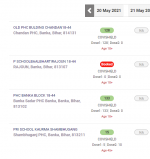
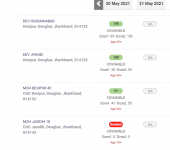
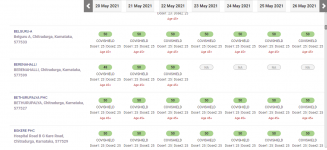
Like, what's the point...
Appointments are opened based on availability of the vaccines, genius. And if appointments are left as is, without anyone taking them, it means people are not going in for vaccinations even though vaccines are available.
Seems vaccines are available only for you. ppl here are going to the vaccination centers at 5.00 AM and then returning without getting any shot.It's vaccine hesitancy. One can open the Cowin website and many districts show open appointments. I randomly checked one in Bihar for today and there are open appointments numbering from a few dozen to hundreds. Followed by a few others.
View attachment 19887
View attachment 19888
View attachment 19889
Like, what's the point...
Please care to send to all those available unused doses to urban bangalore.

You should search by the district, not by pincode ... some states are having surplus vaccines based on their population e.g. Tamilnadu and some states are having vaccine scarcity like Andhra Pradesh. I feel as the 45+ age group is coming to saturation GOI should increase the age range to 40+ then 35+Seems vaccines are available only for you. ppl here are going to the vaccination centers at 5.00 AM and then returning without getting any shot.
Please care to send to all those available unused doses to urban bangalore.
View attachment 19904