

You are using an out of date browser. It may not display this or other websites correctly.
You should upgrade or use an alternative browser.
You should upgrade or use an alternative browser.
Should have a vaccine for COVID-19 by 2021, will not patent it: Serum Institute's Adar Poonawalla
Should have a vaccine for COVID-19 by 2021, will not patent it: Serum Institute's Adar Poonawalla
Should have a vaccine for COVID-19 by 2021, will not patent it: Serum Institute's Adar Poonawalla

If true, We will now have wear BUM masks too......


40% decline in growth factor of COVID-19 cases in India; doubling rate improved to 6 days: Health Ministry
"Before lockdown, doubling rate of COVID19 cases was about 3 days, but according to data in the past 7 days, the doubling rate of cases now stands at 6.2 days. Doubling rate in 19 States, Union Territories are even lower than average doubling rate," Lav Aggrawal, Health Ministry secretary said.
ET Online | Last Updated: Apr 17, 2020, 04.41 PM IST
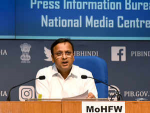
India is doing better in comparison to several other nations and the growth factor of Coronavirus cases has declined 40 per cent in India, Union health ministry said today. "We have been witnessing average growth factor at 1.2 since April 1 which stood at 2.1 between March 15 and March 13. Hence, there is 40 per cent decline in average growth factor," health ministry said in a daily press briefing today.
The ministry also said that the doubling rate of cases in the country has increased from 3 days in March to 6.1 days now. "Before lockdown, doubling rate of COVID19 cases was about 3 days, but according to data in the past 7 days, the doubling rate of cases now stands at 6.2 days. Doubling rate in 19 States, Union Territories are even lower than average doubling rate," Lav Aggrawal, Health Ministry secretary said.
He also said that the doubling rate is lower than the national level in 19 states and UTs -- Kerala, Uttarakhand, Haryana, Himachal Pradesh, Chandigarh, Ladakh, Puducherry, Delhi, Bihar, Odisha, TN, Andhra Pradesh , UP, Punjab, Assam, Tripura.
Aggarwal also said that India is doing better in comparison to several other developed nations."The ratio between recovered COVID19 patients and deaths stands at 80:20 in India which is higher than that in several other counties," Aggarawal said.
40% decline in growth factor of COVID-19 cases in India; doubling rate improved to 6 days: Health Ministry
"Before lockdown, doubling rate of COVID19 cases was about 3 days, but according to data in the past 7 days, the doubling rate of cases now stands at 6.2 days. Doubling rate in 19 States, Union Territories are even lower than average doubling rate," Lav Aggrawal, Health Ministry secretary said.
ET Online | Last Updated: Apr 17, 2020, 04.41 PM IST
India is doing better in comparison to several other nations and the growth factor of Coronavirus cases has declined 40 per cent in India, Union health ministry said today. "We have been witnessing average growth factor at 1.2 since April 1 which stood at 2.1 between March 15 and March 13. Hence, there is 40 per cent decline in average growth factor," health ministry said in a daily press briefing today.
The ministry also said that the doubling rate of cases in the country has increased from 3 days in March to 6.1 days now. "Before lockdown, doubling rate of COVID19 cases was about 3 days, but according to data in the past 7 days, the doubling rate of cases now stands at 6.2 days. Doubling rate in 19 States, Union Territories are even lower than average doubling rate," Lav Aggrawal, Health Ministry secretary said.
He also said that the doubling rate is lower than the national level in 19 states and UTs -- Kerala, Uttarakhand, Haryana, Himachal Pradesh, Chandigarh, Ladakh, Puducherry, Delhi, Bihar, Odisha, TN, Andhra Pradesh , UP, Punjab, Assam, Tripura.
Aggarwal also said that India is doing better in comparison to several other developed nations."The ratio between recovered COVID19 patients and deaths stands at 80:20 in India which is higher than that in several other counties," Aggarawal said.
40% decline in growth factor of COVID-19 cases in India; doubling rate improved to 6 days: Health Ministry


Europe Is Taking a Harder Look at China After Virus Suspicions
Europe Is Taking a Harder Look at China After Virus Suspicions
European governments struggling with the fallout from the Covid-19 pandemic are hardening their positions toward China as suspicions grow over the level of transparency in the coronavirus’s country of origin.
French President Emmanuel Macron accused Beijing of not being upfront over its handling of the epidemic, while in the U.K., Prime Minister Boris Johnson’s plans to involve Chinese tech giant Huawei Technologies Co. in the nation’s next-generation mobile network may fall prey to mounting opposition.
The European Union’s position on China has been relatively measured, but leaders are beginning to call for a more thorough examination of its activities amid accusations Beijing has covered up the true scale of the epidemic. American intelligence officials are said to have concluded that China concealed the extent of its outbreak and under-reported the number of cases and deaths.
Europe Is Taking a Harder Look at China After Virus Suspicions
European governments struggling with the fallout from the Covid-19 pandemic are hardening their positions toward China as suspicions grow over the level of transparency in the coronavirus’s country of origin.
French President Emmanuel Macron accused Beijing of not being upfront over its handling of the epidemic, while in the U.K., Prime Minister Boris Johnson’s plans to involve Chinese tech giant Huawei Technologies Co. in the nation’s next-generation mobile network may fall prey to mounting opposition.
The European Union’s position on China has been relatively measured, but leaders are beginning to call for a more thorough examination of its activities amid accusations Beijing has covered up the true scale of the epidemic. American intelligence officials are said to have concluded that China concealed the extent of its outbreak and under-reported the number of cases and deaths.


Xi fears Japan-led manufacturing exodus from China
TOKYO -- Amid the coronavirus pandemic, Japanese Prime Minister Shinzo Abe has proposed building an economy that is less dependent on one country, China, so that the nation can better avoid supply chain disruptions.
The call touched off a heated debate in the Chinese political world.
In Zhongnanhai, the area in central Beijing where leaders of the Chinese Communist Party and the state government have their offices, "there are now serious concerns over foreign companies withdrawing from China," a Chinese economic source said. "What has particularly been talked about is the clause in Japan's emergency economic package that encourages (and funds) the re-establishment of supply chains."
Had the pandemic not struck, Chinese President Xi Jinping's maiden state visit to Japan would have been wrapped up by now with Xi proudly declaring a "new era" of Sino-Japanese relations. He would have cheered on Abe as Japan prepared for the next big event, the 2020 Olympics.
Instead, both Xi's trip and the Tokyo Olympics have been postponed, and Sino-Japanese relations find themselves at a crossroads.
 Japanese Prime Minister Shinzo Abe was clear about the direction he wants Japanese manufacturers to take -- away from an over-reliance on China. (Photo by Uichiro Kasai)
Signals of Abe's new policy were visible as early as March 5.
Japan had finally been able to put the Diamond Princess cruise ship disaster behind it but was still snowed under by the challenge of preventing the virus's further spread.
On that date, coincidentally the same day the postponement of Xi's Japan visit was announced, the Japanese government held a meeting of the Council on Investments for the Future. Abe, who chairs the council, said he wanted high value-added product manufacturing bases to come home to Japan.
At the table were influential business leaders such as Hiroaki Nakanishi, chairman of the Japan Business Federation, the country's biggest business lobby better known as Keidanren.
"Due to the coronavirus, fewer products are coming from China to Japan," Abe said. "People are worried about our supply chains."
Of the products that rely heavily on a single country for manufacturing, "we should try to relocate high added value items to Japan," the leader said. "And for everything else, we should diversify to countries like those in ASEAN."
Abe's remarks were clear. They came as disruptions hit the procurement of auto parts and other products for which Japan relies on China, seriously impacting corporate Japan's activities.
And they asked for something more than the traditional "China plus one" concept, in which companies add a non-China location to diversify production.
Abe was forming a "shift away from China" policy.
With the nation transfixed by coronavirus coverage, the proposal failed to generate big headlines in Japan.
But China was watching carefully, perhaps wondering whether it was about to undergo an industrial hollowing-out like Japan once experienced.
Such a trend would shake the foundation of China's long-standing growth model.
In its emergency economic package adopted on April 7, the Japanese government called for the re-establishment of supply chains that have been hit by the virus's proliferation. It earmarked more than 240 billion yen (about $2.2 billion) in its supplementary budget plan for fiscal 2020 to assist domestic companies to move production back home or to diversify their production bases into Southeast Asia. It is a tidy sum of money.
 Chinese President Xi Jinping and Politburo Standing Committee members Wang Huning, Li Zhanshu and Li Keqiang attend a wreath laying ceremony in Beijing's Tiananmen Square on Sept. 30, 2019.
The next day, April 8, China's Politburo Standing Committee, the party's top decision-making body, held a meeting in Beijing.
Speaking at the meeting, President Xi said that "as the pandemic continues its global spread, the world economy faces a mounting downside risk." He added, "Unstable and uncertain factors are notably increasing."
Xi, who doubles as the party's general secretary, stressed the need to stick to "bottom-line thinking" -- which means assuming the worst -- and called for "preparedness in mind and work to cope with prolonged external environment changes."
The seven-member Politburo Standing Committee usually meets once a week, and it is rare for the holding and content of these meetings to be reported.
Xi sounded the call to prepare for "a protracted battle" while assuming the worst.
There are talks in the U.S. regarding China dependency.
Larry Kudlow, chairman of the White House's National Economic Council, has expressed his intention to consider shouldering the relocation costs of American companies returning home from China.
It fits with President Donald Trump's "America first" agenda.
If the U.S. and Japan, the world's biggest and third-biggest economies respectively, move away from China, it will have a huge impact on the world's second-biggest economy.
 U.S. President Donald Trump and Japanese Prime Minister Shinzo Abe appear to be on the same page when it comes supply chains in China, much to Chinese President Xi Jinping's chagrin. © Kyodo
One topic has now set tongues wagging in the world of Chinese intellectuals. According to the Chinese astrology chart, 2020 is the year of Geng-Zi, or the metal rat, which comes once every 60 years.
It is said that every time the year of the metal rat rolls around a big history-shaking incident takes place.
In 1840, during the Qing dynasty, the Opium War broke out, leading to China's stagnation for more than a century.
Sixty years later, in 1900, toward the end of the Qing dynasty, forces from an alliance of eight nations -- the U.K., U.S., Germany, France, Italy, Russia, Japan and Austria-Hungary -- moved from Tianjin to Beijing, an incident triggered by the Boxer Rebellion, which had started in 1899.
"55 Days at Peking" is an American film starring Charlton Heston and depicting the siege of the foreign legations' compounds in Peking, now known as Beijing, during the Boxer Rebellion.
The metal rat's next return, in 1960, coincided with a famine caused by the Great Leap Forward led by Mao Zedong, the founding father of "a new China," or the People's Republic of China.
Yang Jisheng, a former journalist for Xinhua News Agency who lost his foster father to the famine, later authored "Tombstone," a detailed reportage about the epic disaster.
Based on field work and interviews, Yang revealed that as many as 36 million people died of hunger during the Great Leap Forward, far more than China once announced.
 Silkworm cocoon harvesting during the Great Leap Forward. The last time the year of the metal rat came around, the Great Leap Forward was pushing China into a devastating famine. (Photo by Keystone-France/Gamma-Keystone via Getty Images) © Getty Images
What will this year's metal rat jinx be like for China?
The peak of China's coronavirus outbreak has passed. But Zhang Wenhong, the head of a coronavirus clinical expert team whose profile has been on the rise, has said a second round of infections will hit in November or later.
During the 1918-1920 Spanish flu pandemic, the second wave of infections was more serious than the first. No pandemic has been more deadly since then. Estimates are that 500 million people, a third of the planet's population, were infected and that 50 million died.
Zhong Nanshan, an 83-year-old medical doctor, has shined since 2003, when he played a major role in the fight against severe acute respiratory syndrome, or SARS.
The new coronavirus has already mutated, and its death rate has reached levels up to 20 times higher than that for influenza, Zhong has warned.
The new virus emerged in China late last year and then spread globally. China's crackdown on information and social media posts regarding the outbreak through mid-January and its delayed initial response to the public health crisis ended up contributing to a catastrophe and sparking an international uproar.
Trump had been calling the coronavirus "the Chinese virus," although he has since stopped doing so.
Global public opinion will greatly affect the re-establishment of a post-virus world order. As things stand now, those moving to take the initiative are the U.S. and China.
In ancient China, bamboo strips were the main canvas for documents before the introduction of paper. They were called "green logs" because bamboo strips are green before they are cured and sewn into books.
Bamboo strips are official documents that are kept for posterity, and it was important for an emperor to inscribe his name on them.
If the scourge of the coronavirus were to drastically change the world order in the 21st century, will it be the U.S. or China that inscribes the bamboo strips? China cannot afford to lose.
Much will depend on how the U.S. and China rebuild their respective virus-hit economies. If major foreign companies withdraw from China, it will become a big drag on the Middle Kingdom's economic revival.
Katsuji Nakazawa is a Tokyo-based senior staff writer and editorial writer at Nikkei. He has spent seven years in China as a correspondent and later as China bureau chief. He is the 2014 recipient of the Vaughn-Ueda International Journalist prize for international reporting.
Xi fears Japan-led manufacturing exodus from China
TOKYO -- Amid the coronavirus pandemic, Japanese Prime Minister Shinzo Abe has proposed building an economy that is less dependent on one country, China, so that the nation can better avoid supply chain disruptions.
The call touched off a heated debate in the Chinese political world.
In Zhongnanhai, the area in central Beijing where leaders of the Chinese Communist Party and the state government have their offices, "there are now serious concerns over foreign companies withdrawing from China," a Chinese economic source said. "What has particularly been talked about is the clause in Japan's emergency economic package that encourages (and funds) the re-establishment of supply chains."
Had the pandemic not struck, Chinese President Xi Jinping's maiden state visit to Japan would have been wrapped up by now with Xi proudly declaring a "new era" of Sino-Japanese relations. He would have cheered on Abe as Japan prepared for the next big event, the 2020 Olympics.
Instead, both Xi's trip and the Tokyo Olympics have been postponed, and Sino-Japanese relations find themselves at a crossroads.
Signals of Abe's new policy were visible as early as March 5.
Japan had finally been able to put the Diamond Princess cruise ship disaster behind it but was still snowed under by the challenge of preventing the virus's further spread.
On that date, coincidentally the same day the postponement of Xi's Japan visit was announced, the Japanese government held a meeting of the Council on Investments for the Future. Abe, who chairs the council, said he wanted high value-added product manufacturing bases to come home to Japan.
At the table were influential business leaders such as Hiroaki Nakanishi, chairman of the Japan Business Federation, the country's biggest business lobby better known as Keidanren.
"Due to the coronavirus, fewer products are coming from China to Japan," Abe said. "People are worried about our supply chains."
Of the products that rely heavily on a single country for manufacturing, "we should try to relocate high added value items to Japan," the leader said. "And for everything else, we should diversify to countries like those in ASEAN."
Abe's remarks were clear. They came as disruptions hit the procurement of auto parts and other products for which Japan relies on China, seriously impacting corporate Japan's activities.
And they asked for something more than the traditional "China plus one" concept, in which companies add a non-China location to diversify production.
Abe was forming a "shift away from China" policy.
With the nation transfixed by coronavirus coverage, the proposal failed to generate big headlines in Japan.
But China was watching carefully, perhaps wondering whether it was about to undergo an industrial hollowing-out like Japan once experienced.
Such a trend would shake the foundation of China's long-standing growth model.
In its emergency economic package adopted on April 7, the Japanese government called for the re-establishment of supply chains that have been hit by the virus's proliferation. It earmarked more than 240 billion yen (about $2.2 billion) in its supplementary budget plan for fiscal 2020 to assist domestic companies to move production back home or to diversify their production bases into Southeast Asia. It is a tidy sum of money.
The next day, April 8, China's Politburo Standing Committee, the party's top decision-making body, held a meeting in Beijing.
Speaking at the meeting, President Xi said that "as the pandemic continues its global spread, the world economy faces a mounting downside risk." He added, "Unstable and uncertain factors are notably increasing."
Xi, who doubles as the party's general secretary, stressed the need to stick to "bottom-line thinking" -- which means assuming the worst -- and called for "preparedness in mind and work to cope with prolonged external environment changes."
The seven-member Politburo Standing Committee usually meets once a week, and it is rare for the holding and content of these meetings to be reported.
Xi sounded the call to prepare for "a protracted battle" while assuming the worst.
There are talks in the U.S. regarding China dependency.
Larry Kudlow, chairman of the White House's National Economic Council, has expressed his intention to consider shouldering the relocation costs of American companies returning home from China.
It fits with President Donald Trump's "America first" agenda.
If the U.S. and Japan, the world's biggest and third-biggest economies respectively, move away from China, it will have a huge impact on the world's second-biggest economy.
One topic has now set tongues wagging in the world of Chinese intellectuals. According to the Chinese astrology chart, 2020 is the year of Geng-Zi, or the metal rat, which comes once every 60 years.
It is said that every time the year of the metal rat rolls around a big history-shaking incident takes place.
In 1840, during the Qing dynasty, the Opium War broke out, leading to China's stagnation for more than a century.
Sixty years later, in 1900, toward the end of the Qing dynasty, forces from an alliance of eight nations -- the U.K., U.S., Germany, France, Italy, Russia, Japan and Austria-Hungary -- moved from Tianjin to Beijing, an incident triggered by the Boxer Rebellion, which had started in 1899.
"55 Days at Peking" is an American film starring Charlton Heston and depicting the siege of the foreign legations' compounds in Peking, now known as Beijing, during the Boxer Rebellion.
The metal rat's next return, in 1960, coincided with a famine caused by the Great Leap Forward led by Mao Zedong, the founding father of "a new China," or the People's Republic of China.
Yang Jisheng, a former journalist for Xinhua News Agency who lost his foster father to the famine, later authored "Tombstone," a detailed reportage about the epic disaster.
Based on field work and interviews, Yang revealed that as many as 36 million people died of hunger during the Great Leap Forward, far more than China once announced.
What will this year's metal rat jinx be like for China?
The peak of China's coronavirus outbreak has passed. But Zhang Wenhong, the head of a coronavirus clinical expert team whose profile has been on the rise, has said a second round of infections will hit in November or later.
During the 1918-1920 Spanish flu pandemic, the second wave of infections was more serious than the first. No pandemic has been more deadly since then. Estimates are that 500 million people, a third of the planet's population, were infected and that 50 million died.
Zhong Nanshan, an 83-year-old medical doctor, has shined since 2003, when he played a major role in the fight against severe acute respiratory syndrome, or SARS.
The new coronavirus has already mutated, and its death rate has reached levels up to 20 times higher than that for influenza, Zhong has warned.
The new virus emerged in China late last year and then spread globally. China's crackdown on information and social media posts regarding the outbreak through mid-January and its delayed initial response to the public health crisis ended up contributing to a catastrophe and sparking an international uproar.
Trump had been calling the coronavirus "the Chinese virus," although he has since stopped doing so.
Global public opinion will greatly affect the re-establishment of a post-virus world order. As things stand now, those moving to take the initiative are the U.S. and China.
In ancient China, bamboo strips were the main canvas for documents before the introduction of paper. They were called "green logs" because bamboo strips are green before they are cured and sewn into books.
Bamboo strips are official documents that are kept for posterity, and it was important for an emperor to inscribe his name on them.
If the scourge of the coronavirus were to drastically change the world order in the 21st century, will it be the U.S. or China that inscribes the bamboo strips? China cannot afford to lose.
Much will depend on how the U.S. and China rebuild their respective virus-hit economies. If major foreign companies withdraw from China, it will become a big drag on the Middle Kingdom's economic revival.
Katsuji Nakazawa is a Tokyo-based senior staff writer and editorial writer at Nikkei. He has spent seven years in China as a correspondent and later as China bureau chief. He is the 2014 recipient of the Vaughn-Ueda International Journalist prize for international reporting.
Xi fears Japan-led manufacturing exodus from China
President of Taiwan: How My Country Prevented a Major Outbreak of COVID-19

Nhu Xuan Hua for TIME
By Tsai Ing-wen
Taiwan is an island of resilience. Centuries of hardship have compelled our society to cope, adapt, and survive trying circumstances. We have found ways to persevere through difficult times together as a nation, and the COVID-19 pandemic is no different. Despite the virus’s highly infectious nature and our proximity to its source, we have prevented a major outbreak. As of April 14, we have had fewer than 400 confirmed cases.
This success is no coincidence. A combination of efforts by medical professionals, government, private sector and society at large have armored our country’s defenses. The painful lessons of the 2003 SARS outbreak, which left Taiwan scarred with the loss of dozens of lives, put our government and people on high alert early on. Last December, when indications of a contagious new respiratory illness began to appear in China, we began monitoring incoming passengers from Wuhan. In January, we established the Central Epidemic Command Center to handle prevention measures. We introduced travel restrictions, and established quarantine protocols for high-risk travelers.
Upon the discovery of the first infected person in Taiwan on Jan. 21, we undertook rigorous investigative efforts to track travel and contact history for every patient, helping to isolate and contain the contagion before a mass community outbreak was possible. In addition to the tireless efforts of our public-health professionals, spearheaded by Health Minister Chen Shih-chung, our informed citizens have done their part. Private businesses, franchises and apartment communities have initiated body-temperature monitoring and disinfection steps that have supplemented government efforts in public spaces.
To prevent mass panic buying, at an early stage the government monitored market spikes in commodities and took over the production and distribution of medical-grade masks. With the cooperation of private machine-tool and medical-supply companies, the Ministry of Economic Affairs coordinated additional production lines for surgical masks, multiplying production capacity. Supported by technology experts, pharmacies and convenience stores, we devised a system for distributing rationed masks. Here, masks are available and affordable to both hospitals and the general public. The joint efforts of government and private companies—a partnership we have deemed “Team Taiwan”—have also enabled us to donate supplies to seriously affected countries.
Taiwan has one of the world’s top health care systems, strong research capabilities and transparent information that we actively share with both the public and international bodies. Indeed, Taiwan has effectively managed the containment of the corona-virus within our borders. Yet on a global level, COVID-19 is a humanitarian disaster that requires the joint efforts of all countries. Although Taiwan has been unfairly excluded from the WHO and the U.N., we remain willing and able to utilize our strengths across manufacturing, medicine and technology to work with the world.
Global crises test the fabric of the inter-national community, stretching us at the seams and threatening to tear us apart. Now more than ever, every link in this global network must be accounted for. We must set aside our differences and work together for the benefit of humankind. The fight against COVID-19 will require the collective efforts of people around the world.
Taiwan is no stranger to hardship, and our resilience stems from our willingness to unite to surmount even the toughest obstacles. This, above all else, is what I hope Taiwan can share with the world: the human capacity to overcome challenges together is limitless. Taiwan can help.
Tsai is the President of Taiwan
This article is part of a special series on how the coronavirus is changing our lives, with insights and advice from the TIME 100 community. Want more? Sign up for access to TIME 100 Talks, our virtual event series, featuring live conversations with influential newsmakers.
President of Taiwan: How My Country Prevented a Major Outbreak of COVID-19
Nhu Xuan Hua for TIME
By Tsai Ing-wen
Taiwan is an island of resilience. Centuries of hardship have compelled our society to cope, adapt, and survive trying circumstances. We have found ways to persevere through difficult times together as a nation, and the COVID-19 pandemic is no different. Despite the virus’s highly infectious nature and our proximity to its source, we have prevented a major outbreak. As of April 14, we have had fewer than 400 confirmed cases.
This success is no coincidence. A combination of efforts by medical professionals, government, private sector and society at large have armored our country’s defenses. The painful lessons of the 2003 SARS outbreak, which left Taiwan scarred with the loss of dozens of lives, put our government and people on high alert early on. Last December, when indications of a contagious new respiratory illness began to appear in China, we began monitoring incoming passengers from Wuhan. In January, we established the Central Epidemic Command Center to handle prevention measures. We introduced travel restrictions, and established quarantine protocols for high-risk travelers.
Upon the discovery of the first infected person in Taiwan on Jan. 21, we undertook rigorous investigative efforts to track travel and contact history for every patient, helping to isolate and contain the contagion before a mass community outbreak was possible. In addition to the tireless efforts of our public-health professionals, spearheaded by Health Minister Chen Shih-chung, our informed citizens have done their part. Private businesses, franchises and apartment communities have initiated body-temperature monitoring and disinfection steps that have supplemented government efforts in public spaces.
To prevent mass panic buying, at an early stage the government monitored market spikes in commodities and took over the production and distribution of medical-grade masks. With the cooperation of private machine-tool and medical-supply companies, the Ministry of Economic Affairs coordinated additional production lines for surgical masks, multiplying production capacity. Supported by technology experts, pharmacies and convenience stores, we devised a system for distributing rationed masks. Here, masks are available and affordable to both hospitals and the general public. The joint efforts of government and private companies—a partnership we have deemed “Team Taiwan”—have also enabled us to donate supplies to seriously affected countries.
Taiwan has one of the world’s top health care systems, strong research capabilities and transparent information that we actively share with both the public and international bodies. Indeed, Taiwan has effectively managed the containment of the corona-virus within our borders. Yet on a global level, COVID-19 is a humanitarian disaster that requires the joint efforts of all countries. Although Taiwan has been unfairly excluded from the WHO and the U.N., we remain willing and able to utilize our strengths across manufacturing, medicine and technology to work with the world.
Global crises test the fabric of the inter-national community, stretching us at the seams and threatening to tear us apart. Now more than ever, every link in this global network must be accounted for. We must set aside our differences and work together for the benefit of humankind. The fight against COVID-19 will require the collective efforts of people around the world.
Taiwan is no stranger to hardship, and our resilience stems from our willingness to unite to surmount even the toughest obstacles. This, above all else, is what I hope Taiwan can share with the world: the human capacity to overcome challenges together is limitless. Taiwan can help.
Tsai is the President of Taiwan
This article is part of a special series on how the coronavirus is changing our lives, with insights and advice from the TIME 100 community. Want more? Sign up for access to TIME 100 Talks, our virtual event series, featuring live conversations with influential newsmakers.
President of Taiwan: How My Country Prevented a Major Outbreak of COVID-19
Kazakhstan summons Chinese ambassador in protest over article
ALMATY (Reuters) - Kazakhstan’s foreign ministry summoned the Chinese ambassador on Tuesday to protest over an article saying the country was keen to become part of China, the ministry said.
In a statement the Kazakh ministry said the article titled “Why Kazakhstan is eager to return to China” and published on privately-owned Chinese website sohu.com “runs counter to the spirit of permanent comprehensive strategic partnership” officially declared between the two countries.
The ambassadorial summons is an unusual move since the neighbouring countries usually avoid criticising each other.
The article does not reflect the position of China’s government, and the two countries’ friendship shall not be shaken by any matter, said China’s foreign ministry in a statement sent to Reuters.
The article retells in brief the history of Kazakhstan, noting that leaders of many Kazakh tribes had pledged allegiance to the Chinese emperor.
It also states that Kazakhstan had historically been part of China’s territory and Kazakhs “do not have too many complaints” about being repeatedly invaded by China.
China is a major investor in oil- and metals-rich Kazakhstan and is one of the main markets for its exports, dominated by commodities. Kazakhstan also makes money from Chinese goods carried across its territory to Europe.
But Sino-Kazakh ties have been strained by Beijing’s de-radicalisation campaign in its western Xinjiang province, where the United Nations estimates over a million Muslim Uighurs have been detained in camps.
China has denied the camps violate the rights of ethnic minorities and says they were designed to stamp out terrorism and provide vocational skills.
The Chinese policies have affected ethnic Kazakhs living in Xinjiang, but the Kazakh government has not criticised the campaign and has chosen instead to seek the release of those who had Kazakh citizenship or were seeking it.
Kazakhstan summons Chinese ambassador in protest over article
ALMATY (Reuters) - Kazakhstan’s foreign ministry summoned the Chinese ambassador on Tuesday to protest over an article saying the country was keen to become part of China, the ministry said.
In a statement the Kazakh ministry said the article titled “Why Kazakhstan is eager to return to China” and published on privately-owned Chinese website sohu.com “runs counter to the spirit of permanent comprehensive strategic partnership” officially declared between the two countries.
The ambassadorial summons is an unusual move since the neighbouring countries usually avoid criticising each other.
The article does not reflect the position of China’s government, and the two countries’ friendship shall not be shaken by any matter, said China’s foreign ministry in a statement sent to Reuters.
The article retells in brief the history of Kazakhstan, noting that leaders of many Kazakh tribes had pledged allegiance to the Chinese emperor.
It also states that Kazakhstan had historically been part of China’s territory and Kazakhs “do not have too many complaints” about being repeatedly invaded by China.
China is a major investor in oil- and metals-rich Kazakhstan and is one of the main markets for its exports, dominated by commodities. Kazakhstan also makes money from Chinese goods carried across its territory to Europe.
But Sino-Kazakh ties have been strained by Beijing’s de-radicalisation campaign in its western Xinjiang province, where the United Nations estimates over a million Muslim Uighurs have been detained in camps.
China has denied the camps violate the rights of ethnic minorities and says they were designed to stamp out terrorism and provide vocational skills.
The Chinese policies have affected ethnic Kazakhs living in Xinjiang, but the Kazakh government has not criticised the campaign and has chosen instead to seek the release of those who had Kazakh citizenship or were seeking it.
Kazakhstan summons Chinese ambassador in protest over article
UN chief Antonio Guterres salutes India for helping others in fight against COVID-19
UN Secretary-General Antonio Guterres salutes countries helping others in the global fight against the COVID-19 pandemic, his spokesman has said, days after India sent supplies of the anti-malarial drug hydroxychloroquine to several nations, including the US.
Hydroxychloroquine has been identified by the US Food and Drug Administration as a possible treatment for the COVID-19 and it is being tested on more than 1,500 coronavirus patients in New York.
The demand for the drug has swelled rapidly in the last few days after India decided to lift a ban on its export.
The Secretary-General calls for global solidarity in this struggle against the virus, and that means that every country who is in a position to help another country should. And we salute those countries that are doing so, UN chief Antonio Guterres’ spokesperson Stephane Dujarric said at the daily press briefing on Friday.
He was responding to a question on Guterres’ reaction to India’s efforts to send medicine and other supplies to other countries amidst the coronavirus outbreak. New Delhi lifted a ban on the export of the anti-malaria drug, seen as a possible cure for COVID-19.
India is in the process of supplying hydroxychloroquine to 55 coronavirus-hit countries as grants as well as on commercial basis. A number of countries including the US, Mauritius and Seychelles have already received the drug in the past few days while several others will get it by the weekend.
In the neighbourhood, India is sending the drug to Afghanistan, Bhutan, Bangladesh Nepal, the Maldives, Mauritius, Sri Lanka and Myanmar, sources said. India is also supplying hydroxychloroquine to Zambia, Dominican Republic, Madagascar, Uganda, Burkina Faso, Niger, Mali, Congo, Egypt, Armenia, Kazakhstan, Equador, Jamaica, Syria, Ukraine, Chad, Zimbabwe, France, Jordan, Kenya, the Netherlands, Nigeria, Oman and Peru.
In a recent telephonic conversation, US President Donald Trump requested Prime Minister Narendra Modi to allow the sale of hydroxychloroquine tablets ordered by the US to treat the growing number of coronavirus patients in his country.
Trump had praised Modi for his strong leadership and said that India’s help during this crisis will not be forgotten. Special Envoy from Dominican Republic to UN Ambassador Jose Singer and President of Security Council for April expressed gratitude to India for the donation of 200,000 hydroxychloroquine tablets to his country.
Dear Ambassador! My country the Dominican Republic is so grateful for this help in challenging times!!! Singer said in response to a tweet by India’s Permanent Representative to the UN Ambassador Syed Akbaruddin on India’s donating the medicines to the Caribbean nation.
UN chief Antonio Guterres salutes India for helping others in fight against COVID-19
UN Secretary-General Antonio Guterres salutes countries helping others in the global fight against the COVID-19 pandemic, his spokesman has said, days after India sent supplies of the anti-malarial drug hydroxychloroquine to several nations, including the US.
Hydroxychloroquine has been identified by the US Food and Drug Administration as a possible treatment for the COVID-19 and it is being tested on more than 1,500 coronavirus patients in New York.
The demand for the drug has swelled rapidly in the last few days after India decided to lift a ban on its export.
The Secretary-General calls for global solidarity in this struggle against the virus, and that means that every country who is in a position to help another country should. And we salute those countries that are doing so, UN chief Antonio Guterres’ spokesperson Stephane Dujarric said at the daily press briefing on Friday.
He was responding to a question on Guterres’ reaction to India’s efforts to send medicine and other supplies to other countries amidst the coronavirus outbreak. New Delhi lifted a ban on the export of the anti-malaria drug, seen as a possible cure for COVID-19.
India is in the process of supplying hydroxychloroquine to 55 coronavirus-hit countries as grants as well as on commercial basis. A number of countries including the US, Mauritius and Seychelles have already received the drug in the past few days while several others will get it by the weekend.
In the neighbourhood, India is sending the drug to Afghanistan, Bhutan, Bangladesh Nepal, the Maldives, Mauritius, Sri Lanka and Myanmar, sources said. India is also supplying hydroxychloroquine to Zambia, Dominican Republic, Madagascar, Uganda, Burkina Faso, Niger, Mali, Congo, Egypt, Armenia, Kazakhstan, Equador, Jamaica, Syria, Ukraine, Chad, Zimbabwe, France, Jordan, Kenya, the Netherlands, Nigeria, Oman and Peru.
In a recent telephonic conversation, US President Donald Trump requested Prime Minister Narendra Modi to allow the sale of hydroxychloroquine tablets ordered by the US to treat the growing number of coronavirus patients in his country.
Trump had praised Modi for his strong leadership and said that India’s help during this crisis will not be forgotten. Special Envoy from Dominican Republic to UN Ambassador Jose Singer and President of Security Council for April expressed gratitude to India for the donation of 200,000 hydroxychloroquine tablets to his country.
Dear Ambassador! My country the Dominican Republic is so grateful for this help in challenging times!!! Singer said in response to a tweet by India’s Permanent Representative to the UN Ambassador Syed Akbaruddin on India’s donating the medicines to the Caribbean nation.
UN chief Antonio Guterres salutes India for helping others in fight against COVID-19
What happened to Shekhar babu ?
Covid hasn’t gone viral in India yet, but some in the world & at home can’t accept the truth
India isn’t going through a picnic. But our drains aren’t filled with bodies, hospitals haven’t run out of beds, crematoriums and graveyards not out of wood or space.
By Shekhar Gupta
18 April, 2020 8:14 am IST

Illustration by Soham Sen | ThePrint
Why are we talking movies in the era of Covid? Especially when it is neither Outbreak, nor Contagion. It is the 1992 classic, A Few Good Men.
Among the most quoted exchanges from that film is Tom Cruise as Lt Daniel Kaffee demanding the truth from Jack Nicholson’s Marine Col. Nathan R. Jessep, who famously throws a counter at the prosecutor: You can’t handle the truth.
That was about an ugly and inconvenient truth that Nicholson’s character was seeking to hide and justify. For this week’s argument, however, we are reversing that logic.
Can we confront you, therefore, with the same counter — you can’t handle the truth — when it isn’t as bad as you might have expected in this coronavirus crisis in India?
India is by no means going through a picnic. The entire country is locked down, more stringently than any other in the world, with all the attendant consequences: Economic stall, job losses, even mass misery in significant pockets, and hunger.
Yet, the truth that many, especially in the global commentariat, find so inconvenient is that contrary to what so many wise people with fancy degrees from a university in this league or that might have asserted by now, millions or lakhs, or even tens of thousands of us, are not dying. Apologies for letting you down.
Our drains are not filled with bodies, our hospitals have not run out of beds. Our crematoriums and graveyards are not out of wood or space. There is not even a cricket field-sized sliver of India anywhere that might help you make a convenient or macabre comparison with the Spanish Flu of 1918. The India of 2020 is not perfect. But it is a far cry from the India of that past.
That good news, or absence of expected bad news, is the truth that so many in the international community, and also within India, seem unable to handle. Isn’t it too good to be true ?
We seek refuge again in the eternal wisdom of N.R. Narayana Murthy: “In God we trust. The rest of you bring data.”
The daily Government of India briefing on the Covid-19 crisis is often criticised for opacity, lack of information, and some Yes Minister-style bureaucratic ducking and weaving. But it gives you a set of data. We have the right, then, to be suspicious. But we then have to find facts from somewhere to counter it.
One scholar who tracks this data each day and publishes a string of brilliantly informative charts is Brookings Institution’s Shamika Ravi. You can check these out on her Twitter handle here. Her key chart shows us how India’s infection numbers had picked up pace by 23 March, but then began a decline, especially once the Tablighi bulge was absorbed, by early April. The numbers went from doubling in 3 days to 5, then 4 (with the Tablighi cluster), and now stand at 8 days. Her chart also assumes that if there was no lockdown, India’s infections would be about nine times higher than the figure now.
You can extend the same logic to fatalities and positive tests also. Both have generally remained in the same ballpark, about 3.4 per cent and 4.1 per cent, respectively.
Now, how can this be true, you can well ask. Can you trust official data? Look elsewhere. As we did.
The data plotted by the darling of the public health community, World Health Organization, plots the rate of doubling in 7 days now. As does the European Centre for Disease Control. Most delightfully, the darling of the doomsayers, Johns Hopkins University, whose logo was used by a set of them predicting millions of us dead, and was called out for misusing it, plots this rate of doubling of Covid cases in India at 8 days.
Of course, you may still say this is too good to be true; that everyone, from a top UN organisation to a premier European institution to a globally-respected university are all complicit with the Modi government. You may be right. But we will repeat to you that Narayana Murthy caveat. Bring data. Unless you think you are God.
I spend most of my time, especially during the lockdown, reading up and watching whatever is available globally on coronavirus. Every couple of days, there is a story or a commentary insinuating and implying three things: One, India must be concealing figures. Sometimes a snide remark in a TV discussion. Two, that India will soon — and inevitably — be the worst victim of the virus with millions dead. And three, that we in the Indian media are either complicit with the Modi government and won’t speak the truth, or so intimidated that we can’t.
The fact is that all our reporters are also looking at the same set of data points with a high degree of suspicion. Something to prove that the government figures are a gross under-estimation or a China/North Korea style fudge. But we do not find such facts — at hospitals, in surveillance figures, from so many state governments where anti-BJP parties rule. Health, in India, is a state subject.
An easy option is to follow the way of the BBC which, earlier this week, ran a story quoting two anonymous doctors from an unnamed hospital in Mumbai claiming lots of people were dying of respiratory collapse but were either not tested for Covid or not declared its victims. Would they run a story like that on Britain, or any other country where they’d treat human life in a more dignified, less cavalier fashion? But this is the ‘bhookha–nanga’ India, what is the story if it isn’t at least a few hundred thousands of Indians dead? Especially when the UK, Italy, Spain, the US, are already floating in high five figures. Or unless you begin counting for bodies like our Holy National Accountant of Yore used to count notional losses, with series freely added.
The truth so far, fortunately, is less “fun” than that. I am not wagering anything on the news not taking a turn for the worse tomorrow, especially after the lockdown opens, but we can’t make those presumptions now.
This is the most polarising global pandemic in world history. First, globally, because the virus came from China and the deputy superpower does not want anyone mentioning that fact. Second, because the two global leaders the liberal community detests, Donald Trump and Boris Johnson, have bungled with its handling. And third, closer home, because Narendra Modi is seen as a member of the same Alpha Male Brotherhood. So sharply has this disease politicised us that even an 80-year-old drug like chloroquine has become contentious because Trump is prescribing it, and Modi dispensing it.
All stories do not necessarily turn out to be as lipsmackingly juicy as you might have expected them to be. The days when you could conveniently exaggerate, multiply and fictionalise mass tragedies in poor countries are over. And poor as India might be, its media, civil society, and most importantly, the common citizen, haven’t been mentally and spiritually transhipped post-2014 to North Korea or China that they’d pay no heed to fellow countrymen dying around them. Or to believe their government that claims there is no coronavirus victim, or that, oh, I got my count of the dead a little bit wrong, by just 50 per cent (to begin with) in Wuhan.
India, unfortunately, has a very recent experience of having been subjected to such callous and criminal excess by global influencers, especially from some sections of foundation-fattened public health mafias. Strong words, but why waste euphemisms on those who unanimously counted India’s HIV positive cases to be 5.7 million and rising? Until the summer of 2007, when a paper in Lancet derailed the gravy train? Everyone, from UNAIDS to WHO to the richest foundations, all conveniently rectified the numbers. You know to what: 2.5 million. India was being subjected to a 128 per cent exaggeration.
India’s numbers have been dropping since. You can read two stories from the venerable New York Times here and here on how everyone who had been complicit quietly retreated and reset. No one said sorry.
A few honourable Indians complained. Civil servant S.Y. Quraishi (then head of the National Aids Control Organisation or NACO) in 2005, and before that, Shatrughan Sinha as health minister in 2002, when Bill Gates arrived with a grant of $100 million for AIDS control and predicted that by 2010, India will have 20-25 million cases. They were ignored.
They all got away with it, including so many in our bureaucracy, activists and health NGOs, who had joined that well-funded, wine ’n cheese war to ‘save’ India. They all retreated. But the damage they did wasn’t just philosophical. It was real. The Hollywoodisation of AIDS in India took attention and resources away from more real issues. Like tuberculosis, to begin with.
Covid hasn’t gone viral in India yet, but some in the world & at home can't accept the truth
Covid hasn’t gone viral in India yet, but some in the world & at home can’t accept the truth
India isn’t going through a picnic. But our drains aren’t filled with bodies, hospitals haven’t run out of beds, crematoriums and graveyards not out of wood or space.
By Shekhar Gupta
18 April, 2020 8:14 am IST
Illustration by Soham Sen | ThePrint
Why are we talking movies in the era of Covid? Especially when it is neither Outbreak, nor Contagion. It is the 1992 classic, A Few Good Men.
Among the most quoted exchanges from that film is Tom Cruise as Lt Daniel Kaffee demanding the truth from Jack Nicholson’s Marine Col. Nathan R. Jessep, who famously throws a counter at the prosecutor: You can’t handle the truth.
That was about an ugly and inconvenient truth that Nicholson’s character was seeking to hide and justify. For this week’s argument, however, we are reversing that logic.
Can we confront you, therefore, with the same counter — you can’t handle the truth — when it isn’t as bad as you might have expected in this coronavirus crisis in India?
India is by no means going through a picnic. The entire country is locked down, more stringently than any other in the world, with all the attendant consequences: Economic stall, job losses, even mass misery in significant pockets, and hunger.
Yet, the truth that many, especially in the global commentariat, find so inconvenient is that contrary to what so many wise people with fancy degrees from a university in this league or that might have asserted by now, millions or lakhs, or even tens of thousands of us, are not dying. Apologies for letting you down.
Our drains are not filled with bodies, our hospitals have not run out of beds. Our crematoriums and graveyards are not out of wood or space. There is not even a cricket field-sized sliver of India anywhere that might help you make a convenient or macabre comparison with the Spanish Flu of 1918. The India of 2020 is not perfect. But it is a far cry from the India of that past.
That good news, or absence of expected bad news, is the truth that so many in the international community, and also within India, seem unable to handle. Isn’t it too good to be true ?
We seek refuge again in the eternal wisdom of N.R. Narayana Murthy: “In God we trust. The rest of you bring data.”
The daily Government of India briefing on the Covid-19 crisis is often criticised for opacity, lack of information, and some Yes Minister-style bureaucratic ducking and weaving. But it gives you a set of data. We have the right, then, to be suspicious. But we then have to find facts from somewhere to counter it.
One scholar who tracks this data each day and publishes a string of brilliantly informative charts is Brookings Institution’s Shamika Ravi. You can check these out on her Twitter handle here. Her key chart shows us how India’s infection numbers had picked up pace by 23 March, but then began a decline, especially once the Tablighi bulge was absorbed, by early April. The numbers went from doubling in 3 days to 5, then 4 (with the Tablighi cluster), and now stand at 8 days. Her chart also assumes that if there was no lockdown, India’s infections would be about nine times higher than the figure now.
You can extend the same logic to fatalities and positive tests also. Both have generally remained in the same ballpark, about 3.4 per cent and 4.1 per cent, respectively.
Now, how can this be true, you can well ask. Can you trust official data? Look elsewhere. As we did.
The data plotted by the darling of the public health community, World Health Organization, plots the rate of doubling in 7 days now. As does the European Centre for Disease Control. Most delightfully, the darling of the doomsayers, Johns Hopkins University, whose logo was used by a set of them predicting millions of us dead, and was called out for misusing it, plots this rate of doubling of Covid cases in India at 8 days.
Of course, you may still say this is too good to be true; that everyone, from a top UN organisation to a premier European institution to a globally-respected university are all complicit with the Modi government. You may be right. But we will repeat to you that Narayana Murthy caveat. Bring data. Unless you think you are God.
I spend most of my time, especially during the lockdown, reading up and watching whatever is available globally on coronavirus. Every couple of days, there is a story or a commentary insinuating and implying three things: One, India must be concealing figures. Sometimes a snide remark in a TV discussion. Two, that India will soon — and inevitably — be the worst victim of the virus with millions dead. And three, that we in the Indian media are either complicit with the Modi government and won’t speak the truth, or so intimidated that we can’t.
The fact is that all our reporters are also looking at the same set of data points with a high degree of suspicion. Something to prove that the government figures are a gross under-estimation or a China/North Korea style fudge. But we do not find such facts — at hospitals, in surveillance figures, from so many state governments where anti-BJP parties rule. Health, in India, is a state subject.
An easy option is to follow the way of the BBC which, earlier this week, ran a story quoting two anonymous doctors from an unnamed hospital in Mumbai claiming lots of people were dying of respiratory collapse but were either not tested for Covid or not declared its victims. Would they run a story like that on Britain, or any other country where they’d treat human life in a more dignified, less cavalier fashion? But this is the ‘bhookha–nanga’ India, what is the story if it isn’t at least a few hundred thousands of Indians dead? Especially when the UK, Italy, Spain, the US, are already floating in high five figures. Or unless you begin counting for bodies like our Holy National Accountant of Yore used to count notional losses, with series freely added.
The truth so far, fortunately, is less “fun” than that. I am not wagering anything on the news not taking a turn for the worse tomorrow, especially after the lockdown opens, but we can’t make those presumptions now.
This is the most polarising global pandemic in world history. First, globally, because the virus came from China and the deputy superpower does not want anyone mentioning that fact. Second, because the two global leaders the liberal community detests, Donald Trump and Boris Johnson, have bungled with its handling. And third, closer home, because Narendra Modi is seen as a member of the same Alpha Male Brotherhood. So sharply has this disease politicised us that even an 80-year-old drug like chloroquine has become contentious because Trump is prescribing it, and Modi dispensing it.
All stories do not necessarily turn out to be as lipsmackingly juicy as you might have expected them to be. The days when you could conveniently exaggerate, multiply and fictionalise mass tragedies in poor countries are over. And poor as India might be, its media, civil society, and most importantly, the common citizen, haven’t been mentally and spiritually transhipped post-2014 to North Korea or China that they’d pay no heed to fellow countrymen dying around them. Or to believe their government that claims there is no coronavirus victim, or that, oh, I got my count of the dead a little bit wrong, by just 50 per cent (to begin with) in Wuhan.
India, unfortunately, has a very recent experience of having been subjected to such callous and criminal excess by global influencers, especially from some sections of foundation-fattened public health mafias. Strong words, but why waste euphemisms on those who unanimously counted India’s HIV positive cases to be 5.7 million and rising? Until the summer of 2007, when a paper in Lancet derailed the gravy train? Everyone, from UNAIDS to WHO to the richest foundations, all conveniently rectified the numbers. You know to what: 2.5 million. India was being subjected to a 128 per cent exaggeration.
India’s numbers have been dropping since. You can read two stories from the venerable New York Times here and here on how everyone who had been complicit quietly retreated and reset. No one said sorry.
A few honourable Indians complained. Civil servant S.Y. Quraishi (then head of the National Aids Control Organisation or NACO) in 2005, and before that, Shatrughan Sinha as health minister in 2002, when Bill Gates arrived with a grant of $100 million for AIDS control and predicted that by 2010, India will have 20-25 million cases. They were ignored.
They all got away with it, including so many in our bureaucracy, activists and health NGOs, who had joined that well-funded, wine ’n cheese war to ‘save’ India. They all retreated. But the damage they did wasn’t just philosophical. It was real. The Hollywoodisation of AIDS in India took attention and resources away from more real issues. Like tuberculosis, to begin with.
Covid hasn’t gone viral in India yet, but some in the world & at home can't accept the truth