Small banks in China are running into trouble. Savers could lose everything
Peter had put his life savings of about $6 million into accounts at three small banks in China's central Henan province. He says he hasn't been able to access them since April.
The 45-year-old entrepreneur asked us to call him Peter for security reasons. He's from the eastern city of Wenzhou and is just one of thousands of depositors who have been fighting to recover their savings from at least six banks in rural provinces in central China.
"I'm close to having a nervous breakdown. I can't sleep," Peter told CNN Business.
When he tried to access his accounts online, a statement would pop up on the homepage informing him that the website was under maintenance and services would be unavailable for a while, Peter told CNN Business. Two months later, those services have not been restored.
The trouble began in April, when four banks in Henan suspended cash withdrawals.
In China, local banks are only permitted to obtain deposits from their home customer base, but authorities say that "third-party platforms" were used to acquire funds from depositors outside the region. In Peter's case, for example, his hometown is over 700 miles away from the banks in Henan.
The national banking regulator has accused a major shareholder of the four banks of illegally attracting money from savers. "Henan New Fortune Group, a shareholder of the four village banks, has illegally absorbed the public's funds through internal and external collusion, the use of third-party platforms, and fund brokers," the China Banking and Insurance Regulatory Commission told state-run
Xinhua News Agency in May.
Depositors protest in front of the Henan branch of the China Banking and Insurance Regulatory Commission, demanding their money back after their funds were frozen.
"The police have opened a case for investigation into the matter," it added.
Runs on small Chinese banks have become more frequent in recent years and some have been accused of financial improprieties or corruption. But experts worry that a much bigger financial problem could be looming, caused by fallout from a real estate crash and soaring bad debts related to the Covid-19 pandemic.
There are no official estimates yet on the total amount of funds that bank depositors are unable to withdraw. CNN Business did not receive a
comment from the local police or the national banking regulator.
As many as 400,000 banking customers across China were unable to access their savings, according to an estimate in April by
Sanlian Lifeweek, a state-owned magazine.
That's a drop in the ocean of China's vast banking system, but about a quarter of the industry's total assets are held by around 4,000 small lenders, which often have opaque ownership and governance structures and are more vulnerable to corruption, say experts, and the sharp economic slowdown.
"The scope of the bank scandals where bank officials embezzle and steal funds from depositors is alarming, and what is exposed could only be the tip of the iceberg," said Frank Xie, a professor at University of South Carolina Aiken who studies Chinese business and the economy.
"As the Chinese economy slows down further, the fiscal shortage worsens, and the debt repayments become more widespread among Chinese companies, especially in the real estate sector, bank runs could become more often and on a larger scale," he said.
Many savers have had enough. Late last month,
hundreds of depositors traveled to Zhengzhou, the capital of Henan, to protest outside the office of the banking regulator and to demand their money back, to no avail.
Another protest was planned in June. But as the depositors arrived in Zhengzhou, they were stunned to find that their health codes — which were green upon departure — had turned red, according to six people who spoke with CNN and social media posts. Anyone with a red code — usually assigned to people infected with Covid or deemed by authorities to be at high risk of infection — immediately becomes persona non grata.
They are banned from all public venues and transport and are often subject to weeks of government quarantine.
CNN has reached out to the Zhengzhou government for comment. The Henan Provincial Health Commission told
state-run news website thepaper.cn it was "investigating and verifying" the complaints from depositors who received red codes.
What's behind the problem in Henan
In Henan, the China Banking and Insurance Regulatory Commission has put the blame on the private investment firm that holds large stakes in all four lenders.
Last week, the Henan police said that a criminal gang headed by the investment firm's controller "has been suspected of using village banks to commit serious crimes." Police say several suspects have been arrested.
The Henan New Fortune Group no longer has a website. CNN tried to reach the company for comment on the phone and by email without success. The company has made no public statements and it's believed to have been annulled.
Later on Monday, the four Henan banks said they would start collecting information from customers who have been affected by the shutdown of their online transaction systems. The move was required by financial regulators, the banks added in separate statements on their website, without elaborating further.
That's of little comfort to the banks' customers. Deposits up to 500,000 yuan (almost $75,000) are guaranteed in the event of bank failures, but that's not enough for some — like Peter — and if the government's investigation finds that their savings are "non-compliant" transactions, they
could lose everything.
"I'm quite worried about how they [authorities] are going to deal with our money," said Ye, who asked CNN Business to only use his surname. Ye is a 30-year old tech worker from the city of Dongguan in Guangdong province — about 1500 km (900 miles) from the banks he used in Henan. He said he has a total of 160,000 yuan (about $24,000) worth of deposits with them.
"We were told by the banks that the deposit products were legal, and that they were protected by the deposit insurance scheme," he said. "We just want to get our money back."
The four banks — Yuzhou Xinminsheng Village Bank, Shangcai Huimin County Bank, Zhecheng Huanghuai Community Bank, New Oriental Country Bank of Kaifeng — have not replied to requests for comment.
Risky liabilities
In early 2021, Beijing banned banks from selling deposit products via third party online platforms, fearing that the rapid expansion of the fintech sector could increase risks in the wider financial system. The People's Bank of China called such practices "illegal financial activities."
So why were small local banks in Henan apparently ignoring the ban and raising deposits from savers — like Ye, who live on the other side of the country?
China's national banking and insurance regulator says third party online platforms allowed them to bypass these geographical restrictions and grow their business nationwide.
In the Henan case, various state-run media are reporting that the deposit products were sold via platforms affiliated with, or owned by, giants of China's tech scene such as Baidu (
BIDU) and JD.com. (
JD)
Those platforms — Du Xiaoman Financial, which is the financial affiliate of Baidu, as well as JD Finance — have not responded to requests for comment.
"The central government regulators seem to be incapable of enforcing those regulations aimed at preventing this kind of bank run from occurring," said Frank Xie, the Chinese economy expert. He added that corruption was "rampant" at local levels of financial institutions.
"Perpetrators such as the person stealing millions from the depositors often get shielded by accomplices in governments and in the upper-level management of the banks," Xie said.
"The core problem is that China's financial system simply expanded far too fast relative to the size of the economy over the previous decade," said Logan Wright, director of China markets research at Rhodium Group.
China's banking sector has increased sixfold in size since 2008, with total assets reaching over $50 trillion, according to government statistics.
The funding structure of small lenders also makes them more risky, say experts.
Compared with big banks, they are more reliant on deposits for funding. Many of them offer high interest rates to attract commercial and interbank deposits. But as the slowing economy means borrowers struggle to repay the banks, it becomes difficult for them to deliver the returns they offered savers.
"The funding structure of liabilities in many of China's mostly smaller and regional banks is most likely still vulnerable to deposit runs, lender caution, and deteriorating economic performance and rising unemployment," said George Magnus, an associate at the China Centre at Oxford University and former chief economist at UBS.
Deteriorating financial health
The Henan crisis arrived at a time when public confidence in China's banking system was already waning.
In the past decade, Beijing has been clamping down on "shadow banking" activities — which means unregulated, off-the-book lending by financial institutions — on worries that most of the funds had been diverted to property developers and local government infrastructure projects, leading to a rapid run-up in debt and growing financial risks.
In 2019, China seized control of Baoshang Bank, based in Inner Mongolia, citing serious credit risks posed by the lender.
It was the first bank seizure in China in more than 20 years and the lender was declared bankrupt.
The following year, there were at least five bank runs at small lenders, mostly triggered by public fears following reports of financial distress at the banks or anti-graft investigations into bank executives.
"Financial institutions are still grappling with some of the losses that have resulted, particularly in China's northeast, central provinces, and western regions, where shadow banking activities had expanded the fastest over the past decade," Wright said.
Making matters worse, "the ongoing slowdowns in the economy during the Covid-19 pandemic have further exposed financial institutions to new credit risks as well," Wright added.
Spillover effects
Investors are closely watching the government's investigation into the Henan bank run. Analysts are gauging possible spillover effects to other banks.
"The economy is a key reason why affected banks might be experiencing difficulties, and it is quite possible that other banks will be affected, perhaps even larger banks, given that the fate of the property market and real estate prices hang in the balance," said Magnus from Oxford University.
The Chinese economy has been
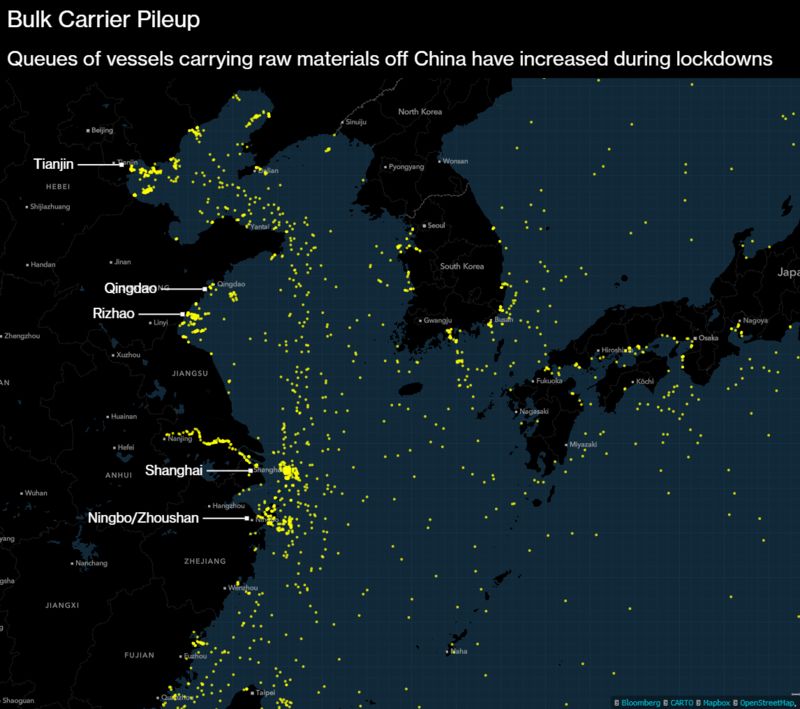
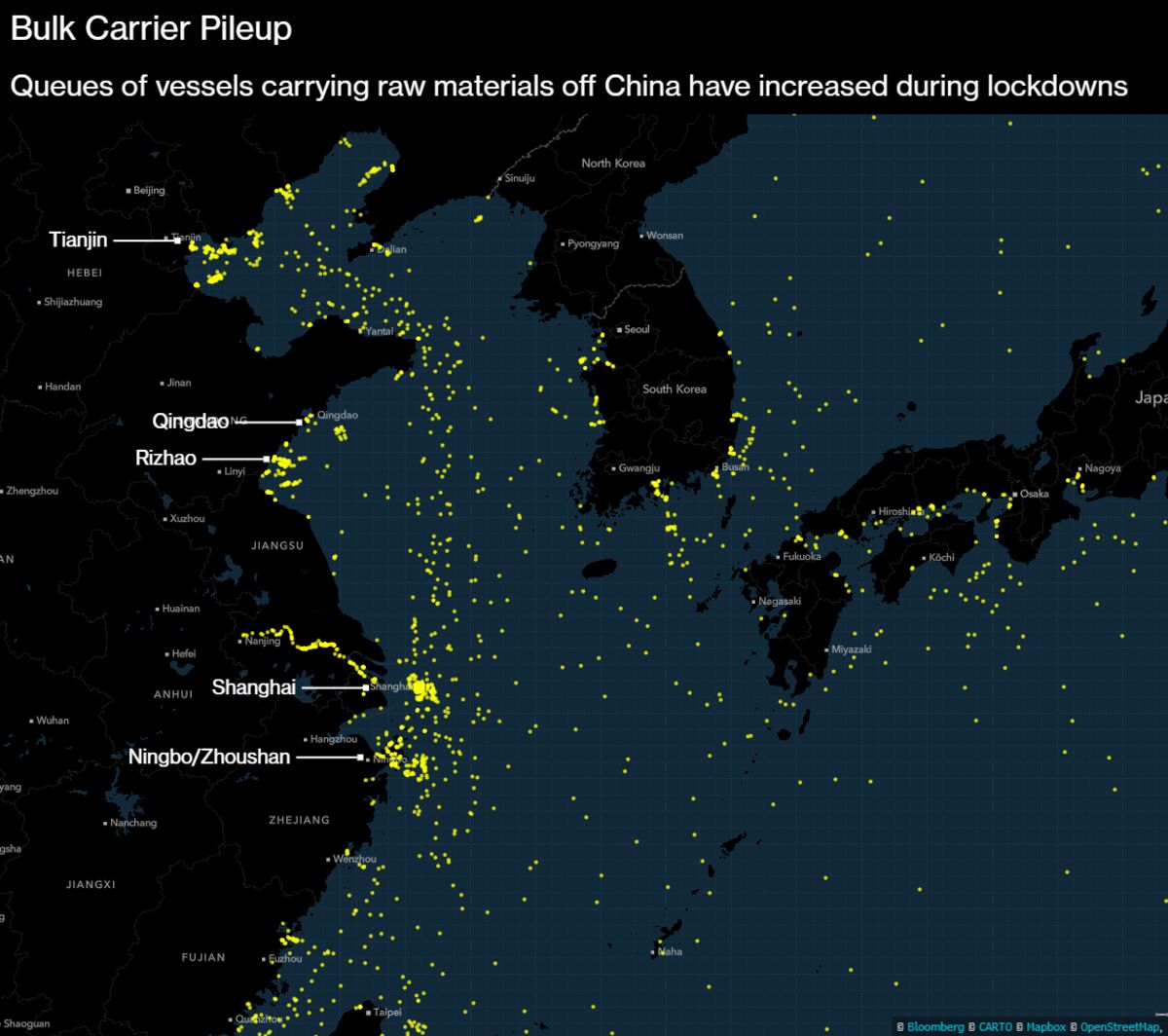
struggling with the country's zero-Covid policy. Many cities have been placed under full or partial lockdowns since March, wreaking havoc on activity. Analysts are worried that the economy could contract in the second quarter.
"This could have multiplier effects given that real estate as an asset class could be compromised now for a few years," Magnus said.
China's gigantic real estate sector, which accounts for as much as 30% of its GDP, is in a worsening downturn. Sales by the country's top 100 developers
collapsed 59% in May from a year ago, according to a recent survey by property research firm Cric China.
Evergrande — one of the country's biggest developers — is undergoing
a huge restructuring after it defaulted on its debts late last year. Analysts have long feared Evergrande's collapse could have
ripple effects across the property industry and spill over to the financial system.
Property loans accounts for nearly 30% of outstanding loans with China's financial institutions.
Analysts aren't yet worrying about a financial crisis — because the PBOC is likely to ensure that larger and systemically more important banks are protected.
But the discontent triggered by the bank runs could be a major concern for the government.
When Covid health codes of depositors turned red early last week, derailing a planned protest in Zhengzhou, it
sparked a massive outcry on social media.
"Now (the authorities) can stop you from petitioning by directly putting digital shackles on you, aka giving you red codes," said one comment on Weibo, China's Twitter-like platform.
Dozens of depositors were taken into a quarantine hotel guarded by police and local officials, before being sent away on trains bound for their hometowns the next day; others were "quarantined" at several other locations in the city, including a college campus, according to the witnesses and online posts.
"Many people lost their lifetime savings because of this and [if] more incidences like this takes place, and [if] a bank run is met with a government crackdown, social unrest will be the only end result," Xie said.
Peter had put his life savings of about $6 million into accounts at three small banks in China's central Henan province. He says he hasn't been able to access them since April.

edition.cnn.com