Astra Series Air to Air Missiles

Range increments don't happen overnight, the development of the ER version of the Astra Mk1 & Mk2 has more to do with the changing in chemistry, density of the propellants they carry on which R&D has been going on for years and less about the PL-15E found intact.
Associating the improvements being carried out with the Astra Mk1 & Mk2 with the PL-15E debris being found intact is a great disservice to the scientists who have put their sweat & blood into this program.
These low IQ influencers literally know nothing about this.

But I think DRDO would have found Something useful or note- worthy in the PL 15 which was recovered intact
 
  • Like
Reactions: Rajput Lion
But I think DRDO would have found Something useful or note- worthy in the PL 15 which was recovered intact
Could be, but I don't think it has anything particularly to do with the range increment program planned with the Astra family because these things take time, even analyzing the PL-15 wreckage is going to take months if not years, and building upon that analysis another few years.
Op Sindoor happened 7 months ago and that is definitely not enough time for any R&D org to carry out a range extension program.
 
  • Like
Reactions: Ironhide and Shan
I don’t even know why these theories are being entertained in any serious defence discussion.

Someone even edited the Wikipedia page, citing that stupid article by Shishir Gupta, and the people sharing these ‘reverse‑engineering’ videos on twitter, told me themselves that they’re doing information warfare 🤦

Lrashm was reverse engineered fateh 1 crashed in Srinagar 😆

1000080427.png
 
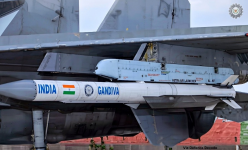
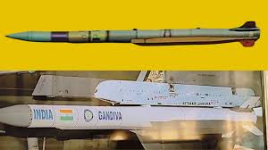
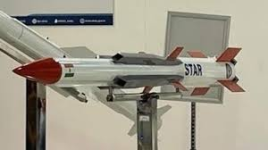
So, what's the game plan of DRDO and IAF regarding the PL17, considering it's a missile with a range of over 400 km? Are we looking at an LFRJ design based on the STAR missile, or perhaps the Gandiv (ASTRA MK3)? In my opinion, an LFRJ-based design featuring a throttleable liquid motor could provide a better range while keeping size constraints in mind.

DRDO really needs to focus on developing a 400+ km missile now, or we might face another unexpected challenge in the next conflict with PL17. If both Gandiva and LFRJ are going to take longer, then DRDO should prioritize working on the triple pulse motor extended ASTRA MK2.


1771144769328.png 1771144813797.png

1771145078306.png 1771145103888.png

 
  • Haha
Reactions: Aniruddha and Shan
what's the game plan for DRDO and IAF regarding the PL17
The question itself is wrong. This is not ramayana TV series where missile neutralise other missiles.

We need platforms with low observability that can carry radars big enough to make use of such extremely long-range missiles. For the time being gandiva should be good enough.
 
The question itself is wrong. This is not ramayana TV series where missile neutralise other missiles.

We need platforms with low observability that can carry radars big enough to make use of such extremely long-range missiles. For the time being gandiva should be good enough.
Many folks are less unconcerned about the nature of the platforms and more concerned about the missile/missile ranges itself. The radar aspect is almost on the fringes of thinking when it comes to A2A/BVR capabilities.
 
  • Like
Reactions: spice and Aniruddha
So, what's the game plan of DRDO and IAF regarding the PL17, considering it's a missile with a range of over 400 km? Are we looking at an LFRJ design based on the STAR missile, or perhaps the Gandiv (ASTRA MK3)? In my opinion, an LFRJ-based design featuring a throttleable liquid motor could provide a better range while keeping size constraints in mind.

DRDO really needs to focus on developing a 400+ km missile now, or we might face another unexpected challenge in the next conflict with PL17. If both Gandiva and LFRJ are going to take longer, then DRDO should prioritize working on the triple pulse motor extended ASTRA MK2.


View attachment 49741 View attachment 49742

View attachment 49743 View attachment 49744

Tell this retard to show concrete proof that 2-3 Rafales were downed by the PL-15
 
IMO, the missile's range is crucial otherwise, the 40N6 won't be significant for the S400 missile, same goes with Meteor. You can compensate with speed, you always have to consider the opponent's capabilities into account. The platform is essential, but not always necessary, just like with the SU30 MKI and BrahMos. We need to match or supass the Chinese capabilities regarding missile range for BVR engagement. If I have a longer-range, accurate, and fast missile, my enemy's AWACS will be at a distance.
 
In long-range BVR (Beyond Visual Range), the platform and its sensor suite are also a bottleneck, its not just the missile that plays a key role in engagement. Having a 400 km is useless if you can't lock onto the target at a suitable engagement range. A missile flying 300 km takes sometime to arrive. The target will move. The launching platform has to maintain a datalink to update the missile. If the platform (FA) has a weak radar or is jammed, the long-range missile becomes a "dumb" rocket. BVR ranges are important. However, the package as a whole plays its part. VLO and the type of radar on board can make a lot of difference.
 
Tell this retard to show concrete proof that 2-3 Rafales were downed by the PL-15
If I take the Swiss report, they point to the fact that 1 went down. Still this chap is pointing towards the nos. pushed by the PAF. Also, look at the conviction in stating that all were downed in A2A engagement and none went down due to SAMs. He's giving a verdict more than an opinion. Certain section of Indians have more faith in EU and Chinese weapons (and their associated claims) more than the Chinese and Europeans happen to have.
 
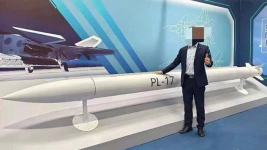
Comparison of R37 to PL17 found online. Interestingly, the PL17 guidance utilizes satellite data to provide direction to target coordinates before the seeker activates.
  • The R-37M has a wide diameter (380mm). This allows for a massive radar seeker head but creates more aerodynamic drag. It relies on sheer brute-force thrust to overcome this.
  • The PL-17's needle-like profile (long and relatively thin) is optimized for ultra-long-range "lofting." It climbs into the thin upper atmosphere where air resistance is low, using its massive length (which is mostly rocket motor) to glide for hundreds of kilometers.
FeatureR-37M (Russia)PL-17 / PL-XX (China)
NATO NameAA-13 "Axehead"Likely "CH-AA-X-11"
Estimated Range200–400 km300–400+ km
Top SpeedMach 5–6Mach 4+ (Estimated)
Length~4.06 meters~5.8 meters
Primary PlatformMiG-31BM, Su-35S, Su-57J-16, J-20
GuidanceInertial + Active RadarActive Radar (likely AESA) + Satellite
StatusCombat ProvenOperational / Testing
SpecificationR-37M (Russia)PL-17 / PL-XX (China)
Length4.06 meters (13.3 ft)~5.8 to 6.0 meters (19–20 ft)
Diameter380 mm (15 in)~300 mm (12 in)
Wingspan720 mm (28.3 in)~700 mm (Estimated)
Launch Weight510 kg (1,124 lbs)~600–700 kg (Estimated)
Warhead Weight[/60 kg (132 lbs)[/~40–50 kg (Estimated)
[td]td] [td]td]
 
  • Informative
  • Like
Reactions: spice and Shan
Satellite guidance only navigates the missile to a general zone it cannot track moving targets in real-time. In reality, GPS signals are weak and susceptible to spoofing, making the missile reliant on fragile datalinks for mid-course updates (A satellite cannot track a manoeuvring fighter jet in real-time and guide a missile to it. The latency is too high, and the resolution is too low). Its true danger isn't immunity to jamming, but its "Home-on-Jam" capability, which allows it to lock onto an enemy's electronic interference and ride it like a beacon. Consequently, while it is a lethal "sniper" against slow, predictable AWACS, it remains vulnerable to agile fighters that can out-manoeuvre its limited terminal energy. AWACS are quite susceptible, I agree on this aspect. However, for wider A2A capabilities/engagement, the platform characteristics still matter.
 
  • Like
Reactions: spice
This satellite component needs to be analyzed by defense experts. Can we deploy a chain of mini satellites equipped with AESA radar in LEO at altitudes between 200 to 300 km? and with a secure data link, we could connect with air and ground assets to identify enemy flying objects. If this is feasible for BMD, then why not for BVR engagement? I really hope DRDO collaborates with ISRO to make this happen.

I'm having trouble replying to any messages; it looks like there's an issue with my account on the forum site. I think we shouldn't stress about PAF this time because we'll ensure that nothing goes airborne from PAF.
 
Comparison of R37 to PL17 found online. Interestingly, the PL17 guidance utilizes satellite data to provide direction to target coordinates before the seeker activates.
  • The R-37M has a wide diameter (380mm). This allows for a massive radar seeker head but creates more aerodynamic drag. It relies on sheer brute-force thrust to overcome this.
  • The PL-17's needle-like profile (long and relatively thin) is optimized for ultra-long-range "lofting." It climbs into the thin upper atmosphere where air resistance is low, using its massive length (which is mostly rocket motor) to glide for hundreds of kilometers.
FeatureR-37M (Russia)PL-17 / PL-XX (China)
NATO NameAA-13 "Axehead"Likely "CH-AA-X-11"
Estimated Range200–400 km300–400+ km
Top SpeedMach 5–6Mach 4+ (Estimated)
Length~4.06 meters~5.8 meters
Primary PlatformMiG-31BM, Su-35S, Su-57J-16, J-20
GuidanceInertial + Active RadarActive Radar (likely AESA) + Satellite
StatusCombat ProvenOperational / Testing
SpecificationR-37M (Russia)PL-17 / PL-XX (China)
Length4.06 meters (13.3 ft)~5.8 to 6.0 meters (19–20 ft)
Diameter380 mm (15 in)~300 mm (12 in)
Wingspan720 mm (28.3 in)~700 mm (Estimated)
Launch Weight510 kg (1,124 lbs)~600–700 kg (Estimated)
Warhead Weight[/60 kg (132 lbs)[/~40–50 kg (Estimated)
[td]td] [td]td]
the PL17 is likely better optimised for the j20 and so they probably could make it fat. the russians on the other hand have a massive internal bay for the su57 and therefore can afford to make it a lot fatter and rely on brute force.

The russians will have access to a bigger seeker but since theyre radar tech isnt as good its probably the same as the pl17 seeker or maybe slightly worse off.
Man if we get to manufacture an extended range version of the R37M with a high end indigenous seeker it will serve us extraordinarily well for Airspace denial. the range itself doesnt matter but the extra thrust provided for the extended range version will be very useful for endgame even if the effective range of radar etc is the same.
 
My query is If USAF is using modified surface to air missile RIM 174 to create AIM174B as a counterpart to chinese PL15/17 missiles, why can't we make an air to air variant from Barak 8 & Barak ER(of course we need Israeli tech transfer for ER variant )? If we are firing Barak 8 & ER from air, definitely we can achieve much larger range than the surface to air firing range. We can easily acheive 200-400 from these two missiles.
I think.
 
My query is If USAF is using modified surface to air missile RIM 174 to create AIM174B as a counterpart to chinese PL15/17 missiles, why can't we make an air to air variant from Barak 8 & Barak ER(of course we need Israeli tech transfer for ER variant )? If we are firing Barak 8 & ER from air, definitely we can achieve much larger range than the surface to air firing range. We can easily acheive 200-400 from these two missiles.
I think.
Barak 8 top speed: mach 2.
Astra mk1 top speed: mach 4.5.


The RIM-174 Standard ERAM (SM-6) top speed: Mach 3.5, lower than typical air to air missiles but enough for slow moving targets like awacs, tankers at long distance, but still less optimal than p17 which is a dedicated air to air missile and likely has higher top and median speed than SM6/RIM174.

also possible the AIM174B has somewhat higher speeds than its base RIM174/sm6, around mach 4 top maybe.
 
  • Informative
Reactions: Hydra