Air Engagement of Operation Sindoor : Analysis

Did India view HQ9 as a threat? This gives us some information towards that angle why India was trying to hunt at least 2 HQ9s to the best of our knowledge which apparently were four when agencies tracked them through the intel.

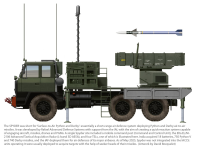
They also show that India destroyed one Chinese LY-80 fire radar, two AN/TPQ-43 US-made automatic tracking radars, and one fire unit of the Chinese HQ-9 radar at Chaklala during the retaliatory strike on May 10. Intelligence inputs now suggest that Pakistan has four HQ-9 (the Chinese equivalent of the Russian S-300 air defence radar systems), instead of the two originally estimated by national security planners.
None of the strike package were intercepted by Pakistan, I understand it was the CAP flights some of which may have been inside HQ9 long range SAM envelope just like PAF jets were caught loitering near border regions by S400 SAM batteries.

What stood between them and their intended targets was not just technology, but years of commitment to Atmanirbhar Bharat. While Pakistan relied on imported HQ-9 and HQ-16 systems that failed to detect and intercept Indian strikes, Akashteer showcased India’s dominance in real-time, automated air defence warfare.

 
Did India view HQ9 as a threat? This gives us some information towards that angle why India was trying to hunt at least 2 HQ9s to the best of our knowledge which apparently were four when agencies tracked them through the intel.

Even stinger is a threat. HQ9 is an automated system, a much bigger headache. Crippling such capabilities is a multi directional task not restricted to air force only as you mentioned.
 
Even stinger is a threat. HQ9 is an automated system, a much bigger headache. Crippling such capabilities is a multi directional task not restricted to air force only as you mentioned.
Very correctly said, hence the multi agencies assets were tasked for this intelligence gathering. Also the subtle reason why Kirana hills and Command & control at Noor Khan airbase were being tracked, and invited response.

Not everything can be said on a public forum like this as I have stated in past, however there is enough circumstantial evidence to suggest the assumption maybe much closer to the truth than the truth being peddled by certain domestic quarters on inaptitude of Indian Air force, and partly towards Indian armed forces.
 
  • Like
Reactions: screambowl
Yes It does.
I don't know what you are assuming, if its about BVR kill, I never said we lost any fighter to a PL15.
No what your posts are implying there that IAF jets were loitering for strikes despite knowing the launch of AAMs, that's what we are calling that a farce statement. Nothing could be further from the truth.

A battle, much less a war, is always fluid and dynamic. One doesn't count its material assets, rather one focuses on human life safety and the goal achievement. If anything organization succeeds in achieving the set objectives without loss of human life directly involved, it's a win, no matter what the material losses might be.

But alas, it's difficult to get our point across as many are still stuck on the numbers of losses, rather than the number of objectives met.
 
Yes It does.
I don't know what you are assuming, if its about BVR kill, I never said we lost any fighter to a PL15.
It's not about loss from PL15, AIM missiles or HQ9, it's about the objectives achievement, that's what we should be talking about. No one knows how many jets we lost and against which missiles, if any, as not loosing the material assets were not the objectives. Objectives were to give blistering hurt to terror fronts while degrading and showing the world how India brought Pakistan to knee while keeping the battle restricted without going nuclear way.

India was able to do what it did this time was specifically due to the reason that Pakistan didn't catch any of our people during the battle period. Not crossing the border was an chosen, well thought out plan which put the PAF on backfoot despite having comparative capabilities when it comes to air to air engagements.
 
It's not about loss from PL15, AIM missiles or HQ9, it's about the objectives achievement, that's what we should be talking about. No one knows how many jets we lost and against which missiles, if any, as not loosing the material assets were not the objectives. Objectives were to give blistering hurt to terror fronts while degrading and showing the world how India brought Pakistan to knee while keeping the battle restricted without going nuclear way.

India was able to do what it did this time was specifically due to the reason that Pakistan didn't catch any of our people during the battle period. Not crossing the border was an chosen, well thought out plan which put the PAF on backfoot despite having comparative capabilities when it comes to air to air engagements.
Yeah.


Then Why did you asses this

Re-read and understand what you are saying and is that making sense to you?
 
No what your posts are implying there that IAF jets were loitering for strikes despite knowing the launch of AAMs, that's what we are calling that a farce statement. Nothing could be further from the truth

From what I know.

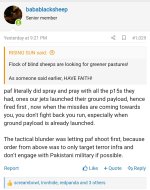
Both IAF and PAF planes were in the air , Both sides aware of each other, IAF was loitering until the go ahead was given to release the strike package( SCALP) from command center.

Plus as also released in public domain, Indian side made pak aware of the Incoming strikes so PAF got the time get airborne.


In the 2025 India–Pakistan conflict, the Indian Ministry of External Affairs (MEA) specifically clarified that Pakistan was "warned at the start," meaning during the early phase after Operation Sindoor had already commenced.
 
You said, and I am quoting here, that IAF jets fired their payload, and PAF jets started lobbing AAMs, and instead of turning back IAF jets stayed on and their jets became the victim of PAF fired AAMs if any.

The reason is that you're assuming that there were IAF jets going against the PAF knowing AAMs coming their way. Second, you claim PAF fired the first lot of AAMs, is there any statements that supports your claim? Your own post has a very minute details which you missed.

Everyone is guessing what those operational restrictions were. It is also possible that IAF pilots had certain restrictions, like fired upon, or in danger of fired upon or perceived danger of targetting, IAF may have been given explicit ROIs to shoot first.

Hence what you read here or in gibberish media, that's a whole lot of misdirection. No knows those restrictions except GOI and armed forces. Nothing more nothing less.
Screenshot_20260127_081348.jpg
No what your posts are implying there that IAF jets were loitering for strikes despite knowing the launch of AAMs, that's what we are calling that a farce statement. Nothing could be further from the truth.

A battle, much less a war, is always fluid and dynamic. One doesn't count its material assets, rather one focuses on human life safety and the goal achievement. If anything organization succeeds in achieving the set objectives without loss of human life directly involved, it's a win, no matter what the material losses might be.

But alas, it's difficult to get our point across as many are still stuck on the numbers of losses, rather than the number of objectives met.
...after...
 
You said, and I am quoting here, that IAF jets fired their payload, and PAF jets started lobbing AAMs, and instead of turning back IAF jets stayed on and their jets became the victim of PAF fired AAMs if any.
No, i specifically added * when missile is coming towards you you don't fight back , you run* to explain why iaf took defensive measure and why it makes sense
 
And how do you claim to know the fact that PAF fired first?
I just remembered something. I don't know if few pals including few of the moderators remember from old days of WhatsApp group that my Teacher is serving in airforce on a major air force base and a very critical one at Western border. Though I didn't and don't ask for confidential information as I can't put him & jeopardize his career. However from the old times, and I am talking here about the days of Jaguars and Mig bombers, he used to work on Migs mostly and then on Jaguars. Jaguars, though in bad shape, don't lack in punch when combined with Air superiority jets and that continues till now however those jets are showing the age which you can't visually identify from the videos taken from distance. That's the feedback.


Ahha, I almost forgot my own uncle who heads a major military installation in a north eastern state bordering Bangladesh and very very near Bhutan and Chinese sovereign land, I guess, he may get retired soon.

And cousin who works in Dimapur corps however I can't disclose the actual position. I have posted few edited photos in past as well when he ventured out of country "without passport" for some leisure.

Anyways less speak the better. What's there to win anyways in social media.🙊
 
  • Haha
Reactions: Subgradewalker


HADDP8sbEAw7n2c
 
1769936376430.png
1769936406314.png
1769936422761.png
1769936449273.png
1769936470744.png
1769936511312.png
1769936534963.png
1769936548431.png
1769936565694.png

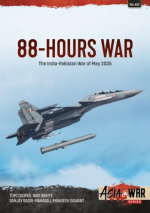
Often downplayed or misrepresented, the short but intense military confrontation between India and Pakistan in early May 2025 was one of the sharpest clashes the two nuclear-armed rivals have fought in decades. Lasting less than four days, the conflict saw the combat debut of several of the most advanced weapon systems currently in service. Widely dismissed in much of the international media as a mere extension of the Kashmir dispute, a “large-scale cross-border skirmish,” or simply a “drone battle,” it culminated in both sides claiming victory—before being shepherded into a ceasefire through hurried diplomatic pressure from the administration of U.S. President Donald Trump. Yet behind these narratives lies a confrontation that will shape Indo-Pakistani relations for decades to come.

The crisis began on 22 April 2025, when a terrorist attack outside Pahalgam in Indian-administered Jammu and Kashmir killed 26 civilians, mostly Hindu tourists. A Pakistan-based, UN-designated terrorist organisation first claimed responsibility, then denied involvement, while Islamabad—having engineered the attack to draw global attention to Kashmir—dismissed the massacre as an Indian “false flag operation.” New Delhi responded with a series of calibrated countermeasures and, armed with irrefutable evidence of Pakistani complicity, launched precision strikes on multiple terrorist camps in the early hours of 7 May.

Determined to dictate India’s responses through nuclear threats and long-standing myths of military invulnerability, Pakistan escalated. Mortars, artillery rockets and armed unmanned aerial vehicles were fired at civilian, military and religious targets inside Indian territory. India, however, reacted with a tightly planned and proportionate operation that systematically dismantled Pakistani air defences. Over the next 48 hours, Pakistan intensified its “drone war,” only to see the majority of its systems destroyed mid-flight.

In desperation, Islamabad ordered ballistic missile strikes on 26 targets across India. New Delhi’s retaliation was swift and overwhelming. In just 90 minutes, Indian missiles crippled key Pakistani command centres, closed runways at several major PAF bases, destroyed critical aircraft hangars, and—most significantly—struck at least one, possibly two underground nuclear weapons storage sites. The message was unmistakable: India now held the upper hand.

Though rooted in the long-standing Kashmir dispute, the India–Pakistan War of May 2025 represented something far more consequential. For the first time in 80 years of hostility, India not only responded directly to a Pakistan-sponsored terrorist attack, but openly called Islamabad’s nuclear bluff, neutralised its ability to retaliate and forced Pakistani aircraft away from the international border—placing the IAF in a decisive offensive posture. Despite Islamabad’s subsequent efforts, aided by Chinese disinformation and familiar Western misconceptions, to mask the scale of its defeat and even claim victory, the strategic balance between the two nations has been irrevocably altered.

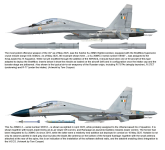
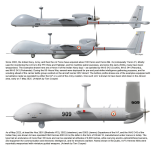
Richly illustrated with custom-drawn diagrams, detailed colour profiles and in-depth technical analysis, 88-Hours War provides the first full account of this fast-moving but poorly understood conflict. Combining background, context and a blow-by-blow narrative of the fighting from 7 to 10 May 2025, it is an indispensable reference for defence professionals, analysts and military history enthusiasts alike.

88 Hours War | Asia@War | Helion & Company