

You are using an out of date browser. It may not display this or other websites correctly.
You should upgrade or use an alternative browser.
You should upgrade or use an alternative browser.

Ministry of Science & Technology
Advanced protective coatings to improve machining of critical superalloys can help aerospace, energy & petrochemical sectors
Advanced protective coatings to improve machining of critical superalloys can help aerospace, energy & petrochemical sectors
Posted On: 04 NOV 2026 5:21 PM by PIB Delhi
An advanced surface-engineering approach developed by scientists can help improve the durability of cutting tools used for machining super alloys.
This could help aerospace, energy and petrochemical sectors, where nickel-based superalloys are indispensable for components operating under extreme conditions.
Machining of super alloys for use in aircraft engines, power plants and petrochemical systems is a major manufacturing challenge. Nickel-based superalloys such as Inconel 718 (IN718), IN625 and IN617 possess exceptional strength and hardness which make them difficult to cut or shape. Rapid work hardening, poor thermal conductivity and strong chemical interaction with cutting tools accelerate tool wear, reduce productivity and increase manufacturing costs.
Scientists from the International Advanced Research Centre for Powder Metallurgy and New Materials (ARCI), Hyderabad, an autonomous R&D Centre of the Department of Science and Technology (DST) have developed and evaluated two nanocomposite protective coatings—Titanium Aluminium Silicon Nitride (TiAlSiN) and Chromium Aluminium Silicon Nitride (CrAlSiN)—on widely used tungsten carbide cutting tools.
The coatings were deposited in-house using cathodic-arc physical vapour deposition and this helped evaluate the performance of tools for milling of IN718, IN625 and IN617. The study examined both tool life and the mechanisms governing coating performance.
The research revealed an important finding: there is no single coating that performs best for every superalloy. The effectiveness of a protective coating depends significantly on the chemistry of the material being machined and its interaction with the coating.
For IN718, the TiAlSiN-coated tool improved tool life by about 80% compared with an uncoated tool, while for IN625, the improvement was about 60%. For IN617, however, CrAlSiN proved remarkably superior, increasing tool life by more than 200%. The results demonstrate that one coating may be better suited to IN718 and IN625, while another can perform substantially better for IN617. The findings provide a scientific basis for selecting coatings according to the specific alloy being machined.

Fig 1: Advanced nanocomposite coatings significantly improve the life of tungsten carbide cutting tools. The results show that the optimum coating depends on the specific nickel-based superalloy being machined.
The researchers also investigated how cutting tools failed. A major cause of damage was repeated adhesion of workpiece material to the tool surface. During machining, a layer of the superalloy can stick to the cutting edge and, when it subsequently breaks away, it pulls tiny fragments from the tool, progressively causing chipping. The coatings helped delay this damage and extend tool life. Chipping and progressive wear were identified as the major failure modes, with abrasion, adhesion and attrition contributing to the overall wear process.

Fig2: A Scanning Electron Microscope image of a cutting-tool edge showing workpiece adhesion, abrasion, chipping and lateral cracks—key mechanisms responsible for tool failure during machining of nickel-based superalloys.
The researchers also examined the metal chips generated during machining. The chips exhibited characteristic shear bands and serrated or saw-tooth patterns, reflecting the intense thermo-mechanical conditions during cutting. The degree of chip segmentation was related to tool performance, providing further insight into the complex machining behaviour of these advanced alloys.
Longer-lasting cutting tools can reduce downtime, improve productivity and lower the cost of machining high-value engineering components.
More significantly, the study points towards a science-based, application-specific approach to protective coatings. Rather than seeking a universally superior coating, manufacturers can select or design coatings based on the composition and behaviour of the particular alloy being machined. This can contribute to more efficient, reliable and cost-effective manufacturing of components made from advanced materials.
The research carried out at ARCI's Centre for Engineered Coatings, has been published in the journal Materials Today Communications.
The study demonstrates that the key to improving the machining of some of industry's most demanding materials lies not merely in developing a better coating, but in matching the right coating to the right material.
Link to Publication: Redirecting
https://www.pib.gov.in/PressReleaseDetail.aspx?PRID=2332607®=21&lang=1

MP-IDSA: The 3rd Edition of the Delhi Defence Dialogue on 3-4 November 2026 (Day 02)
The interaction starting at 04:09:18 with GTRE director is very interesting. Below transcript is Indus AI generated with some obvious errors!
This confirms that we are almost there! The Director is confirming that w.r.t. IN20 engine the gaps are very small. But what I don't understand is that with SX blades we can go from 71kN to only 74kN! Can anyone explain why such a small leap? Why can't Kaveri do 80kN+ with SX blades? Does it still need more bells and whistles?
The interaction starting at 04:09:18 with GTRE director is very interesting. Below transcript is Indus AI generated with some obvious errors!
My question is to GTRE director. We will have about 400 LCM arc one, mark two. So these aircraft subsequently will undergo at least two engine changes. So, do we currently have an indigenous engine program after Burner 1 which has got approved to replace the current lot of engines say after 6, 10 or 15 years? of 80 to 100 ton.
Dr. S. V. Ramana Murthy
Sir, I mean, yeah. Coming to your point, we are discussing with all the stakeholders what Kaveri engine, with the Kaveri dry engine, we could able to demonstrate performance and operability with unrestricted carefree throttle movement. What I brought it out earlier, the fan flutter problem. Screech problem, LP tap and blade resonance, high, I mean, oil consumption, all we could able to address those things. Coming to the reheat, we could able to get the 71 kilonewton with the single crystal blades, we can go to 75 kilonewton. With respect to what is the i20 engine, we know where are the gaps, it's very small. So, we are having discussion with all the stakeholders and we are moving ahead, sir.
This confirms that we are almost there! The Director is confirming that w.r.t. IN20 engine the gaps are very small. But what I don't understand is that with SX blades we can go from 71kN to only 74kN! Can anyone explain why such a small leap? Why can't Kaveri do 80kN+ with SX blades? Does it still need more bells and whistles?
This confirms that we are almost there! The Director is confirming that w.r.t. IN20 engine the gaps are very small. But what I don't understand is that with SX blades we can go from 71kN to only 74kN! Can anyone explain why such a small leap? Why can't Kaveri do 80kN+ with SX blades? Does it still need more bells and whistles?
The primary bottleneck with the Kaveri now is the bypass ratio. F404 has a bypass ratio of 0.34, for Kaveri its 0.16. The current Kaveri is roughly equivalent to the F404-GE-402 in performance. The F404 was designed with the growth margin that allowed them to build a higher thrust version (the IN20 version).
Kaveri was designed in the 80s with metallurgical limitation in mind. Back then the standard blades GTRE was using was equiaxed blades. Then came DS blades & now SX blades. The engine wasn't designed to make the most out of SX blades. Why is this the case? Because both engine design expertise & metallurgical expertise needs slow gradual improvements. Engine design improvements need dedicated testing facilities & constant large-scale funding. Kaveri program was defunded decades ago. DMRL was funded for various other programs: armour steels, KE penetrators, Ti alloys, Al alloys, etc. This allowed DMRL to build up expertise in powder metallurgy, CMC, CERMETS etc. Now they have caught up to contemporary 4th gen SX blades in metallurgy.
To increase Kaveri's thrust we have to do 2 things. Increase overall pressure ratio (OPR) or increase TET, if possible, do both.
Increasing just the TET without changing the design would need years of work into superalloys, TBCs, cooling geometry etc. We might still end up with an engine that provides sufficient power but has a higher specific fuel consumption & reduced service life.
Increasing OPR without changing TET would require a larger bypass ratio, intake, compressors, turbines etc. We will end up with a larger heavier engine with enough thrust but a worse thrust to weight ratio.
This is why GTRE is pushing for a Kaveri 2.0 program now. GoI is invested in making the dry Kaveri successful. But no signs of a Kaveri 2.0 yet.
KDE engine bypass is now 0.2The primary bottleneck with the Kaveri now is the bypass ratio. F404 has a bypass ratio of 0.34, for Kaveri its 0.16. The current Kaveri is roughly equivalent to the F404-GE-402 in performance. The F404 was designed with the growth margin that allowed them to build a higher thrust version (the IN20 version).
Kaveri was designed in the 80s with metallurgical limitation in mind. Back then the standard blades GTRE was using was equiaxed blades. Then came DS blades & now SX blades. The engine wasn't designed to make the most out of SX blades. Why is this the case? Because both engine design expertise & metallurgical expertise needs slow gradual improvements. Engine design improvements need dedicated testing facilities & constant large-scale funding. Kaveri program was defunded decades ago. DMRL was funded for various other programs: armour steels, KE penetrators, Ti alloys, Al alloys, etc. This allowed DMRL to build up expertise in powder metallurgy, CMC, CERMETS etc. Now they have caught up to contemporary 4th gen SX blades in metallurgy.
To increase Kaveri's thrust we have to do 2 things. Increase overall pressure ratio (OPR) or increase TET, if possible, do both.
Increasing just the TET without changing the design would need years of work into superalloys, TBCs, cooling geometry etc. We might still end up with an engine that provides sufficient power but has a higher specific fuel consumption & reduced service life.
Increasing OPR without changing TET would require a larger bypass ratio, intake, compressors, turbines etc. We will end up with a larger heavier engine with enough thrust but a worse thrust to weight ratio.
This is why GTRE is pushing for a Kaveri 2.0 program now. GoI is invested in making the dry Kaveri successful. But no signs of a Kaveri 2.0 yet.
KDE engine bypass is now 0.2
Woah! When did this happen? Any sources to this. With 0.2 bypass, GTRE could potentially push the OPR to ~23 from the current ~21.
Appreciate the answer but what I still fail to understand is that the GTRE guys back then with all things considered were sure that if they get the design right then they can hit 81kN most probably with DS blades since those are the ones being used currently. As I understand right from the beginning itself the plan was to master the higher TeT regime than go for higher BPR because of Indian atmospheric condition which we know degrades the engine performance by 7-8% in such engines.The primary bottleneck with the Kaveri now is the bypass ratio. F404 has a bypass ratio of 0.34, for Kaveri its 0.16. The current Kaveri is roughly equivalent to the F404-GE-402 in performance. The F404 was designed with the growth margin that allowed them to build a higher thrust version (the IN20 version).
Kaveri was designed in the 80s with metallurgical limitation in mind. Back then the standard blades GTRE was using was equiaxed blades. Then came DS blades & now SX blades. The engine wasn't designed to make the most out of SX blades. Why is this the case? Because both engine design expertise & metallurgical expertise needs slow gradual improvements. Engine design improvements need dedicated testing facilities & constant large-scale funding. Kaveri program was defunded decades ago. DMRL was funded for various other programs: armour steels, KE penetrators, Ti alloys, Al alloys, etc. This allowed DMRL to build up expertise in powder metallurgy, CMC, CERMETS etc. Now they have caught up to contemporary 4th gen SX blades in metallurgy.
To increase Kaveri's thrust we have to do 2 things. Increase overall pressure ratio (OPR) or increase TET, if possible, do both.
Increasing just the TET without changing the design would need years of work into superalloys, TBCs, cooling geometry etc. We might still end up with an engine that provides sufficient power but has a higher specific fuel consumption & reduced service life.
Increasing OPR without changing TET would require a larger bypass ratio, intake, compressors, turbines etc. We will end up with a larger heavier engine with enough thrust but a worse thrust to weight ratio.
This is why GTRE is pushing for a Kaveri 2.0 program now. GoI is invested in making the dry Kaveri successful. But no signs of a Kaveri 2.0 yet.
So with SX blades we should be able to hit much higher TeT right? Then how come that is translating into a mere 4kN jump vs DS blades? What might be the TeT now then? GTRE has grown a lot in terms of TBC, blade cooling etc. and yet struggling to reach the original 81kN! Was GTRE's initial design choices itself so bad that the current Kaveri design can never reach that figure or what? Or did the Director by 75kN meant equivalent IN20 performance considering the degradation? All of this is very confusing!
Woah! When did this happen? Any sources to this. With 0.2 bypass, GTRE could potentially push the OPR to ~23 from the current ~21.
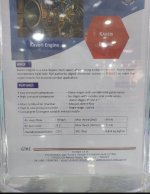
Appreciate the answer but what I still fail to understand is that the GTRE guys back then with all things considered were sure that if they get the design right then they can hit 81kN most probably with DS blades since those are the ones being used currently.
Kaveri is our 1st fighter sized turbofan engine. The figures GTRE quoted was based not on actual design experience but on simulation data. When GTRE tried to push the engine to the ~80 kN mark, the discovered problems. Namely combustion instability caused by dynamic pressure loss & resonance, screech on the afterburner section & most problematically the engine would throw blades at near peak thrust.
The screech problem was solved with a new V-gutter style flame holder on the afterburner section. If I recall correctly the new afterburner prototype was handed to Brahmos Aerospace for manufacturing & testing. No updates on that yet.
The combustion instability & blade throw problems was caused by creep deformation on the DS blades & vanes. The new SX blades & vanes have much higher creep tolerance. The blade throw issue has been resolved.
Pressure loss & resonance are still problems they have not fully overcome.
So with SX blades we should be able to hit much higher TeT right? Then how come that is translating into a mere 4kN jump vs DS blades?
TET alone doesn't fix other problems. TET allows you to push the thrust higher for longer. But without resolving other issues this added thrust boost will be short lived.
The SX blades are not the bottleneck. They are not stopping GTRE from pushing the engine RPM & thus thrust higher.
Was GTRE's initial design choices itself so bad that the current Kaveri design can never reach that figure or what? Or did the Director by 75kN meant equivalent IN20 performance considering the degradation? All of this is very confusing!
48-49 kN dry & 75 kN wet are probably what the engine can do sustainably for long periods of time. The SX blades will allow them to push past 80kN wet but without fixing the resonance & pressure loss issues the engine can't sustain that for long.
As for initial design choices, choosing a 0.16 bypass ratio was a completely avoidable mistake. If only we had that kind of foresight. A lower bypass ratio forces more mass through the core, that means the engine naturally have to run at a higher RPM. Higher RPM increases TET demand, significantly increases risk of creep damage and more aeroelastic resonance.
Had we gone for 0.2-0.3 bypass ratio from the get-go a lot of these troubles could be avoided. But you see at the time GTRE was experience with turbojets not turbofans, they thought a very low bypass "leaky" turbojet would be a smaller/easier leap.
The Kaveri with the new afterburner can power a Tejas. But until these issues are sorted IAF won't let that happen. Tejas is a single engine fighter, a dynamic pressure loss in flight means we will lose an airframe.
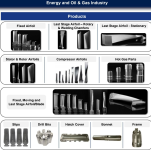
AZAD Engineering's new manufacturing facility in Hyderabad for critical power generation components for global OEMs. Precision engineering to produce around 100000 blades per annum from this factory.
View attachment AZAD Engineering.mp4
View attachment AZAD Engineering.mp4

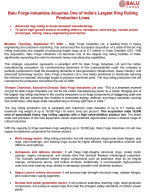
They made tech demo engines before taking up Kaveri. This below pic is from the famous Aero Gas Turbine Webinar from 2022. As we can see below that for GTRE Kaveri was an incremental development. They overestimated everything but they weren't going totally blind atleast.The figures GTRE quoted was based not on actual design experience but on simulation data.
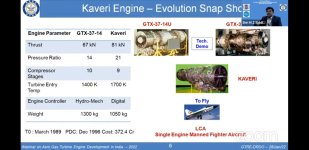
When GTRE tried to push the engine to the ~80 kN mark, the discovered problems. Namely combustion instability caused by dynamic pressure loss & resonance, screech on the afterburner section & most problematically the engine would throw blades at near peak thrust.
The screech problem was solved with a new V-gutter style flame holder on the afterburner section. If I recall correctly the new afterburner prototype was handed to Brahmos Aerospace for manufacturing & testing. No updates on that yet.
The combustion instability & blade throw problems was caused by creep deformation on the DS blades & vanes. The new SX blades & vanes have much higher creep tolerance. The blade throw issue has been resolved.
Pressure loss & resonance are still problems they have not fully overcome.
The problems with Kaveri are well know and GTRE has publicly claimed to have solved them and achieved "care free handling". Again attaching another pic from the aforementioned webinar.

So even after publicly claiming "development issues addressed" if the Kaveri is still falling short of it's target with the new bells and whistles then there is something very wrong with GTRE and Kaveri. Also, can anyone confirm that Brahmos making the new AB news from legit source? I have read about that from individuals claiming the same but failed to find any proper source for that!
As for initial design choices, choosing a 0.16 bypass ratio was a completely avoidable mistake. If only we had that kind of foresight. A lower bypass ratio forces more mass through the core, that means the engine naturally have to run at a higher RPM. Higher RPM increases TET demand, significantly increases risk of creep damage and more aeroelastic resonance.
Had we gone for 0.2-0.3 bypass ratio from the get-go a lot of these troubles could be avoided. But you see at the time GTRE was experience with turbojets not turbofans, they thought a very low bypass "leaky" turbojet would be a smaller/easier leap.
The Kaveri with the new afterburner can power a Tejas. But until these issues are sorted IAF won't let that happen. Tejas is a single engine fighter, a dynamic pressure loss in flight means we will lose an airframe.
As I understand their design choice (correct me if I am wrong) of low bypass is because it's more suited for Indian condition and doesn't undergo significant thrust loss vs. the higher bypass engines. As many knowledgeable people have said that Kaveri failed because of our "materials immaturity" so even after so many years of lab development when the "mature materials" are reaching the Kaveri, it's still underperforming! I think you are right about pressure loss and resonance issue still affecting Kaveri but then GTRE claims to have solved those and yet they are now stuck at 75kN with SX blades!
These are questions for which the GTRE Director should be grilled in the upcoming Aero India. But he did say w.r.t. IN20 engine they know where are the gaps and it's very small so hopefully this "small gap" of the remaining 6kN will be covered soon.
NOTE: All pic credits to their respective owners
I remember now the X post from the ruling party and the DD program on Kaveri 2.0This is why GTRE is pushing for a Kaveri 2.0 program now. GoI is invested in making the dry Kaveri successful. But no signs of a Kaveri 2.0 yet.
Don't know about funding status but atleast the SM larp is strong!

They made tech demo engines before taking up Kaveri. This below pic is from the famous Aero Gas Turbine Webinar from 2022. As we can see below that for GTRE Kaveri was an incremental development. They overestimated everything but they weren't going totally blind atleast.
The GTX-37-14U is a large turbojet not a turbofan. This engine has greatly influenced the design of the Kabini core of the Kaveri engine:
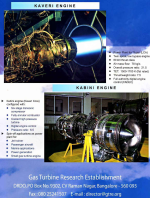
The GTX-37-14U was later modified to adapt a bypass tube, this version was called the GTX-37-14U-B. This engine was the early demonstrator/predecessor of the GTX-35-VS Kaveri. This is one of the reasons why Kaveri ended up with that bypass ratio.
The problems with Kaveri are well know and GTRE has publicly claimed to have solved them and achieved "care free handling".
Care free handling is Indian english for good throttle response. The Kaveri does have good throttle response for 0-90% of the throttle range. Beyond 90% is where the problems begin.
Also, can anyone confirm that Brahmos making the new AB news from legit source? I have read about that from individuals claiming the same but failed to find any proper source for that!
From Tejas rejection to 5th-gen fighter jet hopes: Can Kaveri 2.0 finally deliver?
From the article:
During the visit, Rajnath also witnessed a successful full-afterburner test of the Kaveri engine, which used a newly designed afterburner developed with support from BrahMos Aerospace. The upgraded configuration is aimed at generating around 81-83 kilo newtons (kN) of thrust, ......
As I understand their design choice (correct me if I am wrong) of low bypass is because it's more suited for Indian condition and doesn't undergo significant thrust loss vs. the higher bypass engines.
This is true for high-bypass engines. Not entirely true for low-bypass military TF engines. Flat rating military TF engines is achieved through a combination of high-fidelity engine health monitoring systems, FADEC system, thermal management systems & by increasing compressor margins.
A lower BPR helps with compressor margins, the rest still needs to be there for flat rating to be achieved.
I think you are right about pressure loss and resonance issue still affecting Kaveri but then GTRE claims to have solved those and yet they are now stuck at 75kN with SX blades!
Resonance issues exist will all large turbomachinery. Changing the blades from DS to SX will also change the resonant frequencies of the engine & cause new issues.
Since the Kaveri program was pre-maturely discontinued, we never built up the testing facilities needed for solving these issues. Only now GTRE is building some ground testing facilities. Plans for aerial test beds still don't exists.
Look at ISRO's engine test facilities for example. With the CE-20 engine they gradually reduced 50-60 kg of weight, increased thrust from 180 kN to 220 kN. Increased burn time from 600-800 sec. All of this was done in under a decade. Look at the Wikipedia page, long list of hot fire tests.
Now imagine if ISRO had to go to Russia for every test. How long do you think it would take?

The issue
Copied from BRF, AI09, Mohan Rao, GTRE:
1. He pointed out that the change in IAF requirements and the increase in all-up weight by 2 tons killed the Kaveri as they knew it, simply because it could not in any way be able to achieve the new requirements. He was quite angry that they had been blamed for what was obviously not their fault, i.e., a low-performing Kaveri for the updated requirements. Bypass ratio is 0.16 to 0.18. He pointed out that if it had to meet the new standards, the bypass would have to be at least 0.35 to 0.45.
2. 4 cores and 8 Kaveris built, 1800 hrs of testing done.
Thrust demonstrated: 4774 kgf dry (design value reached). 7000 kgf reheat (2.5–3% shortfall).
3. Pressure ratio – 21.5 overall.
- Fan – 3-stage, 3.4 pressure ratio, surge margin >20.
- Compressor – 6.4 pressure, surge >23.
- Combustor – efficiency >99%, high-intensity annular combustor. Pattern factor of 0.35 and 0.14.
Note: These are ACHIEVED values.
4. The present Kaveri will not power combat LCAs, although it will be fitted to an LCA within 9 months. The new programme, which is the Kaveri with the Snecma Eco core of 90 kN, will be used. The preliminary design studies and configuration have been completed.
5. Bird-hit requirements of 85% thrust after a hit at 0.4–0.5 Mach have been shown and achieved.
6. He pointed out the major factor in delays being that they were not given enough infrastructure and testing facilities. The government has not given funds; babus have sat on them. Instead, they have had to go to CIAM in Russia and Anecom in Germany for tests.
He mentioned that this was the biggest problem. One of the issues they had was engine strain and blade throws. They tried to isolate all the causes for 3 years, but only when they took it to CIAM for the Non-Intrusive Strain Measurement (NSMS) tests did they realise that there were excess vibrations of the 3rd order of engine frequency being developed. Imagine if the facility was there in India.
Then, the compressor tests also: it was only at Anecom that they could see that the first 2 stages were surged by 20%, while the rest were "as dead as government servants" (his quote – shows how low on confidence they are, I guess). He pointed out that this would have saved a lot of time and money if that facility had been in India. They have since fixed the issue.
Then, the afterburner tests (the much-highlighted high-altitude failure) at CIAM – the requirement is for a 50% thrust boost over dry thrust at 88% efficiency. The K5 prototype failed in 2003, after working perfectly at GTRE. They realised that they could not achieve light-up at high altitudes (dry thrust worked OK).
They took another new engine block, and the afterburner worked perfectly and has been certified to 15 km.
7. The good news..... they will conduct complete engine trials at CIAM in March. If these trials are successful (and they are highly confident), the Kaveri will be integrated onto the LCA within 9 months.
The KADECU FADEC system with manual backup has also been fully certified.
8. The bad news again – the present requirements would need the core to pump out 15–20% more power, which is impossible... hence the Eco. Not that there is anything wrong with the core.
He mentioned that otherwise, the Kaveri has met the original requirements, or will meet them within the next month, and is good for all other uses except a "combat LCA" – i.e., CAT, LIFT, LCA Trainer, etc.
9. When asked where we lack, he mentioned 4 key areas:
a. BLISK – integrated single blade and disk.
b. Single Crystal Blades – he categorically said: "We do not have that tech at all."
c. Thermal Barrier Coatings (TBC) – very critical for high-temperature engine operation. A talk on this by an American Indian prof attracted a house-full audience. He mentioned that this is highly critical and export-controlled, so they don't have it.
The last two points were mentioned by the Director, DMRL, as two of their areas of research, but I was not able to quiz him on it.
Mohan Rao appealed that people should realise that this technology takes time, money, and, more importantly, willpower and support.... it's not being given by foreign nations, so if we have to develop it, it needs support. This stance found strong support from Saraswat, Sundaram, and Selvamurthy in the closing ceremony.
They are not looking at TVC just yet, and it is in the hands of other labs at the moment.
However, the ADE presentation on UCAVs showed a future Indian UCAV (2015) with no tail (MCA design), a non-conventional wingform, and a 3-axis TVC.
10. OK, some nos....
- Fan – Successful tests at CIAM.
- Compressor (nos. in brackets are design values):
- 6-stage axial flow, 3-stage variable vanes with IGVs.
- Corr. tip speed: ~370 m/s.
- Inlet diameter: 590 mm.
- Mass flow: 24.13 kg/s (24.3).
- Pressure: 6.42 (6.38).
- Efficiency: 85.4% (85%).
- Surge %: 21.6 (20% designed).
- Combustor:
- Has undergone aero testing at CIAM.
- K8 V4 combustor is close to design.
- Turbine:
- Pressure = 3.6.
- Mass flow function = 1.1.
- Isentropic efficiency = 85%.
- Max. TET = 1700 K.
- Is a success, has met design.
11. Future uses:
- Navy – KMGT:
- 1 MW for small ships is being developed.
- 5–6 MW KMGT is a success and runs on diesel, instead of the usual kerosene aviation fuel.
- The railways also wants a 7–8 MW CNG-run engine, which will be a challenge in terms of fuel supply, rather than the combustion itself, which shouldn't be a problem.
Does anyone know what is the status of the engine test facility RFI and the HAL isothermal press?


Posting this here as a thought experiment not so much for the Kaveri which now needs funds & infrastructure to see the project to its fruition but for other projects in the pipeline especially in the pvt sector.
Last year i posted that a redesigned kaveri engine is in works with 50/76 kN thrust for FUFA. I think this only will be the Kaveri 2.0. As director GTRE also told that with SX blades Kaveri will deliver 75-76 kN thrust. Also, it will be aimed for FUFA.A wargame was conducted by Insighteon Consulting in 2022 involving retired DRDO senior scientists, leaders from the Public Sector like ISRO, HAL, NAL, GTRE and Private Industry like Godrej Aerospace, Paninian India and Bharat Forge, academia, retired defence officers, bureaucrats, diplomats and members of various think tanks. In that wargame there was mention of a redesigned Kaveri engine program with desired thrust of 50/76 kN for FUFA ( Futuristic Unmanned Fighter Aircraft).

The aero engine eco system in India
The nature of warfare is changing and there is a move towards smaller and more numerous weapons systems which have matching or better efficacywww.aviation-defence-universe.com