

Ukraine - Russia Conflict
- Thread starter randomradio
- Start date
You are using an out of date browser. It may not display this or other websites correctly.
You should upgrade or use an alternative browser.
You should upgrade or use an alternative browser.


Rare footage of four Russian UMBP D-30SN guided aerial bombs striking a temporary Ukrainian army deployment site in buildings in the village of Dobropillya in Donbas. The strike was carried out by a Russian Su-34 frontline fighter-bomber.
NOELREPORTS 🇪🇺 🇺🇦 (@NOELreports) on X
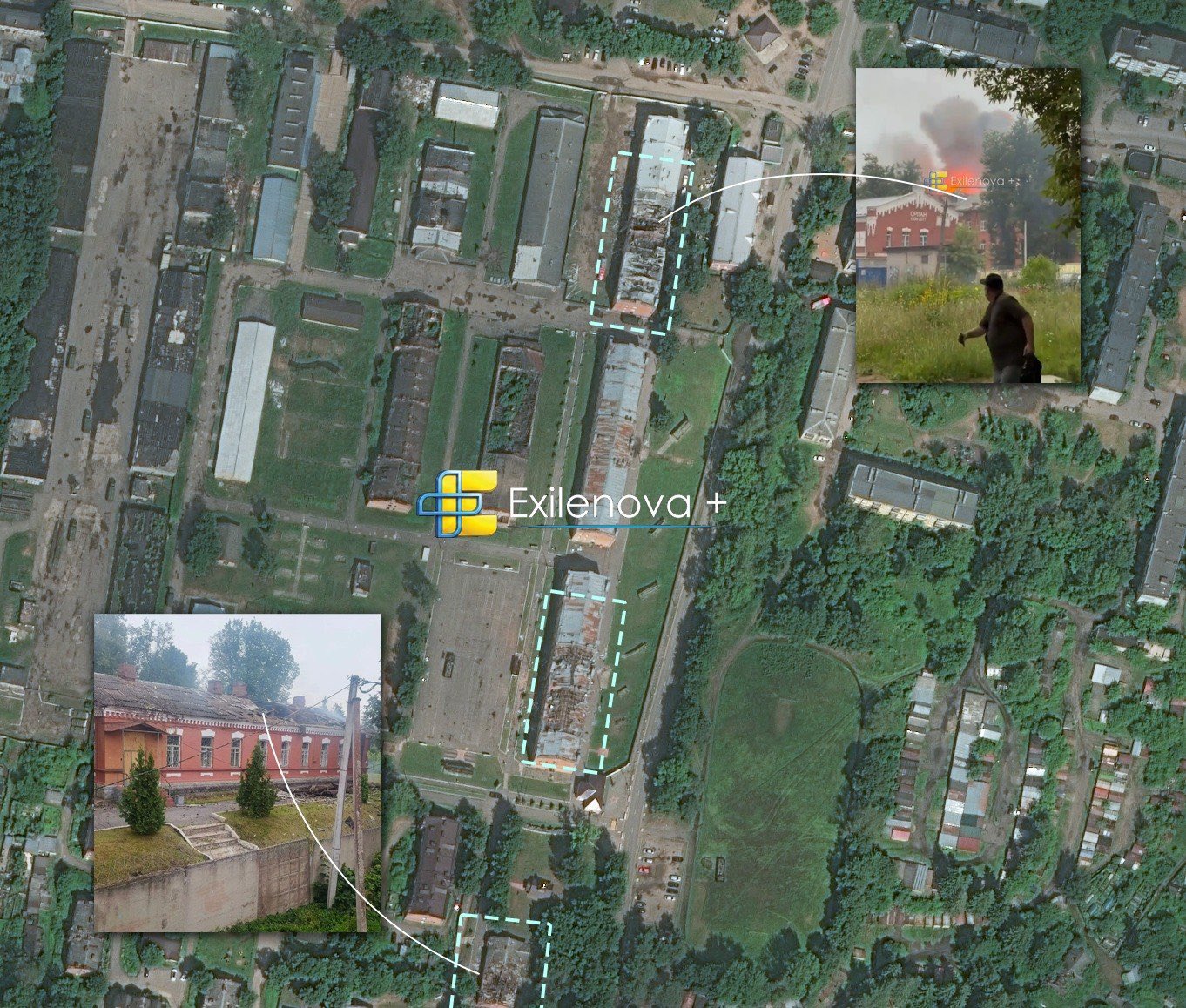
Imagery shows the aftermath of the July 6 strike on the permanent deployment site of Russia’s 26th Missile Brigade near Luga. The brigade is one of Russia’s key units equipped with Iskander-M ballistic missile systems. #Ukraine
The Russian army launched a second Iskander missile strike on Kyiv on the night of July 8. The strike hit the Ukrainian company Samsung-Ukraine, which produced and stored components for FP-5 Flamingo cruise missiles. A drone assembly plant, a motor depot on the territory of Kyivmetrobud, and warehouses used by the Ukrainian Armed Forces in Kyiv's Desnyansky district were also hit.
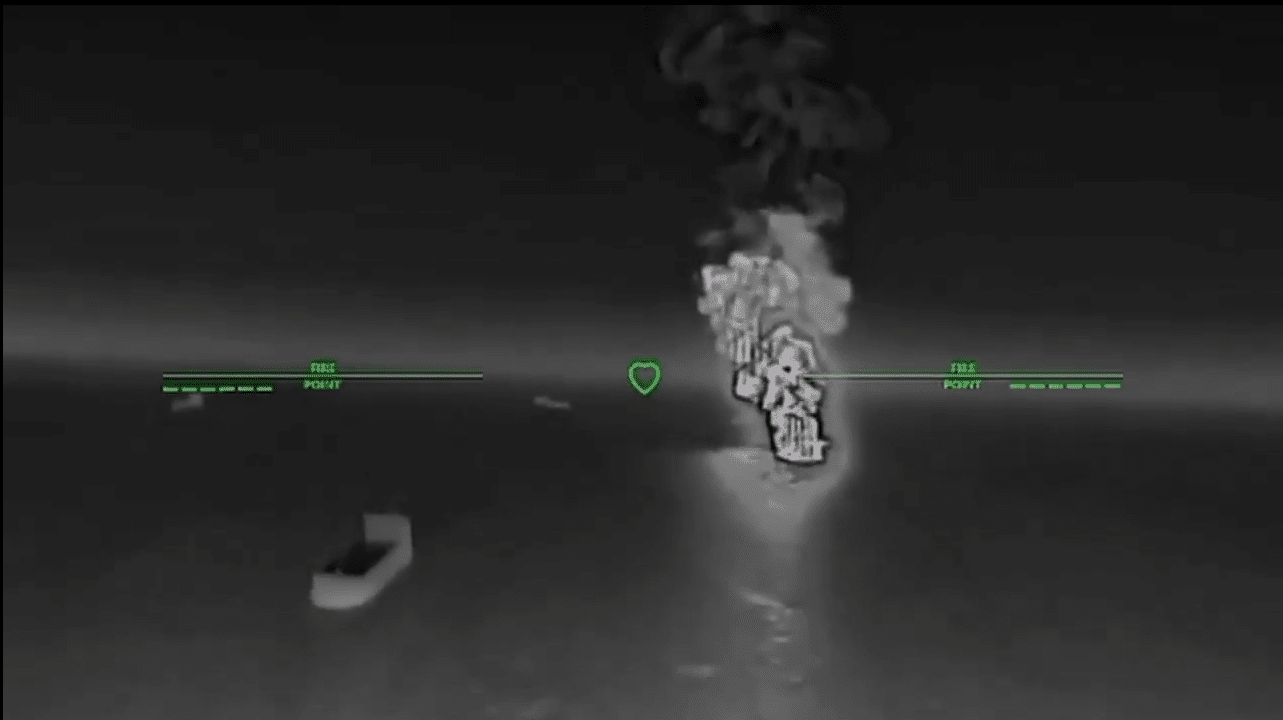
Ukrainian Drone Raid Hits 10 Russian Ships, Crippling Crimea Supply Lines
Ukraine’s Unmanned Systems Forces struck 10 vessels, including 8 shadow fleet oil tankers, severely disrupting Russian logistics to occupied Crimea.
 www.navalnews.com

Safran supplies the guidance system for the Ukrainian FP-5 Flamingo long-range cruise missile
Last month, industrial sites belonging to the Russian companies VNIIR-Progress and Titan-Barrikady [a Roscosmos subsidiary] were hit by Ukrainian strikes carried out in Cheboksary [on June 10] and Volgograd [on June 27], respectively. Both sites shared the common feature of being targeted by FP-5 Flamingo long-range missiles.
With a profile similar to the Soviet Tu-141 drone [though others might see a resemblance to the V-1], this vehicle was unveiled in August 2025 by the Ukrainian company FirePoint—which developed it with the support of the Anglo-Emirati group Milanion—just days before its first operational use against an FSB [Russian domestic intelligence agency] base in Crimea.
Powered by an Ivchenko AI-25 turbofan engine, the FP-5 Flamingo carries a 1,150-kilogram warhead over a maximum range of 3,000 km, flying at a cruising speed of 850 km/h [950 km/h top speed] and an altitude of 16,000 feet. Approximately thirty units are reportedly produced each month.
To navigate to its target, the FP-5 Flamingo uses a GPS and inertial guidance system—details of which FirePoint had previously disclosed almost nothing about. However, as reported by the daily newspaper *Le Monde* during the Eurosatory land-air defense trade show, the Ukrainian company revealed that the component in question was supplied by Safran. It further added that the French group was also participating in the "development of other products," without providing further details.
For its part, Safran confirmed that, through its subsidiary Safran.AI (formerly Preligens), it was supplying other "Ukrainian operators" with various types of equipment, including navigation systems, electro-optical systems, anti-drone countermeasures, and intelligence analysis support solutions.
In any case, the specific guidance system supplied to FirePoint by Safran was not disclosed. The manufacturer markets several solutions, such as the ICONYX inertial navigation unit, which is inherently resilient to the jamming of satellite-based positioning (GNSS) signals.
It is also possible that the FP-5 Flamingo’s guidance system is derived from the one developed by Safran for the A2SM (*Armement Air-Sol Modulaire*, or "Hammer") weapon system—much like the Thundart rocket, developed by MBDA under the FLP/T (*Frappe Longue Portée / Terrestre* or Long-Range Ground Strike) program led by the French Defense Procurement Agency (DGA) on behalf of the Army.
Ultimately, this cooperation between FirePoint and Safran could benefit the Chorus project, which the Ministry of the Armed Forces has entrusted to Turgis Gaillard and the automaker Renault.
As a reminder, during a Senate hearing in February, the Head of the Defense Procurement Agency (DGA), Patrick Pailloux, explained that the aim of the Chorus project was to develop "the equivalent of the Ukrainian Flamingo," albeit with lower performance specifications (a 500 kg warhead and a cruising speed of 400 km/h). /end

This is an important thread because it puts the Omsk strike in context.
The table describes the already degraded state of Russia’s refining system before the full impact of the Omsk strike is reflected. It already suggested that Russian refining output had fallen sharply compared with the 2022 baseline, with several major refineries offline, reduced, or severely damaged.
This is a very interesting table because it shows not only the strikes themselves but also their estimated impact on Russian monthly refining output.
The key figure is the total at the bottom: the baseline average Russian refining output for 2022 is listed as 5.048 million barrels per day (Mb/d). By January 2026, the table projects a figure of 4.844 Mb/d. By July 2026, this drops to 3.333 Mb/d—a decline of approximately 34% compared to the 2022 baseline.
That is massive. If the estimate is accurate, we are no longer looking at a mere one-off wartime impact; this represents a systemic degradation of Russia’s refining sector.
The most significant takeaways are:
TANECO / Nizhnekamsk is likely one of the most critical cases. 2022 baseline: approximately 265 kb/d. July 2026: 22 kb/d—a 92% drop—with a "Severe" status. This is highly significant because TANECO is a modern, complex facility with a high NCI (Nelson Complexity Index) of around 9; it is not some small, peripheral refinery.
Kirishi, Volgograd, the Moscow Refinery, TAIF-NK, Tuapse, and Novoshakhtinsky appear as offline or at zero in some recent columns. Kirishi, Volgograd, Moscow, Tuapse, and Novoshakhtinsky are all listed at -100%.
The Ufa Oil Refinery is marked "Severe": baseline around 94 kb/d, dropping to 9 kb/d in July—a 90% decline. Here again, the NCI is high (around 10.8), meaning this involves not just crude capacity, but sophisticated refining capability.
Kuibyshev sees a sharp drop: from a baseline of approximately 107 kb/d to 39 kb/d in July—a 64% decrease—with a "Severe" status. Syzran drops from approximately 119 kb/d to 49 kb/d—a 59% decrease—placing it in the "Severe" category.
Slavyansk drops from approximately 77 kb/d to 34 kb/d—a 56% decrease—also classified as "Severe."
Ufaneftekhim drops from approximately 131 kb/d to 70 kb/d—a 47% decrease—classified as "Reduced."
Nizhny Novgorod is listed as "Reduced" at around -35%; this is significant because it is a major refinery, with a cumulative total of 8 strikes recorded in the table.
The number of recorded strikes is also striking: the total at the bottom indicates approximately 42 strikes in 2024, 17 in 2025, and 85 in 2026, amounting to 143 cumulative strikes against the refining system. The 2026 campaign is therefore by far the most intense.
The table reveals a distinctly Ukrainian approach: certain refineries are struck repeatedly. Tuapse appears with 15 cumulative strikes, Novoshakhtinsky with 12, Ryazan and Nizhny Novgorod with 8 each, Syzran and Slavyansk with 8 each, and several others with 6 or 7. This is not a case of "one spectacular hit and then moving on"; it is a campaign of knocking facilities offline, preventing repairs, and then striking again.
An interesting point: some distant or eastern refineries appear to remain "online"—or even operating above their baseline levels, like Omsk in this table—despite a reported strike.
However, the trend is very clear: Ukraine is not merely seeking to blow up storage tanks. It is targeting the units that matter: distillation, hydrocracking, reforming, diesel/gasoline units, electrical grids, industrial control systems, pumps, and compressors. When these facilities are hit, Russia can still extract crude oil, but it loses the ability to process it locally into usable fuel.
This is where the 34% figure becomes strategically significant. A one-third drop in domestic refining capacity—even if temporary or based on partial estimates—exerts pressure on:
Omsk may be the accelerator.
for Omsk, if the reported damage is confirmed, Ukraine did not merely hit storage tanks or peripheral infrastructure. It struck the core of Russia’s largest refinery. CDU-10, a crude distillation unit representing around 38% of Omsk’s throughput, reportedly caught fire and was damaged. CDU-11, another major crude unit representing around 37% of capacity, was reportedly forced offline after essential utility links were damaged.
That means roughly three quarters of Omsk’s primary crude processing capacity may have been directly or indirectly affected.
This matters because Omsk is not a marginal facility. It accounts for roughly 8–10% of Russia’s national refining capacity and is reportedly its largest gasoline producer. If Russia was already short around 200 kb/d of gasoline versus domestic demand before fully accounting for Omsk and YANOS, then this strike could push the fuel crisis into a much more visible phase.
The key point is that Ukraine’s campaign is no longer just about logistics. It is now also about volumes.
Ukraine is combining several effects:
Russia can still produce crude oil. But crude oil is not gasoline, diesel, or jet fuel at the right place and at the right time. If refining capacity is degraded while maritime and land logistics to Crimea are also under attack, Russia faces a compounding problem: less usable fuel, harder to move, and more expensive to protect.
The table shows the structural trend. Omsk may be the shock that accelerates it.
The table describes the already degraded state of Russia’s refining system before the full impact of the Omsk strike is reflected. It already suggested that Russian refining output had fallen sharply compared with the 2022 baseline, with several major refineries offline, reduced, or severely damaged.
This is a very interesting table because it shows not only the strikes themselves but also their estimated impact on Russian monthly refining output.
The key figure is the total at the bottom: the baseline average Russian refining output for 2022 is listed as 5.048 million barrels per day (Mb/d). By January 2026, the table projects a figure of 4.844 Mb/d. By July 2026, this drops to 3.333 Mb/d—a decline of approximately 34% compared to the 2022 baseline.
That is massive. If the estimate is accurate, we are no longer looking at a mere one-off wartime impact; this represents a systemic degradation of Russia’s refining sector.
The most significant takeaways are:
TANECO / Nizhnekamsk is likely one of the most critical cases. 2022 baseline: approximately 265 kb/d. July 2026: 22 kb/d—a 92% drop—with a "Severe" status. This is highly significant because TANECO is a modern, complex facility with a high NCI (Nelson Complexity Index) of around 9; it is not some small, peripheral refinery.
Kirishi, Volgograd, the Moscow Refinery, TAIF-NK, Tuapse, and Novoshakhtinsky appear as offline or at zero in some recent columns. Kirishi, Volgograd, Moscow, Tuapse, and Novoshakhtinsky are all listed at -100%.
The Ufa Oil Refinery is marked "Severe": baseline around 94 kb/d, dropping to 9 kb/d in July—a 90% decline. Here again, the NCI is high (around 10.8), meaning this involves not just crude capacity, but sophisticated refining capability.
Kuibyshev sees a sharp drop: from a baseline of approximately 107 kb/d to 39 kb/d in July—a 64% decrease—with a "Severe" status. Syzran drops from approximately 119 kb/d to 49 kb/d—a 59% decrease—placing it in the "Severe" category.
Slavyansk drops from approximately 77 kb/d to 34 kb/d—a 56% decrease—also classified as "Severe."
Ufaneftekhim drops from approximately 131 kb/d to 70 kb/d—a 47% decrease—classified as "Reduced."
Nizhny Novgorod is listed as "Reduced" at around -35%; this is significant because it is a major refinery, with a cumulative total of 8 strikes recorded in the table.
The number of recorded strikes is also striking: the total at the bottom indicates approximately 42 strikes in 2024, 17 in 2025, and 85 in 2026, amounting to 143 cumulative strikes against the refining system. The 2026 campaign is therefore by far the most intense.
The table reveals a distinctly Ukrainian approach: certain refineries are struck repeatedly. Tuapse appears with 15 cumulative strikes, Novoshakhtinsky with 12, Ryazan and Nizhny Novgorod with 8 each, Syzran and Slavyansk with 8 each, and several others with 6 or 7. This is not a case of "one spectacular hit and then moving on"; it is a campaign of knocking facilities offline, preventing repairs, and then striking again.
An interesting point: some distant or eastern refineries appear to remain "online"—or even operating above their baseline levels, like Omsk in this table—despite a reported strike.
However, the trend is very clear: Ukraine is not merely seeking to blow up storage tanks. It is targeting the units that matter: distillation, hydrocracking, reforming, diesel/gasoline units, electrical grids, industrial control systems, pumps, and compressors. When these facilities are hit, Russia can still extract crude oil, but it loses the ability to process it locally into usable fuel.
This is where the 34% figure becomes strategically significant. A one-third drop in domestic refining capacity—even if temporary or based on partial estimates—exerts pressure on:
- civilian gasoline supplies;
- agricultural and military diesel;
- jet fuel;
- deliveries to Crimea;
- rail and road transport;
- domestic prices;
- refined product exports;
- and Moscow’s ability to simultaneously manage the war effort, the civilian economy, and the supply needs of remote regions.
Omsk may be the accelerator.
for Omsk, if the reported damage is confirmed, Ukraine did not merely hit storage tanks or peripheral infrastructure. It struck the core of Russia’s largest refinery. CDU-10, a crude distillation unit representing around 38% of Omsk’s throughput, reportedly caught fire and was damaged. CDU-11, another major crude unit representing around 37% of capacity, was reportedly forced offline after essential utility links were damaged.
That means roughly three quarters of Omsk’s primary crude processing capacity may have been directly or indirectly affected.
This matters because Omsk is not a marginal facility. It accounts for roughly 8–10% of Russia’s national refining capacity and is reportedly its largest gasoline producer. If Russia was already short around 200 kb/d of gasoline versus domestic demand before fully accounting for Omsk and YANOS, then this strike could push the fuel crisis into a much more visible phase.
The key point is that Ukraine’s campaign is no longer just about logistics. It is now also about volumes.
Ukraine is combining several effects:
- Blinding Russian air defense by destroying radars and opening corridors for deep strikes.
- Hitting refinery capacity deep inside Russia.
- Disrupting fuel distribution to Crimea through attacks on tankers, ferries, ports, and the southern land corridor.
Russia can still produce crude oil. But crude oil is not gasoline, diesel, or jet fuel at the right place and at the right time. If refining capacity is degraded while maritime and land logistics to Crimea are also under attack, Russia faces a compounding problem: less usable fuel, harder to move, and more expensive to protect.
The table shows the structural trend. Omsk may be the shock that accelerates it.