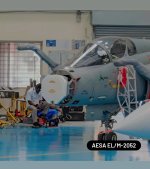
What is the current situation with the Mk1A engines? Because sometimes the Tejas Mk1A halfheartedly seems like a semi dead program, sure we can develop most of the other related components on our own now but without an engine of our own or a reliable supplier, america controls how many jets we can make. The GE F414 deal seems to be going nowhere as of now and without a reliable supply of it, how long till we can induct a reliable number of it? Since induction can be from as early as 2028 to 2030, how long till we produce a meaningful number to make a difference for Tejas Mk2 or MK1A atleast.
Don't get me wrong, I'm not trying to be a hater. just concerned over some of the potential problems we are and could face in future and hope we can do something to make sure we can built a good squadron of Tejas for our Airforce.
If we had perfected the Kaveri with reduced weight and new afterburner, we could potentially scale up the order of Tejas and make a Tejas Mk1b which uses the kaveri engine hopefully, (Although I prefer a more aesthetic intake if we did so)
Since the kaveri is an uprated engine and has similar thrust to the GE F404-GE-IN20 engine used in the Tejas,
If we use the Breguet Range Equation simplified for Aircrafts:
Range = (Cruise Speed/Thrust Specific Fuel Consumption in dry mode) x (Lift to Drag Ratio) x Natural Logarithm(Initial Gross Weight of aircraft/Final Weight after fuel is burned)
If we input the values, V = 900km/hr, L/D = 13, Fuel Mass = 2458Kg, W_initial(GEF404) = 13500Kg, W_Final(GE404) = 13500-2458 = 11042kg & W_Initial(Kaveri) = 13600kg and W_Final(Kaveri) = 11142Kg, TSFC(GE F404) = 0.77 kg/kgf·hr and TSFC(Kaveri) = 0.824 kg/kgf·hr.
So for GE F404-IN20 Engine, we get: Range = (900/0.77) x 13 x ln(13500/11042) = 3053.9km
and for Kaveri Engine, we get a: Range = (900/0.824) x 13 x ln(13600/11142) = 2830.5km
Although this is the max theoretical range under ideal conditions, to find the real world range, we would have to apply a correction factor usually seen in typical hi-lo-hi profile mission with fully loaded weapons, the correction factor could range from 0.14 - 0.18 (0.15 most common) . So to calculate
Real Combat Range = Theoretical Range x Correction Factor,
So for Tejas with GE F404, Combat Radius = 3053.9Km x 0.15 = 458.085km
and for Tejas with Kaveri, Combat Radius = 2830.5km x 0.15 = 424.575km
This makes the difference in combat radius between both being 33.5km or an efficiency difference of roughly 7% which isn't a major difference. Although these are just general estimates by me cause some values can differ and change the range, it makes sense why we can use the current kaveri or a further upgraded lightweight one using Blisk in the low and high pressure stages and maybe materials with better strength to weight ratios for greater performance and range. Not to mention with external tanks, we can significantly increase the range of the jet during operation.
The Kaveri program should be treated with absolute importance for self dependency of our country and to boost our aviation Industry.