

People's Republic of China (PRC) : News & Discussions
- Thread starter Nick
- Start date
You are using an out of date browser. It may not display this or other websites correctly.
You should upgrade or use an alternative browser.
You should upgrade or use an alternative browser.
The question we've all been asking for a while.............
@vstol Jockey @Falcon @_Anonymous_ @BlackOpsIndia @Milspec @randomradio @Parthu @Sathya @Nilgiri @BMD @Ashwin et al
@vstol Jockey @Falcon @_Anonymous_ @BlackOpsIndia @Milspec @randomradio @Parthu @Sathya @Nilgiri @BMD @Ashwin et al


The question we've all been asking for a while.............
@vstol Jockey @Falcon @_Anonymous_ @BlackOpsIndia @Milspec @randomradio @Parthu @Sathya @Nilgiri @BMD @Ashwin et al
Any answer part available?
I saw a old video where Imran replied, he hasn't personally seen / heard anything like that.
...
Couldn't find it anywhere. I'll try again.Any answer part available?
I saw a video where Imran replied, he hasn't personally seen / heard anything like that.
...


Yeah, it's like if someone makes an off-cuff remark about Muslims on Twitter, the UNHCR, ECHR and Pakistan etc. are all over it, but when China indefinitely detains and attempts to brainwash 1 million of them, they suddenly turn into Officer Barbrady off South Park, "okay... nothing to see here, move along."The question we've all been asking for a while.............
@vstol Jockey @Falcon @_Anonymous_ @BlackOpsIndia @Milspec @randomradio @Parthu @Sathya @Nilgiri @BMD @Ashwin et al


The question we've all been asking for a while.............
@vstol Jockey @Falcon @_Anonymous_ @BlackOpsIndia @Milspec @randomradio @Parthu @Sathya @Nilgiri @BMD @Ashwin et al
If anyone want to poke any mard-e-momin somewhere regarding this topic.....just ask why iron brother Turks and big 2 central asian republics (kazakh and uzbek) did not join signing this letter. I believe it was these 37 countries that signed:
Algeria, Angola, Belarus, Burkina Faso, Burundi, Comoros, Congo, Cuba, North Korea, Congo, Eritrea, Gabon, Laos, Myanmar, Nigeria , Philippines, Russia, Somalia, South Sudan, Syria, Tajikistan, Venezuela, Zimbabwe, Saudi Arabia, Pakistan, Egypt, Togo, Cambodia, Oman, Qatar, United Arab Emirates, Bahrain, Sudan, Turkmenistan, Kuwait, Cameroon and Bolivia.
Interesting to see Iran did not sign either. Looks like arab chasm (with iranians and turks) opening on this issue too.

China may reject Dalai Lama chosen abroad
The 14th Dalai Lama’s age – he turned 84 on July 6 – and his health problems in recent years have added importance to the issue of finding an eventual successor.
Updated: Jul 15, 2019 07:08 IST
By Rezaul H Laskar
From Lhasa/Beijing

The Dalai Lama addresses a gathering in Bodh Gaya in Dec 2018.(PTI Photo)
Chinese authorities are set to reject any successor to the current Dalai Lama chosen outside the country, with experts saying any Indian involvement in the matter would have the potential to affect bilateral relations.
The 14th Dalai Lama’s age – he turned 84 on July 6 – and his health problems in recent years have added importance to the issue of finding an eventual successor. According to age-old Buddhist traditions, the Dalai Lama’s successor is chosen through reincarnation, but Chinese authorities insist the individual must also be recognised by the government in Beijing.
“There are established historical institutions and formalities for the reincarnation of the Dalai Lama and the position of the Chinese government is clear cut and resolute,” Wang Neng Sheng, an official with the rank of vice minister, told a small group of Indian journalists invited for a rare tour of the Tibet Autonomous Region.
“[The Dalai Lama’s] reincarnation will not be decided by his personal wish or some group of people living in other countries,” said Wang, who is director general of the information office of Tibet, which is referred to as Xizang by Chinese authorities.
Wang contended the Chinese government and past dynasties played a “leading role” in granting recognition to the Dalai Lama or head of the Gelug school of Tibetan Buddhism, who, he said, was chosen through a draw of lots using a golden urn. “Otherwise, with no recognition by the central government, the Dalai Lama doesn’t have a legal status.”
At the Beijing-based China Tibetology Research Center, a state-run think tank that advises the government on framing policies for Tibet, experts Zha Luo and Xiao Jie underscored the importance of choosing the next Dalai Lama through a draw of lots and receiving recognition from Chinese administration. They contended an individual chosen without this process would be an “illegal” Dalai Lama.
Asked about the implications of India not accepting a Dalai Lama chosen through the Chinese process, Zha noted this was a hypothetical matter but made it clear that it has the potential to impact bilateral ties. “If the Chinese government recognised the legal [successor] of the Dalai Lama while the Indian government refused to recognise [him], it would be a major political difference that would affect Sino-Indian relations,” he said.
“Since the reincarnation of the Dalai Lama is an important issue for China, any friend of China wouldn’t interfere or meddle in this issue with China.”
The current Dalai Lama fled to India in 1959 and sought political asylum after escaping a military crackdown on an uprising by the population of Tibet. The Central Tibetan Administration (CTA), or government in exile, is based in Dharamshala in Himachal Pradesh. As it has worked to improve ties with China in recent years, India has tread cautiously on the issue of the Dalai Lama. In 2017, the external affairs ministry even advised officials to stay away from events organised by CTA in view of Beijing’s sensitivities. Though extensive efforts have been made to scrub all public manifestations of the influence wielded by the Dalai Lama in Tibet, Buddhism remains an intrinsic part of the lives of the local populace.
Vice minister Wang, however, said religion “can’t interfere in politics, justice, administration and education” and that “religions in China must be independent from foreign influence”.
The Dalai Lama, he said, had been “inciting and misguiding people out of his political motives”. He noted the Chinese government currently has no plans for further engagement with the Dalai Lama after 10 rounds of talks between representatives of the Tibetan leader and Chinese officials, the last of which was held in Beijing in 2011.
A member of CTA said the Chinese stand on the future Dalai Lama was a “ploy to politicise the issue of reincarnation and use it as a political tool to justify their occupation of Tibet and sinicise Tibet”.
(The writer was in Tibet at the invitation of the Chinese government)
China may reject Dalai Lama chosen abroad
The 14th Dalai Lama’s age – he turned 84 on July 6 – and his health problems in recent years have added importance to the issue of finding an eventual successor.
Updated: Jul 15, 2019 07:08 IST
By Rezaul H Laskar
From Lhasa/Beijing
The Dalai Lama addresses a gathering in Bodh Gaya in Dec 2018.(PTI Photo)
Chinese authorities are set to reject any successor to the current Dalai Lama chosen outside the country, with experts saying any Indian involvement in the matter would have the potential to affect bilateral relations.
The 14th Dalai Lama’s age – he turned 84 on July 6 – and his health problems in recent years have added importance to the issue of finding an eventual successor. According to age-old Buddhist traditions, the Dalai Lama’s successor is chosen through reincarnation, but Chinese authorities insist the individual must also be recognised by the government in Beijing.
“There are established historical institutions and formalities for the reincarnation of the Dalai Lama and the position of the Chinese government is clear cut and resolute,” Wang Neng Sheng, an official with the rank of vice minister, told a small group of Indian journalists invited for a rare tour of the Tibet Autonomous Region.
“[The Dalai Lama’s] reincarnation will not be decided by his personal wish or some group of people living in other countries,” said Wang, who is director general of the information office of Tibet, which is referred to as Xizang by Chinese authorities.
Wang contended the Chinese government and past dynasties played a “leading role” in granting recognition to the Dalai Lama or head of the Gelug school of Tibetan Buddhism, who, he said, was chosen through a draw of lots using a golden urn. “Otherwise, with no recognition by the central government, the Dalai Lama doesn’t have a legal status.”
At the Beijing-based China Tibetology Research Center, a state-run think tank that advises the government on framing policies for Tibet, experts Zha Luo and Xiao Jie underscored the importance of choosing the next Dalai Lama through a draw of lots and receiving recognition from Chinese administration. They contended an individual chosen without this process would be an “illegal” Dalai Lama.
Asked about the implications of India not accepting a Dalai Lama chosen through the Chinese process, Zha noted this was a hypothetical matter but made it clear that it has the potential to impact bilateral ties. “If the Chinese government recognised the legal [successor] of the Dalai Lama while the Indian government refused to recognise [him], it would be a major political difference that would affect Sino-Indian relations,” he said.
“Since the reincarnation of the Dalai Lama is an important issue for China, any friend of China wouldn’t interfere or meddle in this issue with China.”
The current Dalai Lama fled to India in 1959 and sought political asylum after escaping a military crackdown on an uprising by the population of Tibet. The Central Tibetan Administration (CTA), or government in exile, is based in Dharamshala in Himachal Pradesh. As it has worked to improve ties with China in recent years, India has tread cautiously on the issue of the Dalai Lama. In 2017, the external affairs ministry even advised officials to stay away from events organised by CTA in view of Beijing’s sensitivities. Though extensive efforts have been made to scrub all public manifestations of the influence wielded by the Dalai Lama in Tibet, Buddhism remains an intrinsic part of the lives of the local populace.
Vice minister Wang, however, said religion “can’t interfere in politics, justice, administration and education” and that “religions in China must be independent from foreign influence”.
The Dalai Lama, he said, had been “inciting and misguiding people out of his political motives”. He noted the Chinese government currently has no plans for further engagement with the Dalai Lama after 10 rounds of talks between representatives of the Tibetan leader and Chinese officials, the last of which was held in Beijing in 2011.
A member of CTA said the Chinese stand on the future Dalai Lama was a “ploy to politicise the issue of reincarnation and use it as a political tool to justify their occupation of Tibet and sinicise Tibet”.
(The writer was in Tibet at the invitation of the Chinese government)
China may reject Dalai Lama chosen abroad
China is building a global coalition of human rights violators to justify its actions in Xinjiang
By Abbas Faiz, The Conversation
A group of 37 countries, including North Korea, Russia and Saudia Arabia, signed a letter in support of Beijing’s human rights record.
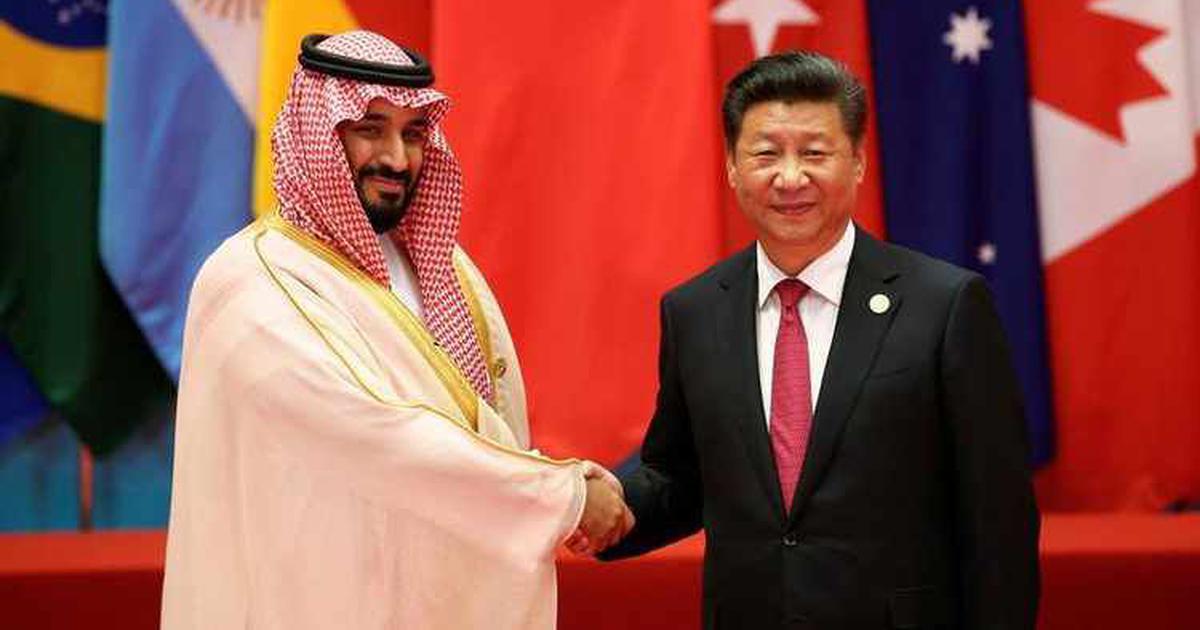 Chinese President Xi Jinping with Saudi Arabia's Deputy Crown Prince Mohammed bin Salman at the G20 Summit in Hangzhou, Zhejiang province, in September 2016 | Damir Sagolj/Reuters
A letter signed in early July by 22 Western countries, including the UK, Australia, Canada and France, raised serious concerns to UN officials about China’s incarceration of Uyghur people in so-called education camps in the country’s Xinjiang region. A few days later, a second letter emerged. Signed by 37 governments, including North Korea, Russia and Saudi Arabia, it effectively endorsed China’s human rights abuses in the region.
All of the signatories of the second letter have appalling human rights records of their own. Like the Chinese government, they suppress their political opponents and impose severe restrictions on critical media. Many subject their critics to arbitrary arrest, torture, long prison sentences or the death penalty after grossly unfair trials.
The letter highlights China’s latest win in its plan to reshape the international human rights system. For more than a decade, as documented in a 2012 Chatham House study, Chinese officials have worked hard to derail human rights resolutions at the UN whether or not they had a bearing on the country’s own record.
Alarm about the role China is playing to weaken the UN human rights system was also raised by Human Rights Watch in 2017. It accused China of intimidation on UN premises, obstruction of NGO advocacy at the UN, resistance to routine practices regarding appointments and media broadcast and efforts to weaken key human rights resolutions.
If China succeeds in gaining the support of a majority of UN member states, it can push to water down some of the binding international legal safeguards for human rights, such as civil and political rights.
Insisting on sovereignty
China’s approach has been to engage with the UN’s human rights bodies to impose its own narrative, which misinterprets sovereignty as being distinct and above human rights. The Chinese government persistently reacts to any criticism of China by labelling it interference in the internal affairs of a sovereign state. In doing so, it ignores the repeated emphasis in international human rights law that human rights depend on one another. The exercise of one right, such as the right to sovereignty, cannot allow the violation of another, such as the right not to be tortured.
Chinese delegates at the UN Human Rights Council said they “highly appreciated” the letter of support by the 37 signatories. China’s ambassador to the council, Chen Xu, said, “We have repeatedly expressed that what is going on in Xinjiang is entirely an internal affair of China and it involves China’s sovereignty and territorial integrity.”
A dangerous block
China is recruiting like-minded governments to push its line on sovereignty. The 37 signatories of the letter, as well as other countries not on the list, including Iran and Turkey, are taking the same approach towards legitimate criticism of their human rights records. Not only are they brothers in arms against safeguarding human rights, but for many their partnership with China’s Belt and Road Initiative or their dependency on China’s low interest loans is a growing incentive to join China’s block. The stronger this menacing form of solidarity grows, the less effective human rights safeguards will be in these countries.
Chinese officials have repeatedly termed the criticism of their treatment of Uyghurs in Xinjiang region as Western media politicising the issue. But the block of support that China is building is itself a highly political enterprise. The countries include Muslim states, such as Pakistan and Saudi Arabia, who turn a blind eye to the treatment of Muslims in China but have been vocal against the treatment of Muslims in other parts of the world in a display of double standards.
What unites many of the 37 countries who support China is their style of governance. They all appear hostile to campaigns for democracy in their countries, ruthlessly suppress freedoms and with a few exceptions rank high in Transparency International’s Corruption Perceptions Index.
China may not be currently pushing for actual amendments to international human rights law, but it is advocating a change in how the law is interpreted. It may also want to have control in future on the appointment of independent experts, for which it would need support from other countries. A block of 37 countries may not yet be a decisive development, but it is the start of what could be a nightmare for human rights defenders.
China’s economic might and worldwide influence enable it to deflect international criticism of its poor human rights record. With a growing army of like-minded governments behind it, international human rights safeguards have never been so dangerously exposed.
Abbas Faiz is a lecturer on human rights at the School of Law, University of Essex.
This article first appeared on The Conversation.
By Abbas Faiz, The Conversation
A group of 37 countries, including North Korea, Russia and Saudia Arabia, signed a letter in support of Beijing’s human rights record.
A letter signed in early July by 22 Western countries, including the UK, Australia, Canada and France, raised serious concerns to UN officials about China’s incarceration of Uyghur people in so-called education camps in the country’s Xinjiang region. A few days later, a second letter emerged. Signed by 37 governments, including North Korea, Russia and Saudi Arabia, it effectively endorsed China’s human rights abuses in the region.
All of the signatories of the second letter have appalling human rights records of their own. Like the Chinese government, they suppress their political opponents and impose severe restrictions on critical media. Many subject their critics to arbitrary arrest, torture, long prison sentences or the death penalty after grossly unfair trials.
The letter highlights China’s latest win in its plan to reshape the international human rights system. For more than a decade, as documented in a 2012 Chatham House study, Chinese officials have worked hard to derail human rights resolutions at the UN whether or not they had a bearing on the country’s own record.
Alarm about the role China is playing to weaken the UN human rights system was also raised by Human Rights Watch in 2017. It accused China of intimidation on UN premises, obstruction of NGO advocacy at the UN, resistance to routine practices regarding appointments and media broadcast and efforts to weaken key human rights resolutions.
If China succeeds in gaining the support of a majority of UN member states, it can push to water down some of the binding international legal safeguards for human rights, such as civil and political rights.
Insisting on sovereignty
China’s approach has been to engage with the UN’s human rights bodies to impose its own narrative, which misinterprets sovereignty as being distinct and above human rights. The Chinese government persistently reacts to any criticism of China by labelling it interference in the internal affairs of a sovereign state. In doing so, it ignores the repeated emphasis in international human rights law that human rights depend on one another. The exercise of one right, such as the right to sovereignty, cannot allow the violation of another, such as the right not to be tortured.
Chinese delegates at the UN Human Rights Council said they “highly appreciated” the letter of support by the 37 signatories. China’s ambassador to the council, Chen Xu, said, “We have repeatedly expressed that what is going on in Xinjiang is entirely an internal affair of China and it involves China’s sovereignty and territorial integrity.”
A dangerous block
China is recruiting like-minded governments to push its line on sovereignty. The 37 signatories of the letter, as well as other countries not on the list, including Iran and Turkey, are taking the same approach towards legitimate criticism of their human rights records. Not only are they brothers in arms against safeguarding human rights, but for many their partnership with China’s Belt and Road Initiative or their dependency on China’s low interest loans is a growing incentive to join China’s block. The stronger this menacing form of solidarity grows, the less effective human rights safeguards will be in these countries.
Chinese officials have repeatedly termed the criticism of their treatment of Uyghurs in Xinjiang region as Western media politicising the issue. But the block of support that China is building is itself a highly political enterprise. The countries include Muslim states, such as Pakistan and Saudi Arabia, who turn a blind eye to the treatment of Muslims in China but have been vocal against the treatment of Muslims in other parts of the world in a display of double standards.
What unites many of the 37 countries who support China is their style of governance. They all appear hostile to campaigns for democracy in their countries, ruthlessly suppress freedoms and with a few exceptions rank high in Transparency International’s Corruption Perceptions Index.
China may not be currently pushing for actual amendments to international human rights law, but it is advocating a change in how the law is interpreted. It may also want to have control in future on the appointment of independent experts, for which it would need support from other countries. A block of 37 countries may not yet be a decisive development, but it is the start of what could be a nightmare for human rights defenders.
China’s economic might and worldwide influence enable it to deflect international criticism of its poor human rights record. With a growing army of like-minded governments behind it, international human rights safeguards have never been so dangerously exposed.
Abbas Faiz is a lecturer on human rights at the School of Law, University of Essex.
This article first appeared on The Conversation.
Jaishankar to visit China in August to prepare ground for Modi-Xi informal summit
In Beijing, Jaishankar will hold wide-ranging talks with State Councilor and Foreign Minister Wang Yi covering various aspects of bilateral ties besides discussing key regional and global issues, sources said.
By Press Trust of India, New Delhi, July 20, 2019 23:38 IST

In the summit, Modi and Xi decided to issue "strategic guidance" to militaries of the two countries to strengthen communications to build trust. (Photo: Reuters)
External Affairs Minister S Jaishankar is expected to travel to China next month to prepare the ground for the second informal summit between Prime Minister Narendra Modi and Chinese President Xi Jinping in India in October, government sources said.
In Beijing, Jaishankar will hold wide-ranging talks with State Councilor and Foreign Minister Wang Yi covering various aspects of bilateral ties besides discussing key regional and global issues, sources said.
The primary objective of the visit will be to prepare the ground for the second informal summit between Modi and Xi which is likely to be held in the second week of October, the sources said.
In the informal summit, the two leaders are likely to focus on further broadening India-China ties which will include enhancing people-to-people contacts and expanding cooperation in trade and investment.
The two leaders held the first informal summit in April in the Chinese city of Wuhan months after bilateral ties came under severe strain following a 73-day standoff between the armies of the two countries in Doklam in the Sikkim sector of the border.
In the Wuhan summit, Modi and Xi decided to issue "strategic guidance" to militaries of the two countries to strengthen communications to build trust and understanding, a move aimed at avoiding a Doklam-like situation in the future.
China's new Ambassador to India Sun Weidong said in Beijing that with two strong leaders at the helm in both the countries, the ties are set to reach new heights.
Under the strategic guidance provided by Xi and Modi at their first informal summit in Wuhan last year, the China-India relations have gathered a "very good and sound momentum of development", Sun told a group of Indian journalists.
"This year the two leaders are going to hold another informal meeting. I believe, this will be a top priority in our bilateral relations which will surely take our relations on to new heights," he said.
Modi and Xi held a bilateral meeting last month in Kyrgyzstan's capital Bishkek on the sidelines of the Shanghai Cooperation Organisation (SCO) summit.
It was the first meeting between the two leaders after Modi's re-election following the massive victory of the BJP in the general elections in May. Modi had described the meeting as "extremely fruitful".
Jaishankar to visit China in August to prepare ground for Modi-Xi informal summit
In Beijing, Jaishankar will hold wide-ranging talks with State Councilor and Foreign Minister Wang Yi covering various aspects of bilateral ties besides discussing key regional and global issues, sources said.
By Press Trust of India, New Delhi, July 20, 2019 23:38 IST
In the summit, Modi and Xi decided to issue "strategic guidance" to militaries of the two countries to strengthen communications to build trust. (Photo: Reuters)
External Affairs Minister S Jaishankar is expected to travel to China next month to prepare the ground for the second informal summit between Prime Minister Narendra Modi and Chinese President Xi Jinping in India in October, government sources said.
In Beijing, Jaishankar will hold wide-ranging talks with State Councilor and Foreign Minister Wang Yi covering various aspects of bilateral ties besides discussing key regional and global issues, sources said.
The primary objective of the visit will be to prepare the ground for the second informal summit between Modi and Xi which is likely to be held in the second week of October, the sources said.
In the informal summit, the two leaders are likely to focus on further broadening India-China ties which will include enhancing people-to-people contacts and expanding cooperation in trade and investment.
The two leaders held the first informal summit in April in the Chinese city of Wuhan months after bilateral ties came under severe strain following a 73-day standoff between the armies of the two countries in Doklam in the Sikkim sector of the border.
In the Wuhan summit, Modi and Xi decided to issue "strategic guidance" to militaries of the two countries to strengthen communications to build trust and understanding, a move aimed at avoiding a Doklam-like situation in the future.
China's new Ambassador to India Sun Weidong said in Beijing that with two strong leaders at the helm in both the countries, the ties are set to reach new heights.
Under the strategic guidance provided by Xi and Modi at their first informal summit in Wuhan last year, the China-India relations have gathered a "very good and sound momentum of development", Sun told a group of Indian journalists.
"This year the two leaders are going to hold another informal meeting. I believe, this will be a top priority in our bilateral relations which will surely take our relations on to new heights," he said.
Modi and Xi held a bilateral meeting last month in Kyrgyzstan's capital Bishkek on the sidelines of the Shanghai Cooperation Organisation (SCO) summit.
It was the first meeting between the two leaders after Modi's re-election following the massive victory of the BJP in the general elections in May. Modi had described the meeting as "extremely fruitful".
Jaishankar to visit China in August to prepare ground for Modi-Xi informal summit
Looking forward to working with Indian govt for better ties: China's new envoy
ANI
Published : Jul 21, 2019, 12:58 pm IST
Updated : Jul 21, 2019, 12:58 pm IST
Last month, China appointed Sun as its new envoy to India in place of Luo Zhaohui who was promoted to post of China’s vice foreign minister.

A veteran diplomat, Sun served as the Director-General in China's Ministry of Foreign Affairs' Policy Planning Department before being appointed to the current post. He also served as China's Ambassador to Pakistan and is an expert in South Asian affairs. (Photo: ANI)
New Delhi: Sun Weidong, the newly-appointed Chinese Ambassador to India, has arrived here and said he looks forward to working with the Narendra Modi-led government to give further boost to bilateral relations between the two countries.
Sun arrived in New Delhi along with his wife Bao Jiqing and was received by officials.
"Just arrived at Delhi with my wife Bao Jiqing. Sincere greetings to the #Indian people. Look forward to working with #Indian government and friends from all sectors for building better #China-#India relations," he tweeted on Sunday.
Last month, China appointed Sun as its new envoy to India in place of Luo Zhaohui, who was recently promoted to the post of the country's vice foreign minister.
A veteran diplomat, Sun served as the Director-General in China's Ministry of Foreign Affairs' Policy Planning Department before being appointed to the current post. He also served as China's Ambassador to Pakistan and is an expert in South Asian affairs.
His predecessor Luo is said to have played a significant role in the dousing of tensions between India and China during the Doklam standoff and was widely appreciated for his expertise in India and its foreign policy.
He was also known for his rapport with the political leaders of the country.
Looking forward to working with Indian govt for better ties: China's new envoy
ANI
Published : Jul 21, 2019, 12:58 pm IST
Updated : Jul 21, 2019, 12:58 pm IST
Last month, China appointed Sun as its new envoy to India in place of Luo Zhaohui who was promoted to post of China’s vice foreign minister.
A veteran diplomat, Sun served as the Director-General in China's Ministry of Foreign Affairs' Policy Planning Department before being appointed to the current post. He also served as China's Ambassador to Pakistan and is an expert in South Asian affairs. (Photo: ANI)
New Delhi: Sun Weidong, the newly-appointed Chinese Ambassador to India, has arrived here and said he looks forward to working with the Narendra Modi-led government to give further boost to bilateral relations between the two countries.
Sun arrived in New Delhi along with his wife Bao Jiqing and was received by officials.
"Just arrived at Delhi with my wife Bao Jiqing. Sincere greetings to the #Indian people. Look forward to working with #Indian government and friends from all sectors for building better #China-#India relations," he tweeted on Sunday.
Last month, China appointed Sun as its new envoy to India in place of Luo Zhaohui, who was recently promoted to the post of the country's vice foreign minister.
A veteran diplomat, Sun served as the Director-General in China's Ministry of Foreign Affairs' Policy Planning Department before being appointed to the current post. He also served as China's Ambassador to Pakistan and is an expert in South Asian affairs.
His predecessor Luo is said to have played a significant role in the dousing of tensions between India and China during the Doklam standoff and was widely appreciated for his expertise in India and its foreign policy.
He was also known for his rapport with the political leaders of the country.
Looking forward to working with Indian govt for better ties: China's new envoy
China, India should not allow any individual case to disrupt bilateral relations: Envoy
Jul 20, 2019, 2:15PM
China's new Ambassador to India Sun Weidong has said that China and India should not allow any individual case at certain time to disrupt the bilateral relations and take more initiatives to move forward the bilateral ties.
Talking to media in Beijing, Mr Sun Weidong said under the strategic guidance provided by Xi Jinping and Mr Modi at their first informal summit in Wuhan last year, the China-India relations have gathered a very good and sound momentum of development.
In an apparent reference to the CPEC and the Belt and Road Initiative( BRI), Mr Sun said both the countries should not allow individual cases to disrupt ties.
Outlining various initiatives taken by India and China including the appointment of Special Representatives in 2003 to address the boundary dispute, Sun said an early settlement of the boundary issue is in line with the interests of the two countries.
http://www.newsonair.com/News?title...-disrupt-bilateral-relations:-Envoy&id=368844
I don't think he is talking about CPEC, I think he is on about Masood Ahzar. Just my take of it.
Jul 20, 2019, 2:15PM
China's new Ambassador to India Sun Weidong has said that China and India should not allow any individual case at certain time to disrupt the bilateral relations and take more initiatives to move forward the bilateral ties.
Talking to media in Beijing, Mr Sun Weidong said under the strategic guidance provided by Xi Jinping and Mr Modi at their first informal summit in Wuhan last year, the China-India relations have gathered a very good and sound momentum of development.
In an apparent reference to the CPEC and the Belt and Road Initiative( BRI), Mr Sun said both the countries should not allow individual cases to disrupt ties.
Outlining various initiatives taken by India and China including the appointment of Special Representatives in 2003 to address the boundary dispute, Sun said an early settlement of the boundary issue is in line with the interests of the two countries.
http://www.newsonair.com/News?title...-disrupt-bilateral-relations:-Envoy&id=368844
I don't think he is talking about CPEC, I think he is on about Masood Ahzar. Just my take of it.
China wants joint front with India against US' 'ugly' trade war
IANS20.07.19
(Syndicated story. Not edited by The Quint.)
By Gaurav Sharma
Beijing, July 20 (IANS) China and India will have to jointly stand up to counter US "ugly" unilateralist and protectionist trade policies to promote a fair and just economic order, Beijings newly-appointed envoy Sun Weidong to New Delhi has said.
Sun, who is headed to New Delhi on Saturday to take charge of his office, spoke to the Indian media in Beijing on a range of issues ranging from border dispute to trade deficit and US' trade war to the forthcoming informal summit between President Xi Jinping and Indian Prime Minister Narendra Modi.
Sun, who is China's one of the finest diplomats and an expert on South Asia, said this second informal summit between Xi and Modi later this year will take the Sino-Indian relations to a new height.
The envoy suggested India and China make a joint front against the US that has taken on both the countries on the trade front.
"There has been a change that is unseen in this century. Like I just mentioned the ugly path of unilateralism and protectionism has now affected the growth and stability of the world economy," Sun said.
"This will surely have an impact on the emerging markets and the developing countries because it also based on the international order that relies on that," Sun added.
"In this changing world, China and India have all the reasons to work together to safeguard our common interests and promote a more fair and open international economic order. Also to realise our mutual and common interests, it is very important."
China and the US have been engaged in the world's biggest trade war, slapping tariffs worth billions of dollars on each other's products. Washington triggered it last year, claiming Beijing's business practices are unfair, a charge denied by the Chinese government.
Experts say India could be Washington's next target after the US ended preferential trade status that had allowed Indian goods to enter America without duties. India retaliated by slapping additional duties on US products which American President Donald Trump described as "unacceptable."
Some experts say US' trade offensive could bring regional rivals India and China together take on Washington temporarily.
In his interaction at Chinese foreign ministry, Sun' tone suggested that.
"China and India are the only two emerging markets and developing countries in the world that have a population of over one billion.
"So while upholding our legitimate rights and interests, we have to shoulder our historical responsibility in terms of safeguarding peace, stability, and prosperity for the world as well as injecting positive energy and stabilizing that.
"So specifically speaking we should stick to multilateralism and defend the international system with the UN at the core and try to promote multilateralism in the world order and try to make it more democratic."
"We also have to try to resolve dispute and issues through political dialogue. We also need to advance the WTO reforms and through promoting trade and investment liberalization, we also need to build an open world economy that is beneficial to the developing countries."
--IANS
(This story was auto-published from a syndicated feed. No part of the story has been edited by The Quint.)
China wants joint front with India against US' 'ugly' trade war
IANS20.07.19
(Syndicated story. Not edited by The Quint.)
By Gaurav Sharma
Beijing, July 20 (IANS) China and India will have to jointly stand up to counter US "ugly" unilateralist and protectionist trade policies to promote a fair and just economic order, Beijings newly-appointed envoy Sun Weidong to New Delhi has said.
Sun, who is headed to New Delhi on Saturday to take charge of his office, spoke to the Indian media in Beijing on a range of issues ranging from border dispute to trade deficit and US' trade war to the forthcoming informal summit between President Xi Jinping and Indian Prime Minister Narendra Modi.
Sun, who is China's one of the finest diplomats and an expert on South Asia, said this second informal summit between Xi and Modi later this year will take the Sino-Indian relations to a new height.
The envoy suggested India and China make a joint front against the US that has taken on both the countries on the trade front.
"There has been a change that is unseen in this century. Like I just mentioned the ugly path of unilateralism and protectionism has now affected the growth and stability of the world economy," Sun said.
"This will surely have an impact on the emerging markets and the developing countries because it also based on the international order that relies on that," Sun added.
"In this changing world, China and India have all the reasons to work together to safeguard our common interests and promote a more fair and open international economic order. Also to realise our mutual and common interests, it is very important."
China and the US have been engaged in the world's biggest trade war, slapping tariffs worth billions of dollars on each other's products. Washington triggered it last year, claiming Beijing's business practices are unfair, a charge denied by the Chinese government.
Experts say India could be Washington's next target after the US ended preferential trade status that had allowed Indian goods to enter America without duties. India retaliated by slapping additional duties on US products which American President Donald Trump described as "unacceptable."
Some experts say US' trade offensive could bring regional rivals India and China together take on Washington temporarily.
In his interaction at Chinese foreign ministry, Sun' tone suggested that.
"China and India are the only two emerging markets and developing countries in the world that have a population of over one billion.
"So while upholding our legitimate rights and interests, we have to shoulder our historical responsibility in terms of safeguarding peace, stability, and prosperity for the world as well as injecting positive energy and stabilizing that.
"So specifically speaking we should stick to multilateralism and defend the international system with the UN at the core and try to promote multilateralism in the world order and try to make it more democratic."
"We also have to try to resolve dispute and issues through political dialogue. We also need to advance the WTO reforms and through promoting trade and investment liberalization, we also need to build an open world economy that is beneficial to the developing countries."
--IANS
(This story was auto-published from a syndicated feed. No part of the story has been edited by The Quint.)
China wants joint front with India against US' 'ugly' trade war

China Hints Its Troops Could Be Used to Quell Hong Kong Protests
By Steven Lee Myers
July 24, 2019
By Steven Lee Myers
July 24, 2019

People’s Liberation Army soldiers at Stonecutters Island naval base in Hong Kong last month. China warned that it could mobilize Chinese troops to maintain order in Hong Kong.CreditCreditTyrone Siu/Reuters
BEIJING — Warning that protests convulsing Hong Kong were crossing a line, China hinted broadly on Wednesday that it was prepared to use military force in the territory if necessary to retain Beijing’s control.
“The behavior of some radical protesters challenges the central government’s authority, touching on the bottom line principle of ‘one country, two systems,’” said the chief spokesman for the Ministry of National Defense, Senior Col. Wu Qian. “That absolutely cannot be tolerated.”
It was both the most explicit warning to date since protests began in the former British colony and a stark reminder of who has ultimate control over Hong Kong’s fate.
Colonel Wu made the comments at a briefing in Beijing on a government document outlining China’s defense strategy. Citing protests on Sunday outside the central government’s liaison office in Hong Kong, which protesters splattered with paint and defaced with graffiti, he made clear that the vandalism was straining Beijing’s patience.
China’s state television, which had largely ignored the protests, highlighted the damage at the liaison office, calling it “a humiliation of our country’s dignity.”
Responding to a question, Colonel Wu pointedly cited the specific article of a law detailing relations between Hong Kong and the People’s Liberation Army. It allows the military to intervene, when requested by Hong Kong’s leaders, to maintain order or assist in cases of natural disasters.
The People’s Liberation Army has for years maintained a garrison of 6,000 soldiers in several bases around Hong Kong. But China has never before ordered them to intervene in the territory’s affairs, though several hundred did help clear trees and other debris after Typhoon Mangkhut battered the city in 2018.
The new defense strategy unveiled in the document did not mention Hong Kong, but it identified efforts to divide Chinese territory as the country’s most pressing security threat.
The document also refused to rule out the use of force against Taiwan, which China claims as its territory, in the event the self-governing island took any formal steps toward independence.
It criticized “external forces” that support such independence moves, an oblique but clear reference to the United States, which has long provided support to Taiwan, including a new sale of more than 100 M1A2T Abrams tanks and other weaponry, worth $2.2 billion.
The warnings about what are, to China, core matters of sovereignty underlined growing concern about threats to the central authority of the Communist Party government under President Xi Jinping, whose pledges never to cede any territory are central to his image as the country’s most powerful leader in decades.
The new document on defense strategy — 69 pages in all — offered a detailed window into China’s rising military ambitions under the leadership of Mr. Xi. It accused the United States of undermining global stability and reflected China’s uneasy view of an increasingly uncertain world. It also acknowledged shortcomings still hampering the People’s Liberation Army, especially in the areas of artificial intelligence and what it called “informationized warfare.”
“Greater efforts have to be invested in military modernization to meet national security demands,” the strategy said, noting that Chinese military spending was lower as a percentage of gross domestic product than not only the United States and Russia, but also France and Britain. “The P.L.A. still lags far behind the world’s leading militaries.”
Adam Ni, a researcher at Macquarie University in Sydney, said the strategy was noteworthy for emphasizing the military’s loyalty to the Communist Party and the primary mission of providing domestic security. The centrality of the party’s role has been a recurring theme of Mr. Xi’s statements ahead of the 70th anniversary of the founding of the People’s Republic of China in October.
The defense strategy “makes it clear that maintaining internal security and social stability is the top priority for China’s armed forces,” Mr. Ni wrote in an email. “It is a clear admission that China’s military is oriented internally as much as externally.”
The strategy, with a title that included Mr. Xi’s signature allusions to a “new era,” stopped short of explicitly identifying the United States as an adversary, as the Trump administration did with China (and Russia) in its own national security strategy in 2017.

The chief spokesman for China’s Ministry of National Defense, Senior Col. Wu Qian, during a news conference in Beijing on Wednesday. He said that the behavior of some radical protesters in Hong Kong “cannot be tolerated.”CreditAndy Wong/Associated Press
It did accuse the United States of acting unilaterally across the globe by expanding American capabilities in nuclear weaponry, missile defenses, cyberwarfare and outer space. (President Trump last year ordered the creation of the United States Space Force as a sixth branch of the American military.)
“The international security system and order are under attack,” Colonel Wu said. He went on to criticize those who have described growing tensions in the world as a clash of civilizations akin to the Cold War.
China’s defense strategy — and the comments of the senior officials — made clear that China had its own red lines, particularly dealing with anything perceived to threaten territorial sovereignty.
It singled out, for example, the deployment in South Korea of the American missile defense system called Terminal High Altitude Area Defense, or THAAD.
Chinese officials have similarly accused the Americans of supporting the protests convulsing Hong Kong and, more broadly, for supporting Taiwan and its independence-minded president, Tsai Ing-wen, who visited the United States this month.
Although China has long warned Taiwan against steps toward independence, the language in the new strategy was more detailed and voluminous than in previous versions. The document sharply criticized Ms. Tsai’s Democratic Progressive Party for “stepping up efforts to sever the connection with the mainland.”
“While it does not look like a change in policy, there is definitely more emphasis on Taiwan,” said Drew Thompson, the director of China policy at the Pentagon from 2011 to 2018 and now a research fellow at the Lee Kuan Yew School of Public Policy at the National University of Singapore. “That underscores the fact that Taiwan remains the main focus of P.L.A. modernization efforts.”
Regarding Hong Kong, the law Colonel Wu cited took effect when China resumed control of Hong Kong in 1997 and detailed the activities of the military garrison that was established there soon after. The forces are headquartered in a former British military building in Admiralty, the area where many of the protests have unfolded.
In 2017, on the 20th anniversary of Hong Kong’s return to Chinese rule, Mr. Xi presided over a military parade that was the largest display of Chinese military force, with 3,000 soldiers in formation hailing their commander in chief. For the most part, however, the troops have largely kept a low profile.
Although the law says the People’s Liberation Army will not interfere in “local affairs,” it allows the authorities in Hong Kong to call on the military in extreme circumstances.
Beijing has urged the Hong Kong government and the police to swiftly bring to justice those who stormed the territory’s legislative offices on July 1 and the liaison office on Sunday, but officials have also expressed confidence in the local authorities’ abilities to handle the situation.
The use of force — even a symbolic display of military might on the streets outside government landmarks — would be an ominous and unpredictable turn in an already volatile situation.
Analysts said that the warning of military involvement in Hong Kong could inflame, rather than calm, the underlying grievances driving the protests.
“I think it is likely to backfire and further harden public opinion and concerns about the Communist Party of China at a time the ‘one country, two systems’ model is being called into question,” Elsa B. Kania, an expert on Chinese military and defense strategy with the Center for a New America Security in Washington, said in an interview.
The protests have already reverberated in Taiwan, which holds a presidential election in January that is, by some measure, boiling down to a referendum on ties with China.
In Taiwan, the Mainland Affairs Council responded to the new strategy with a statement condemning the warnings. “The Chinese Communist Party’s provocative behavior not only impacts cross-strait peace,” the statement said, “it also seriously violates the peaceful principles of international law and international relations.”
Ms. Kania said China’s hard-line message on Taiwan could also be directed at the United States. Detailing China’s view of the threat in a formal strategy was “intended to demonstrate resolve and a sense of the stakes to the United States.”
Steven Lee Myers is a veteran diplomatic and national security correspondent, now based in Beijing. He is the author of “The New Tsar: The Rise and Reign of Vladimir Putin,” published by Alfred A. Knopf in 2015.
Chris Horton contributed reporting from Taipei, Taiwan, and Gerry Mullany and Austin Ramzy from Hong Kong. Claire Fu and Yinuo Shi in Beijing contributed research.
-------------------------------------------------------------------------------------------------------------------------------------------
Source: The New York Times

Let's see how this interesting story unfolds. I wish the protests spread inland. But that's asking for a lot.China Hints Its Troops Could Be Used to Quell Hong Kong Protests
By Steven Lee Myers
July 24, 2019
People’s Liberation Army soldiers at Stonecutters Island naval base in Hong Kong last month. China warned that it could mobilize Chinese troops to maintain order in Hong Kong.CreditCreditTyrone Siu/Reuters
BEIJING — Warning that protests convulsing Hong Kong were crossing a line, China hinted broadly on Wednesday that it was prepared to use military force in the territory if necessary to retain Beijing’s control.
“The behavior of some radical protesters challenges the central government’s authority, touching on the bottom line principle of ‘one country, two systems,’” said the chief spokesman for the Ministry of National Defense, Senior Col. Wu Qian. “That absolutely cannot be tolerated.”
It was both the most explicit warning to date since protests began in the former British colony and a stark reminder of who has ultimate control over Hong Kong’s fate.
Colonel Wu made the comments at a briefing in Beijing on a government document outlining China’s defense strategy. Citing protests on Sunday outside the central government’s liaison office in Hong Kong, which protesters splattered with paint and defaced with graffiti, he made clear that the vandalism was straining Beijing’s patience.
China’s state television, which had largely ignored the protests, highlighted the damage at the liaison office, calling it “a humiliation of our country’s dignity.”
Responding to a question, Colonel Wu pointedly cited the specific article of a law detailing relations between Hong Kong and the People’s Liberation Army. It allows the military to intervene, when requested by Hong Kong’s leaders, to maintain order or assist in cases of natural disasters.
The People’s Liberation Army has for years maintained a garrison of 6,000 soldiers in several bases around Hong Kong. But China has never before ordered them to intervene in the territory’s affairs, though several hundred did help clear trees and other debris after Typhoon Mangkhut battered the city in 2018.
The new defense strategy unveiled in the document did not mention Hong Kong, but it identified efforts to divide Chinese territory as the country’s most pressing security threat.
The document also refused to rule out the use of force against Taiwan, which China claims as its territory, in the event the self-governing island took any formal steps toward independence.
It criticized “external forces” that support such independence moves, an oblique but clear reference to the United States, which has long provided support to Taiwan, including a new sale of more than 100 M1A2T Abrams tanks and other weaponry, worth $2.2 billion.
The warnings about what are, to China, core matters of sovereignty underlined growing concern about threats to the central authority of the Communist Party government under President Xi Jinping, whose pledges never to cede any territory are central to his image as the country’s most powerful leader in decades.
The new document on defense strategy — 69 pages in all — offered a detailed window into China’s rising military ambitions under the leadership of Mr. Xi. It accused the United States of undermining global stability and reflected China’s uneasy view of an increasingly uncertain world. It also acknowledged shortcomings still hampering the People’s Liberation Army, especially in the areas of artificial intelligence and what it called “informationized warfare.”
“Greater efforts have to be invested in military modernization to meet national security demands,” the strategy said, noting that Chinese military spending was lower as a percentage of gross domestic product than not only the United States and Russia, but also France and Britain. “The P.L.A. still lags far behind the world’s leading militaries.”
Adam Ni, a researcher at Macquarie University in Sydney, said the strategy was noteworthy for emphasizing the military’s loyalty to the Communist Party and the primary mission of providing domestic security. The centrality of the party’s role has been a recurring theme of Mr. Xi’s statements ahead of the 70th anniversary of the founding of the People’s Republic of China in October.
The defense strategy “makes it clear that maintaining internal security and social stability is the top priority for China’s armed forces,” Mr. Ni wrote in an email. “It is a clear admission that China’s military is oriented internally as much as externally.”
The strategy, with a title that included Mr. Xi’s signature allusions to a “new era,” stopped short of explicitly identifying the United States as an adversary, as the Trump administration did with China (and Russia) in its own national security strategy in 2017.
The chief spokesman for China’s Ministry of National Defense, Senior Col. Wu Qian, during a news conference in Beijing on Wednesday. He said that the behavior of some radical protesters in Hong Kong “cannot be tolerated.”CreditAndy Wong/Associated Press
It did accuse the United States of acting unilaterally across the globe by expanding American capabilities in nuclear weaponry, missile defenses, cyberwarfare and outer space. (President Trump last year ordered the creation of the United States Space Force as a sixth branch of the American military.)
“The international security system and order are under attack,” Colonel Wu said. He went on to criticize those who have described growing tensions in the world as a clash of civilizations akin to the Cold War.
China’s defense strategy — and the comments of the senior officials — made clear that China had its own red lines, particularly dealing with anything perceived to threaten territorial sovereignty.
It singled out, for example, the deployment in South Korea of the American missile defense system called Terminal High Altitude Area Defense, or THAAD.
Chinese officials have similarly accused the Americans of supporting the protests convulsing Hong Kong and, more broadly, for supporting Taiwan and its independence-minded president, Tsai Ing-wen, who visited the United States this month.
Although China has long warned Taiwan against steps toward independence, the language in the new strategy was more detailed and voluminous than in previous versions. The document sharply criticized Ms. Tsai’s Democratic Progressive Party for “stepping up efforts to sever the connection with the mainland.”
“While it does not look like a change in policy, there is definitely more emphasis on Taiwan,” said Drew Thompson, the director of China policy at the Pentagon from 2011 to 2018 and now a research fellow at the Lee Kuan Yew School of Public Policy at the National University of Singapore. “That underscores the fact that Taiwan remains the main focus of P.L.A. modernization efforts.”
Regarding Hong Kong, the law Colonel Wu cited took effect when China resumed control of Hong Kong in 1997 and detailed the activities of the military garrison that was established there soon after. The forces are headquartered in a former British military building in Admiralty, the area where many of the protests have unfolded.
In 2017, on the 20th anniversary of Hong Kong’s return to Chinese rule, Mr. Xi presided over a military parade that was the largest display of Chinese military force, with 3,000 soldiers in formation hailing their commander in chief. For the most part, however, the troops have largely kept a low profile.
Although the law says the People’s Liberation Army will not interfere in “local affairs,” it allows the authorities in Hong Kong to call on the military in extreme circumstances.
Beijing has urged the Hong Kong government and the police to swiftly bring to justice those who stormed the territory’s legislative offices on July 1 and the liaison office on Sunday, but officials have also expressed confidence in the local authorities’ abilities to handle the situation.
The use of force — even a symbolic display of military might on the streets outside government landmarks — would be an ominous and unpredictable turn in an already volatile situation.
Analysts said that the warning of military involvement in Hong Kong could inflame, rather than calm, the underlying grievances driving the protests.
“I think it is likely to backfire and further harden public opinion and concerns about the Communist Party of China at a time the ‘one country, two systems’ model is being called into question,” Elsa B. Kania, an expert on Chinese military and defense strategy with the Center for a New America Security in Washington, said in an interview.
The protests have already reverberated in Taiwan, which holds a presidential election in January that is, by some measure, boiling down to a referendum on ties with China.
In Taiwan, the Mainland Affairs Council responded to the new strategy with a statement condemning the warnings. “The Chinese Communist Party’s provocative behavior not only impacts cross-strait peace,” the statement said, “it also seriously violates the peaceful principles of international law and international relations.”
Ms. Kania said China’s hard-line message on Taiwan could also be directed at the United States. Detailing China’s view of the threat in a formal strategy was “intended to demonstrate resolve and a sense of the stakes to the United States.”
Steven Lee Myers is a veteran diplomatic and national security correspondent, now based in Beijing. He is the author of “The New Tsar: The Rise and Reign of Vladimir Putin,” published by Alfred A. Knopf in 2015.
Chris Horton contributed reporting from Taipei, Taiwan, and Gerry Mullany and Austin Ramzy from Hong Kong. Claire Fu and Yinuo Shi in Beijing contributed research.
-------------------------------------------------------------------------------------------------------------------------------------------
Source: The New York Times
Let's see how this interesting story unfolds. I wish the protests spread inland. But that's asking for a lot.
I think most mainlanders side with the government over the protestors? I think the CCP putting boots on the ground in Hong Kong would be a terrible idea. While it may quash the protests, such an action will definitely turn the entire neighborhood against them. The world is watching.
I don't think the mainlanders are with the Government as they share a common vision. They just don't see a positive outcome and hey, why Rock the economy now when things are going well or even reasonably well.I think most mainlanders side with the government over the protestors? I think the CCP putting boots on the ground in Hong Kong would be a terrible idea. While it may quash the protests, such an action will definitely turn the entire neighborhood against them. The world is watching.
In all likelihood there's going to be a showdown between government troops and the protestors. I just don't share your optimism in the amount of international opprobrium the Chinese can take and still do just what they want. If you don't believe me, look at what they're doing to the Uighurs & how they've gotten away with it. Why should what they do in Hong Kong be any different?
I don't think the mainlanders are with the Government as they share a common vision. They just don't see a positive outcome and hey, why Rock the economy now when things are going well or even reasonably well.
In all likelihood there's going to be a showdown between government troops and the protestors. I just don't share your optimism in the amount of international opprobrium the Chinese can take and still do just what they want. If you don't believe me, look at what they're doing to the Uighurs & how they've gotten away with it. Why should what they do in Hong Kong be any different?
Hong Kong is much more prominent/well known in the West compared to Xinjiang. Most Westerners can relate to the city dwelling, democracy practicing peoples of Hong Kong. Hong Kong is also economically important, it was a symbol of East Asia's development and economic miracle in the late 20th century. Also Hong Kong is geographically near Taiwan, Vietnam, S Korea, Japan, etc.
Overall, the cynic in me agrees that the as long as the CCP don't do a Tienanmen Square 2 and just bring in strictly riot policing...they'll probably get away with a slap on the wrist. Most people know Hong Kong is a lost cause, but depending on how brutal the suppression is... maybe it can be a symbol of the dangers of authoritarianism in the modern day. A rallying cry/wake up call.
'We can't hide anything' say Cambodians at alleged China base
'We can't hide anything' say Cambodians at alleged China base

By Prak Chan Thul
,
Reuters•July 26, 2019

Sailors stand guard near petrol boats at the Cambodian Ream Naval Base in Sihanoukville
More
By Prak Chan Thul
REAM, Cambodia (Reuters) - Trying to rebut a report of a secret deal to give China access to a naval base, Cambodia's defense ministry took reporters to see the torpid jetty and outbuildings on Friday.
'We can't hide anything' say Cambodians at alleged China base
By Prak Chan Thul
,
Reuters•July 26, 2019
Sailors stand guard near petrol boats at the Cambodian Ream Naval Base in Sihanoukville
More
By Prak Chan Thul
REAM, Cambodia (Reuters) - Trying to rebut a report of a secret deal to give China access to a naval base, Cambodia's defense ministry took reporters to see the torpid jetty and outbuildings on Friday.