

Project 18, Next Generation Destroyer (NGD) : News and Updates
- Thread starter Vishwamitra
- Start date
-
- Tags
- project 18
You are using an out of date browser. It may not display this or other websites correctly.
You should upgrade or use an alternative browser.
You should upgrade or use an alternative browser.


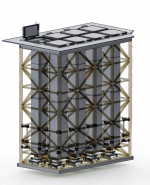
Cylindrical VLS cells ?
Isn't it's bad for quad packing ?
Or it's a placeholder and brahmos VLS is used here ?

The UVLS image is either a place holder or it is the same old Brahmos UVLM modified to launch new missiles.

Better photo of this VLM:
Cylindrical VLS cells ?
Isn't it's bad for quad packing ?
Or it's a placeholder and brahmos VLS is used here ?
Rectangular tubes.
Yeah. But it is being developed. Last time I say doc regarding UVLS they were going with a twin configuration. A smaller UVL cell for hot launching smaller missiles like SAMs & a larger cold launched UVL cell for bigger missiles like Brahmos, ET-LDHCM, LR-AShMs etc.
The problem with this approach is that some larger missiles like Kusha M2, M3, AD-1, AD-2 etc. need to be hot launched. SAMs of any range should preferably use hot launch, that allows them to preserve momentum & climb faster.
So, we will need not 2 but 3 types ULV cells. Smaller hot-launch, large hot-launch & large cold-launch. DRDO is trying to see if they can quad-pack smaller SAMs from the large hot launch VLS.
Again, the problem here is that Navy's current hot launch SAM, Barak-8, is a bit smaller than the Kusha M1. There are compatibility issues which will need to be resolved. Unless the Navy wants to abandon the Barak-8 entirely, I don't think they do.
Last time I commented on this, I assumed we would go for a hot launch VLS for the Kusha/BMD missiles. But this render clearly shows a cold launch. Notice no exhaust vents for hot gasses. So, the missile's motor will fire outside the tube, like Brahmos. The missiles will be ejected using compressed gasses. Notice the shock dampeners at the bottom on the tubes, those are to absorb the recoil of the cold launch.
So, maybe this VLM is going to be common for all large missiles: Kusha M2/M3, Brahmos, AD-1, AD-2, SMART, LR-LACM etc. Shorter range/point defence AD missiles will need a dedicated smaller hot launch VLM.
With time we could have smaller quad packed hot launch missiles from this large rectangular VLS.


Boss you remember anything about that quad pack canister EOI maybe I can try to track it down.Better photo of this VLM:
View attachment 55442
Rectangular tubes.
Last time I commented on this, I assumed we would go for a hot launch VLS for the Kusha/BMD missiles. But this render clearly shows a cold launch. Notice no exhaust vents for hot gasses. So, the missile's motor will fire outside the tube, like Brahmos. The missiles will be ejected using compressed gasses. Notice the shock dampeners at the bottom on the tubes, those are to absorb the recoil of the cold launch.
So, maybe this VLM is going to be common for all large missiles: Kusha M2/M3, Brahmos, AD-1, AD-2, SMART, LR-LACM etc. Shorter range/point defence AD missiles will need a dedicated smaller hot launch VLM.
With time we could have smaller quad packed hot launch missiles from this large rectangular VLS.
Boss you remember anything about that quad pack canister EOI maybe I can try to track it down.
The EoI was from RCI. It was about simulation work to reduce effects of vibrations, resonance & ship hull roll on missile launch tubes. The scope of work included proving reliability of cannister lid opening mechanism during dynamic load conditions.
I tried to look for it a few times. No luck. I imagine Zeus Numerix would be involved in this program. Now I am waiting to see if they publish something.
Do you remember approximately when did it come outThe EoI was from RCI. It was about simulation work to reduce effects of vibrations, resonance & ship hull roll on missile launch tubes. The scope of work included proving reliability of cannister lid opening mechanism during dynamic load conditions.
I tried to look for it a few times. No luck. I imagine Zeus Numerix would be involved in this program. Now I am waiting to see if they publish something.

Photo has nothing to do with the tender though. Source.Better photo of this VLM:
View attachment 55442
Rectangular tubes.
Last time I commented on this, I assumed we would go for a hot launch VLS for the Kusha/BMD missiles. But this render clearly shows a cold launch. Notice no exhaust vents for hot gasses. So, the missile's motor will fire outside the tube, like Brahmos. The missiles will be ejected using compressed gasses. Notice the shock dampeners at the bottom on the tubes, those are to absorb the recoil of the cold launch.
So, maybe this VLM is going to be common for all large missiles: Kusha M2/M3, Brahmos, AD-1, AD-2, SMART, LR-LACM etc. Shorter range/point defence AD missiles will need a dedicated smaller hot launch VLM.
With time we could have smaller quad packed hot launch missiles from this large rectangular VLS.
Attachments
Late 2024, I think.Do you remember approximately when did it come out
Yeah, for now this is the closest thing we have to an official render of the UVLM from DRDO.Photo has nothing to do with the tender though. Source.
The paper is quite interesting too. They are trying to see if they can do a hot launch or a combination of hot & cold launch from a VLM system designed for cold launch.
@Parthu An update on the Italian DDG, we did have some co-operations with Fincantieri:
80 Missiles in Silos: Italian Navy to Receive NG DDG Floating Fortress
Taras Safronov
November 20, 2026
22:28
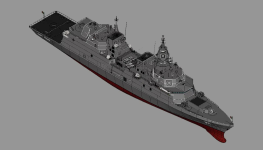
Rendering of the Italian Navy’s new-generation destroyer (NG DDG / DDX). Render: OCCAR.
Italy has revealed the first details about the new-generation NG DDG (formerly DDX) destroyer, which is being developed for the country’s Navy.
The ship, with a displacement of 13,500 metric tons, will be equipped with 80 vertical launch systems, a new radar with an active phased array antenna, anti-missile systems, and advanced laser weapons, according to Naval News.
A contract worth approximately €3.7 billion was signed on September 24, 2026, between the joint venture Orizzonte Sistemi Navali (OSN) and OCCAR-EA.
It covers the design, construction, and initial technical support for the first destroyer, as well as an option to order a second ship.
OSN is owned by Fincantieri (51%) and Leonardo (49%). Fincantieri is responsible for the ship’s design and the integration of its systems, while Leonardo is responsible for developing the combat system.
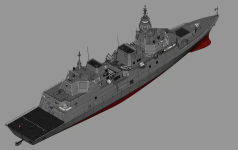
Rendering of the Italian Navy’s new-generation destroyer (NG DDG / DDX). Render: OCCAR.
The cost of the optional second ship is approximately €1.3 billion. Meanwhile, the procurement of weapons and ten years of technical support for each destroyer will be financed separately.
Delivery of the first ship is scheduled for 2033, and the second for 2035. The new destroyers are intended to replace two Durand de la Penne-class ships. According to Naval News, the Italian Navy is considering ordering two more such destroyers in the future. They are intended to replace two Horizon-class ships.
Next-Generation Destroyer (NG DDG)
The primary missions of the NG DDG will include air and missile defense, anti-submarine warfare, long-range strikes against land targets, and command and control of naval task forces.
During development, special attention is being paid to countering modern threats, particularly ballistic and hypersonic missiles, as well as unmanned aerial vehicles.
NG DDG Destroyer Specifications:
Displacement: 13,500 metric tons;
Length: 180 m;
Width: 25 m;
Maximum speed: 30 knots;
Crew: 250 personnel.
NG DDG propulsion system: 2 gas turbines, 32 MW each; 2 diesel engines, 8 MW each; 2 electric motors, 3 MW each; 4 diesel generators, 3.8 MW each.
NG DDG armament: 80 vertical launch systems: 32 in the bow and 48 in the midship section; 4 four-cell launchers for Teseo Mk2/E missiles; 3 Leonardo 76/62 mm Super Rapido artillery systems; 4 Leonardo Lionfish combat modules with 30-mm cannons; 2 triple-tube torpedo launchers for MU90 torpedoes.
Air group on the NG DDG: 2 AW101 or NH90 helicopters; unmanned aerial vehicles; 2 hangars and a stern flight deck.
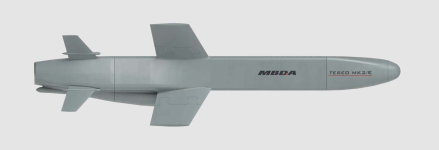
Teseo Mk2/E missile
Radar system
The combat system will be based on the fifth-generation SADOC 5 C5I complex. It will feature an open, cyber-resilient architecture and support the integration of artificial intelligence and cooperative weapon employment.
The primary means of target detection will be a new digital Leonardo radar with an S-band AESA and gallium nitride (GaN) technology. It will have four fixed antenna arrays, each with an area of approximately 10 m². Additionally, the ship will be equipped with a four-panel X-band radar.
The sensor suite will also include the Leonardo DDS-IRST infrared target detection and tracking system, four NA-30S Mk2 fire control systems, and an ELT Group electronic warfare suite.
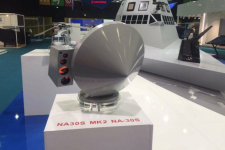
NA-30S Mk2 fire control system. Photo credits: reportdifesa.it
To counter missiles and torpedoes, two Leonardo ODLS-20 decoy launchers are planned. The electronic warfare system will also include countermeasures against unmanned aerial vehicles and satellite radar systems.
Missile and artillery armament
The destroyer’s missile armament will include the SAAM-ESD air defense system, Teseo Mk2/E anti-ship missiles, and next-generation missiles from the Aster family.
The new national vertical launch system (VLS) will be capable of firing both surface-to-surface and surface-to-air missiles.
In particular, it will be designed to launch the advanced long-range MBDA Stratus LO cruise missile, Aster Block 1NT missiles, and the future Aquila interceptor, which is being developed as part of the European HYDIS²dp program to counter ballistic and hypersonic threats.
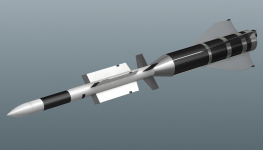
Aster-30 Block 1 New Technology (B1 NT) Missile.
To counter surface and air targets, the ship will be equipped with three 76-mm Leonardo Super Rapido artillery mounts armed with DART and Vulcano ammunition.
Close-in defense will be provided by four 30-mm Lionfish combat modules. In the future, two of them are planned to be replaced with directed-energy laser systems. Initially, these systems will be used to counter drones and asymmetric threats, and later, more powerful systems for intercepting missiles are planned to be developed.
Anti-submarine defense and unmanned systems
To counter submarines, the NG DDG will be equipped with a bow-mounted medium-frequency hydroacoustic station, a towed passive hydroacoustic antenna, and two triple-tube torpedo launchers for MU90 light torpedoes.
AW101 or NH90 helicopters will also be capable of launching MU90 torpedoes and Marte ER anti-ship missiles.
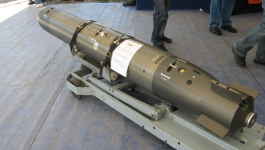
MU90 Impact Torpedo. Photo credits: Wikipedia.org
The ship will have two side stations for launching and recovering watercraft. They will be adapted to operate with RHIBs used by special operations forces and unmanned surface vehicles (USVs).
In addition, the destroyers will be prepared for the installation of 9-meter unmanned surface vehicles, which Fincantieri is developing for the FREMM EVO frigates and other ships of the Italian Navy.
80 Missiles in Silos: Italian Navy to Receive NG DDG Floating Fortress
80 Missiles in Silos: Italian Navy to Receive NG DDG Floating Fortress
Taras Safronov
November 20, 2026
22:28
Rendering of the Italian Navy’s new-generation destroyer (NG DDG / DDX). Render: OCCAR.
Italy has revealed the first details about the new-generation NG DDG (formerly DDX) destroyer, which is being developed for the country’s Navy.
The ship, with a displacement of 13,500 metric tons, will be equipped with 80 vertical launch systems, a new radar with an active phased array antenna, anti-missile systems, and advanced laser weapons, according to Naval News.
A contract worth approximately €3.7 billion was signed on September 24, 2026, between the joint venture Orizzonte Sistemi Navali (OSN) and OCCAR-EA.
It covers the design, construction, and initial technical support for the first destroyer, as well as an option to order a second ship.
OSN is owned by Fincantieri (51%) and Leonardo (49%). Fincantieri is responsible for the ship’s design and the integration of its systems, while Leonardo is responsible for developing the combat system.
Rendering of the Italian Navy’s new-generation destroyer (NG DDG / DDX). Render: OCCAR.
The cost of the optional second ship is approximately €1.3 billion. Meanwhile, the procurement of weapons and ten years of technical support for each destroyer will be financed separately.
Delivery of the first ship is scheduled for 2033, and the second for 2035. The new destroyers are intended to replace two Durand de la Penne-class ships. According to Naval News, the Italian Navy is considering ordering two more such destroyers in the future. They are intended to replace two Horizon-class ships.
Next-Generation Destroyer (NG DDG)
The primary missions of the NG DDG will include air and missile defense, anti-submarine warfare, long-range strikes against land targets, and command and control of naval task forces.
During development, special attention is being paid to countering modern threats, particularly ballistic and hypersonic missiles, as well as unmanned aerial vehicles.
NG DDG Destroyer Specifications:
Displacement: 13,500 metric tons;
Length: 180 m;
Width: 25 m;
Maximum speed: 30 knots;
Crew: 250 personnel.
NG DDG propulsion system: 2 gas turbines, 32 MW each; 2 diesel engines, 8 MW each; 2 electric motors, 3 MW each; 4 diesel generators, 3.8 MW each.
NG DDG armament: 80 vertical launch systems: 32 in the bow and 48 in the midship section; 4 four-cell launchers for Teseo Mk2/E missiles; 3 Leonardo 76/62 mm Super Rapido artillery systems; 4 Leonardo Lionfish combat modules with 30-mm cannons; 2 triple-tube torpedo launchers for MU90 torpedoes.
Air group on the NG DDG: 2 AW101 or NH90 helicopters; unmanned aerial vehicles; 2 hangars and a stern flight deck.
Teseo Mk2/E missile
Radar system
The combat system will be based on the fifth-generation SADOC 5 C5I complex. It will feature an open, cyber-resilient architecture and support the integration of artificial intelligence and cooperative weapon employment.
The primary means of target detection will be a new digital Leonardo radar with an S-band AESA and gallium nitride (GaN) technology. It will have four fixed antenna arrays, each with an area of approximately 10 m². Additionally, the ship will be equipped with a four-panel X-band radar.
The sensor suite will also include the Leonardo DDS-IRST infrared target detection and tracking system, four NA-30S Mk2 fire control systems, and an ELT Group electronic warfare suite.
NA-30S Mk2 fire control system. Photo credits: reportdifesa.it
To counter missiles and torpedoes, two Leonardo ODLS-20 decoy launchers are planned. The electronic warfare system will also include countermeasures against unmanned aerial vehicles and satellite radar systems.
Missile and artillery armament
The destroyer’s missile armament will include the SAAM-ESD air defense system, Teseo Mk2/E anti-ship missiles, and next-generation missiles from the Aster family.
The new national vertical launch system (VLS) will be capable of firing both surface-to-surface and surface-to-air missiles.
In particular, it will be designed to launch the advanced long-range MBDA Stratus LO cruise missile, Aster Block 1NT missiles, and the future Aquila interceptor, which is being developed as part of the European HYDIS²dp program to counter ballistic and hypersonic threats.
Aster-30 Block 1 New Technology (B1 NT) Missile.
To counter surface and air targets, the ship will be equipped with three 76-mm Leonardo Super Rapido artillery mounts armed with DART and Vulcano ammunition.
Close-in defense will be provided by four 30-mm Lionfish combat modules. In the future, two of them are planned to be replaced with directed-energy laser systems. Initially, these systems will be used to counter drones and asymmetric threats, and later, more powerful systems for intercepting missiles are planned to be developed.
Anti-submarine defense and unmanned systems
To counter submarines, the NG DDG will be equipped with a bow-mounted medium-frequency hydroacoustic station, a towed passive hydroacoustic antenna, and two triple-tube torpedo launchers for MU90 light torpedoes.
AW101 or NH90 helicopters will also be capable of launching MU90 torpedoes and Marte ER anti-ship missiles.
MU90 Impact Torpedo. Photo credits: Wikipedia.org
The ship will have two side stations for launching and recovering watercraft. They will be adapted to operate with RHIBs used by special operations forces and unmanned surface vehicles (USVs).
In addition, the destroyers will be prepared for the installation of 9-meter unmanned surface vehicles, which Fincantieri is developing for the FREMM EVO frigates and other ships of the Italian Navy.
80 Missiles in Silos: Italian Navy to Receive NG DDG Floating Fortress
Those ship lines are oddly familiar, you can clearly see the Italian impact on P-15A/B. Also, the roof-mounted long-range radar and mast mounted missile defense radar, this is likely the design that'll influence P-18. Fincantieri has collaborated with DND in designing of multiple warships (Vikrant being the foremost), and P17A more recently.@Parthu An update on the Italian DDG, we did have some co-operations with Fincantieri:
80 Missiles in Silos: Italian Navy to Receive NG DDG Floating Fortress
Taras Safronov
November 20, 2026
22:28
View attachment 55512
Rendering of the Italian Navy’s new-generation destroyer (NG DDG / DDX). Render: OCCAR.
Italy has revealed the first details about the new-generation NG DDG (formerly DDX) destroyer, which is being developed for the country’s Navy.
The ship, with a displacement of 13,500 metric tons, will be equipped with 80 vertical launch systems, a new radar with an active phased array antenna, anti-missile systems, and advanced laser weapons, according to Naval News.
A contract worth approximately €3.7 billion was signed on September 24, 2026, between the joint venture Orizzonte Sistemi Navali (OSN) and OCCAR-EA.
It covers the design, construction, and initial technical support for the first destroyer, as well as an option to order a second ship.
OSN is owned by Fincantieri (51%) and Leonardo (49%). Fincantieri is responsible for the ship’s design and the integration of its systems, while Leonardo is responsible for developing the combat system.
View attachment 55513
Rendering of the Italian Navy’s new-generation destroyer (NG DDG / DDX). Render: OCCAR.
The cost of the optional second ship is approximately €1.3 billion. Meanwhile, the procurement of weapons and ten years of technical support for each destroyer will be financed separately.
Delivery of the first ship is scheduled for 2033, and the second for 2035. The new destroyers are intended to replace two Durand de la Penne-class ships. According to Naval News, the Italian Navy is considering ordering two more such destroyers in the future. They are intended to replace two Horizon-class ships.
Next-Generation Destroyer (NG DDG)
The primary missions of the NG DDG will include air and missile defense, anti-submarine warfare, long-range strikes against land targets, and command and control of naval task forces.
During development, special attention is being paid to countering modern threats, particularly ballistic and hypersonic missiles, as well as unmanned aerial vehicles.
NG DDG Destroyer Specifications:
Displacement: 13,500 metric tons;
Length: 180 m;
Width: 25 m;
Maximum speed: 30 knots;
Crew: 250 personnel.
NG DDG propulsion system: 2 gas turbines, 32 MW each; 2 diesel engines, 8 MW each; 2 electric motors, 3 MW each; 4 diesel generators, 3.8 MW each.
NG DDG armament: 80 vertical launch systems: 32 in the bow and 48 in the midship section; 4 four-cell launchers for Teseo Mk2/E missiles; 3 Leonardo 76/62 mm Super Rapido artillery systems; 4 Leonardo Lionfish combat modules with 30-mm cannons; 2 triple-tube torpedo launchers for MU90 torpedoes.
Air group on the NG DDG: 2 AW101 or NH90 helicopters; unmanned aerial vehicles; 2 hangars and a stern flight deck.
View attachment 55514
Teseo Mk2/E missile
Radar system
The combat system will be based on the fifth-generation SADOC 5 C5I complex. It will feature an open, cyber-resilient architecture and support the integration of artificial intelligence and cooperative weapon employment.
The primary means of target detection will be a new digital Leonardo radar with an S-band AESA and gallium nitride (GaN) technology. It will have four fixed antenna arrays, each with an area of approximately 10 m². Additionally, the ship will be equipped with a four-panel X-band radar.
The sensor suite will also include the Leonardo DDS-IRST infrared target detection and tracking system, four NA-30S Mk2 fire control systems, and an ELT Group electronic warfare suite.
View attachment 55515
NA-30S Mk2 fire control system. Photo credits: reportdifesa.it
To counter missiles and torpedoes, two Leonardo ODLS-20 decoy launchers are planned. The electronic warfare system will also include countermeasures against unmanned aerial vehicles and satellite radar systems.
Missile and artillery armament
The destroyer’s missile armament will include the SAAM-ESD air defense system, Teseo Mk2/E anti-ship missiles, and next-generation missiles from the Aster family.
The new national vertical launch system (VLS) will be capable of firing both surface-to-surface and surface-to-air missiles.
In particular, it will be designed to launch the advanced long-range MBDA Stratus LO cruise missile, Aster Block 1NT missiles, and the future Aquila interceptor, which is being developed as part of the European HYDIS²dp program to counter ballistic and hypersonic threats.
View attachment 55516
Aster-30 Block 1 New Technology (B1 NT) Missile.
To counter surface and air targets, the ship will be equipped with three 76-mm Leonardo Super Rapido artillery mounts armed with DART and Vulcano ammunition.
Close-in defense will be provided by four 30-mm Lionfish combat modules. In the future, two of them are planned to be replaced with directed-energy laser systems. Initially, these systems will be used to counter drones and asymmetric threats, and later, more powerful systems for intercepting missiles are planned to be developed.
Anti-submarine defense and unmanned systems
To counter submarines, the NG DDG will be equipped with a bow-mounted medium-frequency hydroacoustic station, a towed passive hydroacoustic antenna, and two triple-tube torpedo launchers for MU90 light torpedoes.
AW101 or NH90 helicopters will also be capable of launching MU90 torpedoes and Marte ER anti-ship missiles.
View attachment 55517
MU90 Impact Torpedo. Photo credits: Wikipedia.org
The ship will have two side stations for launching and recovering watercraft. They will be adapted to operate with RHIBs used by special operations forces and unmanned surface vehicles (USVs).
In addition, the destroyers will be prepared for the installation of 9-meter unmanned surface vehicles, which Fincantieri is developing for the FREMM EVO frigates and other ships of the Italian Navy.
80 Missiles in Silos: Italian Navy to Receive NG DDG Floating Fortress
Those ship lines are oddly familiar, you can clearly see the Italian impact on P-15A/B. Also, the roof-mounted long-range radar and mast mounted missile defense radar, this is likely the design that'll influence P-18. Fincantieri has collaborated with DND in designing of multiple warships (Vikrant being the foremost), and P17A more recently.
One thing I particularly like about the Italian design is that the smokestacks are flush/joined to the fore and aft superstructure to make space for the amidships VLS.
The notional P-15C/18 concept has 2 standalone stacks in comparison. If we retain the HWT tubes there will be relatively less room with this areangement for a large VLS amidships.
Frankly I can't imagine the IN switching to LWT on a ship this size. But then again these are 180m long ships.
Last edited: