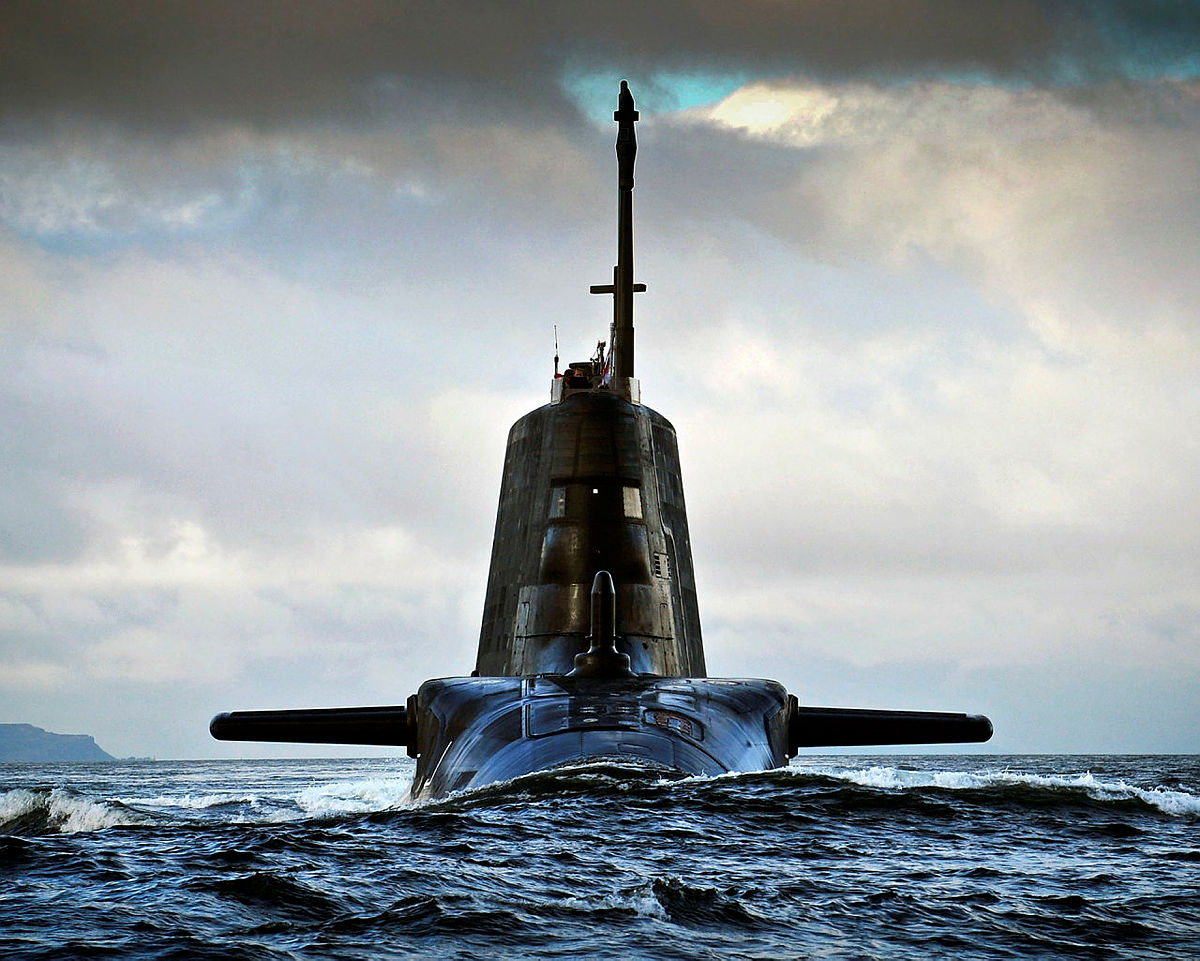
AUKUS : US, UK and Australia forge military alliance to counter China


The Federal Government has launched a $15.8 million initiative called Propel: Australian Submarine Scholarship program, to support the development of Australia’s future nuclear-powered submarine workforce.

Propel will offer up to 3,000 scholarships to students studying in priority STEM fields at Australian universities.

Over its three‑year rollout, the program will provide financial support as well as opportunities to learn from some of Australia’s most accomplished scientists and engineers. More than 800 students nationwide are already taking part as members of the inaugural cohort.

Delivered through a partnership between the Australian Submarine Agency and the Australian Academy of Technological Sciences and Engineering, Propel will help grow the highly skilled workforce needed to deliver and sustain Australia’s nuclear-powered submarines, a key capability under the AUKUS partnership.

“AUKUS represents one of the most significant industrial endeavours in our country’s history and the Albanese Government continues to invest in young Australians who will make up our future workforce,” according to Deputy Prime Minister and Minister of Defence Richard Marles.

“In order to successfully deliver Australia’s nuclear-powered submarine program, we need to ensure we are developing the skills needed to build and sustain them.
 

Aussie SSNs to pack VLS capability, US State Department confirms​

Naval
25 March 2026
|
By: Stephen Kuper
Defence%20Connect%2FBAE_SSN_AUKUS_Submarine_dc_a1a7yw


The US State Department has confirmed that Australia’s future fleet of conventionally armed, nuclear-powered attack submarines being jointly developed with the United Kingdom and the United States under Pillar 1 of the AUKUS framework will field a vertical launch system (VLS) capability.

The UK government has formally sought extensive technical assistance from the US to support the design and development of key systems underpinning the AUKUS nuclear-powered submarine program, in a deal now valued at around US$1 billion (approximately AU$1.42 billion).

The request significantly expands an earlier foreign military sale (FMS) case worth US$50 million (AU$71.6 million), reflecting the growing scale and complexity of the trilateral AUKUS effort involving the UK, the US and Australia.

At the heart of the expanded package is support for advanced submarine combat system architecture, including AUKUS-specific vertical launch tubes, common weapon launchers and modular support systems for all-up-round canisters. The request also covers network input/output units, servers, switches and bespoke electronics integral to a federated tactical warfare system.
 
  • Like
Reactions: santosh1976

1776402481004.png

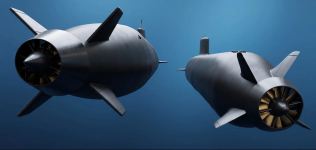
Uncrewed and undersea warfare capabilities are considered to be force multiplier for crewed platforms and enhance the agility, asymmetry and survivability of the Australian Defence Force, according to the recently released documents.

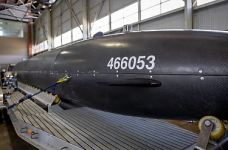
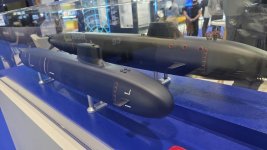
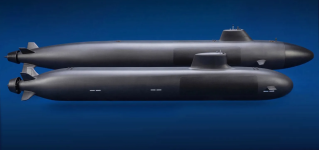
Capabilities, like Speartooth and Ghost Shark extra-large autonomous undersea vehicles, are envisioned to support the ADF’s maritime intelligence, surveillance and reconnaissance and enhance its ability to detect and strike at long‑range.

“Speartooth is capable of conducting shorter range intelligence, surveillance, reconnaissance, strike and logistics operations at sea,” according to the IIP.

“Due to its smaller size and lower unit cost, Speartooth is optimised for seabed warfare and agile undersea operations, reaching areas Ghost Shark cannot.”
 

RAAF takes delivery of advanced jammers for EA-18G​

By Greg Waldron | 21 April 2026
RAAF-EA-18Gs-1024x732.jpg
The RAAF will operate the EA-18G out until 2040. SOURCE: Commonwealth of Australia
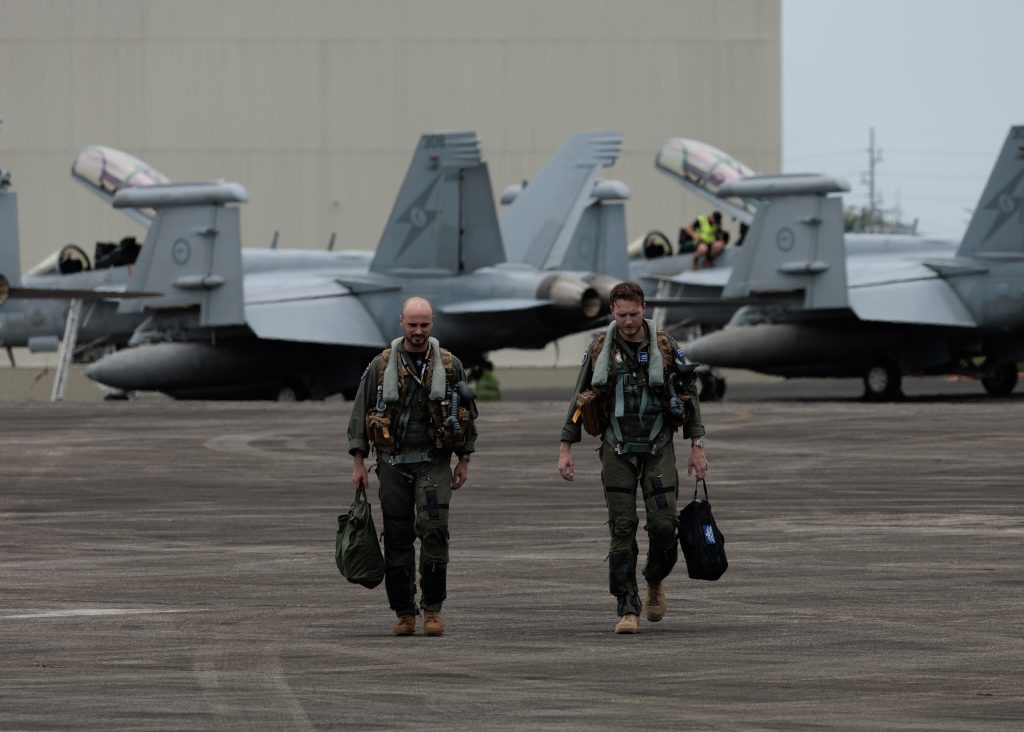
The Royal Australian Air Force (RAAF) has taken delivery of its first new jammer pods, which will equip its Boeing EA-18G Growlers.


Raytheon parent RTX indicates that the units are the Next Generation Jammer Mid-Band (NGJ-MB), a joint programme between the RAAF and the US Navy (USN), the only other operator of the EA-18G.

The company indicates that the first delivery of the pods – designated AN/ALQ-249 – occurred in September 2025, and that deliveries will continue through 2026
 

Pentagon awards $276m submarine contract in first for AUKUS pact​

By Brad Ryan in Washington DC

The Pentagon has awarded the first major submarine contract to deliver on the AUKUS security deal.

The $US197 million ($276 million) contract is for engineering and design work to support the transfer of nuclear-powered submarine capabilities from the US to Australia.
 
  • Like
Reactions: BoredBear
frankly i dont think australia cares all that much, they dont really face any threat anyway and china is a threat they cant face with their current navy anyway. 3 SSNs is still 3 SSNs

Instead of 2 used & 1 new-build Virginia-class boat, Australia will now get 3 used boats instead.
 
frankly i dont think australia cares all that much, they dont really face any threat anyway and china is a threat they cant face with their current navy anyway. 3 SSNs is still 3 SSNs

Virginia is still the best SSN in the world today, hands down. No arguments there. So it doesn't really matter from a qualitative perspective whether they get second-hand or new-build boats. I'm not making a comment on that.

Just providing the update is all.
 
July 24, 2026

Australia invests approximately €3 billion more in the construction of its future nuclear submarines


The cost of the eight nuclear-powered attack submarines (SSNs) that Australia intends to acquire under an agreement concluded with the United Kingdom and the United States (AUKUS) in 2021 continues to rise. This is all the more significant given that the Royal Australian Navy (RAN) plans to spend up to €6.7 billion to extend the operational lifespan of its six Collins-class submarines, preventing a capability gap by 2040.​
As a reminder, of the eight nuclear-powered attack submarines (SSNs) in question, three will be supplied by the United States, while the other five will be built in cooperation with the United Kingdom under the SSN-AUKUS program.​
Initially, the RAN expected to receive new Virginia-class submarines, and as the American shipbuilding industry was facing significant difficulties, Canberra agreed to grant it subsidies totaling US$3 billion (approximately €2.6 billion). However, the SSNs promised by Washington will ultimately be drawn from the US Navy's inventory.​
At the same time, Australia must get its shipbuilding industry up and running to build the five AUKUS-class nuclear-powered attack submarines (SSNs) and ensure the operational readiness of the future fleet of nuclear attack submarines (SSNs), even though it lacks both expertise in nuclear propulsion and the capacity to undertake such a project. Hence the need for significant investment to bring it up to standard.​
In September 2025, Canberra announced a ten-year investment of AU$12 billion [approximately €7 billion] to renovate and improve the infrastructure of the Henderson shipyard, near Perth [Western Australia]. This investment is intended to build secure dry docks for the maintenance of its future SSNs. But that's not all, as the Mogami-class frigates, ordered from Japan, will also be built there.​
“Henderson is a key element of the AUKUS agreement.” “This is what Australia must do to seize this strategic opportunity,” argued Richard Marles, the Australian Minister for Defence at the time.​
In February, he announced a new investment of AU$3.9 billion (approximately €2.3 billion) to launch a new shipyard, this time in Osborne, near Adelaide, South Australia. This future facility will be responsible for building the five AUKUS-class SSNs.​
But this was just the beginning… Indeed, on July 24, Mr. Marles announced that the Osborne shipyard would receive an additional AU$4.6 billion (approximately €2.8 billion) in funding to “support the continued” construction.​
“This investment represents another important step in developing the sovereign capabilities Australia will need to build, operate, maintain, and sustain its future fleet of submarines,” commented Mr. Marles. “The ongoing work at Osborne demonstrates that AUKUS is on track and is becoming a reality now, while creating opportunities for Australian industry and workers for decades to come,” he added.​
The cost of Australia’s eight future nuclear-powered attack submarines (SSNs) is estimated to reach approximately €220 billion over the next thirty years… nearly four times more than the twelve Shortfin Barracuda-class submarines that Canberra initially ordered from the French company Naval Group in 2016. But as the essayist André Frossard once wrote, “the best way to know where you’re going is still to go there.” /END
 
Australia abandoned a program deemed too expensive because it required developing a local industry, only to replace it with a program that requires a vastly more complex local industry, costs several times more, and relies more heavily on foreign decisions.

And the announcement on July 24 confirms that the industrial bill is only just beginning.
 
США, Великобритания и Австралия создают трехстороннее партнерство в области безопасности, направленное на противостояние Китаю, которое будет включать помощь Австралии в строительстве атомных подводных лодок.

Инициатива, получившая название Aukus, была совместно объявлена президентом Джо Байденом и премьер-министрами Борисом Джонсоном и Скоттом Моррисоном после брифингов в США, на которых соглашение было названо объединяющим три англоязычные страны.

Премьер-министр Великобритании Борис Джонсон заявил, что они являются «естественными союзниками», несмотря на то, что «нас может разделять географическое расстояние», и сказал, что альянс создаст «новое партнерство в сфере обороны и будет способствовать созданию рабочих мест и процветанию».

А что вы скажете об этом проекте?
 

Attachments

  • хабр.jpg
    хабр.jpg
    255.8 KB · Views: 3
  • ток2.png
    ток2.png
    468.1 KB · Views: 3
А что вы скажете об этом проекте?
So you have just immigrated to to England and haven't learnt English yet, Lucky you got out of Russia, it's not looking good there
Though what this has to do with AUKUS has me puzzled

To save you translating

Избавлю вас от необходимости переводить: значит, вы только что иммигрировали в Англию и еще не выучили английский. Повезло вам, что выбрались из России — дела там идут неважно.
 
  • Like
Reactions: qxev

AUKUS is a $368 billion gamble Australia does not need to take

Peter Briggs September 1, 2026

US production shortfalls, Britain’s submarine crisis and Australia’s own infrastructure delays are eroding the assumptions behind AUKUS. It’s time to take a different path.

The AUKUS ‘optimal pathway’ was supposed to deliver a seamless transition from our Collins-class fleet to US Virginia-class SSNs, followed by a jointly built SSN-AUKUS. Today, that pathway looks structurally undeliverable, operationally fragile and fiscally irresponsible.

The core assumptions of AUKUS are unravelling across both sides of the Atlantic. In the United States, shipyard output stubbornly hovers between 1.1 and 1.2 attack submarines per year, far below the 2.0+ rate required to sustain the US Navy’s own force structure. Under US law (10 U.S.C. § 8677), no US president can transfer second-hand Virginia-class hulls if doing so degrades American undersea readiness. Australia is counting on submarines that the US Navy simply cannot afford to give away.

In the United Kingdom, the situation is even more dire. The Royal Navy’s attack submarine capability has effectively collapsed. By mid-2026, public fleet tracking revealed an unprecedented crisis: all five in-service Astute-class SSNs were tied up alongside simultaneously due to severe maintenance backlogs, dockyard shortages and cannibalisation for spare parts. HMS Ambush has not put to sea since August 2022 and HMS Artful has been inactive since May 2023.

This is not merely an Australian assessment. Former British director of nuclear policy, Rear Admiral Philip Mathias, recently delivered a scathing verdict on the state of the Royal Navy fleet, warning that:

Britain’s nuclear submarine fleet is in ‘DEEP’ trouble and why it can’t provide Australia with the support it needs.”

Admiral Mathias further highlighted Australia’s strategic miscalculation in signing up to the deal, stating:

It is clear that Australia has shown a great deal of naivety and did not conduct sufficient due diligence on the parlous state of the UK’s nuclear submarine program before signing up to AUKUS… Policy and money don’t build nuclear submarines – people do that, and there are not enough of them with the right level of skills and experience.”

He concluded that there is a “high probability that the UK element of AUKUS will fail,” observing that “the UK is no longer capable of managing a nuclear submarine program”. Plagued by shipyard overloads and prioritising its Dreadnought nuclear-deterrent SSBNs, the UK is in no position to act as a reliable submarine build or operational training partner for Australia.

Crucially, the UK disaster provides a stark warning about the perils of neglecting comprehensive docking and sustainment infrastructure. The collapse of Britain’s SSN availability was not caused by a lack of operational will, but by a failure to maintain certified nuclear dry docks, refuelling facilities and specialised maintenance infrastructure at Devonport and Faslane. Australia is rushing toward the exact same trap.

At Osborne in South Australia, attempting to squeeze massive nuclear submarine construction alongside the Hunter-class frigate program and Collins Life of Type Extension (LOTE) creates spatial and capital gridlock exceeding $30 billion.

Meanwhile, the belated start to master planning for the Henderson Defence Precinct in Western Australia guarantees that Australia will not achieve ’nuclear ready’ certification by 2031, when the US decision to sell the first Virginia-class hull is scheduled to be made.

Worse still, these severe infrastructure delays mean Australia will be unable to provide the certified depot-level maintenance and contingency docking required to support Submarine Rotational Force-West (SRF-West). Without comprehensive, certified domestic dry docks and deep sustainment yards, acquiring complex nuclear submarines is an exercise in futility, leaving multi-billion-dollar hulls rotting alongside piers.

Beyond physical infrastructure gridlock, AUKUS presents a self-inflicted crewing and force-structure crisis. Managing a fragmented three-class fleet (Collins, Virginia, and SSN-AUKUS) splits training, supply chains and personnel. An eight-boat AUKUS force will yield at best two to three deployable submarines on station at any given time, a poor return for a $368 billion investment. Furthermore, insisting on highly enriched uranium (HEU) reactors introduces weapons-grade fuel hazards, intrusive 3-to-5-kilometre emergency exclusion zones at urban shipyards like Osborne and severe social licence risks.

Australia does not need to abandon nuclear propulsion, but we must abandon the unworkable AUKUS framework. A viable, lower-risk alternative exists: pivoting to a low-enriched uranium (LEU) SSN based on the proven French Suffren design.

At ~5,000 tonnes, the Suffren baseline is already operational, debugged and requires a crew of just 65, halving the Royal Australian Navy’s seagoing recruitment target compared to the 135-person crews required for US and UK hulls. Subject to safety assessment, its smaller displacement would allow it to utilise existing shiplift and docking facilities, drastically reducing the infrastructure overload at both Osborne and Henderson. Built continuously at Osborne, an Australian fleet of 12 LEU SSNs can be delivered for $4.5 billion per hull ($54 billion build cost), with a total 30-year lifecycle program cost of approximately $180 billion. This $4.5 billion per unit cost figure is derived from a French offer to supply eight Suffren for the cost of the 12 Attack-class conventional submarines plus 10 per cent, as reported in Andrew Fowler’s book, Nuked: The Submarine Fiasco that Sank Australia’s Sovereignty.

This pivot saves Australia $188 billion compared to the headline AUKUS estimate. Reallocating that sovereign dividend releases up to $6.2 billion per annum back into the Defence budget over 30 years. These funds can directly secure sovereign long-range strike missiles, fund our surface frigate fleet, and establish the robust, sovereign dockyard infrastructure needed to sustain our fleet independently.

Continuing down the current AUKUS path risks leaving Australia with a prolonged undersea capability gap, no design rights, and an un-crew-able, unviable force. It is time for a pragmatic policy pivot to a 12-boat LEU submarine program that delivers true national sovereignty, continuous domestic shipbuilding and real maritime deterrence at a price Australia can afford. /END
Peter Briggs retired from the RAN in 2001 after a 40-year career, specialising in submarines.
This included two submarine commands, command of the RAN Submarine Squadron, director of Submarine Policy and Warfare and Head of Submarine Capability Team, established to rectify Collins introduction into service issues.
He was the president of the Submarine Institute of Australia from 2006-09
and is a frequent contributor to public debate on Australian submarine matters.

 
Sounds like some french wishful thinking, I'd like to know is the French still paying Briggs to promote their sub? There was a lot of cash around during the comp

To think that the UK isn't going to lay the steel as planned next year, will soon be seen as reality
If the UK sub fails, I guess both the UK and AU will get US subs, One thing for certain, they won't be French subs :ROFLMAO:
 
Last edited:
Sounds like some french wishful thinking, I'd like to know is the French still paying Briggs to promote their sub? There was a lot of cash around during the comp

To think that the UK isn't going to lay the steel as planned next year, will soon be seen as reality
If the UK sub fails, I guess both the UK and AU will get US subs, One thing for certain, they won't be French subs :ROFLMAO:
We didn't ask for anything; we're doing just fine without the Australians. We bought some popcorn and are watching you go at it—and if you ever do need us, chances are you'll ask too late and we won't be able to help. And that makes us so, so sad... :D