MMRCA 2.0 - Updates and Discussions

What is your favorite for MMRCA 2.0 ?

  • F-35 Blk 4

    Votes: 44 16.4%
  • Rafale F4

    Votes: 205 76.5%
  • Eurofighter Typhoon T3

    Votes: 5 1.9%
  • Gripen E/F

    Votes: 5 1.9%
  • F-16 B70

    Votes: 1 0.4%
  • F-18 SH

    Votes: 10 3.7%
  • F-15EX

    Votes: 11 4.1%
  • Mig-35

    Votes: 2 0.7%

  • Total voters
    268
  • Poll closed .
To be perfectly honest, within the Aviation Industry Corporation of China (AVIC), there are two main factions that are relatively stronger in fighter jet manufacturing.

One is Shenyang in the north (famous for the J-8), which is notorious for its rock-bottom efficiency. A well-known meme about them is "One J-8 spawned eight Academicians." This is a sarcastic jab at how, merely by designing and manufacturing the J-8 fighter, eight individuals from this institution managed to ascend to the "Academician" status—the highest honor in the Chinese engineering sector. Furthermore, in Chinese slang, "J-8" (Ji-Ba) is a homophone for the male genitalia, giving the meme a double meaning: "One dick ejaculated eight Academicians."

The other is Chengdu in the south (famous for the J-7 and J-10). Its spotlight was completely stolen by the north until it finally turned things around with the arrival of the J-10. However, this plant represents another form of corruption. Riding the wave of "Reform and Opening-up," the Chief Designer of the J-10 aggressively pursued privatization, operating as a coordinated criminal syndicate to amass massive amounts of dirty money and gobble up vast plots of real estate. The later Chief Designer of the J-20 was the prized disciple of this J-10 designer. The J-20 project originally belonged to someone else, but because the J-10 designer wielded immense authority, he snatched the project away and handed it on a silver platter to his student, Yang Wei. Ultimately, Yang Wei was also elected as an "Academician" solely due to the J-20 project. However, because the final performance of the J-20 turned out to be absolute garbage, combined with the fact that their corruption scandal eventually came to light, he has now been arrested and placed under investigation (in fact, he was detained back in 2024). A prison sentence is inevitable.

Returning to the main topic: after the collapse of the Soviet Union, the country was dirt poor. Boris Yeltsin was aggressively pushing privatization to the point where blueprints were being sold by the kilogram. Sensing a golden opportunity, the Aviation Industry Corporation of China poured massive amounts of cash into poaching talent and buying up blueprints.
During this gold rush:
The northern faction (Shenyang)沈阳 connected with Sukhoi苏霍伊.
The southern faction (Chengdu)成都 connected with Mikoyan 米格.
(Because the development of the entire Sukhoi lineage was placed under the more authoritative northern faction, Shenyang earned the nickname "Shen-khoi沈-霍伊" )

Meanwhile, next-generation fighter designs that began selection in the 1980s were submitted to the Air Force for review. This was supposed to be a stealth aircraft, but China possessed absolutely zero capability, experience, or experimental equipment to design such a plane. The relevant formulas were literally conjured up by a professor at Beihang University based entirely on Russian and American literature. The PLA had absolutely no confidence in it, so they spent tens of thousands of dollars in hard cash to hire experts from the Central Aerohydrodynamic Institute (TsAGI) in Moscow to evaluate the design.

The verdict? The radar cross-section (RCS) values calculated by the Chinese side were a staggering 10 times lower than reality. In other words, while the Chinese side believed their design had an RCS of 1㎡, the Russian assessment concluded it was 10㎡ by Russian standards. (Source: Memoirs of Academician 顾诵芬)

Consequently, the entire 1980s R&D project was completely scrapped and torn down. The next-generation aircraft would have to be decided through a head-to-head showdown between the two factions.
Shenyang (North)Su-37.
Chengdu (South) proposed an interceptor variant based on the MiG 1.42/1.46.
Ultimately, Chengdu won the bid, and the result of that victory is the J-20.

In terms of propulsion, the target engine was designated WS-15. In reality, it is a reverse-engineered R79-B300. The actual engine and its corresponding blueprints—including the complete set of vectoring nozzle blueprints—were bought and brought back from Russia in 1996 by "Academician Liu Daxiang(刘大响)." Development was carried out by shrinking the bypass ratio based on this platform. However, because their foundational capabilities were too poor, R&D dragged on disastrously; they have been grinding away at it for 30 years now. Around 2010, some suggested that the original targets were set too low and the project had dragged on for too long, meaning they should keep the designation but scrap the project and start fresh. Yet, judging by current progress, it is highly likely still just a modification of the old R79, because China lacks the capability to develop a brand-new engine from scratch in such a short timeframe. The design of this engine was also the result of assistance and theoretical calculations from Moscow—including wind tunnel testing and thermal equilibrium simulations, all completed in Moscow. The bypass ratio is likely squeezed very tight, somewhere between 0.2 and 0.3, to satisfy China's urgent operational need for maritime interception.(Source: Memoirs of Academician 刘大响).

As a result, the J-20 was forced to adopt the WS-10 "Taihang太行" series of engines. This engine was reverse-engineered from the CFM56-2 commercial turbofan introduced during the 1980s Sino-US honeymoon period. The method of reverse-engineering was to secretly disassemble the engine at night to measure and map it, and then reassemble and reinstall it before daybreak to evade commercial audits by their "American Daddy." The low-pressure stage and the lubrication system were copied lock, stock, and barrel from the AL-31F

1、WS-10/10A
: Rated thrust of 12.5 tons, weighing 200 kg more than the AL-31F. It didn't pass final acceptance until 2017. Due to inherent structural defects, it was accepted only after throttling the thrust down by 700 kg (the original project goal was 13.2 tons).
2、WS-10BCFM56-7 engines and F110-GE-129 engines obtained through special illicit channels (though the low-pressure stage remained the AL-31F). It finally hit its rated thrust and passed acceptance around 2020.
3、There is also a variant with a purported 14-ton thrust.

Generally speaking, the WS-10B is inferior to the AL-31F, and the 14-ton variant is inferior to the AL-31FM1.
The name WS-10 'Taihang太行' itself is a pun. While it refers to a mountain, 'Tai Hang' also sounds like 'super capable' or 'awesome' in Chinese. However, because its garbage performance is an open secret across the Chinese internet, it has been widely mocked with the nickname 'Tai Buxing太不行'—which literally translates to 'Super Incapable' or 'Too Trash to Work.

Back to the J-20's powerplant issue: early test flights used the AL-31F; later flights used the AL-31F-M2 (according to Russian export records, these were delivered after 2015). Ultimately, for the sake of claiming "100% domestic production," the mass-produced models were fitted with the far inferior WS-10B. Today, they might also be using the 14-ton thrust variant. All in all, it is an absolute mess.

Regarding maintenance and sortie rates, the entire WS-10 series has a service life of a mere 900 to 1,500 hours, with even the latest variants not exceeding 2,000 hours.
The training standards of the Chinese Air Force are also exceptionally poor—far below Pakistan's standards, and probably on par with India's. It is an open secret that military pilots line up waiting for a chance to transfer to commercial civil aviation. Furthermore, once they hit 45 to 50 years old, they are forced to retire or transfer to flying drones, leading to an abysmal accumulation of veteran experience. In Chinese Air Force flight and adversarial training, they never conduct within-visual-range (WVR) dogfighting (the Army and even the Armed Police Force have no hand-to-hand combat training either).
As for the radar, it features an Active Electronically Scanned Array (AESA) radar. Internal propaganda boasts a detection range of "2XX" kilometers (the last two digits are always redacted and blurred out), which basically aligns with common sense, physics, and their actual technical level.
The most heavily criticized aspect is its payload capacity—everyone can see how pathetic it is, so people don't even bother talking about it anymore.
Regarding its stealth capabilities: in reality, China’s very first full-scale anechoic chamber capable of accommodating an actual, real-size fighter jet wasn't even built until after the J-20's maiden flight. To top it off, it was constructed by Shenyang—Chengdu's arch-rival. Throughout the entire design phase of the J-20, they couldn't even use proper physical testing methods to verify and refine its stealth performance

The J-20 holds a rather unique status in global aviation:
It is the only "5th-generation" fighter in the world without thrust-vectoring control (TVC). (Though with the J-35 around now, it’s one of two).
It is the only "5th-generation" fighter in the world that lacks an internal autocannon or any provision to mount one. (Though with the J-35 around, it’s one of two).
It is the only "5th-generation" fighter in the world equipped with previous-generation engines. (Though with the J-35 around, it’s one of two).
It is the only "5th-generation" fighter in the world featuring a tailless delta wing configuration.
It is the only "5th-generation" fighter in the world whose Chief Designer is rotting in a jail cell.

In short, it is truly "mind-blowing."

And then, this exact same company went ahead and designed a three-engine frontline bomber—absolutely brilliant. As a side note, the FC-1 (JF-17) also came out of this company. That thing was originally designated the "MiG-33"—not the current MiG-29M variant of the 33, but a single-engine version of the MiG-29 designed during the Soviet era to cater to cash-strapped allies. Later, the blueprints along with the engineers were sold wholesale to Chengdu.


Returning to Shen-khoi沈-霍伊 in the north: having lost out on the Air Force's next-generation contract, the Navy's 5th-generation fighter naturally fell into Shenyang's lap. The earliest prototype was called the FC-31, powered by RD-33 engines. Later, to meet naval requirements, they scaled up its dimensions (similar to the transition from the F-18 to the F/A-18C) to facilitate bomb-carrying capabilities.

However, because the design remains fundamentally terrible, judging by currently leaked spy shots and satellite imagery, this monstrosity's wingspan when folded is even wider than that of the Su-33. Yet, it is fitted with two modified RD-33 engines, with rumors claiming the thrust has been pushed up to around 10 tons. Anyone with a brain knows exactly what is going on here: they just increased the bypass ratio of the RD-33 to boost low-altitude performance while completely abandoning energy retention for air combat.

This is the J-35. And because the J-20 turned out to be such unmitigated garbage—essentially acting as nothing more than a "A MiG-31 that can go stealth, yet flies slow and carries no long-range missiles."—the Air Force now intends to buy a batch of these as well. That is the origin of the land-based variant of the J-35.
That is interesting, but it raises a question.

If, in your view, the Rafale is technically less impressive than something like an F-15, and if the J-20 has all the problems you described, engines, availability, payload, stealth validation, maintenance and factional issues, then how do you explain the PLAAF reportedly deploying around five J-20s for each Indian Rafale after their arrival?

I am not asking whether five J-20s are needed to defeat one Rafale in a dogfight. That would be a simplistic interpretation. I am asking whether this ratio may reflect the operational effort required to neutralize the Rafale effect: sortie generation, availability, EW, Meteor, SCALP/HAMMER, SPECTRA, and the ability of a small Rafale fleet to create disproportionate planning constraints.

In other words: does everything you explained about the J-20 help explain why China had to overcommit high-end assets opposite a very small number of Rafales?
 
  • Like
Reactions: Rajput Lion
"Irrbis-E is inferior to domestic AESA"—this kind of argument crops up constantly in China, and even today, it remains the mainstream perception on the internet. It is nothing more than a pathetic attempt by netizens to salvage their fragile dignity.
In the late 1980s and early 1990s, they imported the Su-27SK. After spending eight to ten years merely assembling it, they felt a massive boost in confidence just because they had the blueprints in hand. So, they tore up the agreement and began copycatting it based on those blueprints, playing around with so-called "composite material modifications." Then, Russia cut off the supply of flight control software. To this day, these pieces of junk still cannot perform the Pugachev’s Cobra maneuver. Consequently, they’ve started bragging about how amazing the onboard radars are. Around 2010, the Chinese internet hyped the WS-10 engine to high heaven, claiming it had 13 tons of thrust, a thrust-to-weight ratio of 8, and a 6,000-hour lifespan on par with the US, while expressing nothing but disdain and contempt for Russian weaponry. In the end, though, they obediently bought the Su-35 and S-400.
It’s the exact same story with tanks and armored vehicles. They repeatedly argued how the Type 99A could slice through the T-90A like a hot knife through butter, boasting a 1,000mm penetration for APFSDS and 1,000mm of protection against kinetic energy penetrators, powered by a 1,500-horsepower engine. Yet, when the chief designer gave a lecture and pulled up the PowerPoint, it turned out to have only 600mm of penetration and 700mm of protection. When the 125mm gun was sent to Thailand for testing, its shot dispersion was four times that of the Ukrainian product. Furthermore, during competitions in Russia, the Type 96B—which supposedly possessed superior mobility to the Type 99A—couldn't even catch the exhaust fumes of the T-72B3.
And just recently, the General Staff obediently went ahead and bought the 2S25 Sprut-SD and BMD-4—vehicles that Chinese netizens used to utterly despise. Naturally, these netizens have already started churning out all kinds of mental gymnastics to explain it away, claiming, "This is just targeted poverty alleviation for Russia."

Therefore, when India claims to possess a radar superior to the Irbis-E, I maintain the exact same attitude and sense of familiarity.

When you claim they can catch up in 5 or 10 years, how is that even possible? Even the J-20 is already a 15-year-old design. If I remember correctly, back in 1978, the basic model of the Il-76 set a record carrying a 70-ton payload—a record that the Y-20 won't be able to achieve even in another 10 to 20 years. In fact, the Y-20 has never even possessed the capability to take off from unpaved rough airfields; looking at that landing gear, it seems flat-out impossible. This aircraft has wings designed by Antonov and a fuselage designed by Ilyushin.

Besides, the Irbis-E itself is a piece of hardware from over a decade ago. No one is just going to sit there idly in a static state, waiting for others to overtake them.

As for electronic components like radar, they iterate the fastest and carry the least amount of difficulty. As long as you keep throwing money at them, accelerate the frequency of upgrades, and swap things out, anyone can do it well. What "Chinese electronic components" or "Iranian electronic components"? Once you tear them open, aren't they all American parts inside? North Korean missiles are packed full of chips from Texas Instruments and Infineon. Therefore, under most circumstances, I don’t even bother discussing these things. The barrier to entry is simply too low; anyone can do it well—it all comes down to whether you spent the money, and whether the timing, location, and circumstances aligned.

In other words, while the electronic system as a variable certainly exists, it is inherently uncontrollable and carries a low barrier to entry. Wasting your breath discussing it is not only exhausting but ultimately fails to make a clear case...
For these netizens, their entire understanding of electronic devices boils down to assembling a smartphone and running a few apps. Their grasp of high-end electronics is confined to nothing more than robotic vacuum cleaners. And when it comes to military hardware, they literally judge the sophistication of an aircraft based on the size and resolution of its cockpit screens

Yes, I have always laughed at a lot of Chinese claims about tanks and such. Even India is way behind the West in many areas. We are slowly catching up, but it's a 15-30-year process for India.

But things are different when it comes to some specific areas.

IAF reported that the PL-15 technology procured and studied from debris was of good quality. And the J-10's radar also performed well. They said the PAF failed to inflict damage 'cause the missiles were fired from their maximum ranges. I guess the fear of the Rafale and S-400 was far greater than the confidence in their own weapons.

In India, DRDO reported that the Uttam AESA radar is superior to Israel's EL/M-2052. Similarly, when it came to the high power radar program for large radars, the Israelis won the plains contract but failed to meet requirements for mountains, where an Indian radar won. So India has caught up to Western standards here.
 
That is interesting, but it raises a question.

If, in your view, the Rafale is technically less impressive than something like an F-15, and if the J-20 has all the problems you described, engines, availability, payload, stealth validation, maintenance and factional issues, then how do you explain the PLAAF reportedly deploying around five J-20s for each Indian Rafale after their arrival?

I am not asking whether five J-20s are needed to defeat one Rafale in a dogfight. That would be a simplistic interpretation. I am asking whether this ratio may reflect the operational effort required to neutralize the Rafale effect: sortie generation, availability, EW, Meteor, SCALP/HAMMER, SPECTRA, and the ability of a small Rafale fleet to create disproportionate planning constraints.

In other words: does everything you explained about the J-20 help explain why China had to overcommit high-end assets opposite a very small number of Rafales?
I haven't paid close attention to this issue, but China's military forces are thoroughly mechanized, filling their organizational structures with corresponding hardware. For instance, even the operational unit for their destroyers is called a 'Flotilla' (支队 - Zhidui), which literally translates to the equivalent of an army regimen
 
To be perfectly honest, within the Aviation Industry Corporation of China (AVIC), there are two main factions that are relatively stronger in fighter jet manufacturing.

One is Shenyang in the north (famous for the J-8), which is notorious for its rock-bottom efficiency. A well-known meme about them is "One J-8 spawned eight Academicians." This is a sarcastic jab at how, merely by designing and manufacturing the J-8 fighter, eight individuals from this institution managed to ascend to the "Academician" status—the highest honor in the Chinese engineering sector. Furthermore, in Chinese slang, "J-8" (Ji-Ba) is a homophone for the male genitalia, giving the meme a double meaning: "One dick ejaculated eight Academicians."

The other is Chengdu in the south (famous for the J-7 and J-10). Its spotlight was completely stolen by the north until it finally turned things around with the arrival of the J-10. However, this plant represents another form of corruption. Riding the wave of "Reform and Opening-up," the Chief Designer of the J-10 aggressively pursued privatization, operating as a coordinated criminal syndicate to amass massive amounts of dirty money and gobble up vast plots of real estate. The later Chief Designer of the J-20 was the prized disciple of this J-10 designer. The J-20 project originally belonged to someone else, but because the J-10 designer wielded immense authority, he snatched the project away and handed it on a silver platter to his student, Yang Wei. Ultimately, Yang Wei was also elected as an "Academician" solely due to the J-20 project. However, because the final performance of the J-20 turned out to be absolute garbage, combined with the fact that their corruption scandal eventually came to light, he has now been arrested and placed under investigation (in fact, he was detained back in 2024). A prison sentence is inevitable.

Returning to the main topic: after the collapse of the Soviet Union, the country was dirt poor. Boris Yeltsin was aggressively pushing privatization to the point where blueprints were being sold by the kilogram. Sensing a golden opportunity, the Aviation Industry Corporation of China poured massive amounts of cash into poaching talent and buying up blueprints.
During this gold rush:
The northern faction (Shenyang)沈阳 connected with Sukhoi苏霍伊.
The southern faction (Chengdu)成都 connected with Mikoyan 米格.
(Because the development of the entire Sukhoi lineage was placed under the more authoritative northern faction, Shenyang earned the nickname "Shen-khoi沈-霍伊" )

Meanwhile, next-generation fighter designs that began selection in the 1980s were submitted to the Air Force for review. This was supposed to be a stealth aircraft, but China possessed absolutely zero capability, experience, or experimental equipment to design such a plane. The relevant formulas were literally conjured up by a professor at Beihang University based entirely on Russian and American literature. The PLA had absolutely no confidence in it, so they spent tens of thousands of dollars in hard cash to hire experts from the Central Aerohydrodynamic Institute (TsAGI) in Moscow to evaluate the design.

The verdict? The radar cross-section (RCS) values calculated by the Chinese side were a staggering 10 times lower than reality. In other words, while the Chinese side believed their design had an RCS of 1㎡, the Russian assessment concluded it was 10㎡ by Russian standards. (Source: Memoirs of Academician 顾诵芬)

Consequently, the entire 1980s R&D project was completely scrapped and torn down. The next-generation aircraft would have to be decided through a head-to-head showdown between the two factions.
Shenyang (North)Su-37.
Chengdu (South) proposed an interceptor variant based on the MiG 1.42/1.46.
Ultimately, Chengdu won the bid, and the result of that victory is the J-20.

In terms of propulsion, the target engine was designated WS-15. In reality, it is a reverse-engineered R79-B300. The actual engine and its corresponding blueprints—including the complete set of vectoring nozzle blueprints—were bought and brought back from Russia in 1996 by "Academician Liu Daxiang(刘大响)." Development was carried out by shrinking the bypass ratio based on this platform. However, because their foundational capabilities were too poor, R&D dragged on disastrously; they have been grinding away at it for 30 years now. Around 2010, some suggested that the original targets were set too low and the project had dragged on for too long, meaning they should keep the designation but scrap the project and start fresh. Yet, judging by current progress, it is highly likely still just a modification of the old R79, because China lacks the capability to develop a brand-new engine from scratch in such a short timeframe. The design of this engine was also the result of assistance and theoretical calculations from Moscow—including wind tunnel testing and thermal equilibrium simulations, all completed in Moscow. The bypass ratio is likely squeezed very tight, somewhere between 0.2 and 0.3, to satisfy China's urgent operational need for maritime interception.(Source: Memoirs of Academician 刘大响).

As a result, the J-20 was forced to adopt the WS-10 "Taihang太行" series of engines. This engine was reverse-engineered from the CFM56-2 commercial turbofan introduced during the 1980s Sino-US honeymoon period. The method of reverse-engineering was to secretly disassemble the engine at night to measure and map it, and then reassemble and reinstall it before daybreak to evade commercial audits by their "American Daddy." The low-pressure stage and the lubrication system were copied lock, stock, and barrel from the AL-31F

1、WS-10/10A
: Rated thrust of 12.5 tons, weighing 200 kg more than the AL-31F. It didn't pass final acceptance until 2017. Due to inherent structural defects, it was accepted only after throttling the thrust down by 700 kg (the original project goal was 13.2 tons).
2、WS-10BCFM56-7 engines and F110-GE-129 engines obtained through special illicit channels (though the low-pressure stage remained the AL-31F). It finally hit its rated thrust and passed acceptance around 2020.
3、There is also a variant with a purported 14-ton thrust.

Generally speaking, the WS-10B is inferior to the AL-31F, and the 14-ton variant is inferior to the AL-31FM1.
The name WS-10 'Taihang太行' itself is a pun. While it refers to a mountain, 'Tai Hang' also sounds like 'super capable' or 'awesome' in Chinese. However, because its garbage performance is an open secret across the Chinese internet, it has been widely mocked with the nickname 'Tai Buxing太不行'—which literally translates to 'Super Incapable' or 'Too Trash to Work.

Back to the J-20's powerplant issue: early test flights used the AL-31F; later flights used the AL-31F-M2 (according to Russian export records, these were delivered after 2015). Ultimately, for the sake of claiming "100% domestic production," the mass-produced models were fitted with the far inferior WS-10B. Today, they might also be using the 14-ton thrust variant. All in all, it is an absolute mess.

Regarding maintenance and sortie rates, the entire WS-10 series has a service life of a mere 900 to 1,500 hours, with even the latest variants not exceeding 2,000 hours.
The training standards of the Chinese Air Force are also exceptionally poor—far below Pakistan's standards, and probably on par with India's. It is an open secret that military pilots line up waiting for a chance to transfer to commercial civil aviation. Furthermore, once they hit 45 to 50 years old, they are forced to retire or transfer to flying drones, leading to an abysmal accumulation of veteran experience. In Chinese Air Force flight and adversarial training, they never conduct within-visual-range (WVR) dogfighting (the Army and even the Armed Police Force have no hand-to-hand combat training either).
As for the radar, it features an Active Electronically Scanned Array (AESA) radar. Internal propaganda boasts a detection range of "2XX" kilometers (the last two digits are always redacted and blurred out), which basically aligns with common sense, physics, and their actual technical level.
The most heavily criticized aspect is its payload capacity—everyone can see how pathetic it is, so people don't even bother talking about it anymore.
Regarding its stealth capabilities: in reality, China’s very first full-scale anechoic chamber capable of accommodating an actual, real-size fighter jet wasn't even built until after the J-20's maiden flight. To top it off, it was constructed by Shenyang—Chengdu's arch-rival. Throughout the entire design phase of the J-20, they couldn't even use proper physical testing methods to verify and refine its stealth performance

The J-20 holds a rather unique status in global aviation:
It is the only "5th-generation" fighter in the world without thrust-vectoring control (TVC). (Though with the J-35 around now, it’s one of two).
It is the only "5th-generation" fighter in the world that lacks an internal autocannon or any provision to mount one. (Though with the J-35 around, it’s one of two).
It is the only "5th-generation" fighter in the world equipped with previous-generation engines. (Though with the J-35 around, it’s one of two).
It is the only "5th-generation" fighter in the world featuring a tailless delta wing configuration.
It is the only "5th-generation" fighter in the world whose Chief Designer is rotting in a jail cell.

In short, it is truly "mind-blowing."

And then, this exact same company went ahead and designed a three-engine frontline bomber—absolutely brilliant. As a side note, the FC-1 (JF-17) also came out of this company. That thing was originally designated the "MiG-33"—not the current MiG-29M variant of the 33, but a single-engine version of the MiG-29 designed during the Soviet era to cater to cash-strapped allies. Later, the blueprints along with the engineers were sold wholesale to Chengdu.


Returning to Shen-khoi沈-霍伊 in the north: having lost out on the Air Force's next-generation contract, the Navy's 5th-generation fighter naturally fell into Shenyang's lap. The earliest prototype was called the FC-31, powered by RD-33 engines. Later, to meet naval requirements, they scaled up its dimensions (similar to the transition from the F-18 to the F/A-18C) to facilitate bomb-carrying capabilities.

However, because the design remains fundamentally terrible, judging by currently leaked spy shots and satellite imagery, this monstrosity's wingspan when folded is even wider than that of the Su-33. Yet, it is fitted with two modified RD-33 engines, with rumors claiming the thrust has been pushed up to around 10 tons. Anyone with a brain knows exactly what is going on here: they just increased the bypass ratio of the RD-33 to boost low-altitude performance while completely abandoning energy retention for air combat.

This is the J-35. And because the J-20 turned out to be such unmitigated garbage—essentially acting as nothing more than a "A MiG-31 that can go stealth, yet flies slow and carries no long-range missiles."—the Air Force now intends to buy a batch of these as well. That is the origin of the land-based variant of the J-35.
Why u sound like either u are very critical of china( arr u chinease leftsit ?)

Or u are just trying to downplay china ? I mean what u even got with this ?

I dont think indian militry and airforce will believe on anything said ny a chinease person on a forum

Anyways , i always tries to take the performance of a system described by the creator if that is anyway enemy of me

So i don't think iaf will ever under estimate china

Obv, they say that a rafale can defeat j20. But thats their job, they can not say that thwy can not fight, that will demoralizing population as well as they will be terminated from the position
 
Yes, I have always laughed at a lot of Chinese claims about tanks and such. Even India is way behind the West in many areas. We are slowly catching up, but it's a 15-30-year process for India.

But things are different when it comes to some specific areas.

IAF reported that the PL-15 technology procured and studied from debris was of good quality. And the J-10's radar also performed well. They said the PAF failed to inflict damage 'cause the missiles were fired from their maximum ranges. I guess the fear of the Rafale and S-400 was far greater than the confidence in their own weapons.

In India, DRDO reported that the Uttam AESA radar is superior to Israel's EL/M-2052. Similarly, when it came to the high power radar program for large radars, the Israelis won the plains contract but failed to meet requirements for mountains, where an Indian radar won. So India has caught up to Western standards here.
In terms of technological capability, the only countries in the entire region of Asia that can even compete with the West are Japan and South Korea. Among them, South Korea is merely a degraded version of Japan: it lags far behind, and its social structure is thoroughly repulsive.
Whether it is India or China, the gap separating them from the West spans several decades, making it extraordinarily difficult to catch up or even close the distance. Their only advantage lies in their sheer mass and scale. Of course, outside of the United States and Russia, the rest of the Western world is in a state of rapid decline. Yet the United States itself is severely plagued by racial friction, while Russia remains trapped by the fallout of the Soviet collapse and severe demographic crises—further compounded by recently being dragged into war.
The entire world is on a downward trajectory; this can be viewed as a global equalization. Perhaps for developing or lagging nations, this regression is what they like to call 'catching up.'
As for missiles like the PL-15, countless similar concepts can be found at Japanese and Russian defense expos. For instance, Japan was the absolute pioneer in developing AESA radar seekers; it’s just that they either found it unnecessary to mass-produce them, or they simply haven't had the opportunity to test them in actual combat. These kinds of systems are nothing to marvel at—they practically cycle through a new generation every ten years. Compared to the monumental challenge of developing single-crystal turbine blades or high-performance piston rings, the difficulty and barrier to entry for making these missiles are not even worth mentioning
 
  • Like
Reactions: PhotonVish
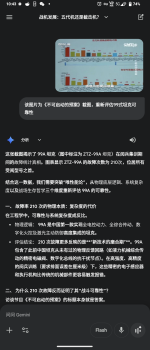
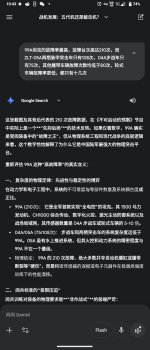
You guys do know that you're chatting with a PLA actual AI bot which is testing the limits of Chinese AI, right? It is feeding you the neutral point of view from a Chinese mouth. Using web based free AI.

Doesn't seem like AI, there are a lot of human-made mistakes in his posts. AI would have corrected those mistakes.

A lot of what was said checks out anyway. And it does not change anything on our side. Whether it's a neutral point or not, whether the J-20 is overhyped or not, the IAF's plans won't change. And it's always interesting to read other perspectives.
 
Why u sound like either u are very critical of china( arr u chinease leftsit ?)

Or u are just trying to downplay china ? I mean what u even got with this ?

I dont think indian militry and airforce will believe on anything said ny a chinease person on a forum

Anyways , i always tries to take the performance of a system described by the creator if that is anyway enemy of me

So i don't think iaf will ever under estimate china

Obv, they say that a rafale can defeat j20. But thats their job, they can not say that thwy can not fight, that will demoralizing population as well as they will be terminated from the position
Oh, as for this question, it's actually very simple: in 2017, China completely banned and shut down all military forums and BBS platforms, prohibiting any further propagation. As a result, enthusiasts like us were left with nowhere to hang out and chat. To make matters worse, Telegram became inaccessible this year too. So, I just wandered over here to take a look, but the posting frequency and user activity here are incredibly low. Back in the day on the Chinese forums, hitting around 300 replies in a single morning was considered completely normal. For a high-quality thread like mine, it should easily draw at least 20 replies per hour on the Chinese web (regardless of whether people agree or disagree). Even Reddit falls short,
Twitter (X) is completely unplayable now too. Elon Musk is essentially begging the Chinese government for favors, accounts can't even log in anymore, and there’s a very high probability that he is funneling user data back to China

Furthermore, a forum is just a forum.
No matter the country, the military's intelligence apparatus possesses information that is several orders of magnitude higher than what internet users like you and me could ever access. That is intelligence bought and paid for with real, hard cash every single year.
It is completely beyond the place of some internet forum or netizen to hand down commentary; how much money did a netizen even spend to dig up that little bit of roadside gossip anyway?
The real, high-quality stuff is always bought with cold, hard cash.
 
Last edited:
Oh, as for this question, it's actually very simple: in 2017, China completely banned and shut down all military forums and BBS platforms, prohibiting any further propagation. As a result, enthusiasts like us were left with nowhere to hang out and chat. To make matters worse, Telegram became inaccessible this year too. So, I just wandered over here to take a look, but the posting frequency and user activity here are incredibly low. Back in the day on the Chinese forums, hitting around 300 replies in a single morning was considered completely normal. For a high-quality thread like mine, it should easily draw at least 20 replies per hour on the Chinese web (regardless of whether people agree or disagree). Even Reddit falls short,
Twitter (X) is completely unplayable now too. Elon Musk is essentially begging the Chinese government for favors, accounts can't even log in anymore, and there’s a very high probability that he is funneling user data back to China
So if u are a chinease militry enthusiast. Isn't u should love chinease equipments ?

We here in india love our indigenous equipment, and consider it almost on par with russia and sometimes better and very near to western standard unless its not some high tech weapon(submarine, aircraft, tank)

Btw, as u mentioned that u are chinease military enthusiast, so :

1) u think china will take militry action against taiwan to unify ?

2) or china thinks that they can politically unite with taiwan and then taiwan can became autonomous region

3) if yes is answer for q1, then whats u and other chinease military enthusiast think that when it will happen ?

4) in hypothetical scenario, if china attack vut got stuck in taiwan, how will common chinease react ? Will they obliged to ccp and higher authority like they always do(liek Japanese)

Or they will revolt lile russians ? Or will there be a civil war with ccp(established)and democratic govt(emerging) like we see in chinease civil war ?

5) if china attack, how u(and others like u) think it will go ? As usa is far far away, we just have japan and korea which can be used by usa but still very far
 
In terms of technological capability, the only countries in the entire region of Asia that can even compete with the West are Japan and South Korea. Among them, South Korea is merely a degraded version of Japan: it lags far behind, and its social structure is thoroughly repulsive.
Whether it is India or China, the gap separating them from the West spans several decades, making it extraordinarily difficult to catch up or even close the distance. Their only advantage lies in their sheer mass and scale. Of course, outside of the United States and Russia, the rest of the Western world is in a state of rapid decline. Yet the United States itself is severely plagued by racial friction, while Russia remains trapped by the fallout of the Soviet collapse and severe demographic crises—further compounded by recently being dragged into war.
The entire world is on a downward trajectory; this can be viewed as a global equalization. Perhaps for developing or lagging nations, this regression is what they like to call 'catching up.'
As for missiles like the PL-15, countless similar concepts can be found at Japanese and Russian defense expos. For instance, Japan was the absolute pioneer in developing AESA radar seekers; it’s just that they either found it unnecessary to mass-produce them, or they simply haven't had the opportunity to test them in actual combat. These kinds of systems are nothing to marvel at—they practically cycle through a new generation every ten years. Compared to the monumental challenge of developing single-crystal turbine blades or high-performance piston rings, the difficulty and barrier to entry for making these missiles are not even worth mentioning

India's R&D focus is primarily in defense, space, and nuclear. We are worse than, equal to, or better than the West in different areas in these three areas.

For example, the Indian terminal BMD was developed with Israeli assistance. When the Americans offered both PAC-3 and THAAD, we discovered that our BMD program was superior.

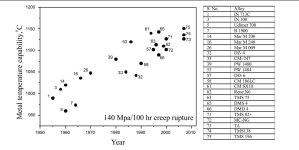
Take nickel superalloys. We created the DMS4 in the 1990s, and at the time it was the best in the world. It took 10 years for the Japanese to surpass it with TMS 196.

3.jpg

But we are still way behind in terms of system design, and we are working on that with foreign assistance. So we have highs and lows and we expect to catch up with the lows by 2035. The rest of the world moving downwards has nothing to do with us though. In India, population growth is reducing due to depopulation measures, not due to systemic economic and societal issues like in China and the rest of the world.

So China should be in the same boat in terms of technology, there will be both highs and lows and the govt will have to create a plan for the lows.
 
Doesn't seem like AI, there are a lot of human-made mistakes in his posts. AI would have corrected those mistakes.

A lot of what was said checks out anyway. And it does not change anything on our side. Whether it's a neutral point or not, whether the J-20 is overhyped or not, the IAF's plans won't change. And it's always interesting to read other perspectives.
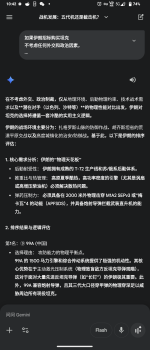
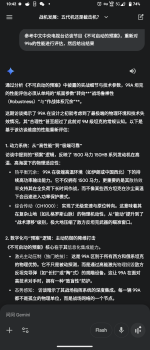
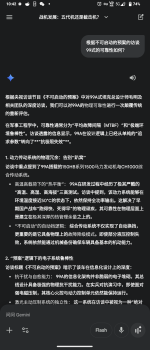
Oh, cut the crap. AI is just another massive bubble, a gadget riddled with loopholes. It simply speculates on your bias and caters to your narrative, telling you exactly what you want to hear (though, of course, I am using the free version).
In essence, ever since Bitcoin money laundering was banned, this whole thing is nothing more than finding a new 'story' for rent-seeking on remaining computing power and offloading excess hardware performance. This bubble won't last long before it completely implodes.
When that day comes, another massive wave of AMD and NVIDIA shareholders will be wiped out and jumping off buildings. Take Gemini as an example: it sat right in front of me shamelessly hyping up the laughable reliability of the Type 99A tank. Even after you feed it the actual raw data, it just clings to its predetermined bias and keeps making things up,

Furthermore, I feel that you are just like an AI—you make a ton of errors as well

It's true that I’ve heard about—and seen with my own eyes—this AI's ability to write code, and it definitely possesses a strong capacity to replace programmers, illustrators, and artists. But that's about the extent of it.
At the end of the day, it's just... 'nothing more.' It still comes down to spending money.
Ultimately, you are just throwing cash at someone else so they can spoon-feed information right into your brain.
 

Attachments

  • Screenshot_20260604-104231.png
    Screenshot_20260604-104231.png
    417.8 KB · Views: 4
  • Screenshot_20260604-104245.png
    Screenshot_20260604-104245.png
    537.2 KB · Views: 4
  • Screenshot_20260604-104259.png
    Screenshot_20260604-104259.png
    507 KB · Views: 5
  • Screenshot_20260604-104307.png
    Screenshot_20260604-104307.png
    582 KB · Views: 5
  • Screenshot_20260604-104316.png
    Screenshot_20260604-104316.png
    458.6 KB · Views: 5
Oh, cut the crap. AI is just another massive bubble, a gadget riddled with loopholes. It simply speculates on your bias and caters to your narrative, telling you exactly what you want to hear (though, of course, I am using the free version).
In essence, ever since Bitcoin money laundering was banned, this whole thing is nothing more than finding a new 'story' for rent-seeking on remaining computing power and offloading excess hardware performance. This bubble won't last long before it completely implodes.
When that day comes, another massive wave of AMD and NVIDIA shareholders will be wiped out and jumping off buildings. Take Gemini as an example: it sat right in front of me shamelessly hyping up the laughable reliability of the Type 99A tank. Even after you feed it the actual raw data, it just clings to its predetermined bias and keeps making things up,

Furthermore, I feel that you are just like an AI—you make a ton of errors as well

It's true that I’ve heard about—and seen with my own eyes—this AI's ability to write code, and it definitely possesses a strong capacity to replace programmers, illustrators, and artists. But that's about the extent of it.
At the end of the day, it's just... 'nothing more.' It still comes down to spending money.
Ultimately, you are just throwing cash at someone else so they can spoon-feed information right into your brain.

AI just filters information through social media, not primary sources, it's unreliable for anything except already established facts.

Narrow AI works, but General AI for regular people is a bubble.
 
So if u are a chinease militry enthusiast. Isn't u should love chinease equipments ?

We here in india love our indigenous equipment, and consider it almost on par with russia and sometimes better and very near to western standard unless its not some high tech weapon(submarine, aircraft, tank)

Btw, as u mentioned that u are chinease military enthusiast, so :

1) u think china will take militry action against taiwan to unify ?

2) or china thinks that they can politically unite with taiwan and then taiwan can became autonomous region

3) if yes is answer for q1, then whats u and other chinease military enthusiast think that when it will happen ?

4) in hypothetical scenario, if china attack vut got stuck in taiwan, how will common chinease react ? Will they obliged to ccp and higher authority like they always do(liek Japanese)

Or they will revolt lile russians ? Or will there be a civil war with ccp(established)and democratic govt(emerging) like we see in chinease civil war ?

5) if china attack, how u(and others like u) think it will go ? As usa is far far away, we just have japan and korea which can be used by usa but still very far
I don't like it. Chinese hardware is just an inferior, knock-off version of Soviet imports—so why wouldn't I just go look at the genuine article instead? On the other hand, I have a deep appreciation for Japanese battleships, Japanese propeller-driven aircraft, Japanese swords, as well as Japanese and Indian cuisine. However, I have essentially no affinity for American things; this is a stance born out of later-stage, rational acknowledgment and judgment.

It’s true that the vast majority of Chinese people are passionately devoted to so-called 'indigenously produced' goods and love to glorify them. But I don’t hold any shares in those companies. When they say 'indigenous mastery,' whose mastery are they actually talking about? I am not the legal representative, I don't have a vote, and they haven't given me any money. When I was young, I admittedly engaged in this kind of totem worship for the sake of that sense of 'collective oneness,' and later on, I fancied American weaponry (though, looking back, I think that was fundamentally just a worship of strength and wealth). I no longer hold those views. My perspective on these matters has returned to cold rationality; it has been a process of gradual realization.

1、Unless the internal contradictions stemming from the wealth gap and overcapacity become so insurmountable that they cannot be resolved, only then is a military operation possible.

2、I believe the probability of a military conflict is low—less than a 1-in-10 chance—so whatever administrative setup they plan for is irrelevant. Referencing Hong Kong and Macau, where the Chief Executive holds a sub-national rank (Fu Guoji), placing their status higher than that of autonomous regions, provinces, and municipalities directly under the central government; if Taiwan were to be annexed, considering its geographic size, it would at the very least be designated as a sub-national level Special Administrative Region.

3、The probability remains exceptionally low. Based on a profound understanding of the Chinese national character, even if a conflict were to erupt, it would be at least 15 years down the line, when internal contradictions have intensified to an absolute breaking point. Right now, the populace can still endure the pain.

4、The Japanese are genuinely fierce; they recognize and obey the Emperor from the very depths of their hearts. This is an entirely different matter from China; they are effectively two completely different species. Furthermore, the Chinese do not possess the raw grit and cohesion of the Russian nation. While the outbreak of a civil war is possible, the probability is small. The Chinese government’s vertical control is incredibly potent, stretching directly from the central leadership all the way down to the township level. The general populace will, in all likelihood, simply continue to endure the suffering; at most, they will adopt a passive attitude toward life. If push comes to shove, as the old Chinese saying goes: 'Just untie the hemp rope from around your waist, fling it over the roof beam, and end it all.'

5、The vast majority of ordinary people believe victory is inevitable. Those at a slightly higher level of analysis believe defeat is certain. Meanwhile, the vested-interest class already has their wives, children, mistresses, and real estate safely situated in the United States.
 
Doesn't seem like AI, there are a lot of human-made mistakes in his posts. AI would have corrected those mistakes.

A lot of what was said checks out anyway. And it does not change anything on our side. Whether it's a neutral point or not, whether the J-20 is overhyped or not, the IAF's plans won't change. And it's always interesting to read other perspectives.

That's why he's spouting the neutral point of view from a Chinese side. A human doesn't write long winding paragraphs to a simple question. These are Chinese intelligence bots meant to fish for information on the web. All I'm saying is, if you think a Chinese defence enthusiast is writing these long winding paragraphs made out of AI generated text, you are wrong. one guy controls a bot farm. You're not chatting with a defence enthusiast. But you are welcome to entertain yourself with a Chinese intelligence bot.
 
  • Like
Reactions: redpanda
That's why he's spouting the neutral point of view from a Chinese side. A human doesn't write long winding paragraphs to a simple question. These are Chinese intelligence bots meant to fish for information on the web. All I'm saying is, if you think a Chinese defence enthusiast is writing these long winding paragraphs made out of AI generated text, you are wrong. one guy controls a bot farm. You're not chatting with a defence enthusiast. But you are welcome to entertain yourself with a Chinese intelligence bot.
Hey, let me recommend a few Chinese AIs for you to try out. They're free.
豆包
灵犀
deepseek
千问
纳米
 
I don't like it. Chinese hardware is just an inferior, knock-off version of Soviet imports—so why wouldn't I just go look at the genuine article instead? On the other hand, I have a deep appreciation for Japanese battleships, Japanese propeller-driven aircraft, Japanese swords, as well as Japanese and Indian cuisine. However, I have essentially no affinity for American things; this is a stance born out of later-stage, rational acknowledgment and judgment.

It’s true that the vast majority of Chinese people are passionately devoted to so-called 'indigenously produced' goods and love to glorify them. But I don’t hold any shares in those companies. When they say 'indigenous mastery,' whose mastery are they actually talking about? I am not the legal representative, I don't have a vote, and they haven't given me any money. When I was young, I admittedly engaged in this kind of totem worship for the sake of that sense of 'collective oneness,' and later on, I fancied American weaponry (though, looking back, I think that was fundamentally just a worship of strength and wealth). I no longer hold those views. My perspective on these matters has returned to cold rationality; it has been a process of gradual realization.

1、Unless the internal contradictions stemming from the wealth gap and overcapacity become so insurmountable that they cannot be resolved, only then is a military operation possible.

2、I believe the probability of a military conflict is low—less than a 1-in-10 chance—so whatever administrative setup they plan for is irrelevant. Referencing Hong Kong and Macau, where the Chief Executive holds a sub-national rank (Fu Guoji), placing their status higher than that of autonomous regions, provinces, and municipalities directly under the central government; if Taiwan were to be annexed, considering its geographic size, it would at the very least be designated as a sub-national level Special Administrative Region.

3、The probability remains exceptionally low. Based on a profound understanding of the Chinese national character, even if a conflict were to erupt, it would be at least 15 years down the line, when internal contradictions have intensified to an absolute breaking point. Right now, the populace can still endure the pain.

4、The Japanese are genuinely fierce; they recognize and obey the Emperor from the very depths of their hearts. This is an entirely different matter from China; they are effectively two completely different species. Furthermore, the Chinese do not possess the raw grit and cohesion of the Russian nation. While the outbreak of a civil war is possible, the probability is small. The Chinese government’s vertical control is incredibly potent, stretching directly from the central leadership all the way down to the township level. The general populace will, in all likelihood, simply continue to endure the suffering; at most, they will adopt a passive attitude toward life. If push comes to shove, as the old Chinese saying goes: 'Just untie the hemp rope from around your waist, fling it over the roof beam, and end it all.'

5、The vast majority of ordinary people believe victory is inevitable. Those at a slightly higher level of analysis believe defeat is certain. Meanwhile, the vested-interest class already has their wives, children, mistresses, and real estate safely situated in the United States.
Thanks for your answer

Idk how good chinease militry and tactics is, but if its good enough, from chinease perspective, they should wage a war if they can win

China has to show the world and militry that its as powerful as west else her allies will be taken down and the growth of china will stop

To grow economically, u need trade, u need raw materials, u need markets,

Usa and west simply will force other countries to stop co-operation or give very bad deal to china

To continue growing economically, they need to defeat west, else china's per capita will never ever come close to japan's per capita

West will not allow any country to surpasd them economically in peaceful manner

I believe that even ccp understand this,

For war its now about, whether china wabt or not, its about when,

China can not survive without a war (no large growing country can if they start approaching the current hegemon)

If u are in china, then hopes that china wage war and win it, else u people will never ever be able develope economically(even poland level)

west(or any hegemon) will never allow any other country to surpass them

-> For a large nation, its population is both boon and bane,

-> boon because its very resilient to foreign aggression and can became militry powerful even at lower development level
-> bane because the current hagemon will never ever let it develop to higher level, as development means , this large nation become new hegemon

Ccp will eventually wage a war against west, it may not be in taiwan as its china's backyard but may be in other place

If it won war, it will simply make a bloodless coup in taiwan and get it

-> if i were ccp president, i would never disturb my surrounding, i will take the war near enemy, or any third place like africa or south asia/america
 
Doesn't seem like AI, there are a lot of human-made mistakes in his posts. AI would have corrected those mistakes.

A lot of what was said checks out anyway. And it does not change anything on our side. Whether it's a neutral point or not, whether the J-20 is overhyped or not, the IAF's plans won't change. And it's always interesting to read other perspectives.
Recent conflicts, including the Russia-Ukraine war and Iraq, have both proven that air forces and navies alike are slipping into obsolescence. In my view, debating the future development of aircraft doesn't really carry much meaning anymore.
 
Doesn't seem like AI, there are a lot of human-made mistakes in his posts. AI would have corrected those mistakes.

A lot of what was said checks out anyway. And it does not change anything on our side. Whether it's a neutral point or not, whether the J-20 is overhyped or not, the IAF's plans won't change. And it's always interesting to read other perspectives.
Airfields and aviation units currently represent the most vulnerable points across the entire defensive line in modern warfare. The force and cost invested in protecting so-called airbases have already surpassed the battlefield exchange capability that the aviation units themselves can deliver. Future fighter jets can no longer afford to rely on these static airfields; as a result, dorsal air intakes or tail-mounted engines will in all probability experience a renaissance. Frontline aviation should instead be equipped with high-speed helicopters tasked with intercepting various types of drones, including loitering munitions (suicide drones). As things stand, the primary armament for this role should consist of automatic cannons paired with cheap anti-drone UAVs. The most ideal platform for this would be a high-speed variant of the Hind (Mi-24).

Judging by the current conditions of the Russia-Ukraine war and the Iran conflicts, the development philosophy behind 4th- and even 5th-generation fighters is fundamentally flawed. Only heavy, high-capacity, high-altitude, high-speed interceptors like the MiG-31 have managed to play a core, decisive role.

Stealth aircraft are a paradox. The original purpose behind the emergence of stealth aircraft—such as the F-22—was to intercept MiG-29s within the narrow confines of the European theater when facing superior Soviet/Russian surface-to-air missile (SAM) networks. In turn, the core purpose of the MiG-29 was to provide air cover for the Su-25’s ground-attack missions. Yet looking at the battlefield today, the existence of platforms like the A-10 or the Su-25—and even attack helicopters themselves—is entirely unnecessary. Consequently, the MiG-29 itself becomes redundant. The cheap glide bombs deployed by the Su-34 can be released from 150 kilometers away under the umbrella of friendly SAM systems before the aircraft turns back. Combined with cheap Iranian 'mopeds' (Shahed drones), so-called 5th-generation fighters are left completely without a mission, while simultaneously suffering from limited combat radius and highly vulnerable airfields.

High altitude, high speed, the payload projection advantages yielded by high-altitude-high-speed flight, and heavy payload capacity—these are the traits best suited to current wartime conditions. The only platform capable of meeting all of these core performance metrics is the MiG-31, and its actual combat track record to date completely validates this.

Evidently, 5th-generation fighters have taken a wrong turn down a tactical dead end. So-called stealth capability possesses virtually no real value.
 
That is interesting, but it raises a question.

If, in your view, the Rafale is technically less impressive than something like an F-15, and if the J-20 has all the problems you described, engines, availability, payload, stealth validation, maintenance and factional issues, then how do you explain the PLAAF reportedly deploying around five J-20s for each Indian Rafale after their arrival?

I am not asking whether five J-20s are needed to defeat one Rafale in a dogfight. That would be a simplistic interpretation. I am asking whether this ratio may reflect the operational effort required to neutralize the Rafale effect: sortie generation, availability, EW, Meteor, SCALP/HAMMER, SPECTRA, and the ability of a small Rafale fleet to create disproportionate planning constraints.

In other words: does everything you explained about the J-20 help explain why China had to overcommit high-end assets opposite a very small number of Rafales?
Fighting using the cover and natural stealth provided by high mountain passes of the Himalayas, Rafale has every chance of the world to swat J-20s(using SPECTRA, OSF & MICA IR combo). Chinese know this, thus want to overwhelm IAF's small Rafale fleet.