

India-Russia Relations
- Thread starter Butter Chicken
- Start date
-
- Tags
- india india russia russia
You are using an out of date browser. It may not display this or other websites correctly.
You should upgrade or use an alternative browser.
You should upgrade or use an alternative browser.


Hopefully Su-57 deal is signed on sidelines of BRICS summit. Though it looks highly optimistic as of now(the timeline not the deal).

What does it mean for India-Russia relations, when Russia begins to actively court Pakistan?
Example 1: Promoting Pakistan in GCC

Example 2: Promoting Pakistan as Iran's ally and CPEC trade route

I've already posted previously that Russia has been promoting JF-17 as well.
Wake up and smell the coffee.
Example 1: Promoting Pakistan in GCC
Example 2: Promoting Pakistan as Iran's ally and CPEC trade route
I've already posted previously that Russia has been promoting JF-17 as well.
Wake up and smell the coffee.


Russia to continue to meet half of India’s crude oil imports in July, August
July imports will surpass 5 million barrels per day (mb/d) with Russia accounting for around 2.6-2.7 mb/d
FILE PHOTO: A pump jack operates near a crude oil reserve in the Permian Basin oil field near Midland, Texas, U.S. February 18, 2025. REUTERS/Eli Hartman/File Photo | Photo Credit: Eli Hartman.
India’s July 2026 crude oil imports from Russia are expected to at least maintain June’s rally when barrels from Moscow accounted for half of New Delhi’s monthly shipments as domestic refiners topped up supplies amidst see-sawing geopolitical uncertainty in West Asia.
Refiners and traders said that July crude oil imports are likely to follow June’s cue as refiners now leverage Russian barrels to hedge against sudden supply disruptions. Besides, cargoes for July mostly would have been booked in the second half of March and April.
“July imports will surpass 5 million barrels per day (mb/d) with Russia accounting for around 2.6-2.7 mb/d. August can also follow the same trajectory as first half supplies are largely done. West Asian producers’ share is rising with suppliers using alternate routes such as Sohar port in Oman and the UAE’s Fujairah and Khor Fakkan ports. However, they are yet to pick up steam,” explained a senior official with a refiner.
Kpler emphasizes that Russian crude has become India’s strongest energy security hedge, particularly since the SoH disruptions.
Russian barrels have enabled Indian refiners to maintain high refinery run rates, ensure uninterrupted fuel supplies, and avoid the disruptions experienced by several other Asian refining systems (excluding China), added the real time data and analytics provider.
This growing importance is reflected in import trends, emphasized Sumit Ritolia, Kpler’s Kpler’s Lead Research Analyst for Refining & Modeling.
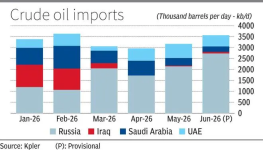
“Russian crude imports rose to around 2.6 mbd in June, accounting for more than 50 per cent of India’s crude imports and have been steadily increasing since March. July arrivals are also tracking at healthy levels and could match or even exceed June’s volumes,” he told businessline
Key supplier
Currently, Moscow accounts for the majority of India’s medium sour grade supply, which dipped at the beginning of 2026 (calendar year) with almost 50 per cent of the crude oil coming from West Asia via the Strait of Hormuz (SoH).
However, West Asian share dwindled to roughly 30 per cent from March 2026 onwards as the February 28 attack on Iran by the US led to the latter closing the SoH leading to the largest disruption in energy supplies in history.
However, August may also witness some displacement of Russian barrels as Saudi Aramco cut August prices of Arab Light by $11 a barrel from last month, which is the highest in over two decades. Besides, Saudi Arabia and the UAE have already increased supply from alternate routes.
For instance, Saudi Arabia is supplying crude oil from the Red Sea port of Yanbu, which is connected through the East-West pipeline that bypasses the SoH. However, a refiner said that this route is logistically expensive due to longer travel time to India, which could shift some focus back to Russian crude oil that is available in plenty due to drone attacks on refineries by Ukraine.
“There are currently few alternative suppliers capable of replacing Russian crude at the same scale, reliability, and economics. Russian crude remains the most practical and competitive source of supply for Indian refiners, and under current market conditions, it is difficult to see those volumes disappearing from the system in the near term,” Ritolia opined.
US sanctions
On the proposed Sanctioning Russia Act of 2026 Bill in the US, Ritolia said while the tariff proposal raises geopolitical uncertainty, its practical implementation and ultimate impact on crude flows are far less straightforward than the headlines suggest. Any policy that materially disrupts Russian exports would risk tightening an already constrained global oil market, with consequences extending well beyond India.
It is also worth noting that the June to September period in India is marked by rains leading to lower mobility and industrial and mining operations, which brings down consumption of petrol, diesel, jet fuel, etc. Refiners might use the period to top up inventory also preparing for the October-December festival and marriage season when travel, industrial and agricultural activity also picks up pace.
Russia to continue to meet half of India’s crude oil imports in July, August
July imports will surpass 5 million barrels per day (mb/d) with Russia accounting for around 2.6-2.7 mb/d
FILE PHOTO: A pump jack operates near a crude oil reserve in the Permian Basin oil field near Midland, Texas, U.S. February 18, 2025. REUTERS/Eli Hartman/File Photo | Photo Credit: Eli Hartman.
India’s July 2026 crude oil imports from Russia are expected to at least maintain June’s rally when barrels from Moscow accounted for half of New Delhi’s monthly shipments as domestic refiners topped up supplies amidst see-sawing geopolitical uncertainty in West Asia.
Refiners and traders said that July crude oil imports are likely to follow June’s cue as refiners now leverage Russian barrels to hedge against sudden supply disruptions. Besides, cargoes for July mostly would have been booked in the second half of March and April.
“July imports will surpass 5 million barrels per day (mb/d) with Russia accounting for around 2.6-2.7 mb/d. August can also follow the same trajectory as first half supplies are largely done. West Asian producers’ share is rising with suppliers using alternate routes such as Sohar port in Oman and the UAE’s Fujairah and Khor Fakkan ports. However, they are yet to pick up steam,” explained a senior official with a refiner.
Kpler emphasizes that Russian crude has become India’s strongest energy security hedge, particularly since the SoH disruptions.
Russian barrels have enabled Indian refiners to maintain high refinery run rates, ensure uninterrupted fuel supplies, and avoid the disruptions experienced by several other Asian refining systems (excluding China), added the real time data and analytics provider.
This growing importance is reflected in import trends, emphasized Sumit Ritolia, Kpler’s Kpler’s Lead Research Analyst for Refining & Modeling.
“Russian crude imports rose to around 2.6 mbd in June, accounting for more than 50 per cent of India’s crude imports and have been steadily increasing since March. July arrivals are also tracking at healthy levels and could match or even exceed June’s volumes,” he told businessline
Key supplier
Currently, Moscow accounts for the majority of India’s medium sour grade supply, which dipped at the beginning of 2026 (calendar year) with almost 50 per cent of the crude oil coming from West Asia via the Strait of Hormuz (SoH).
However, West Asian share dwindled to roughly 30 per cent from March 2026 onwards as the February 28 attack on Iran by the US led to the latter closing the SoH leading to the largest disruption in energy supplies in history.
However, August may also witness some displacement of Russian barrels as Saudi Aramco cut August prices of Arab Light by $11 a barrel from last month, which is the highest in over two decades. Besides, Saudi Arabia and the UAE have already increased supply from alternate routes.
For instance, Saudi Arabia is supplying crude oil from the Red Sea port of Yanbu, which is connected through the East-West pipeline that bypasses the SoH. However, a refiner said that this route is logistically expensive due to longer travel time to India, which could shift some focus back to Russian crude oil that is available in plenty due to drone attacks on refineries by Ukraine.
“There are currently few alternative suppliers capable of replacing Russian crude at the same scale, reliability, and economics. Russian crude remains the most practical and competitive source of supply for Indian refiners, and under current market conditions, it is difficult to see those volumes disappearing from the system in the near term,” Ritolia opined.
US sanctions
On the proposed Sanctioning Russia Act of 2026 Bill in the US, Ritolia said while the tariff proposal raises geopolitical uncertainty, its practical implementation and ultimate impact on crude flows are far less straightforward than the headlines suggest. Any policy that materially disrupts Russian exports would risk tightening an already constrained global oil market, with consequences extending well beyond India.
It is also worth noting that the June to September period in India is marked by rains leading to lower mobility and industrial and mining operations, which brings down consumption of petrol, diesel, jet fuel, etc. Refiners might use the period to top up inventory also preparing for the October-December festival and marriage season when travel, industrial and agricultural activity also picks up pace.
Russia to continue to meet half of India’s crude oil imports in July, August
India, Russia-led bloc agree on key FTA chapter; SME and IPR talks advance
India and the Russia-led Eurasian Economic Union have advanced FTA negotiations, closing the competition chapter and making progress on SMEs and IPR to boost bilateral trade.
By Abhimanyu Sharma
July 20, 2026, 1:14:15 PM IST (Published)
India's negotiations for a proposed Free Trade Agreement (FTA) with the Russia-led Eurasian Economic Union (EAEU) are underway, with the aim of boosting bilateral trade and economic cooperation.
Sources told CNBC-TV18 that the chapter on competition has largely been agreed and closed, while substantial portions of the chapters on small and medium enterprises (SMEs) and intellectual property rights (IPR) have also been agreed.
The EAEU comprises Russia, Kazakhstan, Armenia, Belarus and Kyrgyzstan, with Cuba, Moldova and Uzbekistan holding observer status. India and the Russia-led bloc formally launched FTA negotiations on November 26, 2025, after signing the Terms of Reference (ToR) in Moscow on August 20, 2025. An Indian delegation visited Russia in June 2026 for the latest round of talks.
In April 2026, government sources told CNBC-TV18 that India had urged Russia to reduce non-tariff barriers on exports of electronics, electrical products and automobiles as part of its strategy to expand shipments to the world's largest country by land area.
India is seeking to increase exports of pharmaceuticals, chemicals, engineering goods, machinery, automotive products, agricultural produce and marine products as it looks to narrow its $59 billion trade deficit with Russia by addressing non-tariff barriers across sectors. Efforts are also underway to strengthen the rupee-rouble trade.
Crude oil accounts for around 80% of Russia's exports to India. India's goods exports to Russia stood at $4.88 billion in FY25, while both countries have set a target of achieving $100 billion in bilateral trade by 2030.
In December 2025, government sources indicated that India could explore a separate services agreement with Russia, as the EAEU is a customs union and its trade agreements do not cover services.
Government sources have also said India is not keen to include gold and precious metals in the proposed agreement with the EAEU. They indicated that the initial rounds of negotiations would focus on sensitivities on both sides, the frequency of discussions and the products where trade could be expanded.
While India has flagged more than 65 non-tariff barriers affecting its marine exports, sources identified four key hurdles for pharmaceutical exports to the bloc: registration procedures, clinical trials, market access and price registration.
Sources also said India is seeking to eliminate regulatory overlaps faced by exporters due to differing Russian, EAEU and European regulations. Efforts are underway to provide greater clarity on export rules, including labelling requirements in Russian on and within product packaging.
The FTA negotiations are expected to cover customs administration, e-commerce, IPR, sanitary and phytosanitary measures, tariffs and technical regulations.
On Sunday, officials in India's Ministry of External Affairs (MEA) said the central banks of India and Russia are in talks on a local currency settlement mechanism. They also said the text of a labour mobility agreement between the two countries has been finalised, with both sides completing their respective internal processes before signing.
(Edited by: Vivek Dubey)
India, Russia-led bloc agree on key FTA chapter; SME and IPR talks advance - CNBC TV18
India and the Russia-led Eurasian Economic Union have advanced FTA negotiations, closing the competition chapter and making progress on SMEs and IPR to boost bilateral trade.
By Abhimanyu Sharma
July 20, 2026, 1:14:15 PM IST (Published)
India's negotiations for a proposed Free Trade Agreement (FTA) with the Russia-led Eurasian Economic Union (EAEU) are underway, with the aim of boosting bilateral trade and economic cooperation.
Sources told CNBC-TV18 that the chapter on competition has largely been agreed and closed, while substantial portions of the chapters on small and medium enterprises (SMEs) and intellectual property rights (IPR) have also been agreed.
The EAEU comprises Russia, Kazakhstan, Armenia, Belarus and Kyrgyzstan, with Cuba, Moldova and Uzbekistan holding observer status. India and the Russia-led bloc formally launched FTA negotiations on November 26, 2025, after signing the Terms of Reference (ToR) in Moscow on August 20, 2025. An Indian delegation visited Russia in June 2026 for the latest round of talks.
In April 2026, government sources told CNBC-TV18 that India had urged Russia to reduce non-tariff barriers on exports of electronics, electrical products and automobiles as part of its strategy to expand shipments to the world's largest country by land area.
India is seeking to increase exports of pharmaceuticals, chemicals, engineering goods, machinery, automotive products, agricultural produce and marine products as it looks to narrow its $59 billion trade deficit with Russia by addressing non-tariff barriers across sectors. Efforts are also underway to strengthen the rupee-rouble trade.
Crude oil accounts for around 80% of Russia's exports to India. India's goods exports to Russia stood at $4.88 billion in FY25, while both countries have set a target of achieving $100 billion in bilateral trade by 2030.
In December 2025, government sources indicated that India could explore a separate services agreement with Russia, as the EAEU is a customs union and its trade agreements do not cover services.
Government sources have also said India is not keen to include gold and precious metals in the proposed agreement with the EAEU. They indicated that the initial rounds of negotiations would focus on sensitivities on both sides, the frequency of discussions and the products where trade could be expanded.
While India has flagged more than 65 non-tariff barriers affecting its marine exports, sources identified four key hurdles for pharmaceutical exports to the bloc: registration procedures, clinical trials, market access and price registration.
Sources also said India is seeking to eliminate regulatory overlaps faced by exporters due to differing Russian, EAEU and European regulations. Efforts are underway to provide greater clarity on export rules, including labelling requirements in Russian on and within product packaging.
The FTA negotiations are expected to cover customs administration, e-commerce, IPR, sanitary and phytosanitary measures, tariffs and technical regulations.
On Sunday, officials in India's Ministry of External Affairs (MEA) said the central banks of India and Russia are in talks on a local currency settlement mechanism. They also said the text of a labour mobility agreement between the two countries has been finalised, with both sides completing their respective internal processes before signing.
(Edited by: Vivek Dubey)
India, Russia-led bloc agree on key FTA chapter; SME and IPR talks advance - CNBC TV18

As Russian oil purchases soared, India paid $15 billion of imports in rupees over three months
Paying for imports in rupees can reduce the outflow of foreign currency and help stabilise the exchange rate which has been under intense pressure over the last year.
Written by: Siddharth Upasani
New Delhi
Jul 24, 2026 10:54 AM IST
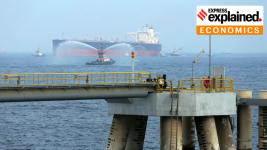
Around 40% of India’s oil needs are met through flows from the Strait of Hormuz. AP file
Even as the value of the rupee tumbled to multiple all-time lows following the onset of the war in West Asia, India used its domestic currency to pay for nearly $15 billion worth of imports in March, April and May. The payment in rupees was likely for oil bought from Russia, whose share in India’s oil imports surged after the US and Israel’s attack on Iran in late February led to the closure of the Strait of Hormuz.
According to data released by the Reserve Bank of India (RBI) this week, imports worth Rs 1.38 lakh crore were paid for in rupees during the three months in question, calculations by The Indian Express showed.
This accounted for 7.1% of India’s merchandise imports in the three months and is approximately equivalent to $14.6 billion at the average exchange rate of 94-per-dollar that prevailed during March-May.
In the previous three months — December 2025 to February 2026 — imports worth Rs 42,506 crore were settled in rupees, equal to 2.4% of total inbound shipments.
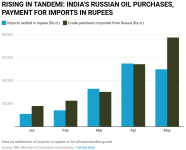
“The rupee’s depreciation will only explain a small part of this increased rupee settlement of imports,” said Madan Sabnavis, Chief Economist at Bank of Baroda, instead pointing to the sharp rise in India’s purchases of Russian oil starting March.
The imports paid for in rupees during March-May is far more than before and exceeds the total for 2023-24 (Rs 99,680 crore) and 2024-25 (Rs 1.13 lakh crore). In 2025-26, the rupee was used to pay for imports worth Rs 1.72 lakh crore.
Supplies from Russia
First announced on March 12, the US sanctions waiver on buying sanctioned Russian crude oil led to a big jump in purchases by India in the face of soaring global energy prices, with around 40% of India’s oil needs met through flows from the Strait of Hormuz.
After the US’s first waiver expired on April 11, another was issued on April 17. Once that expired on May 16, a final waiver was announced on May 17, which ended on June 17. There has been no renewal since then.
With the waivers in place, India stepped up its purchases of Russian crude oil to record levels. According to commerce ministry data, India imported Russian crude petroleum to the tune of $17.13 billion in March-May, up 30% year-on-year.
In February, India’s Russian oil imports amounted to $2.49 billion.
Rupee to pay for imports
To be sure, this would not be the first time India has paid for Russian oil in rupees, with the RBI in mid-2022 announcing a framework for the settlement of international trade in rupees.
As a net buyer of goods and services from abroad, India’s import bill is often at the mercy of the rupee’s performance — if it weakens, it would lead to more money being paid by importers for a fixed dollar amount. In 2025-26, India had a trade deficit of $119 billion.
As such, paying for imports in rupees can reduce the outflow of foreign currency and help stabilise the exchange rate which has been under intense pressure over the last year due to foreign capital outflows from domestic financial markets and global geopolitical developments.
Rupees are also being used to pay by other countries for Indian goods and software exports. From Rs 15,195 crore in February, Indian exports that were paid for in rupees more than doubled to Rs 41,373 crore in March, before declining to Rs 10,218 crore in April and Rs 8,289 crore in May. The jump in March may have again been on account of Russia.
“With India paying for Russian oil in rupees, it makes sense for Russia to use those rupees to pay for what products it can from India,” an economist said, requesting not to be named.
Except for March 2026, payment received in rupees by India for its exports constitutes a small portion of total exports: Rs 1.75 lakh crore in 2023-24 (3.56% of total exports), Rs 1.69 lakh crore in 2024-25 (3.21%), and Rs 1.87 lakh crore in 2025-26 (3.22%). In the first two months of 2026-27, it has been a mere Rs 18,507 crore (1.82%).
As Russian oil purchases soared, India paid $15 billion of imports in rupees over three months
Paying for imports in rupees can reduce the outflow of foreign currency and help stabilise the exchange rate which has been under intense pressure over the last year.
Written by: Siddharth Upasani
New Delhi
Jul 24, 2026 10:54 AM IST
Around 40% of India’s oil needs are met through flows from the Strait of Hormuz. AP file
Even as the value of the rupee tumbled to multiple all-time lows following the onset of the war in West Asia, India used its domestic currency to pay for nearly $15 billion worth of imports in March, April and May. The payment in rupees was likely for oil bought from Russia, whose share in India’s oil imports surged after the US and Israel’s attack on Iran in late February led to the closure of the Strait of Hormuz.
According to data released by the Reserve Bank of India (RBI) this week, imports worth Rs 1.38 lakh crore were paid for in rupees during the three months in question, calculations by The Indian Express showed.
This accounted for 7.1% of India’s merchandise imports in the three months and is approximately equivalent to $14.6 billion at the average exchange rate of 94-per-dollar that prevailed during March-May.
In the previous three months — December 2025 to February 2026 — imports worth Rs 42,506 crore were settled in rupees, equal to 2.4% of total inbound shipments.
“The rupee’s depreciation will only explain a small part of this increased rupee settlement of imports,” said Madan Sabnavis, Chief Economist at Bank of Baroda, instead pointing to the sharp rise in India’s purchases of Russian oil starting March.
The imports paid for in rupees during March-May is far more than before and exceeds the total for 2023-24 (Rs 99,680 crore) and 2024-25 (Rs 1.13 lakh crore). In 2025-26, the rupee was used to pay for imports worth Rs 1.72 lakh crore.
Supplies from Russia
First announced on March 12, the US sanctions waiver on buying sanctioned Russian crude oil led to a big jump in purchases by India in the face of soaring global energy prices, with around 40% of India’s oil needs met through flows from the Strait of Hormuz.
After the US’s first waiver expired on April 11, another was issued on April 17. Once that expired on May 16, a final waiver was announced on May 17, which ended on June 17. There has been no renewal since then.
With the waivers in place, India stepped up its purchases of Russian crude oil to record levels. According to commerce ministry data, India imported Russian crude petroleum to the tune of $17.13 billion in March-May, up 30% year-on-year.
In February, India’s Russian oil imports amounted to $2.49 billion.
Rupee to pay for imports
To be sure, this would not be the first time India has paid for Russian oil in rupees, with the RBI in mid-2022 announcing a framework for the settlement of international trade in rupees.
As a net buyer of goods and services from abroad, India’s import bill is often at the mercy of the rupee’s performance — if it weakens, it would lead to more money being paid by importers for a fixed dollar amount. In 2025-26, India had a trade deficit of $119 billion.
As such, paying for imports in rupees can reduce the outflow of foreign currency and help stabilise the exchange rate which has been under intense pressure over the last year due to foreign capital outflows from domestic financial markets and global geopolitical developments.
Rupees are also being used to pay by other countries for Indian goods and software exports. From Rs 15,195 crore in February, Indian exports that were paid for in rupees more than doubled to Rs 41,373 crore in March, before declining to Rs 10,218 crore in April and Rs 8,289 crore in May. The jump in March may have again been on account of Russia.
“With India paying for Russian oil in rupees, it makes sense for Russia to use those rupees to pay for what products it can from India,” an economist said, requesting not to be named.
Except for March 2026, payment received in rupees by India for its exports constitutes a small portion of total exports: Rs 1.75 lakh crore in 2023-24 (3.56% of total exports), Rs 1.69 lakh crore in 2024-25 (3.21%), and Rs 1.87 lakh crore in 2025-26 (3.22%). In the first two months of 2026-27, it has been a mere Rs 18,507 crore (1.82%).
As Russian oil purchases soared, India paid $15 billion of imports in rupees over three months
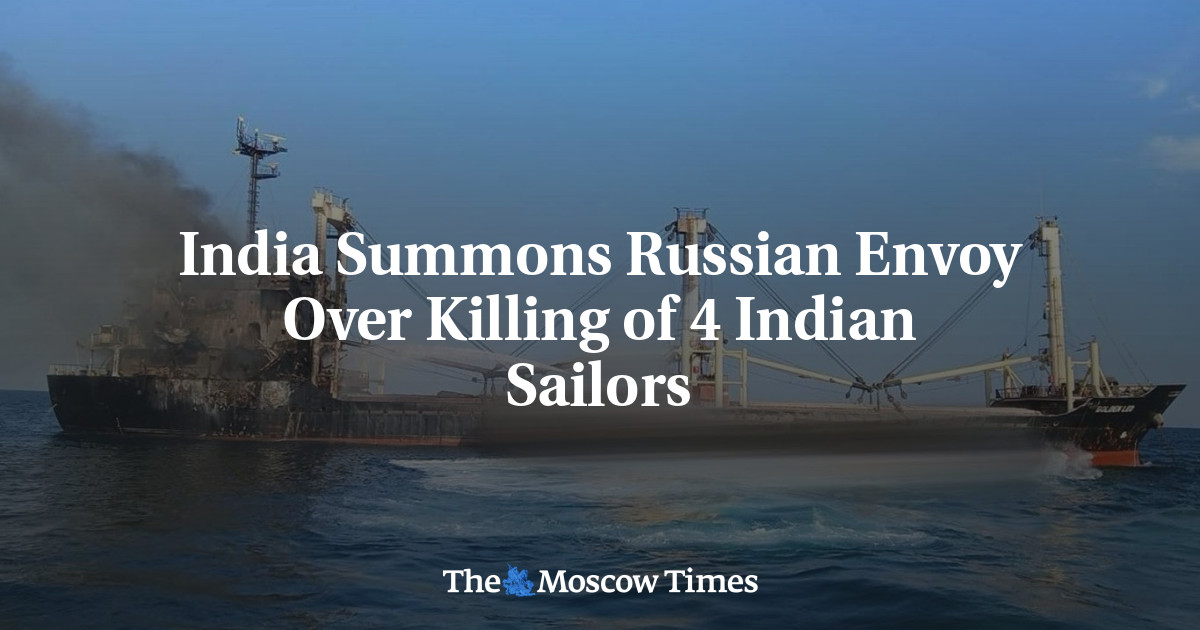
India Summons Russian Envoy Over Killing of 4 Indian Sailors - The Moscow Times
India’s Foreign Ministry said Tuesday that it summoned a senior Russian diplomat to protest an attack on a cargo ship in the Black Sea this weekend that killed four Indian crew members.
India’s Foreign Ministry said Tuesday that it summoned a senior Russian diplomat to protest an attack on a cargo ship in the Black Sea this weekend that killed four Indian crew members.
Ukraine said Russia hit the Golden Leo — a Guinea-Bissau-flagged ship manned by a crew from India and Syria — with three cruise missiles on Sunday, killing 10 people including four Indian citizens.
Vladimir Ladanov, Russian chargé d’affaires, was summoned to India’s Foreign Ministry following the incident.
“Such attacks undermine the safety, security and stability of international maritime commerce,” India’s Foreign Ministry said in a statement.
New Delhi expressed “grave concerns and unequivocal condemnation” of the attack and asked Ladanov to convey to Moscow that “the targeting of commercial shipping and the resulting loss of innocent civilian lives are unacceptable and must be avoided.”
India is one of the largest contributors of sailors to merchant shipping worldwide, with more than 320,000 active seafarers in 2025, according to the country’s shipping ministry.
Russia and India consider each other “time-tested” friends with ties dating back to the Soviet era. However, their relationship has come under significant pressure since the full-scale invasion of Ukraine.
--------------------------------------------------------------------------------------------------------------------------------------------------------------
Now after Americans, Russians are brazenly murdering Indian citizens. What happened to Vishwaguru?? I thought India-Russia was a special relationship.
 Now that the main powers of this world have become brazen in their killings, where has laser-eyed Jaishanker gone??? Jaishanker fanboys are enjoying laser-eye reels meanwhile in the real world he's like a bhigi-billi. Keep enjoying "brutal replies" on youtube.
Kakashnikov is making hovercrafts now:

https://en.kalashnikovgroup.ru/cata...y/katera-spetsialnogo-naznacheniya1/khaska-10
A bit smaller than an American LCAC, but bigger than ICG's UK origin Griffon 8000TD or Indian designed H-561 hovercrafts. Could be useful for future IN's LPD/LHD. IN is planning to have its future LPD/LHD carry 2 LCAC class hovercrafts.