LCA Tejas Mk1 & Mk1A - News and discussions

It must have been under rules restriction, it would have had a kill in that video
  • "Lock After Launch" (LOAL): The AIM-120 uses active radar guidance and, when paired with modern sensors, allows the pilot to engage targets in the rear hemisphere, allowing the missile to guide itself.
 
Bid Number: GEM/2026/B/7458313

Custom Bid for Services - Workpackage for PIBs and FSDU for LCA Mk1 and WIC for AMCA A/c for 3 years
Contract Period 3 Year(s)

1. PIB- IBMBCF, PtB-OB and PIB-L LRUs Safety critical Software Upgrade, certification and Maintenance for MK-I A/C.

3. FSDU LRU maintenance, management and software maintenance, certification and coordination for MK-I A/C.

Pylon Interface Box (PIBs) is IOs and relay intensive embedded system, receives inputs from the stores and sends these data to mission computer via Store Interface Box (SIB) on MIL-STD-1553B bus. It receives inputs from SIB and provide output to stores. This embedded software was developed using DOD-2167A standard using V-Model of software development approach.

Function Sensor display unit FSDU-FSP/SSP LRU is a primary interface for pilot, selecting function and sensor functionalities.
 

A critical programme review between Hindustan Aeronautics Limited (HAL) and the Indian Air Force (IAF) on the much-delayed Tejas Mk-1A fighter jet, scheduled to take place between late April and early May, has still not taken place, sources in the defence establishment said.

The meeting, first reported by The New Indian Express, was to bring together senior IAF and HAL officials in New Delhi to assess progress on mandatory operational benchmarks required before the aircraft can be cleared for induction into service and to firm up revised delivery timelines for the programme, which is already running over two years behind schedule.

However, sources said the review meeting itself was contingent on HAL updating the IAF on progress in resolving pending technical issues, which has not happened yet.

“The review was expected to be decisive, with HAL expected to present progress on the mandatory operational requirements. With the meeting itself now delayed, further slippages are likely, including in the plan to induct the first fighter within the next two months,” the source added.

The mandatory benchmarks include completion of missile firing trials, integration of the AESA radar with the electronic warfare suite and full validation of the aircraft’s weapons package.

The IAF, sources said, is pressing for a firm answer on when the first aircraft will be formally inducted. “We have granted certain exemptions from contractual obligations, and if the mandatory requirements are met, we would take the first fighter as soon as possible,” a source said.

Beyond delays in the supply of GE F404 engines from the United States, the integration and certification of the Israeli EL/M-2052 AESA radar has added to the programme’s timeline pressures.

 

A critical programme review between Hindustan Aeronautics Limited (HAL) and the Indian Air Force (IAF) on the much-delayed Tejas Mk-1A fighter jet, scheduled to take place between late April and early May, has still not taken place, sources in the defence establishment said.

The meeting, first reported by The New Indian Express, was to bring together senior IAF and HAL officials in New Delhi to assess progress on mandatory operational benchmarks required before the aircraft can be cleared for induction into service and to firm up revised delivery timelines for the programme, which is already running over two years behind schedule.

However, sources said the review meeting itself was contingent on HAL updating the IAF on progress in resolving pending technical issues, which has not happened yet.

“The review was expected to be decisive, with HAL expected to present progress on the mandatory operational requirements. With the meeting itself now delayed, further slippages are likely, including in the plan to induct the first fighter within the next two months,” the source added.

The mandatory benchmarks include completion of missile firing trials, integration of the AESA radar with the electronic warfare suite and full validation of the aircraft’s weapons package.

The IAF, sources said, is pressing for a firm answer on when the first aircraft will be formally inducted. “We have granted certain exemptions from contractual obligations, and if the mandatory requirements are met, we would take the first fighter as soon as possible,” a source said.

Beyond delays in the supply of GE F404 engines from the United States, the integration and certification of the Israeli EL/M-2052 AESA radar has added to the programme’s timeline pressures.


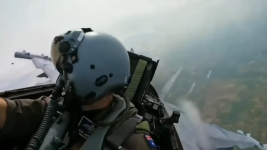
Will we induct atleast 1 MK1A this year? We need to induct 180+ MK1A 😂

HAL is extremely incompetent.
 
HAL is now facing software issues with its Israeli radar. Just goes to show how deeply unprofessional these chai samosa PSUs are. No one else in this world plans aircraft production as haphazardly as HAL. 1st production Mk1A was to be delivered in 2024, its 2026 now. The GE404 delay was just masking the software issues. Integrating radar with onboard electronics is a time consuming process that takes years and is then refined further for years to come. Internationally, as a general rule of thumb, 4.5 gen fighters require a production run of 250 to 300 ac in same hardware config to break even on the investments done. Here, we have these chai samosa geniuses that planned 2 different radars within a production run of a miniscule 83 unit order. Why did people not term this as unrealistic then??? The fact that they are struggling with EL2052 means they would've spared even fewer resources to uttam radars yet. They should've ditched EL2052 and gone all in on uttam, but the opposite happened:ROFLMAO:. These guys have no comprehension about the complexities of their own work.

HAL still has Tejas mk2 in its bag. If IAF is serious, they should immediately invite private companies for production of tejas mk2. Else, forget this project will deliver on time.

I remember when TEDBF was revealed in AeroIndia2021. I asked the same question then, how could a company justify developing an entirely new fighter jet with a supposed production run of max 50 aircraft??? The answer I was given then was that HAL was successful in making 40 bespoke units of tejas mk1 so they can make 50 bespoke TEDBF as well:ROFLMAO:. Well now you know. These PSUs are just employment generators. They cannot handle complex projects. As long as they were copy-pasting foreign designs (MKI, jaguar, mig-21), it was working fine but ask them to develop anything more complex than a trainer(they struggled here as well) ac, watch it all collapse.

These PSUs have no capability to improve, which is the main reason why every foreign OEM wants to tie-up with them. Assured returns knowing these PSUs are too incompetent to copy designs. Why do russians keep coming back to HAL??? Why did TKMS tie up with MDL(avoiding L&T) for P75I???Everyone knows MDL wont be able to copy the design. This is why BEL needs to be kept away from AMCA as well.
 
HAL is now facing software issues with its Israeli radar. Just goes to show how deeply unprofessional these chai samosa PSUs are. No one else in this world plans aircraft production as haphazardly as HAL. 1st production Mk1A was to be delivered in 2024, its 2026 now. The GE404 delay was just masking the software issues. Integrating radar with onboard electronics is a time consuming process that takes years and is then refined further for years to come. Internationally, as a general rule of thumb, 4.5 gen fighters require a production run of 250 to 300 ac in same hardware config to break even on the investments done. Here, we have these chai samosa geniuses that planned 2 different radars within a production run of a miniscule 83 unit order. Why did people not term this as unrealistic then??? The fact that they are struggling with EL2052 means they would've spared even fewer resources to uttam radars yet. They should've ditched EL2052 and gone all in on uttam, but the opposite happened:ROFLMAO:. These guys have no comprehension about the complexities of their own work.

It appears to be a problem from the Israeli side rather than Indian.

I remember when TEDBF was revealed in AeroIndia2021. I asked the same question then, how could a company justify developing an entirely new fighter jet with a supposed production run of max 50 aircraft??? The answer I was given then was that HAL was successful in making 40 bespoke units of tejas mk1 so they can make 50 bespoke TEDBF as well:ROFLMAO:. Well now you know. These PSUs are just employment generators. They cannot handle complex projects. As long as they were copy-pasting foreign designs (MKI, jaguar, mig-21), it was working fine but ask them to develop anything more complex than a trainer(they struggled here as well) ac, watch it all collapse.

These PSUs have no capability to improve, which is the main reason why every foreign OEM wants to tie-up with them. Assured returns knowing these PSUs are too incompetent to copy designs. Why do russians keep coming back to HAL??? Why did TKMS tie up with MDL(avoiding L&T) for P75I???Everyone knows MDL wont be able to copy the design. This is why BEL needs to be kept away from AMCA as well.

TEDBF was never 50 jets total, it was 50 jets initial. Final numbers have reduced from 145 to around 90.

Russian ecosystem is already there in HAL since the 1960s. Others have to start from scratch.

TKMS' main goal was to create a single vendor situation. A secondary goal was they wanted to give India more ToT than what was asked for, 60% vs 45%, and this needed govt-led security assurances in order to protect IP and prevent aggressive marketing for export dominance. The idea was L&T cannot be reigned in by the govt in the export market, unlike MDL. It's not because they think MDL is incompetent or anything of the sort.

BEL too is very competent. Dunno why you're attacking two of our most competent DPSUs. Find different targets, there are plenty.
 
  • Like
Reactions: YoungWolf
HIQLhNqaMAAtyJq


Source
 
Don't get frustrated. The path towards self-reliance is a tedious one but we shall achieve this no matter what.
well its hard to not get frustrated, due to thier stupidity, any sane person would have started work towards CEMILAC of uttam mk2 and ASPJ, hal knew there would be delay on engines, yet they went full aboard with isareli radars and spj, now with the delay of integeration, HAL was the one who rejected the hybrid model, the had plenty of time for integration they had the prototypes, from oct 2025 to may 2026 no jet has been delivered, and uttam mk2 and aspj is left behind there is still time to certify them as the both project have been finished
 
well its hard to not get frustrated, due to thier stupidity, any sane person would have started work towards CEMILAC of uttam mk2 and ASPJ, hal knew there would be delay on engines, yet they went full aboard with isareli radars and spj, now with the delay of integeration, HAL was the one who rejected the hybrid model, the had plenty of time for integration they had the prototypes, from oct 2025 to may 2026 no jet has been delivered, and uttam mk2 and aspj is left behind there is still time to certify them as the both project have been finished
All points are correct but these are the hurdles we face while developing our own indigenous mil-aviation set-up. Once all these software & engine delivery bugs are taken care/control of, and MK1A starts getting delivered to IAF, all our frustrations shall be allayed. That's the bottomline. Till then have patience and trust current GOI.
 
well its hard to not get frustrated, due to thier stupidity, any sane person would have started work towards CEMILAC of uttam mk2 and ASPJ, hal knew there would be delay on engines, yet they went full aboard with isareli radars and spj, now with the delay of integeration, HAL was the one who rejected the hybrid model, the had plenty of time for integration they had the prototypes, from oct 2025 to may 2026 no jet has been delivered, and uttam mk2 and aspj is left behind there is still time to certify them as the both project have been finished
Sad state of affairs. It is unfortunate that India currently has an RM that is unable to get them on track. Other pvt. players will need to enter the aerospace mfg sector not only as suppliers but also as lead integrators. A monopoly will not allow the FA sector to grow in the direction that will be needed by MoD as well as IAF (if they are serious about buying local). The sooner folks realise this the better it will be. Market dynamics themselves state that a cartel or a monopoly is unhealthy for sector development.
 
  • Like
Reactions: Volcano