
What I meant is that cumulative duration of Northrop/AFRL scramjet operation over several tests was 30 minutes. DRDO exceeded that in just two tests
Indian Hypersonic Propulsion Developments
- Thread starter Ashwin
- Start date
You are using an out of date browser. It may not display this or other websites correctly.
You should upgrade or use an alternative browser.
You should upgrade or use an alternative browser.


This is a full scale combustor !!!
Things move fast when you have testing infrastructure.
Things move fast when you have testing infrastructure.


M7.5 is the peak speed during descent with M4.5 at impact. The only point at which it may of may not achieve M8-9 is during the initial boost phase, but no evidence to prove that either way at this point.I am going by Wikipedia, which is not the most accurate. So maybe, Mach 5.5 is cruise speed & Mach 9 is max or terminal speed. Then there is the question of altitude vs. speed & range.
2. The missile does not reach the Kremlin’s claimed Mach 9.
The real figures are still formidable:
- Cruise altitude speed: around Mach 5.5
- Peak speed during descent: up to Mach 7.5
- Terminal phase near the ground: slows to around Mach 4.5
3. Its high terminal speed is what makes it so dangerous.
On approach, the missile travels faster than most Russian cruise missiles ever achieve:
- Soviet-era Kh-22: Mach 2–2.4
- Kinzhal (terminal estimate): Mach 2.5–4
- Zircon (terminal): Mach 4.5
This leaves air defenses very little reaction time.
4. Actual range appears closer to 700 km.
At present the fastest scramjet missile is the South Korean Hycore measured at M6.0 during cruise. At that speed it'll like hit M8+ during descent and impact at >M5.

South Korea’s Hypersonic Cruise Missile Emerges In New Test Photos
Seoul’s Hycore hypersonic cruise missile is being eyed for launch from warships, submarines, and aircraft, as well as from the ground. Seoul’s Hycore hypersonic cruise missile is being eyed for launch from warships, submarines, and aircraft, as well as from the ground.
 www.twz.com
South Korea Conducts Secret Hypersonic Test Flight | Aviation Week
South Korea says it has advanced its hypersonic weapons program with a successful test of its HyCore technology demonstrator, achieving speeds of up to Mach 6.
 aviationweek.com
Last edited:

Hycore has so far demonstrated, as per publicly available information, 5+ seconds of scramjet operation, similar to our HSTDV levels.
M7.5 is the peak speed during descent with M4.5 at impact. The only point at which it may of may not achieve M8-9 is during the initial boost phase, but no evidence to prove that either way at this point.
At present the fastest scramjet missile is the South Korean Hycore measured at M6.0 during cruise. At that speed it'll like hit M8+ during descent and impact at >M5.
South Korea’s Hypersonic Cruise Missile Emerges In New Test Photos
Seoul’s Hycore hypersonic cruise missile is being eyed for launch from warships, submarines, and aircraft, as well as from the ground. Seoul’s Hycore hypersonic cruise missile is being eyed for launch from warships, submarines, and aircraft, as well as from the ground.
South Korea Conducts Secret Hypersonic Test Flight | Aviation Week
South Korea says it has advanced its hypersonic weapons program with a successful test of its HyCore technology demonstrator, achieving speeds of up to Mach 6.
The only source I can find quoting time simply says that it exceeded the goal of the test, which was 5s at M5.Hycore has so far demonstrated, as per publicly available information, 5+ seconds of scramjet operation, similar to our HSTDV levels.
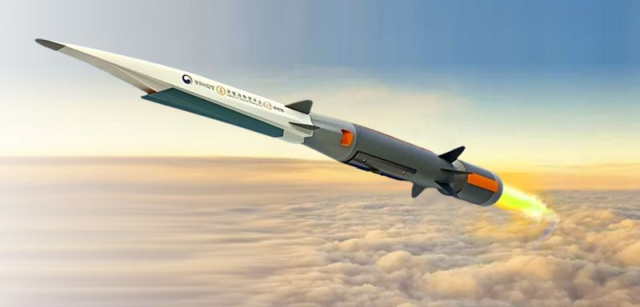
South Korea Moves Closer to Deploying Hypersonic Missile
The South Korean military intends to deploy HyCore across multiple platforms.Hypersonic flight refers to speeds of Mach 5 or higher—more than five times the speed of sound. While conventional aircraft and missiles typically operate below Mach 3, hype
 kdefensenews.com
According to defense sources, HyCore has already completed successful test flights and technical validation. The system reportedly exceeded its original development target of sustaining Mach 5 flight for more than five seconds, reaching a peak speed of Mach 6. These achievements led to HyCore being shortlisted for the “Top 10 Technologies of Korea 2025,” overseen by the Korean Society of Mechanical Engineers.
Not one of the better known sites though.
The only source I can find quoting time simply says that it exceeded the goal of the test, which was 5s at M5.
South Korea Moves Closer to Deploying Hypersonic Missile
The South Korean military intends to deploy HyCore across multiple platforms.Hypersonic flight refers to speeds of Mach 5 or higher—more than five times the speed of sound. While conventional aircraft and missiles typically operate below Mach 3, hype
Not one of the better known sites though.

Korea's HyCore Hypersonic Missile Approaches Weaponization Stage
** South Korea's HyCore hypersonic cruise missile achieved Mach 6 in tests, nearing weaponization. The multi-platform weapon will deploy on fighters, destroyers, and submarines by 2028.
I've read available sources & one thing that is likely about HyCore Hypersonic cruise missile is that it'll have a range around 800 km at average 5.5 to 6 Mach speed. Though the final number may differ a bit. In comparison to our Indian Hypersonic cruise missile project , it looks like Indian missile will have an upper hand in both speed and range over the S.Korean HyCore. Though it is really inspiring and admirable that this missile will be a great achievement for S.Korea. I don't want to compare Indian Project 'Vishnu' with S.Korean 'HyCore' as of now because of unavailability of exact datas from both sides.The only source I can find quoting time simply says that it exceeded the goal of the test, which was 5s at M5.
South Korea Moves Closer to Deploying Hypersonic Missile
The South Korean military intends to deploy HyCore across multiple platforms.Hypersonic flight refers to speeds of Mach 5 or higher—more than five times the speed of sound. While conventional aircraft and missiles typically operate below Mach 3, hype
Not one of the better known sites though.

India extends run-time of scramjet combustor
India has extended the run-time of an actively cooled full-scale scramjet combustor that is under development for the country's hypersonic weapons programme, the...
 www.janes.com
DRDL tested a subscale demonstrator of the scramjet combustor in January 2025. During this maiden test, DRDL operated the subscale combustor continuously for 120 seconds. A follow-up test in April 2025 saw the sub-scale combustor ignited for more than 1,000 seconds. The January 2026 test constituted the first ignition trial of the full-scale combustor.
The combustor employs indigenously developed liquid hydrocarbon endothermic fuel and is equipped with a high temperature thermal barrier coating (TBC), according to the MoD. Janes has previously reported that the combustor's TBC is designed to withstand extreme temperatures beyond the melting point of steel.
Says the same thing pretty much.Korea's HyCore Hypersonic Missile Approaches Weaponization Stage
** South Korea's HyCore hypersonic cruise missile achieved Mach 6 in tests, nearing weaponization. The multi-platform weapon will deploy on fighters, destroyers, and submarines by 2028.en.sedaily.com
1,000km.I've read available sources & one thing that is likely about HyCore Hypersonic cruise missile is that it'll have a range around 800 km at average 5.5 to 6 Mach speed. Though the final number may differ a bit. In comparison to our Indian Hypersonic cruise missile project , it looks like Indian missile will have an upper hand in both speed and range over the S.Korean HyCore. Though it is really inspiring and admirable that this missile will be a great achievement for S.Korea. I don't want to compare Indian Project 'Vishnu' with S.Korean 'HyCore' as of now because of unavailability of exact datas from both sides.
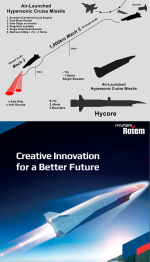
They slowdown in the endgame.
Odd thing to do.
I'm guessing it's a guidance problem. The nose shape limits the seeker range?
Odd thing to do.
I'm guessing it's a guidance problem. The nose shape limits the seeker range?

Plasma affects seeker efficacyThey slowdown in the endgame.
Odd thing to do.
I'm guessing it's a guidance problem. The nose shape limits the seeker range?
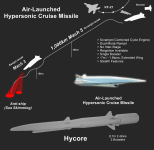
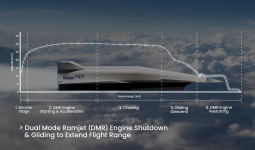
That's only shown to emphasize the fact that it's a dual mode ramjet that can operate as a scramjet at high altitude or ramjet for lower altitude I think (see images below).They slowdown in the endgame.
Odd thing to do.
I'm guessing it's a guidance problem. The nose shape limits the seeker range?
Further reading actually indicates that range is in excess of 1,000km. It does 1,000km hypersonic and can then use engine shutdown and restart to extend range if necessary.
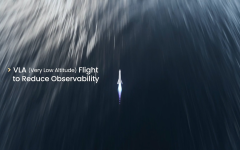

It could be a factor but that would only be relevant for a moving target where a seeker is actually required.Plasma affects seeker efficacy
Last edited:
Okay that's it, they want a sea-skimming capability, that's why it's slowing down. After switching off the engine it glides down, then starts the engine in ramjet mode to be able to fly low at supersonic speeds.That's only shown to emphasize the fact that it's a dual mode ramjet that can operate as a scramjet at high altitude or ramjet for lower altitude I think (see images below).
Further reading actually indicates that range is in excess of 1,000km. It does 1,000km hypersonic and can then use engine shutdown and restart to extend range if necessary.
View attachment 51604View attachment 51603
View attachment 51605View attachment 51606
It could be a factor but that would only be relevant for a moving target where a seeker is actually required.
Pretty cool. It used hypersonic cruise to reduce time-to-target.
Hypersonic speed at low altitude would require insane heatshields and at the same time result in poor fuel efficiency.
So they basically want a brahmos class weapon but with better launch to hit time. That's pretty nice.Okay that's it, they want a sea-skimming capability, that's why it's slowing down. After switching off the engine it glides down, then starts the engine in ramjet mode to be able to fly low at supersonic speeds.
Pretty cool. It used hypersonic cruise to reduce time-to-target.
Hypersonic speed at low altitude would require insane heatshields and at the same time result in poor fuel efficiency.
Actually it seems ROK's Hyunmoo-4 manages to use a seeker at hypersonic speeds.Plasma affects seeker efficacy

[/QUOTE]
At mach ~5, air starts breaking/dissociating into individual atoms, but the atoms themselves do not break into ions at this speed.
Ionisation of air and subsequent plasma starts forming at significant level from mach 10 onwards.
At mach 5-7 there will be low amount to insignificant amount of plasma.
Kind of not.Plasma affects seeker efficacy
At mach ~5, air starts breaking/dissociating into individual atoms, but the atoms themselves do not break into ions at this speed.
Ionisation of air and subsequent plasma starts forming at significant level from mach 10 onwards.
At mach 5-7 there will be low amount to insignificant amount of plasma.
Kind of not.
At mach ~5, air starts breaking/dissociating into individual atoms, but the atoms themselves do not break into ions at this speed.
Ionisation of air and subsequent plasma starts forming at significant level from mach 10 onwards.
At mach 5-7 there will be low amount to insignificant amount of plasma.
[/QUOTE]
It must be possible even at near M10.
 www.twz.com
At mach ~5, air starts breaking/dissociating into individual atoms, but the atoms themselves do not break into ions at this speed.
Ionisation of air and subsequent plasma starts forming at significant level from mach 10 onwards.
At mach 5-7 there will be low amount to insignificant amount of plasma.
[/QUOTE]
It must be possible even at near M10.
New Version Of Bomber-Launched ARRW Hypersonic Missile Is A Ship Killer
The USAF is moving to start work on a new ARRW variant able to hit moving targets with an eye toward future fights in the Pacific.
www.twz.com


1000+ km range with 1.8 tonnes weight is great.That's only shown to emphasize the fact that it's a dual mode ramjet that can operate as a scramjet at high altitude or ramjet for lower altitude I think (see images below).
Further reading actually indicates that range is in excess of 1,000km. It does 1,000km hypersonic and can then use engine shutdown and restart to extend range if necessary.
View attachment 51604View attachment 51603
View attachment 51605View attachment 51606
It could be a factor but that would only be relevant for a moving target where a seeker is actually required.
Brahmos can only able to do 800km with 2.5 tonnes.
But i have a doubt, why it switches to ramjet in last stage ?
Is the korean thermal barrier coating and high heat sustaining materials not good enough for cruising at hypersonic speed at low altitude ?
And why two stage rocket motor ?
I doubt that it even use scramjet, most probably the second rocket motor is for sustained hypersonic speed while 3rd stage which is ramjet is for supersonic speed.
but then how its able to travel 1000+ km with just 1.8 tonnes as specific impulse of rocket motor is very low.
And it looks like currently only Russia and China possesses "true hypersonic cruise missile".
Last edited: