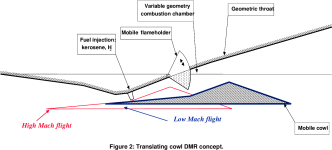
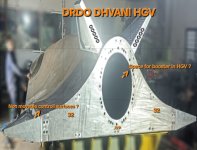
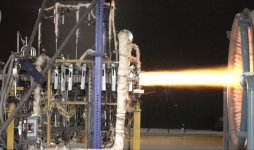
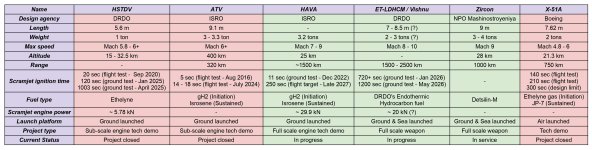
"For short-range ballistic missiles, the Pralay is now in the final stages of testing and should be ready. Then we have some of our strategic missiles, which can be converted to tactical usage for the medium range and the long range. With respect to hypersonic, we are working on two programs, the hypersonic glide missile and the hypersonic cruise missiles. The hypersonic cruise missiles is one which has a scramjet engine and it is powered during its flight. The hypersonic glide missile is a missile which uses a booster to give it initial velocity, and then it just glides without any powering. The glide missile will come out first. We should be doing the first trials fairly soon. And that is at a more advanced stage than the cruise missile. The cruise missile program has not yet been sanctioned, although we are working on the various technologies which will get into the cruise missile. Recently, we have done a scramjet propulsion for more than 1,000 seconds. So that's been a major achievement, and once the program is sanctioned, we'll convert the scramjet propulsion into a working missile system. And I think that should take about five years after the sanction."