

You are using an out of date browser. It may not display this or other websites correctly.
You should upgrade or use an alternative browser.
You should upgrade or use an alternative browser.

Army launches sovereign swarm capability push, seeks partner
Amid scrutiny of foreign, especially Chinese drone components, the project marks the Army’s push for sovereign swarm architecture built on indigenous algorithms and autonomy.NEW DELHI: The Indian Army is looking to build its own sovereign swarm warfare capability and has begun the search for a joint development partner to design and develop an indigenous swarm algorithm that could eventually provide it with a unified command, control and autonomy framework for multi drone operations.
Sources told the TNIE that the Army has invited bids for the project through a formal Request for Proposal, or RFP, and will hold a pre-bid meeting in the second week of May.
“This is far bigger than simply acquiring another swarm capability,” a source said. “What the Army is trying to do is build a common architecture of its own, so swarm operations are no longer tied to individual vendors or proprietary systems.”
The project comes at a time when contemporary conflicts have sharply underscored the operational value of networked drone swarms across surveillance, logistics, payload delivery and adaptive combat roles.
The project is structured in two phases over six months, beginning with an initial two-month stage focused on developing an indigenous ground control station and software-only integration framework capable of commanding existing drones without requiring changes to their hardware or firmware.
“The focus is on creating a secure common control layer over existing drone assets, with fully offline capability built in from the outset,” the source explained. “That is a deliberate requirement because this system is being designed for contested environments, where dependence on cloud architecture or external autonomy engines could become serious operational vulnerabilities.”
This phase will culminate in a live field demonstration where multiple drones, operating under a unified command structure, simultaneously carry out persistent surveillance and coordinated payload delivery missions.
The second phase, spanning the remaining four months, substantially expands the ambition from centralised control to decentralised swarm autonomy, with onboard computing, indigenous software stacks and greater battlefield resilience.
“The objective is to test whether these prototypes can continue functioning in tougher, more realistic operational conditions, rather than only in controlled environments,” the source said. It will test adaptive formations, task reassignment, collision avoidance and the swarm’s ability to sustain operations even when communications are disrupted, drones are lost or navigation systems come under strain.
The stress on indigenous control also comes amid persistent security concerns over foreign, especially Chinese components in drone systems after past vulnerability scares triggered tighter scrutiny of military drone supply chains. That push has since widened into a published framework to weed out such components, which is set to be incorporated into the upcoming Defence Acquisition Procedure 2026.
The Army has also made it clear that indigenous control will be non negotiable. With third party black box autonomy engines barred, and source code and intellectual property to be jointly shared with the selected partner, the project signals a larger push to secure not just swarm capability, but control over its technological backbone.

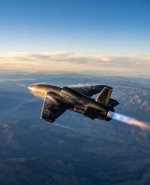
So, uh...a cruise missiles with a more convoluted launch process?
Should be in the league of other loitering capable cheap cruise missiles.So, uh...a cruise missiles with a more convoluted launch process?

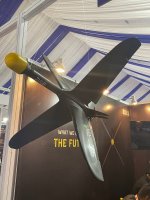
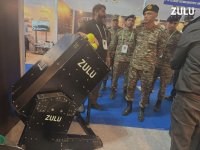
Some exciting new products from defence, the clad system is a tube launched Anti drone system, it has 9 anti drone launcher it can be filed static and vechile mounted system, the range of the hoverbee interceptor drone is 15km, 200km/h speed, has proximity fuse and pre fragmentation warhead,
And the other interesting looking drone is the STARK,
STARK - a four winged light weight drone, the lift generates from the wings helps the drones to glide at longer range,
Range -100km,
Speed -180 km/h
Role - targeting against static and moving targets,
Warhead on the tip, top attack mode,
Can be deployed from helicopters also, you can remove the wings and attached it,
Another product they showcased was DARP max, upgrade version of DARP,
Range -50km,
Tandem warhead,
Speed above 300km/h
Able to penetrate 35mm armour in army test field,
Has direct and top attack mode,
They have lined order from the Dutch special forces
Indian startups are coming up with creative designs
And that's some crazy Speed, without a SAM you can't intercept it,
alt
altitude 10km is very significant as thats above most manpads and AA guns, even helis struggle at that altitude.View attachment 51550View attachment 51551
Some exciting new products from defence, the clad system is a tube launched Anti drone system, it has 9 anti drone launcher it can be filed static and vechile mounted system, the range of the hoverbee interceptor drone is 15km, 200km/h speed, has proximity fuse and pre fragmentation warhead,
And the other interesting looking drone is the STARK,
STARK - a four winged light weight drone, the lift generates from the wings helps the drones to glide at longer range,
Range -100km,
Speed -180 km/h
Role - targeting against static and moving targets,
Warhead on the tip, top attack mode,
Can be deployed from helicopters also, you can remove the wings and attached it,
Another product they showcased was DARP max, upgrade version of DARP,
Range -50km,
Tandem warhead,
Speed above 300km/h
Able to penetrate 35mm armour in army test field,
Has direct and top attack mode,
They have lined order from the Dutch special forces
Indian startups are coming up with creative designs
And that's some crazy Speed, without a SAM you can't intercept it,
Pretty decent video. cc are absent. You can use ENG (auto-gent) if needed.

I've often heard about single-use turbojets. How about something like single-use turboprops? This eliminates the altitude limitations of Shahed-type OWA drones while being cheaper than a single-use turbojet which itself isn't as expensive. Piston engine drones can be hit with AAA guns and interceptor drones, so they must fly higher to raise the costs for the enemy and being more survivable while not being a fiscal burden upon the user.