
LCA AF Mk2 (Medium Weight Fighter) - News and discussions

China's airbases are largely around Taiwan and Japan and pose very little threat to India.
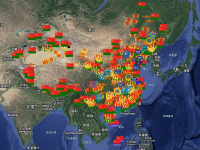
They have over 1000+ flankers and 300+ j-20's with 4000-6000 km range depending on requirement. All capable of carrying the 400km pl-17
1777549597178.png

Eastern Theater Air Force (ETCAF): ~30 airbases, ~700-900 total aircraft.
Southern Theater Air Force (STCAF): ~25 airbases, ~600-800 total aircraft.
Western Theater Air Force (WTCAF): ~20-25 airbases, ~500-650 total aircraft (incl. high-altitude ops).
Northern Theater Air Force (NTCAF): ~25 airbases, ~600-800 total aircraft.
Central Theater Air Force (CTCAF): ~20-30 airbases (many training/support), ~400-600 total aircraft.
Total: Over 150 airbases; ~3,733 total aircraft across PLAAF.

Only counting combat aircrafts
Eastern Theater Air Force (ETCAF): ~550–750 combat aircraft (highest concentration; multiple J-20, J-16, J-10C, Su-30, JH-7A brigades plus H-6 bomber elements focused on Taiwan).
Southern Theater Air Force (STCAF): ~450–650 combat aircraft (J-20, J-16, Su-35, Su-30, J-10 brigades; includes major H-6 bomber division).
Northern Theater Air Force (NTCAF): 400–600 combat aircraft (several J-20 and J-16 brigades, legacy types).
Western Theater Air Force (WTCAF): ~300–450 combat aircraft (mix for high-altitude/border ops; fewer modern heavy fighters).
Central Theater Air Force (CTCAF): ~250–400 combat aircraft (training, reserve, and support-focused; some J-11/J-10 units).

We will be facing primarily the
Western and Southern Air commands if that ever happens. That's around a 1000 combat aircrafts.
Our entire combat fleet is limited to 600 combat aircrafts.
Adding the PAF who have around 400-500 combat aircrafts at any given time.
We are not positioned well. Neither we have any significant tech advantage other than the S-400's.
 
They have over 1000+ flankers and 300+ j-20's with 4000-6000 km range depending on requirement. All capable of carrying the 400km pl-17
View attachment 51383

Eastern Theater Air Force (ETCAF): ~30 airbases, ~700-900 total aircraft.
Southern Theater Air Force (STCAF): ~25 airbases, ~600-800 total aircraft.
Western Theater Air Force (WTCAF): ~20-25 airbases, ~500-650 total aircraft (incl. high-altitude ops).
Northern Theater Air Force (NTCAF): ~25 airbases, ~600-800 total aircraft.
Central Theater Air Force (CTCAF): ~20-30 airbases (many training/support), ~400-600 total aircraft.
Total: Over 150 airbases; ~3,733 total aircraft across PLAAF.

Only counting combat aircrafts
Eastern Theater Air Force (ETCAF): ~550–750 combat aircraft (highest concentration; multiple J-20, J-16, J-10C, Su-30, JH-7A brigades plus H-6 bomber elements focused on Taiwan).
Southern Theater Air Force (STCAF): ~450–650 combat aircraft (J-20, J-16, Su-35, Su-30, J-10 brigades; includes major H-6 bomber division).
Northern Theater Air Force (NTCAF): 400–600 combat aircraft (several J-20 and J-16 brigades, legacy types).
Western Theater Air Force (WTCAF): ~300–450 combat aircraft (mix for high-altitude/border ops; fewer modern heavy fighters).
Central Theater Air Force (CTCAF): ~250–400 combat aircraft (training, reserve, and support-focused; some J-11/J-10 units).

We will be facing primarily the
Western and Southern Air commands if that ever happens. That's around a 1000 combat aircrafts.
Our entire combat fleet is limited to 600 combat aircrafts.
Adding the PAF who have around 400-500 combat aircrafts at any given time.
We are not positioned well. Neither we have any significant tech advantage other than the S-400's.
We are preparing to face against an economy 5x our size and an economy that is probably the most industrialized economy in human history. We will be drastically outmatched for the next 15 or so years.

the point is not to match them but to make any invasion or conflict far too expensive for them to handle without massive issues on their side.
 
We are preparing to face against an economy 5x our size and an economy that is probably the most industrialized economy in human history. We will be drastically outmatched for the next 15 or so years.

the point is not to match them but to make any invasion or conflict far too expensive for them to handle without massive issues on their side.
Not disagree with the overall message.

But its More likely 2.3-2.7 times ours in actual terms.

Nominal is misleading in these cases.

Rupee is lot more devalued in nominal terms(not much demand in international market), while chinese yuan even with ccp keeping its value suppressed its still lot less devalued compared to rupee because to how much china exports( which means there is lot of demand in world to buy from china hence lot of demand for yuan)
 
Mk1a not sufficient at all without astra mk2 and sky sting integration. That needs to be a priority.
MK1A with AESA radar and Astra MK2(in due time) plus GaN ASPJ pods is more than a match for all PAF fighters except their future 5th gen ones like KAAN & J-35AE. Not only MK1A will get Astra MK2 but also Gandiva in due time.
We are preparing to face against an economy 5x our size and an economy that is probably the most industrialized economy in human history. We will be drastically outmatched for the next 15 or so years.

the point is not to match them but to make any invasion or conflict far too expensive for them to handle without massive issues on their side.
On paper China may look stronger but they can't defeat us in an actual war and they know it. This isn't India of 1962 but a military superpower as of 2026.
 
  • Like
Reactions: Aniruddha
We are preparing to face against an economy 5x our size and an economy that is probably the most industrialized economy in human history. We will be drastically outmatched for the next 15 or so years.
They are only twice our size if you count by PPP. And in fact have a smaller population than us.
 
  • Like
Reactions: jmaxwell_
MK1A with AESA radar and Astra MK2(in due time) plus GaN ASPJ pods is more than a match for all PAF fighters except their future 5th gen ones like KAAN & J-35AE. Not only MK1A will get Astra MK2 but also Gandiva in due time.

On paper China may look stronger but they can't defeat us in an actual war and they know it. This isn't India of 1962 but a military superpower as of 2026.
Underestimation of the enemy, and overestimation of yourself is a grave mistake which one shouldn't make, it should be the other way round.
1st set by NAL.

Hal can also produce parts.
Private players can also too.

Alpha defence is also implying that
 
  • Agree
Reactions: YoungWolf
They are only twice our size if you count by PPP. And in fact have a smaller population than us.
You guys seem adept at missing the forest for the trees. The Chinese GDP nominal could well be equal to ours . It's their single minded focus on defence their budget & what they're coming out with at startling frequencies which we ought to consider.

Contrast that with our approach & mismanagement. As of now our R&D capabilities have sufficiently matured , our industrial capacities have also deepened & instead of taking off like say the Turks our projects are meandering more due to mismanagement than lack of technical expertise , our purchases are piece meal given meagre budgets & so on purely because defence doesn't enjoy the kind of priority it should with this government .

To add to the mess , we've what we do as a Raksha Mantri who instead of trying to make the best of a difficult situation aided by an indifferent approach by the PM is content going with the flow not rocking the boat much. What's his personal contribution to the entire subject of defence can be compressed into a single paragraph of 4 lines at best & I'm actually complimenting him here !
 
Underestimation of the enemy, and overestimation of yourself is a grave mistake which one shouldn't make, it should be the other way round.


Alpha defence is also implying that
What happened during last year's skirmish? Entire PAF was on its knees begging for ceasefire. Like it or not, IAF is that damn more powerful than PAF and the gap will widen with every passing year.
 
Why we are inducting handicapped MK1a in large numbers when superior MK2 will available on similar time frame. Its like a trainer like aircraft vs a Gripen class aircraft scenario. Earlier one lacks range & endurance compared to MK2.

Mk2 was supposed to begin inductions from this year. Didn't happen. So Mk1A was chosen to act as stopgap. But with MRFA coming in later than expected, there was a need for a further 5 squadrons.

They are designing it as a replacement but it won't be a plug and play solutions, there is just too many factors behind an engine design to assume it will be a perfect plug and play solution.

AMCA engine will be plug and play with F414 on TE jets. It would require some work for LCA 'cause of the position of the gearbox and APU.

AMCA engine will be able to go on KF-21 and SH too.
 
  • Agree
Reactions: Rajput Lion
I am not saying that we "would" order 500 MK2s, rather am saying that we "should" order 500 MK2s and end our depleting squadron problem forever. 200 is a given. Rest is just icing on the cake.

I think you're understimating the role of unmanned drones / UCAVs / CCA would play in the future & their numbers in the IAF .

Ideally we ought to attempt an unmanned Mk-3 derived from the Mk-2 with modifications , enhancements & so on , once mass mfg commences for the latter.
 
  • Like
Reactions: Rajput Lion
You guys seem adept at missing the forest for the trees. The Chinese GDP nominal could well be equal to ours . It's their single minded focus on defence their budget & what they're coming out with at startling frequencies which we ought to consider.

Contrast that with our approach & mismanagement. As of now our R&D capabilities have sufficiently matured , our industrial capacities have also deepened & instead of taking off like say the Turks our projects are meandering more due to mismanagement than lack of technical expertise , our purchases are piece meal given meagre budgets & so on purely because defence doesn't enjoy the kind of priority it should with this government .

To add to the mess , we've what we do as a Raksha Mantri who instead of trying to make the best of a difficult situation aided by an indifferent approach by the PM is content going with the flow not rocking the boat much. What's his personal contribution to the entire subject of defence can be compressed into a single paragraph of 4 lines at best & I'm actually complimenting him here !
We just less advanced of an economy than the Turks, South Koreans and Chinese and that reality is shown.
The South Koreans have 36000$ gdp per capita the Turks are at 20000$ gdp per capita and the Chinese are at 15000$ gdp per capita. They just have superior human capital and resource access to us. Add into the fact that they are not carrying the baggag of 800 million+ bottom of the barrel shoshit vanchits gareeb who have to been given loads and loads of reservations we are too busy in non essential things for good for nothing citizens of this country.
Adding on to the fact that South Korea invest 5% of it's GDP on research
While China spends 3% of its GDP on research
The Turks spend 1.8% of its GDP on r&d
While we spend 0.64% on r&d. Even Iran invests more in r&d with 0.75% of its GDP on r&d.
You get what you pay for.
 
They have over 1000+ flankers and 300+ j-20's with 4000-6000 km range depending on requirement. All capable of carrying the 400km pl-17
View attachment 51383

Eastern Theater Air Force (ETCAF): ~30 airbases, ~700-900 total aircraft.
Southern Theater Air Force (STCAF): ~25 airbases, ~600-800 total aircraft.
Western Theater Air Force (WTCAF): ~20-25 airbases, ~500-650 total aircraft (incl. high-altitude ops).
Northern Theater Air Force (NTCAF): ~25 airbases, ~600-800 total aircraft.
Central Theater Air Force (CTCAF): ~20-30 airbases (many training/support), ~400-600 total aircraft.
Total: Over 150 airbases; ~3,733 total aircraft across PLAAF.

Only counting combat aircrafts
Eastern Theater Air Force (ETCAF): ~550–750 combat aircraft (highest concentration; multiple J-20, J-16, J-10C, Su-30, JH-7A brigades plus H-6 bomber elements focused on Taiwan).
Southern Theater Air Force (STCAF): ~450–650 combat aircraft (J-20, J-16, Su-35, Su-30, J-10 brigades; includes major H-6 bomber division).
Northern Theater Air Force (NTCAF): 400–600 combat aircraft (several J-20 and J-16 brigades, legacy types).
Western Theater Air Force (WTCAF): ~300–450 combat aircraft (mix for high-altitude/border ops; fewer modern heavy fighters).
Central Theater Air Force (CTCAF): ~250–400 combat aircraft (training, reserve, and support-focused; some J-11/J-10 units).

We will be facing primarily the
Western and Southern Air commands if that ever happens. That's around a 1000 combat aircrafts.
Our entire combat fleet is limited to 600 combat aircrafts.
Adding the PAF who have around 400-500 combat aircrafts at any given time.
We are not positioned well. Neither we have any significant tech advantage other than the S-400's.

The numbers are off.

The main threats are 400-600 Flankers (J-11BG and J-16), 300-400 J-10Cs, and 300 J-20s for now. But only a third of that will face India, so about 400. And from extremely long ranges too. In comparison we will have 400 jets facing them today and will double to 800 by 2035.

To compensate for the greater distance and higher altitude, they need between 3-6 jets for every jet we have. So for 800 jets, their equivalent is approx 2500-4500 jets versus the 400-500 they have today.

With 400 jets, PLAAF can only do about 800-1000 sorties the first 3 days and just 200-400 sorties after that. With 400 jets, IAF can do 2000 sorties the first 3 days and around 800+ after that. Once we get to 800 jets, the PLAAF will need as much as 4000 jets just to match the sortie rate of our upcoming jets, 'cause LCA Mk2 and Rafale will generate more sorties than older jets. The Rafale fleet on its own will be able to generate 600+ sorties a day for a whole month. LCA Mk2 should be able to match that too. At 200 jets each, they will manage a combined 2000 sorties a day on their own consistently. Relatively 200 Flankers or 200 J-20s will be lucky to do 200 sorties a day.

You have to compare sorties, not fighter numbers.

They need to triple the size of their high-end fighter capacity at the very minimum if they want to fight India. They also can't afford to weaken their other fronts, while we can.

Their only alternative is to create advanced next gen capabilities, but we are planning on keeping up with the SCAF/GCAP requirement.
 
Stupid people need to stop posting.

AETD was under GE. So no, none of what happened under GE's ADVENT and AETD benefitted a rival company.

AETP was launched later on because P&W was threatened by GE's F136. It began in 2016 and P&W began and ended their testing of VCE on F135 in 2017 while GE offered their own equivalent F136. P&W's engine was called XA-101. After JPO refused both engines, in 2018, P&W changed the XA-101 to a 6th gen engine with a new core and offered that for the F-35. Once even that was denied, the USAF began a new program called NGAP for NGAD's engines. That's going on now.

XA101 was a 200+ kN engine whereas NGAP's engines are below 180 kN.

Man, the level of retardedness.
 
  • Haha
Reactions: Rajput Lion
We just less advanced of an economy than the Turks, South Koreans and Chinese and that reality is shown.
The South Koreans have 36000$ gdp per capita the Turks are at 20000$ gdp per capita and the Chinese are at 15000$ gdp per capita. They just have superior human capital and resource access to us. Add into the fact that they are not carrying the baggag of 800 million+ bottom of the barrel shoshit vanchits gareeb who have to been given loads and loads of reservations we are too busy in non essential things for good for nothing citizens of this country.
Adding on to the fact that South Korea invest 5% of it's GDP on research
While China spends 3% of its GDP on research
The Turks spend 1.8% of its GDP on r&d
While we spend 0.64% on r&d. Even Iran invests more in r&d with 0.75% of its GDP on r&d.
You get what you pay for.

Militarily, we are more advanced than South Korea and Turkey.

While our research investment is low, it's still going into strategic areas. Apples to apples, we spend a lot. For example, we are working on manned spaceflight, advanced hypersonics, multiple satellite constellations, and advanced next gen nuclear reactors while Korea and Turkey are not. Our direct competitors are the P5, not the tier 2 segment.

And we have no need to match Chinese spending. We only need to get to a third of theirs and we are catching up. The Chinese have to spend 2-3x of America and the US only has to increase their capital budget by 30% to stay ahead, which they are doing. We only need to come up to the American level in terms of capital spending.

We only need to triple our 2025 capital budget to do that. This year it grew by 22%. So we just have to keep this up for a few years. The last 3 years were 13%, 9%, and 9%. That increased it from 1.5LC to 2.2LC, roughly 50% growth in 4 years. By 2035, we will cross that objective.
 
Militarily, we are more advanced than South Korea and Turkey.
If we remove strategic tech. We are behind both the Turks and SoKo.
The South Koreans have a 4.5 gen twin engine fighter, 4th gen mbt, medium range AD(s-350 vityaz based). They are a shipbuilding giant and have been operating destroyers larger than the Vishakapatnam class destroyer. They already have copied the brahmos and have a brahmos ng type missile in development. They already have a third gen atgm. Their small arm designs haven't been failures like the insas.
As for Turks although they have been given a lot of German and SokO technical assistance. They have their own 4th gen mbt while Arjun is in development hell. They are already testing a fifth gen aircraft. They have an entire series of drones from tb-3,tb-4 ,anka and akinci. Their vshorads is superior to DRDO vshorads. They are already working on IADS with the SIPER. While Kusha AD is still in design phase.
We do not exactly have any major lead in tactical systems per se. And in mass production terms we won't be able to match SoKo either.
 
If we remove strategic tech. We are behind both the Turks and SoKo.
The South Koreans have a 4.5 gen twin engine fighter, 4th gen mbt, medium range AD(s-350 vityaz based). They are a shipbuilding giant and have been operating destroyers larger than the Vishakapatnam class destroyer. They already have copied the brahmos and have a brahmos ng type missile in development. They already have a third gen atgm. Their small arm designs haven't been failures like the insas.
As for Turks although they have been given a lot of German and SokO technical assistance. They have their own 4th gen mbt while Arjun is in development hell. They are already testing a fifth gen aircraft. They have an entire series of drones from tb-3,tb-4 ,anka and akinci. Their vshorads is superior to DRDO vshorads. They are already working on IADS with the SIPER. While Kusha AD is still in design phase.
We do not exactly have any major lead in tactical systems per se. And in mass production terms we won't be able to match SoKo either.
- Agree on the 4.5 gen aircraft part.
- If IA had supported the Arjun program like the Koreans did with the K1 & K2, then it would have been as good as the K2 if not better.
- The medium range SAM is heavily influenced by the S-350, it's not like they developed it on their own. Whereas Akash-NG is our own.
- For Indian shipyards to build destroyers equivalent to the Sejong class, Indian Navy has to design them first.
- India has numerous missile programs in the pipeline, and the Koreans have nothing equivalent to that of LRAShM.
- There are atleast 3-4 different 3rd gen ATGMs developed by DRDO & other pvt industries which are awaiting induction.
- Maybe you have never heard of SSS Defence, INSAS isn't the only small arms system to come out of India.

- The TF-X prototype that took flight is equivalent to the AMCA engineering model showcased during AI 25.
- TB-2, TB-3 & Akinci are useless in a contested airspace.
- No credible proof that Turkish VSHOARDS offering is superior, on paper marketing slop does not translate one to one into battlefield performance.
- Only Siper 1 is in mass production, Siper 2 & 3 are still in development.
- If Kusha was still in design phase, the test firing of the M1 interceptor wouldn't have happened.

- Scale of production output depends on orders being placed, BDL has sufficient large order book when it comes to Akash, which is why they are able to scale up production to 100 interceptors/month.
You order more, you get more, it's that simple.
 
India's Akash Air Defense System is an indigenous system, and has proven to be a success during OP Sindoor. India also produces the MRSAM (jointly with Israel) and the QRSAM. While Project Kusha (long-range IADS) is in development, India already operates a multi-layered tactical air defense grid that is highly robust.

Isn't life on defence forum all about combat proven? Why din't the Turks shoot down the Iranian BMs that were lobbed at them? They had to rely on the NATO (American) systems to shoot them down. Talk about AD and IADS when it is mature and capable of handling a variety of threats on its own.


The less I talk about KAAN the better it will be. There are plenty of others who have deconstructed the KF-21. Folks can go over its thread and see for themselves the exact contribution of various NATO countries towards the project.

On another note:

A lot of folks raise points repeatedly about combat proven aspects when it is about Indian systems. However, they fall silent when asked about other OEMs. There is an increasing trend online - but can it really perform well during conflicts? This is a two-way street people.
 
Wonder why's PST posting then if stupid people ought to stop posting.

Well here's what Gemini has to say about about participation in the AETD , ADVENT & AETP programs.

As mentioned earlier by yours truly , AI would be the death of all professional story tellers.

Yes, Pratt & Whitney was a key participant in the U.S. Air Force’s Adaptive Engine Technology Development (AETD) program.

The main companies that participated in the U.S. Air Force Research Laboratory's (AFRL) Adaptive Versatile Engine Technology (ADVENT) program, aimed at developing next-generation variable cycle engines, were:
  • GE Aviation: Awarded a Phase I contract in 2007 and later a major contract to develop and test a full adaptive turbofan demonstrator engine and its core.
  • Rolls-Royce: Awarded a Phase I contract in 2007 and a Phase II contract in 2009 for component testing and technology integration.
  • Pratt & Whitney: Participated in the program, and though their design was not chosen for the final demonstrator phase, they were awarded follow-on contracts in 2012 under the succeeding Adaptive Engine Technology Development (AETD) program.


Somehow I wonder what all this history has to do with the central point of my assertions which has always been & to repeat myself for the 20th possible time , the time taken to develop these technologies viz ACE / VCE technologies , wherein all the references I've provided clearly states , take anywhere between 8-10 years .

That's almost equivalent to the time taken to build & certify a clean sheet TF design as opposed to PST going on about this being a technology which can be easily developed within a couple of years not to mention also easy to convert a non adaptive engine into an ACE / VCE.

All the evidence points out against it & he keeps coming back with irrelevant stuff like a petulant kid who just can't accept reality while also constantly shifting goal posts & what's more he's getting good support here from the management with my posts deleted & his retained. Good example of stated policies of quality over quantity.

So are we getting into stupid territory again of XA-101 being capable of 200 KN + output can't be de rated to below 180 KN which apparently is NGAP's avowed goals assuming that's the way taken ?

What next ? If P&W with the XA-103 is declared the preferred vendor to supply VCE TFs to the NGAD , all the studies development & tests etc under taken for the XA-101 program ever since P&W participated in the AETD program in 2012 would be binned ?

Is that what's sought to be conveyed only to underline the argument PST has forwarded , it takes a couple of years at the most to come up with the VCE TF ?

Yup that's the level of retardation here with a newbie here openly stating that facts & figures provided by the old timers here have no credibility. In one broad stroke of the brush everybody's been painted with the same shade.

At the end of the day that's the legacy being left behind , notwithstanding all the stated policies of this forum's management of quality over quantity & all that blah .
 
  • Like
Reactions: Rajput Lion
Koreans have nothing equivalent to that of LRAShM.
LRAShM is strategic tech. The conventional scenario where we will see it's use is limited to China and US.
I'm talking about sub-500km capabilities, Where we are lacking. LRAShm isn't going to be used in the opening hours of a war.

There are atleast 3-4 different 3rd gen ATGMs developed by DRDO & other pvt industries which are awaiting induction.
The Koreans have already inducted and exported them to friendly countries.

Akinci are useless in a contested airspace.
They can carry the SOM-J standoff cruise missile. They are not exactly useless if used correctly.
Scale of production output depends on orders being placed
That needs to be done then.