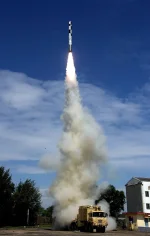
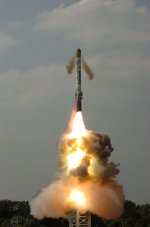
India’s Coming ‘Rocket Force’

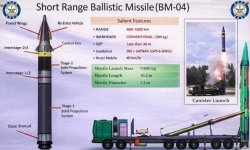
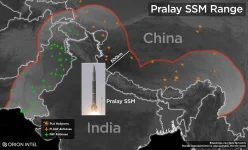
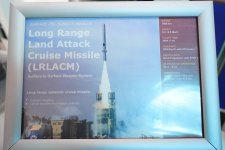
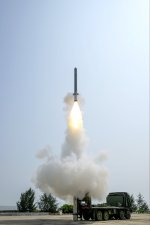
Might be breaking news for you but IAF is going to operate ground launched Pralay, Nirbhay, Brahmos and future HCM.
And maybe reading official IAF doctrine might help you a bit...

View attachment 51025
View attachment 51026
Let IAF operate the missiles they have now already but Pralay Pinaka ground launched Brahmos LRLACM, they should in the future go to IRF which should be a tri service command like SFC.
 
It's not a threat. IRF should not be a separate force. Each branch should have its own long range vectors. Only thing we need is a coordinating authority in case a joint strike is needed. Example being Russia's Main Computation Centre of the General Staff.

We already have that in HQ IDS but its role is limited to planning, suppport. IRF will consolidate logistics, training and targeting between the 3 services. It will have operational control unlike IDS.

Domain specific capabilities like coastal defence batteries (Brahmos, Smart, etc) will likely continue to remain with the respective services.
 
Well if they wanted to maintain the primary then maybe they should have modernized better. MoD babus have a role in their current pathetic state as well but even with the same MoD the Navy has done much better although it too has fumbled especially wrt subs.

IAF has fumbled everywhere. First not supporting LCA initially to get a good replacement of MIG21, second not prioritizing force multipliers like tankers AWACS and instead lusting after lone imported silver bullets and third for being delusional that their imported bullets are superior to the adversarys next gen fighters. Result? Their pride and joy fell on its a$$ facing an air force which has less budget than 1/9th of the IAF budget.

If they wanted to maintain the primary then they should have gotten their act together. I have 0 confidence in IAF handling ALL of our missiles like some here want to. IRF is coming whether those guys want to or not they can cope.

The use of TBMs has become normalized since Ukraine and more recently Iran. Earlier, our planners feared that using TBMs vs Pak would mean 'going up the escalatory ladder'. Not anymore.

The IAF knows it has lost its qualitative superiority over our rivals and needs 15+ yrs to catch up to present strength of the PLAAF. The recent arguments of an ex-IAF officer regarding IRF should be taken with a pinch of salt, imo.

The fighter jock attitude will not fly with GoI which would ideally want to save money on big ticket defence deals wherever possible. IRF is as low risk (local supply chain, predictable costs) as it gets.

Besides, with Pak setting up its own rocket force, I don't think we can afford to delay much longer. Inter-service C2/hierarchicy issues can always be resolved later.
 
Might be breaking news for you but IAF is going to operate ground launched Pralay, Nirbhay, Brahmos and future HCM.
And maybe reading official IAF doctrine might help you a bit...

View attachment 51025
View attachment 51026
do the iaf leadership knows about thier long rang vectors doctrine?
cause they are hell bent on proving why the dont need one cause the west dosent have one and only russia and china are doing it,
 
IRF will become the test case for deciding ownership/reporting hierarchy of several other commands like special ops, space, cyber and cognitive.

Commanders may or may not be appointed on a rotating basis as recent reports indicate. As an interim solution, IRF could be placed under the CDS, imo.
 
Russian Iskander Tactical SRBM brigade. Something to model upon.


Use VPN. Location set to USA to see.


All these tactical SRBMs have almost identical shape from Iskander to Korean KTSSM to Israeli LORA to American ATACAMS interesting.


While I am in favour of Air Marshal opinion regarding rocket forces. There are scope of Iskander like brigade unit in ground forces. Air marshal is not an idiot. In Age of drones & persistent airborne & space based surveillance shoot & scoot ground launchers are vulnerable even when they are well behind enemy lines while an aircraft like a F-16 can fly from 1,000 km away with full load of 3 LORA or multiple standoff weapons & would still deliver bigger & more accurate punch then say ground based SRBM launchers without being vulnerable to most modern threats at fraction of a cost.
 
Russian Iskander Tactical SRBM brigade. Something to model upon.


Use VPN. Location set to USA to see.


All these tactical SRBMs have almost identical shape from Iskander to Korean KTSSM to Israeli LORA to American ATACAMS interesting.


While I am in favour of Air Marshal opinion regarding rocket forces. There are scope of Iskander like brigade unit in ground forces. Air marshal is not an idiot. In Age of drones & persistent airborne & space based surveillance shoot & scoot ground launchers are vulnerable even when they are well behind enemy lines while an aircraft like a F-16 can fly from 1,000 km away with full load of 3 LORA or multiple standoff weapons & would still deliver bigger & more accurate punch then say ground based SRBM launchers without being vulnerable to most modern threats at fraction of a cost.
Air defense systems exists, air-force exist.

Even with mostly defunct air defense systems of Iran & no functional airforce to context the skies.
it still managed to launch low but consistent amount of missiles & drones, even after its strategy of building underground missile cities that made it lot easier for U.S. & Israelis to predict most launching locations( near tunnel entrances)
 
The title of this thread :ROFLMAO:
Its 2026 and its still coming. Wont arrive any time soon either.
I read a news article recently that claimed that the biggest hurdle to all the theaterisation reforms are the senior officers just below the rank of service chiefs. Everyone is fighting for their jagiir. What a cursed country!!! We are so capable in terms of missile tech but just refuse to exploit it. Beyond retrded.


Such weak arguments. It's all a turf war for them.
We all saw these airtards fumble SEAD/DEAD ops in may 25. These guys are so inept technologically and operationally that I have started to wonder if Bipin Rawat was actually right when he referred to the airtards as "supporting arm" to the ground forces.
 
Such a good article that goes straight to the core of the problem. IAF is fearful of losing its turf. Thats what its all about. Air force is also the most backwards now when it comes to indegenisation.

----------------------------------------------------------------------------------------------------------------------------------------------------------------
At the launch of Vishnu Som's book on Operation Sindoor, Air Marshal Narmdeshwar Tiwari (Retd) made a case against the idea of a dedicated rocket force for India. Only China and Russia have done it, he argued, adding that Iran was forced into it by sanctions. No Western country has bothered, he said, adding that India should invest in modern fighter aircraft instead.

The Air Marshal's argument might sound reasonable until you examine what Operation Sindoor actually revealed about how India fights, and how its adversaries have reorganised since. A detailed analysis published in War on the Rocks by Brigadier (Retd) Anil Raman lays out the problem with uncomfortable clarity. His argument is not about what weapons India needs. It is about the speed at which a country can authorise action, execute strikes, and establish a narrative before diplomatic intervention shuts down the space for escalation.

Operation Sindoor illustrated this perfectly. India's strikes were operationally brilliant. But nearly two weeks elapsed between the Pahalgam attack and the authorisation to strike, because intelligence confirmation, diplomatic preparation, and inter-service planning each ran through separate bureaucratic channels with no mechanism to synchronise them.

By the time Indian forces delivered their precise, devastating blows, the United States had already activated its machinery. Trump claimed credit for preventing nuclear war. Pakistan's preferred framing, including restraint, victimhood, escalation risk, had already seeped into Washington's crisis assessment.

The post-Sindoor reforms that Pakistan enacted were designed to ensure this timing advantage widens in the next crisis. A new Chief of Defence Forces position collapsed multiple coordination layers into one decision channel. But the most consequential reform was the Army Rocket Force Command, which consolidated conventional missiles, cruise missiles, and armed drone swarms under a single operational authority reporting directly to the CDF. The logic is straightforward.

In a limited war, the side that can execute controlled strikes within hours of crisis onset, without waiting for three services to coordinate targeting, proportionality, and execution, holds a decisive first-day advantage. Target selection, escalation calibration, and execution orders flow through one vertical chain.

Conventional strike forces were also formally decoupled from nuclear command and control, with nuclear assets placed under a separate national strategic command. This means conventional missile capability can be used rapidly without the action being read as nuclear signalling, reducing the ambiguity that, in past crises, deterred both sides from acting.

Now consider what India has on its side, and why it still loses the speed contest. India's long-range conventional strike assets are individually superior: BrahMos missiles, Nirbhay cruise missiles, armed Heron drones, standoff munitions. But they are scattered across the Army's artillery divisions, the Air Force's strike squadrons, and the Navy's missile systems. Using them in a coordinated, proportional response requires inter-service coordination that consumes 24 to 48 hours, precisely the window in which limited wars are decided.

The structural asymmetry this creates is stark. An adversary with a unified strike command can act first, shape the narrative around its "proportional response," and de-escalate before India's distributed assets are synchronised. The problem is not capability. India has better missiles, better platforms, better trained personnel. The problem is organisational velocity, the gap between the speed at which India's hardware can perform and the speed at which India's institutions can authorise and coordinate that performance.

The world that India now operates in, with instant American diplomatic activation, Chinese intelligence-sharing with Pakistan, and media amplification compressing everything, demands convergence within hours. A rocket force, or at minimum a Joint Strike Command consolidating crisis-time control of non-nuclear long-range strike systems under the Chief of Defence Staff, is the structural precondition for India's superior hardware to matter when it matters.

So why is a retired Air Marshal making the opposite case at precisely the moment the strategic logic has never been clearer? The answer, unfortunately, is institutional.

The IAF carries deep scars from losing roles to sister services. In 1976, the maritime reconnaissance mission, long performed by the IAF's No. 6 Squadron with its Super Constellations, was transferred to the Indian Navy, which raised INAS 312 to take it over. A decade later, in 1986, the Air Observation Post units were transferred from the Air Force to the Army, forming the Army Aviation Corps. Both transfers were operationally sound.

Both were bitterly resisted. A rocket force or joint strike command that consolidates long-range conventional strike under a unified authority would represent the most significant such migration yet, pulling the Air Force's deep-strike mission, its most prestigious warfighting role, into a structure it does not control.

The United States went through an identical convulsion. When the Air Force became independent in 1947, the turf wars over who controls carrier aviation, who owns close air support, and who runs strategic bombing nearly paralysed the new defence establishment.

It took Defence Secretary James Forrestal physically hauling the Joint Chiefs to Key West, Florida, in March 1948 to broker a settlement. The Key West Agreement delineated primary and collateral functions for each service, preserved Naval Aviation under Navy control, and gave the Air Force its strategic bombing mission.

It was ugly, it was political, and it required direct civilian intervention to override service parochialism. India has no equivalent mechanism. The CDS was supposed to be that mechanism. Theatre commands were supposed to operationalise it. Neither has materialised with the speed or authority the situation demands.

 
  • Haha
  • Like
Reactions: jmaxwell_ and Rune
Iran has demonstrated to the world that there is no answer to cheap rockets & suicide drones. You can just mitigate the destruction on your side with SAMs, Lasers, etc. As of now there is no solution to a barrage of hundreds of rockets coming your way. This is developing into a conventional version of MAD(Mutually Assured Destruction) theory.

If Indian mil planners had some sense, they would stop chasing 5th gen 6th gen falana dhamkana in the form of imports of Rafales/Su-57. Instead, invest money into domestic programs like AMCA & in the meantime start churning out Solid fueled missiles/rockets in the thousands. India has such a diverse & capable industry when it comes to missiles. Our private startups make more capable SRBs than vast majority of countries on this planet. Instead of leveraging this advantage we have, we are languishing over the fantasies of our generals who would like to import every a/c under the sun in the name of capability.

A rocket Force with 10,000 missiles/rockets in varying range from 500km to 2000km would make sure that any country that starts a war with India will be ruined, no matter if they have hundreds of 5th gen fighters. A conventional(non-nuclear) MAD.
 
Iran has demonstrated to the world that there is no answer to cheap rockets & suicide drones. You can just mitigate the destruction on your side with SAMs, Lasers, etc. As of now there is no solution to a barrage of hundreds of rockets coming your way. This is developing into a conventional version of MAD(Mutually Assured Destruction) theory.

If Indian mil planners had some sense, they would stop chasing 5th gen 6th gen falana dhamkana in the form of imports of Rafales/Su-57. Instead, invest money into domestic programs like AMCA & in the meantime start churning out Solid fueled missiles/rockets in the thousands. India has such a diverse & capable industry when it comes to missiles. Our private startups make more capable SRBs than vast majority of countries on this planet. Instead of leveraging this advantage we have, we are languishing over the fantasies of our generals who would like to import every a/c under the sun in the name of capability.

A rocket Force with 10,000 missiles/rockets in varying range from 500km to 2000km would make sure that any country that starts a war with India will be ruined, no matter if they have hundreds of 5th gen fighters. A conventional(non-nuclear) MAD.
If retd AM Narmadeshwar Tiwari's recent comments are any indication, the IAF sees IRF as eroding its strategic role. No surprise that only the IAF is resisting the idea among the services.
 
  • Like
Reactions: Aniruddha
If retd AM Narmadeshwar Tiwari's recent comments are any indication, the IAF sees IRF as eroding its strategic role. No surprise that only the IAF is resisting the idea among the services.
Utility of fighter jets itself is slowly eroding if not completely getting useless. In modern era of space based ISR be it sovereign or commercial and long range vectors, a lot of your things are close to being potential sitting ducks. Look at what Iran and US have done to each other's aircrafts on ground or what even we did with pakistani jets and AEW&CS inside their own hangars, and what we could've done to their parked aircrafts at Nur Khan if we wanted. With aircrafts getting more advanced, they're getting more difficult to maintain and costlier to build and operate in large numbers.

Sure, they were vulnerable earlier too, but then the availability of real-time intelligence was missing. Now if one gets real time intel of an enemy aircraft landing and parked inside a hangar, a high speed weapon can take it out within minutes like we did with the Erieye.

Fighter jets are useful in terms of reducing costs per strike, like it is a lot lot cheaper to hit a target with a precision-guided aerial bomb that costs lakhs at best than a guided missile that costs millions at the minimum. But then you'll have to risk the jets too and unmanned fighter-bombers like the CATS Warrior and RPSA Ghatak can fulfill that role of being warhead carriers.
 
We need to be building complimentary 'effects-based' capabilities. And not worry about which tool is used to create those effects.

Frankly, the logic about BMs being one-time use weapons and therefore not suited for conventional roles is outdated to say the least.

Between the USAF, USMC and USN, the Americans probably have more airpower than the rest of the world combined, yet they are bringing back conventional land based vectors via PrSM (with anti-ship capability too), etc. Why can't we?

Frankly, there is some merit to the IAFs reluctance to divide its assets via theaterization and the lack of professional acumen among tri-service commanders. But an IRF could actually ease the pressure on it in a shooting war. Besides, each theatre commander won't function in a silo but act according to a grand national strategy in times of war.