People's Liberation Army Air Force : News & Discussions


China is aggressively expanding its ability to assemble and deliver new tactical military aircraft, including hundreds of the latest stealth fighters.

That is the conclusion of a research analyst in Washington, DC, who used commercially available satellite imagery to track activity at several key hubs for China’s state-owned aerospace conglomerate – the Aviation Industry Corporation of China, or AVIC.

“China’s inventory of fighter and attack aircraft is going to grow significantly over the next five years,” says J Michael Dahm, a senior fellow at the Mitchell Institute for Aerospace Studies.

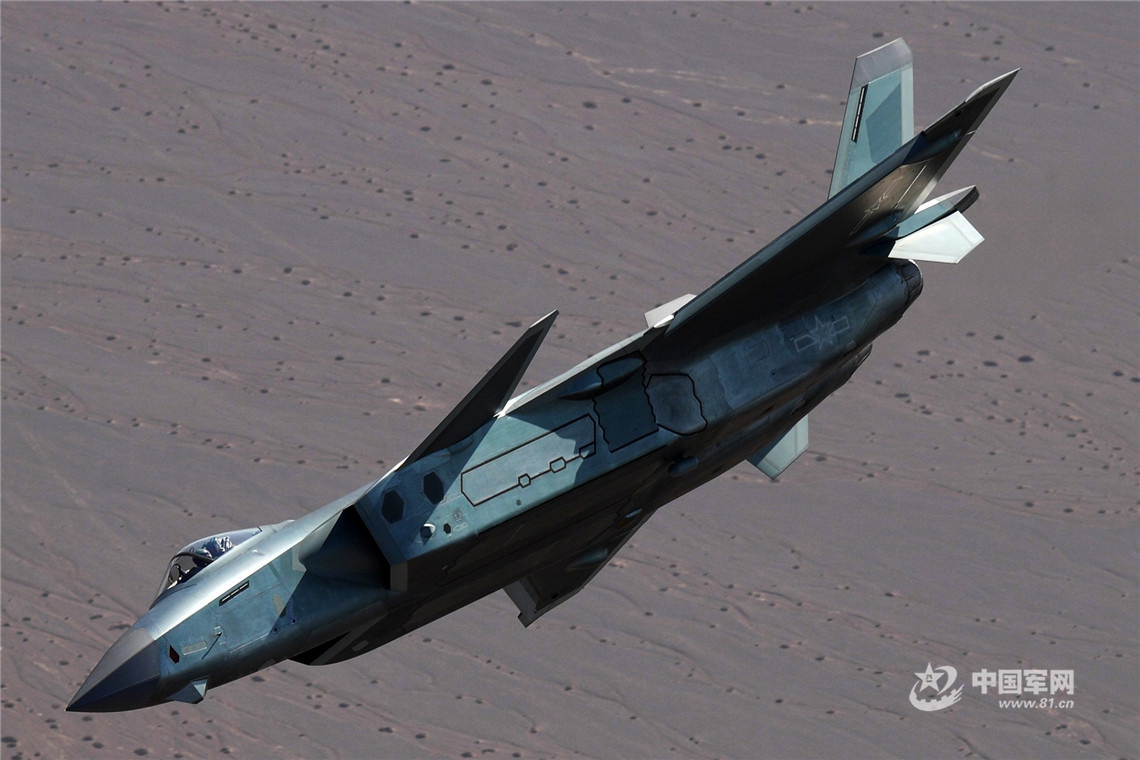
Since 2021, Dahm says AVIC has added some 278,700sq m (3 million sq ft) of manufacturing space at the Chengdu plant that assembles China’s fifth-generation J-20 air superiority fighter. Five J-20 production lines are now active at that facility.


“Looking back at commercial satellite imagery and substantial infrastructure improvements support the assessment that the Chengdu plant has increased its capacity and could be producing as many as 100 J-20s per year,” says Dahm, who presented his findings at the 2026 Air & Space Forces Association’s Warfare Symposium in February.

Other estimates, including one by the Royal United Services Institute, put China’s 2025 J-20 production figure at 120 aircraft.

Similar to the recent expansion at the Chengdu plant, other AVIC locations also show signs of growth. That includes the development of a new factory in Shenyang, which geospatial analysis suggest will include over 370,000sq m of manufacturing space and a dedicated 3,660m (12,000ft)-long runway.

This site, it is hypothesised, will assemble the new Shenyang J-35 and J-35A fifth-generation fighters – China’s answer to the Lockheed F-35 stealth fighter – respectively for the People’s Liberation Army Navy and People’s Liberation Army Air Force.

A separate 93,000sq m expansion is underway at the Changhe Aircraft Industries plant that assembles military helicopters, including attack and heavy-lift transport varieties. That represents a 30% increase in capacity.

Between the three sites in Chengdu, Shenyang and Changhe, AVIC is adding more than 743,000sq m of space, presumably to support additional aircraft production.

“Those 8 million sq ft are more than the entire F-35 manufacturing complex in Fort Worth, Texas,” Dahm says.

Meanwhile, the existing AVIC assembly line in Shenyang is continuing to deliver fourth-generation models, including the J-15 and J-16 fighters.

“Starting next year AVIC will have the capacity to produce 300-400 fourth- and fifth-generation fighters per year for the PLA,” Dahm says.

Beijing may not opt to make use of that full capacity, or could direct some portion of the output toward supporting export sales of its latest fighter types.

Regardless of the exact breakdown, Dahm predicts a minimum volume of at least 250 aircraft per year across AVIC’s entire fighter aircraft enterprise.


And quantity has a quality all its own, as goes the famous axiom attributed to the Soviet Union’s military-industrial strategy during the Cold War.

If it makes full use of all that new production capacity, Dahm says China will have the largest fighter force on the planet by 2029. That comes as Beijing is also expanding its fleet of aircraft carriers and maturing its ability to conduct air operations from those naval vessels.

Dahm notes the latest satellite images indicate that around 20ha (50 acres) of land have been cleared on the north side of the current Chengdu plant, space previously occupied by Sichuan University. He posits that space could eventually be used to support production of a sixth-generation Chinese fighter or further expand J-20 capacity.

So what will China do with all that firepower?

The obvious answer is be ready to mount an operation to forcibly integrate Taiwan, whether via a protracted blockade or a cross-strait assault.

In war time we can hit Xian and CAC but SAC is far away and will be more difficult to destroy.
 
  • Like
Reactions: Rajput Lion
In war time we can hit Xian and CAC but SAC is far away and will be more difficult to destroy.
MKI with BrahMos-A ER will have deep reach in Chinese hinterland. Now the question comes about its survivability 'cause it's not stealth? One of the reasons IAF is looking to procure Su-57 is its deep IWBs. It can carry miniaturised version of Kinzhal hypersonic quasi-BM and long range stealth-cruise missiles like Kh-69. With its stealth and MUM-T(S-70), it can infiltrate deep inside China and hit them where it hurts most.
 
  • Like
Reactions: Tamilan57
This is huge.

Yang Wei, the chief designer of the J-20 has been purged.

Yang was first reported missing. Then he was found dead.

China is a scary state
 
Damn, that's sad. I wonder if it's corruption or something else.

The below article mentions the detailed reason for his secret execution I guess. But I think the below news source is a dodgy.


As per this news, J20 exploded during a test flight and a female pilot died. Xi was frustrated and took out the person who said J20 had already completed all test trials.
 
  • Informative
Reactions: batman
HJDsPL2aUAA5DD2


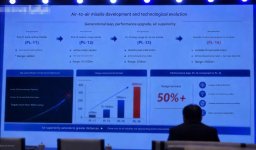
J-16 with 8 PL-15 + 2 PL-10
 

Seems like nobody saw this? Looking like China's NGAD equivalent, this is their THIRD next generation prototype!!!!

@Saaho @Ashwin @Shan @Rajput Lion @Parthu @randomradio @marich01 @_Anonymous_ @Ankit Kumar

I see no way out for the IAF frankly. Such aircraft flying at high altitude with PL17 and their powerful GaN radars will steamroll the IAF. By 2035 the Chinese can likely make the entire PLAAF fleet facing India as 5th and 6th gen while we will barely have 5-10 5th gen AMCA if all goes well. What a pathetic situation we are in. It's going to take 20 years at least for us to be survivable in the air against China imo and that's only if we are mass producing AMCA with new engine by 2040.
The air force is a military branch undergoing decline and transformation; furthermore, China does not possess the capability to counter India.
 
  • Like
Reactions: Rajput Lion
Check out the developmental T/Ls for the J-20 . It made first flight in 2011 IIRC & got the definitive TF WS-15 somewhere around 2022-23 .

It's still not received its FOC as trials are still on. Possibly the J-20 with the WS-15 TF will be certified FOC by 2027-28. That's 17 years from FF .

While I don't expect their 6th Gen FAs to take as long how long are you prepared to give them to be operationally ready ? 10 years or 12 or more ?

China's a communist country & typical to these nations propaganda forms a very big part of their lives. You'd never find them discussing their failures in public & even then it's for an objective.

They've still not mastered the 170 KN + TF which is supposed to power their J-36 . Work on it is still on & there's zero information in the public domain about details of their existing line of TFs like the WS-10 . What's their MTBO ? What's their estimated TTSL ? Etc.

I'd recommend take note of this development , keep tabs on it & redouble your own indigenous efforts.

In any case this isn't going to be fully operationally ready before the middle of the next decade , if at all . Who knows in what shape the world will be then ?

I'm of the opinion China'd be sorted out one way or another before that time .
WS-10 "Taihang" Engine: Project Lineage and Technical Evolution
The "10A" Origin and Reverse Engineering (1980s):
The WS-10, internally designated as project "10A," was officially launched in 1984. Its core was derived from the CFM56-2 engines found on Boeing 737 airliners imported by China during that era. Due to strict agreements prohibiting the disassembly of these civilian engines, the core was reverse-engineered under high secrecy—allegedly disassembled and mapped by night and reinstalled on the aircraft before dawn.
The Design Conflict: US vs. Russian Architecture:
Because the WS-10 only mimicked the CFM56-2 core and lacked an indigenous low-pressure stage design, engineers opted to copy the low-pressure sections of the AL-31F acquired in the 1990s. This created a significant mechanical conflict: American and Russian engines rotate in opposite directions. To reconcile this, Chinese engineers designed the WS-10 as a counter-rotating engine. However, domestic industrial capacity at the time could not meet the required precision.
The initial target thrust was 13.2 tons, but due to developmental hurdles, this was downgraded to 12.5 tons. To compensate for mechanical limitations, the relative rotational speed between the low-pressure and high-pressure stages was reduced to 8,880 RPM—a feat only achieved by using imported bearings.
Initial Service and Reliability Crisis:
When small-batch service began in the 2000s on the J-11 series, the engine suffered from notorious reliability issues. At one point, faults originating from the WS-10 accounted for over 50% of all engine-related failures across the entire PLA Air Force. The engine remained in a cycle of "forced service while improving" until it finally passed final acceptance and "production certification" in 2017. Notably, it remained 200+kg heavier than the Russian AL-31F.Total service life of 1,500 hours, with a Time Between Overhaul (TBO) of 900 hours for the first major overhaul.


WS-10A: Performance-wise, it was identical to the base WS-10. The primary difference was the relocation of maintenance ports to the bottom. It never entered mass production because it was overweight (200+kg heavier than the AL-31FN) and suffered from a flawed lubrication system. The bottom-mounted maintenance access exacerbated the failure rate of the AL-31F-derived lubrication hardware.Total service life of 1,500 hours, with a Time Between Overhaul (TBO) of 900 hours for the first major overhaul.

WS-10H: The "H" stands for Navy (Haijun). With a thrust of 12.5 tons, it was specifically equipped on naval carrier-based aircraft.Total service life of 1,500 hours, with a Time Between Overhaul (TBO) of 900 hours for the first major overhaul.

WS-10B: The "F110" of China:
From this variant onward, the design incorporated dual maintenance ports (top and bottom). The core was redesigned based on the newer CFM56-7, and the overall architecture was overhauled using data from F110-GE-129 engines acquired through special channels. The ground dynamic thrust finally reached the original goal of 13.2 tons. While considered the Chinese equivalent of the F110, its flight stability envelope remains narrower than the AL-31F; it is still prone to flameouts during high-alpha (large-angle) maneuvers.Total service life of 1,500 hours, with a Time Between Overhaul (TBO) of 900 hours for the first major overhaul.

WS-10E
The WS-10E utilizes a variety of advanced new materials, allowing ground thrust to reach 14 tons. Currently, this is the most powerful engine variant available for the J-20 stealth fighter.

WS-10C: This is the official designation that will be assigned to the WS-10E once its development succeeds (if it succeeds). The 'WS-10E' is an internal corporate designation used by AECC (Aero Engine Corporation of China); it is a self-funded project, meaning the military has provided no funding or appropriations. The company assumes full financial responsibility for its profits and losses.As things stand, it appears to have succeeded


There is no such thing as a "final production variant' of the WS-15";
its progress is incredibly slow.
 
MKI with BrahMos-A ER will have deep reach in Chinese hinterland. Now the question comes about its survivability 'cause it's not stealth? One of the reasons IAF is looking to procure Su-57 is its deep IWBs. It can carry miniaturised version of Kinzhal hypersonic quasi-BM and long range stealth-cruise missiles like Kh-69. With its stealth and MUM-T(S-70), it can infiltrate deep inside China and hit them where it hurts most.
With total command of the sea in the Indian Ocean, there is no need to launch deep-penetrating bombing runs into mainland China. Just look up the statistics on how much Chinese oil and ore imports depend on the Strait of Malacca.
 
  • Like
Reactions: Rajput Lion