
Indian Economy : News,Discussions & Updates
- Thread starter Butter Chicken
- Start date
-
- Tags
- indian defence forum
You are using an out of date browser. It may not display this or other websites correctly.
You should upgrade or use an alternative browser.
You should upgrade or use an alternative browser.


Not the original poster, just for the record - indeed, the private sector (investors) will have better indicators for consumer behavior - except, the better indicator points at much weaker consumer spend in the new series compared to the 2011-12 series. PFCE for 2022-23, 2023-24, and 2024-25 is cumulatively less by approx. INR 56.5 lakh crore (less by approx. INR 15.7 lakh crore, INR 17.54 lakh crore, INR 23.28 lakh crore for the three years respectively).How much?! You seem to be assuming the worst because of the effects immediately. Have you ever thought of what effects it will have on investor momentum who now have better set of indicators for 2025 Indian consumer scenario.
Whether weaker consumption figures inform private investors to continue holding back on investments (as has been alluded by the finance minister - "sitting on passive cash", "want to see private investments catch pace", "shed hesitation and invest"), or it induces the private sector to invest more remains to be seen (well, weaker demand reduces appetite for expanding supply, but still, remains to be seen).
Well, that's one of the reasons why countries regularly update their base years to better capture changing economic composition that cannot be accurately reflected in pricing.Have you thought that it also allows GOI and Economic advisors to implement policies in better way?
To be fair to some of them, there are genuine problems in the Indian economy, that no amount of confidence or glazing can cover up. Every economy gets criticized for some weakness or the other - high unemployment, disguised employment, over-reliance on any one sector, etc. Let them criticize, no harm in that.Every 6 months some "eminent" economist predicts doom.
Tamil Nadu gives freebies on everything, grows its GDP at >11%, boasts of some of the best HR stats in the country, while also widening its per capita income and aggregate GSDP gap over Gujarat, an often cited model of fiscal management. And then there's Madhya Pradesh, which provides its own freebies, ranks among the poorest states in India, registers nominal growth numbers lower than Tamil Nadu's constant prices GDP growth, while achieving a per capita income less than half of Tamil Nadu. Every state in India is different, has different growth structures, etc. Either show your way is the best in everything, or let those who show better results than you stick to what they've been doing.And the biggest thing.. ask the states to cut down on freebies. And FYI... Before ladli behena.. there was free bijli, free 5 promises, free this and that, free loans.
That said, the export numbers so far have been very encouraging. If India successfully maintains similar numbers for this year, export numbers could be closer to $1 trillion this year (calendar year), and exceed $1 trillion by next year.
1. That is actually very important. Not only has the base year been changed, but the weightage of different sectors have been changed. The decrease in consumption projection here can refer to two things. 1) The pattern of consumption have changed drastically since 2011. The change in consumption levels means that the new areas of consumption have not reached the level of old areas (Areas: Food, Electricity, Digital services, Machinery etc). And assumptions based on old series skewed the numbers due to heavy weightage of old areas in previous series.Not the original poster, just for the record - indeed, the private sector (investors) will have better indicators for consumer behavior - except, the better indicator points at much weaker consumer spend in the new series compared to the 2011-12 series. PFCE for 2022-23, 2023-24, and 2024-25 is cumulatively less by approx. INR 56.5 lakh crore (less by approx. INR 15.7 lakh crore, INR 17.54 lakh crore, INR 23.28 lakh crore for the three years respectively).
Whether weaker consumption figures inform private investors to continue holding back on investments (as has been alluded by the finance minister - "sitting on passive cash", "want to see private investments catch pace", "shed hesitation and invest"), or it induces the private sector to invest more remains to be seen (well, weaker demand reduces appetite for expanding supply, but still, remains to be seen).
Well, that's one of the reasons why countries regularly update their base years to better capture changing economic composition that cannot be accurately reflected in pricing.
To be fair to some of them, there are genuine problems in the Indian economy, that no amount of confidence or glazing can cover up. Every economy gets criticized for some weakness or the other - high unemployment, disguised employment, over-reliance on any one sector, etc. Let them criticize, no harm in that.
Tamil Nadu gives freebies on everything, grows its GDP at >11%, boasts of some of the best HR stats in the country, while also widening its per capita income and aggregate GSDP gap over Gujarat, an often cited model of fiscal management. And then there's Madhya Pradesh, which provides its own freebies, ranks among the poorest states in India, registers nominal growth numbers lower than Tamil Nadu's constant prices GDP growth, while achieving a per capita income less than half of Tamil Nadu. Every state in India is different, has different growth structures, etc. Either show your way is the best in everything, or let those who show better results than you stick to what they've been doing.
That said, the export numbers so far have been very encouraging. If India successfully maintains similar numbers for this year, export numbers could be closer to $1 trillion this year (calendar year), and exceed $1 trillion by next year.
2) This indeed gives investors a better idea of where to invest. It's not always about just putting down money. But also about how and where. Consumption is not always low because of weak demand, but it's also due to supply issues, price issues. Now the investors and policy makers can take decisions to increase the consumption beyond tax cuts.
Through jobs, through scaling of infra, bringing down cost, innovation etc. for example: If you just looked at consumption figures.. before jio, the figures for data consumption would be measly. A negative person might say, that this is not an area of investment. But didn't jio prove it wrong? After jio solved the issue of availability, affordability and scale.. the consumption skyrocketed. Imagine if naysayers succeeded in convincing ambani that indian economy isn't good for investment in this venture.
While consumption figures and growth for 2 waqt ki roti would have been still high in 2011. But there comes a point of saturation in Food, Clothing sector without new addition to numbers of consumers. And that won't happen on doles but investment ( and employment). A vicious cycle without without new areas as potential growth point. So, now new investments will come in.. let's say data centers. That requires its own set of raw materials , components at several levels of supply chain. That means either one company manufacturing at scale or small factories in large numbers. That's manufacturing sector growth. Demand for workforce. Education business will transition. That needs its own set of supplies. And it creates a new cycle. New growth. That will in turn create new set of consumers which will feed into older areas. I am saying that consumption figures can also tell where consumption growth is low due to demand vs low due to lack of scale and proper structure.
This works for shipping, AI, Weapons any kind of industry that GOI is bringing investors for.
2) Ofcourse there are problems with economy. Otherwise, we wouldn't be a developing nation. We would be an utopia. But by no means are we in a doomsday dead economy scenario and by no means are we regressing or fragile. The economist here predicts that it's the new policies of GOI that will harm economy while supporting the people who made the old policies which already led to fragile five CAD horror scenario. They aren't giving suggestions. Most of the genuine suggestions don't make headlines. They reach to MoF, PMO in closed conversation, dialogue, conference, files. The difference lies in the kind of suggestions being accepted and people having access to suggest. If your planning commission suggests to increase welfarism while cutting capital expenditure at same time, allow unchecked immigration etc.. that well.. you know. ..
3) Absolutely. Every state is different. But You know.. more appropriate would be to compare TamilNadu with Kerala, Odisha, Maharashtra.. the coastal states. Because of its geography, access to sea and GOIs early preference for investment in the south due to strategic depth. Then, you need to check TNs performance based on the suitable economic model for it. Is it punching above it's weight or below it's weight?
Similarly for MP... It can't replicate either gujrat or TN. It needs its model which needs investment in technology and infra that supports sustainable agriculture along with urbanisation.
Shift the services sector from South to Northern areas. Let south focus on manufacturing due to issues like water consumption and port access.
For Gujrat, the investment have been coming only in recent decades unlike TN, enabling it to catch up steadily. Still they don't have advantages of being near trade route, hence focus on other venture like GIFT city. Even they have freebies but sustainable for how long? Not much I would say.
As for HR stats... they are the most bogus stats for 21st century. These aren't the days of 12th pass being educated and enough for employment. Kerala, WB focused on those and it did work for them in early days. But now the demands are changing. Kerala, for all its HR stats.. can't sustain for long based on its remittance model, averse to manufacturing and increasingly welfare policies and extreme ideology that is averse to demands of future. They have time but will they act in time? Doubt it.
You can do individual analysis for UP, WB, Bihar, Ch,RJ etc etc.. and then look at the kind of freebies they can sustain, and the degree of growth/potential.
And you're spot on in highlighting that chose your model, show it. Kerala is still harping about it HR stats and trying to rally support for leftist economic model. It managed to convince us for a while before 1991 crisis happened and we woke up.
4) Exports.. Still far below our potential tbh. Heavily skewed in services. Hopefully it increases with increase in manufacturing sector.
Last edited:

Centre sanctions ₹360 cr to Kerala endorsing state’s deregulation initiatives
Centre sanctions ₹360 cr to Kerala endorsing state’s deregulation initiatives| India News
 www.hindustantimes.com
1. Agree with the premise, disagree on the conclusion. Yes, a rebasing almost always includes changes in the 'weights' of the various components in a 'representative consumption basket'. These could be food items, transportation, manufactured goods, miscellaneous goods, hospitality, house rent, recreation, medical services etc. (each of these "broad" categories is then subdivided further - for example, food items feature - cereals, pulses, perishables etc.). The official MOSPI methodology lists over 35 different item categories in the sample basket (don't remember the exact numbers, apologies).1. That is actually very important. Not only has the base year been changed, but the weightage of different sectors have been changed. The decrease in consumption projection here can refer to two things. 1) The pattern of consumption have changed drastically since 2011. The change in consumption levels means that the new areas of consumption have not reached the level of old areas (Areas: Food, Electricity, Digital services, Machinery etc). And assumptions based on old series skewed the numbers due to heavy weightage of old areas in previous series.
2) This indeed gives investors a better idea of where to invest. It's not always about just putting down money. But also about how and where. Consumption is not always low because of weak demand, but it's also due to supply issues, price issues. Now the investors and policy makers can take decisions to increase the consumption beyond tax cuts.
Through jobs, through scaling of infra, bringing down cost, innovation etc. for example: If you just looked at consumption figures.. before jio, the figures for data consumption would be measly. A negative person might say, that this is not an area of investment. But didn't jio prove it wrong? After jio solved the issue of availability, affordability and scale.. the consumption skyrocketed. Imagine if naysayers succeeded in convincing ambani that indian economy isn't good for investment in this venture.
While consumption figures and growth for 2 waqt ki roti would have been still high in 2011. But there comes a point of saturation in Food, Clothing sector without new addition to numbers of consumers. And that won't happen on doles but investment ( and employment). A vicious cycle without without new areas as potential growth point. So, now new investments will come in.. let's say data centers. That requires its own set of raw materials , components at several levels of supply chain. That means either one company manufacturing at scale or small factories in large numbers. That's manufacturing sector growth. Demand for workforce. Education business will transition. That needs its own set of supplies. And it creates a new cycle. New growth. That will in turn create new set of consumers which will feed into older areas. I am saying that consumption figures can also tell where consumption growth is low due to demand vs low due to lack of scale and proper structure.
This works for shipping, AI, Weapons any kind of industry that GOI is bringing investors for.
2) Ofcourse there are problems with economy. Otherwise, we wouldn't be a developing nation. We would be an utopia. But by no means are we in a doomsday dead economy scenario and by no means are we regressing or fragile. The economist here predicts that it's the new policies of GOI that will harm economy while supporting the people who made the old policies which already led to fragile five CAD horror scenario. They aren't giving suggestions. Most of the genuine suggestions don't make headlines. They reach to MoF, PMO in closed conversation, dialogue, conference, files. The difference lies in the kind of suggestions being accepted and people having access to suggest. If your planning commission suggests to increase welfarism while cutting capital expenditure at same time, allow unchecked immigration etc.. that well.. you know. ..
3) Absolutely. Every state is different. But You know.. more appropriate would be to compare TamilNadu with Kerala, Odisha, Maharashtra.. the coastal states. Because of its geography, access to sea and GOIs early preference for investment in the south due to strategic depth. Then, you need to check TNs performance based on the suitable economic model for it. Is it punching above it's weight or below it's weight?
Similarly for MP... It can't replicate either gujrat or TN. It needs its model which needs investment in technology and infra that supports sustainable agriculture along with urbanisation.
Shift the services sector from South to Northern areas. Let south focus on manufacturing due to issues like water consumption and port access.
For Gujrat, the investment have been coming only in recent decades unlike TN, enabling it to catch up steadily. Still they don't have advantages of being near trade route, hence focus on other venture like GIFT city. Even they have freebies but sustainable for how long? Not much I would say.
As for HR stats... they are the most bogus stats for 21st century. These aren't the days of 12th pass being educated and enough for employment. Kerala, WB focused on those and it did work for them in early days. But now the demands are changing. Kerala, for all its HR stats.. can't sustain for long based on its remittance model, averse to manufacturing and increasingly welfare policies and extreme ideology that is averse to demands of future. They have time but will they act in time? Doubt it.
You can do individual analysis for UP, WB, Bihar, Ch,RJ etc etc.. and then look at the kind of freebies they can sustain, and the degree of growth/potential.
And you're spot on in highlighting that chose your model, show it. Kerala is still harping about it HR stats and trying to rally support for leftist economic model. It managed to convince us for a while before 1991 crisis happened and we woke up.
4) Exports.. Still far below our potential tbh. Heavily skewed in services. Hopefully it increases with increase in manufacturing sector.
The weights of these categories is assigned based on consumption patterns - if your consumption pattern is focused more on items such as food, clothing, medical expenses - you assign more weights to these categories. If your consumer has shifted his consumption towards manufactured goods, recreation, luxury goods, i.e., your consumer spends (or more accurately, displays greater propensity to spend) on these items, you increase their weightage. Since the average price of items under these categories is greater, increased weightage for these categories actually increases your final PFCE number.
A significant downward revision in your PFCE number in the new series as compared to the 2011-12 series could conventionally mean - you overestimated the shift in assumption patterns towards higher value categories in the old series, and reduced the weightage of such categories in the news series (less propensity to consume for a category = less weight for the category).
Conventionally speaking, what you're assuming about consumption patterns moving more towards higher value categories is completely true. What the downward revision (both absolute PFCE numbers and PFCE as a % of GDP even after a downsize in the GDP) would indicate that old series had overestimated shift in consumption (keeping weights constant).
You remember the reports in December and January speculating that the new series would actually increase India's GDP by 8-12%? That was based on the same assumption that you've stated - the old model had underestimated the shift in consumption patterns (by design, since the weights were fixed earlier)., which of course, seems to be opposite of what actually happened.
Again, compulsory caution - they haven't released the exact weights yet. the secretary had revealed better information collection, and steps to avoid duplication etc. so it could be that as well. So, no definitive verdict.
2. These PFCE methodology is designed to account for shifting consumption patterns when weights are reassigned, as described in the point above.
3. Comparing Tamil Nadu with states like Gujarat, Maharashtra, Odisha, and Kerala pretty much reinforces the original point. These states represent different models - Gujarat - rich, high capex-led, excellent fiscal numbers, moderate social indicators; Maharashtra - rich but falling behind, high capex, high-freebie, moderate fiscal numbers, moderate social indicators; Odisha - poor, moderate growth, high capex, low freebie (increased after the BJP victory), excellent fiscal numbers, very poor social numbers; Tamil Nadu - richest in this list, fastest growing in this list, moderate capex, high freebies, moderate fiscal numbers, very good social indicators; Kerala - rich but falling behind, moderate growth, very low capex, high freebies, bad fiscal numbers, best social indicators.
Here, Tamil Nadu is, in terms of GSDP growth, per capita income growth, manufacturing growth, export growth - is the best performing. If a higher debt to GDP ratio, and fiscal deficit is what it takes for a state to open a INR 7 lakh crore gap with Gujarat (from near parity towards 2018-19), and not only reverse, but increase the per capita income gap over Gujarat (Tamil Nadu had a lower PCI than Gujarat in 2021-22), then so be it.
The government doesn't have any statistical model to measure this (feel free to correct). The IMF uses a metric called potential growth, and measures the gap between potential and actual growth, but this hasn't been used for any sub-national economies so far.Is it punching above it's weight or below it's weight?
Yeah, well, there's been a single party in government for over 20 years now (barring 1.5 years of Kamal Nath), with a double engine for over 10 years now (subtracting the 1.5 years of Kamal Nath). Eh, let them develop the model, show their stats, compare that to how other models are performing, and then talk. If they're still a low-growth, low-income, low-outcome state, let them stick to their model, but avoid lecturing others, or learn from others and adapt.It needs its model which needs investment in technology and infra that supports sustainable agriculture along with urbanisation.
Again, don't tell them to surrender their economy - first show your model as functional first, superior later. And then, how do you even "shift" the service sector from Bangalore/Chennai/Hyderabad to say, Noida or Delhi NCR? Now, is this "shift" accompanied by a reverse "shift" - do you dismantle all factories you've built in North India and shift it to the South? If your reply is to heavily "incentivize" (coerce) services to move to Noida from Bangalore, and manufacturing to move from UP to TN/KA, you might as well abolish the constitution and role by the supreme leader's diktat.Shift the services sector from South to Northern areas. Let south focus on manufacturing due to issues like water consumption and port access.
Before anything, first show you have a working model first. Until states like MP show they have a model, and states like UP, Raj, Odisha show that they have a superior model through actual outcomes - they should shut up.
Eh? Gujarat hasn't been catching up to Tamil Nadu in - GDP growth, per capita income growth, industrialization, manufacturing growth, etc. There were some areas where it was ahead of Tamil Nadu in the 2010s (the slowest growth years of Tamil Nadu) like PCI, and GDP growth. For the last 4-5 years, forget about Gujarat catching up, its not only been surpassed by Tamil Nadu, the gap between its outcomes and Tamil Nadu's has been growing.For Gujrat, the investment have been coming only in recent decades unlike TN, enabling it to catch up steadily.
And yet, it continues to grow at a moderate rate, similar to most developing or lower income states in India, while also providing a quality of life that is objectively, tangibly better.Kerala, for all its HR stats.. can't sustain for long based on its remittance model, averse to manufacturing and increasingly welfare policies and extreme ideology that is averse to demands of future.
No one's saying the Kerala model is the best - sure, its unsustainable. But then Tamil Nadu, modified their model, and are probably the best fit to spearhead India's manufacturing into the future.
It works for Tamil Nadu - let them do what they're doing. It hasn't worked out Kerala - don't follow them then.
And TN is also harping about its HR stats, and trying to rally support for "leftist" (let's be honest, any economic model that isn't purely "monetarist" will get called "leftist") economic ideas. So yeah, seems TN chose its model, and is showing it as the best at attaining outcomes like GSDP growth, PCI growth, industrial growth. Now, any rightists in power in any state should also do the same - choose their model, and show their model outperforming others. So far, they haven't done that - so until they show better outcomes, they should shut up.And you're spot on in highlighting that chose your model, show it. Kerala is still harping about it HR stats and trying to rally support for leftist economic model.
Either way, too tired to continue further (seriously, even government offices have better work-life balance these days than corporations). Have a great day.
1. I will make a seperate answer for that.1. Agree with the premise, disagree on the conclusion. Yes, a rebasing almost always includes changes in the 'weights' of the various components in a 'representative consumption basket'. These could be food items, transportation, manufactured goods, miscellaneous goods, hospitality, house rent, recreation, medical services etc. (each of these "broad" categories is then subdivided further - for example, food items feature - cereals, pulses, perishables etc.). The official MOSPI methodology lists over 35 different item categories in the sample basket (don't remember the exact numbers, apologies).
The weights of these categories is assigned based on consumption patterns - if your consumption pattern is focused more on items such as food, clothing, medical expenses - you assign more weights to these categories. If your consumer has shifted his consumption towards manufactured goods, recreation, luxury goods, i.e., your consumer spends (or more accurately, displays greater propensity to spend) on these items, you increase their weightage. Since the average price of items under these categories is greater, increased weightage for these categories actually increases your final PFCE number.
A significant downward revision in your PFCE number in the new series as compared to the 2011-12 series could conventionally mean - you overestimated the shift in assumption patterns towards higher value categories in the old series, and reduced the weightage of such categories in the news series (less propensity to consume for a category = less weight for the category).
Conventionally speaking, what you're assuming about consumption patterns moving more towards higher value categories is completely true. What the downward revision (both absolute PFCE numbers and PFCE as a % of GDP even after a downsize in the GDP) would indicate that old series had overestimated shift in consumption (keeping weights constant).
You remember the reports in December and January speculating that the new series would actually increase India's GDP by 8-12%? That was based on the same assumption that you've stated - the old model had underestimated the shift in consumption patterns (by design, since the weights were fixed earlier)., which of course, seems to be opposite of what actually happened.
Again, compulsory caution - they haven't released the exact weights yet. the secretary had revealed better information collection, and steps to avoid duplication etc. so it could be that as well. So, no definitive verdict.
2. These PFCE methodology is designed to account for shifting consumption patterns when weights are reassigned, as described in the point above.
3. Comparing Tamil Nadu with states like Gujarat, Maharashtra, Odisha, and Kerala pretty much reinforces the original point. These states represent different models - Gujarat - rich, high capex-led, excellent fiscal numbers, moderate social indicators; Maharashtra - rich but falling behind, high capex, high-freebie, moderate fiscal numbers, moderate social indicators; Odisha - poor, moderate growth, high capex, low freebie (increased after the BJP victory), excellent fiscal numbers, very poor social numbers; Tamil Nadu - richest in this list, fastest growing in this list, moderate capex, high freebies, moderate fiscal numbers, very good social indicators; Kerala - rich but falling behind, moderate growth, very low capex, high freebies, bad fiscal numbers, best social indicators.
Here, Tamil Nadu is, in terms of GSDP growth, per capita income growth, manufacturing growth, export growth - is the best performing. If a higher debt to GDP ratio, and fiscal deficit is what it takes for a state to open a INR 7 lakh crore gap with Gujarat (from near parity towards 2018-19), and not only reverse, but increase the per capita income gap over Gujarat (Tamil Nadu had a lower PCI than Gujarat in 2021-22), then so be it.
The government doesn't have any statistical model to measure this (feel free to correct). The IMF uses a metric called potential growth, and measures the gap between potential and actual growth, but this hasn't been used for any sub-national economies so far.
Yeah, well, there's been a single party in government for over 20 years now (barring 1.5 years of Kamal Nath), with a double engine for over 10 years now (subtracting the 1.5 years of Kamal Nath). Eh, let them develop the model, show their stats, compare that to how other models are performing, and then talk. If they're still a low-growth, low-income, low-outcome state, let them stick to their model, but avoid lecturing others, or learn from others and adapt.
Again, don't tell them to surrender their economy - first show your model as functional first, superior later. And then, how do you even "shift" the service sector from Bangalore/Chennai/Hyderabad to say, Noida or Delhi NCR? Now, is this "shift" accompanied by a reverse "shift" - do you dismantle all factories you've built in North India and shift it to the South? If your reply is to heavily "incentivize" (coerce) services to move to Noida from Bangalore, and manufacturing to move from UP to TN/KA, you might as well abolish the constitution and role by the supreme leader's diktat.
Before anything, first show you have a working model first. Until states like MP show they have a model, and states like UP, Raj, Odisha show that they have a superior model through actual outcomes - they should shut up.
Eh? Gujarat hasn't been catching up to Tamil Nadu in - GDP growth, per capita income growth, industrialization, manufacturing growth, etc. There were some areas where it was ahead of Tamil Nadu in the 2010s (the slowest growth years of Tamil Nadu) like PCI, and GDP growth. For the last 4-5 years, forget about Gujarat catching up, its not only been surpassed by Tamil Nadu, the gap between its outcomes and Tamil Nadu's has been growing.
And yet, it continues to grow at a moderate rate, similar to most developing or lower income states in India, while also providing a quality of life that is objectively, tangibly better.
No one's saying the Kerala model is the best - sure, its unsustainable. But then Tamil Nadu, modified their model, and are probably the best fit to spearhead India's manufacturing into the future.
It works for Tamil Nadu - let them do what they're doing. It hasn't worked out Kerala - don't follow them then.
And TN is also harping about its HR stats, and trying to rally support for "leftist" (let's be honest, any economic model that isn't purely "monetarist" will get called "leftist") economic ideas. So yeah, seems TN chose its model, and is showing it as the best at attaining outcomes like GSDP growth, PCI growth, industrial growth. Now, any rightists in power in any state should also do the same - choose their model, and show their model outperforming others. So far, they haven't done that - so until they show better outcomes, they should shut up.
Either way, too tired to continue further (seriously, even government offices have better work-life balance these days than corporations). Have a great day.
2. Arent you being very obnoxious. You're saying that a state is above critique because things are just working out for it? Even if it can be better?
By that logic, on what grounds are you gonna even comment on current GOI's economic policies and Indian economy?
Every other contender have gotten a chance to manage the Indian economy... We all know how it planned out.
Indian economy has never been better. Deficit is under control, capex is good, growth rate is one of the best on the world, banking health has been in best since their nationalisation, FDI flows are high and so much more.
So, on what grounds will you follow your own logic and still criticise indian economy? They are proving it works right? Others could've proven their model but failed. So, should we stop pushing GOI to get better?
And what about Top 5 states... Should all those states be above fault? Or does that work when our favourite party or home state is in discussion?
3) No. Gujrat wasn't like TN since starting. Gujrat wasn't even a state at the time of independence. When TN was getting industry, Gujrat was being pushed aside in favor of Bombay/Mumbai. While TN was getting diversified industry, Gujrat was going through its early days of statehood and two state run industry going for it. Before you think it's about party politics.. back in those days, Congress was dominant in almost every state, coupled with hegemony of parivaar, TN got the favor of parivar due to geography. There's nothing wrong with it becoz it makes sense for that time. But it doesn't mean we can't acknowledge that TN did get an advantage in geographical location.
Gujrat's rise only started after 1991. Post 2000 to be exact, after the heavy earthquake of BHUJ. It started opening up to private investments and laid the foundation. Then it catched up to TN today. Even today TN has so so much unlocked potential.
4) You seem to be confused with something. I didn't specify TN for freebies in my original comment. It was you, who thought to bring it in to somehow justify it. My point was for each and every state. I pointed out other schemes than ladli behna becoz we have got some peeps who have joined the bandwagon to use abusive language for ladli behna yojna, as if it was a new concept.
5) You seem to get irked about leftist remark. I stand by it. And I never commented that TN haps about HDI stats. I named Kerala. And that's the fact. All it does it parade about HDI sats when a) the legal definition of literate isn't enough to advance economy in current times b) It has been shinning industries and now blaming others.
Once again, TN did not follow the leftist way of economy. They invested in manufacturing, services, infrastructure, education, ports and that investment gave returns multifold. Dmk, AIDMK both have been on power for significant time there. But that doesn't mean it has indulged in more than necessary freebies. That's a curse for every state of India and TN doesn't get to get away with it either. Despite all this investment.. potential matters becoz the "paid activist/leftist" have stalled a lot of projects and even cancelled some which harms the state in long run.
If you wanna look at what happened when Leftists got their own way unimpeded.. go to license raj, go to the decline of WB and shaky grounds Kerala is standing on. Go to Tripura or other NE states with left bastion some years back. All of those states have measly capex to show for. Even today, NDA is getting favorable results there becoz it is actually putting money into building things. ( Critique of freebies still stands).
So, put your standards straight. No one is here against the "people" of TN personally. Leftist is an ideology under which nefarious elements have found shelter and cover in. and policy is about the govt.
Even when I talked about MP, I wasn't praising it becoz there was a BJP govt. It's shtty. Their policies weren't any better and the only reason they win there is becoz the other option is even shtter which says something. Heck, before current CM in my home state of Rajasthan.. two person played musical chair every 5 years for CM seat since last 25+ years. We dislike both of them. In 2018-19 elections.. even the BJP supporters voted for Congress becoz there were talks about new CM face from party. They appointed the old guard. Lost this election cycle badly.
As for 'rightist' economic model.. India doesn't have any state. The freebies and state govts insistence on maintaining control is a pan India curse. At most we have from far left to near centre of economic model. Even TN isn't far left like Kerala, WB.
We want a rightist state.. but then some idiot term it as anti-poor, wins elections and ruins it. Others follow and cycle continues. Untill people like you stop justifying freebies of their choice of party, this will go on.
6) Shifting services sector doesn't need to happen through diktat. And since when "incentives" became unconstitutional
Shift will take places through multiple approaches. Gurugram is pulling it off. GIFT city is gearing up. They happen when infrastructure, incentives, polcies coincide. I never said about dismantling TN economy or shift offices through diktat. Northern states like Bihar, MP can do it only via urbanisation and logistics. Bringing down costs for the industry. Shift will then happen naturally.. similarly TN, MH, OD, KR etc could prioritise water heavy industry, shipbuilding and infra connectivity ( electricity, water, road) linking states with each other.
B) I am talking about water because sooner or later, India will need to harness it's peninsula geography, use filtration, purification for industrial use. There's no way our rivers can sustain both industry and domestic needs. World is working on the tech with Japan being the frontrunner. Even if India gets it through JVs, FDI, license or anything... The plants will have to be utilised.
Oh, before you go on cribbing about diktat and everything... No one's here shoving down policies. We are discussing here, what we think is the way forward. Because I said it doesn't mean Modi will implement it next day. And no one is asking people of various states to give up "jobs".. even TN employs residents of various other states. It's a state, not a country requiring Visa. No matter how much regionalism, language warriors, seperatists shout.. All the states gets their strength from INDIA. And INDIA gets its strength from each and every state. If TN prospers.. so does India and in return, every other states too. Same for WB.. of WB falters, INDIA falters and other states also get impacted. Such a shame about WB.. it's location is no worse than Mumbai.
Last edited:

A very detailed and explanatory video about India's economic growth and our foreign policy by a Chinese/Western analyst(even though her jealousy is obvious):
@Arctic Wolf, @randomradio, @vstol Jockey, @marich01, @_Anonymous_, @Ashwin, @YoungWolf, @Speedster1, @babablacksheep, @Hydra, @Ironhide, @Milspec, @nair, @Subgradewalker, @Shan, @redpanda, @batman, @FalconSlayers, @Chain Smoker, @Parthu, @Ankit Kumar, @Gautam,@South block, @Aniruddha et al
@Arctic Wolf, @randomradio, @vstol Jockey, @marich01, @_Anonymous_, @Ashwin, @YoungWolf, @Speedster1, @babablacksheep, @Hydra, @Ironhide, @Milspec, @nair, @Subgradewalker, @Shan, @redpanda, @batman, @FalconSlayers, @Chain Smoker, @Parthu, @Ankit Kumar, @Gautam,@South block, @Aniruddha et al
man i despise clickbait videos with a passion. Im not going to give this person views when theyre clearly trying to clickbait Indians.A very detailed and explanatory video about India's economic growth and our foreign policy by a Chinese/Western analyst(even though her jealousy is obvious):
@Arctic Wolf, @randomradio, @vstol Jockey, @marich01, @_Anonymous_, @Ashwin, @YoungWolf, @Speedster1, @babablacksheep, @Hydra, @Ironhide, @Milspec, @nair, @Subgradewalker, @Shan, @redpanda, @batman, @FalconSlayers, @Chain Smoker, @Parthu, @Ankit Kumar, @Gautam,@South block, @Aniruddha et al

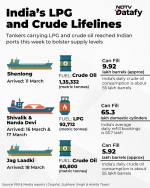
It's mostly hoarding and panic buying.Seems like LPG shortage.. driving prices up.
Based on that , many items prices are changing/ getting unavailable.
There's no shortage for domestic needs. Although commercial activities will find difficulties.
As for prices... That's kind of inevitable. It's not just crude but everything shipped from the strait, which has been hurt. Driving up insurance premiums, usage of force majure and input cost for industries.
Considering the gravity of situation, if the diversification had not happened, we would be in a actual precarious situation.
Last edited:
This is a big breakthrough:

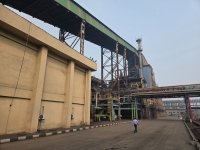

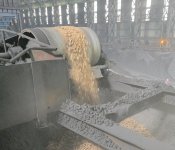
BREAKING: World-First Breakthrough in Green Steelmaking
Researchers from CSIRO and the Indian Institute of Science have successfully demonstrated the partial replacement of coal with agricultural waste in commercial steel production.
During a full-scale trial at Jindal Steel in Odisha, the team seamlessly blended 5% and 10% rice husk pellets into commercial gasifiers to produce biomass-derived syngas.
If adopted across India's steel sector, this technology could reduce emissions by up to 50 per cent, cutting approximately 357 million tonnes of carbon dioxide annually.
As a next step, the researchers plan to expand this work to smaller-scale regional facilities and explore a wider range of biomass sources to accelerate sustainable industrial practices.

BREAKING: World-First Breakthrough in Green Steelmaking
Researchers from CSIRO and the Indian Institute of Science have successfully demonstrated the partial replacement of coal with agricultural waste in commercial steel production.
During a full-scale trial at Jindal Steel in Odisha, the team seamlessly blended 5% and 10% rice husk pellets into commercial gasifiers to produce biomass-derived syngas.
If adopted across India's steel sector, this technology could reduce emissions by up to 50 per cent, cutting approximately 357 million tonnes of carbon dioxide annually.
As a next step, the researchers plan to expand this work to smaller-scale regional facilities and explore a wider range of biomass sources to accelerate sustainable industrial practices.