MMRCA 2.0 - Updates and Discussions

What is your favorite for MMRCA 2.0 ?

  • F-35 Blk 4

    Votes: 44 16.4%
  • Rafale F4

    Votes: 205 76.5%
  • Eurofighter Typhoon T3

    Votes: 5 1.9%
  • Gripen E/F

    Votes: 5 1.9%
  • F-16 B70

    Votes: 1 0.4%
  • F-18 SH

    Votes: 10 3.7%
  • F-15EX

    Votes: 11 4.1%
  • Mig-35

    Votes: 2 0.7%

  • Total voters
    268
  • Poll closed .
^ Agree, I am surprised to see @Picdelamir posting communist party's propaganda website here, just because any article contains the word Rafale does not mean you should find and post here.
I did notice that there were a few inaccuracies, but from a French perspective, it's not a big deal. However, I thought that the tone of the article reflected a large part of the Indian population.
 
Via PTI

"In our engagements with the Government of India, we have proposed the creation of the world's most advanced aerospace industry, comprising multi-layered design, production and maintenance," said Mikael Franzen, Chief Marketing Officer, Gripen, and Vice President of Business Area Aeronautics at the Swedish group.

He pointed out that Gripen E is the most modern and cost-effective fighter jet system on the market and could significantly improve Air Power within the Indian Air Force, with world leading sensor and networking capability.

"The highest availability of any fighter gives an unrivalled combat mass to counter any adversary. Gripen will fit perfectly in IAF together with Rafale and Tejas," Frazen told PTI at the Singapore Airshow held 3-8 Feb here.

While the IAF operates Rafale and Tejas fighters, there is a large space for a game changer like Gripen E at two levels: First, a fighter than can be inducted quickly and in large numbers; second, a technology powerhouse that has already solved the recipe for constant updating, upgrading and incorporation of the latest technology to become the masters of Net Centric Warfare, Electronic Warfare and Kill Chain, he highlighted.

Gripen E not only ticks all the boxes as its rapidly increasing AI capabilities has already put it well ahead of every other fighter aircraft, he elaborated on the jet.

Gripen is the only fighter aircraft with the ability not only to incorporate new technology without significant fleet downtime due to its ability to rapidly qualify and certify new software. Gripen provides Air Forces unique capability to build, qualify, incorporate and certify their own software without the involvement of the manufacturer, said Franzen.

"Saab would be making the biggest transfer of technology and capability in the history of defence aviation, engaging with 300+ of tier 1,2 and 3 companies including MSMEs. The infusion of industrial capabilities and new technologies make Gripen a potential stepping stone to bolster India's indigenous fighter projects such as AMCA," underscored the Swedish business executive.

At the core of Saab's India proposition is to deliver aircraft quickly - as soon as the third year from contract. This is followed by a steep capacity ramp-up - to enable the IAF to multiply its fleet options, he said.

"There is a blueprint not only to build aircraft, initially out of Sweden and then in India at a rapid pace, but also to build an Indian eco-system of Indian companies, in parallel. This will also form a regional industrial hub with significant opportunities for export," he went on.

This approach will empower the IAF to incorporate customized national software and AI in the highly agile platforms at the core of Gripen avionics, which can be rapidly scaled up as greater processing power and AI evolves, said Franzen.

To sum up, what is different in SAAB offer is an aircraft that will not only fly far into the future, the 'make in India' will create a backbone of future aircraft bringing capability which is currently well outside the envelope of any fighter aircraft, he said.
 
  • Like
  • Informative
Reactions: YoungWolf and Shan

Legacy aircraft like the MiG-29 UPG, Mirage 2000, and Jaguar are expected to retire within the next 5–7 years. Any major aircraft purchase or indigenous development started today will take 3–5 years to become fully operational.

This reality explains why the IAF sees the acquisition of 114 additional Rafale fighters as the safest and fastest solution. India already operates 36 Rafales, and expanding an existing fleet appears operationally sensible.

But this “safe solution” may come at a price that can only be described as a Kidney for Rafale.

Why Rafale Looks Like the Best Option


There is no denying the capability of the Rafale.
It is among the world’s best 4.5-generation fighter aircraft. Its weapon ecosystem makes it especially attractive for India’s threat environment.

Key strengths include:
  • Meteor long-range air-to-air missile
  • SCALP deep-strike cruise missile
  • MICA NG, the next-generation air combat missile

Against Pakistan, Rafale offers clear operational advantages. From sensor fusion to strike depth, it gives the IAF confidence in both offensive and defensive missions.
The problem, however, is not capability. The problem is cost and what that cost actually includes.

The Two-Pronged Rafale Problem

1. A €40 Billion Entry Ticket


Media reports suggest India may pay north of €40 billion for 114 Rafale jets. That puts the per-aircraft cost at roughly €350 million.

For comparison:
  • 36 Rafales (2016 deal): ~€222 million per aircraft
  • 26 Rafale-M for Navy: ~€275 million per aircraft
Yes, the new deal will include local assembly in India and long-term support. Facility amortisation and services will push prices up. But even accounting for that, the jump is significant.

This is the first warning sign that the Kidney for Rafale narrative is not exaggeration.

2. Expensive Jets, Limited Weapons


Despite the massive upfront cost, India will not receive a large stockpile of weapons.
This is not speculation. Recent events confirm it.

SCALP Missile Purchase Raises Hard Questions

Just yesterday, ANI reported that India is purchasing €300 million worth of SCALP missiles.

This is notable.

When India signed the original 36-Rafale deal, then Defence Minister Late Shri Arun Jaitley stated that India would avoid revealing weapon inventory numbers so adversaries would not know the stockpile size.

However, the need to buy SCALP missiles again after a single high-intensity operation suggests something else.

During Operation Sindoor, SCALP missiles were reportedly used in 10–15 numbers. If replenishment is required so quickly, it indicates that the original inventory was not very large.

What Does €300 Million Actually Buy?

According to the Italian defence website The Aviationist, the unit cost of a SCALP missile in 2024 was around USD 3 million per missile.

A simple euro-to-dollar conversion shows that a €300 million deal would give India roughly 100–120 SCALP missiles. That is not a war-sustaining stockpile. This leads to the first major cost issue.

Hidden Cost #1: Weapons Are a Continuous Expense

French weapon systems are expensive and they must be bought again and again.
Missiles are not a one-time purchase. Training, deterrence patrols, and actual combat operations consume them rapidly.
These recurring purchases add heavily to the life-cycle cost of the Rafale program. This cost is rarely discussed in mainstream media coverage but matters enormously for long-term force planning.

This is where the Kidney for Rafale argument becomes unavoidable.

Hidden Cost #2: Rising Unit Price Over Time

With a projected total of €40 billion:
  • Unit cost rises to ~€350 million
  • This is significantly higher than previous Rafale deals
  • The price is now comparable to some fifth-generation programs globally
Even if support and infrastructure are included, this number will shape future budgets and crowd out other programs.

Rafale Is a Necessity: but at What Price?

There is no escaping reality.
Rafale is not a luxury for the IAF. It is a necessity driven by shrinking squadron strength and limited short-term alternatives.
But necessity should not mean blind acceptance.
At this scale, Rafale risks becoming a Kidney for Rafale deal, possibly even two.

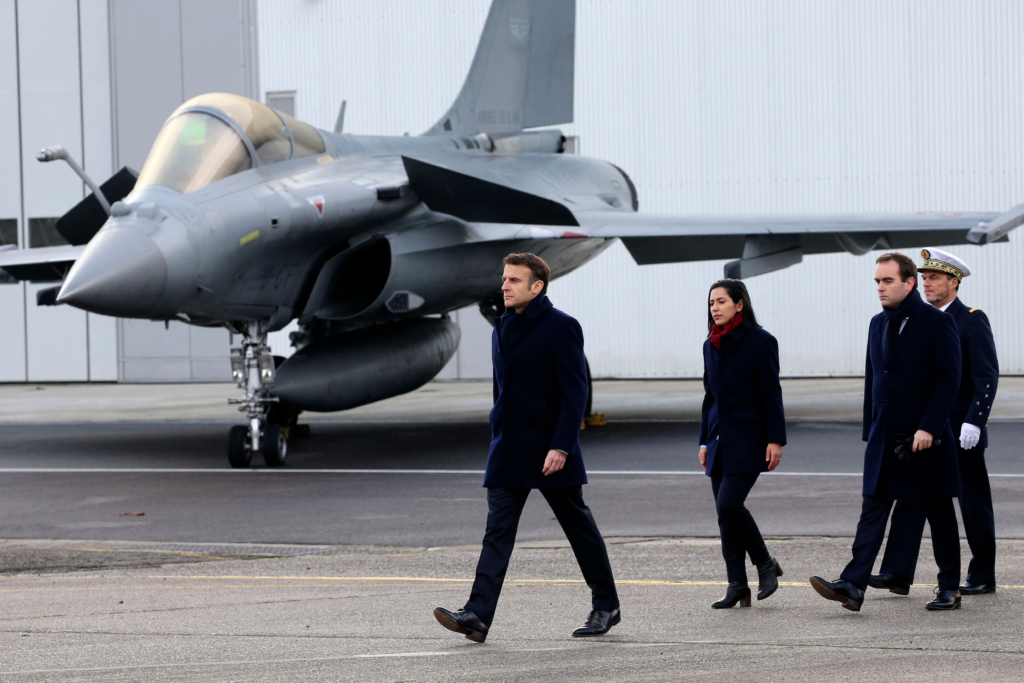
With President Emmanuel Macron expected to visit India soon, developments around this acquisition are inevitable. Momentum will build quickly.

The Minimum India Must Demand

If India is paying this price, expectations must be clear.

At the very least, India should secure:
  • Future access to integrate Indian-origin weapons
  • Reduced dependence on French weapons for every mission
  • Long-term flexibility without repeated renegotiations

Without this, the Rafale will remain an elite aircraft but also a permanently expensive one.

Final Thoughts

Rafale will strengthen the Indian Air Force. There is no doubt about that. But strength purchased without autonomy becomes dependence. And dependence, over decades, is far costlier than the aircraft itself.

India needs Rafale.
But India must ensure it does not permanently pay a Kidney for Rafale every time it prepares for war.
ot permanently pay a Kidney for Rafale every time it prepares for war.

 
Gentlemen, please share your views taking into account recent upgrades.

"Technical comparison: Avionics & EW suites ( F-35, Rafale , Typhoon, Gripen, F-15EX)"
How does these jets rank against each other wrt following criteria -

1.EW suites - how does F-35 ASQ-239 compare to the Active stealth of Rafale spectra , F-15EX EPAWSS , Typhoon praetorian & Ga-N based suite of Gripen-E ?

2.AESA Radar - How does the F-35 APG-81 stack up against F-15EX APG-82 , Rafale RBE2 AESA, Swashplate wide angle Gripen Radar & Typhoon Captor -E ?

3. IRST - who has the advantage in long range detection of low RCS targets : F-35 EOTS vs Typhoon Pirate vs Rafale OSF vs Gripen skyward ..?

4.Multirole capability vs IADS - which suite offers best strike capability & SEAD/DEAD against modern IADS ?

Welcome, I look forward to hear your opinions and technical insights on these jets stacks up against each other in a combat.
 
Gentlemen, please share your views taking into account recent upgrades.

"Technical comparison: Avionics & EW suites ( F-35, Rafale , Typhoon, Gripen, F-15EX)"
How does these jets rank against each other wrt following criteria -

1.EW suites - how does F-35 ASQ-239 compare to the Active stealth of Rafale spectra , F-15EX EPAWSS , Typhoon praetorian & Ga-N based suite of Gripen-E ?

2.AESA Radar - How does the F-35 APG-81 stack up against F-15EX APG-82 , Rafale RBE2 AESA, Swashplate wide angle Gripen Radar & Typhoon Captor -E ?

3. IRST - who has the advantage in long range detection of low RCS targets : F-35 EOTS vs Typhoon Pirate vs Rafale OSF vs Gripen skyward ..?

4.Multirole capability vs IADS - which suite offers best strike capability & SEAD/DEAD against modern IADS ?

Welcome, I look forward to hear your opinions and technical insights on these jets stacks up against each other in a combat.
F-35A Block-4 with GaN AN/APG-85 and GaN EPAWSS derived EW plus new EOTS & EODAS is going to be an absolute beast and better than all other jets you've listed above.

But for our case, Rafale is best. No thanks to F-35;)
 
  • Like
Reactions: Lolwa
F-35A Block-4 with GaN AN/APG-85 and GaN EPAWSS derived EW plus new EOTS & EODAS is going to be an absolute beast and better than all other jets you've listed above.

But for our case, Rafale is best. No thanks to F-35;)
How US acheived 85 to 100KW power out from their Radar while rest of the world struggled with around 20 kw power?
How much will be the power out for Uttam radar & desi AESA radar we are working for MKI?
 
How US acheived 85 to 100KW power out from their Radar while rest of the world struggled with around 20 kw power?
From which airborne radar have they achieved 100KW power? These are future 5th+ and 6th gen projects but yes, US has the most moolah to hire the brightest minds of the world and their military R&D is highest. So them being ahead in radar tech is not surprising. They were the first to put AESA radar in F-15s, way back in early/mid 2000s FFS.
How much will be the power out for Uttam radar & desi AESA radar we are working for MKI?
Between 25KW to 35KW, of what is known now. Could be more in definitive version especially with uprated or all-new engines.
 
From which airborne radar have they achieved 100KW power? These are future 5th+ and 6th gen projects but yes, US has the most moolah to hire the brightest minds of the world and their military R&D is highest. So them being ahead in radar tech is not surprising. They were the first to put AESA radar in F-15s, way back in early/mid 2000s FFS.

Between 25KW to 35KW, of what is known now. Could be more in definitive version especially with uprated or all-new engines.
There are figures a
From which airborne radar have they achieved 100KW power? These are future 5th+ and 6th gen projects but yes, US has the most moolah to hire the brightest minds of the world and their military R&D is highest. So them being ahead in radar tech is not surprising. They were the first to put AESA radar in F-15s, way back in early/mid 2000s FFS.

Between 25KW to 35KW, of what is known now. Could be more in definitive version especially with uprated or all-new engines.
Its 80. My mistake
 
APG-85 isn't operational yet. And definitive Virupaksha could be north of max 50KW as well. Plus, we're also working on a Photonics radar version of it. As I said, Uncle Sam is ahead but we're catching 'em fast, real fast.
Thing is Rafale we are procuring is having 12-15kw output radar. Correct me if i am wrong. Asper that tweet current F35 having 35kw out put.
 
  • Like
Reactions: Rajput Lion
IAF to have free hand to integrate weapons on 114 new Rafales: Sources

The Indian Air Force (IAF) will have full “unilateral” authority to integrate weapons of its choice — including Made in India munitions — on board the additional 114 Rafale combat aircraft that India is actively considering purchasing from French aerospace major Dassault Aviation, defence sources told Business Standard on Friday. They added that the final deal would be cost-competitive by international standards, despite incorporating a significant push for local manufacturing and maintenance.

“The additional Rafales will be from a vastly improved version compared to the 36 acquired for the IAF under the 2016 deal,” one of the sources added. The new jets will be of the latest “F4 standard” and are planned to be upgraded to the under-development “F5 standard” in due course. According to Dassault, the future Rafale F5 jets will feature capabilities that will allow them to remain operational beyond 2060 and will be optimised to operate alongside unmanned combat aircraft.

The Indian Navy has also placed orders for 26 marine variants of the aircraft.


News for those who think the Rafale deal is around the corner. Pandit suggests a few months before the deal is inked. IMO it'd be a year or 2 from now likely same time 2028 .

What could potentially speed things up is another operation like Operation Sindoor conducted at a much higher intensity.

That'd see the uniforms , suits & dhotis scrambling to sign up ASAP.
 

Key Highlights of MRFA deal --

1. Full Authority to integrate indian weapons & indian Systems.

2. Rafale-M will start coming in 2028.

3. Air force Rafale will also start coming after 3.5 years , around 2029.

4. Negotiations are currently underway to ensure that the make in India rafale exceeds 50 % Indigenous content.
 
Key Highlights of MRFA deal --

1. Full Authority to integrate indian weapons & indian Systems.

2. Rafale-M will start coming in 2028.

3. Air force Rafale will also start coming after 3.5 years , around 2029.

4. Negotiations are currently underway to ensure that the make in India rafale exceeds 50 % Indigenous content.

Any source for the first point?
.
 
HBFja98aIAAsBtk
 
Promising things they do not own themselves. The engines are from US, electronics/radars from Leonardo/European weapons.

What they make themselves and actually control, we already have that expertise.
Via PTI

"In our engagements with the Government of India, we have proposed the creation of the world's most advanced aerospace industry, comprising multi-layered design, production and maintenance," said Mikael Franzen, Chief Marketing Officer, Gripen, and Vice President of Business Area Aeronautics at the Swedish group.

He pointed out that Gripen E is the most modern and cost-effective fighter jet system on the market and could significantly improve Air Power within the Indian Air Force, with world leading sensor and networking capability.

"The highest availability of any fighter gives an unrivalled combat mass to counter any adversary. Gripen will fit perfectly in IAF together with Rafale and Tejas," Frazen told PTI at the Singapore Airshow held 3-8 Feb here.

While the IAF operates Rafale and Tejas fighters, there is a large space for a game changer like Gripen E at two levels: First, a fighter than can be inducted quickly and in large numbers; second, a technology powerhouse that has already solved the recipe for constant updating, upgrading and incorporation of the latest technology to become the masters of Net Centric Warfare, Electronic Warfare and Kill Chain, he highlighted.

Gripen E not only ticks all the boxes as its rapidly increasing AI capabilities has already put it well ahead of every other fighter aircraft, he elaborated on the jet.

Gripen is the only fighter aircraft with the ability not only to incorporate new technology without significant fleet downtime due to its ability to rapidly qualify and certify new software. Gripen provides Air Forces unique capability to build, qualify, incorporate and certify their own software without the involvement of the manufacturer, said Franzen.

"Saab would be making the biggest transfer of technology and capability in the history of defence aviation, engaging with 300+ of tier 1,2 and 3 companies including MSMEs. The infusion of industrial capabilities and new technologies make Gripen a potential stepping stone to bolster India's indigenous fighter projects such as AMCA," underscored the Swedish business executive.

At the core of Saab's India proposition is to deliver aircraft quickly - as soon as the third year from contract. This is followed by a steep capacity ramp-up - to enable the IAF to multiply its fleet options, he said.

"There is a blueprint not only to build aircraft, initially out of Sweden and then in India at a rapid pace, but also to build an Indian eco-system of Indian companies, in parallel. This will also form a regional industrial hub with significant opportunities for export," he went on.

This approach will empower the IAF to incorporate customized national software and AI in the highly agile platforms at the core of Gripen avionics, which can be rapidly scaled up as greater processing power and AI evolves, said Franzen.

To sum up, what is different in SAAB offer is an aircraft that will not only fly far into the future, the 'make in India' will create a backbone of future aircraft bringing capability which is currently well outside the envelope of any fighter aircraft, he said.
 
Full Authority to integrate indian weapons & indian Systems.

If Adani signs up with let's say IAI, and they have a new Kh35 alternative, the Indian Navy can get that weapon integrated into Mig29K without a single Russian present.

That's called full authority. Control over mission computers and future upgrade.