ADA AMCA - Advanced Medium Combat Aircraft

  • Thread starter Thread starter Tarun
  • Start date Start date
I have addressed both points i the original post itself.
  • Maharatna is the highest level of autonomy that a CPSU can achieve. It will always have HR policies such as reservation. There is no point in squabbling about it. Thus, the only fix is disinvest to below 50%, which is politically not possible.
Why isn't it possible ?! By spitting HAL into 4 cos with cross holdings between them , the government can reduce its holdings below 51% enabling an independent management , yet ensuring no private or hostile entity holds a majority stake which in any case even otherwise isn't possible as it's up to the company's discretion to allot shares.
  • There is enough demand for multiple aeronautical manufacturers when you add the civilian aerospace industry.
Yes. Please name the various civilian aerospace projects we're undertaking.
  • No other nation besides China is developing three fighter designs, helicopters, UCAVs, and a reusable heavy rocket all simultaneously.
The US is . Besides that's all the more reason we should be spitting up HAL. It isn't possible for the company management to keep track of existing as well as upcoming projects in different fields simultaneously.

There's a reason cos decide to split itself up into several constituents . It's for better management , to unlock value & for better shareholder returns.
  • We also aspire to produce multiple civilian aircraft, including airliners. The pie will only get bigger with the export market. We do not lack demand, competent human capital, or other resources.
Yes , that's what I asked you . Please name the various civilian aircraft projects we're undertaking. While you're at it , please name the FAs or hptrs we've exported.

This is what I suggested a long time ago. 👇 Difficult - yes , Doable - absolutely. Will we do it ? Of course not.

A long time ago I'd argued with Milspec about dividing HAL into 3-4 independent companies with cross holdings of each of these entities in the others . These 4 would be :

1.) Dedicated only to design mfg of helicopters for both civilian & military applications.

2.) Dedicated to design & mfg of FAs.

3.) Dedicated to design & mfg of transport & civilian planes.

4.) Dedicated to design & mfg of turbofans , tubojets , turboprops & turboshafts.

HAL as an aircraft & helicopter plus engine manufacturing unit is too unwieldy in it's present form .

In fact all the DPSU mfg units around India require to be re organised & privatised if need be or given Navratna status & autonomy on decision making & financial powers like in our oil PSUs , be it the ex OFB units or our Naval mfg set ups too .
 
I disagree with you that it's easy to reform HAL. Because that ignores the internal politics that goes inside HAL itself as well as external politics. As Ashwin has mentioned above, that would require major disinvestment. Which in turn will be not liked by certain people within HAL and outside HAL. Causing a political drama, which the Government would not prefer to get into. Also splitting HAL would reduce autonomy as well as over complicate things. Heck we might end up with two companies worse than HAL with less budget, less human and other resources. Less said about the political consequence of such a move the better.
The same government corporatised OFB in spite of opposition protests & the unions.
 
The same government corporatised OFB in spite of opposition protests & the unions.
That was when they had a super majority. Also corporatisation is different from privatisation. Reforming HAL would require something like Air India converting it into an independent organisation rather than CPSU. Many of the problems in HAL like slow recruitment process, slow procurement process, slow delivery process, etc. are a by-product of it being just a CPSU. Now do you think a coalition government has the guts to privatise HAL into something akin to Brahmos with 50/50 Public-Private split?
 
Why isn't it possible ?! By spitting HAL into 4 cos with cross holdings between them , the government can reduce its holdings below 51% enabling an independent management , yet ensuring no private or hostile entity holds a majority stake which in any case even otherwise isn't possible as it's up to the company's discretion to allot shares.
The government has given up on selling even loss-making PSUs. Privatization of HAL is impossible. It is also this government's stated policy to keep companies in the "strategic" sectors.

Yes. Please name the various civilian aerospace projects we're undertaking.
Because there is no civilian corporation attempting to make aircraft, HAL is directly under the Ministry of Defence. Thats why i said we aspire to.

India is the world's fastest-growing aviation market. The potential is huge. But a lazy PSU can't do it.

Look at what the government is doing with the shipping sector. Policy reform and attractive incentives can make a significant impact.

There's a reason cos decide to split itself up into several constituents . It's for better management , to unlock value & for better shareholder returns.
Its still a PSU.

All the same reservation policies. It doesn't matter if a project fails or succeeds. It doesn't matter if a plane is delivered on time or not. It doesn't matter if a young pilot crashes because of QC failure. No one loses their employment incompetence. Everyone will be paid on time. IAF has to come back for the next project because, you know, there is no alternative.
 
That was when they had a super majority. Also corporatisation is different from privatisation. Reforming HAL would require something like Air India converting it into an independent organisation rather than CPSU. Many of the problems in HAL like slow recruitment process, slow procurement process, slow delivery process, etc. are a by-product of it being just a CPSU. Now do you think a coalition government has the guts to privatise HAL into something akin to Brahmos with 50/50 Public-Private split?
Frankly it wasn't even an issue leave aside a major issue as many thought it would become . Nevertheless the opposition did try to make it one. I suspect the union leadership was compromised therefore apart from token action they refrained from going the whole hog .

Credit to the government then for anticipating problems & nipping it in the bud leaving the field clear for their policies to be implemented.

I'd expect something similar for HAL for the problem is more or less similar. Hence the playbook would be the same.

Looks like the GoI has different plans & this has nothing to do with coalition politics unlike what you guys think . I don't see either CBN or Nitiswa make this a hill to die on if this government was determined to act the way I've prescribed . The latter have no options as of the present. Even if they do I expect this government to have a back up plan.
 
The government has given up on selling even loss-making PSUs. Privatization of HAL is impossible. It is also this government's stated policy to keep companies in the "strategic" sectors.
Part of it has to do with the SC judgement on privatisation late in ABV's term which put a spanner in the works for future administrations.

However Modi has shown a marked tendency not to do even the basic minimum as far as disinvestment & privatisation goes.

Everything is possible if the government sets it's mind to it . Whoever conceived that AMCA would be offered to a private consortium a decade ago ? Compared to that what's privatization of HAL ?

Moreover there seems to be some misconceptions concerning privatization of HAL. I'm not suggesting we offer it for sale to the higest bidder.

I'm only for GoI splitting it into 4 entities with cross holdings & reduction of DIRECT GoI holdings to below 51% thereby ensuring a professional management aka the current management manages HAL in a more professional manner.

It is possible . For instance GoI direct holdings are reduced to 25% , LIC & other government bodies control 30% , cross holdings between the various subsidiaries HAL spawns will be another 20% & the rest can be offered to the public.

How does GoI lose control over HAL or / & it's subsidiaries then if the same ownership pattern follows ?!
Because there is no civilian corporation attempting to make aircraft, HAL is directly under the Ministry of Defence. Thats why i said we aspire to.
And there will be none if HAL continues in its present shape as it is overburdened with present & future responsibilities.

Our pvt sector like TASL etc will do coolie giri for that's what they're good at much like TCS. That's what is known as poverty of imagination.

Just the other day there was a news article on Infosys where the commentator lamented the clash between Sikka & InfoMurthy a decade ago .

Apparently Sikka wanted to adapt Infosys to Next-gen tech like AI much before it became the buzzword it is today whereas InfoMurthy wanted to continue with the status quo.


How's that different from what we're seeing with HAL today ?
India is the world's fastest-growing aviation market. The potential is huge. But a lazy PSU can't do it.
Hence the solution as I put it above.
Look at what the government is doing with the shipping sector. Policy reform and attractive incentives can make a significant impact.
Yes & how many PSUs do you think will capitalise on it given their work culture ? CSL & MDL are going ahead with their ventures . I expect GRSE & HSL including GSL to follow suit.

I'd be very interested in the feedback the Japanese & Koreans would state in public in the next few years assuming those entities collaborate with the Japanese & Koreans.
Its still a PSU.

All the same reservation policies. It doesn't matter if a project fails or succeeds. It doesn't matter if a plane is delivered on time or not. It doesn't matter if a young pilot crashes because of QC failure. No one loses their employment incompetence. Everyone will be paid on time. IAF has to come back for the next project because, you know, there is no alternative.
 
  • Like
Reactions: babablacksheep
I have addressed both points i the original post itself.
  • Maharatna is the highest level of autonomy that a CPSU can achieve. It will always have HR policies such as reservation. There is no point in squabbling about it. Thus, the only fix is disinvest to below 50%, which is politically not possible.
With regards to HR policies and hiring practices, there can be no reform that can be implemented in PSUs or GoI promoted orgs. It is subject to certain guidelines and regulations as Ashwin listed.

HAL (Hindustan Aeronautics Limited) reservation guidelines follow the Government of India's policy, which provides for reservation for Scheduled Castes (SC), Scheduled Tribes (ST), Other Backward Classes (OBC-NCL), and Economically Weaker Sections (EWS) in direct recruitment and apprenticeships. Candidates must meet specific criteria, provide valid government-issued caste or income certificates, and meet the prescribed percentage of disability to qualify for reservation as Persons with Benchmark Disabilities (PwBD).

 
Last edited:
There is a requirement of industrial law on defence manufacturing. The biggest issue in privatizing the defence is the check on information leak and accountability. Indian government is not really ready to share even non critical tech to the manufacturer so easily. Security apparatus in India is not sufficient enough to manage it and otherside the industrial laws don't cover them in official secret act, defence manufacturing act is absent, and law type of share holding and it's foreign investment is also abscent. Government definitely doesn't want some Indian private firm developing a critical tech for a foreign buyer.

Otherwise defence manufacturing is a very lucarative market and won't go the way other PSUs have gone.
 
Everything is possible if the government sets it's mind to it .
Empty statements like these are not very useful.

"We can reach double digit growth in few years if the government sets it's mind to it". Of course, it's possible. But, is it probable?. Can this govt do radical reforms those are needed to get to that goal?.

From their point of view, HAL is performing good enough. There is no huge impetus to break them up for efficiency. Its as unlikely as direct privatisation.

And there will be none if HAL continues in its present shape as it is overburdened with present & future responsibilities.

Our pvt sector like TASL etc will do coolie giri for that's what they're good at much like TCS. That's what is known as poverty of imagination.

Just the other day there was a news article on Infosys where the commentator lamented the clash between Sikka & InfoMurthy a decade ago .

Apparently Sikka wanted to adapt Infosys to Next-gen tech like AI much before it became the buzzword it is today whereas InfoMurthy wanted to continue with the status quo.

How's that different from what we're seeing with HAL today ?
Are you seriously comparing the most successful global IT corporations to HAL?

It's a private company. They can take their cash and burn it if their shareholders want to. It's no one else's concern.

TCS every year pay Rs 15k cr as corporate tax and employs 6 lakh indians today. They built it from scratch and compete globally. We should be thanking these entrepreneurs and risk-takers for their foresight and expertise in generating so much wealth for this country. And you are gossiping about their private matters.

It is absurd to compare HAL, a government company with no competition, where the only customer is the government itself. The company is funded by taxpayer money, and its shareholders are public, so they are accountable to the nation at large.
 
Empty statements like these are not very useful.

"We can reach double digit growth in few years if the government sets it's mind to it". Of course, it's possible. But, is it probable?. Can this govt do radical reforms those are needed to get to that goal?.
In the event , undertaking what I suggested about HAL is definitely much more feasible than the double digit growth rates you're referring to . There's something about comparing apples & oranges.
From their point of view, HAL is performing good enough. There is no huge impetus to break them up for efficiency. Its as unlikely as direct privatisation.
That's coz this government has made up its mind about HAL. I'm suggesting viable alternatives & why this reasoning about HAL is half baked.

After all it's been 3 years since the GoI has been issuing notifications soliciting Pvt participation in the AMCA tender irrespective MoD should've first attempted this with the LCA Mk-2 & not a 5th Gen FA program . How come nobody responded ?

What's the gameplan here but to emaciate HAL just the way Titan emaciated HMT by poaching on its staff ? How different is this move ? Where's the expertise & experience of those pvt players which renders them qualified for THE most complex task in Indian aviation history or even world aviation which is being a system assembler for a fifth generation program ?

Is there any precedent for it ? You can refer to Airbus's attempts to browbeat DA into parting with their patented expertise in the SCAF project for they themselves have none , which therefore is on the verge of being derailed .

Has anybody paid attention to the fallout of the AMCA program in case this pvt entity isn't in a position to deliver on account of reasons I've highlighted and other pressing reasons ?
Are you seriously comparing the most successful global IT corporations to HAL?

It's a private company. They can take their cash and burn it if their shareholders want to. It's no one else's concern.
I was giving you an insight into the way Tatas conduct their business & the fact that Infosys has now become a rentier company .

Have you forgotten Nandan Nilekani refusing to invest in creating indigenous generative AI systems & the justification he offered which led the Google Head India of all people to butt in denying Nilekani's points insisting India must develop its own indigenous generative AI systems.

This is the mentality of people who're lionized for being pioneers of the IT revolution in India whose model & thinking doesn't extend beyond body shopping & labour arbitrage which is all set to be upended with the advent of AI.

Ironically all this could've been prevented if Sikka was given a free hand as that article I've linked earlier highlights . And you're justifying this myopic view.

This is precisely the poverty of imagination I wanted to highlight by referencing that article , on the part of our feted industrialists , the government & people like you.
TCS every year pay Rs 15k cr as corporate tax and employs 6 lakh indians today. They built it from scratch and compete globally. We should be thanking these entrepreneurs and risk-takers for their foresight and expertise in generating so much wealth for this country. And you are gossiping about their private matters.
Please pin this comment & revisit it in 5 years & 5 years after that to see how full of foresight your post was.
It is absurd to compare HAL, a government company with no competition, where the only customer is the government itself. The company is funded by taxpayer money, and its shareholders are public, so they are accountable to the nation at large.
There are better ways to create competition. GoI should've invited all those they did with the aim to create a substantial body of sub contractors & evaluated those organisations on that basis with a view to qualifying them based on their performance on the AMCA project to become system providers / assemblers for the 6th Gen FA program.

Haven't we seen the Tejas program where we leapt straight away to developing a 4th Gen FA without development of the previous 3 generations the Marut program notwithstanding for by the time the LCA was announced virtually all those associated with the Marut either superannuated or were on the verge of it & the fallout it had in terms of timelines , on the IAF's procurement , basic project management or the lack of it & how if a certain Manohar Parrikar wasn't the Raksha Mantri you can be sure we would be back to importing !

What are the lessons you derive from all this man assuming you think there are lessons to be learnt from past experiences unless of course like the government you want to leap from the frying pan into the fire !
 
Moreover there seems to be some misconceptions concerning privatization of HAL. I'm not suggesting we offer it for sale to the higest bidder.

I'm only for GoI splitting it into 4 entities with cross holdings & reduction of DIRECT GoI holdings to below 51% thereby ensuring a professional management aka the current management manages HAL in a more professional manner.

It is possible . For instance GoI direct holdings are reduced to 25% , LIC & other government bodies control 30% , cross holdings between the various subsidiaries HAL spawns will be another 20% & the rest can be offered to the public.
Interesting plan. However, looking at it from a pov of market finances and economics, there might be some issues.

Reducing direct GoI holdings to 25%, with LIC and other government bodies holding 30%, cross-holdings at 20%, and the rest public. This might technically maintain "control" through voting blocs, but it creates a convoluted web of influence that stifles good management practices and policies. In reality, indirect control via state-owned entities like LIC (which is itself government-dominated) means decisions can still be bogged down by bureaucratic red tape, political interference, and conflicting agendas.

Economically, this setup erodes viability because it discourages genuine private investment. Investors would see through the facade—why pour money into a "new and professional" HAL when the government backed investors/institutions can still pull strings indirectly? This leads to lower valuations (you stated that you wish to raise money on the stock market). Also, Cross-holdings add another layer of complexity—each entity owning shares in others creates circular dependencies, making financial reporting difficult and increasing audit expenses by 20-30%

Markets tend to penalise companies with convoluted cross-holdings and often this leads to "holding company discounts" of 20-40% in valuations as evidenced by conglomerates like Japan's keiretsu systems. You can check out such companies, they have been listed for a while and read more about what Japanese investors and FIIs think about them.

In case of economic conditions declining (e.g., a defense budget cut or global recession), these cross-holdings could trigger cascading financial stress—one subsidiary's/dependent's losses ripple through the collective, amplifying volatility.

Due to the shareholding patterns and cross-holdings etc. FIIs will not be interested in such companies.

Economically, if I were to be honest, there are a fair bit of downsides to what you propose. The markets will not favour what has been stated.
 

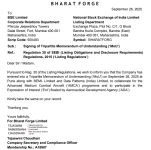
BEML Limited has teamed up with Bharat Forge Limited and Data Patterns (India) Limited through a Tripartite Memorandum of Understanding (MoU) signed on 26th September 2025 in Pune. The collaboration aims to support the Advanced Medium Combat Aircraft (AMCA) programme, a key project in India’s defense sector.

Under this partnership, the three companies will work together to participate in the Expression of Interest (EoI) issued by the Aeronautical Development Agency (ADA). This initiative reflects a strong push towards indigenously strengthening India’s aerospace capabilities and fostering collaboration between leading defense and technology firms.
 
That's coz this government has made up its mind about HAL. I'm suggesting viable alternatives & why this reasoning about HAL is half baked.

After all it's been 3 years since the GoI has been issuing notifications soliciting Pvt participation in the AMCA tender irrespective MoD should've first attempted this with the LCA Mk-2 & not a 5th Gen FA program . How come nobody responded ?

What's the gameplan here but to emaciate HAL just the way Titan emaciated HMT by poaching on its staff ? How different is this move ? Where's the expertise & experience of those pvt players which renders them qualified for THE most complex task in Indian aviation history or even world aviation which is being a system assembler for a fifth generation program ?

Is there any precedent for it ? You can refer to Airbus's attempts to browbeat DA into parting with their patented expertise in the SCAF project for they themselves have none , which therefore is on the verge of being derailed .

Has anybody paid attention to the fallout of the AMCA program in case this pvt entity isn't in a position to deliver on account of reasons I've highlighted and other pressing reasons ?
All of these are taken care because R&D expertise are with ADA not HAL. Multiple private players has shown their ability to manufacture aerostructure in "build to print". From F-16 wings to Apache fuselage, all are being exported. Essentially, they have already been proven and benchmarked by ADA for the same.

1758888429219.png

On emaciate of HAL, Why not exactly? Let the better company wins, thats how capitalism works. Where was the same sentiment for OFB? Bhartforge, Adani and SSS are gonna completely destroy them in a decade. You cheer for that but somehow HAL is different?.

Our priority is to ensure that men in uniform receive the best possible equipment to defend our nation's interests. It's as simple as that. I don't care if it's made by SSS or OFB. I fail to see the value in romanticism with a DPSU.

I was giving you an insight into the way Tatas conduct their business & the fact that Infosys has now become a rentier company .

Have you forgotten Nandan Nilekani refusing to invest in creating indigenous generative AI systems & the justification he offered which led the Google Head India of all people to butt in denying Nilekani's points insisting India must develop its own indigenous generative AI systems.

This is the mentality of people who're lionized for being pioneers of the IT revolution in India whose model & thinking doesn't extend beyond body shopping & labour arbitrage which is all set to be upended with the advent of AI.

Ironically all this could've been prevented if Sikka was given a free hand as that article I've linked earlier highlights . And you're justifying this myopic view.

This is precisely the poverty of imagination I wanted to highlight by referencing that article , on the part of our feted industrialists , the government & people like you.
You are completely missing the point. It's a private company. They take risks based on their aptitude. It's up to them how to run their company.

Please pin this comment & revisit it in 5 years & 5 years after that to see how full of foresight your post was.
The future is irrelevant here; they have generated huge wealth and employment. It's a fact.

In a capitalist system, it is essential to have a process of creative destruction where underperforming entities are replaced by competent companies that succeed. The role of the state is to facilitate the process in an efficient manner. Private companies tend to win in this environment because they are more efficient and agile. So, in order to achieve the goal of delivering the best possible equipment to our forces, we need to involve the private industry.
 
In the event , undertaking what I suggested about HAL is definitely much more feasible than the double digit growth rates you're referring to . There's something about comparing apples & oranges.

That's coz this government has made up its mind about HAL. I'm suggesting viable alternatives & why this reasoning about HAL is half baked.

After all it's been 3 years since the GoI has been issuing notifications soliciting Pvt participation in the AMCA tender irrespective MoD should've first attempted this with the LCA Mk-2 & not a 5th Gen FA program . How come nobody responded ?

What's the gameplan here but to emaciate HAL just the way Titan emaciated HMT by poaching on its staff ? How different is this move ? Where's the expertise & experience of those pvt players which renders them qualified for THE most complex task in Indian aviation history or even world aviation which is being a system assembler for a fifth generation program ?

Is there any precedent for it ? You can refer to Airbus's attempts to browbeat DA into parting with their patented expertise in the SCAF project for they themselves have none , which therefore is on the verge of being derailed .

Has anybody paid attention to the fallout of the AMCA program in case this pvt entity isn't in a position to deliver on account of reasons I've highlighted and other pressing reasons ?

I was giving you an insight into the way Tatas conduct their business & the fact that Infosys has now become a rentier company .

Have you forgotten Nandan Nilekani refusing to invest in creating indigenous generative AI systems & the justification he offered which led the Google Head India of all people to butt in denying Nilekani's points insisting India must develop its own indigenous generative AI systems.

This is the mentality of people who're lionized for being pioneers of the IT revolution in India whose model & thinking doesn't extend beyond body shopping & labour arbitrage which is all set to be upended with the advent of AI.

Ironically all this could've been prevented if Sikka was given a free hand as that article I've linked earlier highlights . And you're justifying this myopic view.

This is precisely the poverty of imagination I wanted to highlight by referencing that article , on the part of our feted industrialists , the government & people like you.

Please pin this comment & revisit it in 5 years & 5 years after that to see how full of foresight your post was.

There are better ways to create competition. GoI should've invited all those they did with the aim to create a substantial body of sub contractors & evaluated those organisations on that basis with a view to qualifying them based on their performance on the AMCA project to become system providers / assemblers for the 6th Gen FA program.

Haven't we seen the Tejas program where we leapt straight away to developing a 4th Gen FA without development of the previous 3 generations the Marut program notwithstanding for by the time the LCA was announced virtually all those associated with the Marut either superannuated or were on the verge of it & the fallout it had in terms of timelines , on the IAF's procurement , basic project management or the lack of it & how if a certain Manohar Parrikar wasn't the Raksha Mantri you can be sure we would be back to importing !

What are the lessons you derive from all this man assuming you think there are lessons to be learnt from past experiences unless of course like the government you want to leap from the frying pan into the fire !

I don't think privatising HAL is easy even if the govt set it's mind to. HAL will just try to buy as much time as possible while opposition create anti-business ruckus and hope to make a govt. When the alternative is even worse scenario, it's prudent to overflow HAL and keep their mouths fed while pushing pvt companies to enter.
The flaws here is that there does not seem to be concentrated and systematic push for creating supply of vendors/manufacturers down the value chain as far as we know. And if academic institutions don't keep up to supply the talent, it's another failure in waiting. There are few startups who show promise.. but let's see.
Also, on the idea of leaping up to 5th gen, I doubt govt has much options with 4th Gen bogged up by HAL already. Resource constraints and needs of IAF will hardly allow govt to run simultaneous 4th Gen program. So, perhaps ADA handholding pvt players, leveraging pvt players' partnerships with rafael and others, their growing experience in setting up ecosystem.. things are changing. They just aren't running at full throttle, only staggering.

I absolutely agree with you on the TCS and TATA front though. We often forget that these companies aren't built on risk taking and innovation but built on bribes to Indira Gandhi and killing competition unethically. Infosys, TCS are byproduct of that culture, even if not from that era.
MM just propped up software industry because it was the easiest and laziest thing to do. He did what chinese did in manufacturing in early days, leveraging cheap labor. Just forgot that chinese did it decades ago and what they did after. Companies brought up in that culture would find it hard to innovate when the whole idea was anything but that. Basically they helped create their own competition.

Another change we see in last few years regarding that is that the new companies, startups ( after the first phase with likes of zomato).. are growing up in an ecosystem where public discourse is about innovation and Beauracracy is frowned upon. Not cajolled. This will have a long term impact if govt can sustain this discourse and ecosystem.
Slowly you strangle the idea of state control. Upliftment of middle class will also steer is towards that direction, as the growing middle class and privatisation has seen somewhat similar trajectory.

P.S. Things can change if big players do course correction now. But I haven't seen much initiatives in R&D even in a lucrative civil automobiles sector..
 
Last edited:
Interesting plan. However, looking at it from a pov of market finances and economics, there might be some issues.

Reducing direct GoI holdings to 25%, with LIC and other government bodies holding 30%, cross-holdings at 20%, and the rest public. This might technically maintain "control" through voting blocs, but it creates a convoluted web of influence that stifles good management practices and policies. In reality, indirect control via state-owned entities like LIC (which is itself government-dominated) means decisions can still be bogged down by bureaucratic red tape, political interference, and conflicting agendas.

Economically, this setup erodes viability because it discourages genuine private investment. Investors would see through the facade—why pour money into a "new and professional" HAL when the government backed investors/institutions can still pull strings indirectly? This leads to lower valuations (you stated that you wish to raise money on the stock market). Also, Cross-holdings add another layer of complexity—each entity owning shares in others creates circular dependencies, making financial reporting difficult and increasing audit expenses by 20-30%

Markets tend to penalise companies with convoluted cross-holdings and often this leads to "holding company discounts" of 20-40% in valuations as evidenced by conglomerates like Japan's keiretsu systems. You can check out such companies, they have been listed for a while and read more about what Japanese investors and FIIs think about them.

In case of economic conditions declining (e.g., a defense budget cut or global recession), these cross-holdings could trigger cascading financial stress—one subsidiary's/dependent's losses ripple through the collective, amplifying volatility.

Due to the shareholding patterns and cross-holdings etc. FIIs will not be interested in such companies.

Economically, if I were to be honest, there are a fair bit of downsides to what you propose. The markets will not favour what has been stated.
You're looking at the issue thru the narrow lens of finances & shareholding. These are strategic units . They don't lend themselves to the same parameters used to gauge performances of other cos like say an FMCG or a CE company.

Check out on how many defence contracting cos are Blue Chip cos? I don't think you'd find any. OTOH let's say RR is in deep waters financially speaking. Being a crown jewel in strategic terms in however bad shape the British economy is in they'd still not permit sale of an M&A with P&W or GE of the US or SAFRAN of France no matter how close their relationship. That's how strategic units are treated.

Retuning to HAL the only reason I'm suggesting the government should drop its stake below 51% is to professionalise the management & get rid of government control if you want a level playing field. Give it time to clean up its act post that & then judge its performance.

In the meanwhile get all those pvt sector cos to participate as sub contractors in the AMCA project where they get valuable experience & then let them compete on equal terms with HAL

Aa far as your view of LIC by virtue of being a major shareholder will act as an impediment in the day to day administration of HAL goes , look around to see in how many pvt sector cos does LIC & other government owned insurance cos hold a majority stake ?

Once upon a time LIC , GIC etc were the majority stake holders in L&T . They also had their directors on the L&T board . I don't think we ever came across instances of LIC et al ever impeding or influencing the decisions of L&T management then .

Those bodies will interfere only when there's a gross misuse of power , fraudulent transactions , dilution of their own shareholding value etc.
 
Check out on how many defence contracting cos are Blue Chip cos? I don't think you'd find any. OTOH let's say RR is in deep waters financially speaking. Being a crown jewel in strategic terms in however bad shape the British economy is in they'd still not permit sale of an M&A with P&W or GE of the US or SAFRAN of France no matter how close their relationship. That's how strategic units are treated.
Rolls Royce, Safran, P&W are being treated as strategic units of their respective countries. I agree with you. So, HAL is a strategic unit at par with them or a peer to them? That's quite something.

Those bodies will interfere only when there's a gross misuse of power , fraudulent transactions , dilution of their own shareholding value etc.
Very subjective parameters. How would you quantify and define them? These are entirely dependent on who wishes to wield what kind of power and how.

You're looking at the issue thru the narrow lens of finances & shareholding.
I performed a market feasibility analysis based on specific parameters/attributes and the plan did not hold out.

I am okay with HAL continuing to do what it does and if it is feasible for other consortiums to compete with it that's all the more better.

IP and Patents


CompanyTotal Patents (Global)Active/Granted PatentsAnnual Patent FilingsNotable IP Achievements/Other IP RightsSources
HAL (Hindustan Aeronautics Limited)~603-623~513 activeNot consistently reported; focuses on defense tech in IndiaStrong in military aircraft and avionics IP. Holds trademarks for products like Tejas aircraft. Emphasizes trade secrets for sensitive defense tech. Limited global IP litigation reported.see above
Rolls-Royce Holdings plc~21,369~10,824 granted; >51% active (~10,900)~28 in specific themes (e.g., future of work) in Q4 2023; historically 100-200 US patents/year (2010-2017)Leader in aero-engine tech patents (e.g., turbofans). Extensive trademark portfolio (e.g., "Rolls-Royce" brand). Active in IP enforcement, including lawsuits over engine designs. Strong in trade secrets for manufacturing processes.see above
Safran GroupNot explicitly totaled; portfolio includes ~16,457 active patents~16,457 active>1,000 first applications worldwide/year; ~931 in France (2020-2021)Tops French patent rankings; focuses on aerospace propulsion and equipment. Robust trademarks (e.g., for CFM engines via JV with GE). Involved in IP collaborations and occasional disputes in Europe. Emphasizes copyrights for software in avionics.see above

 
Last edited:
All of these are taken care because R&D expertise are with ADA not HAL.
By the same token does ADA have mfg expertise ? I've seen a lot of illiterate comments on SM including this board on HAL production capacity & expertise . I wonder how many of those commenting have themselves any production expertise or experience ?

I started my career after graduation as a mechanical engineer 2 decades ago as a service engineer in the premier HVAC co of this country in their Central Plants division.

As part of the service branch we were supposed to co ordinate activities with the R&D cell for new product launches which means being part of the design & prototyping cycle & later on the production cycle. Why ? For those products ought to be serviced & typically R&D & production guys lacking that kind of insight usually go in for what suits their requirements first.

That one instance provided me with a plethora of experience into how do design teams think , how are vendors evaluated , how's prototyping done , the difference between a prototype & a pre production unit ( LSP ) , what goes on behind mass mfg , how does economy of scale kick in & so on.

And this was for a relatively low value chiller package unit like a scroll chiller package both air & water cooled where only the design & certain other parts were desi. The vast majority of the unit including the heart of the machine - the compressor , the brains - the PLC , the thermostats etc were all imported. Yet the coordination involved , the testing , the design validation etc was a hair raising , hair tearing experience.

Now, compared to a Fighter Aircraft that too a 5th Gen FA program , that experience was a cakewalk.


Multiple private players has shown their ability to manufacture aerostructure in "build to print". From F-16 wings to Apache fuselage, all are being exported. Essentially, they have already been proven and benchmarked by ADA for the same.

View attachment 46674
So how many aircrafts has TASL or any of those cos pre qualified to bid for the AMCA project mfgd / assembled ? This is like saying Bosch which is one of the biggest ancillary services the world over for automotive cos can claim design expertise in automobiles .

That too Bosch collectively has much more experience of developing & mfg vital automotive components than TASL or any other sub contractor in the Indian aviation ever has or ever will.

Put another way if push came to shove , Bosch can still design & mfg a car whereas TASL lacks the experience to put together a FA. If you're pointing out towards Airbus & the C-295 venture then it's a JV where the entire hand holding is done by Airbus. That too Airbus has both the experience & expertise of building the C-295 & even if they didn't have that experience they certainly have had plenty of experience in building transporters.

I sincerely hope you don't pull a Hydrocele here by claiming Airbus can hand hold TASL in the AMCA project too because that's where your arguments look like it's heading towards.
On emaciate of HAL, Why not exactly? Let the better company wins, thats how capitalism works.
That's not capitalism that's stupidity. You're wrecking a well performing company thru short sighted policies for unknown gains. Capitalism means first & foremost you have a level playing field. Right now HAL is operating with one hand tied behind its back like all PSU's & while pvt sector cos have the advantage of agility in decision making & nimbleness . However they lack the requisite experience..
Where was the same sentiment for OFB? Bhartforge, Adani and SSS are gonna completely destroy them in a decade. You cheer for that but somehow HAL is different?.
I've always advocated the same approach for OFBs . Those OFBs are striking examples of how not to run defence cos . Since they weren't corporatised before they weren't expected to generate a profit . Result they became centres of a socialist economy where vacancies were duly filled in & the machinery employed for production were of WW-2 vintage or slightly later.

I actually recall seeing a documentary a decade back of an OFB where the gunpowder for cartridges were filled with a a hand & a strainer. I'm not kidding you at all . That documentary was in response to complaints of a lot of cartridges misfiring or turning out to be duds . At least HAL hasn't reached such dire straits although plans seem afoot to take it to the levels of those OFBs.
Our priority is to ensure that men in uniform receive the best possible equipment to defend our nation's interests. It's as simple as that. I don't care if it's made by SSS or OFB. I fail to see the value in romanticism with a DPSU.
Yes the armed forces are entitled to receive the best arms & platforms our money can buy just as those OFBs require the best machines there are to helf mfg the best of arms & platforms our armed forces desire .

There's no romanticism about DPSUs only practicality.

You are completely missing the point. It's a private company. They take risks based on their aptitude. It's up to them how to run their company.
I was referring to the philosophy behind the way those cos are run . You seem the kind to often mistake the wood for the trees.
The future is irrelevant here; they have generated huge wealth and employment. It's a fact.
So by your logic , they ought to retire & go home. Ought to be true for any company which has crossed the age of 60.
In a capitalist system, it is essential to have a process of creative destruction where underperforming entities are replaced by competent companies that succeed.
Not in the strategic sector. Why do we have BSNL still running ? It's always been loss making . However the same government let MTNL go to seed.
The role of the state is to facilitate the process in an efficient manner. Private companies tend to win in this environment because they are more efficient and agile. So, in order to achieve the goal of delivering the best possible equipment to our forces, we need to involve the private industry.
Already answered this above & other posts.

 
  • Like
Reactions: ShiroBarks