

You are using an out of date browser. It may not display this or other websites correctly.
You should upgrade or use an alternative browser.
You should upgrade or use an alternative browser.




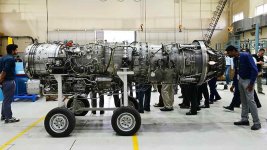
GTRE plans to utilize the LCA to check how the Kaveri engine integrates with the platform, Objective is to identify complexities and issues for a complete end to end solutions.

Not much clued into the mechanics of aero engines & therefore the significance of this development but how's this marginal increase of BPR from 0.016 to 0.2 significant ?
All other TFs which can be considered peers of the Kaveri be it the RD series or M-88 or EJ-200 or the GE F-404 or even the F-414 have BPR > 0.3 onwards.
If the objective of low bypass TF engines is a low BPR then what's the objective behind increasing it like it has been done with the Kaveri ? @Gautam ; @vstol Jockey ; @Picdelamirand-oil

If we can increase the pressure ratio to about 27:1, we will be able to increase the thrust of this engine by about 15%.

Increase in bpr can be done for several reasons some of them like Better cooling, improved fuel efficiency, improvement in low thrust/throttle performance etc.
Not much clued into the mechanics of aero engines & therefore the significance of this development but how's this marginal increase of BPR from 0.016 to 0.2 significant ?
All other TFs which can be considered peers of the Kaveri be it the RD series or M-88 or EJ-200 or the GE F-404 or even the F-414 have BPR > 0.3 onwards.
If the objective of low bypass TF engines is a low BPR then what's the objective behind increasing it like it has been done with the Kaveri ? @Gautam ; @vstol Jockey ; @Picdelamirand-oil
Does increasing the BPR contribute to a better overall pressure ratio & if that be the case how much will a 0.04 increase in BPR contribute to increasing the overall pressure ratio from ~ 21 as of date ?If we can increase the pressure ratio to about 27:1, we will be able to increase the thrust of this engine by about 15%.
Press
Every engine has two parts, the cold and hot. Increased airflow can increase thrust or bring down fuel consumption and the hot section improment does the same. The present set up of Kaveri can easily hit the target figure if we can increase the pressure ratio.
Pressure ratio is about increasing air flow to the combustion chamber and higher the flow of air to combustion chamber, higher is the air to fuel ratio which makes for a lean fuel burn. But that results in higher temperature for turbines and the combustion, so we need cooling of the turbines past the combustion chamber. Most engines today have the air fuel ratio of about 40:1. If we use hydrogen as the fuel it can rise to 160:1.Does increasing the BPR contribute to a better overall pressure ratio & if that be the case how much will a 0.04 increase in BPR contribute to increasing the overall pressure ratio from ~ 21 as of date ?
Every engine has two parts, the cold and hot. Increased airflow can increase thrust or bring down fuel consumption and the hot section improment does the same. The present set up of Kaveri can easily hit the target figure if we can increase the pressure ratio.
No. I all else remains the same, the OPR goes down. The same tweet thread mentions "OPR has decreased from 21.5 to 20.3."Does increasing the BPR contribute to a better overall pressure ratio
Then what's the point of increasing the BPR?No. I all else remains the same, the OPR goes down. The same tweet thread mentions "OPR has decreased from 21.5 to 20.3."
Ok. But if it was possible to increase the air flow mass & thereby increase the overall pressure ratio why wasn't it done on the kaveri?Press
Pressure ratio is about increasing air flow to the combustion chamber and higher the flow of air to combustion chamber, higher is the air to fuel ratio which makes for a lean fuel burn. But that results in higher temperature for turbines and the combustion, so we need cooling of the turbines past the combustion chamber. Most engines today have the air fuel ratio of about 40:1. If we use hydrogen as the fuel it can rise to 160:1.
Every engine has two parts, the cold and hot. Increased airflow can increase thrust or bring down fuel consumption and the hot section improment does the same. The present set up of Kaveri can easily hit the target figure if we can increase the pressure ratio.
Is it because of material limitations on the part of GTRE which allows for lower TET?
Increasing bpr and decreasing opr as before has benifit to better fuel efficiency specifically at lower-to-moderate throttle, and reduction in thermal stress.Then what's the point of increasing the BPR?
Given the event of changes are minimal the affect will also be minimal, while thrust will mostly remain same.


The Kaveri programme has moved on to stealth from jet
The Kaveri programme wanted to make an Indian engine for an Indian fighter jet. But that did not work out. Now, the Kaveri Derivative Engine will power India’s stealth combat aerial platform.


increase in pressure ratio depends upon compressor efficiency for that you need better design of compressor stages and higher RPM or second and easy approach is to increase stages of compressors but that will make it very heavy.If we can increase the pressure ratio to about 27:1, we will be able to increase the thrust of this engine by about 15%.
to increase RPM you need higher strength and lighter compressor stages, to make that possible we need blisk compressor and 50k ton forging press.
ej200 with just 5 stages acheives impressive 26:1 compression ratio because it has all blisk design and that is evident from its weight of just 900kgs.
current kaveri has neither.
so increase in compressor is not just about airflow.
The achievement of GTRE regarding aero engines, from the component level to the overall engine, also confirms we have 4th-gen 49 KN dry and 82 KN afterburner engines. Not sure why we haven't integrated with a platform till now. Seeing it flying would have given a big boost to the scientists and people of India.

Where does it confirm 82kn afterburner engine?The achievement of GTRE regarding aero engines, from the component level to the overall engine, also confirms we have 4th-gen 49 KN dry and 82 KN afterburner engines. Not sure why we haven't integrated with a platform till now. Seeing it flying would have given a big boost to the scientists and people of India.
Also quite nice to hear they already have 6th gen in mind. I'm guessing the tie up with France is 5th gen and they'll use that as base for 6th gen. Good enough I suppose.
Where does it confirm 82kn afterburner engine?
Also quite nice to hear they already have 6th gen in mind. I'm guessing the tie up with France is 5th gen and they'll use that as base for 6th gen. Good enough I suppose.
It will reduce IR, noise & vibrations signatures. Good to have for a stealth UCAV.Then what's the point of increasing the BPR?
Another recent interview:
New fan section on that engine. Probably the same old afterburner. I don't think Brahmos Aerospace has delivered the new afterburner section yet.View attachment 46382The Kaveri programme has moved on to stealth from jet
The Kaveri programme wanted to make an Indian engine for an Indian fighter jet. But that did not work out. Now, the Kaveri Derivative Engine will power India’s stealth combat aerial platform.www.theweek.in
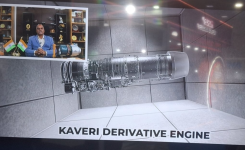


I dont think he said anything about 82kn AB. Only KDE is under active development to be used on UCAV.The achievement of GTRE regarding aero engines, from the component level to the overall engine, also confirms we have 4th-gen 49 KN dry and 82 KN afterburner engines. Not sure why we haven't integrated with a platform till now. Seeing it flying would have given a big boost to the scientists and people of India.