
Inspite of being showcased in DEFEA 2025 held in Greece, there is still no news of the timeline for the induction of this cruise missile in the IAF. There is no news about the introduction of the naval variant as well. The range is adequate and can be used as an inexpensive long range weapon. Another project that had potential of a timely roll out. However, due to the availability of alternatives from Europe and other places, still appears to be in trial phase or is in very limited deployment with the IA.
Nirbhay Family of Subsonic Cruise Missiles : News and Discussions
- Thread starter marich01
- Start date
-
- Tags
- indian defence itcm lrlacm slcm
You are using an out of date browser. It may not display this or other websites correctly.
You should upgrade or use an alternative browser.
You should upgrade or use an alternative browser.

These are all science project to keep gullible Indian defense enthusiast engaged & won't see the light ever.Inspite of being showcased in DEFEA 2025 held in Greece, there is still no news of the timeline for the induction of this cruise missile in the IAF. There is no news about the introduction of the naval variant as well. The range is adequate and can be used as an inexpensive long range weapon. Another project that had potential of a timely roll out. However, due to the availability of alternatives from Europe and other places, still appears to be in trial phase or is in very limited deployment with the IA.


Really? ITCM is done and SLCM and LRLACM tests are happening recently. LRLACM got AoN last year for IAF/IA i think.Inspite of being showcased in DEFEA 2025 held in Greece, there is still no news of the timeline for the induction of this cruise missile in the IAF. There is no news about the introduction of the naval variant as well. The range is adequate and can be used as an inexpensive long range weapon. Another project that had potential of a timely roll out. However, due to the availability of alternatives from Europe and other places, still appears to be in trial phase or is in very limited deployment with the IA.
For Navy, what the hurry? They dont have hulls to put those in. It will come with NGD.
The last test I had read about happened in Nov, 2024. I was unaware that newer tests had happened recently. The first one that I was able to verify had happened was in 2013.Really? ITCM is done and SLCM and LRLACM tests are happening recently. LRLACM got AoN last year for IAF/IA i think.
For Navy, what the hurry? They dont have hulls to put those in. It will come with NGD.
No hurry per se. If the induction had happened, it could have been marked as battle proven during Sindoor. More of a inclination on my part to have had it deployed in the forces.
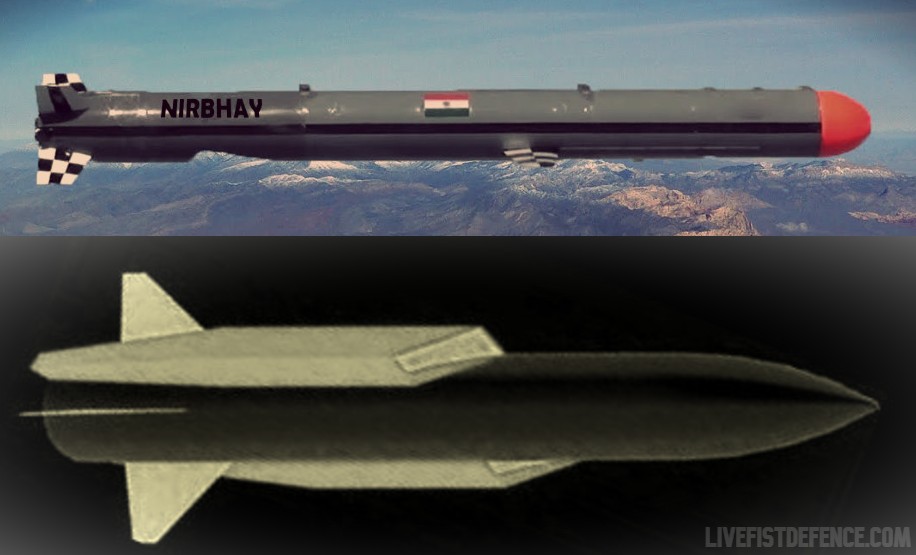
The Lowdown On India's Long Range Land Attack Cruise Missile
The effort detailed first by Livefist in 2018, 'Super Nirbhay' weapon now an official project.
 www.livefistdefence.com
Development trials are once a year event. Few more years of testing is left for LRLACM. 2013 test was for Nirbhay, that project closed long back.The last test I had read about happened in Nov, 2024. I was unaware that newer tests had happened recently. The first one that I was able to verify had happened was in 2013.
No hurry per se. If the induction had happened, it could have been marked as battle proven during Sindoor. More of a inclination on my part to have had it deployed in the forces.
The Lowdown On India's Long Range Land Attack Cruise Missile
The effort detailed first by Livefist in 2018, 'Super Nirbhay' weapon now an official project.

LRLACM Test Timeline
First Test:
The maiden flight test of India's LRLACM was conducted on November 12, 2024, by the Defence Research and Development Organisation (DRDO) from the Integrated Test Range (ITR), Chandipur off the coast of Odisha.
Most Recent Test:
The most recent (and only) test was on November 12, 2024.
Development Context
The LRLACM represents an evolution from India's earlier Nirbhay cruise missile program. The Nirbhay project was completed in February 2023 after six developmental trials, and the LRLACM is described as an improved version of the Nirbhay long-range cruise missile, which was first tested in 2013
The LRLACM has a range of approximately 1000 km and has received Acceptance of Necessity (AoN) for procurement by the Indian Air Force and Army in August 2023
. Trials for the Indian Army are expected to begin in 2025
Summary:
Total tests conducted: 1
First test: November 12, 2024
Last test: November 12, 2024 (same as first)
Status: Very early stage with maiden test recently completed
This missile will not be in service for years.
First Test:
The maiden flight test of India's LRLACM was conducted on November 12, 2024, by the Defence Research and Development Organisation (DRDO) from the Integrated Test Range (ITR), Chandipur off the coast of Odisha.
Most Recent Test:
The most recent (and only) test was on November 12, 2024.
Development Context
The LRLACM represents an evolution from India's earlier Nirbhay cruise missile program. The Nirbhay project was completed in February 2023 after six developmental trials, and the LRLACM is described as an improved version of the Nirbhay long-range cruise missile, which was first tested in 2013
The LRLACM has a range of approximately 1000 km and has received Acceptance of Necessity (AoN) for procurement by the Indian Air Force and Army in August 2023
. Trials for the Indian Army are expected to begin in 2025
Summary:
Total tests conducted: 1
First test: November 12, 2024
Last test: November 12, 2024 (same as first)
Status: Very early stage with maiden test recently completed
This missile will not be in service for years.
Last edited:
A comparison done using Gemini for LRLACM and Kalibr.
Making a note to gauge capability. The same may be done for the Tomahawk as well.
| Origin & Developer | Russia Novator Design Bureau | India Defence Research and Development Organisation (DRDO) |
| Type | Multi-purpose Cruise Missile Family (Land-Attack, Anti-Ship, Anti-Submarine) | Long-Range Subsonic Cruise Missile (Primarily for Land-Attack) |
| Operational Status | In Service & Combat-Proven Widely deployed and used extensively in conflicts. | In Limited Production / Induction Phase Undergoing advanced trials and entering service. Not yet combat-proven. |
| Launch Platforms | Surface ships (frigates, corvettes), submarines. Air-launched and containerized versions also exist. | Designed for launch from surface warships and submarines. A future land-based variant is plausible. |
| Range | 1,500 - 2,500 km (Domestic land-attack version) Export versions are limited to <300 km. | ~1,000 km Potential for longer-range versions is under development. |
| Propulsion | Two-stage: Solid-fuel booster + Turbofan/Turbojet sustainer engine. | Two-stage: Solid-fuel booster + Indigenous Turbofan sustainer engine. |
| Speed Profile | Subsonic Cruise (~Mach 0.8) Note: Some anti-ship variants have a supersonic terminal dash. | Purely Subsonic (~Mach 0.7 - 0.8) Maintains subsonic speed throughout its flight profile. |
| Guidance System | Inertial Navigation System (INS), GLONASS satellite guidance, Terrain Contour Matching (TERCOM), and an active radar seeker for terminal homing. | Inertial Navigation System (INS), augmented by India's NavIC and GPS satellite guidance. Features TERCOM and Digital Scene Matching Area Correlator (DSMAC) for high precision. |
| Warhead | • Conventional High-Explosive (approx. 450 kg) • Believed to be nuclear-capable for certain variants. | • Conventional High-Explosive (approx. 200-300 kg) • Designed to be nuclear-capable to support strategic deterrence. |
| Key Features | • High versatility with multiple variants for different targets. • Extensive combat experience. • Can be launched from a wide array of platforms. | • Key part of India's indigenous strategic deterrence. • Features advanced sea-skimming and terrain-hugging capabilities to evade radar detection. • Successor to the Nirbhay cruise missile program. |
Making a note to gauge capability. The same may be done for the Tomahawk as well.

3m-14T missile, is a surface/ship launched subsonic cruise missileof kalibr family, whose weight is ~1.7-2.3tons, range of ~2000km and warhead weight of generally ~0.5tons.A comparison done using Gemini for LRLACM and Kalibr.
Origin & Developer Russia
Novator Design BureauIndia
Defence Research and Development Organisation (DRDO)Type Multi-purpose Cruise Missile Family
(Land-Attack, Anti-Ship, Anti-Submarine)Long-Range Subsonic Cruise Missile
(Primarily for Land-Attack)Operational Status In Service & Combat-Proven
Widely deployed and used extensively in conflicts.In Limited Production / Induction Phase
Undergoing advanced trials and entering service. Not yet combat-proven.Launch Platforms Surface ships (frigates, corvettes), submarines. Air-launched and containerized versions also exist. Designed for launch from surface warships and submarines. A future land-based variant is plausible. Range 1,500 - 2,500 km (Domestic land-attack version)
Export versions are limited to <300 km.~1,000 km
Potential for longer-range versions is under development.Propulsion Two-stage: Solid-fuel booster + Turbofan/Turbojet sustainer engine. Two-stage: Solid-fuel booster + Indigenous Turbofan sustainer engine. Speed Profile Subsonic Cruise (~Mach 0.8)
Note: Some anti-ship variants have a supersonic terminal dash.Purely Subsonic (~Mach 0.7 - 0.8)
Maintains subsonic speed throughout its flight profile.Guidance System Inertial Navigation System (INS), GLONASS satellite guidance, Terrain Contour Matching (TERCOM), and an active radar seeker for terminal homing. Inertial Navigation System (INS), augmented by India's NavIC and GPS satellite guidance. Features TERCOM and Digital Scene Matching Area Correlator (DSMAC) for high precision. Warhead • Conventional High-Explosive (approx. 450 kg)
• Believed to be nuclear-capable for certain variants.• Conventional High-Explosive (approx. 200-300 kg)
• Designed to be nuclear-capable to support strategic deterrence.Key Features • High versatility with multiple variants for different targets.
• Extensive combat experience.
• Can be launched from a wide array of platforms.• Key part of India's indigenous strategic deterrence.
• Features advanced sea-skimming and terrain-hugging capabilities to evade radar detection.
• Successor to the Nirbhay cruise missile program.
Making a note to gauge capability. The same may be done for the Tomahawk as well.
length of approximately 8.9 meters and a diameter of 0.533 meters (533 millimeters).
( 3m-14e submarine launched varient has length of ~0.6 meters)
Lrlacm, is ~1ton missile with ~300kg warhead generally and ~1000km range.
length of ~6 meters, a diameter of 0.52 meters.
Last edited:
The missile has good potential (can be used for scaled bombardment of important facilities much like TLAM). The weight being less is an advantage. I am not sure what to feel about the warhead though. Most of these subsonic variants carry 400 kgs as standard.3m-14T missile, is a surface/ship launched subsonic cruise missileof kalibr family, whose weight is ~1.7-2.3tons, range of ~2000km and warhead weight of generally ~0.5tons.
length of approximately 8.9 meters (20 feet) and a diameter of 0.533 meters (533 millimeters).
( 3m-14e submarine launched varient has length of ~0.6 meters)
Lrlacm, is ~1ton missile with ~300kg warhead generally and ~1000km range.
length of ~6 meters, a diameter of 0.52 meters.
Let me know which would be a fairer comparison (as much of a near peer as possible).
Last edited:
Bigger warhead-> bigger missile or heavier missile.The missile has good potential (can be used for scaled bombardment of important facilities much like TLAM). The weight being less is an advantage. I am not sure what to feel about the warhead though. Most of these subsonic variants carry 400 kgs as standard.
Let me know which would be a fairer comparison (as much of a near peer as possible).
Tomahawk vb, which carries 450kg warhead and ~1600km max range, while similar in dimension to lrlacm weighs 1.6 tons.

Ah yes, the dimension-weight-warhead dynamics. I will post the TLAM table as well. Let's see how things proceed with it. A singular test so far.Bigger warhead-> bigger missile or heavier missile.
Tomahawk vb, which carries 450kg warhead and ~1600km max range, while similar in dimension to lrlacm weighs 1.6 tons.
Development Timeline Analysis
USA TLAM/Tomahawk Timeline:
- 1972: Development program initiated by U.S. Navy
- 1976-1978: Prototype testing by General Dynamics
- 1983: Entered operational service
- 1991: First combat deployment in Gulf War (288 missiles launched)
- 1993: Block III introduced GPS guidance system
- 2006: Block IV Tactical Tomahawk with improved capabilities
- 2021: Block V operational with enhanced navigation and anti-ship capability
- 2024: Continued modernization and upgrades
India LRLACM Timeline:
- 2012: Nirbhay cruise missile program initiated by DRDO
- 2013: First Nirbhay test (partial success)
- 2014-2019: Multiple Nirbhay development tests with mixed results
- 2020: ITCM (Indigenous Technology Cruise Missile) program launched
- 2021: Successful ITCM test with indigenous Manik engine
- 2023: SLCM submarine variant testing and Defence Acquisition Council approval
- November 2024: LRLACM maiden flight test successful
- 2025: Expected Army trials
Key Findings
Performance Comparison:
- Range: TLAM offers broader spectrum (900-2,500 km across different blocks) vs LRLACM's focused 1,000-1,500 km range
- Speed: Comparable subsonic performance (LRLACM ~Mach 0.9 vs TLAM ~Mach 0.74)
- Warhead: TLAM carries heavier conventional warhead (454 kg vs 200-300 kg for LRLACM)
- Accuracy: TLAM has proven precision (~3m CEP) while LRLACM targets similar accuracy (<10m CEP)

| Feature | Tomahawk Land Attack Missile (TLAM) | Long Range Land Attack Cruise Missile (LRLACM) |
|---|---|---|
| Cost | Approximately $2 million per unit (Block V) | Not publicly available, but expected to be a cost-effective alternative to US missiles. |
| Area Wide Effect | Designed for deep-strike capability against specific land targets. Can be re-targeted in-flight. | Intended for a similar deep-strike role, with a focus on providing a cost-effective option for area-wide saturation attacks. |
| Warhead Size | Can carry a conventional warhead of up to 1,000 lbs or a nuclear warhead. | Expected to carry a conventional warhead, with the exact size not publicly disclosed (expected 300 kg). |
| In-Flight Characteristics | Subsonic cruise missile with a long range (over 1,000 miles). It is jet-powered and can fly at low altitudes to avoid detection. | Also a subsonic cruise missile, it is expected to have a range of at least 1,000 km (over 620 miles) and will be an improved version of the Nirbhay missile. |
| Sensors | Equipped with GPS, an Inertial Navigation System (INS), and a Digital Scene Matching Area Correlator (DSMAC) for terminal guidance. Block V upgrades include improved navigation and communication systems. | Will likely feature a combination of INS, GPS, and a seeker for terminal guidance, with a focus on indigenous Indian technology. |
| Ability to Evade EW | The Block V Tomahawk has upgraded electronic warfare capabilities to resist jamming and other countermeasures. | As a modern missile system, it is expected to incorporate features to counter electronic warfare, although specific details are not public. |
Engine Comparisons TLAM and LRLACM:
The Tomahawk Land Attack Missile, is powered by the Williams International F107 (specifically variants like the F107-WR-402 or F107-WR-101 turbofan engine). LRLACM refers to Long Range Land Attack Cruise Missile, which is powered by the indigenous Manik Small Turbo Fan Engine (STFE) developed by India's Gas Turbine Research Establishment (GTRE).
Both engines are compact turbofan designs optimized for subsonic cruise missiles, emphasizing fuel efficiency, low observability, and long-range endurance (typically for flights at speeds around Mach 0.8). They are twin-spool turbofans without afterburners, designed for expendable use in missiles. However, they differ in key aspects such as thrust output, size, weight, and origin:
- Thrust and Performance: The F107 provides approximately 600-700 lbf (2.7-3.1 kN) of thrust, suitable for the Tomahawk's ~1,500-2,500 km range and ~550 mph speed. The Manik engine delivers higher thrust at around 425 kgf (~4.2 kN), potentially enabling heavier payloads, longer ranges (up to 1,000 km or more in air-launched variants), or improved performance in varied conditions.
- Size and Weight: The F107 is notably compact and lightweight (dry weight ~67 lb/30 kg, length ~24 in/610 mm, diameter ~12 in/300 mm), contributing to the Tomahawk's stealthy, low-observable profile. The Manik is larger (length ~35 in/900 mm, diameter ~14 in/360 mm) and likely heavier (exact weight not publicly detailed but estimated higher due to its thrust class), which may suit larger missile airframes but could increase detectability.
- Design and Features: Both use axial-centrifugal flow for efficiency, but the F107 is a mature, battle-proven design from the 1970s with high reliability in extreme conditions. The Manik is a newer indigenous engine (developed in the 2010s-2020s) with modern features like a 2 kW power off-take for onboard systems and emphasis on cost-effective production for Indian needs.
Advantages of the TLAM Engine (Williams F107)
- Compact and Lightweight Design: Its small size and low weight enable integration into stealthy, low-observable missiles, allowing for extended range without excessive fuel consumption or larger airframes.
- Proven Reliability and Maturity: With decades of use in operational U.S. missiles (e.g., Tomahawk deployments since the 1980s), it offers high dependability in real-world scenarios, including resistance to environmental stresses like high altitudes or temperatures.
- Fuel Efficiency for Long-Range Missions: Optimized for subsonic efficiency, it supports ranges over 2,000 km while maintaining a low acoustic and thermal signature, making it ideal for precision strikes with minimal detection risk.
- Cost-Effective Production and Scalability: As a well-established engine, it benefits from economies of scale in manufacturing and has variants adaptable to different missile types (e.g., air-launched cruise missiles).
Advantages of the LRLACM Engine (Manik STFE)
- Higher Thrust Output: At ~4.2 kN, it provides more power than comparable engines, potentially supporting heavier payloads, faster acceleration, or extended ranges (e.g., 1,000+ km in air-launched configurations) for versatile land-attack and anti-ship roles.
- Indigenous Development and Self-Reliance: Being fully designed and produced in India, it reduces dependency on foreign suppliers, lowers costs for the Indian military, and allows for customized modifications without export restrictions.
- Modern Features for Advanced Missiles: Includes integrated power generation (e.g., 2 kW off-take) for onboard electronics, and its design emphasizes quiet operation and precision, making it suitable for low-altitude, stealthy flights in contested environments.
- Adaptability for Future Variants: As a newer engine, it has potential for upgrades (e.g., for UAVs or hypersonic applications) and has demonstrated success in recent tests, positioning it for rapid iteration in India's defense ecosystem.
Last edited:


Things are moving from ADE to somewhere we know well about.
edit: If this turns out to be for the Abhyas drone then hugely disappointing.


edit: If this turns out to be for the Abhyas drone then hugely disappointing.

A good AI enhanced version of this schematic of the SLCM:

AI enhanced: (Credit on pic)

AI enhanced: (Credit on pic)


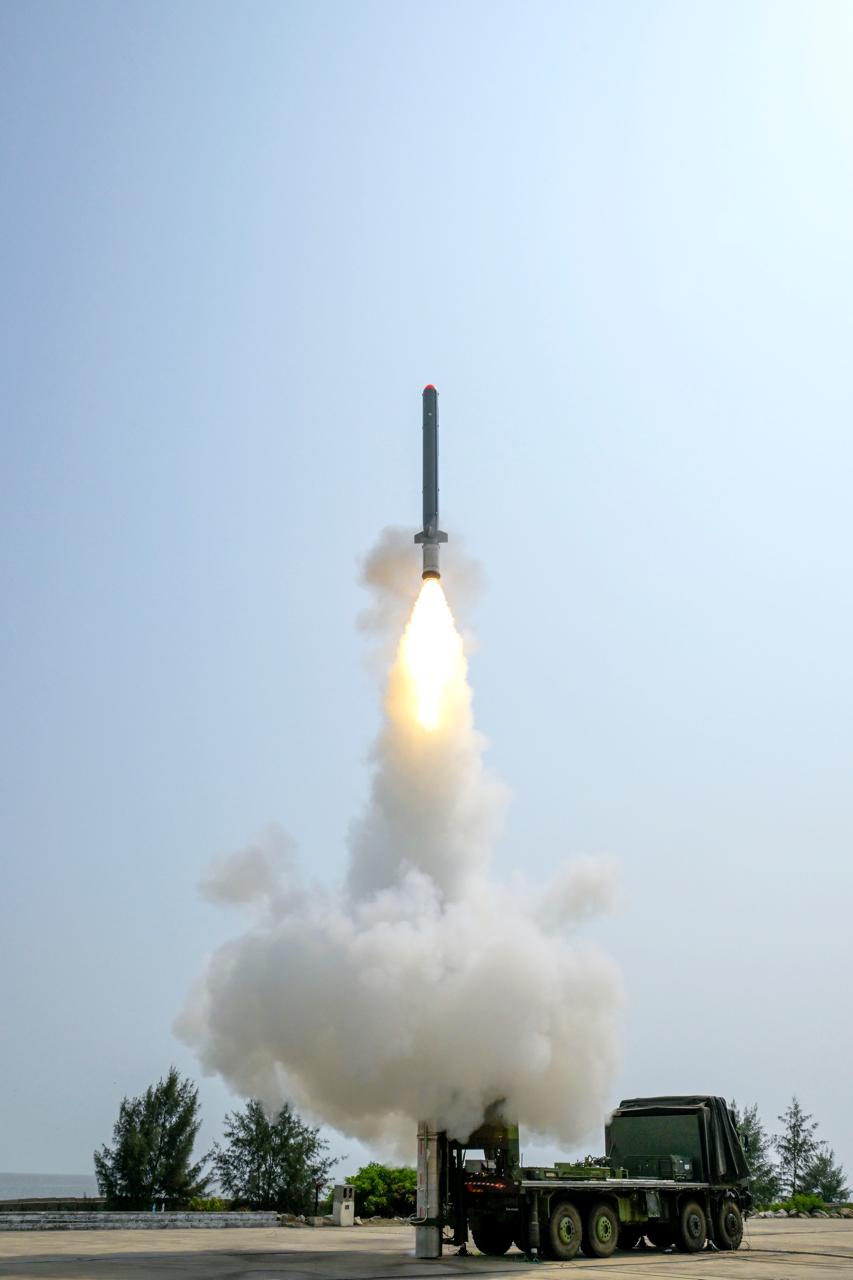

Test, test....Lora Lehasun. They have been testing various iteration of this for like 2 decades how many more tests.
