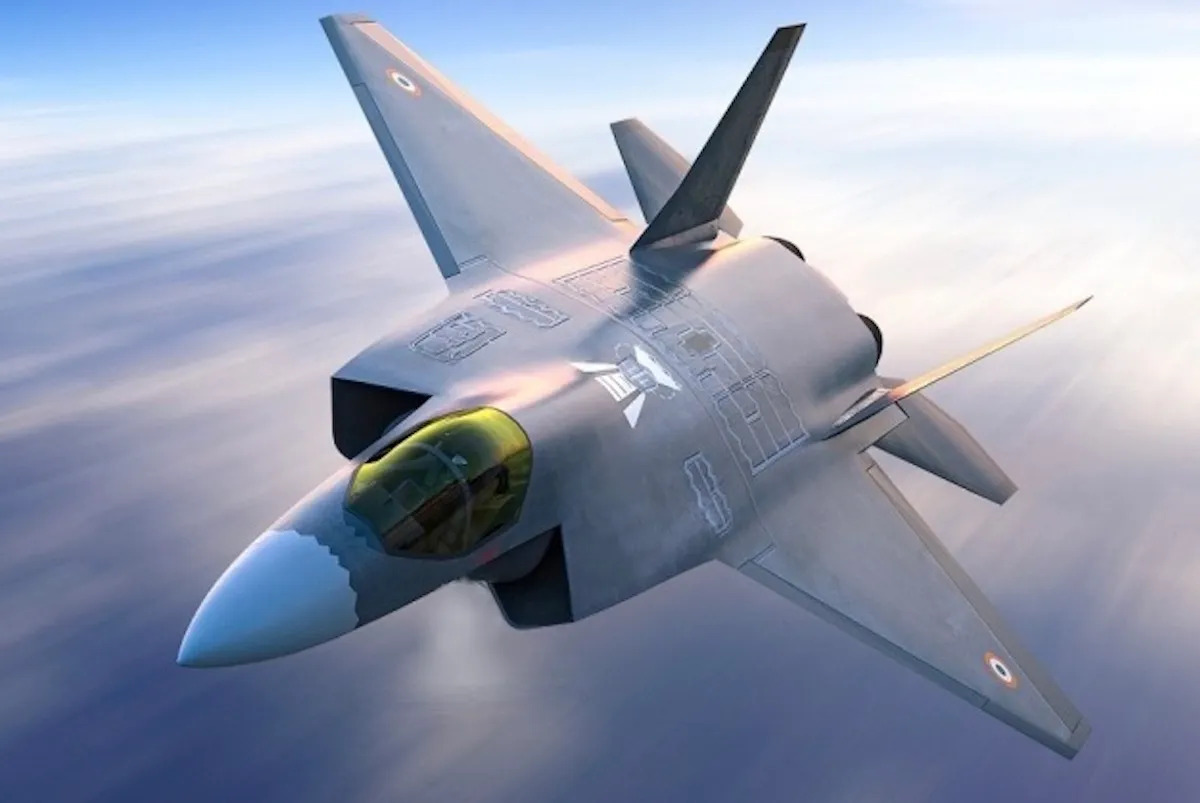
Indo-France Aero Engine Co-Development Program

I have serious doubts that our negotiators would agree to pay so much for a 4th gen level engine. Let's see. Hopefully it's a 5th gen level engine.
5th Gen FA is defined by certain universally accepted characteristics like higher bypass ratios , better material tech , better TWR etc.

I remember seeing a video of the current DG - GTRE out here ( either from very late last year or early this year ) stating their expectation from the JV was a TET for 1800°C ( not Kelvin ) with a slide from a PPT presentation denoting it as well as the classification of TFs the way GTRE understood it.

Now 1800°C is the TET of a lot of 4th / 4.5 Gen TFs. Why's the GTRE setting the bar so low ? It's quite obvious they lack the confidence to achieve even that much given lack of investment into such tech.

Why's that so ? It's coz the BA Hons in Eng Literature babooos in the MoD don't have any confidence in the abilities of the GTRE staff . As per the same babooos every project we undertake must result in tangible gains else it's a science project.

Our user department which happens to be the IAF still treats these developmental organisations like they're clients of the latter not as partner organisations like the way the IN treats these very same organizations. Result you don't see much participation of the IAF in these endeavours .

Things may be changing today but up until this point of time what I've described above was pretty much SOP. Result - while the DRDO / GTRE guys can realise this tech with current resources , it'd take them a decade to do so.

Hence they've decided to take it on the chin & make the best of a sub optimal deal for this means access to more funds , better infrastructure like better testing facilities or / & high performance forging press etc. What this would do is speed up their own developmental endeavours .

I fully expect the GTRE / DRDO to continue parallel development of the KED alongside the JV . You can also see this as our back up plan in case the JV delivers sub optimal results or is abandoned for whatever reason.

At the end of the day all these technologies are crown jewels which won't be parted with come what may. We'd have to develop it on our own like the Chinese did / are doing be it a heavy duty 170 KN TF or 2000° C plus TET & the material technology to go with it.

Our scientists are upto the task even if they work under severe constraints . Are our babooos upto the task ?

The answer is before you.

4-5 billion USD ( 40-50,000 crores) for the JV , possibly more vs 2500 crores for the development of the Kaveri & 5+ years for negotiations for 1800°C TET tech which IMHO wasn't the case at all but was for something much more than that which resulted in a cul de sac on expected lines.
 
Last edited:
That's F119 level, no?
It's much less than that but the F-119 is of a different vintage altogether. The bar for TET of 5th Gen TF has been set by the F-135 .

Since the Europeans have leap frogged to 6th Gen, technologies for TFs under development will exceed 2000°C most likely would be in the band width between 2000-2500°C. I believe le francais already demonstrated material tech withstanding > 2000°C .

We don't know what the Russian & Chinese data points for this particular parameter are like in their respective 5th Gen TFs though if history is any indicator, they should be in the vicinity of ~ 1800°C possibly lower.

Now whether this meets their requirement or is a manifestation of their technology ( limitations) is something time will answer but the higher the TET the more sophisticated the TF. Doubt if there are people disputing this data point
 
One more thing, I don’t think it’ll be based on the M88 core.

I did some basic calculations, and yeah, it just doesn’t seem possible to achieve that thrust and still make it fit into the AMCA

I don't buy that previous news article
The core of the M-88 was designed almost 30 years ago to enable the development of a family of engines in the 7.5 to 11 tonne thrust range. However, technological advances over the past 30 years have enabled the M-88 to evolve into a T-REX version, which is the same size as the standard M-88 but with 20% more thrust. In addition, the M-88 is a small engine in terms of length and diameter, which leaves plenty of room for it to fit into the AMCA. The new range of 9 to 13.2 tonnes seems suitable for the AMCA, but of course it is not a new-generation engine, only an old-generation engine with new-generation technologies. This engine will be used to power the French NGF demonstrator, but the prototype will have a new-generation engine with variable bypass ratio, and I think this is the type of engine that has been proposed to India for development.
 
What did HAL learn with their JV with Safran making turboshaft engines? It still is yet to complete the HTSE-1200 engine. And this is a turboshaft engine, not advanced turbofan engines. Problem is, giving up without even trying has led us to this point of no return. Waste $7 bn for vapourware, subsidising their gas turbine programme and still being able to get nothing done, while spending $300 mn on own programme (including marine gas turbine project btw). HAL has been license making a lot of gas turbines, and GTRE so far has only made single-use turbofans apart from dry-Kaveri. It's delusional to think we'll get a 5th gen 120kn turbofan by just throwing money at Safran.
 
The core of the M-88 was designed almost 30 years ago to enable the development of a family of engines in the 7.5 to 11 tonne thrust range. However, technological advances over the past 30 years have enabled the M-88 to evolve into a T-REX version, which is the same size as the standard M-88 but with 20% more thrust. In addition, the M-88 is a small engine in terms of length and diameter, which leaves plenty of room for it to fit into the AMCA. The new range of 9 to 13.2 tonnes seems suitable for the AMCA, but of course it is not a new-generation engine, only an old-generation engine with new-generation technologies. This engine will be used to power the French NGF demonstrator,

but the prototype will have a new-generation engine with variable bypass ratio, and I think this is the type of engine that has been proposed to India for development.
I'd be extremely surprised if what you've stated turns out to be the case. Having said that , SAFRAN is one of the partners in the FCAS program with other countries like MTU of Germany being a partner with different work shares.

How will that be reconciled with the JV , SAFRAN will be entering into with an Indian company both in terms of the scope of technology on offer for collaboration & in terms of security clearances from partner countries of the FCAS program ?
 
Wrong. Project management in every defence program has not been a failure. If so, India wouldn't have had nuclear weapons, ballistic missiles, or nuclear submarines. Building SSBN with SLBM is a feat harder than building an entire space program or even a fighter jet.

Even blackballing has its limits ffs.

I'm not going to argue with someone on an anonymous internet forum. However, the ATV program was not a defense ministry project it was a PMO project, which is the exact mechanism I proposed so please read what I said before responding. Second, if you think the ATV was delivered on time that's only because you have trained to have very low expectations.

The ATV is a mini-boomer that was built nearly 50 years after the first nuclear submarines were built with significant ex-Soviet support and with the operation experience of operating a nuclear submarine. That project took 20 years to deliver a single submarine of limited operational utility. It is in effect a technology demonstrator. It is a project that should have been completed in half the time with a much better submarine. Nuclear weapons in India are likewise run by the PMO and manned by an organization which at one time had an excellent culture of proudctivity and drive, ditto the space program. Again both are in the PMO's domain.
 
I'm not going to argue with someone on an anonymous internet forum. However, the ATV program was not a defense ministry project it was a PMO project, which is the exact mechanism I proposed so please read what I said before responding. Second, if you think the ATV was delivered on time that's only because you have trained to have very low expectations.

The ATV is a mini-boomer that was built nearly 50 years after the first nuclear submarines were built with significant ex-Soviet support and with the operation experience of operating a nuclear submarine. That project took 20 years to deliver a single submarine of limited operational utility. It is in effect a technology demonstrator. It is a project that should have been completed in half the time with a much better submarine. Nuclear weapons in India are likewise run by the PMO and manned by an organization which at one time had an excellent culture of proudctivity and drive, ditto the space program. Again both are in the PMO's domain.
You said project management was a failure for defence projects, ATV, ballistic missiles, nukes arent defence ig? If that was the case ATV would've never succeeded. And I was already aware of the ATV falling under PMO. Infact I shared insights from the book Weapons of Peace by Raj Chengappa which revealed nuclear submarine project started way back in 1970 by IG herself. She wanted it done by 1980. A country which had not even successfully made a land reactor of any size thinking it can make military reactors for an extremely confined space is bound to find that such a program will take far longer than expected.

Only Arihant is tech demonstrator, Arighat and S4 which fall under ATV are full scale nuclear deterrence machines. And considering the complexity of SSBNs, you think it's bad that a poor country like India took 46 years to achieve it? You have any clue how complex nuclear submarines are? Not to mention SLBMs. Ig you'd rather have us go the China way which rushed its SSBN program and suprise surpise had to literally scuttle its first nuclear submarine bcuz it was so bad. Or worse the K19 way which caused half its crew to die from radiation sickness. Nuclear subs arent some maggi noodles you can demand to be made in hAlF the TiMe. They're some of the most complex machines ever made by man. Harder to make than nuclear weapons even. Considering our resources and economic backwardness in those years it's no wonder we took that long despite full government support.
 
Last edited:
It's official? "Announced"?
I could not find a PIB link for this topic. I believe this might not be a 100 percent confirmed. Wait for a PTI release.

"Citing official sources, the report said the decision followed a detailed consultative process involving stakeholders and a high-level technical committee that thoroughly examined various aspects of fighter jet engine manufacturing. The French proposal emerged as more beneficial for India, leading to the ministry's recommendation in its favour"


Pari stratégique pour New Delhi. Le ministère indien de la Défense a recommandé la signature d’un partenariat avec la France pour le développement conjoint d’un moteur pour leur futur avion de combat. Une décision révélée par The Economic Times qui marque une avancée majeure dans la quête d’autonomie industrielle de l’Inde en matière de défense.

Ce projet estimé à environ 6,7 milliards d’euros vise à concevoir un moteur de 120 kilonewtons (kN) destiné à équiper notamment le futur avion de combat indien AMCA (Advanced Medium Combat Aircraft). Le programme est ambitieux : cinq prototypes attendus d’ici 2027, un premier vol en 2028, une certification en 2032, et une production en série à l’horizon 2035.

Translation:

Strategic Partnership for New Delhi. The Indian Ministry of Defense has recommended signing a partnership with France for the joint development of an engine for their future combat aircraft. This decision, revealed by The Economic Times, marks a major step forward in India’s quest for industrial autonomy in the defense sector.

The project, estimated at approximately 6.7 billion euros, aims to design a 120-kilonewton (kN) engine intended to equip, among others, India’s future Advanced Medium Combat Aircraft (AMCA). The program is ambitious: five prototypes expected by 2027, a first flight in 2028, certification in 2032, and serial production by 2035.
 
Last edited:
What did HAL learn with their JV with Safran making turboshaft engines? It still is yet to complete the HTSE-1200 engine. And this is a turboshaft engine, not advanced turbofan engines
That was not co-development, neither do we own the ip.

It was basically assembly model, same as AL31.

The Aravalli engine is joint IP and work shared based on percentage etc.

The new joint venture is with GTRE a research organisation, not a manufacturing or integration house.

Those two models are not comparable
 
The core of the M-88 was designed almost 30 years ago to enable the development of a family of engines in the 7.5 to 11 tonne thrust range. However, technological advances over the past 30 years have enabled the M-88 to evolve into a T-REX version, which is the same size as the standard M-88 but with 20% more thrust. In addition, the M-88 is a small engine in terms of length and diameter, which leaves plenty of room for it to fit into the AMCA. The new range of 9 to 13.2 tonnes seems suitable for the AMCA, but of course it is not a new-generation engine, only an old-generation engine with new-generation technologies. This engine will be used to power the French NGF demonstrator, but the prototype will have a new-generation engine with variable bypass ratio, and I think this is the type of engine that has been proposed to India for development
I actually hope it's M88 core. I hope we don't get into mess of a brand new core and then issues (delays, engineering side etc.)

If it can achieve 2000K+ TET, I'm more than happy with it.

I couldn't care less it being a 100 year old, our concern is getting a engine first and capability to test, and mass manufacture it.

It may not compete with Americans, but we will leapfrog Chinese developments.

I just hope we have ability to modify it, Marine engine and a high-bypass engine.
 
I actually hope it's M88 core. I hope we don't get into mess of a brand new core and then issues (delays, engineering side etc.)

If it can achieve 2000K+ TET, I'm more than happy with it.

I couldn't care less it being a 100 year old, our concern is getting a engine first and capability to test, and mass manufacture it.

It may not compete with Americans, but we will leapfrog Chinese developments.

I just hope we have ability to modify it, Marine engine and a high-bypass engine.
Exactly, people are bickering over irrelevant details. It doesn't matter how old the core design is, as long as it meets the performance parameters we desire and the French are willing to share the know-how and the know-why behind it.
 
I actually hope it's M88 core. I hope we don't get into mess of a brand new core and then issues (delays, engineering side etc.)

If it can achieve 2000K+ TET, I'm more than happy with it.

I couldn't care less it being a 100 year old, our concern is getting a engine first and capability to test, and mass manufacture it.

It may not compete with Americans, but we will leapfrog Chinese developments.

I just hope we have ability to modify it, Marine engine and a high-bypass engine.
Then we should have sign the deal some 5-7 years ago. French guys offered M88 core long back to us, to develop kaveri. Why did we turn down that offer?
 
  • Like
Reactions: babablacksheep
From what I have seen, the French partnerships are one sided, but with full ToT/IP, if delivered this time, as they have failed in the past, It may be the best choice for India, Engine design and metallurgy isn't easy
 
Last edited:
The M88 is inferior tech
May or may not. I am asking based on the post#195.
What i am asking is if people don't have any problem with devoloping an engine for f*cking 60k crore rupeeses that's based on m88 core, why didn't we agreed for Kaveri resurrection based on m88 core in 2019? Had it been happened in 2019,our first MK2 would have been fly with that kaver in 2026.