

So what do you want to say let us handover our strategic affair to Washington DC, and let us become a vassal state like Japan or South Korea? We have already signed various strategic agreement with USA. We are even sharing Intel and logistics with them. Their ships can literally dock in our port and replenish. It is a myth that only US has tried to court us post Galwan. We have courted the United States throughout to improve our relationship in the last 3 decades starting from Rajiv to PVNR to Vajpayee to Manmohan Singh to Modi. How much do you want us to kneel infront of the great satan? Or shall we become the 53rd state of United States of America? Surely then the great America will come to rescue us.
This is what happened to us now.
India - Pakistan Diplomatic Ties
- Thread starter _Anonymous_
- Start date
You are using an out of date browser. It may not display this or other websites correctly.
You should upgrade or use an alternative browser.
You should upgrade or use an alternative browser.

YeasSo what do you want to say let us handover our strategic affair to Washington DC, and let us become a vassal state like Japan or South Korea?
See the ecenomic conditions of these two countries. And they never fought a war involving US.


****The US is often cited as a key factor, particularly through the Plaza Accord, in Japan's economic slowdown in the late 1980s and early 1990s, often referred to as the "Lost Decade". While not a direct destruction, the Plaza Accord, signed in 1985, aimed to devalue the US dollar and appreciate the Japanese yen, which led to a significant increase in the yen's value. This made Japanese exports more expensive, harming the country's export-oriented economy.
Here's a more detailed explanation:
The Plaza Accord:
This agreement, signed by the US, Japan, West Germany, France, and the UK, aimed to address the large US trade deficit by devaluing the US dollar against other major currencies.
Impact on Japan:
The agreement led to a sharp appreciation of the Japanese yen, making Japanese goods more expensive for foreign buyers and reducing the competitiveness of Japanese exports.
Asset Bubble:
To counteract the economic slowdown caused by the stronger yen, Japan lowered interest rates, leading to a surge in asset prices (stocks and real estate) and creating an asset bubble.
Bubble Burst and Recession:
When the bubble burst in the early 1990s, it triggered a severe economic recession in Japan, often called the "Lost Decade," with stagnant growth, deflation, and a banking crisis. ****
Here's a more detailed explanation:
The Plaza Accord:
This agreement, signed by the US, Japan, West Germany, France, and the UK, aimed to address the large US trade deficit by devaluing the US dollar against other major currencies.
Impact on Japan:
The agreement led to a sharp appreciation of the Japanese yen, making Japanese goods more expensive for foreign buyers and reducing the competitiveness of Japanese exports.
Asset Bubble:
To counteract the economic slowdown caused by the stronger yen, Japan lowered interest rates, leading to a surge in asset prices (stocks and real estate) and creating an asset bubble.
Bubble Burst and Recession:
When the bubble burst in the early 1990s, it triggered a severe economic recession in Japan, often called the "Lost Decade," with stagnant growth, deflation, and a banking crisis. ****
Here's a more detailed explanation:
The Plaza Accord:
This agreement, signed by the US, Japan, West Germany, France, and the UK, aimed to address the large US trade deficit by devaluing the US dollar against other major currencies.
Impact on Japan:
The agreement led to a sharp appreciation of the Japanese yen, making Japanese goods more expensive for foreign buyers and reducing the competitiveness of Japanese exports.
Asset Bubble:
To counteract the economic slowdown caused by the stronger yen, Japan lowered interest rates, leading to a surge in asset prices (stocks and real estate) and creating an asset bubble.
Bubble Burst and Recession:
When the bubble burst in the early 1990s, it triggered a severe economic recession in Japan, often called the "Lost Decade," with stagnant growth, deflation, and a banking crisis. ****
****The US is often cited as a key factor, particularly through the Plaza Accord, in Japan's economic slowdown in the late 1980s and early 1990s, often referred to as the "Lost Decade". While not a direct destruction, the Plaza Accord, signed in 1985, aimed to devalue the US dollar and appreciate the Japanese yen, which led to a significant increase in the yen's value. This made Japanese exports more expensive, harming the country's export-oriented economy.Yeas
See the ecenomic conditions of these two countries. And they never fought a war involving US.
Here's a more detailed explanation:
The Plaza Accord:
This agreement, signed by the US, Japan, West Germany, France, and the UK, aimed to address the large US trade deficit by devaluing the US dollar against other major currencies.
Impact on Japan:
The agreement led to a sharp appreciation of the Japanese yen, making Japanese goods more expensive for foreign buyers and reducing the competitiveness of Japanese exports.
Asset Bubble:
To counteract the economic slowdown caused by the stronger yen, Japan lowered interest rates, leading to a surge in asset prices (stocks and real estate) and creating an asset bubble.
Bubble Burst and Recession:
When the bubble burst in the early 1990s, it triggered a severe economic recession in Japan, often called the "Lost Decade," with stagnant growth, deflation, and a banking crisis. ****

I would urge you to study their economic conditions again. Do take a look beyond GDP per capita that people keep harping about. See the prevalent situation and then give your conclusion based on those stats.Yeas
See the ecenomic conditions of these two countries. And they never fought a war involving US.

Yeas
See the ecenomic conditions of these two countries. And they never fought a war involving US.
Completely different case for Japan they fought and lost the war against US, and were still an industrialized country with near complete mobilization which US cannot subdue beyond a costly main island invasion. The best US can do is co-opt it into its sphere than let Japan be too weakened to be in Soviet sphere like East Germans.I would urge you to study their economic conditions again. Do take a look beyond GDP per capita that people keep harping about. See the prevalent situation and then give your conclusion based on those stats.
Korea is too small to be mattered even if it became a tech powerhouse(which it became) and also again, the geography of the korean peninsula offered a strategic reach near the core Chinese territory and also near Far East region of Soviet/Russia for US to let if fall.
India has neither attributes (neither fought war against US and there is a chance of joining Soviets in coldwar nor too small like korea), and even before us pakees offered everything including allowing U-2 spy planes to fly into USSR etc and even they regretted the wh0ring they did for US when US stopped weapons supply in 1965 because they did not want India to be completely under Soviets. So, it is hopium to think US would support us against pakees if we were an US ally, because of multiple reasons like 1) pakees are good candidate to box us in, else we would focus more on Indian Ocean which US, like british before won't want us do. 2) pakees have utility in poking russia, even china or Eurasian heartland in general. 3) other mohemmadan allies of US like gulf and even iran would pressure US to help pakees and restrain us if India (an US ally) would kurb stomp them US weapons as @Hydra desperately hopes to do.
I mean see, turkey-greece (both US allies) that would be us.
It is not to say being US ally is not beneficial materially especially in coldwar era, infact many US allies benefited with american largesse including pakees like US funded and built the whole canal system for them in 20th century after British built the one before for them. They also gave grains, weapons etc, trained them freely etc. It is just that pakeed were too stupid and not at the level like south koreans to use it for their benefit.

Hydra sirs logic: the local thakur saheb has multiple whores. Some of the whores have gold necklace and jewlery, but one ugly and poor wh0re who is my neighbor keeps attacking me with pots that the thakur saheb gave her. If I become a wh0re of the thakur saheb, then maybe saheb will tell the ugly and poor neighbor to stop attacking me and maybe even the thakur saheb will give me jewelry to feel pretty too.Yeas
See the ecenomic conditions of these two countries. And they never fought a war involving US.
However, the thakur saheb has many whores who are poor and ugly, they are called Guatemala, El Salvador etc. But let's hope I impress the thakur saheb that he gives me jewelry too.
In the Mahabharat, Krishna tells Arjun that he has forgotten his Smriti. Arjun regained his Smriti. But Hydra sir, you are telling Bharat to forget her Smriti and wh0re herself to some gunda who is 20 times younger than herself, and with a history which scarcely approaches in terms of glory her own. Let alone we forget that gunda funds a cancerous tumor which has been attacking Bharat for so long.
I assure you, Bharat will never forget her Smriti but you, have completely forgotten it. On top of that, you want your country to become the sahebs wh0re. Essentially, that makes you a pimp Hydra sir. Please, read this, introspect and think

Last edited:
You are bringing something else.Hydra sirs logic: the local thakur saheb has multiple whores. Some of the whores have gold necklace and jewlery, but one ugly and poor wh0re who is my neighbor keeps attacking me with pots that the thakur saheb gave her. If I become a wh0re of the thakur saheb, then maybe saheb will tell the ugly and poor neighbor to stop attacking me and maybe even the thakur saheb will give me jewelry to feel pretty too.
However, the thakur saheb has many whores who are poor and ugly, they are called Guatemala, El Salvador etc. But let's hope I impress the thakur saheb that he gives me jewelry too.
In the Mahabharat, Krishna tells Arjun that he has forgotten his Smriti. Arjun regained his Smriti. But Hydra sir, you are telling Bharat to forget her Smriti and wh0re herself to some gunda who is 20 times younger than herself, and with a history which scarcely approaches in terms of glory her own. Let alone we forget that gunda funds a cancerous tumor which has been attacking Bharat for so long.
I assure you, Bharat will never forget her Smriti but you, have completely forgotten it. On top of that, you want your country to become the sahebs wh0re. Essentially, that makes you a pimp Hydra sir. Please, read this, introspect and think
Tje 70+ years of strategic isolation didn't bring any economic growth, didn't stop china from grabbing Aksai chin, IG couldn't capture pok during 1971 and forced to do a military operation in favore of a people who parted away from us in 1947, Atalji couldn't cross loc in 1999 and finally modiji did paus op sindoor. All these can be avoided if we are cosying with US.Completely different case for Japan they fought and lost the war against US, and were still an industrialized country with near complete mobilization which US cannot subdue beyond a costly main island invasion. The best US can do is co-opt it into its sphere than let Japan be too weakened to be in Soviet sphere like East Germans.
Korea is too small to be mattered even if it became a tech powerhouse(which it became) and also again, the geography of the korean peninsula offered a strategic reach near the core Chinese territory and also near Far East region of Soviet/Russia for US to let if fall.
India has neither attributes (neither fought war against US and there is a chance of joining Soviets in coldwar nor too small like korea), and even before us pakees offered everything including allowing U-2 spy planes to fly into USSR etc and even they regretted the wh0ring they did for US when US stopped weapons supply in 1965 because they did not want India to be completely under Soviets. So, it is hopium to think US would support us against pakees if we were an US ally, because of multiple reasons like 1) pakees are good candidate to box us in, else we would focus more on Indian Ocean which US, like british before won't want us do. 2) pakees have utility in poking russia, even china or Eurasian heartland in general. 3) other mohemmadan allies of US like gulf and even iran would pressure US to help pakees and restrain us if India (an US ally) would kurb stomp them US weapons as @Hydra desperately hopes to do.
I mean see, turkey-greece (both US allies) that would be us.
It is not to say being US ally is not beneficial materially especially in coldwar era, infact many US allies benefited with american largesse including pakees like US funded and built the whole canal system for them in 20th century after British built the one before for them. They also gave grains, weapons etc, trained them freely etc. It is just that pakeed were too stupid and not at the level like south koreans to use it for their benefit.
In my humble opinion economic growth is more of a function of your internal economic policy rather than allying geopolitically with someone. You can asses my statement wrt our pre 1991 economic growth and geopolitical alliance and post 1991 growth and alliance.Tje 70+ years of strategic isolation didn't bring any economic growth,

Go and see how japan had grown, how soko ( which is as good as india in 50s), poland grpwth after 1990. All because of US healp.In my humble opinion economic growth is more of a function of your internal economic policy rather than allying geopolitically with someone. You can asses my statement wrt our pre 1991 economic growth and geopolitical alliance and post 1991 growth and alliance.
Loosing Aksai chin was our own blunder(Nehru didn't listen to intelligence and other mistake like flawed military strategy)....May be alliance with US could have saved us..and may be couldn't..you never know....we didn't ally with US may be because of we had just come out of colonialism.didn't stop china from grabbing Aksai chin,
The biggest blunder of Nehru was VK Krishnamenon followed by NAM. Yeas China wouldn't invade Aksaichin if we had US on our side.Loosing Aksai chin was our own blunder(Nehru didn't listen to intelligence and other mistake like flawed military strategy)....May be alliance with US could have saved us..and may be couldn't..you never know....we didn't ally with US may be because of we had just come out of colonialism.
I am not aware of Poland growth and its nature....so I can't comment but let me tell you sir...US did played it's part in Japan's growth(mainly bringing capital) but Japan was a millitary and economic powerhouse even before nuclear devastation...and even after devastation all these were in their memory and they could act and rebuild everything... when i read stories of Woman stitching torn public bus seat... Japanese students aboard buying overpriced japanese product rather than cheap western products to support their industries...their story of patriotism, discipline,hard work...I understand that Japan is Japan because is japanese people's commitment towards japan. Attributing growth of a nation solely to a foreign alliance is a grave injustice to it's people .....and if your argument is true..why doesn't it hold true for pakistan?Go and see how japan had grown, how soko ( which is as good as india in 50s), poland grpwth after 1990. All because of US healp.
China????? Read my post above mor3 clearly please.Go and see how japan had grown, how soko ( which is as good as india in 50s), poland grpwth after 1990. All because of US healp.
Bullshit. US had nukes in Korea and military bases in Japan. For China not to intervene we would have had to host US bases. They attacked during Cuban missile crisis so US in any scenario would not have helped. China built its own path by respecting its civilizational legacy, you want to pimp India to unkill. Such a weak mentality which I did not expect you to have sir.The biggest blunder of Nehru was VK Krishnamenon followed by NAM. Yeas China wouldn't invade Aksaichin if we had US on our side.
If we aligned with US then no nukes no ICBM nothing. India would have been a powerless wh0re of Unkil like Korea and Japan are now.You are bringing something else.
With respect to this statement..I have something to share but I fear it will offend a significant population of our country...Such a weak mentality which I did not expect you to have sir.

Share. Nobody knows who you are, and most of the population don't understand these things. They see these things on news then move on to gossip about neighbors/actors/events and other brainrot.With respect to this statement..I have something to share but I fear it will offend a significant population of our country...
Ok..hydra is from Kerala...and kerala have been known for their literacy and education for a long period of time... basically they have been a leader in that sector...and I am happy about it but when analyse things with respect to their contribution to out nation building... it's underwhelming(I see little in ISRO)....they could have led nation in lot of sector...could have set a benchmark... but their education/literacy/qualification haven't turn them into leader of industry/business or say other sector in proportionate manner(education vs human asset creation)....when they could have leaders of nation..all I see is them fleeing to Arab nations...is this not because of weak mentality? I think all this can be understood when you see mentality as the probelm...apart from communism.Share. Nobody knows who you are, and most of the population don't understand these things. They see these things on news then move on to gossip about neighbors/actors/events and other brainrot.
Disagree. Disagree strongly. Sardar Patels aid V.P Menon was instrumental in uniting India, without him I don't think many territories would have been part of India. Kerala has given a lot of critical people, ISRO was full of Kerala people from a long time, leave ISRO, DRDO RCI was/is full of Kerala people, our Agni 5 director was Mallu Christian. They have given a lot of brilliant strategists too like Brahma Chellaney. Imo, Kerala people have contributed more than Gujaratis or so called asset creating people. Anyone can make money, to gain knowledge and apply it is hard. I don't see as many Gujaratis or even other Indians as much as Kerala and Tamil people in our nuclear programme or missile/rocket programme.Ok..hydra is from Kerala...and kerala have been known for their literacy and education for a long period of time... basically they have been a leader in that sector...and I am happy about it but when analyse things with respect to their contribution to out nation building... it's underwhelming(I see little in ISRO)....they could have led nation in lot of sector...could have set a benchmark... but their education/literacy/qualification haven't turn them into leader of industry/business or say other sector in proportionate manner(education vs human asset creation)....when they could have leaders of nation..all I see is them fleeing to Arab nations...is this not because of weak mentality? I think all this can be understood when you see mentality as the probelm...apart from communism.
Lots of Punjabis in army and industry but they run away and try to enter US illegally in droves. @Hydra is just a lone person, he's not indicative of Kerala people.
And that same foreign ally partner hydra is giving credit for Japan's growth also played a part in collapsing their economy because it felt threatened that Japan would economically surpass them. What a great ally. There have been multiple experts from both US and Japan who on camera have said that US had a lot of its hand on the economic crisis of Japan..I am not aware of Poland growth and its nature....so I can't comment but let me tell you sir...US did played it's part in Japan's growth(mainly bringing capital) but Japan was a millitary and economic powerhouse even before nuclear devastation...and even after devastation all these were in their memory and they could act and rebuild everything... when i read stories of Woman stitching torn public bus seat... Japanese students aboard buying overpriced japanese product rather than cheap western products to support their industries...their story of patriotism, discipline,hard work...I understand that Japan is Japan because is japanese people's commitment towards japan. Attributing growth of a nation solely to a foreign alliance is a grave injustice to it's people .....and if your argument is true..why doesn't it hold true for pakistan?
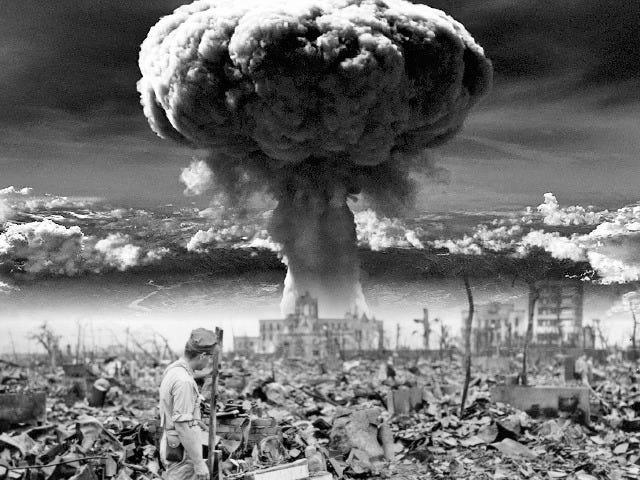
How the Plaza Accord helped the US destroy the Japanese economy
And how the US is doing it again to China
Last edited: