Indian Defense Industry General News and Updates

Aernnova & Mahindra Aerostructures announce a multi- year $300 Million contract, strengthening their long- standing partnership

Paris– June 17, 2025 – Aernnova Aerospace, SAU & Mahindra Aerostructures Pvt. Ltd (MASPL) have announced a multi-year contract valued at approximately $300 million for MASPL to manufacture metal sub-assemblies and components for a range of Airbus aircraft and also for Embraer aircraft families (including the Embraer C390 Millennium military transport aircraft). The contract covers the supply to several Aernnova sites in Spain, the UK, Portugal and Brazil, further strengthening a collaboration that began in 2013.

Speaking on the occasion, Mr. Ricardo Chocarro, CEO of Aernnova said, " This partnership with Mahindra will enable Aernnova to reinforce its supply base to secure production ramp-ups in our factories for all our programs, fulfilling our mission to deliver to our customers. We have great confidence in MASPL’s expertise and high-end technology capabilities to industrialize the different packages with the support of our technical experts in the different areas of work”.

Dr. Anish Shah, Group CEO & MD, Mahindra Group said “We are delighted with the confidence Aernnova has reposed on us and are grateful for their support. As we scale up our operations and make significant investments in our Aerospace business, we look forward to enhancing this partnership and scale new heights.”

Speaking about the alliance, Mr. Arvind Mehra, Managing Director and CEO of Mahindra Aerostructures said: “The Aernnova partnership has been of great importance to us since the inception of our business, and it is truly an exciting moment to sign this new contract with them. This contract builds significantly on our existing relationship with their UK subsidiary and also opens up several opportunities to make in India. Through incremental investment in capability and capacity, we are thrilled to showcase our value proposition across the realms of industrial process maturity, digitalization, performance and sustainability and contribute to our customers production rate ramp up plans”.

Aernnova supported MASPL in the early stages of its facility development in India, with strong contributions to the facility design and development, as well as for skilling and skill assessment. The relationship stepped up to a new level when Aernnova acquired an existing customer of MASPL, Hamble Aerostructures (UK), from GE in 2020. The new Aernnova contract evolved over multiple engagements where both companies studied new opportunities and finalized a collaboration strategy. Both businesses intend to build on this base to further grow the size of the relationship progressively over the coming years.
 
This fellow said we are wasting money on chips and should spend money on expanding services instead. As an electrical engineer that day I used a wide and potent arsenal of curses across 3 languages on that boomer Rajan.
Fired few times is very far from production. Original Astra was first a lot over a decade. User trials itself will take few years.

Astra Mk 2 needs to be completed urgently.
By when do you think Astra Mk2 will enter service? Forgive me for my potential ignorance but Mk2 looks to have a similar design as Mk1 but longer range and better radar so while testing is necessary is a decades worth of testing needed for Mk2? Can 2-3 more years suffice?
 
I had not heard of these folks. Good stuff.
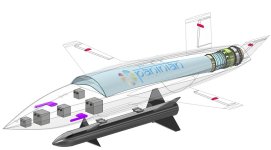
Looks like they named themselves after Maharishi Panini, who is the greatest Indian linguist to ever live (some even call him the father of linguistics). Panini was born around 400-300 BCE iirc and he is the one who formalized grammatical rules of Ancient Sanskrit into Classical Sanskrit, rules which Sanskrit speakers still follow a whopping 2,300 years after Maharishi Panini's death.

BTW I see so many Indian private companies propping up making missiles, drones and other equipment. Who funds them? As for the technical manpower i guess it's retired DRDO people who form such companies. Hopefully these guys succeed and bring more glory to Maharishi Paninis name.
 
  • Like
Reactions: redpanda and Shan
I wouldn't say Navy has been any better in running a development program.
I strongly disagree. Navy has had its own design bureau for decades. Most of navy's ships are designed by their own bureau & the ships are built in India. Design capability for all kinds of ships- from tugboats to aircraft carriers, missile tracking ships to SSBMs exists in this country. We also have good domestic shipbuilding capability.

They do have problems. Shipbuilding is almost always behind schedule. Indigenization on sensors, EW & weapons are getting there but propulsion tech is a problem area. Nuclear propulsion development is going alright. Only recently have the Navy begun a project on medium power naval diesel engine. If that project pans out, we will have most of our diesel engine needs met.

Domestic marine gas turbine is nowhere to be seen.

But the IAF is in a much worse position. IAF has no design bureau. There is no domestic capability for a vast number of aerial assets. We have no proven domestic design capability for medium/heavy transport aircraft, we are therefore reliant on foreign suppliers for not just transporters but also platforms for AEW&CS, refuellers, EW, ELINT/SIGINT etc.

Things aren't better on the fighter front. Unlike our naval fleet, most out our fighter fleet is foreign origin. Quite a few fighters are under development, even if all goes well the majority of the fleet will remain foreign origin for another 15 years at least. Same can be said for weapons & sensors carried by these fighters.

Things are a bit better on the rotary wing front mostly because of the ALH Dhruv. The induction of the LUH & LCH have been slow. Development of the IMRH is also agonizingly slow. IAF could have let the Army have all the attack helos & concentrated their budget & energy on the IMRH. HAL is the probably the only Indian entity today that can make turboshaft engines. Yet the IAF doesn't fund the HTSE-1200/HTFE-25 engine. They have let HAL run it using internal funds.

A similar approach was seen during the development of the HTT-40 trainers. IAF is happy with their Pilatus why would they fund the development of yet another trainer? I imagine this is also the reason why the Tejas LIFT or HLFT-42 is getting no attention. IAF is happy with the BAE Hawk why would they need another lead in flight trainer?

Never heard an argument of this kind from the Navy. We are getting the Talwar class frigates from Russia why do we need to fund the development & production of a Shivalik & Nilgiri class frigates.

Testing infra for Navy's platforms exists in the country. Hydrodynamic testing on surface ships, SSBN/SSN hulls happen in India. Many IAF's projects rely on foreign test facilities. IAF has the 2nd largest share of the defence budget, IN has the 3rd. This has been the case for a long time. Yet here we are.

I can keep ranting. But the point is if I believe if IAF ran projects as well as the IN we would have the capability to make C390 category transporters, RTA90 like passenger planes by now.
 
I strongly disagree. Navy has had its own design bureau for decades. Most of navy's ships are designed by their own bureau & the ships are built in India. Design capability for all kinds of ships- from tugboats to aircraft carriers, missile tracking ships to SSBMs exists in this country. We also have good domestic shipbuilding capability.

They do have problems. Shipbuilding is almost always behind schedule. Indigenization on sensors, EW & weapons are getting there but propulsion tech is a problem area. Nuclear propulsion development is going alright. Only recently have the Navy begun a project on medium power naval diesel engine. If that project pans out, we will have most of our diesel engine needs met.

Domestic marine gas turbine is nowhere to be seen.

But the IAF is in a much worse position. IAF has no design bureau. There is no domestic capability for a vast number of aerial assets. We have no proven domestic design capability for medium/heavy transport aircraft, we are therefore reliant on foreign suppliers for not just transporters but also platforms for AEW&CS, refuellers, EW, ELINT/SIGINT etc.

Things aren't better on the fighter front. Unlike our naval fleet, most out our fighter fleet is foreign origin. Quite a few fighters are under development, even if all goes well the majority of the fleet will remain foreign origin for another 15 years at least. Same can be said for weapons & sensors carried by these fighters.

Things are a bit better on the rotary wing front mostly because of the ALH Dhruv. The induction of the LUH & LCH have been slow. Development of the IMRH is also agonizingly slow. IAF could have let the Army have all the attack helos & concentrated their budget & energy on the IMRH. HAL is the probably the only Indian entity today that can make turboshaft engines. Yet the IAF doesn't fund the HTSE-1200/HTFE-25 engine. They have let HAL run it using internal funds.

A similar approach was seen during the development of the HTT-40 trainers. IAF is happy with their Pilatus why would they fund the development of yet another trainer? I imagine this is also the reason why the Tejas LIFT or HLFT-42 is getting no attention. IAF is happy with the BAE Hawk why would they need another lead in flight trainer?

Never heard an argument of this kind from the Navy. We are getting the Talwar class frigates from Russia why do we need to fund the development & production of a Shivalik & Nilgiri class frigates.

Testing infra for Navy's platforms exists in the country. Hydrodynamic testing on surface ships, SSBN/SSN hulls happen in India. Many IAF's projects rely on foreign test facilities. IAF has the 2nd largest share of the defence budget, IN has the 3rd. This has been the case for a long time. Yet here we are.

I can keep ranting. But the point is if I believe if IAF ran projects as well as the IN we would have the capability to make C390 category transporters, RTA90 like passenger planes by now.
Things like RTA 90 haven't been stuck on the IAF side for now. The project has been in the bureaucratic hurdles for years, it hasn't even reached the drawing board.

In the first place several IAF officers and IAF chiefs have shown their dissatisfaction towards HAL and have asked for HAL to be under IAF afaik. Why is HAL not under IAF or IAF doesn't own a design bureau we don't know, though I am pretty confident it's not because IAF doesn't want it.

HLFT 42 has seen interest from IAF afaik and they have been involved in the project, the tender for the aircraft's engine was released some time ago. Of course I don't know how well the relationship has been between HAL and IAF for the program but saying there is no interest from IAF is definitely false atleast for now. Btw the talwar class frigate and HLFT 42 comparison was pretty awful, atleast use an example which would draw the right parallel for example the tugboats.

You are asking why IAF doesn't fund the HTFE 25 engine but the engine's funding should've been from the MoD and the MoD delayed the release of their funds which delayed the project. You can argue why IAF doesn't ask for these development programs, there I'd agree. But even then they won't be the one funding such program, it would be the MoD afaik simply because the cost would be too high for them.

The testing infra wouldn't be developed by the IAF because the IAF doesn't have any use for the infra. HAL and DRDO would be the ones who'll be owning all these testing infra so why would IAF ask for the funding? Btw the army owns several testing grounds but IAF can't do that either because testing and certification is in the hands of CEMILAC which isn't under IAF afaik.

The 3rd largest budget thing is very misleading. The army has the largest budget not because MoD feels like it but because historically the army has always had the highest number of personnel under them and armies in general require much more money for replenishments across the world.

I think there are several IN projects which have been problematic to say the least. Saying things like IAF would have been way better if the IN guys handled it or this program would have been better if this organization had handled it is simply foolish because no one knows what goes behind the scenes. The R&D project suffer not because of a single entity, they suffer because the process has been systematically really flawed. None of the services will be in the right position unless there is a systematic change.
 

BEL said the new orders include fire control systems, missile sighting systems, communication equipment, jammers, critical spares, and associated services.
 
  • Like
Reactions: redpanda and Zarion
I strongly disagree. Navy has had its own design bureau for decades. Most of navy's ships are designed by their own bureau & the ships are built in India. Design capability for all kinds of ships- from tugboats to aircraft carriers, missile tracking ships to SSBMs exists in this country. We also have good domestic shipbuilding capability.

They do have problems. Shipbuilding is almost always behind schedule. Indigenization on sensors, EW & weapons are getting there but propulsion tech is a problem area. Nuclear propulsion development is going alright. Only recently have the Navy begun a project on medium power naval diesel engine. If that project pans out, we will have most of our diesel engine needs met.

Domestic marine gas turbine is nowhere to be seen.

But the IAF is in a much worse position. IAF has no design bureau. There is no domestic capability for a vast number of aerial assets. We have no proven domestic design capability for medium/heavy transport aircraft, we are therefore reliant on foreign suppliers for not just transporters but also platforms for AEW&CS, refuellers, EW, ELINT/SIGINT etc.

Things aren't better on the fighter front. Unlike our naval fleet, most out our fighter fleet is foreign origin. Quite a few fighters are under development, even if all goes well the majority of the fleet will remain foreign origin for another 15 years at least. Same can be said for weapons & sensors carried by these fighters.

Things are a bit better on the rotary wing front mostly because of the ALH Dhruv. The induction of the LUH & LCH have been slow. Development of the IMRH is also agonizingly slow. IAF could have let the Army have all the attack helos & concentrated their budget & energy on the IMRH. HAL is the probably the only Indian entity today that can make turboshaft engines. Yet the IAF doesn't fund the HTSE-1200/HTFE-25 engine. They have let HAL run it using internal funds.

A similar approach was seen during the development of the HTT-40 trainers. IAF is happy with their Pilatus why would they fund the development of yet another trainer? I imagine this is also the reason why the Tejas LIFT or HLFT-42 is getting no attention. IAF is happy with the BAE Hawk why would they need another lead in flight trainer?

Never heard an argument of this kind from the Navy. We are getting the Talwar class frigates from Russia why do we need to fund the development & production of a Shivalik & Nilgiri class frigates.

Testing infra for Navy's platforms exists in the country. Hydrodynamic testing on surface ships, SSBN/SSN hulls happen in India. Many IAF's projects rely on foreign test facilities. IAF has the 2nd largest share of the defence budget, IN has the 3rd. This has been the case for a long time. Yet here we are.

I can keep ranting. But the point is if I believe if IAF ran projects as well as the IN we would have the capability to make C390 category transporters, RTA90 like passenger planes by now.
You need to zoom out and look at things historically.

The result you see today is because of the choice of institutional building by the leadership after independence. They created a single civilian entity, the Defense Research and Development Organization (DRDO), in 1958 to oversee military-related research and development. The key word here is "civilian". The services role is very limited to provide support not more than that. If we compare it with USA, its a mix of Department of Defense Agencies like DARPA and Service Research Laboratories like Air Force Research Laboratory (AFRL), Naval Research Laboratory (NRL) etc. They work with defense contractors to prototype and build any weapon system.

Now, why do we have a design bureau for the navy but not for the air force? This is because of two reasons. First, there was no civilian entity that could perform that job. As for the air force, they had HAL, which had good enough design and development expertise. Secondly, it was within their reach. The air force cannot easily do that; the design and development of a fighter are far more challenging compared to a warship. Even in the USA, NRL was the pioneer in service-specific labs; every other lab came after. The inspiration of naval inhouse design was royal navy Corps of Naval Constructors which overtime evolved into Directorate of Naval Design (DND). It was a visionary decision for the navy to undertake. They had very small budget comparitivly so they had to make the most out of it.

At the same time, it is unfair to place blame on the air force and army because the design of our institutions was flawed. The innovation of the structure by the navy is an aberration, not the norm.

I wouldn't say Navy has been any better in running a development program.
Services dont run development programs. They are just there to assist. They dont have any leverage over development of a project.

They do have problems. Shipbuilding is almost always behind schedule. Indigenization on sensors, EW & weapons are getting there but propulsion tech is a problem area. Nuclear propulsion development is going alright. Only recently have the Navy begun a project on medium power naval diesel engine. If that project pans out, we will have most of our diesel engine needs met.

Domestic marine gas turbine is nowhere to be seen.
These responsibilities lie with either DRDO or the industry. Only with the recent DPP do we have involvement of services working with the industry as such.

But the IAF is in a much worse position. IAF has no design bureau. There is no domestic capability for a vast number of aerial assets. We have no proven domestic design capability for medium/heavy transport aircraft, we are therefore reliant on foreign suppliers for not just transporters but also platforms for AEW&CS, refuellers, EW, ELINT/SIGINT etc.
No where in the world airforces design and develop platforms like you mentioned. Its out of their reach and mandate.

Things are a bit better on the rotary wing front mostly because of the ALH Dhruv. The induction of the LUH & LCH have been slow. Development of the IMRH is also agonizingly slow. IAF could have let the Army have all the attack helos & concentrated their budget & energy on the IMRH. HAL is the probably the only Indian entity today that can make turboshaft engines. Yet the IAF doesn't fund the HTSE-1200/HTFE-25 engine. They have let HAL run it using internal funds.
Services cannot directly fund projects under DRDO or DPSU like HAL. I don't know where these assumptions come from.

The testing infra wouldn't be developed by the IAF because the IAF doesn't have any use for the infra. HAL and DRDO would be the ones who'll be owning all these testing infra so why would IAF ask for the funding? Btw the army owns several testing grounds but IAF can't do that either because testing and certification is in the hands of CEMILAC which isn't under IAF afaik.
Correct, in my opinion, if DRDO had prioritized the testing infrastructure in the 1980s and 1990s, we could have been on a different trajectory. But again we were a poor country. We have a scarcity mindset. Why build an advanced wind tunnel for LCA or a high-altitude test facility for Kaveri when we can do it more cheaply outside?. We didnt plan for long term.

Also, as you pointed out, CEMILAC is another hurdle for the Air Force that naval platforms don't have to face.

Footnote:

During the time of Antony, there was an attempt to establish a civilian agency called the National Institute for Research and Development in Defence Shipbuilding (NIRDESH) to reduce the workload of the Directorate of Naval Design (DND).
 
You need to zoom out and look at things historically.

The result you see today is because of the choice of institutional building by the leadership after independence. They created a single civilian entity, the Defense Research and Development Organization (DRDO), in 1958 to oversee military-related research and development. The key word here is "civilian". The services role is very limited to provide support not more than that. If we compare it with USA, its a mix of Department of Defense Agencies like DARPA and Service Research Laboratories like Air Force Research Laboratory (AFRL), Naval Research Laboratory (NRL) etc. They work with defense contractors to prototype and build any weapon system.

Now, why do we have a design bureau for the navy but not for the air force? This is because of two reasons. First, there was no civilian entity that could perform that job. As for the air force, they had HAL, which had good enough design and development expertise. Secondly, it was within their reach. The air force cannot easily do that; the design and development of a fighter are far more challenging compared to a warship. Even in the USA, NRL was the pioneer in service-specific labs; every other lab came after. The inspiration of naval inhouse design was royal navy Corps of Naval Constructors which overtime evolved into Directorate of Naval Design (DND). It was a visionary decision for the navy to undertake. They had very small budget comparitivly so they had to make the most out of it.

At the same time, it is unfair to place blame on the air force and army because the design of our institutions was flawed. The innovation of the structure by the navy is an aberration, not the norm.


Services dont run development programs. They are just there to assist. They dont have any leverage over development of a project.


These responsibilities lie with either DRDO or the industry. Only with the recent DPP do we have involvement of services working with the industry as such.


No where in the world airforces design and develop platforms like you mentioned. Its out of their reach and mandate.


Services cannot directly fund projects under DRDO or DPSU like HAL. I don't know where these assumptions come from.


Correct, in my opinion, if DRDO had prioritized the testing infrastructure in the 1980s and 1990s, we could have been on a different trajectory. But again we were a poor country. We have a scarcity mindset. Why build an advanced wind tunnel for LCA or a high-altitude test facility for Kaveri when we can do it more cheaply outside?. We didnt plan for long term.

Also, as you pointed out, CEMILAC is another hurdle for the Air Force that naval platforms don't have to face.

Footnote:

During the time of Antony, there was an attempt to establish a civilian agency called the National Institute for Research and Development in Defence Shipbuilding (NIRDESH) to reduce the workload of the Directorate of Naval Design (DND).
Didn't IAF had a dedicated internal design bureau once which got merged with HAL to avoid duplication of efforts?
 
You need to zoom out and look at things historically.

The result you see today is because of the choice of institutional building by the leadership after independence. They created a single civilian entity, the Defense Research and Development Organization (DRDO), in 1958 to oversee military-related research and development. The key word here is "civilian". The services role is very limited to provide support not more than that. If we compare it with USA, its a mix of Department of Defense Agencies like DARPA and Service Research Laboratories like Air Force Research Laboratory (AFRL), Naval Research Laboratory (NRL) etc. They work with defense contractors to prototype and build any weapon system.

Now, why do we have a design bureau for the navy but not for the air force? This is because of two reasons. First, there was no civilian entity that could perform that job. As for the air force, they had HAL, which had good enough design and development expertise. Secondly, it was within their reach. The air force cannot easily do that; the design and development of a fighter are far more challenging compared to a warship. Even in the USA, NRL was the pioneer in service-specific labs; every other lab came after. The inspiration of naval inhouse design was royal navy Corps of Naval Constructors which overtime evolved into Directorate of Naval Design (DND). It was a visionary decision for the navy to undertake. They had very small budget comparitivly so they had to make the most out of it.

At the same time, it is unfair to place blame on the air force and army because the design of our institutions was flawed. The innovation of the structure by the navy is an aberration, not the norm.


Services dont run development programs. They are just there to assist. They dont have any leverage over development of a project.


These responsibilities lie with either DRDO or the industry. Only with the recent DPP do we have involvement of services working with the industry as such.


No where in the world airforces design and develop platforms like you mentioned. Its out of their reach and mandate.


Services cannot directly fund projects under DRDO or DPSU like HAL. I don't know where these assumptions come from.


Correct, in my opinion, if DRDO had prioritized the testing infrastructure in the 1980s and 1990s, we could have been on a different trajectory. But again we were a poor country. We have a scarcity mindset. Why build an advanced wind tunnel for LCA or a high-altitude test facility for Kaveri when we can do it more cheaply outside?. We didnt plan for long term.

Also, as you pointed out, CEMILAC is another hurdle for the Air Force that naval platforms don't have to face.
100% agree. I think that what Navy ( I am referring to the whole organization not just the armed service) has achieved is great and something to be proud about but even now we can see issues in development projects due to the structure of the defence R&D and procurement system in the country. The whole procedure needs a revamp rather than one organization like HAL or Armed Forces.

Hopefully things change for the better. Some issues have been solved or improved upon but still a long way ahead.
 
  • Like
Reactions: RationalGuy