Yes. And today they don't exist. By the time they exist (and we get it), things will change to the point where they will have to operate like the Rafale does.
Su-57 hasn't been designed for penetration anyway. We can tell by its avionics. They are developing a penetration version, a twin-seat version. So we gotta wait for that.
Nothing we can use as a stopgap is gonna be in time as long as AMCA is successful.
The F-35 as a platform exists. And that's what we'd essentially buy it for - just as a stop-gap VLO platform till AMCA is ready. We don't need a gold-plated version for that. And if it turns out we do need the upgrades (cuz of AMCA delay or otherwise), we can do them post-induction. Just like how ISEs were being implemented on our Rafales years after induction.
The relative differences between the platforms will still remain. Even the F-35 as it exists will be capable of getting much closer to any given target than a Rafale.
There is no "upgrade" to Block 4. B4 is their standard FOC model with "full warfighting capabilities."
Article from 2017.
The F-35 program should wait until the all-up Block 3F software version is fully developed before asking industry to offer upgrades for future iterations, known as Block IV, and before significantly increasing the fighter’s production rate.

www.airandspaceforces.com
The F-35 program should wait until the all-up Block 3F software version is fully developed before asking industry to offer upgrades for future iterations, known as Block IV, and before significantly increasing the fighter’s production rate, the Government Accountability Office said Monday.
And guess what? 3F isn't ready even today. They thought they will achieve it with TR-2 hardware, but turned out they need TR-3.
The 3F version is the last step in achieving the baseline capabilities of the F-35, with all the weapons and electronic warfare capabilities planned for the initial version. The Marine Corps and Air Force declared initial operational capability with the jet in July 2015 and August 2016, respectively, with the Block 3i version of the software. The Navy plans IOC in 2018 with the full-up 3F software iteration.
So it's still at early FOC.
Another one from 2015.
CAPITOL HILL: While Congress and the media focus on immediate issues with the F-35’s ejection seat, the program has begun working on a long-range modernization plan to upgrade the Joint Strike Fighter’s combat power. This modernization package, with the so-called Block 4 software upgrade at its...

breakingdefense.com
This modernization package, with the so-called Block 4 software upgrade at its core, is essential to the aircraft reaching its “full warfighting capability,” Maj. Gen. Jeffrey Harrigian, the Air Force’s F-35 integration director, told Congress yesterday.
“We will improve electronic attack [e.g. jamming]. We will improve electronic warfare [in general]. We will improve the radar,” said Lt. Gen. Christopher Bogdan, head of the F-35 Joint Program Office, speaking to reporters after the House air-land forces subcommittee hearing. “We will add many weapons in Block 4, many unique weapons that the [foreign] partners need and use.” Those first two improvements are particularly important because the Air Force has said the F-35 won’t need the help of dedicated jamming aircraft like the Navy’s EA-18G Growler.
Sure, they have just added some later block upgrades to the original 2015 version of B4. But it's still in the works.
2016 article. Planned date:

Troubled warplane that has yet to see any cyber security testing hit with yet another bug affecting flight performance requiring software update

www.theguardian.com
“The next software version is block 4. It won’t be available until 2020. So there’ll be nothing but fixing bugs in the original software between 2013 and 2020.”
B4 should have been ready by 2019 as per the original schedule. And it's unlikely to be ready even by 2030. So good luck convicing the IAF to go for the F-35 without fully completing B4 first.
Rafale without ISEs wouldn't have been considered fully mission-capable by IAF. That doesn't mean we wouldn't induct them till after all ISEs were implemented.
The thing is, like I said before, we're in an extraordinary place with regard to procurement paralysis right now - we've never been in such a place before.
Yeah. So Neuron and Ghatak are meant to penetrate, whereas the cheaper CCAs are meant to accompany the main fighter.
The degree of advancement doesn't matter because Neuron will be able to operate hundreds of kms away from the Rafale.
If staying 100s of kms behind the penetrator is the way Rafale wants to play the game, then we frankly don't need something that expensive for this role. A Tejas Mk2 with drop tanks would do the job just as well, if not better considering it will be stealthier than the Rafale.
Btw, the primary fighter isn't a "mothership." A mothership is something that carries other aircraft, akin to an aircraft carrier that flies.
It's the terminology we use to describe the aircraft that controls the CATS system. It's the M in MAX.

But frankly, it doesn't matter what you call it - MUMT involves a man in the loop. I'm talking about the plane where the man sits.
No. The Americans plan to generate mass to drill a hole so the B-21 can get in. We just don't know the full extent of what India and France have planned because they move slower than the Americans and Chinese.
Well, I think I have a fairly solid idea that drilling holes in Chinese IADS isn't exactly a pressing requirement for France.
J-36 will be dealt with by both Rafale and AMCA. As I said, it's about information, not about the capabilities of an individual aircraft.
Information can't change physical properties. Information is to be used in conjunction with a stealthy platform, not instead of.
Why do you think there's a VLO/ULO plane at the heart of every system-of-systems program in the works (FCAS, GCAP, NGAD) right now?
At the very least, we are not gonna make kneejerk purchases for the J-35 when we didn't for the far superior J-20.
By the time we assessed the J-20, the J-20B was already flying. Now that we finally sanctioned development of AMCA & working on NG engine program as an answer to J-20B, now 2-3 different J-XX are flying.
Whether we actually buy a stop-gap 5G or not is anyone's guess, and a lot of it will come down to politics. I'm just saying that if we've determined that a VLO platform is necessary to deal with future threats (which we did when we sanctioned AMCA), it might be worthwhile to get one via G2G sooner as a stop-gap because the enemy is rapidly building numbers in this department AND because very soon this will become a two-front problem.
If the stop-gap G2G isn't available, I already told you what we'll do.
That's worse for the attacker. Smaller areas are easier to defend. It gets even better for the US 'cause those smaller areas are islands.
Haven't you heard of the Battle of Thermopylae?
How did you come to the opposite conclusion?
Yep, cratering a whole 5km x 5km island is more difficult than searching the whole Indo-Gangetic Plain for where that BrahMos MAL moved after it launched.
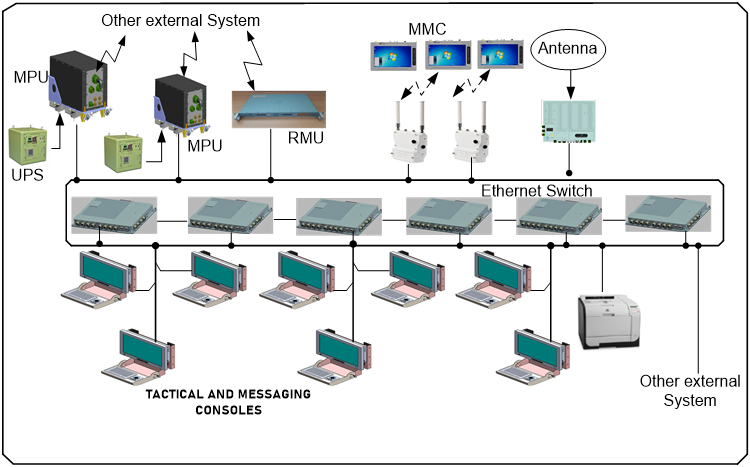
BEL makes datalinks for the IN, that's separate from the IAF's program which was won by the Israelis. There's a larger indigenous one meant to integrate all three services. Right now integration between the three services is siloed.
BEL makes datalinks for everybody. The IN uses it's Link-II in conjunction with indigenous SDRs, while IAF uses its DL in conjunction with Israeli SDR (BNET).
The BNET was purchased instead of the indigenous alternative called SDR-2010, which was developed by HAL. Mostly due to size & weight constraints. Even if we had bought the HAL SDR, the datalink would've still been from BEL.
The reason cross-service integration is siloed is because the different SDRs use different encryptions. We need to fix that, either by modifying them all to use the same encryption, or replacing them all with our own SDRs.
And Rafale's radar significantly outranges Netra.
Yeah, sure buddy.
The way it actually works... Netra uses TWS to figure out basic target data. That data is sent to Rafale to generate fire control. The missile is then fired in the general direction of the target and midcourse updates are provided by Netra through the Rafale.
You just repeated what I said regarding the process of what's supposed to happen, but without addressing the question I asked therein:
"What that means is that the Meteor's engagement envelope could currently be limited to what the Rafale's own FCR is able to see & guide the missile onto, because the Rafale might not yet be able to take inputs from Netra & feed them to Meteor via the datalink that connects the missile to the Rafale."
Once the missile gets close enough, the Rafale uses its own radar to refine fire control data until the seeker kicks in. This is a basic sensor-shooter loop of an AWACS + fighter pair.
But a better version of that is to just use 2 Rafales instead. The MKI's had this since the very beginning, that's why it's called mini-AWACS. A group of 4 MKIs could join up to create a loop.
This is where you err, combined with that other assumption of Rafale (or MKI) radar outranging Netra. Wake me up when either of those can generate tracks of fighter-sized targets at +475 km like Netra can.
An additional problem is you're gonna be operating under a heavy EW environment, meaning significant sensor degradation. Which I already talked about, but you conveniently ignored. Fighter FCRs are considerably easier to degrade than AEWs, cuz the latter are much more powerful - and would operate out at farther ranges meaning the same jammer is less effective against them.
A Netra could be operating 200 km behind the fighters, and still outrange their radars by a 100 kms when it comes to tracking fighter-sized targets. The BARS can track fighters at 140 km in the best-case scenario. And no, the instrumented detection range (what fanboys love to call mini-AWACS) doesn't matter. You need to be able to generate tracks & vector data, otherwise the fighters you're guiding won't know whether they're firing their missiles ahead of or behind the target. One of those would significantly reduce the Ph/Pk.
Missiles like Meteor or Gandiva cannot be leveraged to their full extent unless you can rely on offboard target data.
And that is the crux of my doubt - whether the Rafale is yet able to take information from Netra via datalink, translate it & feed it to Meteor via fighter-to-missile datalink (which is a different system) or not. This would require our Rafales to have:
1) BNET SDR hardware installed - status: DONE.
2) Rafale's software patched to recognize the Indian datalink fed via the BNET - status: UNKNOWN, but likely DONE.
3) Translation layer installed to allow this data to be converted & fed to Meteor's datalink (which is proprietary MBDA software) - status: UNKNOWN.
I wouldn't be surprised if some of this is still work in progress.