

Operation Sindoor: India Strikes Terroist Camps Inside Pakitsan
- Thread starter Defc0n
- Start date
You are using an out of date browser. It may not display this or other websites correctly.
You should upgrade or use an alternative browser.
You should upgrade or use an alternative browser.
- Status
- Not open for further replies.




You don't seem to get why AMCA is necessary. In short, MRFA cannot deliver what it can. Otherwise we'd have just gone straight to 6G like the French are doing.
The AMCA represents a significant enough leap in survivability over what any MRFA can offer. That's why the program exists.
We just seem to be running around in circles over this.
I'm not even talking about MRFA here. F-22, F-35, J-20, AMCA etc are no longer true stealth jets, just LO/VLO. There was a time when it was very difficult to detect RCS below 1m2, but it's quite easy now. Similarly, it was very difficult to detect LO/VLO jets 20 years ago. Now that's no longer the case. It's just part and parcel of this endless cat and mouse game.
Now both RO and LO/VLO jets require EW to survive. It's also why global discourse has shifted towards EW.
But what LO/VLO does is raise costs. The adversary has to spend more money on detection systems and C2 nodes than before. If they cannot, they won't be able to fight back, as we saw with Sindoor. So the higher the cost, the lower is the adversary's ability to wage war. It reinforces my point of only the rich being able to fight future wars. Case in point, the ridiculous American space BMD revealed earlier.
India's got radar systems that render AMCA-class stealth moot already. Pakistan doesn't. And to defeat future 6th gen tech, we need satellites and drones alongside existing systems. So, with each step costs are being raised to abnormal levels.
Neither is Rafale if the opponent is China. It won't survive. Even if it can survive by flying low, which is doubtful, it won't be able to penetrate very deep in that flight profile, and even then the weapons it can launch seem to have a high probability of being intercepted.
Ideally we need a 6G with broadband stealth (ULO) to deal with China. But that's not on the anvil for us right now.
So the next closest thing is AMCA which is LO (and will develop into VLO once it gets NG engines), but that's far away. Even the stealthy CCAs & other drones are quite a ways off.
Till then, all we can really do is fly within Indian airspace and fire standoff weapons. At worst, the MKI can do that just as well as Rafale. At best, it can do an even better job as it can carry & launch things that might be too big for Rafale like BrahMos or Rudram-3.
Additional MKIs are not such a bad idea at all if they come with Super upgrades from factory.
Ghatak.
Rafale's sufficient for air bases, but not true depth areas, at least not without Neuron.
All other Rafale/Meteor export customers use either NATO or NATO-compliant datalinks & AEW platforms (Hawkeye, Sentry, Wedgetail, Erieye). We're the only ones who don't*.
It's not inconceivable that there might be hiccups with integration.
*Not counting those that don't have AEWs at all so are anyway dependent on Rafale' own FCR.
BNET is also NATO-compliant. Don't see why it cannot be integrated with Meteor.
Anyway:
Meteor can be operated using third party data
I didn't say we don't have possession of the missiles. I said they might not yet be fully operational.
What that means is that the Meteor's engagement envelope could currently be limited to what the Rafale's own FCR is able to see & guide the missile onto, because the Rafale might not yet be able to take inputs from Netra & feed them to Meteor via the datalink that connects the missile to the Rafale.
In this situation, because of the fact that we would be operating under a heavy EW environment, it's likely that there might not have been much of a difference in effective range (with good Ph/Pk) between Meteor and MICA-EM, cuz they would both only be relying on what the Rafale itself can see, within that range MICA itself is capable of prosecuting all targets.
So no point in using the much more expensive Meteor.
Direct link between AWACS and Meteor is very difficult, we don't yet have that for Astra yet either. But an indirect link where Netra sends targeting data to the Rafale and the Rafale uses that to generate fire control solution without using its own radar is possible. It's their own missile after all. And all this needs is middleware to connect Rafale to Netra, which is what B-NET does.
Netra is "third party data."
Cuz we've seen MICA wreckage at the Bathinda site. But no Meteor wreckage.
Yes, absence of evidence is not evidence of absence. But I can only comment on what I see, until & unless IAF says otherwise.
If Meteors were carried & were fully functional with AEW-provided target cues, we would have fired them. Some debris or remnants of Meteor would've been found in Pakistan and they would have paraded it. There's no evidence of any Meteor (or MICA for that matter) in Pak, even though several debris of BrahMos, SCALP & S400 rounds were seen.
That's not evidence for anything. What about R-77 or R-27? And Astra? Do we have AMRAAMs on the Indian side? Any MICAs on the other side?
As I said, just wild guesses. This story about no datalink on the Rafale is Pakistani psyop. Even during Balakot they said the same thing even though the Mig-21s were integrated with the ODL.
And no Meteor on Rafale story is just a lame fanboy excuse to protect the Rafale's status.
Anyway, Meteor is for AS missions, not for low-altitude strike missions, which the Rafales were used for. Plus the IAF said no air combat using fighters was conducted from the Indian side on day 1 and 2, probably not even on day 3, just SAMs and drones from the looks of it.

I'm not even talking about MRFA here. F-22, F-35, J-20, AMCA etc are no longer true stealth jets, just LO/VLO. There was a time when it was very difficult to detect RCS below 1m2, but it's quite easy now. Similarly, it was very difficult to detect LO/VLO jets 20 years ago. Now that's no longer the case. It's just part and parcel of this endless cat and mouse game.
Now both RO and LO/VLO jets require EW to survive. It's also why global discourse has shifted towards EW.
But what LO/VLO does is raise costs. The adversary has to spend more money on detection systems and C2 nodes than before. If they cannot, they won't be able to fight back, as we saw with Sindoor. So the higher the cost, the lower is the adversary's ability to wage war. It reinforces my point of only the rich being able to fight future wars. Case in point, the ridiculous American space BMD revealed earlier.
India's got radar systems that render AMCA-class stealth moot already. Pakistan doesn't. And to defeat future 6th gen tech, we need satellites and drones alongside existing systems. So, with each step costs are being raised to abnormal levels.
Huh..?
So what are you saying? That there's no point in pursuing a 5G fighter? Because otherwise, we need AMCA. And if AMCA is too far away, we need a stop-gap 5G.
We'd only stay away from a stop-gap if either AMCA is somehow expedited or there's no 5G option available due to geopolitics. But the requirement of a 5G aircraft is not up for debate, we absolutely need it. Else we wouldn't be pursuing AMCA.
Ghatak.
Rafale's sufficient for air bases, but not true depth areas, at least not without Neuron.
Well then that means it can't be a DPSA.
We don't need an expensive jet to strike Chinese air bases in TAR. Missiles are a cheaper option, and as we just witnessed, they can achieve devastatingly precise hits inside airspace defended by HQ-9/HQ-16.
Nobody in their right mind would risk a manned aircraft to do the job that a standoff missile can. We have strike options with up to 800-km range and are working on ones with 1500-km reach. Mass producing them is likely to achieve better results vis-a-vis PRC than buying/building 114 jets that can't penetrate anyway.
BNET is also NATO-compliant. Don't see why it cannot be integrated with Meteor.
Anyway:
Meteor can be operated using third party data
Direct link between AWACS and Meteor is very difficult, we don't yet have that for Astra yet either. But an indirect link where Netra sends targeting data to the Rafale and the Rafale uses that to generate fire control solution without using its own radar is possible. It's their own missile after all. And all this needs is middleware to connect Rafale to Netra, which is what B-NET does.
Netra is "third party data."
BNET is an SDR, not a datalink. It's just the hardware that's used to encrypt, transmit & receive. The actual datalink software is customer-specific (and is our own IP, nothing to do with the Rafael-developed datalink that comes with BNET out of the box). Unless we integrate our datalink on Rafale's system, it won't know what to do with it - but if the same BNET is being used to transmit/receive Link-16, it will. Cuz Rafale's system can recognize Link-16.
In simple terms, BNET is like a USB drive. The software you load on it is your own & can vary. But if you load a Mac program and plug the USB into a Windows PC, it won't work. I'm not asking whether we have a USB (SDR) or not, I know we do. What I don't know is whether we've written a Windows-compliant version of our software (datalink) or not - and whether Microsoft (the French) has shared the SDK to allow us to do that or not.
That's not evidence for anything. What about R-77 or R-27? And Astra? Do we have AMRAAMs on the Indian side? Any MICAs on the other side?
As I said, just wild guesses. This story about no datalink on the Rafale is Pakistani psyop. Even during Balakot they said the same thing even though the Mig-21s were integrated with the ODL.
And no Meteor on Rafale story is just a lame fanboy excuse to protect the Rafale's status.
Anyway, Meteor is for AS missions, not for low-altitude strike missions, which the Rafales were used for. Plus the IAF said no air combat using fighters was conducted from the Indian side on day 1 and 2, probably not even on day 3, just SAMs and drones from the looks of it.
I'll just wait for IAF to set the record straight. Cuz either way is an assumption.
Last edited:

Because its not needed. We didnt attack their military in the first place. We attacked terrorist camps. Their reaction was to spam missile across the border. They didnt dare to cross the border with the super duper chinese toys.India is wreaking havoc in Pakistan. Don't be ridiculous. So far, apart from launching BrahMos from a distance, does the Indian Air Force still have the courage to deploy large-scale fighter jets to compete with Pakistan for air supremacy?
Why would we want air supremacy over pakistan? we can molest them as we please without risking lives.
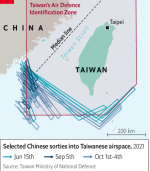
By the way, why cant the communist party airforce cross the Republic of China airspace? Too scared?
Small dick bully behavior, but too scared to get into a fight.
BNET is an SDR, not a datalink. It's just the hardware that's used to encrypt, transmit & receive. The actual datalink software is customer-specific (and is our own IP, nothing to do with the Rafael-developed datalink that comes with BNET out of the box). Unless we integrate our datalink on Rafale's system, it won't know what to do with it - but if the same BNET is being used to transmit/receive Link-16, it will. Cuz Rafale's system can recognize Link-16.
In simple terms, BNET is like a USB drive. The software you load on it is your own & can vary. But if you load a Mac program and plug the USB into a Windows PC, it won't work. I'm not asking whether we have a USB (SDR) or not, I know we do. What I don't know is whether we've written a Windows-compliant version of our software (datalink) or not - and whether Microsoft (the French) has shared the SDK to allow us to do that or not.
Had a question. Do we currently have any plans to introduce a datalink(like link 16) to communicate across all of our fighters? is it even possible to do so?
Basically what I want to know is since we have bought stuff from so many different types of vendors, so our Rafales, Su30, Mirage, Tejas, MIGs, AEW&C, BVR missiles etc, can they all seamlessly talk to each other for unified battlespace communication?

F-35 For India: A Mismatch in the Skies? - Livefist
US President Donald Trump’s offer to sell the fifth-generation F-35 Lightning II to India has raised a few eyebrows in Indian defence circles, sparking intense debate about its feasibility and implications." Most critiques of the F-35 offer to India have focused on strategic autonomy. Given how...
 www.livefistdefence.com
Because, I was reading this article and the author says that even if we do end up procuring the F35 as stopgap, F35 might become a lone wolf operating in a silo, and this would be bad because it was designed for network centric warfare. And the US also might not agree to integrate F35 datalink into Indian system. He says even Rafale might have similar problems.
Last edited:
So much trash talk, but can't challenge a tiny island.Pakistan will not be our test subject. Because the war between India and Pakistan is too low-level. We want the air combat theory between fifth-generation aircraft. We want the coordinated combat theory between unmanned wingman and manned aircraft, and we want the combat theory about the US distributed lethality and network-centric warfare.
The combat theories of the air forces of both sides in this war did not even surpass the combat theories of the US military during the Iraq War.
The simplest example is that India and Pakistan do not even conduct SEAD operations, and there are no dedicated electronic warfare aircraft to provide accompanying interference.
Even a decade ago PLAN didnt have a single dedicated EW aircraft. They have never even attempted a SEAD in modern warfare. You should be learning from PAF like toddlers.View attachment 43535
I am flattering the Indian Air Force by saying it is not up to the standards of the Iraq War. The Indian Air Force is not even up to the standards of the 1991 Gulf War.
During the Gulf War, the U.S. military formed a formation of four F-15 fighters, with early warning aircraft, electronic warfare aircraft and electronic reconnaissance aircraft as the core. After the early warning aircraft and electronic reconnaissance aircraft discovered enemy air or ground targets, the electronic warfare aircraft maintained suppression of the enemy radar, and the fighters launched missiles for beyond-visual-range strikes.
1,How many AWACS does India have? Only five, and no one even knows if the Rafale and Su-30 can establish effective data link communication with these Israeli-made AWACS.
2,Does India have electronic warfare aircraft? No. During the Gulf War, the United States had EA-6B and EA-111, while India in 2025 only has some tiny Israeli electronic warfare pods and some backward Russian ones.
3,Does India have any aircraft capable of performing this mission? Only some Su-30s can carry some KH31s, and these unfortunate aircraft need to launch a death charge against the enemy alone without the cover of electronic warfare aircraft.
Had a question. Do we currently have any plans to introduce a datalink(like link 16) to communicate across all of our fighters? is it even possible to do so?
Basically what I want to know is since we have bought stuff from so many different types of vendors, so our Rafales, Su30, Mirage, Tejas, MIGs, AEW&C, BVR missiles etc, can they all seamlessly talk to each other for unified battlespace communication?
F-35 For India: A Mismatch in the Skies? - Livefist
US President Donald Trump’s offer to sell the fifth-generation F-35 Lightning II to India has raised a few eyebrows in Indian defence circles, sparking intense debate about its feasibility and implications." Most critiques of the F-35 offer to India have focused on strategic autonomy. Given how...
Because, I was reading this article and the author says that even if we do end up procuring the F35 as stopgap, F35 might become a lone wolf operating in a silo, and this would be bad because it was designed for network centric warfare. And the US also might not agree to integrate F35 datalink into Indian system. He says even Rafale might have similar problems.
We have indigenous data links, but they are not a unified interface like Link-16. We have to modify our datalink in order to work with different OEM platforms, and they might or might not be interoperable directly (depends on the aircraft), so have to go through some form of gateway interface.
Typically, one would install such 'interface exchange' gateways on platforms like AEWs but ideally we should aim for such interfaces on all aircraft.
But installing such interfaces would require us to have deep access to an aircraft's system. The level of access we have varies based on the plane & the OEM.
TLDR; in theory all our aircraft are capable of communicating with one another. But to what extent this is implemented on each platform can vary.


Some how cm-400 which is an air launched ballistic missile left no such burned marks or debris on the S-400 cheeseboard radar in Adampur (not Udhampur in J&K) in Op banyan al chaddi

Oscar in PeeDF is coping that India is blocking Maxar from releasing sat pics as it is a big market
and they have to depend on Chinese sats which are not that frequent.Op Banyan al Chaddi turned out to be a damp squib and Munir became a Field Marshal in its backdrop and they have to invent wierd copes daily from BSF to Army operating S-400 and even confused the Adampur with Udhampur as seen in pakee texan medium article.
25 Things We Learned from the Pakistan-India War of 2025
25 Things We Learned from the Pakistan-India War of 2025 The 2025 conflict between Pakistan and India has reshaped our understanding of modern warfare in South Asia and the balance of power in the …

Why should India fight Pakistan's war? India fight a war that is India's war.India is wreaking havoc in Pakistan. Don't be ridiculous. So far, apart from launching BrahMos from a distance, does the Indian Air Force still have the courage to deploy large-scale fighter jets to compete with Pakistan for air supremacy?

Don't believe in all that bullshit that you read about IAF assets not talking to each other. IAF core is net-centricity via AFNET and through IACCS. Every single IAF asset is part of this broader system. If they don't or can't be integrated then rest assured that they'll never ever become a part of it. Period.Had a question. Do we currently have any plans to introduce a datalink(like link 16) to communicate across all of our fighters? is it even possible to do so?
Basically what I want to know is since we have bought stuff from so many different types of vendors, so our Rafales, Su30, Mirage, Tejas, MIGs, AEW&C, BVR missiles etc, can they all seamlessly talk to each other for unified battlespace communication?
F-35 For India: A Mismatch in the Skies? - Livefist
US President Donald Trump’s offer to sell the fifth-generation F-35 Lightning II to India has raised a few eyebrows in Indian defence circles, sparking intense debate about its feasibility and implications." Most critiques of the F-35 offer to India have focused on strategic autonomy. Given how...
Because, I was reading this article and the author says that even if we do end up procuring the F35 as stopgap, F35 might become a lone wolf operating in a silo, and this would be bad because it was designed for network centric warfare. And the US also might not agree to integrate F35 datalink into Indian system. He says even Rafale might have similar problems.
Opinion: Want better integration? Either have a jv or build your own defence equipment. This is the path that needs to be taken sooner or later.
Aand forces spokesperson trying to woo Youthia

Huh..?
So what are you saying? That there's no point in pursuing a 5G fighter? Because otherwise, we need AMCA. And if AMCA is too far away, we need a stop-gap 5G.
We'd only stay away from a stop-gap if either AMCA is somehow expedited or there's no 5G option available due to geopolitics. But the requirement of a 5G aircraft is not up for debate, we absolutely need it. Else we wouldn't be pursuing AMCA.
No. I'm saying we don't need to walk backwards by kneejerking our way into contracts which won't fit into our system just 'cause the PAF will operate J-35s.
Any counter to the J-35 isn't another 5th gen jet but a vast array of sensors and C2 networks. We are building that to counter the J-20 and J-XX, which means J-35 will automatically get countered by it too.
Vanilla Su-57 isn't good enough and requires its next gen modernization, and the F-35 Block 4 won't be ready anytime before 2030. So neither are answers to the J-35 at this time. If AMCA fails, they can become options. Ultimately, we need stealth, the raising-costs version and the true-stealth version, but not imported ones.
Well then that means it can't be a DPSA.
When combined with a drone it is. The same with the F-35. And against the PLAAF, not PAF.
But on its own, it can still hit air bases, which most of our air force cannot without using standoff weapons.
It's about degrees. If you want to breach a well-defended airspace without conducting SEAD/DEAD, you need excellent stealth and/or EW. Or you could soften it a bit using standoff weapons before breaching it. Or you gotta empty the bases of anything remotely related to SAMs and then breach it. We don't know where Rafale fits in for cases 1 or 2, but we know for sure the rest of our air force is at case 3.
We don't need an expensive jet to strike Chinese air bases in TAR. Missiles are a cheaper option, and as we just witnessed, they can achieve devastatingly precise hits inside airspace defended by HQ-9/HQ-16.
Nobody in their right mind would risk a manned aircraft to do the job that a standoff missile can. We have strike options with up to 800-km range and are working on ones with 1500-km reach. Mass producing them is likely to achieve better results vis-a-vis PRC than buying/building 114 jets that can't penetrate anyway.
Missiles have their place but on the whole are unreliable and can be intercepted. Gotta get close to guarantee a hit.
That's why the B-21 exists.
BNET is an SDR, not a datalink. It's just the hardware that's used to encrypt, transmit & receive. The actual datalink software is customer-specific (and is our own IP, nothing to do with the Rafael-developed datalink that comes with BNET out of the box). Unless we integrate our datalink on Rafale's system, it won't know what to do with it - but if the same BNET is being used to transmit/receive Link-16, it will. Cuz Rafale's system can recognize Link-16.
In simple terms, BNET is like a USB drive. The software you load on it is your own & can vary. But if you load a Mac program and plug the USB into a Windows PC, it won't work. I'm not asking whether we have a USB (SDR) or not, I know we do. What I don't know is whether we've written a Windows-compliant version of our software (datalink) or not - and whether Microsoft (the French) has shared the SDK to allow us to do that or not.
An "SDR" is not, but BNET is SDR + data link.
What Led to the Recent Crisis Between India and Pakistan?
On May 7, 2025, India launched missile strikes in Pakistan and Pakistan-administered Jammu and Kashmir. India stated that the strikes targeted terrorist infrastructure, while Pakistan rejected India’s claims. The strikes took place after two weeks of flare-ups between India and Pakistan following a terrorist attack in Pahalgam, a town in India-administered Kashmir. Both countries adopted diplomatic and military measures in response to the situation, drawing international attention. India and Pakistan agreed to a ceasefire on May 10, after three days of military operations and as the countries stood on the precipice of war.
The crisis between the two nuclear-armed countries indicates how rapidly tensions can escalate to dangerous levels. The intensity of the conflict exceeded that of past episodes, with several rounds of retaliation that undermined strategic stability in South Asia. This is also the first time India and Pakistan have engaged in drone warfare in their rivalry, indicating a new era of technological conflict in the region. The conflict underscores the need for heightened international attention to South Asia more broadly—not only during a crisis, as tensions over the Line of Control (LOC) occur even during relative peacetime. While the ceasefire continues to hold, the region should not reactively develop off-ramps only when tensions reach critical levels. The upcoming dialogues between India and Pakistan, as part of the ceasefire agreement, provide an opportunity for both countries to explore off-ramps and engage in confidence-building measures (CBMs).
Q1: What happened in Pahalgam?
A1: The terrorist attack took place on April 22 in Pahalgam, a town located in India-administered Kashmir, and killed 25 Indian citizens. The attack occurred along the LoC, which is a de facto border established in 1972 between India and Pakistan demarcating their control over Kashmir. India strongly condemned the terrorist attack, with Indian Prime Minister Narendra Modi stating that those behind the attack will be brought to justice, and that India’s resolve to fight terrorism remains strong. Pakistan’s Ministry of Foreign Affairs issued a statement extending condolences to the family of the deceased and expressed concern about the loss of tourist lives.
The Resistance Front (TRF) claimed responsibility for the terrorist attack. TRF is an offshoot of Lashkar-e-Taiba (LeT), a Kashmir-focused terrorist group that perpetrated the 2008 attacks in Mumbai, one of the deadliest attacks in India’s recent history. The United Nations and the United States have designated the LeT as an “international terrorist organization.” The LeT conducts activities in pursuit of a united Kashmir under Pakistan. The TRF has not conducted a large-scale attack before and is typically involved in LeT operations.
Q2: What was Operation Sindoor, the military strikes launched by India?
A2: Two weeks after the terrorist attack, India announced “Operation Sindoor” as a response to the Pahalgam attack, targeting what it terms as “terrorist infrastructure” in Pakistan and Pakistan-administered Jammu and Kashmir. In its statement, the armed forces conducted conventional missile strikes. They also stated that none of the targeted sites were associated with the Pakistani military, but were linked to the LeT and Jaish-e-Mohammad (JeM), another extremist group whose aim is to unite Kashmir with Pakistan and expel foreign troops from Afghanistan. India termed these strikes as “focused, measured, and non-escalatory.” In a briefing, Indian military officials stated that they will respond to any “misadventures” by Pakistan.
Indian media reported that the precision strike weapons included SCALP cruise missiles and HAMMER precision-guided munitions, which were launched by the Rafale jets. Pakistan strongly criticized India’s actions, reporting 31 civilians killed and 46 wounded. The Pakistani Ministry of Foreign Affairs termed the missile strikes as an “act of war” violating Pakistan’s sovereignty. Pakistan reserved “the right to respond appropriately” at a time and place of its choosing and accused India of bringing the two nuclear-armed countries closer to a major conflict. Pakistan launched Operation Bunyanun Marsoos in response, during which Pakistan used precision-guided missiles and munitions in India and India-administered Kashmir against “enterprises that were responsible for fomenting terrorism in Pakistan.” India and Pakistan continued to engage in missile strikes. The conflict also saw India and Pakistan’s first-time engagement in drone warfare to target each other’s military bases.
Q3: How have domestic and international stakeholders responded to the recent crisis?
A3: Between April 22 and May 7, a series of regional and international responses took place. On the regional side, India announced a series of diplomatic measures, including the abeyance of the Indus Waters Treaty (IWT), which supports the provision of water to both countries from the Indus River, the downgrading of diplomatic ties, and the suspension of trade. India accused Pakistan of failing to address terrorist activities. Pakistan continues to deny its involvement, claiming insubstantial evidence from India. It also adopted diplomatic measures, including threats to suspend the 1972 Shimla Agreement, which allows for bilateral resolution of disputes. In recent weeks, both countries conducted missile tests and shows of force. Pakistan conducted a test of the Fatah and Abdali surface-to-surface missiles. Hours before the strikes, India announced nationwide civil defense drills to prepare for a potential military conflict. Indian news sources reported that Prime Minister Modi provided the Indian armed forces a “free hand” to make operational decisions in crafting their response. India announced aerial drills, including the Rafales and Sukhois between May 7 and 8, while the missile strikes took place on May 7.
Differing accounts emerge from Pakistan and India on their approaches to the conflict. At UN Security Council meetings, Pakistan called for an independent investigation into the terrorist attack in Pahalgam, asserting that India did not provide sufficient evidence regarding Pakistan’s involvement. India stated that it approached Pakistan over the past two years to reassess the IWT, but without success. India and Pakistan state that the reasoning behind Operation Sindoor also differs. India argues that the missile strikes were retaliation for the Pahalgam attack against terrorists, whereas Pakistan claims that its retaliation is against the missile strikes by India.
The escalation received significant international attention, with calls for both sides to de-escalate. The United States said that it stands strong with India against terrorism, and after the missile strikes, it urged both sides to end the crisis and seek a peaceful resolution. Russia condemned acts of terrorism while calling for de-escalation. China called India’s missile strikes regrettable, while stating its opposition to all forms of terrorism and urging de-escalation. China also offered to collaborate with the international community and play a constructive role in addressing the conflict. Iran expressed readiness to help de-escalate tensions. Ultimately, a ceasefire was announced on May 10 between India and Pakistan to immediately stop the escalation and start a broad set of dialogues.
Q4: What are the broader implications for strategic stability in South Asia?
A4: Four initial implications emerge from the crisis. One is the emergence of a new era of technological conflict in the region. The crisis included the first-time use of drones in an aerial battle between India and Pakistan. Both sides accused each other of targeting military installations with these drone technologies. This will shape future conflicts, as both India and Pakistan are ramping up developments in conventional and nuclear capabilities. The crisis is witnessing higher levels of retaliation by both sides, indicating a lower risk tolerance toward conflict.
Second, the escalation during the conflict reflects an evolving Indian posture in addressing terrorist attacks. India struck one JeM camp in 2019 during the Balakot crisis, when the Indian Armed Forces struck the camp in response to a terrorist attack in Pulwama, located in India-administered Kashmir. The 2025 strikes targeted nine camps within Pakistan and Pakistan-administered Kashmir. Indian defense experts highlight that this might indicate a shift in how India responds to terrorism, opting for high-intensity military responses to terrorist attacks. Prime Minister Modi stated that Operation Sindoor “carved out a new benchmark in our fight against terrorism,” setting up a new normal in India-Pakistan tensions. This includes (1) delivering a “fitting reply” to terrorist attacks on India; (2) rejecting nuclear blackmail and demonstrating a willingness to strike terrorist hideouts that come “under the cover of nuclear blackmail”; and (3) refusing to differentiate between state-sponsored terrorism and the masterminds behind the attacks. These benchmarks will have ramifications for any future border tensions between India and Pakistan, as terrorism continues to be a point of contention between the two countries. Terrorists and non-state actors could potentially drag the region into a nuclear crisis.
Third, threatening nuclear escalation and engaging in nuclear rhetoric during the conflict have raised tensions. The abeyance of the IWT also comes during the peak of the summer, when water resources are limited and both sides of the border face drought-like conditions. Pakistan’s ambassador to Russia stated that Pakistan will use “both conventional and nuclear” weapons if India were to escalate or cut off water supplies. A Pakistani minister warned India that its 130 missiles were “kept for India,” and if India halts water supply, it should prepare for war. Nuclear rhetoric is not new to the conventional crisis, but this underscores the impact that critical infrastructure has on these conflicts in fueling further escalation. A New York Times article reported that when the Indian military struck Pakistan’s Nur Khan military base, Pakistan’s fear was the decapitation of the National Command Authority (NCA), the highest-ranking authority on nuclear and missile policy in Pakistan. Despite statements by officials on convening the NCA, Pakistan denied that the meeting took place. Most recently, the Indian defense minister called for oversight into Pakistan’s nuclear weapons program from the International Atomic Energy Agency, which Pakistan strongly criticized. Disinformation tactics continue to remain prominent in the India-Pakistan conflict, even in the nuclear rhetoric. These include reports of a nuclear radiation leak in Pakistan with fabricated memos, as well as a supposed Indian attack on Kinara Hills in Pakistan, a nuclear storage facility, which India denied.
Fourth, the deployment of capabilities by third-party actors has cascading effects—not just on strategic stability in South Asia, but also on broader geopolitical dynamics. An example of this is the Rafale episode. Pakistan claimed that it shot down Rafale jets, which India acquired from France, using Chinese-made J-10C jets and PL-15 missiles. Discrepancies remain regarding the number of Rafale jets shot down: while French intelligence claimed it was one, numerous Pakistani sources reported between three and six, and India has not responded to the claims. When asked about the involvement of the jets, the Chinese Foreign Ministry stated that China was not familiar with the matter. This not only has regional implications, but also signals to countries such as the United States and France the ability of Chinese-made capabilities to counter Western-produced defense systems.
Q5: What is the status of the ceasefire, and how will it impact CBMs in the region?
A5: On May 10, the United States announced that India and Pakistan agreed to an immediate ceasefire and to begin talks on a broad set of issues. A glaring difference between the responses from India and Pakistan, however, remains: Pakistani Prime Minister Shehbaz Sharif thanked President Trump for his role in bringing “lasting peace to South Asia” and strengthening the U.S.-Pakistan partnership going forward. On the other hand, India’s minister of foreign affairs stated that India and Pakistan worked out an understanding to stop the military action, but did not mention the role of third-party mediators such as the United States. Overall, while India and Pakistan accused one another of violations of the ceasefire agreement, tensions have simmered down since the start of the border conflict.
Communication channels have remained open. The respective Indian and Pakistani directors general of military operations (DGMOs) communicated over the hotline regarding ceasefire violations along the LoC. The Indian media reported that the national security advisors of India and Pakistan, along with the high commissions, have kept diplomatic channels open, though this does not indicate dialogue on de-escalation. Indian Foreign Secretary Vikram Misri revealed that India agreed to Pakistan’s bilateral request for a ceasefire after the Pakistani DGMO contacted India.
Much remains unknown about ceasefire talks, including the extent to which the United States will mediate in these negotiations. These talks present India and Pakistan with the perfect opportunity to address concerns arising from developments during the crisis and subsequently develop off-ramps when crises occur. In his recent remarks in Saudi Arabia, President Trump stated that he offered trade as an off-ramp for escalation, claiming that the United States would no longer trade with India and Pakistan if they did not de-escalate. Gulf states, such as Saudi Arabia and the United Arab Emirates, also sent diplomats to de-escalate tensions between India and Pakistan. The role of third-party actors in mediating and calling for de-escalation in the India-Pakistan crisis continues to highlight their importance. Given the long and complex history between India and Pakistan, a structure for off-ramps should already be in place, rather than developed reactively during a conflict, when border tensions are at their peak. This structure could adopt existing proposals to have a standing communication body for Track 1 and 2 diplomacy to strengthen CBMs and discuss regional issues. Another proposal worth consideration recommends establishing a working group with the army chiefs and national security advisers of both India and Pakistan, ensuring a strong line of contact.
These talks also present India and Pakistan with the opportunity to engage in dialogue over existing CBMs and crisis communication mechanisms. The dialogues could draw from the existing Track 1.5 and 2 dialogues taking place to identify ways to strengthen CBMs and establish off-ramps, including the discussions on the IWT, which India continues to hold in abeyance, and the Shimla Agreement. A recent publication from the Lawrence Livermore National Laboratory on the Track 1.5 and 2 dialogues provides lessons learned from these dialogues. India and Pakistan should draw on these lessons—which include focusing dialogues on a broad set of topics, establishing platforms for India and Pakistan to express strategic concerns, and engaging in de-escalation off-ramps—as the current talks take place.
Diya Ashtakala is a research associate with the Project on Nuclear Issues at the Center for Strategic and International Studies in Washington, D.C.
On May 7, 2025, India launched missile strikes in Pakistan and Pakistan-administered Jammu and Kashmir. India stated that the strikes targeted terrorist infrastructure, while Pakistan rejected India’s claims. The strikes took place after two weeks of flare-ups between India and Pakistan following a terrorist attack in Pahalgam, a town in India-administered Kashmir. Both countries adopted diplomatic and military measures in response to the situation, drawing international attention. India and Pakistan agreed to a ceasefire on May 10, after three days of military operations and as the countries stood on the precipice of war.
The crisis between the two nuclear-armed countries indicates how rapidly tensions can escalate to dangerous levels. The intensity of the conflict exceeded that of past episodes, with several rounds of retaliation that undermined strategic stability in South Asia. This is also the first time India and Pakistan have engaged in drone warfare in their rivalry, indicating a new era of technological conflict in the region. The conflict underscores the need for heightened international attention to South Asia more broadly—not only during a crisis, as tensions over the Line of Control (LOC) occur even during relative peacetime. While the ceasefire continues to hold, the region should not reactively develop off-ramps only when tensions reach critical levels. The upcoming dialogues between India and Pakistan, as part of the ceasefire agreement, provide an opportunity for both countries to explore off-ramps and engage in confidence-building measures (CBMs).
Q1: What happened in Pahalgam?
A1: The terrorist attack took place on April 22 in Pahalgam, a town located in India-administered Kashmir, and killed 25 Indian citizens. The attack occurred along the LoC, which is a de facto border established in 1972 between India and Pakistan demarcating their control over Kashmir. India strongly condemned the terrorist attack, with Indian Prime Minister Narendra Modi stating that those behind the attack will be brought to justice, and that India’s resolve to fight terrorism remains strong. Pakistan’s Ministry of Foreign Affairs issued a statement extending condolences to the family of the deceased and expressed concern about the loss of tourist lives.
The Resistance Front (TRF) claimed responsibility for the terrorist attack. TRF is an offshoot of Lashkar-e-Taiba (LeT), a Kashmir-focused terrorist group that perpetrated the 2008 attacks in Mumbai, one of the deadliest attacks in India’s recent history. The United Nations and the United States have designated the LeT as an “international terrorist organization.” The LeT conducts activities in pursuit of a united Kashmir under Pakistan. The TRF has not conducted a large-scale attack before and is typically involved in LeT operations.
Q2: What was Operation Sindoor, the military strikes launched by India?
A2: Two weeks after the terrorist attack, India announced “Operation Sindoor” as a response to the Pahalgam attack, targeting what it terms as “terrorist infrastructure” in Pakistan and Pakistan-administered Jammu and Kashmir. In its statement, the armed forces conducted conventional missile strikes. They also stated that none of the targeted sites were associated with the Pakistani military, but were linked to the LeT and Jaish-e-Mohammad (JeM), another extremist group whose aim is to unite Kashmir with Pakistan and expel foreign troops from Afghanistan. India termed these strikes as “focused, measured, and non-escalatory.” In a briefing, Indian military officials stated that they will respond to any “misadventures” by Pakistan.
Indian media reported that the precision strike weapons included SCALP cruise missiles and HAMMER precision-guided munitions, which were launched by the Rafale jets. Pakistan strongly criticized India’s actions, reporting 31 civilians killed and 46 wounded. The Pakistani Ministry of Foreign Affairs termed the missile strikes as an “act of war” violating Pakistan’s sovereignty. Pakistan reserved “the right to respond appropriately” at a time and place of its choosing and accused India of bringing the two nuclear-armed countries closer to a major conflict. Pakistan launched Operation Bunyanun Marsoos in response, during which Pakistan used precision-guided missiles and munitions in India and India-administered Kashmir against “enterprises that were responsible for fomenting terrorism in Pakistan.” India and Pakistan continued to engage in missile strikes. The conflict also saw India and Pakistan’s first-time engagement in drone warfare to target each other’s military bases.
Q3: How have domestic and international stakeholders responded to the recent crisis?
A3: Between April 22 and May 7, a series of regional and international responses took place. On the regional side, India announced a series of diplomatic measures, including the abeyance of the Indus Waters Treaty (IWT), which supports the provision of water to both countries from the Indus River, the downgrading of diplomatic ties, and the suspension of trade. India accused Pakistan of failing to address terrorist activities. Pakistan continues to deny its involvement, claiming insubstantial evidence from India. It also adopted diplomatic measures, including threats to suspend the 1972 Shimla Agreement, which allows for bilateral resolution of disputes. In recent weeks, both countries conducted missile tests and shows of force. Pakistan conducted a test of the Fatah and Abdali surface-to-surface missiles. Hours before the strikes, India announced nationwide civil defense drills to prepare for a potential military conflict. Indian news sources reported that Prime Minister Modi provided the Indian armed forces a “free hand” to make operational decisions in crafting their response. India announced aerial drills, including the Rafales and Sukhois between May 7 and 8, while the missile strikes took place on May 7.
Differing accounts emerge from Pakistan and India on their approaches to the conflict. At UN Security Council meetings, Pakistan called for an independent investigation into the terrorist attack in Pahalgam, asserting that India did not provide sufficient evidence regarding Pakistan’s involvement. India stated that it approached Pakistan over the past two years to reassess the IWT, but without success. India and Pakistan state that the reasoning behind Operation Sindoor also differs. India argues that the missile strikes were retaliation for the Pahalgam attack against terrorists, whereas Pakistan claims that its retaliation is against the missile strikes by India.
The escalation received significant international attention, with calls for both sides to de-escalate. The United States said that it stands strong with India against terrorism, and after the missile strikes, it urged both sides to end the crisis and seek a peaceful resolution. Russia condemned acts of terrorism while calling for de-escalation. China called India’s missile strikes regrettable, while stating its opposition to all forms of terrorism and urging de-escalation. China also offered to collaborate with the international community and play a constructive role in addressing the conflict. Iran expressed readiness to help de-escalate tensions. Ultimately, a ceasefire was announced on May 10 between India and Pakistan to immediately stop the escalation and start a broad set of dialogues.
Q4: What are the broader implications for strategic stability in South Asia?
A4: Four initial implications emerge from the crisis. One is the emergence of a new era of technological conflict in the region. The crisis included the first-time use of drones in an aerial battle between India and Pakistan. Both sides accused each other of targeting military installations with these drone technologies. This will shape future conflicts, as both India and Pakistan are ramping up developments in conventional and nuclear capabilities. The crisis is witnessing higher levels of retaliation by both sides, indicating a lower risk tolerance toward conflict.
Second, the escalation during the conflict reflects an evolving Indian posture in addressing terrorist attacks. India struck one JeM camp in 2019 during the Balakot crisis, when the Indian Armed Forces struck the camp in response to a terrorist attack in Pulwama, located in India-administered Kashmir. The 2025 strikes targeted nine camps within Pakistan and Pakistan-administered Kashmir. Indian defense experts highlight that this might indicate a shift in how India responds to terrorism, opting for high-intensity military responses to terrorist attacks. Prime Minister Modi stated that Operation Sindoor “carved out a new benchmark in our fight against terrorism,” setting up a new normal in India-Pakistan tensions. This includes (1) delivering a “fitting reply” to terrorist attacks on India; (2) rejecting nuclear blackmail and demonstrating a willingness to strike terrorist hideouts that come “under the cover of nuclear blackmail”; and (3) refusing to differentiate between state-sponsored terrorism and the masterminds behind the attacks. These benchmarks will have ramifications for any future border tensions between India and Pakistan, as terrorism continues to be a point of contention between the two countries. Terrorists and non-state actors could potentially drag the region into a nuclear crisis.
Third, threatening nuclear escalation and engaging in nuclear rhetoric during the conflict have raised tensions. The abeyance of the IWT also comes during the peak of the summer, when water resources are limited and both sides of the border face drought-like conditions. Pakistan’s ambassador to Russia stated that Pakistan will use “both conventional and nuclear” weapons if India were to escalate or cut off water supplies. A Pakistani minister warned India that its 130 missiles were “kept for India,” and if India halts water supply, it should prepare for war. Nuclear rhetoric is not new to the conventional crisis, but this underscores the impact that critical infrastructure has on these conflicts in fueling further escalation. A New York Times article reported that when the Indian military struck Pakistan’s Nur Khan military base, Pakistan’s fear was the decapitation of the National Command Authority (NCA), the highest-ranking authority on nuclear and missile policy in Pakistan. Despite statements by officials on convening the NCA, Pakistan denied that the meeting took place. Most recently, the Indian defense minister called for oversight into Pakistan’s nuclear weapons program from the International Atomic Energy Agency, which Pakistan strongly criticized. Disinformation tactics continue to remain prominent in the India-Pakistan conflict, even in the nuclear rhetoric. These include reports of a nuclear radiation leak in Pakistan with fabricated memos, as well as a supposed Indian attack on Kinara Hills in Pakistan, a nuclear storage facility, which India denied.
Fourth, the deployment of capabilities by third-party actors has cascading effects—not just on strategic stability in South Asia, but also on broader geopolitical dynamics. An example of this is the Rafale episode. Pakistan claimed that it shot down Rafale jets, which India acquired from France, using Chinese-made J-10C jets and PL-15 missiles. Discrepancies remain regarding the number of Rafale jets shot down: while French intelligence claimed it was one, numerous Pakistani sources reported between three and six, and India has not responded to the claims. When asked about the involvement of the jets, the Chinese Foreign Ministry stated that China was not familiar with the matter. This not only has regional implications, but also signals to countries such as the United States and France the ability of Chinese-made capabilities to counter Western-produced defense systems.
Q5: What is the status of the ceasefire, and how will it impact CBMs in the region?
A5: On May 10, the United States announced that India and Pakistan agreed to an immediate ceasefire and to begin talks on a broad set of issues. A glaring difference between the responses from India and Pakistan, however, remains: Pakistani Prime Minister Shehbaz Sharif thanked President Trump for his role in bringing “lasting peace to South Asia” and strengthening the U.S.-Pakistan partnership going forward. On the other hand, India’s minister of foreign affairs stated that India and Pakistan worked out an understanding to stop the military action, but did not mention the role of third-party mediators such as the United States. Overall, while India and Pakistan accused one another of violations of the ceasefire agreement, tensions have simmered down since the start of the border conflict.
Communication channels have remained open. The respective Indian and Pakistani directors general of military operations (DGMOs) communicated over the hotline regarding ceasefire violations along the LoC. The Indian media reported that the national security advisors of India and Pakistan, along with the high commissions, have kept diplomatic channels open, though this does not indicate dialogue on de-escalation. Indian Foreign Secretary Vikram Misri revealed that India agreed to Pakistan’s bilateral request for a ceasefire after the Pakistani DGMO contacted India.
Much remains unknown about ceasefire talks, including the extent to which the United States will mediate in these negotiations. These talks present India and Pakistan with the perfect opportunity to address concerns arising from developments during the crisis and subsequently develop off-ramps when crises occur. In his recent remarks in Saudi Arabia, President Trump stated that he offered trade as an off-ramp for escalation, claiming that the United States would no longer trade with India and Pakistan if they did not de-escalate. Gulf states, such as Saudi Arabia and the United Arab Emirates, also sent diplomats to de-escalate tensions between India and Pakistan. The role of third-party actors in mediating and calling for de-escalation in the India-Pakistan crisis continues to highlight their importance. Given the long and complex history between India and Pakistan, a structure for off-ramps should already be in place, rather than developed reactively during a conflict, when border tensions are at their peak. This structure could adopt existing proposals to have a standing communication body for Track 1 and 2 diplomacy to strengthen CBMs and discuss regional issues. Another proposal worth consideration recommends establishing a working group with the army chiefs and national security advisers of both India and Pakistan, ensuring a strong line of contact.
These talks also present India and Pakistan with the opportunity to engage in dialogue over existing CBMs and crisis communication mechanisms. The dialogues could draw from the existing Track 1.5 and 2 dialogues taking place to identify ways to strengthen CBMs and establish off-ramps, including the discussions on the IWT, which India continues to hold in abeyance, and the Shimla Agreement. A recent publication from the Lawrence Livermore National Laboratory on the Track 1.5 and 2 dialogues provides lessons learned from these dialogues. India and Pakistan should draw on these lessons—which include focusing dialogues on a broad set of topics, establishing platforms for India and Pakistan to express strategic concerns, and engaging in de-escalation off-ramps—as the current talks take place.
Diya Ashtakala is a research associate with the Project on Nuclear Issues at the Center for Strategic and International Studies in Washington, D.C.
If Pak buys j-35 and India relies on sensors only, isn't too risky? Don't you think India should buy F-35 for "at a minimum to maintain psychological pressure" on pak?Any counter to the J-35 isn't another 5th gen jet but a vast array of sensors and C2 networks. We are building that to counter the J-20 and J-XX, which means J-35 will automatically get countered by it too.
Missiles have their place but on the whole are unreliable and can be intercepted. Gotta get close to guarantee a hit.
Can supersonic cruise missiles like brahmos be intercepted?
Su-57 or bust. Mark it.If Pak buys j-35 and India relies on sensors only, isn't too risky? Don't you think India should buy F-35 for "at a minimum to maintain psychological pressure" on pak?
Can supersonic cruise missiles like brahmos be intercepted?
Not sure why you are fascinated by su57. It can never match f-35 or Chinese latest.Su-57 or bust. Mark it.
Also - in a conflict with China, Russians may not help us (like in 62 war).
Russians are not saints. They did not help in 62, but made us return hajipir pass in 65.
- Status
- Not open for further replies.