

India - United States Relations
- Thread starter Butter Chicken
- Start date
You are using an out of date browser. It may not display this or other websites correctly.
You should upgrade or use an alternative browser.
You should upgrade or use an alternative browser.
This along with Naval Helicopters means.
That TRUMP is definitely coming for
An EXCLUSIVE VISIT

It looks like DSCA Site has crashed
Thousands of Indians and Por--kis are trying to log onto it
Thousands of Indians and Por--kis are trying to log onto it
Last edited:

India-US trade deal likely only after American elections
Indrani Bagchi | TNN | Feb 18, 2020, 02:54 IST
NEW DELHI: With an India-US trade deal timed out before President Donald Trump’s visit, the Washington has informed New Delhi that it would look to completing negotiations after the US elections in November. That would mean the earliest the talks could resume would be in 2021. This was told to the Indian political leadership by US trade representative Robert Lighthizer in a conversation late last week when he decided to call off his visit to India.
The trade deal would have been an important “deliverable” for the Trump visit scheduled for next week. The discussions have dragged on for ages — the deal should have happened before PM Narendra Modi landed in Houston last year, then it was pushed back to after the UNGA, then it was supposed to happen before the Trump visit. The curious part is that the negotiations are not deadlocked.
India believes the US is testing its anxiety level — how desperately does New Delhi want the deal ? Senior government sources said India had clarified its “red lines” to the US. “The ball is in the US court,” they said. India was willing to complete negotiations whenever the US was ready, they said.
That is also the message foreign secretary S. Jaishankar gave to the EU on Monday, when he met the leadership in Brussels. India wants to restart BTIA talks with the EU, which were suspended in 2013. But EU officials are yet to get back into negotiation mode with India.
According to senior government sources, the two sides had covered the difficult ground, and need a political-level meeting — between Lighthizer and commerce minister Piyush Goyal and his junior Hardeep Puri — to take final decisions on quantities and tariff quotas. But there is enough unhappiness to go around between the two sides, certainly at the official level. In recent weeks, the Indian negotiations have been led by Goyal and Puri, with assistance from Jaishankar. All three, sources said, have full mandate by Modi to close the deal.
On the other side, the US believes the Indian government, with its tortuous inter-agency processes, had dragged the processes unnecessarily. They have said the Indian side has reopened discussions when it has appeared close to a decision, for instance on DDGS (dry distilled grain soluble) poultry feed where the Indian side introduced new tests, or on dairy imports. On the Indian side, there is frustration that the US introduced new items, like pecan nuts and cranberries, into the negotiations, or even electronic payments (essentially asking for national treatment for international credit card companies, in line with the domestic RuPay system).
US’s top official for South Asia Alice Wells told reporters in Washington over the weekend, “If a tiny Phase 1 trade deal cannot be done when US President Donald Trump visits India, it would be a big setback.”
India-US trade deal likely only after American elections | India News - Times of India
Indrani Bagchi | TNN | Feb 18, 2020, 02:54 IST
NEW DELHI: With an India-US trade deal timed out before President Donald Trump’s visit, the Washington has informed New Delhi that it would look to completing negotiations after the US elections in November. That would mean the earliest the talks could resume would be in 2021. This was told to the Indian political leadership by US trade representative Robert Lighthizer in a conversation late last week when he decided to call off his visit to India.
The trade deal would have been an important “deliverable” for the Trump visit scheduled for next week. The discussions have dragged on for ages — the deal should have happened before PM Narendra Modi landed in Houston last year, then it was pushed back to after the UNGA, then it was supposed to happen before the Trump visit. The curious part is that the negotiations are not deadlocked.
India believes the US is testing its anxiety level — how desperately does New Delhi want the deal ? Senior government sources said India had clarified its “red lines” to the US. “The ball is in the US court,” they said. India was willing to complete negotiations whenever the US was ready, they said.
That is also the message foreign secretary S. Jaishankar gave to the EU on Monday, when he met the leadership in Brussels. India wants to restart BTIA talks with the EU, which were suspended in 2013. But EU officials are yet to get back into negotiation mode with India.
According to senior government sources, the two sides had covered the difficult ground, and need a political-level meeting — between Lighthizer and commerce minister Piyush Goyal and his junior Hardeep Puri — to take final decisions on quantities and tariff quotas. But there is enough unhappiness to go around between the two sides, certainly at the official level. In recent weeks, the Indian negotiations have been led by Goyal and Puri, with assistance from Jaishankar. All three, sources said, have full mandate by Modi to close the deal.
On the other side, the US believes the Indian government, with its tortuous inter-agency processes, had dragged the processes unnecessarily. They have said the Indian side has reopened discussions when it has appeared close to a decision, for instance on DDGS (dry distilled grain soluble) poultry feed where the Indian side introduced new tests, or on dairy imports. On the Indian side, there is frustration that the US introduced new items, like pecan nuts and cranberries, into the negotiations, or even electronic payments (essentially asking for national treatment for international credit card companies, in line with the domestic RuPay system).
US’s top official for South Asia Alice Wells told reporters in Washington over the weekend, “If a tiny Phase 1 trade deal cannot be done when US President Donald Trump visits India, it would be a big setback.”
India-US trade deal likely only after American elections | India News - Times of India

India, US ink pact on intellectual property rights
India and the US have signed an agreement on intellectual property rights (IPR) ahead of US President Donald Trump’s visit. The Cabinet Wednesday approved an MoU with the US on the issue of IPRs, information and broadcasting minister Prakash Javadekar said.
Terming it a knowledge-sharing agreement, officials said the agreement will enrich the IPR systems between the two sides. The pact comes in the wake of India slipping to 40th position on the US Chamber’s International IP Index. The country continues to figure in the US’ Priority Watch List that identifies trade barriers to US companies due to IP laws of other countries.
“It is about active cooperation between India and the US to enrich the IPR systems between the two sides. We’ve done such MoUs with a few other countries also but looking at the importance of overall relationships between these two countries, this is important,” said a senior official.
The decision comes ahead of Trump’s maiden visit to India on February 24-25, and after the Department of Promotion of Industry and Internal Trade had a discussion on reviewing the country’s IPR laws.
According to another official, the MoU is a learning exercise and the agreement spans across the entire IPR regime including patents and copyrights and is not specific to any sector. “It doesn’t involve any implementation of laws. There would be training sessions and experts, and officials would travel to each other’s country to study the IPR systems,” said the official.
Though the MoU doesn’t imply a legal commitment, experts said India should be cautious as the US, through its Special 301report, has tried to push India to drop Section 3 (d) of the Indian Patents Act that denies patents on items that are not significantly different from their older versions. It is also opposed to compulsory licences issued for manufactured copies of patented drugs to address situations of national emergency, as permitted by the global trade rules.
Last year, the US said that India currently lacks an effective system for protecting against unfair commercial use, as well as unauthorised disclosure of undisclosed test or other data generated to obtain marketing approval for pharma and agri goods.
India, US ink pact on intellectual property rights
India and the US have signed an agreement on intellectual property rights (IPR) ahead of US President Donald Trump’s visit. The Cabinet Wednesday approved an MoU with the US on the issue of IPRs, information and broadcasting minister Prakash Javadekar said.
Terming it a knowledge-sharing agreement, officials said the agreement will enrich the IPR systems between the two sides. The pact comes in the wake of India slipping to 40th position on the US Chamber’s International IP Index. The country continues to figure in the US’ Priority Watch List that identifies trade barriers to US companies due to IP laws of other countries.
“It is about active cooperation between India and the US to enrich the IPR systems between the two sides. We’ve done such MoUs with a few other countries also but looking at the importance of overall relationships between these two countries, this is important,” said a senior official.
The decision comes ahead of Trump’s maiden visit to India on February 24-25, and after the Department of Promotion of Industry and Internal Trade had a discussion on reviewing the country’s IPR laws.
According to another official, the MoU is a learning exercise and the agreement spans across the entire IPR regime including patents and copyrights and is not specific to any sector. “It doesn’t involve any implementation of laws. There would be training sessions and experts, and officials would travel to each other’s country to study the IPR systems,” said the official.
Though the MoU doesn’t imply a legal commitment, experts said India should be cautious as the US, through its Special 301report, has tried to push India to drop Section 3 (d) of the Indian Patents Act that denies patents on items that are not significantly different from their older versions. It is also opposed to compulsory licences issued for manufactured copies of patented drugs to address situations of national emergency, as permitted by the global trade rules.
Last year, the US said that India currently lacks an effective system for protecting against unfair commercial use, as well as unauthorised disclosure of undisclosed test or other data generated to obtain marketing approval for pharma and agri goods.
India, US ink pact on intellectual property rights
Joint effort of FDA and India intercepts illegally shipped opioids, cancer drugs
India and the FDA has sometimes had a strained relationship given how often the agency has come down on Indian drugmakers for manufacturing lapses. Now, in a first, the FDA and Indian oversight agencies worked together to block illegal drugs from entering the U.S.
In what was termed Operation Broadsword, the Government of India’s Central Board of Indirect Taxes and Customs and Directorate of Revenue Intelligence joined the FDA and other U.S. enforcement agencies for three days examining 800 shipments, looking for illegally shipped drugs.
The effort uncovered 50 different FDA-regulated products, including medications for treating HIV and various forms of cancer, as well as opioids. Many of the shipments had been transshipped through third-party countries to conceal their point of origin and escape detection, the FDA said.
“With standards and regulations varying in each country, U.S. consumers face hazards when they order drugs and other FDA-regulated products from unauthorized foreign sources and receive them through the international mail system,” FDA Commissioner Stephen M. Hahn said in a statement.
“Consumers and physicians purchasing medicines cannot be assured the products they are receiving are legitimate, safe or effective if they are obtained from outside of the FDA-regulated pharmaceutical supply chain,” Hahn continued.
The FDA stepped up its intervention efforts some years ago after finding that some cancer doctors had been acquiring drugs illegally shipped from India, Turkey and Pakistan and sold at deep discounts.
For India, it was a chance to form a working bond and learn about how the FDA intercepts imported drugs from India and elsewhere.
“A bilateral enforcement exercise like Operation Broadsword allows us to closely work with our U.S. counterparts so as to share best practices, develop intelligence, better target suspect consignments, consignors and other bad actors at both ends,” Balesh Kumar, director general, Directorate of Revenue Intelligence for the Government of India, said in the announcement.
The operation in January was preceded by a series of meetings last fall at the U.S. Embassy in New Delhi between “senior-level” FDA officials and government officials in India.
The FDA said that in fiscal 2019, the agency screened approximately 25,200 parcels, containing more than 41,000 products combined at all of its international mail facilities. The FDA detained more than 38,000 of those products, and expects to ultimately destroy more than 17,000 of them.
Joint effort of FDA and India intercepts illegally shipped opioids, cancer drugs
India and the FDA has sometimes had a strained relationship given how often the agency has come down on Indian drugmakers for manufacturing lapses. Now, in a first, the FDA and Indian oversight agencies worked together to block illegal drugs from entering the U.S.
In what was termed Operation Broadsword, the Government of India’s Central Board of Indirect Taxes and Customs and Directorate of Revenue Intelligence joined the FDA and other U.S. enforcement agencies for three days examining 800 shipments, looking for illegally shipped drugs.
The effort uncovered 50 different FDA-regulated products, including medications for treating HIV and various forms of cancer, as well as opioids. Many of the shipments had been transshipped through third-party countries to conceal their point of origin and escape detection, the FDA said.
“With standards and regulations varying in each country, U.S. consumers face hazards when they order drugs and other FDA-regulated products from unauthorized foreign sources and receive them through the international mail system,” FDA Commissioner Stephen M. Hahn said in a statement.
“Consumers and physicians purchasing medicines cannot be assured the products they are receiving are legitimate, safe or effective if they are obtained from outside of the FDA-regulated pharmaceutical supply chain,” Hahn continued.
The FDA stepped up its intervention efforts some years ago after finding that some cancer doctors had been acquiring drugs illegally shipped from India, Turkey and Pakistan and sold at deep discounts.
For India, it was a chance to form a working bond and learn about how the FDA intercepts imported drugs from India and elsewhere.
“A bilateral enforcement exercise like Operation Broadsword allows us to closely work with our U.S. counterparts so as to share best practices, develop intelligence, better target suspect consignments, consignors and other bad actors at both ends,” Balesh Kumar, director general, Directorate of Revenue Intelligence for the Government of India, said in the announcement.
The operation in January was preceded by a series of meetings last fall at the U.S. Embassy in New Delhi between “senior-level” FDA officials and government officials in India.
The FDA said that in fiscal 2019, the agency screened approximately 25,200 parcels, containing more than 41,000 products combined at all of its international mail facilities. The FDA detained more than 38,000 of those products, and expects to ultimately destroy more than 17,000 of them.
Joint effort of FDA and India intercepts illegally shipped opioids, cancer drugs
The Surprising Success of the U.S.-Indian Partnership
Three years ago, U.S.-Indian relations seemed destined to falter. U.S. President Donald Trump’s “America first” agenda, which asks what every American partner has done for the United States lately, had strained relations with many traditional U.S. allies. But his agenda seemed especially incompatible with India’s expectation that it would continue to benefit from American largesse—particularly in the form of diplomatic support and generous technology access—despite resisting the reciprocal obligations that come with a formal alliance.
Yet three years into Trump’s presidency, the strategic partnership with India that successive U.S. administrations have cultivated as a silent bulwark against China hasn’t just survived—it has flourished. Indian Prime Minister Narendra Modi and Trump have met on numerous occasions and even appeared together last September at a “Howdy Modi” rally in Houston, Texas, that drew 50,000 Indian Americans. Trump’s planned visit to India next week will feature a public extravaganza on an even grander scale, showcasing the leaders’ chummy personal relationship and the deepening ties between their respective nations.
Modi’s courtship of Trump was part of a considered strategy to keep the United States committed to India. Whereas many other world leaders reacted to Trump’s election in 2016 with bewilderment and horror, the Indian prime minister sought to charm and disarm his impulsive American counterpart. In public, Modi lavished attention on Trump and wrapped him in trademark bear hugs. In private, he patiently parried Trump’s demands on everything from Afghanistan to India’s peace process with Pakistan to bilateral trade with the United States. In so doing, Modi signaled that the United States was of vital importance to India and sought to persuade Trump that even an asymmetrical U.S.-Indian partnership could be mutually beneficial. And Trump seems to have bought it, given his boast that Modi promised him a boisterous welcome by “seven million people” in the Indian prime minister’s home state of Gujarat.
Modi’s success in keeping the United States’ attention was undoubtedly aided by fortuitous developments in Washington. The Trump administration’s focus on great-power competition, its designation of China as a strategic competitor, and its pursuit of a “free and open Indo-Pacific” all gave India renewed importance. So did the U.S. president’s desire to sell more American goods abroad. Since taking office, Trump has authorized the release of several advanced U.S. weapons systems, including Predator drones and the Aegis integrated air and missile defense system—both of which India would have struggled to procure from a U.S. administration more fearful of provoking Pakistan or irritating China. The Trump administration has also granted India the same special trade status that NATO allies enjoy when it comes to licensing requirements for high-end defense-technology sales.
India and the United States are far from becoming formal allies. They are dogged by persistent trade disagreements, which India shows no inclination to settle. But given Trump’s record with other U.S. allies, his administration has been surprisingly lenient when it comes to India’s uncompetitive trade practices. It has also kept mum about India’s feared drift toward illiberalism, enabling both countries to push ahead on strategic, especially defense, cooperation, which has always been the lodestar that guides U.S.-Indian relations.
SHARED VISION, SHARED BURDEN
Commentators have devoted many column inches to parsing the differences between New Delhi’s and Washington’s visions for the Indo-Pacific. But these differences shouldn’t obscure important areas of convergence. India and the United States are both increasingly committed to maintaining a free and open Indo-Pacific. Both now seek to keep Asia’s continental and maritime spaces free from Chinese domination and to resist Chinese encroachment on the sovereignty, security, and economic activities of states in the region. This ideational convergence, deepened by two decades of accumulating trust between India and the United States, has enhanced the strategic partnership and set the stage for even closer cooperation in the future.
The growing U.S.-Indian defense trade has also strengthened the relationship between the two countries. India was once overly dependent on Russia for defense procurement, but in recent years, it has begun to purchase more high-tech defense goods from U.S. suppliers. As a result, New Delhi has had to contend with mounting Russian resentment and even implicit threats that Moscow will sell arms to China that are more capable than those it supplies to India. Yet New Delhi has managed these tensions skillfully enough to preserve decent ties with Russia even as it steadily increases its reliance on the United States for new military systems. Although it can’t accede to Trump’s demand that it sever defense ties with Russia entirely, India has managed to become an important market for advanced American weapons. Currently, India hopes to purchase U.S. antisubmarine and antitank warfare helicopters, advanced surface-to-air missiles, naval guns, unmanned aerial vehicles, and long-range maritime patrol aircraft. Deals for some of these may be announced during Trump’s visit next week.
The United States now conducts more military exercises with India than with any other non-NATO partner.
The defense trade between the two countries is not without limits. Weapons systems used to operate independently, making India’s traditional à la carte approach to arms acquisition sustainable. The Indian defense inventory could, for example, consist of French fighter jets, Russian surface-to-air missiles, Israeli unmanned aerial vehicles, and European radars. But in an era of networked warfare, the United States and European nations (and private suppliers) balk at integrating their systems with those provided by strategic rivals, such as Russia. Such considerations will either limit India’s acquisition choices or compel it to settle for incomplete integration, forgoing the benefits of fully networked military systems. India’s desire for defense-trade autonomy, in other words, is beginning to collide with the emerging realities of information-age warfare.
Even so, defense cooperation between the United States and India has steadily increased, reaching levels that would have been hard to imagine two decades ago. The United States now conducts more military exercises with India than with any other non-NATO partner. More important, both countries orient their exercises (bilaterally and with others) toward the unspoken objective of countering the emerging Chinese military threat in the Indo-Pacific. India now collaborates with the United States on intelligence collection, the monitoring of Chinese military operations, and a range of other activities that are for the most part quiet and deniable. In so doing, the Modi government has sought to preempt the kinds of complaints that Trump has made about U.S. allies that allegedly free-ride on U.S. defense expenditures. India is not a U.S. ally, but New Delhi has nonetheless moved proactively to pursue military activities that both advance its own interests vis-à-vis China and hold out the promise of reducing the burdens borne by U.S. forces in the event of future crises or wars in India’s extended neighborhood.
NOT THERE YET
For all the progress of recent years, much remains to be done for U.S.-Indian defense cooperation to reach its full potential. For starters, the Modi government needs to jump-start the flagging Indian economy. Slowing growth bodes ill for India’s capacity to modernize its military fast enough to both balance out China’s growing power in its neighborhood and expand defense trade with the United States. India’s woeful defense-procurement system also needs to be reformed. New Delhi treats defense acquisition as industrial and employment policy rather than as a mechanism for obtaining the military equipment its armed services need for operational success.
The Indian military also needs to change its mindset from a frontier defense force to an expeditionary one capable of projecting power beyond the subcontinent. Although it is competent and professional, it is still highly conservative. Its technology, doctrine, and tactics are all driven mainly by the need to defend India’s borders with China and Pakistan—making it a less capable U.S. partner when it comes to providing security across the wider Indo-Pacific.
More than anything else, however, the future of the U.S.-Indian defense relationship hinges on India’s ability to maintain prosperity, stability, and social cohesion at home. An India that is distracted by internal strife, domestic cleavages, and corrosive ideological confrontations will be unable to either grow rapidly or modernize its military fast enough to project power beyond the Indian subcontinent. On this score, the recent record of Modi’s government has been dispiriting. It would be tragic if India’s hitherto upward trajectory were to be derailed by bad domestic policies. As they mull this danger, however, both U.S. and Indian policymakers can take heart that over the last three years the U.S.-Indian strategic partnership has prospered unexpectedly—and to the benefit of both nations.
The Surprising Success of the U.S.-Indian Partnership
Three years ago, U.S.-Indian relations seemed destined to falter. U.S. President Donald Trump’s “America first” agenda, which asks what every American partner has done for the United States lately, had strained relations with many traditional U.S. allies. But his agenda seemed especially incompatible with India’s expectation that it would continue to benefit from American largesse—particularly in the form of diplomatic support and generous technology access—despite resisting the reciprocal obligations that come with a formal alliance.
Yet three years into Trump’s presidency, the strategic partnership with India that successive U.S. administrations have cultivated as a silent bulwark against China hasn’t just survived—it has flourished. Indian Prime Minister Narendra Modi and Trump have met on numerous occasions and even appeared together last September at a “Howdy Modi” rally in Houston, Texas, that drew 50,000 Indian Americans. Trump’s planned visit to India next week will feature a public extravaganza on an even grander scale, showcasing the leaders’ chummy personal relationship and the deepening ties between their respective nations.
Modi’s courtship of Trump was part of a considered strategy to keep the United States committed to India. Whereas many other world leaders reacted to Trump’s election in 2016 with bewilderment and horror, the Indian prime minister sought to charm and disarm his impulsive American counterpart. In public, Modi lavished attention on Trump and wrapped him in trademark bear hugs. In private, he patiently parried Trump’s demands on everything from Afghanistan to India’s peace process with Pakistan to bilateral trade with the United States. In so doing, Modi signaled that the United States was of vital importance to India and sought to persuade Trump that even an asymmetrical U.S.-Indian partnership could be mutually beneficial. And Trump seems to have bought it, given his boast that Modi promised him a boisterous welcome by “seven million people” in the Indian prime minister’s home state of Gujarat.
Modi’s success in keeping the United States’ attention was undoubtedly aided by fortuitous developments in Washington. The Trump administration’s focus on great-power competition, its designation of China as a strategic competitor, and its pursuit of a “free and open Indo-Pacific” all gave India renewed importance. So did the U.S. president’s desire to sell more American goods abroad. Since taking office, Trump has authorized the release of several advanced U.S. weapons systems, including Predator drones and the Aegis integrated air and missile defense system—both of which India would have struggled to procure from a U.S. administration more fearful of provoking Pakistan or irritating China. The Trump administration has also granted India the same special trade status that NATO allies enjoy when it comes to licensing requirements for high-end defense-technology sales.
India and the United States are far from becoming formal allies. They are dogged by persistent trade disagreements, which India shows no inclination to settle. But given Trump’s record with other U.S. allies, his administration has been surprisingly lenient when it comes to India’s uncompetitive trade practices. It has also kept mum about India’s feared drift toward illiberalism, enabling both countries to push ahead on strategic, especially defense, cooperation, which has always been the lodestar that guides U.S.-Indian relations.
SHARED VISION, SHARED BURDEN
Commentators have devoted many column inches to parsing the differences between New Delhi’s and Washington’s visions for the Indo-Pacific. But these differences shouldn’t obscure important areas of convergence. India and the United States are both increasingly committed to maintaining a free and open Indo-Pacific. Both now seek to keep Asia’s continental and maritime spaces free from Chinese domination and to resist Chinese encroachment on the sovereignty, security, and economic activities of states in the region. This ideational convergence, deepened by two decades of accumulating trust between India and the United States, has enhanced the strategic partnership and set the stage for even closer cooperation in the future.
The growing U.S.-Indian defense trade has also strengthened the relationship between the two countries. India was once overly dependent on Russia for defense procurement, but in recent years, it has begun to purchase more high-tech defense goods from U.S. suppliers. As a result, New Delhi has had to contend with mounting Russian resentment and even implicit threats that Moscow will sell arms to China that are more capable than those it supplies to India. Yet New Delhi has managed these tensions skillfully enough to preserve decent ties with Russia even as it steadily increases its reliance on the United States for new military systems. Although it can’t accede to Trump’s demand that it sever defense ties with Russia entirely, India has managed to become an important market for advanced American weapons. Currently, India hopes to purchase U.S. antisubmarine and antitank warfare helicopters, advanced surface-to-air missiles, naval guns, unmanned aerial vehicles, and long-range maritime patrol aircraft. Deals for some of these may be announced during Trump’s visit next week.
The United States now conducts more military exercises with India than with any other non-NATO partner.
The defense trade between the two countries is not without limits. Weapons systems used to operate independently, making India’s traditional à la carte approach to arms acquisition sustainable. The Indian defense inventory could, for example, consist of French fighter jets, Russian surface-to-air missiles, Israeli unmanned aerial vehicles, and European radars. But in an era of networked warfare, the United States and European nations (and private suppliers) balk at integrating their systems with those provided by strategic rivals, such as Russia. Such considerations will either limit India’s acquisition choices or compel it to settle for incomplete integration, forgoing the benefits of fully networked military systems. India’s desire for defense-trade autonomy, in other words, is beginning to collide with the emerging realities of information-age warfare.
Even so, defense cooperation between the United States and India has steadily increased, reaching levels that would have been hard to imagine two decades ago. The United States now conducts more military exercises with India than with any other non-NATO partner. More important, both countries orient their exercises (bilaterally and with others) toward the unspoken objective of countering the emerging Chinese military threat in the Indo-Pacific. India now collaborates with the United States on intelligence collection, the monitoring of Chinese military operations, and a range of other activities that are for the most part quiet and deniable. In so doing, the Modi government has sought to preempt the kinds of complaints that Trump has made about U.S. allies that allegedly free-ride on U.S. defense expenditures. India is not a U.S. ally, but New Delhi has nonetheless moved proactively to pursue military activities that both advance its own interests vis-à-vis China and hold out the promise of reducing the burdens borne by U.S. forces in the event of future crises or wars in India’s extended neighborhood.
NOT THERE YET
For all the progress of recent years, much remains to be done for U.S.-Indian defense cooperation to reach its full potential. For starters, the Modi government needs to jump-start the flagging Indian economy. Slowing growth bodes ill for India’s capacity to modernize its military fast enough to both balance out China’s growing power in its neighborhood and expand defense trade with the United States. India’s woeful defense-procurement system also needs to be reformed. New Delhi treats defense acquisition as industrial and employment policy rather than as a mechanism for obtaining the military equipment its armed services need for operational success.
The Indian military also needs to change its mindset from a frontier defense force to an expeditionary one capable of projecting power beyond the subcontinent. Although it is competent and professional, it is still highly conservative. Its technology, doctrine, and tactics are all driven mainly by the need to defend India’s borders with China and Pakistan—making it a less capable U.S. partner when it comes to providing security across the wider Indo-Pacific.
More than anything else, however, the future of the U.S.-Indian defense relationship hinges on India’s ability to maintain prosperity, stability, and social cohesion at home. An India that is distracted by internal strife, domestic cleavages, and corrosive ideological confrontations will be unable to either grow rapidly or modernize its military fast enough to project power beyond the Indian subcontinent. On this score, the recent record of Modi’s government has been dispiriting. It would be tragic if India’s hitherto upward trajectory were to be derailed by bad domestic policies. As they mull this danger, however, both U.S. and Indian policymakers can take heart that over the last three years the U.S.-Indian strategic partnership has prospered unexpectedly—and to the benefit of both nations.
The Surprising Success of the U.S.-Indian Partnership

US surpasses China to become India's top trading partner
US surpasses China to become India's top trading partner - Times of India
US surpasses China to become India's top trading partner - Times of India

India and USA begin work on BECA draft agreement
Srinjoy Chowdhury| National Affairs Editor
Updated Mar 06, 2020 | 22:12 IST
Days after US President Donald Trump's maiden India visit; New Delhi and Washington have started working on the draft of BECA, the third foundational agreements between the two countries.
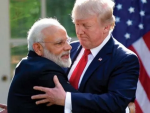
New Delhi: India and the United States have begun work on the draft paper of the Basic Exchange and Cooperation Agreement (BECA), the third of the "foundational" pacts that aims to bring the armed forces of the two countries closer. Work on the drafts has just begun after a successful meeting on BECA in Washington DC on 2-3 March. After several rounds of discussions led by the Indian ministry of defence and the U.S. National Geospatial Agency, it was decided to begin work on the draft.
Indian and U.S. armed forces officials were part of the meeting.
BECA is the third of the agreements, India already having signed the Logistics Exchange Memorandum of Agreement (LEMOA) and the Communications Compatibility and Security Agreement (COMCASA). Both sides are confident that the agreement could be signed by the end of the year. In fact, both sides are working towards signing the agreement with the Trump administration before the November US Presidential polls. BECA would lead to sharing information relating to various kind of data, whether it is imagery, hydrological, topographical or other kinds of data.
The meeting in Washington DC was considered successful and the BECA agreement is seen as easier to achieve that COMCASA, which is about communications interoperability. It came right after the Trump visit to India. During the visit, the US President announced the sale of 3 billion US dollars worth of naval helicopters, Apache attack choppers and a protection system for the Prime Minister's plane.
The BECA agreement could also come up for discussions when the US defence secretary, Mark Esper, arrives on March 17. But no new defence deals are likely to be announced during the visit.
India and USA begin work on BECA draft agreement
Srinjoy Chowdhury| National Affairs Editor
Updated Mar 06, 2020 | 22:12 IST
Days after US President Donald Trump's maiden India visit; New Delhi and Washington have started working on the draft of BECA, the third foundational agreements between the two countries.
New Delhi: India and the United States have begun work on the draft paper of the Basic Exchange and Cooperation Agreement (BECA), the third of the "foundational" pacts that aims to bring the armed forces of the two countries closer. Work on the drafts has just begun after a successful meeting on BECA in Washington DC on 2-3 March. After several rounds of discussions led by the Indian ministry of defence and the U.S. National Geospatial Agency, it was decided to begin work on the draft.
Indian and U.S. armed forces officials were part of the meeting.
BECA is the third of the agreements, India already having signed the Logistics Exchange Memorandum of Agreement (LEMOA) and the Communications Compatibility and Security Agreement (COMCASA). Both sides are confident that the agreement could be signed by the end of the year. In fact, both sides are working towards signing the agreement with the Trump administration before the November US Presidential polls. BECA would lead to sharing information relating to various kind of data, whether it is imagery, hydrological, topographical or other kinds of data.
The meeting in Washington DC was considered successful and the BECA agreement is seen as easier to achieve that COMCASA, which is about communications interoperability. It came right after the Trump visit to India. During the visit, the US President announced the sale of 3 billion US dollars worth of naval helicopters, Apache attack choppers and a protection system for the Prime Minister's plane.
The BECA agreement could also come up for discussions when the US defence secretary, Mark Esper, arrives on March 17. But no new defence deals are likely to be announced during the visit.
India and USA begin work on BECA draft agreement
An independent body mandated by the US congress to monitor the state of religious freedom around the world may have unwittingly given away its historical bias against India by inviting expert testimony from an adviser to the Pakistani prime minister at a public hearing on India’s controversial citizenship laws.“The new citizenship law is aimed at Muslims and those from the poorest sections of India’s caste system, (and) undermines the non- confessional basis of the Indian constitution,” said the expert, Azeem Ibrahim, of the Center for Global Policy that focuses exclusively on US foreign policy implications for Muslim-majority countries.And the law, “will create identifiable groups who are denied the basic right of citizenship”, the expert argued.Here is how Ibrahim’s homepage (www.azeemibrahim.com) describes him: “Over the years, Dr Ibrahim has advised numerous world leaders on strategy and policy development with his most recent role being the Strategic Policy Advisor to the Chairman of Pakistan’s PTI party, Prime Minister Imran Khan.”Prime Minister Khan’s alarmist views on the Citizenship Amendment Act and everything Indian, including cricket, are well known by now.But, just to recap, he had raised the specter of a nuclear war in December conference on refugees in Geneva.“We are worried there not only could be a refugee crisis, we are worried it could lead to a conflict between two nuclear-armed countries,” Imran had said.The United States Commission on International Religious Freedom or USCIRF, which has struggled to find the kind of global recognition and respect commanded by other genuinely bipartisan US bodies, had a chance of setting it right. Indian-descent Anurima Bhargava, one of the USCIRF commissioners, set the tone for the hearing with a searing critique of the CAA, saying that together with the planned National Population Register (NPR) and the potential National Register of Citizens (NRC), it was feared to “result in the wide-scale disenfranchisement of Indian Muslims”.Ashutosh Varshney, a widely respected Indian-descent academic, was even more critical in his testimony.“The threat is serious and the implications quite horrendous,” he said referring to the joint impact of the three government programmes.“Something deeply injurious to the Muslim minority can happen, once their citizenship rights are taken away,” Varshney added.“The Indian Constitution in its Preamble emphasizes the ideals of justice, liberty, equality, fraternity and secularism,” said Aman Wadud, a human rights lawyer from Assam.“The steps proposed by the Indian government are a direct attack on these constitutional ideals, and defeat the demand that every Indian citizen has the right to a life of dignity. The Indian Constitution, which is an unparalleled document in the history of modern nations, guarantees the right to live with dignity. The NRC exercise if implemented will deny this very right to live a dignified life.”The USCIRF insinuated itself into the CAA controversy very early urging the Trump administration to sanction Union home minister Amit Shah if the amendment law passed parliament. It did, and the administration has still to act on that recommendation if the USCIRF did indeed make it.The USCIRF had wanted to send a team to India in 2016 to “discuss and assess religious freedom conditions in that nation”, but India had blocked it by denying visas. Though the body had then said it would continue to pursue the visit, it could not be immediately ascertained if it tried again.

A nice middle finger to USCIRF and i cant believe academic like Varshney is peddling liesAn independent body mandated by the US congress to monitor the state of religious freedom around the world may have unwittingly given away its historical bias against India by inviting expert testimony from an adviser to the Pakistani prime minister at a public hearing on India’s controversial citizenship laws.“The new citizenship law is aimed at Muslims and those from the poorest sections of India’s caste system, (and) undermines the non- confessional basis of the Indian constitution,” said the expert, Azeem Ibrahim, of the Center for Global Policy that focuses exclusively on US foreign policy implications for Muslim-majority countries.And the law, “will create identifiable groups who are denied the basic right of citizenship”, the expert argued.Here is how Ibrahim’s homepage (www.azeemibrahim.com) describes him: “Over the years, Dr Ibrahim has advised numerous world leaders on strategy and policy development with his most recent role being the Strategic Policy Advisor to the Chairman of Pakistan’s PTI party, Prime Minister Imran Khan.”Prime Minister Khan’s alarmist views on the Citizenship Amendment Act and everything Indian, including cricket, are well known by now.But, just to recap, he had raised the specter of a nuclear war in December conference on refugees in Geneva.“We are worried there not only could be a refugee crisis, we are worried it could lead to a conflict between two nuclear-armed countries,” Imran had said.The United States Commission on International Religious Freedom or USCIRF, which has struggled to find the kind of global recognition and respect commanded by other genuinely bipartisan US bodies, had a chance of setting it right. Indian-descent Anurima Bhargava, one of the USCIRF commissioners, set the tone for the hearing with a searing critique of the CAA, saying that together with the planned National Population Register (NPR) and the potential National Register of Citizens (NRC), it was feared to “result in the wide-scale disenfranchisement of Indian Muslims”.Ashutosh Varshney, a widely respected Indian-descent academic, was even more critical in his testimony.“The threat is serious and the implications quite horrendous,” he said referring to the joint impact of the three government programmes.“Something deeply injurious to the Muslim minority can happen, once their citizenship rights are taken away,” Varshney added.“The Indian Constitution in its Preamble emphasizes the ideals of justice, liberty, equality, fraternity and secularism,” said Aman Wadud, a human rights lawyer from Assam.“The steps proposed by the Indian government are a direct attack on these constitutional ideals, and defeat the demand that every Indian citizen has the right to a life of dignity. The Indian Constitution, which is an unparalleled document in the history of modern nations, guarantees the right to live with dignity. The NRC exercise if implemented will deny this very right to live a dignified life.”The USCIRF insinuated itself into the CAA controversy very early urging the Trump administration to sanction Union home minister Amit Shah if the amendment law passed parliament. It did, and the administration has still to act on that recommendation if the USCIRF did indeed make it.The USCIRF had wanted to send a team to India in 2016 to “discuss and assess religious freedom conditions in that nation”, but India had blocked it by denying visas. Though the body had then said it would continue to pursue the visit, it could not be immediately ascertained if it tried again.
Much bigger problem than you can think ofA nice middle finger to USCIRF and i cant believe academic like Varshney is peddling lies